Financial Management
Introduction
RA01/31/15
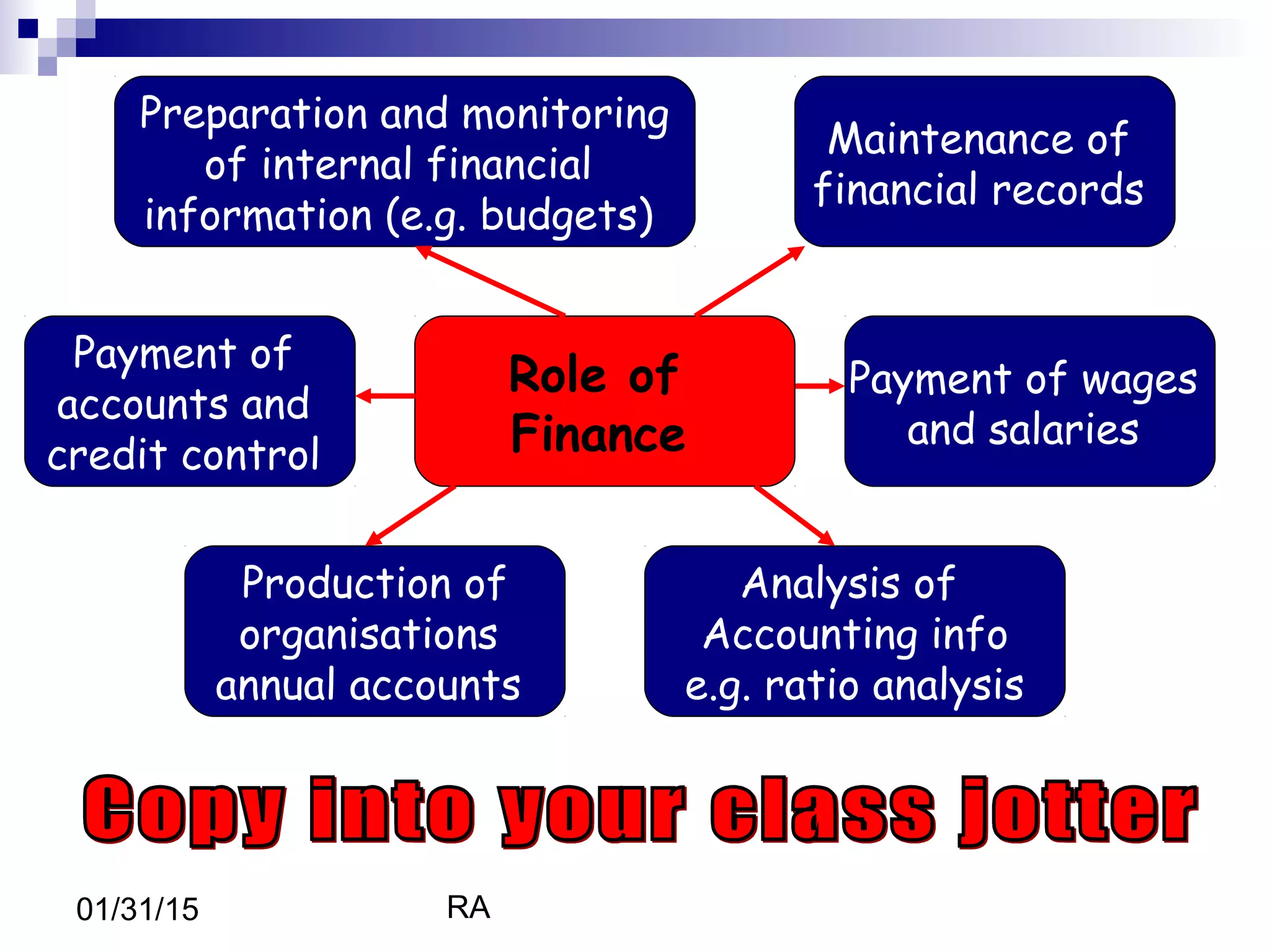
Role of
Finance
Payment of wages
and salaries
Maintenance of
financial records
Production of
organisations
annual accounts
Analysis of
Accounting info
e.g. ratio analysis
Payment of
accounts and
credit control
Preparation and monitoring
of internal financial
information (e.g. budgets)
RA01/31/15
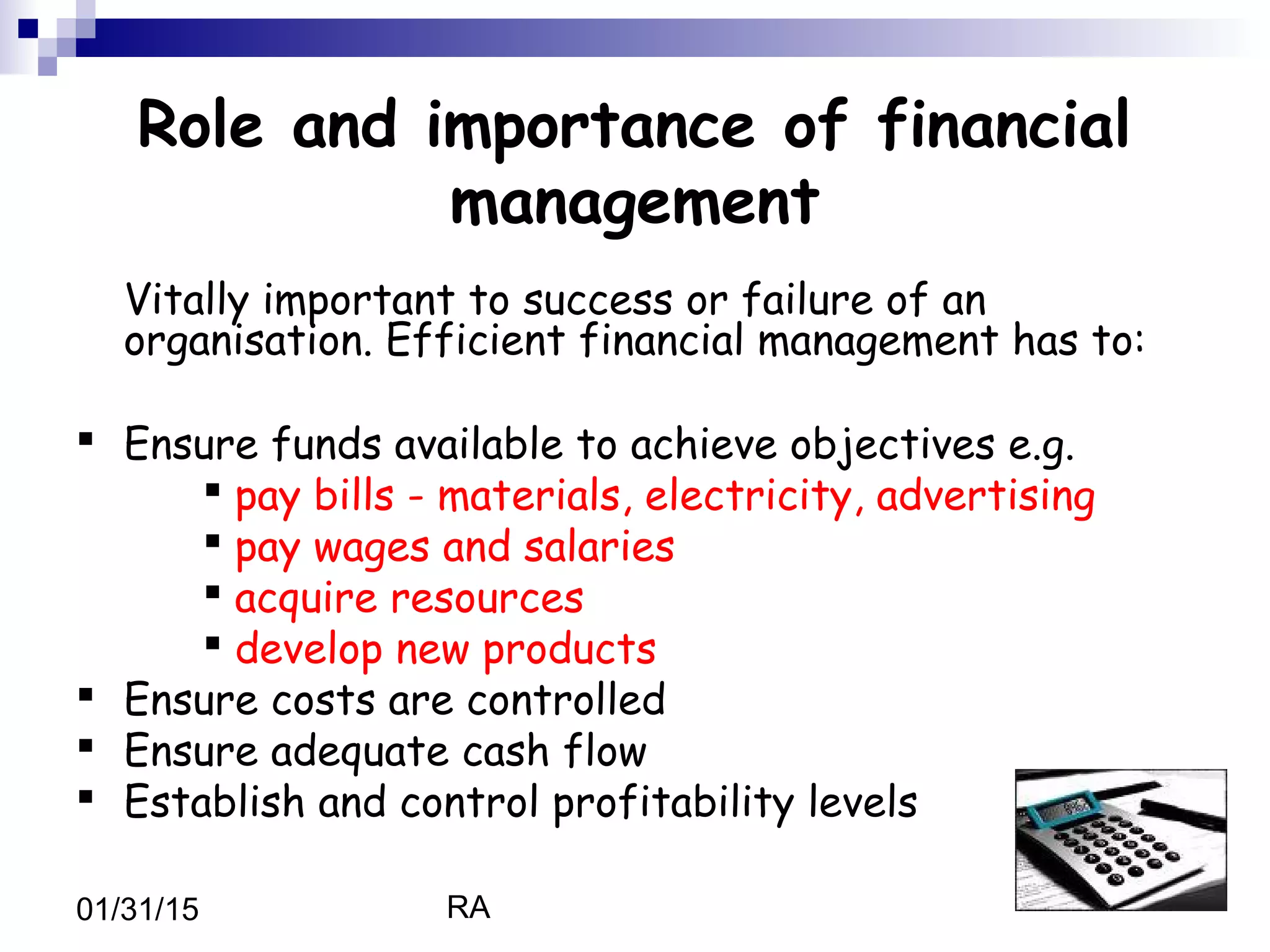
Role and importance of financial
management
Vitally important to success or failure of an
organisation. Efficient financial management has to:
 Ensure funds available to achieve objectives e.g.
 pay bills - materials, electricity, advertising
 pay wages and salaries
 acquire resources
 develop new products
 Ensure costs are controlled
 Ensure adequate cash flow
 Establish and control profitability levels
RA01/31/15
Question
 In your own words, explain the role and
importance of financial management to a
manufacturer whose objective is to improve
quality.
(4 marks)
RA01/31/15
Solution
 to make sure there are sufficient funds for the organisation to
buy all the resources it needs to achieve its objectives i.e.
appropriate quality of raw materials, correctly trained staff,
well maintained machinery (1)
 to make sure there is enough money to recruit and train
appropriately skilled staff to satisfy the objective of improving
quality. (1)
 to make sure that all the costs/expenses are under control (1)
 to make sure that the organisation is performing profitably and
efficiently without compromising quality (1)
 to reduce costs of raw materials by ensuring the best value for
money from suppliers. (1)
RA01/31/15
Question
Outline 2 reasons why the marketing and
financial departments may face conflicts of
interest within an organisation
(2 marks)
RA01/31/15
Solution
 Marketing department may require cash in order to
carry out promotional activities e.g. advertising,
free gifts
 Marketing may wish to discount price
 Marketing may wish to use techniques like BOGOF
 All of the above are costs to the business and may
result in reduced profits.
RA01/31/15
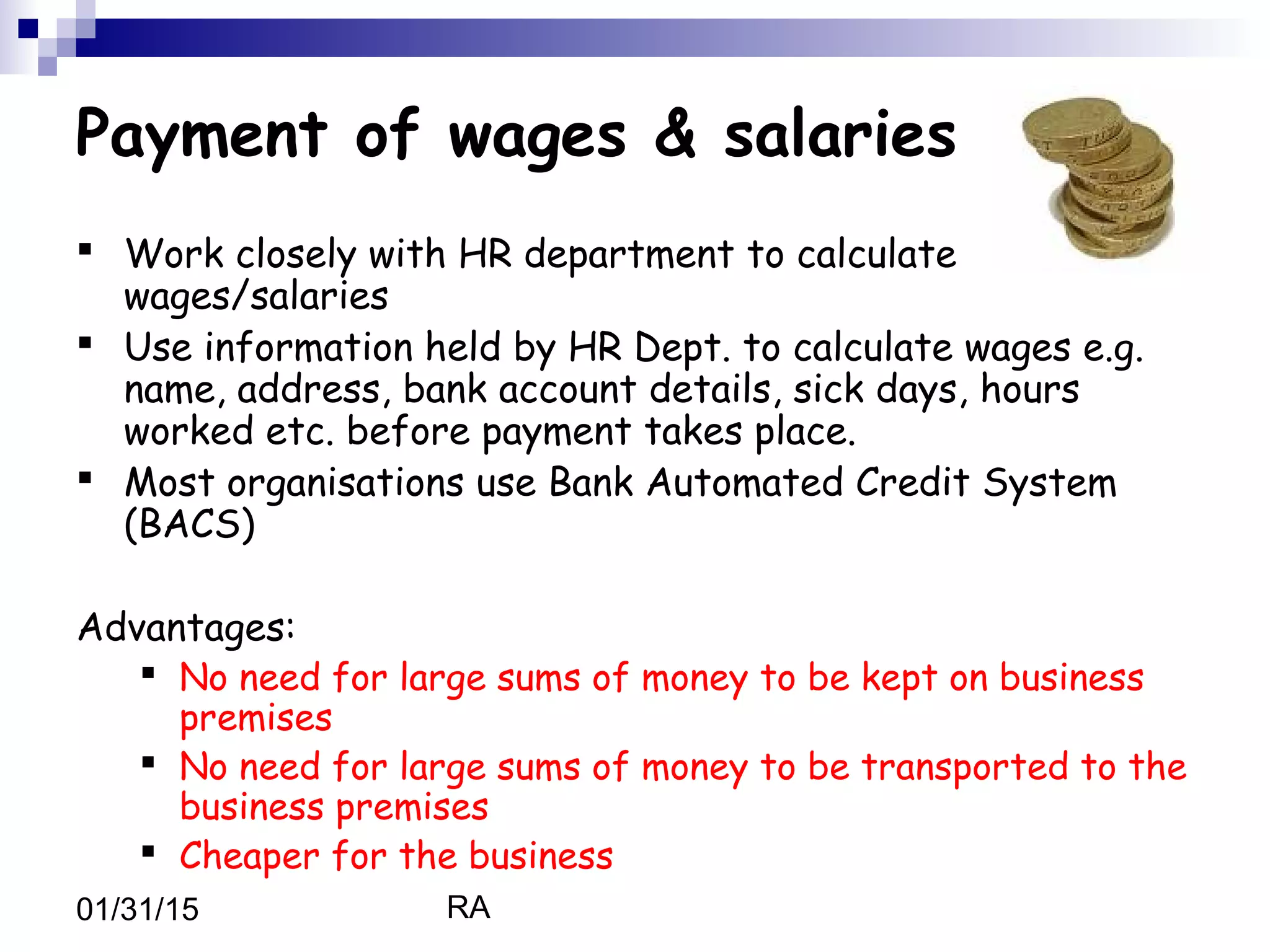
Payment of wages & salaries
 Work closely with HR department to calculate
wages/salaries
 Use information held by HR Dept. to calculate wages e.g.
name, address, bank account details, sick days, hours
worked etc. before payment takes place.
 Most organisations use Bank Automated Credit System
(BACS)
Advantages:
 No need for large sums of money to be kept on business
premises
 No need for large sums of money to be transported to the
business premises
 Cheaper for the business
RA01/31/15
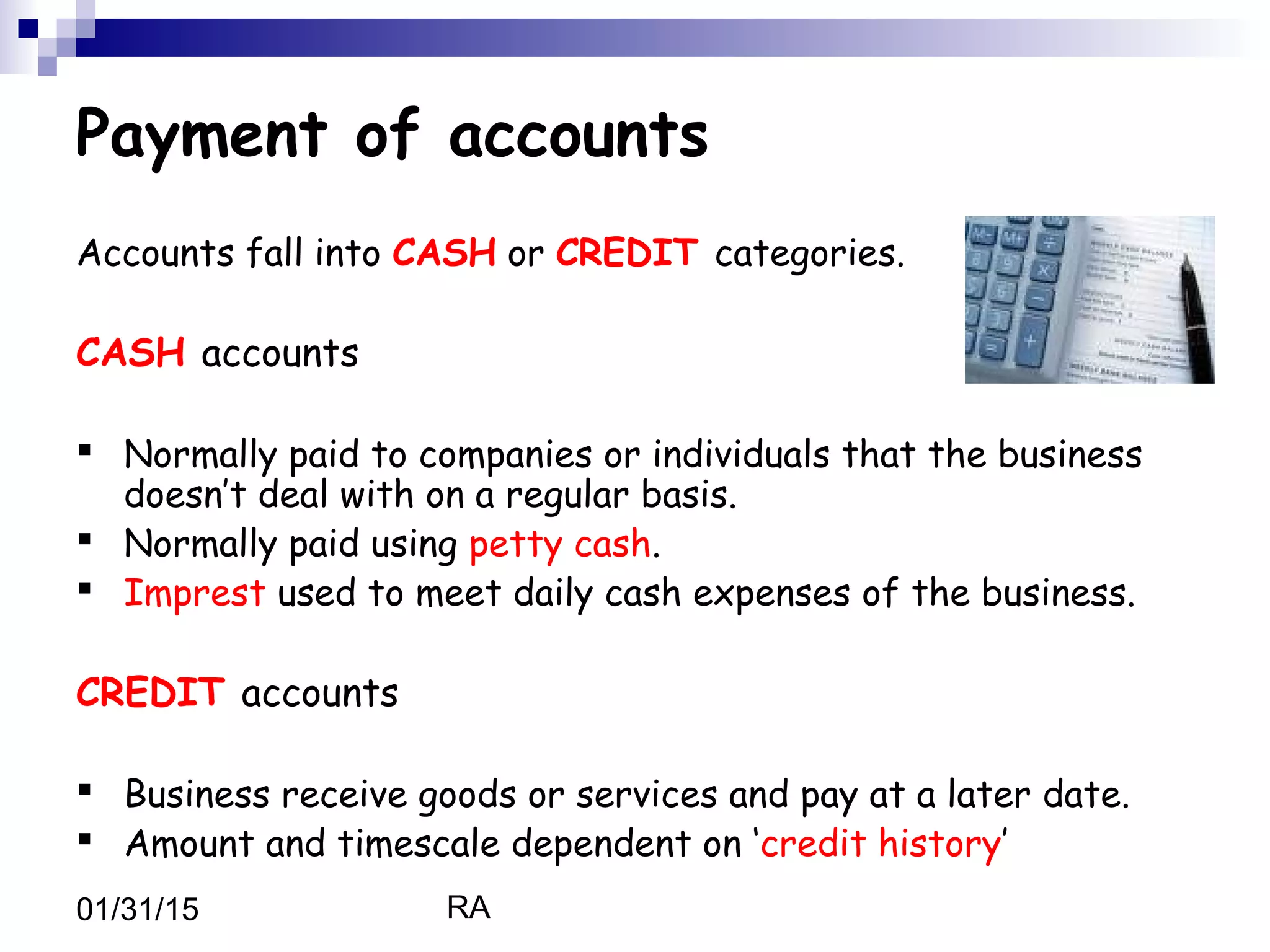
Payment of accounts
Accounts fall into CASH or CREDIT categories.
CASH accounts
 Normally paid to companies or individuals that the business
doesn’t deal with on a regular basis.
 Normally paid using petty cash.
 Imprest used to meet daily cash expenses of the business.
CREDIT accounts
 Business receive goods or services and pay at a later date.
 Amount and timescale dependent on ‘credit history’
RA01/31/15
Question
 Distinguish between a cash account and a
credit account.
(1 mark)
 Describe the advantages of using the BACS
system to pay wages.
(3 marks)
RA01/31/15
Solution
 A cash account is normally paid using petty
cash whereas a credit account is where a
business receive goods or services and pay
at a later date.
RA01/31/15
Maintenance of financial records
 Companies must maintain financial records - a history of
the business’s activities.
 Inland Revenue require businesses to retain financial
records for a period of 6 years for possible investigation.
 Limited companies must comply with Companies Act of
1985 & 1989 which states that it is an offence not to
maintain proper financial records.
RA01/31/15
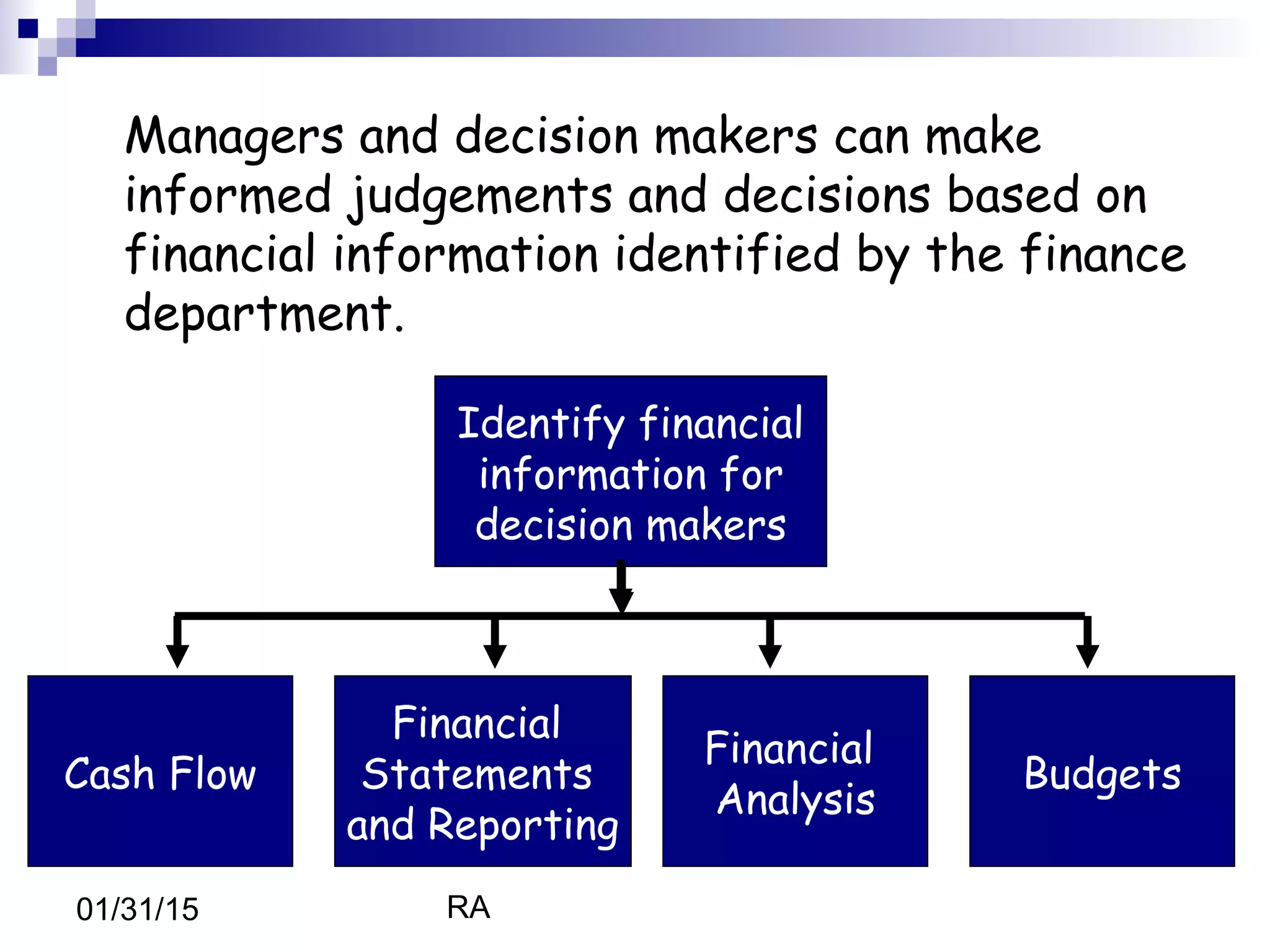
Managers and decision makers can make
informed judgements and decisions based on
financial information identified by the finance
department.
Identify financial
information for
decision makers
Cash Flow
Financial
Statements
and Reporting
Financial
Analysis
Budgets

Introduction to Financial Management

  • 1.
  • 2.
    RA01/31/15 Role of Finance Payment ofwages and salaries Maintenance of financial records Production of organisations annual accounts Analysis of Accounting info e.g. ratio analysis Payment of accounts and credit control Preparation and monitoring of internal financial information (e.g. budgets)
  • 3.
    RA01/31/15 Role and importanceof financial management Vitally important to success or failure of an organisation. Efficient financial management has to:  Ensure funds available to achieve objectives e.g.  pay bills - materials, electricity, advertising  pay wages and salaries  acquire resources  develop new products  Ensure costs are controlled  Ensure adequate cash flow  Establish and control profitability levels
  • 4.
    RA01/31/15 Question  In yourown words, explain the role and importance of financial management to a manufacturer whose objective is to improve quality. (4 marks)
  • 5.
    RA01/31/15 Solution  to makesure there are sufficient funds for the organisation to buy all the resources it needs to achieve its objectives i.e. appropriate quality of raw materials, correctly trained staff, well maintained machinery (1)  to make sure there is enough money to recruit and train appropriately skilled staff to satisfy the objective of improving quality. (1)  to make sure that all the costs/expenses are under control (1)  to make sure that the organisation is performing profitably and efficiently without compromising quality (1)  to reduce costs of raw materials by ensuring the best value for money from suppliers. (1)
  • 6.
    RA01/31/15 Question Outline 2 reasonswhy the marketing and financial departments may face conflicts of interest within an organisation (2 marks)
  • 7.
    RA01/31/15 Solution  Marketing departmentmay require cash in order to carry out promotional activities e.g. advertising, free gifts  Marketing may wish to discount price  Marketing may wish to use techniques like BOGOF  All of the above are costs to the business and may result in reduced profits.
  • 8.
    RA01/31/15 Payment of wages& salaries  Work closely with HR department to calculate wages/salaries  Use information held by HR Dept. to calculate wages e.g. name, address, bank account details, sick days, hours worked etc. before payment takes place.  Most organisations use Bank Automated Credit System (BACS) Advantages:  No need for large sums of money to be kept on business premises  No need for large sums of money to be transported to the business premises  Cheaper for the business
  • 9.
    RA01/31/15 Payment of accounts Accountsfall into CASH or CREDIT categories. CASH accounts  Normally paid to companies or individuals that the business doesn’t deal with on a regular basis.  Normally paid using petty cash.  Imprest used to meet daily cash expenses of the business. CREDIT accounts  Business receive goods or services and pay at a later date.  Amount and timescale dependent on ‘credit history’
  • 10.
    RA01/31/15 Question  Distinguish betweena cash account and a credit account. (1 mark)  Describe the advantages of using the BACS system to pay wages. (3 marks)
  • 11.
    RA01/31/15 Solution  A cashaccount is normally paid using petty cash whereas a credit account is where a business receive goods or services and pay at a later date.
  • 12.
    RA01/31/15 Maintenance of financialrecords  Companies must maintain financial records - a history of the business’s activities.  Inland Revenue require businesses to retain financial records for a period of 6 years for possible investigation.  Limited companies must comply with Companies Act of 1985 & 1989 which states that it is an offence not to maintain proper financial records.
  • 13.
    RA01/31/15 Managers and decisionmakers can make informed judgements and decisions based on financial information identified by the finance department. Identify financial information for decision makers Cash Flow Financial Statements and Reporting Financial Analysis Budgets