Chapter 1
Introduction to Biology
I. Introduction
Science is an organised body of knowledge supported by
observation and experimentation, derived from the study of
natural phenomena of the entire material universe.
There are three major branches of science, namely, Physics,
Chemistry and Biology. "Biology" itself means the study or science of
life (Greek: bios = life; logos = study).
II. Growth of Biology
 Era of Aristotle (384-322 B.C.) , Theophrastus (370-285 B.C.),
Hippocrates (460-377 B.C.)
 Biology in ancient India (2500 B.C. to 650 B.C.). Various systems of classifying
animals and plants were developed, for example, Jeevaj (viviparous) animals who
give birth to young one, Andaj (oviparous) animals who lay eggs, etc.
 Invention of microscope in the sixteenth century
 Discovery of germs, wider acceptance of the theory of organic evolution,
establishment of the cell theory, etc
 Biology has already progressed a great deal in the field of vitamins,
hormones, genetics, genetic engineering, antibiotics, cancer research,
cloning, stem cell research, organ transplant, environmental sciences, life in
outer space, etc.
III. Branches of Biology
A. In terms of major kinds of
organisms.
Botany -- the study of
plants.
Zoology — the study of
animals.
Human Biology — the
study of man as a living
organism and his
relationship with other
living organisms.
• Bacteriology — the study of bacteria.
• Virology — the study of viruses.
• Mycology — the study of fungi.
• Entomology — the study of insects.
• Ichthyology — the study of fishes.
• Herpetology — the study of lizards, snakes, etc.
• Ornithology — the study of birds.
B. In terms of special groups of organisms.
C. In terms of approach on studying it.
Anatomy Morphology Histology
Cytology Physiology Embryology
Taxonomy Ecology Biogeography
Palaeontology Evolution Genetics
Parasitology Pathology Immunology
Eugenics Biochemistry
Applied Biology: Biology has enormous applications in
other branches of science. It forms an important part of
the following:
Agriculture
Marine
biology
Household
biology
Horticulture
Sericulture Pisciculture
Molecular
Biology
Biotechnology
Bioengineerin
g
Nuclear
Biology
Space Biology Exobiology
Genomics Bioinformatics Biometrics
Veterinary
science
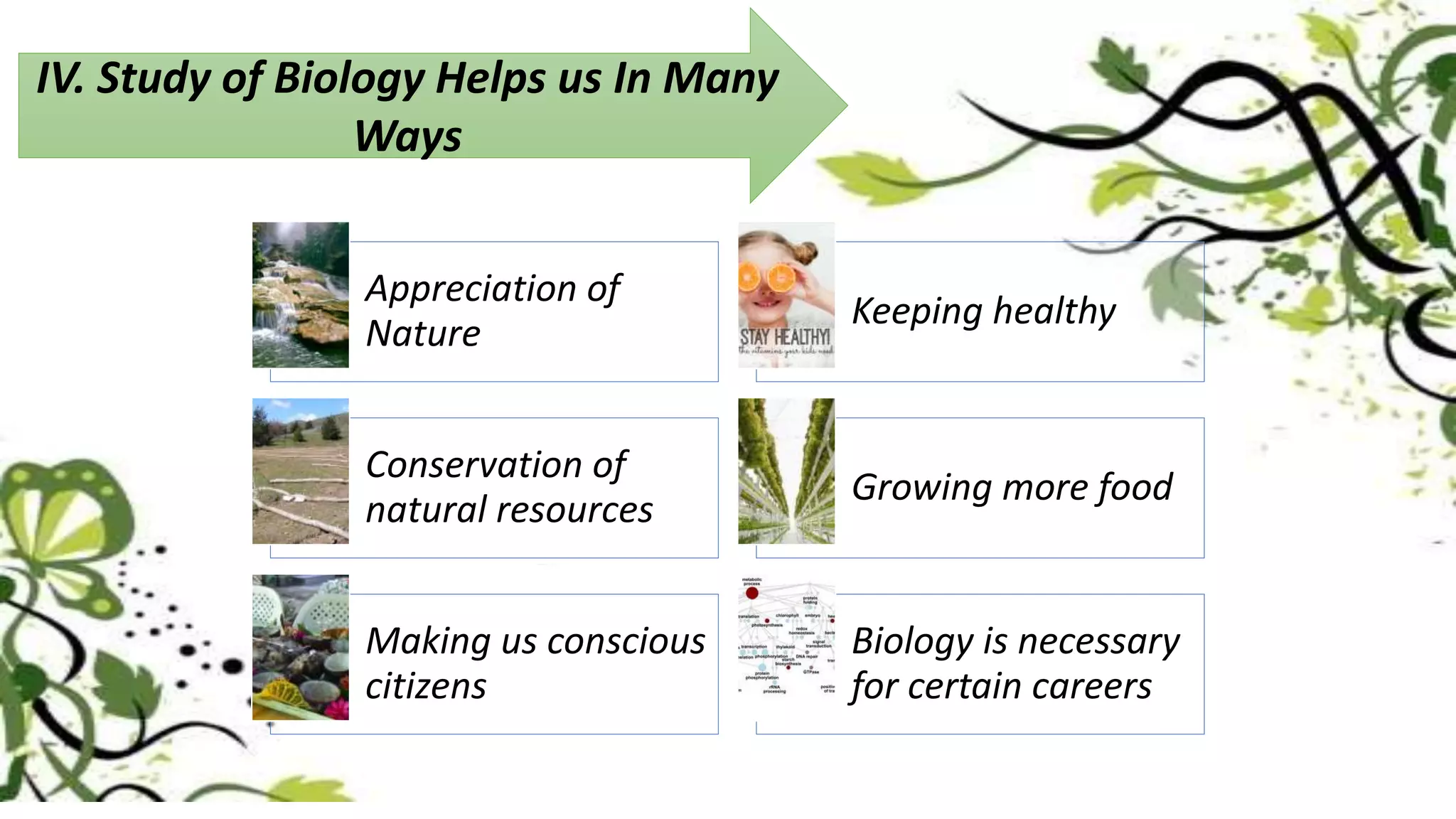
Appreciation of
Nature
Keeping healthy
Conservation of
natural resources
Growing more food
Making us conscious
citizens
Biology is necessary
for certain careers
IV. Study of Biology Helps us In Many
Ways

Introduction to biology

  • 2.
  • 4.
    I. Introduction Science isan organised body of knowledge supported by observation and experimentation, derived from the study of natural phenomena of the entire material universe. There are three major branches of science, namely, Physics, Chemistry and Biology. "Biology" itself means the study or science of life (Greek: bios = life; logos = study).
  • 5.
    II. Growth ofBiology  Era of Aristotle (384-322 B.C.) , Theophrastus (370-285 B.C.), Hippocrates (460-377 B.C.)  Biology in ancient India (2500 B.C. to 650 B.C.). Various systems of classifying animals and plants were developed, for example, Jeevaj (viviparous) animals who give birth to young one, Andaj (oviparous) animals who lay eggs, etc.  Invention of microscope in the sixteenth century  Discovery of germs, wider acceptance of the theory of organic evolution, establishment of the cell theory, etc  Biology has already progressed a great deal in the field of vitamins, hormones, genetics, genetic engineering, antibiotics, cancer research, cloning, stem cell research, organ transplant, environmental sciences, life in outer space, etc.
  • 6.
    III. Branches ofBiology A. In terms of major kinds of organisms. Botany -- the study of plants. Zoology — the study of animals. Human Biology — the study of man as a living organism and his relationship with other living organisms.
  • 7.
    • Bacteriology —the study of bacteria. • Virology — the study of viruses. • Mycology — the study of fungi. • Entomology — the study of insects. • Ichthyology — the study of fishes. • Herpetology — the study of lizards, snakes, etc. • Ornithology — the study of birds. B. In terms of special groups of organisms.
  • 8.
    C. In termsof approach on studying it. Anatomy Morphology Histology Cytology Physiology Embryology Taxonomy Ecology Biogeography Palaeontology Evolution Genetics Parasitology Pathology Immunology Eugenics Biochemistry
  • 9.
    Applied Biology: Biologyhas enormous applications in other branches of science. It forms an important part of the following: Agriculture Marine biology Household biology Horticulture Sericulture Pisciculture Molecular Biology Biotechnology Bioengineerin g Nuclear Biology Space Biology Exobiology Genomics Bioinformatics Biometrics Veterinary science
  • 10.
    Appreciation of Nature Keeping healthy Conservationof natural resources Growing more food Making us conscious citizens Biology is necessary for certain careers IV. Study of Biology Helps us In Many Ways