
By
Dewi Sivasamy
The word biology is derived from the greek words
  /bios/ meaning /life/ and /logos/ meaning /study/ and
  is defined as the science of life and living organisms.

An organism is a living entity consisting of one cell e.g.
     bacteria, or several cells e.g. animals, plants and
   fungi. Aspects of biological science range from the
      study of molecular mechanisms in cells, to the
     classification and behaviour of organisms, how
   species evolve and interaction between ecosystems.
Field fo study in Biology

•   Zoology
•   Botany
•   Microbiology
•   Ecology
•   Anatomy
•   Biochemstry
•   Morphology
•   Physiology
•   Biotechnology
•   Medicine/ veterinary
•   biomedine
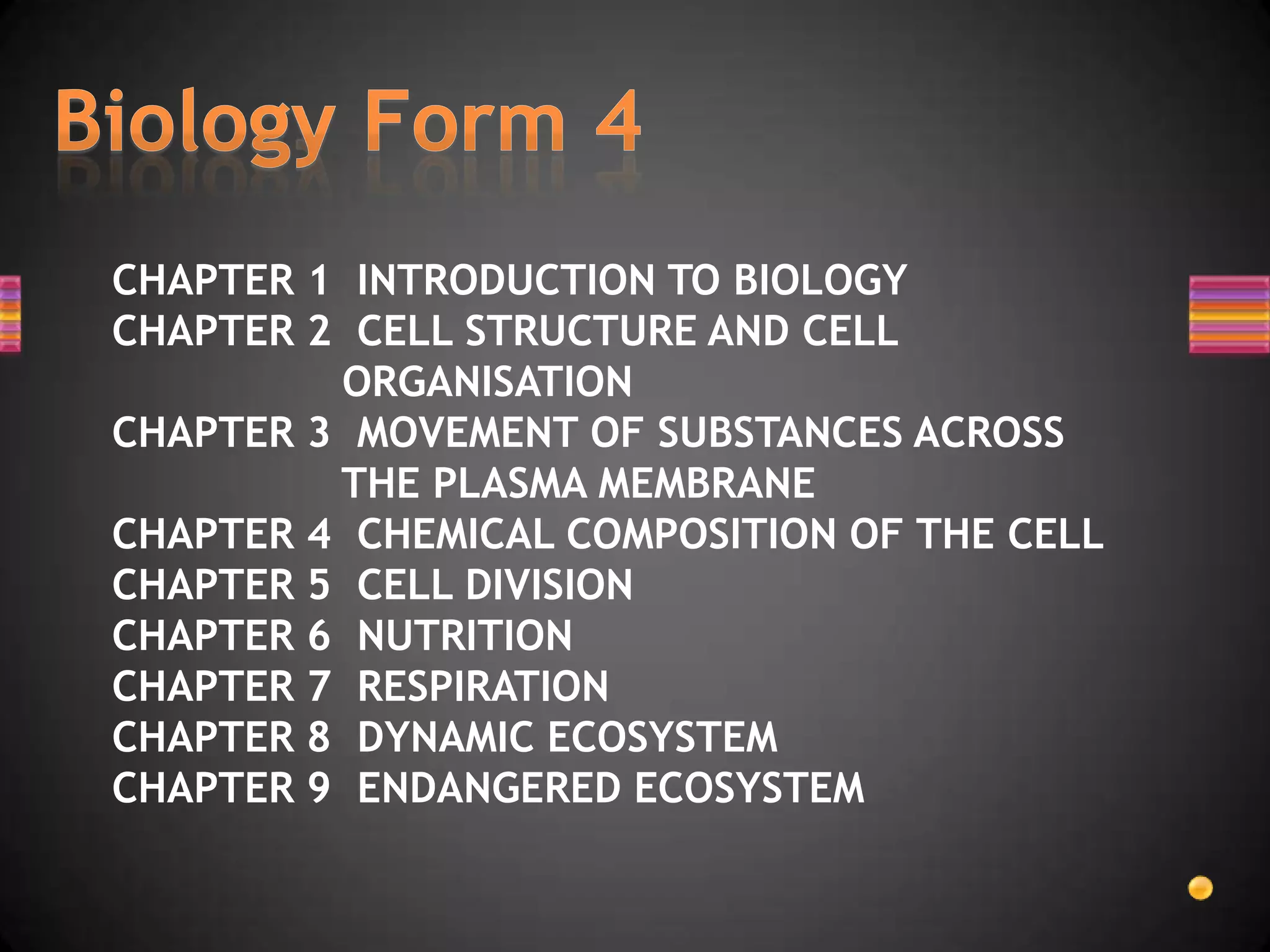
CHAPTER 1 INTRODUCTION TO BIOLOGY
CHAPTER 2 CELL STRUCTURE AND CELL
         ORGANISATION
CHAPTER 3 MOVEMENT OF SUBSTANCES ACROSS
         THE PLASMA MEMBRANE
CHAPTER 4 CHEMICAL COMPOSITION OF THE CELL
CHAPTER 5 CELL DIVISION
CHAPTER 6 NUTRITION
CHAPTER 7 RESPIRATION
CHAPTER 8 DYNAMIC ECOSYSTEM
CHAPTER 9 ENDANGERED ECOSYSTEM
As man is a living organisms so the study of biology helps us to
                  understand ourselves and our behavior.
For many of you the most interesting part of biology may be the study
    of yourself; how your body works; how it reacts to diseases; how
          you resemble or differ from other people such as your
                       sisters, brothers and parents.
You will also learn how you and other living things came to be on this
    Earth, as part of the origin of life and the process of evolution of
                                 organisms.
The study of man is not complete unless we also make a comparative
    study of other animals. For example, by studying the working of
   muscles in a frog, or the digestive, respiratory and nervous system
    of a mammal such as the rabbit, we can understand much better
                how such systems work in our own bodies.
By studying plants man has found that certain plants have
         medicinal value from which he has been able to
   manufacture drugs (e.g. penicillin and streptomycin) which
   have proved effective in the treatment of certain diseases.
An ever-increasing human population requires more and more
                               food.
Food production can be increased by a careful study of plants
   and soil.Above all, biology helps us to understand ourselves
                    and the world we live in.
Career related to science


•   Medicine
•   Nursing
•   Dentistry
•   Pharmacy
•   Veterinary
Why study bio
Why study bio

Why study bio

  • 1.
  • 2.
    The word biologyis derived from the greek words /bios/ meaning /life/ and /logos/ meaning /study/ and is defined as the science of life and living organisms. An organism is a living entity consisting of one cell e.g. bacteria, or several cells e.g. animals, plants and fungi. Aspects of biological science range from the study of molecular mechanisms in cells, to the classification and behaviour of organisms, how species evolve and interaction between ecosystems.
  • 3.
    Field fo studyin Biology • Zoology • Botany • Microbiology • Ecology • Anatomy • Biochemstry • Morphology • Physiology • Biotechnology • Medicine/ veterinary • biomedine
  • 4.
    CHAPTER 1 INTRODUCTIONTO BIOLOGY CHAPTER 2 CELL STRUCTURE AND CELL ORGANISATION CHAPTER 3 MOVEMENT OF SUBSTANCES ACROSS THE PLASMA MEMBRANE CHAPTER 4 CHEMICAL COMPOSITION OF THE CELL CHAPTER 5 CELL DIVISION CHAPTER 6 NUTRITION CHAPTER 7 RESPIRATION CHAPTER 8 DYNAMIC ECOSYSTEM CHAPTER 9 ENDANGERED ECOSYSTEM
  • 5.
    As man isa living organisms so the study of biology helps us to understand ourselves and our behavior. For many of you the most interesting part of biology may be the study of yourself; how your body works; how it reacts to diseases; how you resemble or differ from other people such as your sisters, brothers and parents. You will also learn how you and other living things came to be on this Earth, as part of the origin of life and the process of evolution of organisms. The study of man is not complete unless we also make a comparative study of other animals. For example, by studying the working of muscles in a frog, or the digestive, respiratory and nervous system of a mammal such as the rabbit, we can understand much better how such systems work in our own bodies.
  • 6.
    By studying plantsman has found that certain plants have medicinal value from which he has been able to manufacture drugs (e.g. penicillin and streptomycin) which have proved effective in the treatment of certain diseases. An ever-increasing human population requires more and more food. Food production can be increased by a careful study of plants and soil.Above all, biology helps us to understand ourselves and the world we live in.
  • 7.
    Career related toscience • Medicine • Nursing • Dentistry • Pharmacy • Veterinary