Introduction to Behaviorism

             By
       Derek Antoniazzi
Menu Options
   What is Behaviorism?
   Who are key figures in Behaviorism?
   How it’s used in a classroom?
   How it’s used in my classroom?
What is Behaviorism?
   Behavior is caused by…
       Physical Stimuli
       Responses
       Learning Histories
       And Behavioral Reinforcements
What is Behaviorism? (cont.)
       Behaviorist is not concerned with…
            How…or why?
       Just concerned with whether answer’s
        correct
       Behavior can be reinforced using
            Positive…
            …or Negative feedback

https://www.msu.edu/~purcelll/behaviorism%20theory.htm?pagewanted=all
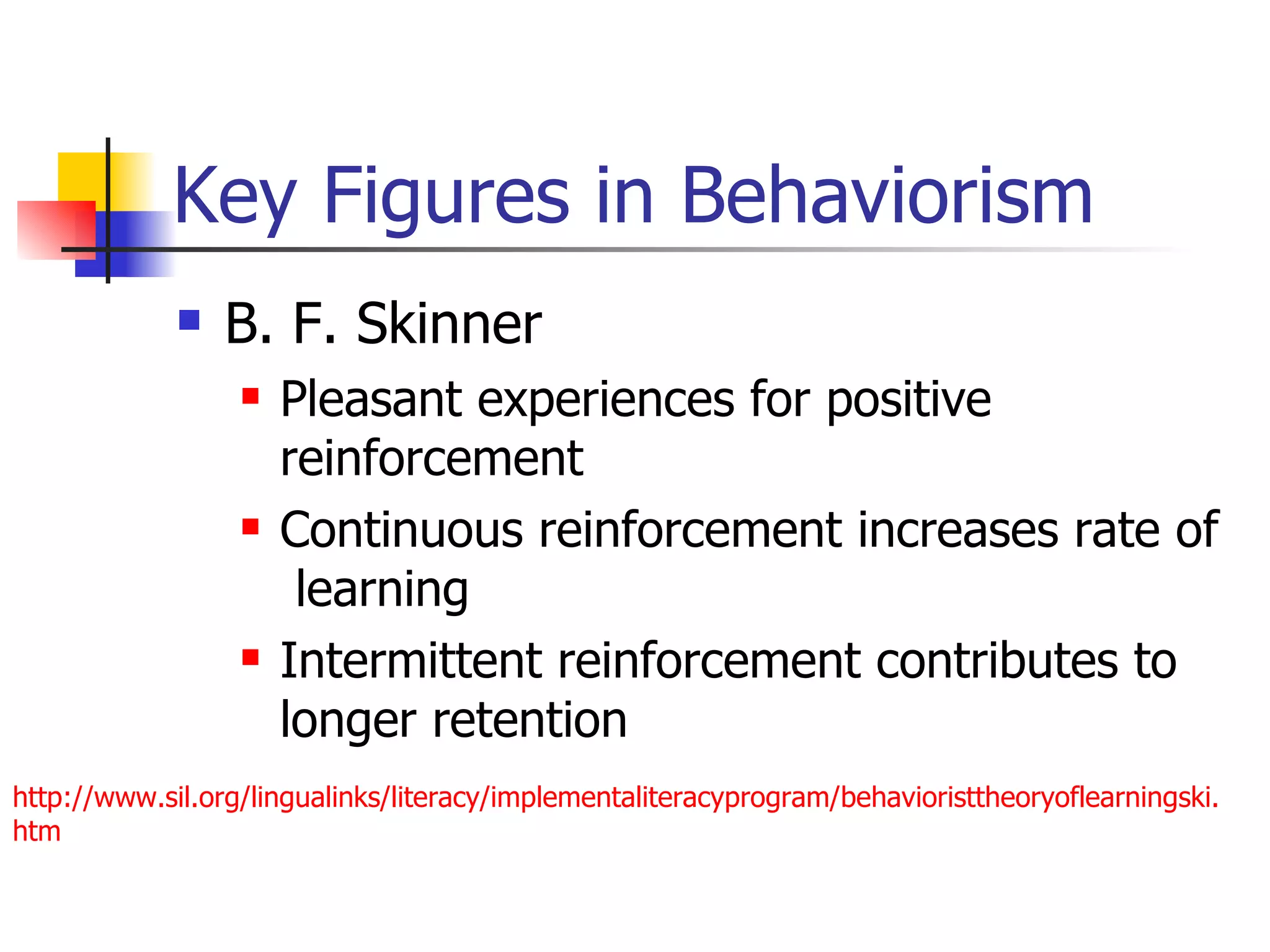
Key Figures in Behaviorism
                B. F. Skinner
                     Pleasant experiences for positive
                      reinforcement
                     Continuous reinforcement increases rate of
                       learning
                     Intermittent reinforcement contributes to
                      longer retention
http://www.sil.org/lingualinks/literacy/implementaliteracyprogram/behavioristtheoryoflearningski.
htm
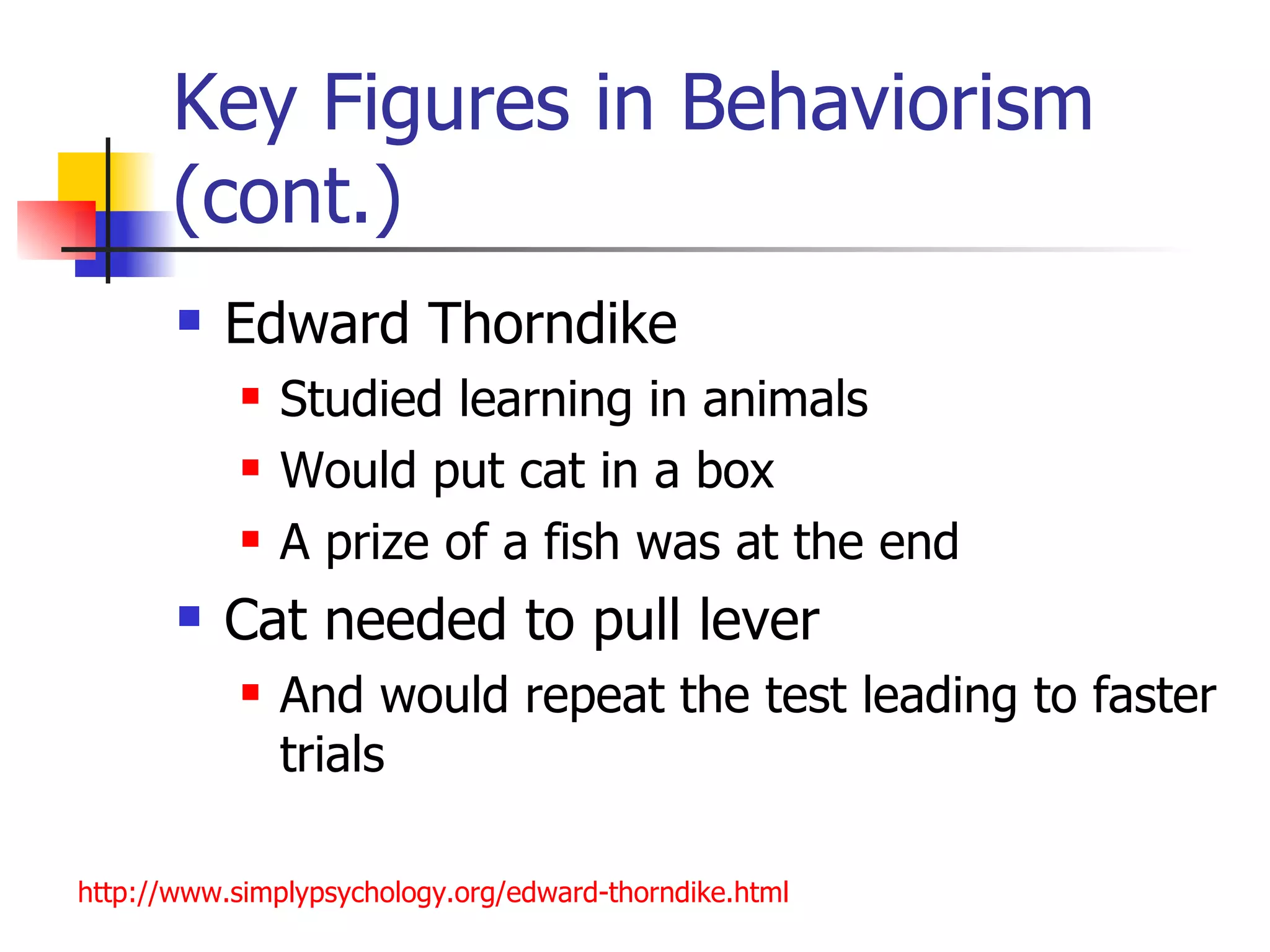
Key Figures in Behaviorism
       (cont.)
          Edward Thorndike
               Studied learning in animals
               Would put cat in a box
               A prize of a fish was at the end
          Cat needed to pull lever
               And would repeat the test leading to faster
                trials

http://www.simplypsychology.org/edward-thorndike.html
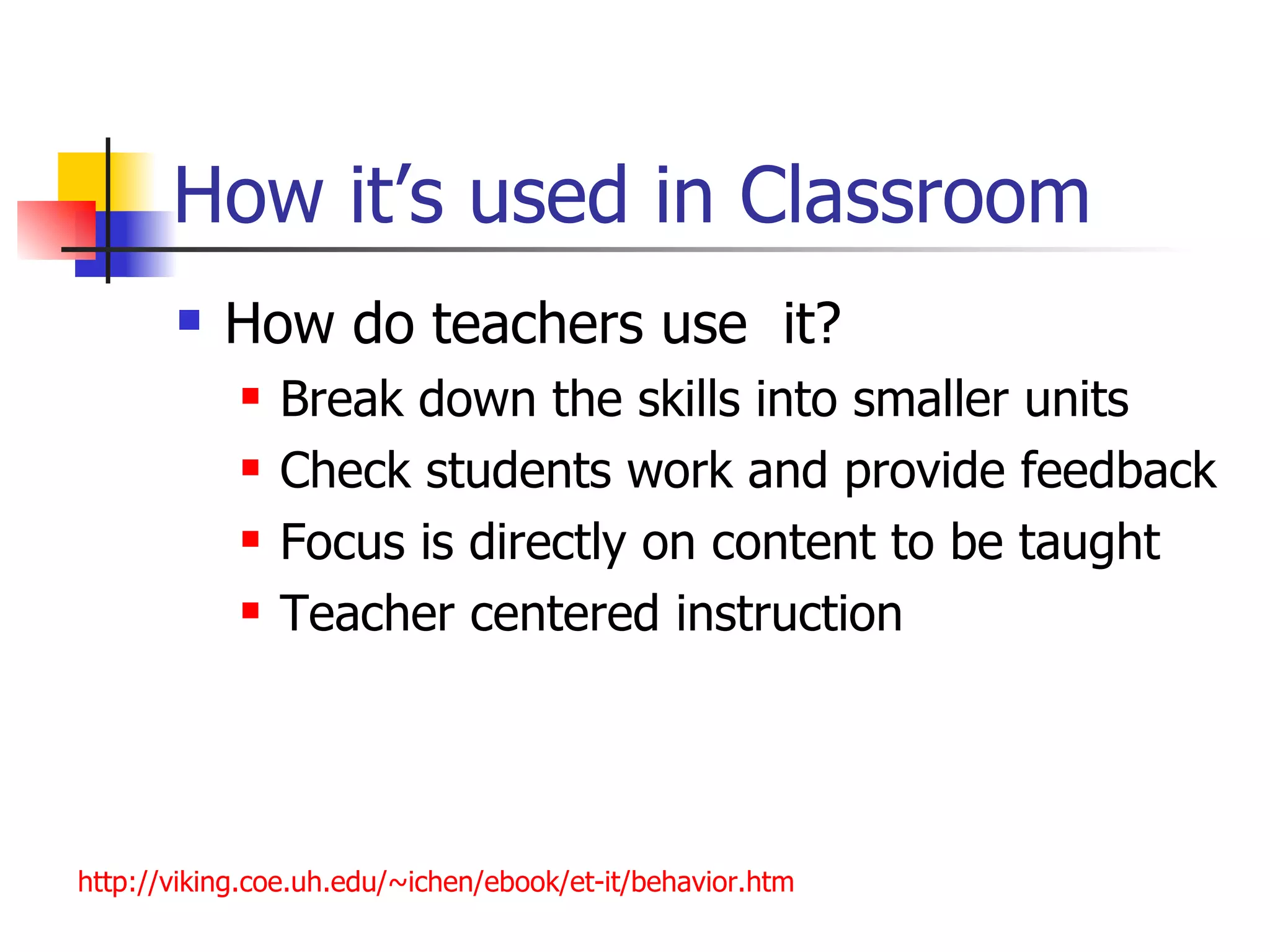
How it’s used in Classroom
          How do teachers use it?
               Break down the skills into smaller units
               Check students work and provide feedback
               Focus is directly on content to be taught
               Teacher centered instruction


http://viking.coe.uh.edu/~ichen/ebook/et-it/behavior.htm
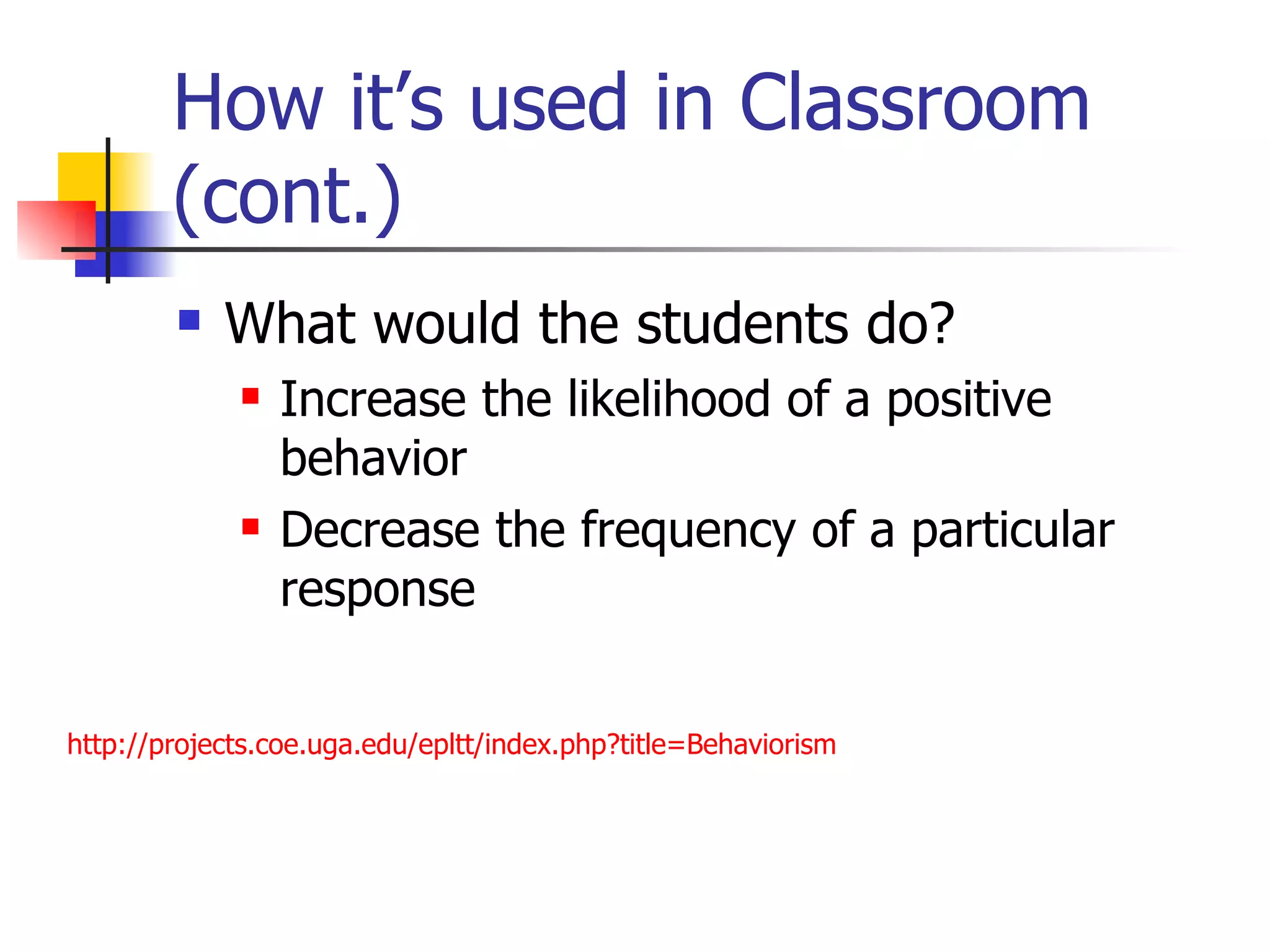
How it’s used in Classroom
        (cont.)
           What would the students do?
                Increase the likelihood of a positive
                 behavior
                Decrease the frequency of a particular
                 response


http://projects.coe.uga.edu/epltt/index.php?title=Behaviorism
How Theory would apply to
my classroom
   Could give positive reinforcement
       Applaud students after a performance
       Commend students for their work
       Reinforce their abilities to perform
       Informing students’ parents’ of their talents
How Theory would apply to
my classroom
   Could give negative reinforcement
       Attending a school production replacing
        lowest homework grade
       Performing a Monologue or scene replacing
        an eight page final exam

Introduction to behaviorism

  • 1.
    Introduction to Behaviorism By Derek Antoniazzi
  • 2.
    Menu Options  What is Behaviorism?  Who are key figures in Behaviorism?  How it’s used in a classroom?  How it’s used in my classroom?
  • 3.
    What is Behaviorism?  Behavior is caused by…  Physical Stimuli  Responses  Learning Histories  And Behavioral Reinforcements
  • 4.
    What is Behaviorism?(cont.)  Behaviorist is not concerned with…  How…or why?  Just concerned with whether answer’s correct  Behavior can be reinforced using  Positive…  …or Negative feedback https://www.msu.edu/~purcelll/behaviorism%20theory.htm?pagewanted=all
  • 5.
    Key Figures inBehaviorism  B. F. Skinner  Pleasant experiences for positive reinforcement  Continuous reinforcement increases rate of learning  Intermittent reinforcement contributes to longer retention http://www.sil.org/lingualinks/literacy/implementaliteracyprogram/behavioristtheoryoflearningski. htm
  • 6.
    Key Figures inBehaviorism (cont.)  Edward Thorndike  Studied learning in animals  Would put cat in a box  A prize of a fish was at the end  Cat needed to pull lever  And would repeat the test leading to faster trials http://www.simplypsychology.org/edward-thorndike.html
  • 7.
    How it’s usedin Classroom  How do teachers use it?  Break down the skills into smaller units  Check students work and provide feedback  Focus is directly on content to be taught  Teacher centered instruction http://viking.coe.uh.edu/~ichen/ebook/et-it/behavior.htm
  • 8.
    How it’s usedin Classroom (cont.)  What would the students do?  Increase the likelihood of a positive behavior  Decrease the frequency of a particular response http://projects.coe.uga.edu/epltt/index.php?title=Behaviorism
  • 9.
    How Theory wouldapply to my classroom  Could give positive reinforcement  Applaud students after a performance  Commend students for their work  Reinforce their abilities to perform  Informing students’ parents’ of their talents
  • 10.
    How Theory wouldapply to my classroom  Could give negative reinforcement  Attending a school production replacing lowest homework grade  Performing a Monologue or scene replacing an eight page final exam