
GGGE 6313
PSYCHOLINGUISTICS ANDLANGUAGE TEACHING
ASSIGNMENT: EXTENSIVE READING (PPT)
DATE: 22 DECEMBER2017
SUBMIT TO: DRMASLAWATI MOHAMAD
NAMES (GROUP2)
MATRIC
NUMBERS
SITI NORAIN BINTI DUKA GP05720
NURUL NAKIAH BINTI ABDULLAH GP05705
NITHIA PRATHIBA THEVAR D/O KAMALANATHAN GP05685
MUHAMMAD NAQIUDDIN BIN HASHIM GP05677
THEEBANRAJ S/O NAGARAJAN GP05731
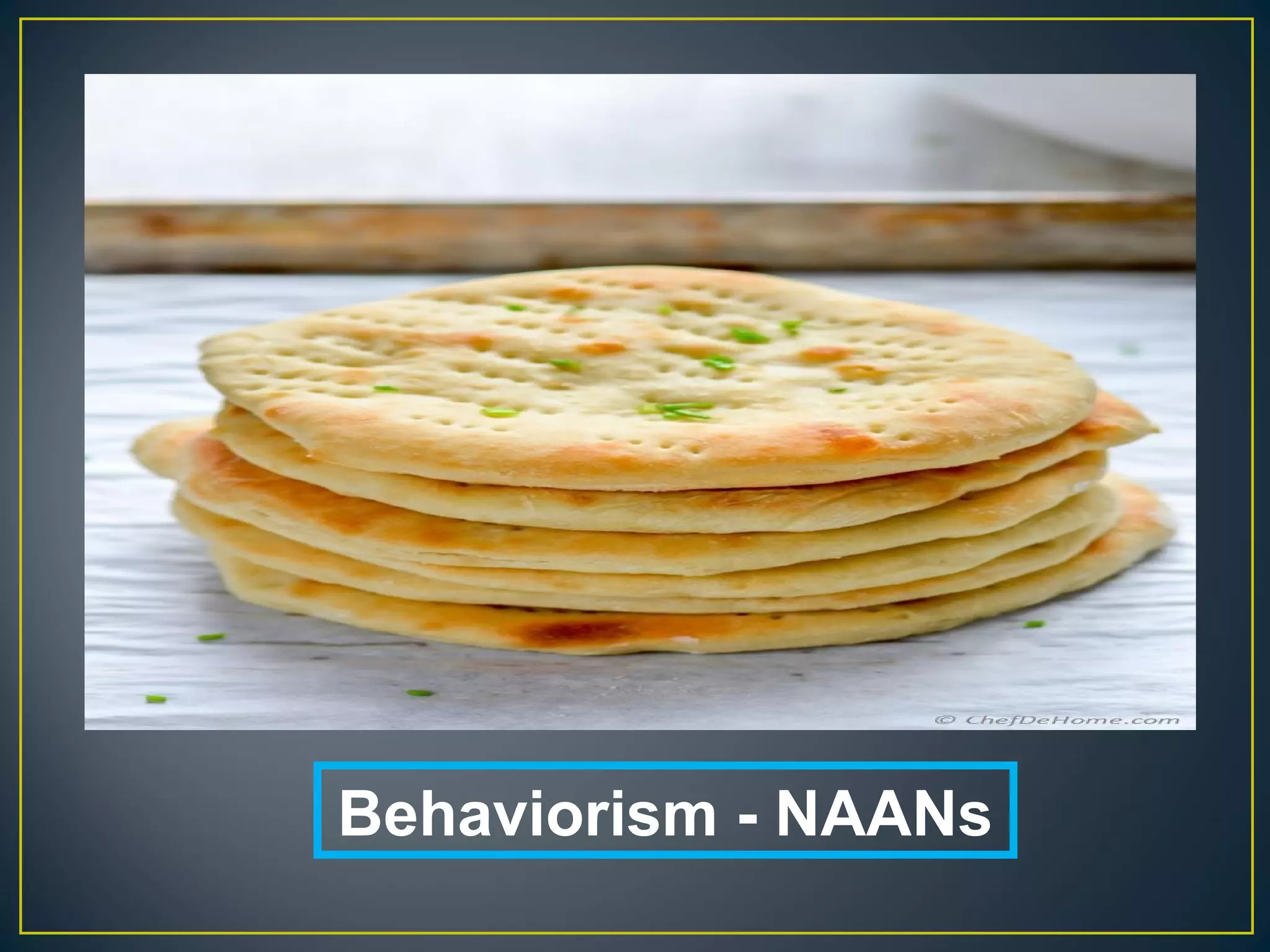
Behaviorism - NAANs
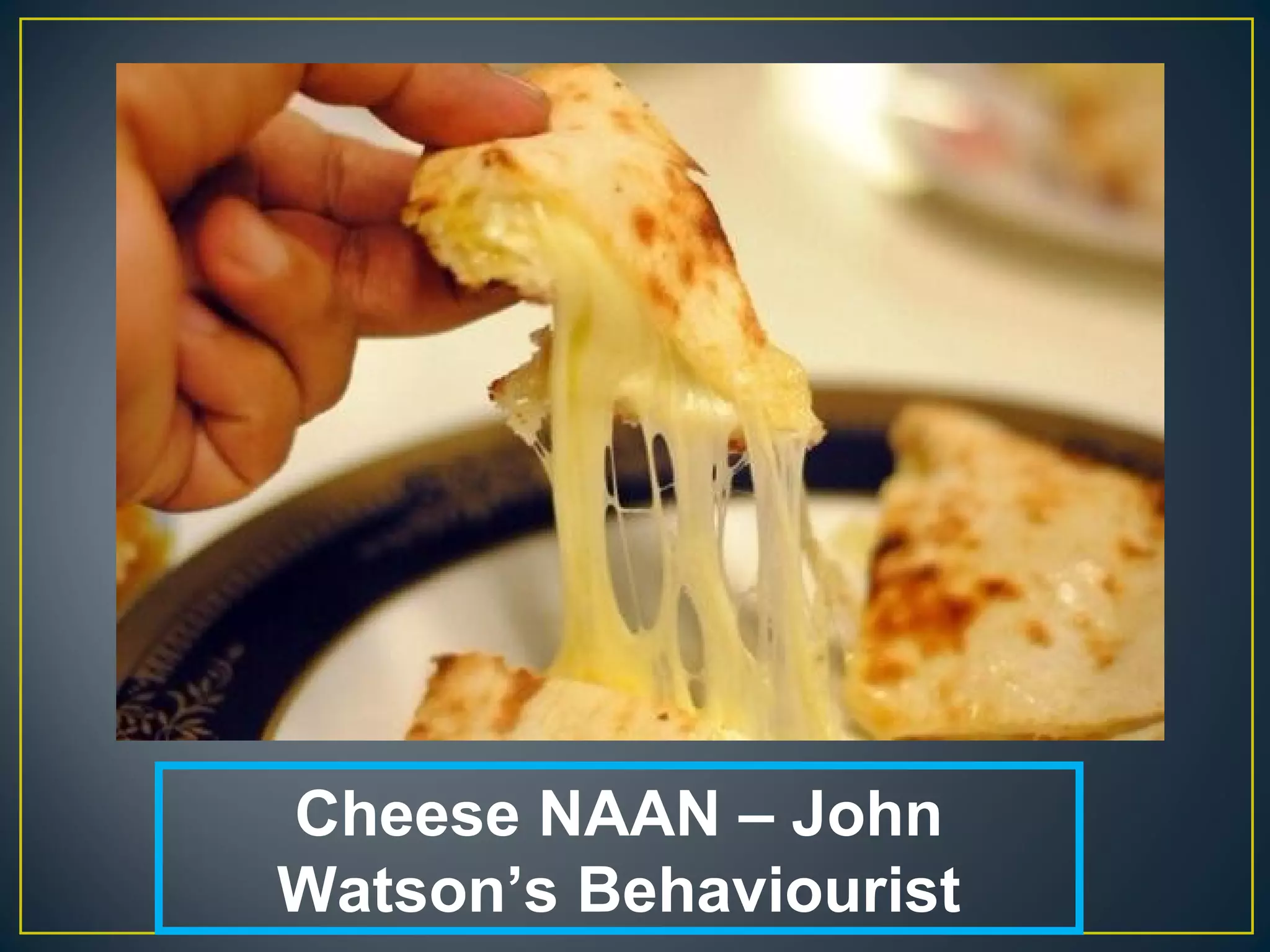
Cheese NAAN – John
Watson’s Behaviourist
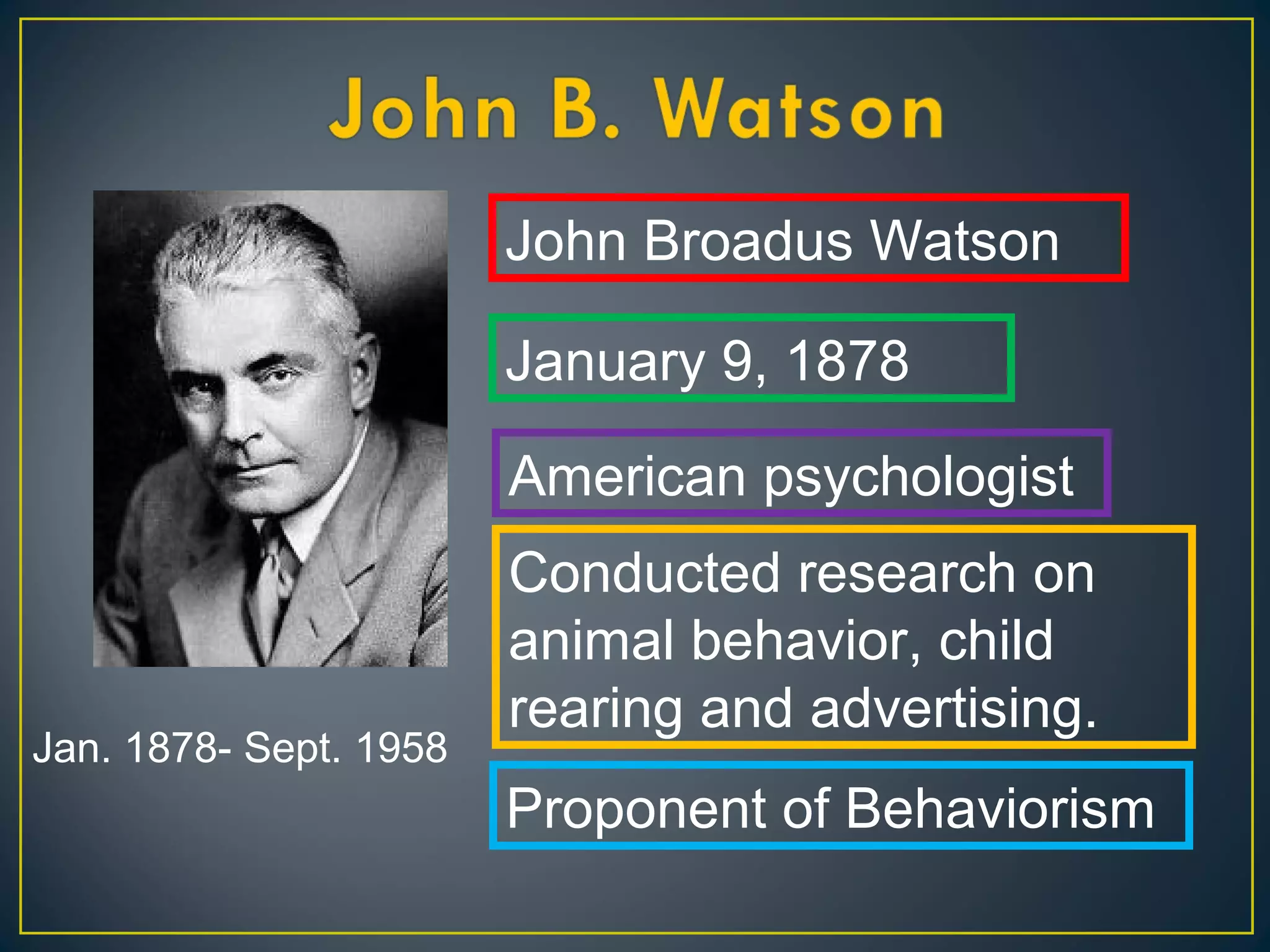
John Broadus Watson
January 9, 1878
American psychologist
Conducted research on
animal behavior, child
rearing and advertising.
Proponent of Behaviorism
Jan. 1878- Sept. 1958
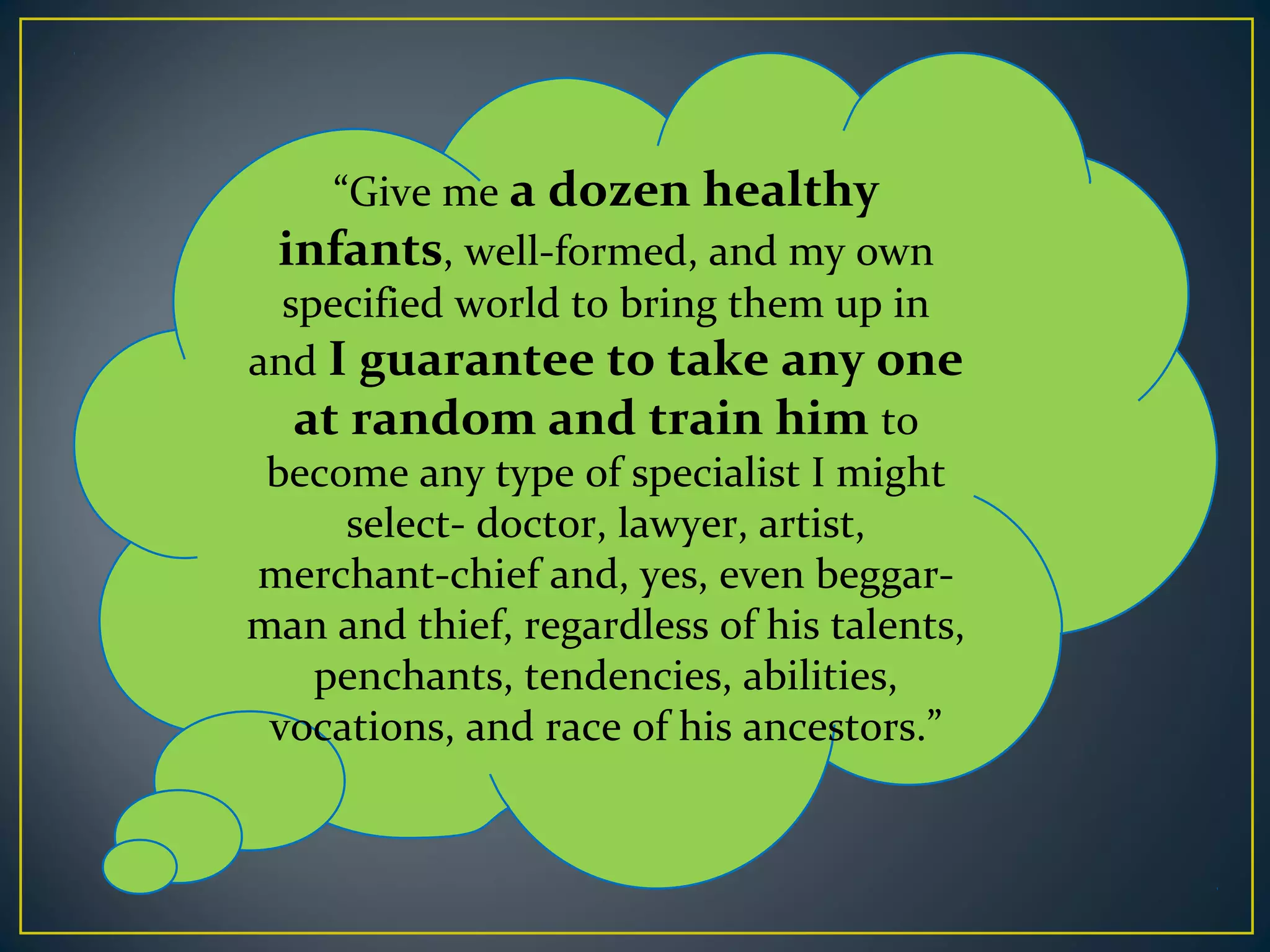
“Give me a dozen healthy
infants, well-formed, and my own
specified world to bring them up in
and I guarantee to take any one
at random and train him to
become any type of specialist I might
select- doctor, lawyer, artist,
merchant-chief and, yes, even beggar-
man and thief, regardless of his talents,
penchants, tendencies, abilities,
vocations, and race of his ancestors.”
Idea that behavior
is acquired
through
conditioning.
Language
production was the
result of stimuli that
produced the
formation of a habit.
A learner’s response to
stimuli can be reinforced
using positive or
negative feedback.
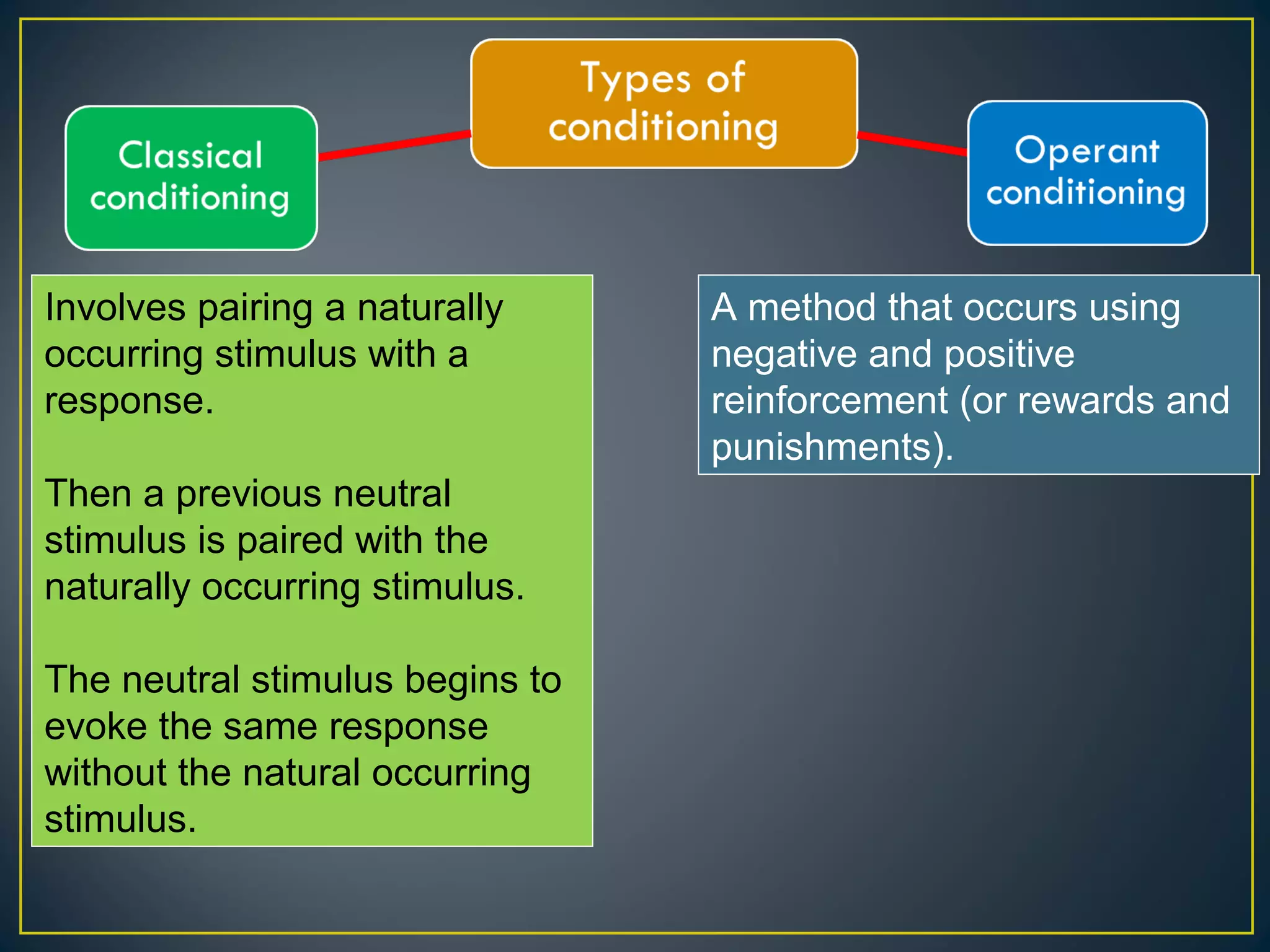
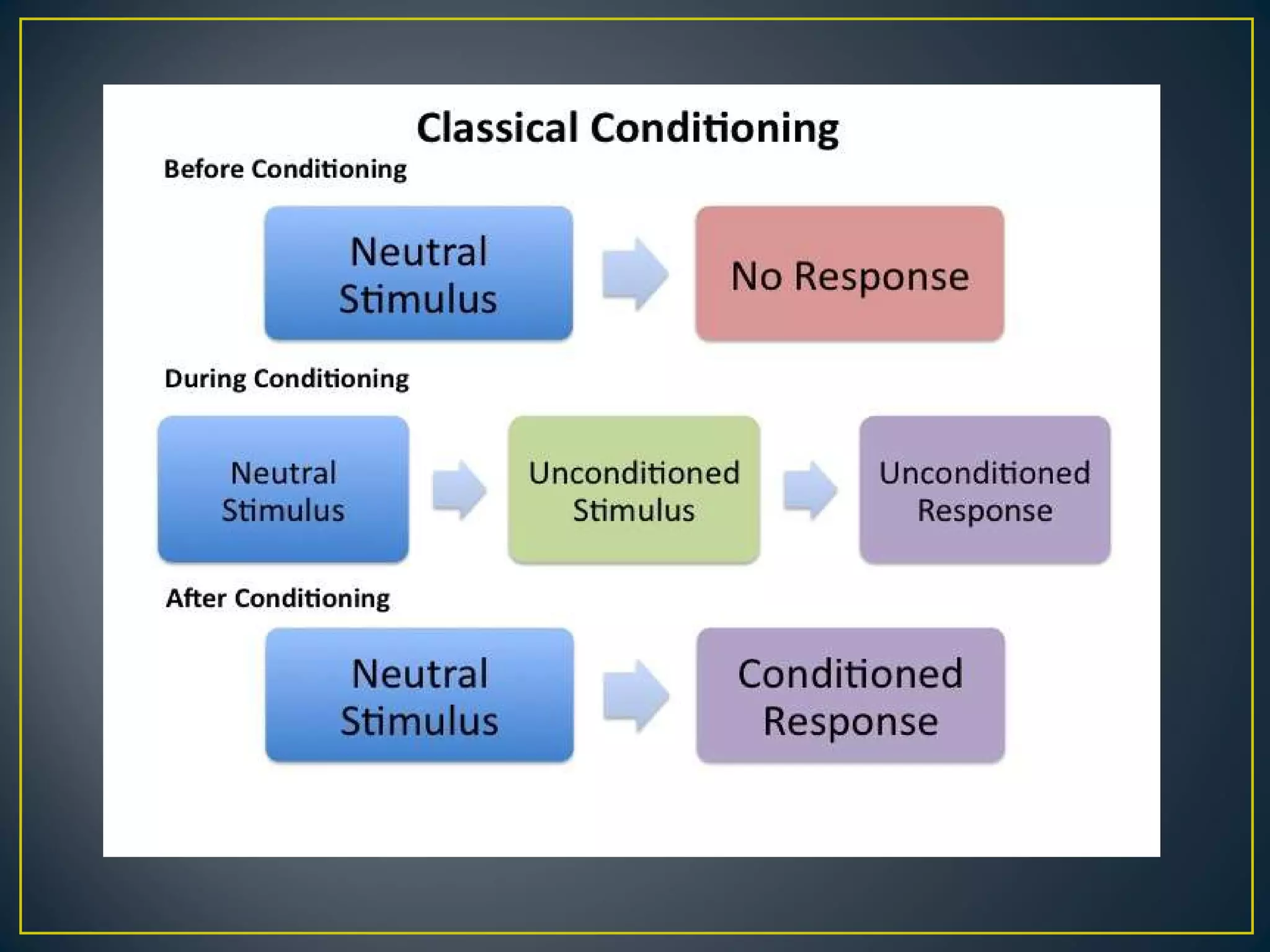
Involves pairing a naturally
occurring stimulus with a
response.
Then a previous neutral
stimulus is paired with the
naturally occurring stimulus.
The neutral stimulus begins to
evoke the same response
without the natural occurring
stimulus.
A method that occurs using
negative and positive
reinforcement (or rewards and
punishments).
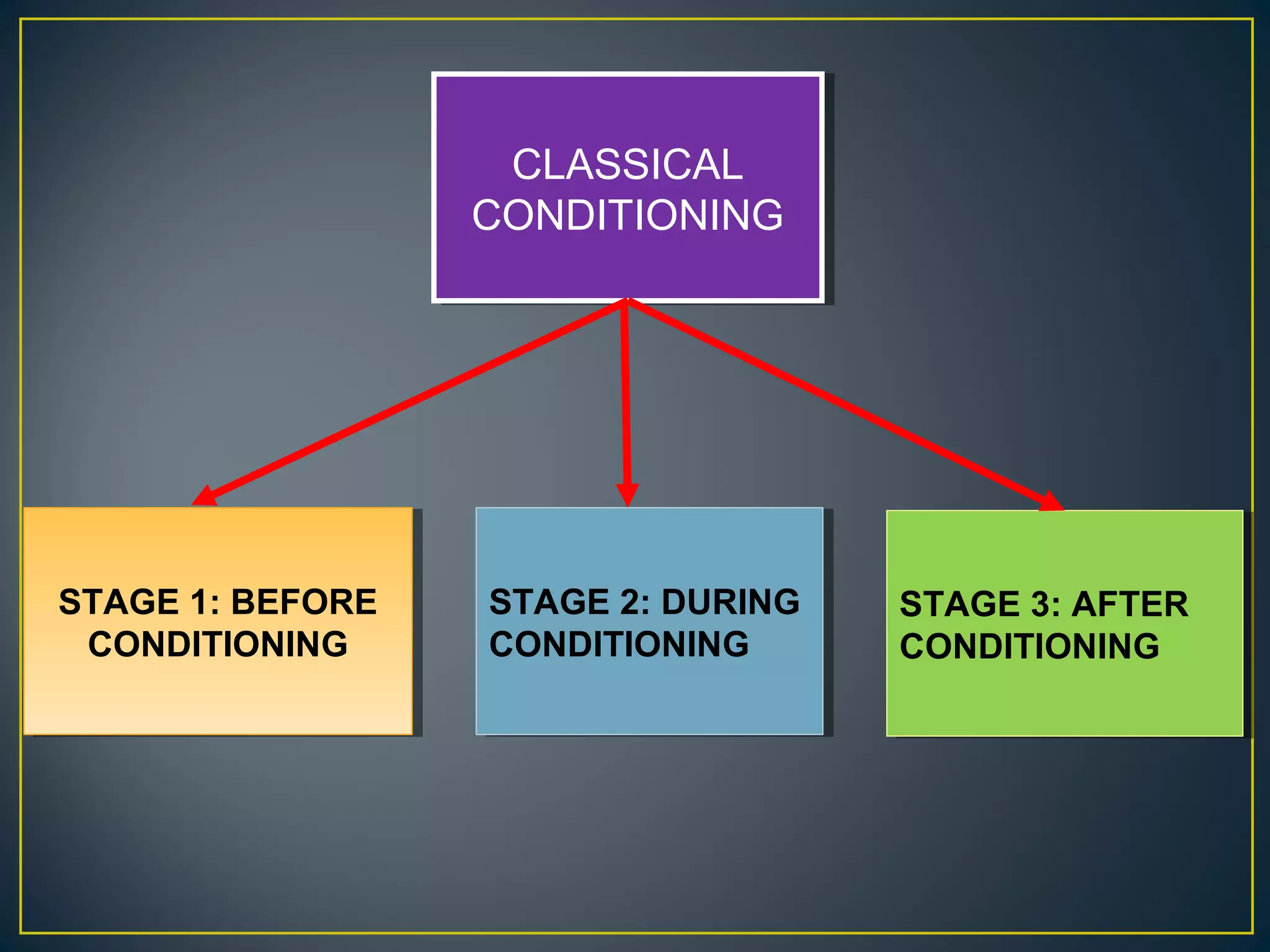
STAGE 1: BEFORE
CONDITIONING
STAGE 1: BEFORE
CONDITIONING
STAGE 3: AFTER
CONDITIONING
STAGE 3: AFTER
CONDITIONING
STAGE 2: DURING
CONDITIONING
STAGE 2: DURING
CONDITIONING
CLASSICAL
CONDITIONING
CLASSICAL
CONDITIONING
In this stage, the unconditioned stimulus (UCS)
produces an unconditioned response (UCR)in an
organism.
In basic terms, this means that a stimulus in the
environment has produced a behavior / response which is
unlearned.
Therefore is a natural response which has not been taught.
This stage also involves another stimulus which has no
effect on a person and is called the neutral stimulus
(NS).
 The NS could be a person, object, place, etc.
The neutral stimulus in classical conditioning does not
produce a response until it is paired with the
unconditioned stimulus.
During this stage a stimulus which produces no response
(i.e. neutral) is associated with the unconditioned
stimulus at which point it now becomes known as the
conditioned stimulus (CS).
However, one trail learning can happen on certain
occasions when it is not necessary for an association to
be strengthened over time
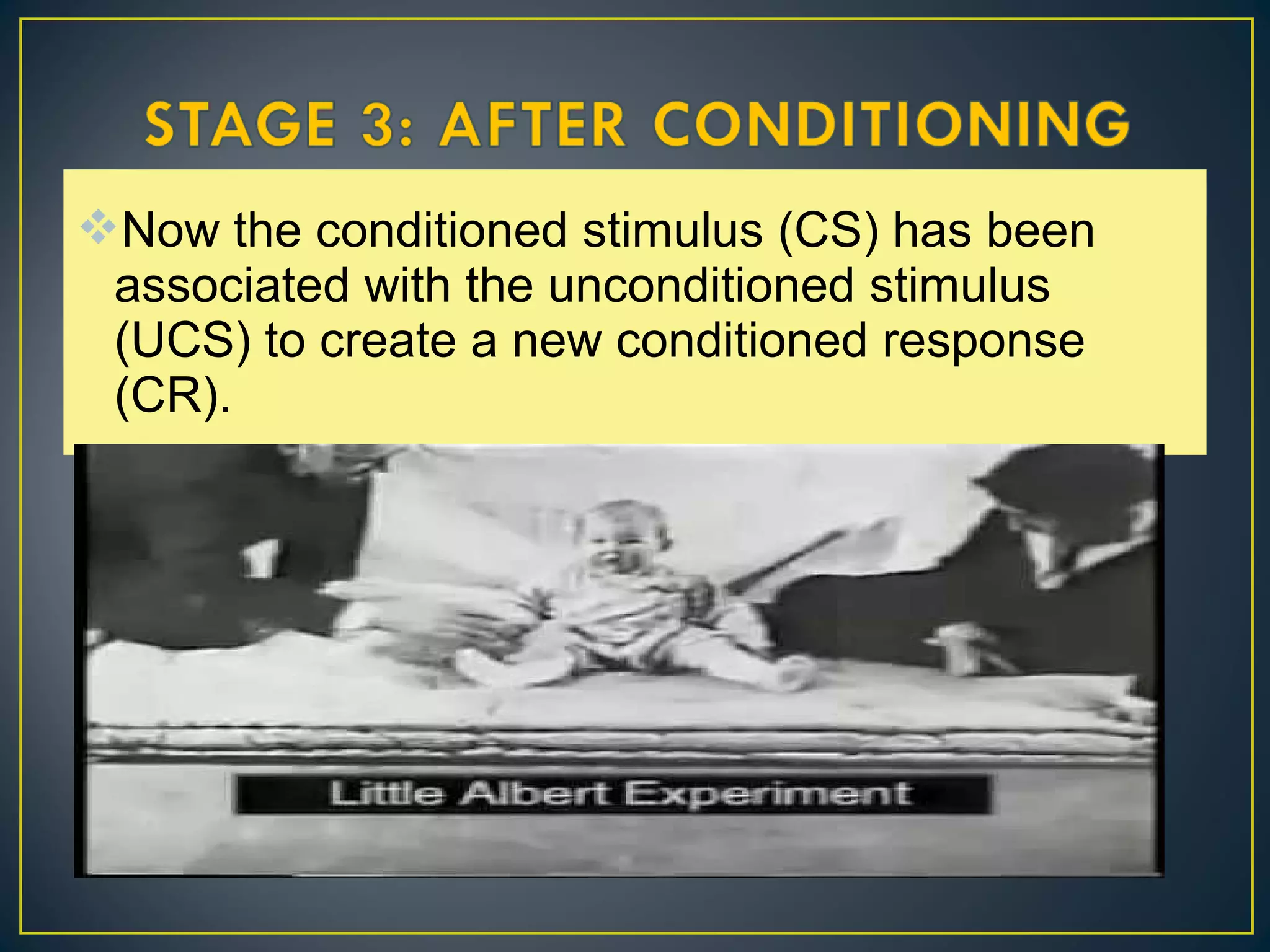
Now the conditioned stimulus (CS) has been
associated with the unconditioned stimulus
(UCS) to create a new conditioned response
(CR).
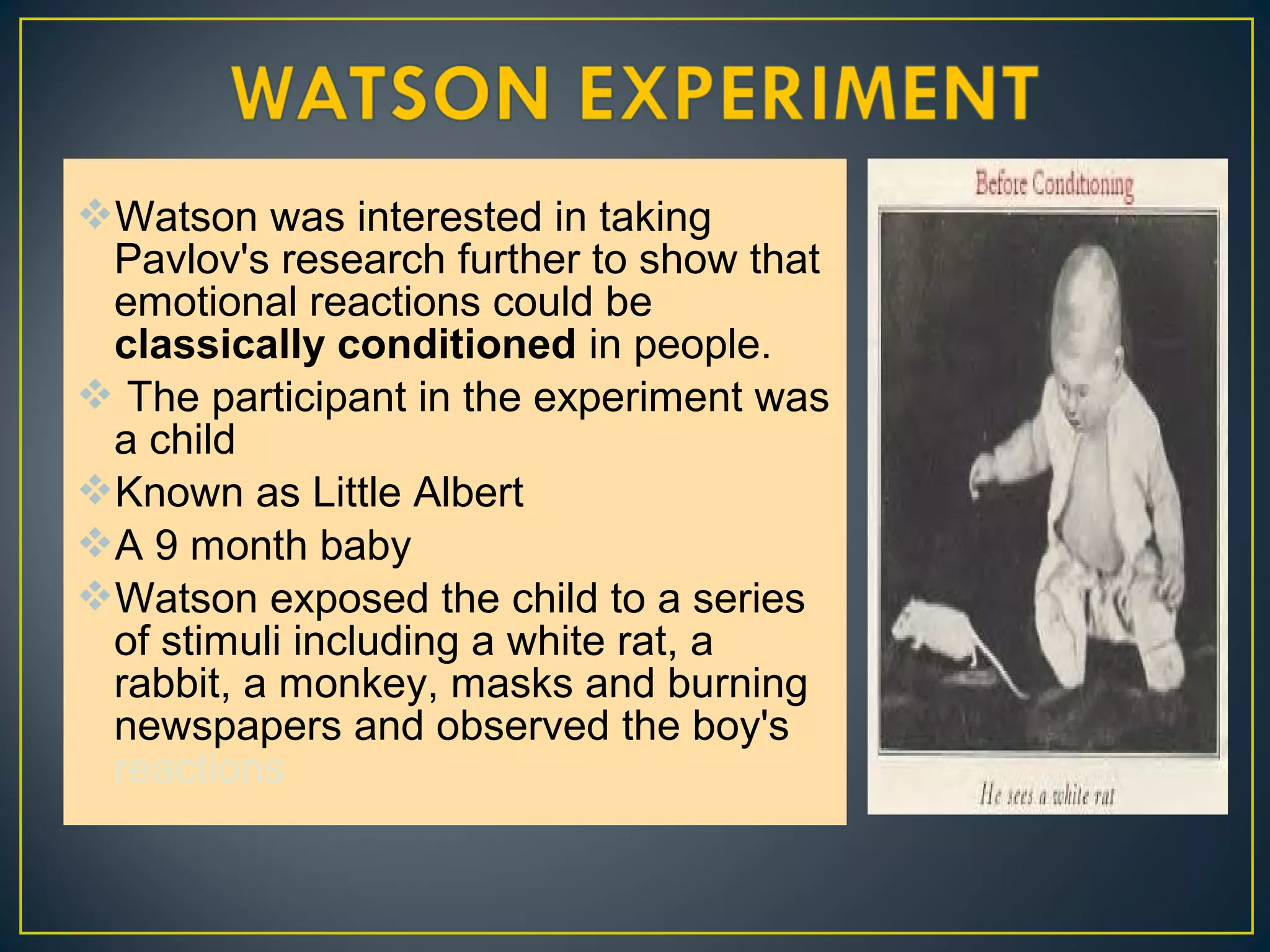
Watson was interested in taking
Pavlov's research further to show that
emotional reactions could be
classically conditioned in people.
 The participant in the experiment was
a child
Known as Little Albert
A 9 month baby
Watson exposed the child to a series
of stimuli including a white rat, a
rabbit, a monkey, masks and burning
newspapers and observed the boy's
reactions
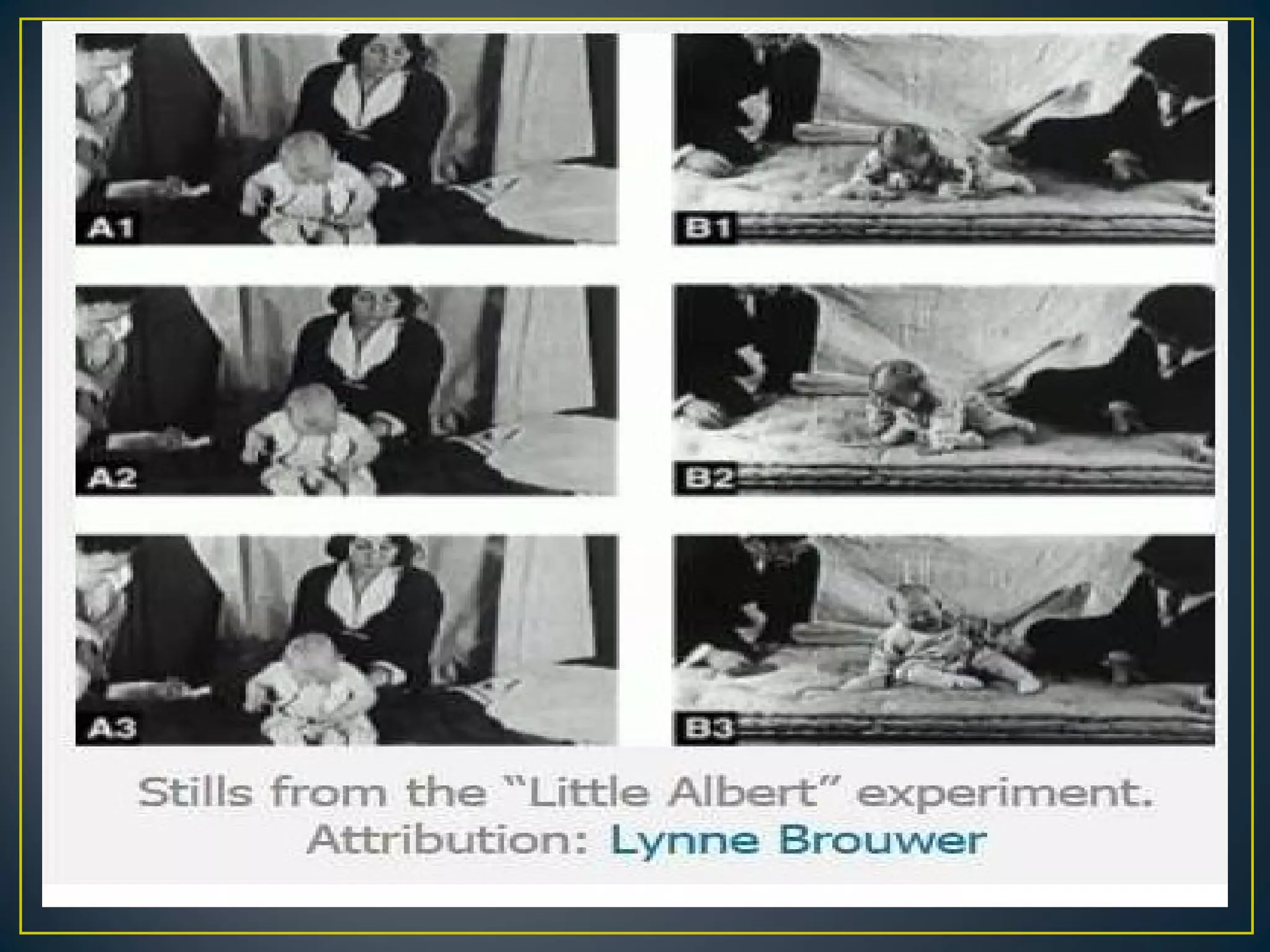
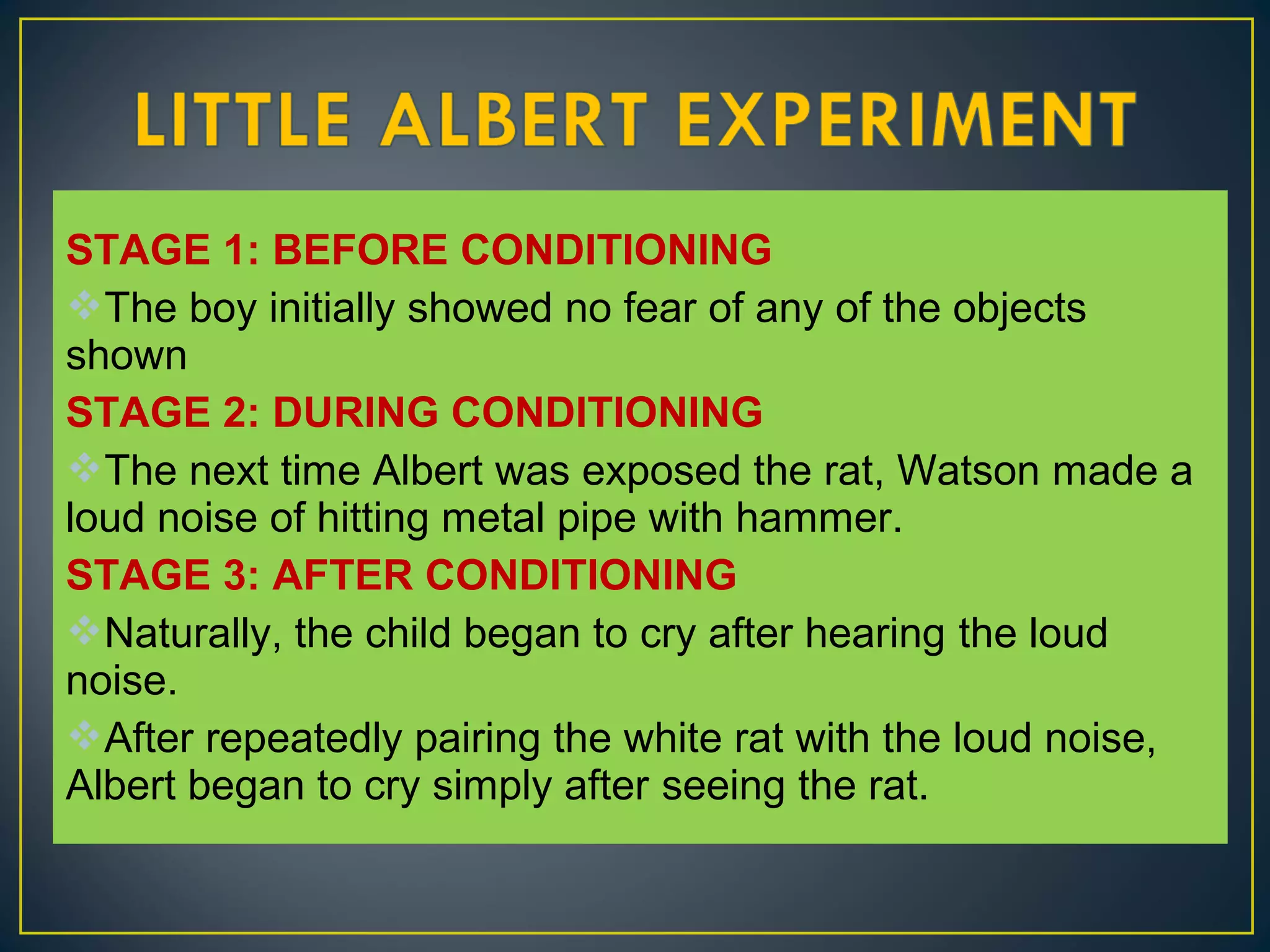
STAGE 1: BEFORE CONDITIONING
The boy initially showed no fear of any of the objects
shown
STAGE 2: DURING CONDITIONING
The next time Albert was exposed the rat, Watson made a
loud noise of hitting metal pipe with hammer.
STAGE 3: AFTER CONDITIONING
Naturally, the child began to cry after hearing the loud
noise.
After repeatedly pairing the white rat with the loud noise,
Albert began to cry simply after seeing the rat.
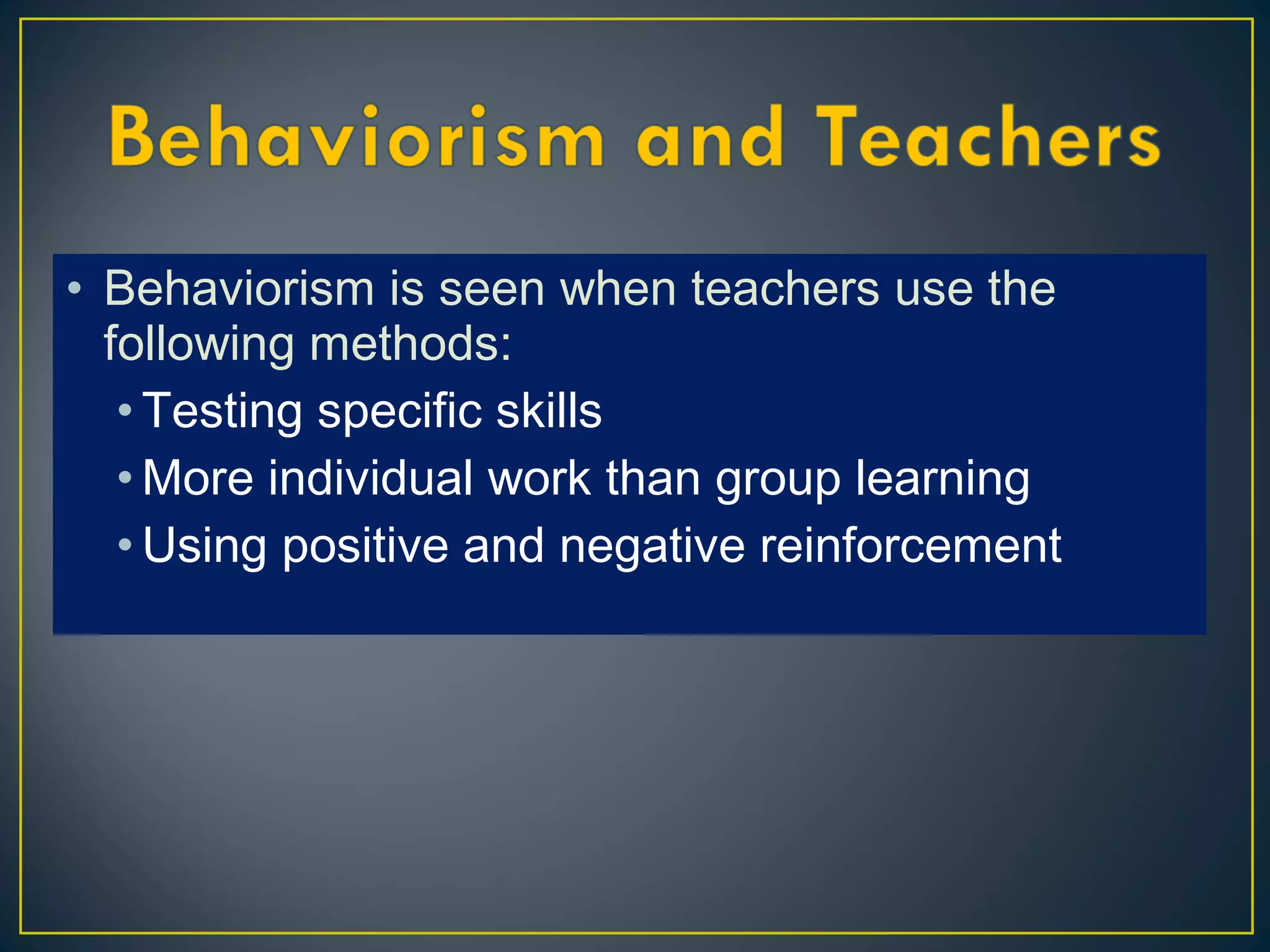
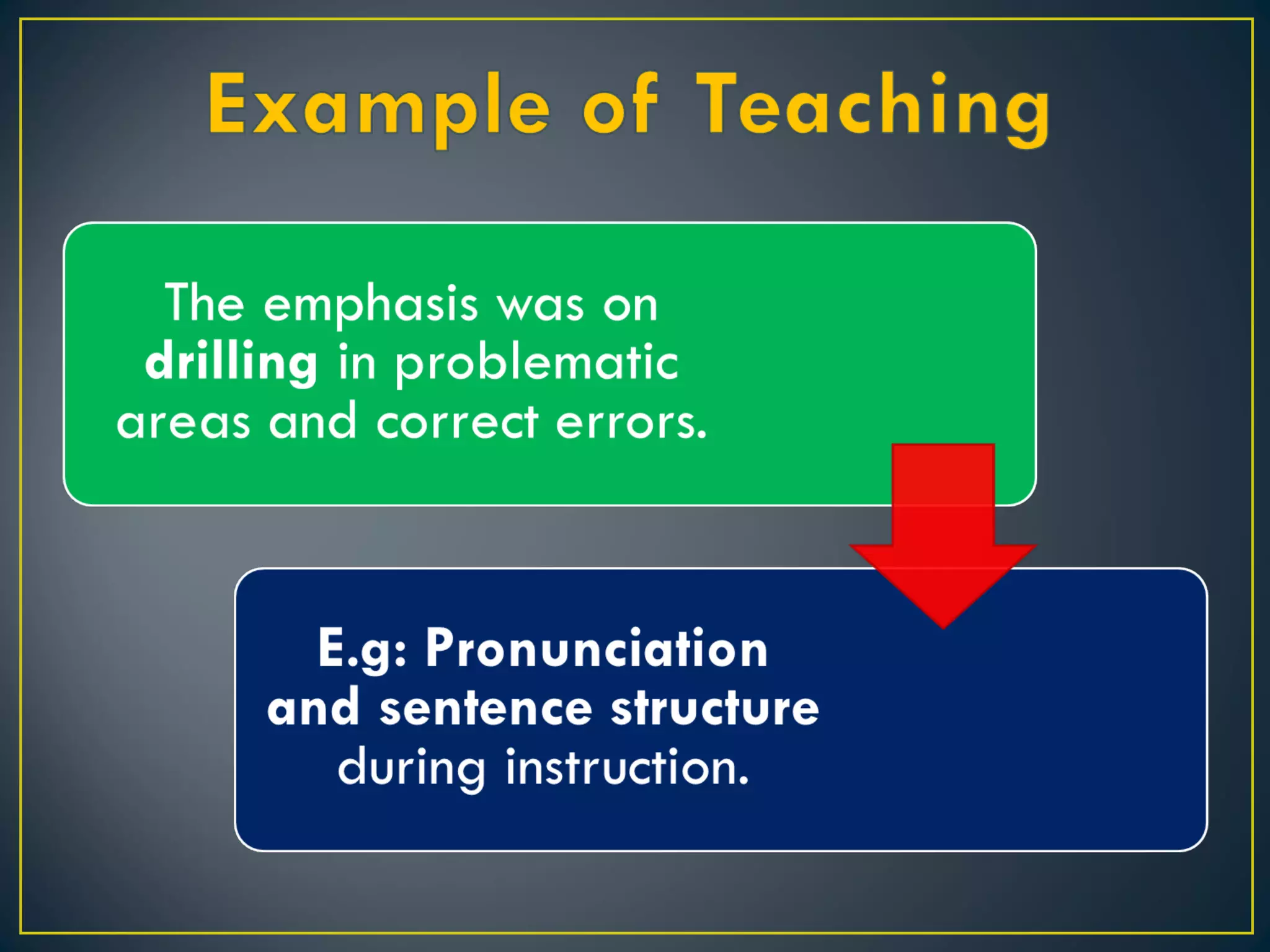
• Behaviorism is seen when teachers use the
following methods:
• Testing specific skills
• More individual work than group learning
• Using positive and negative reinforcement
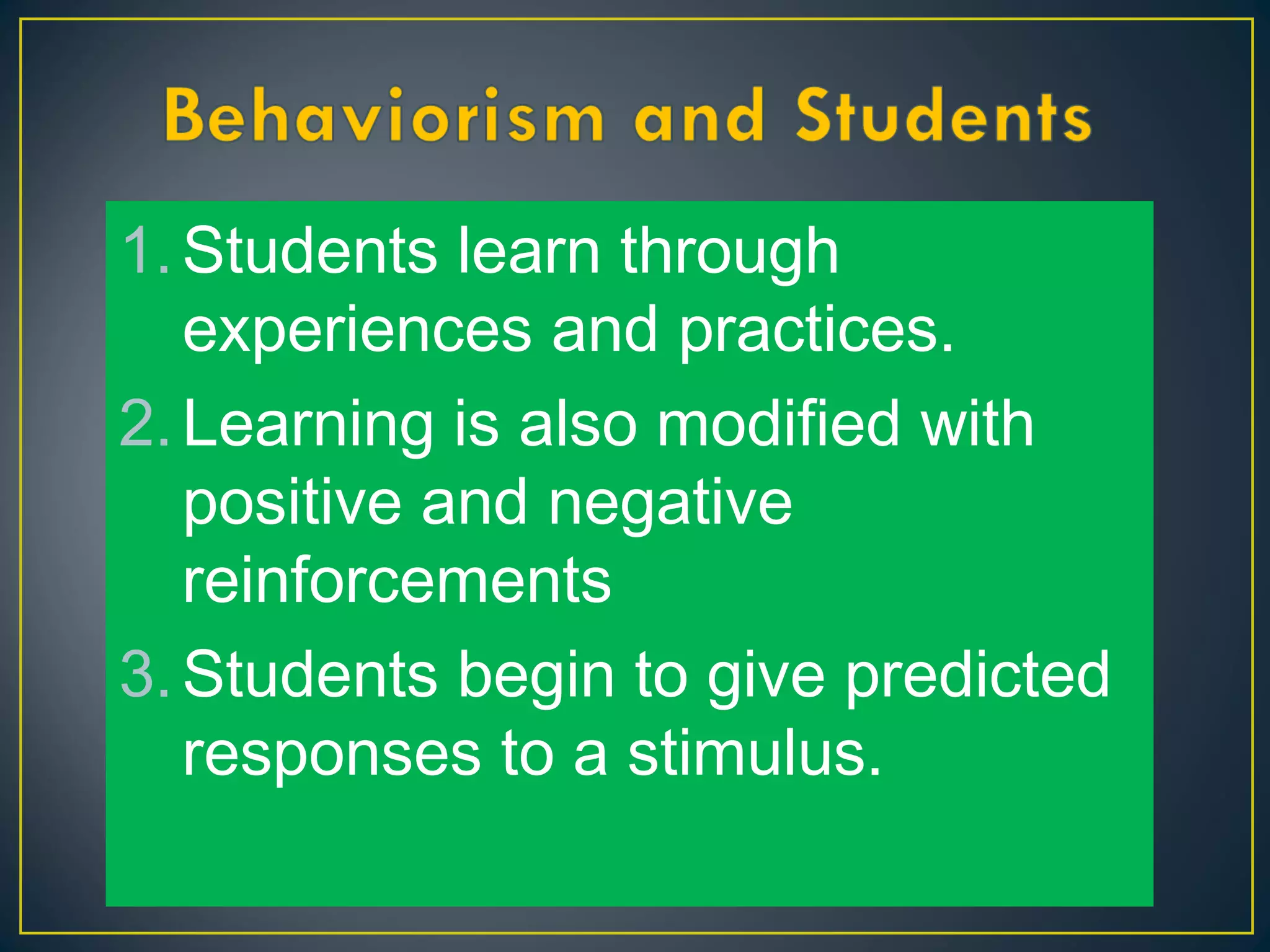
1.Students learn through
experiences and practices.
2.Learning is also modified with
positive and negative
reinforcements
3.Students begin to give predicted
responses to a stimulus.
1
2
3
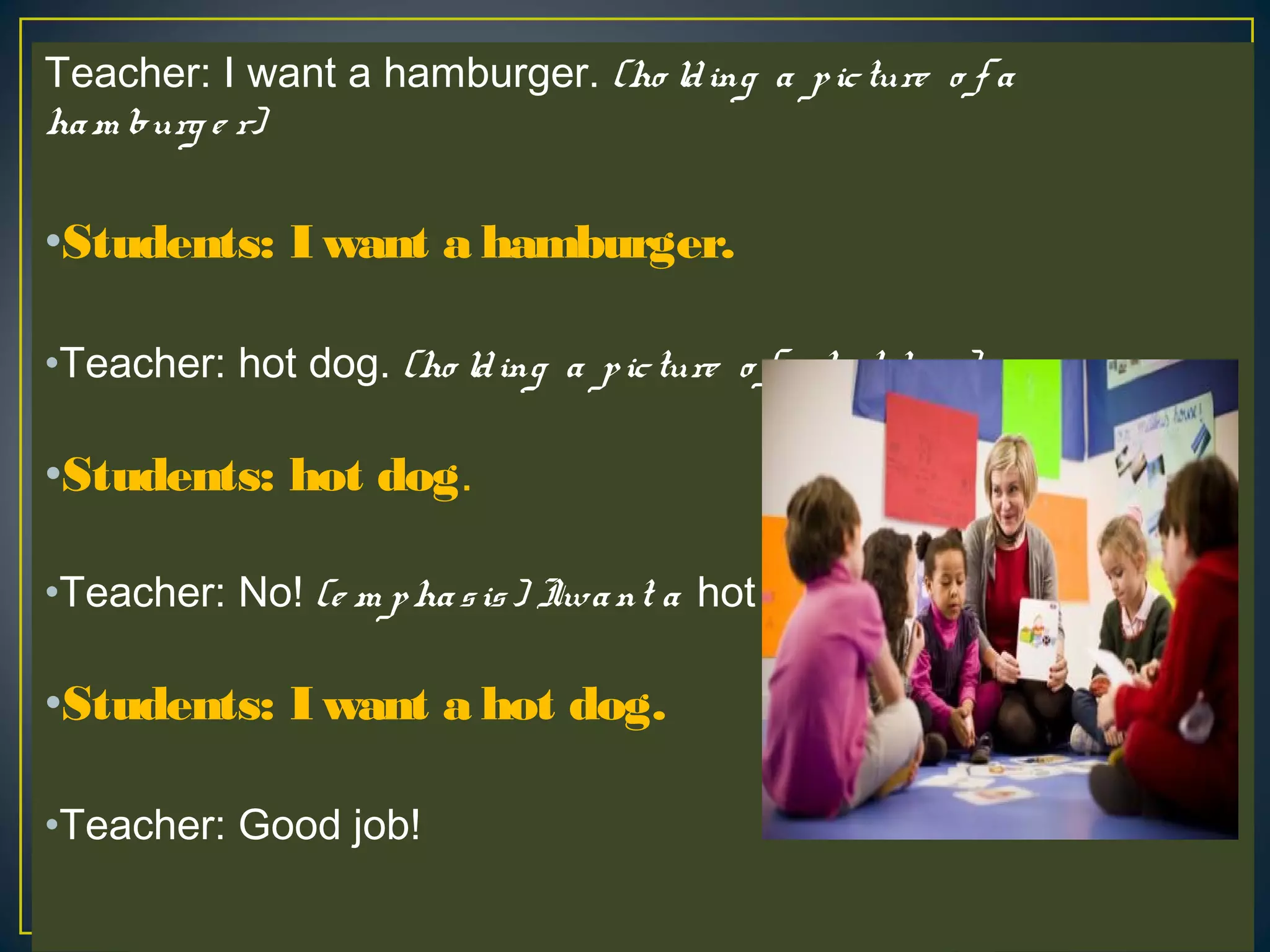
Teacher: I want a hamburger. (ho lding a picture o f a
ham burg e r)
•Students: I want a hamburger.
•Teacher: hot dog. (ho lding a picture o f a ho t do g )
•Students: hot dog.
•Teacher: No! (e m phasis) Iwant a hot dog.
•Students: I want a hot dog.
•Teacher: Good job!
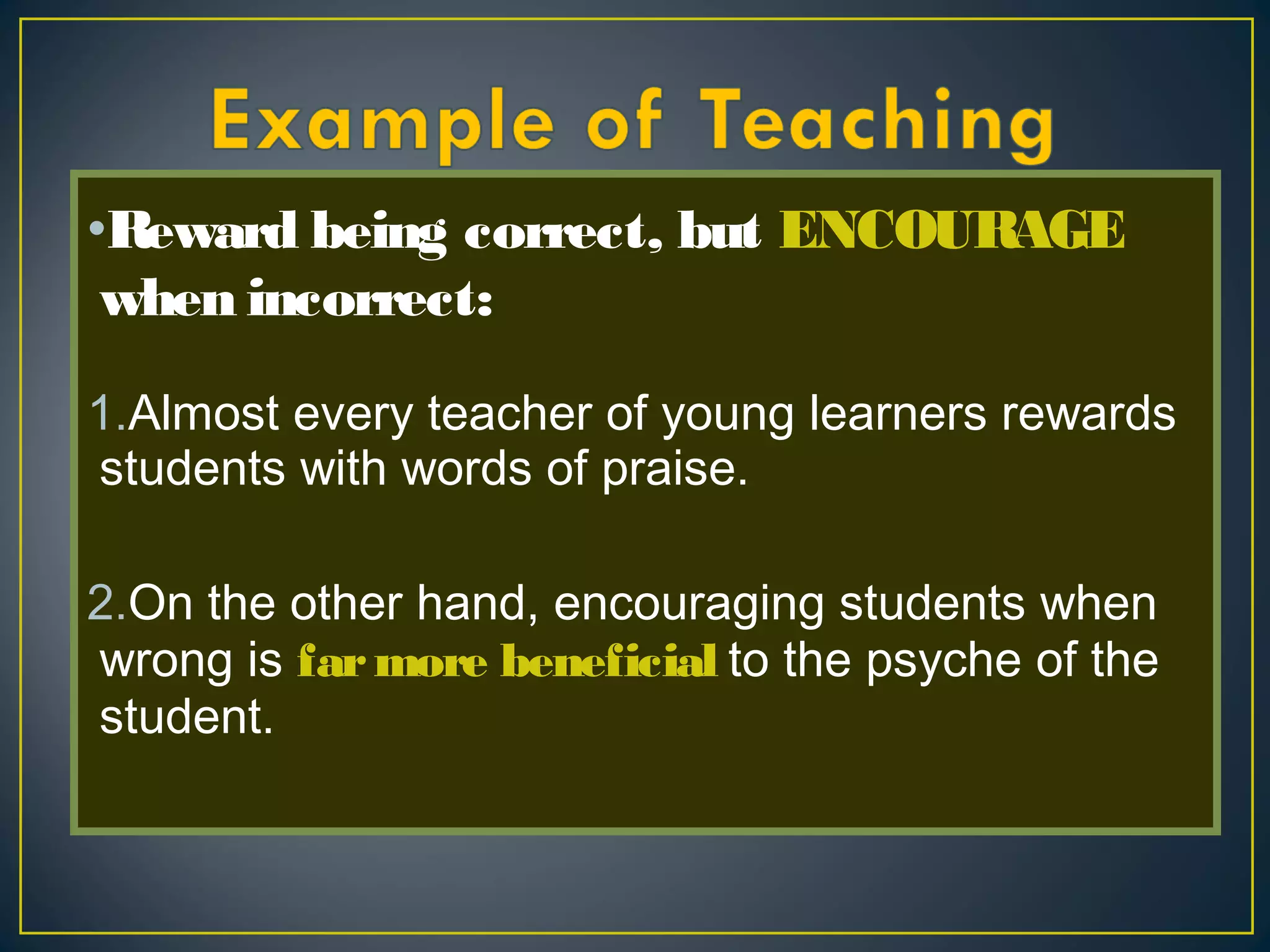
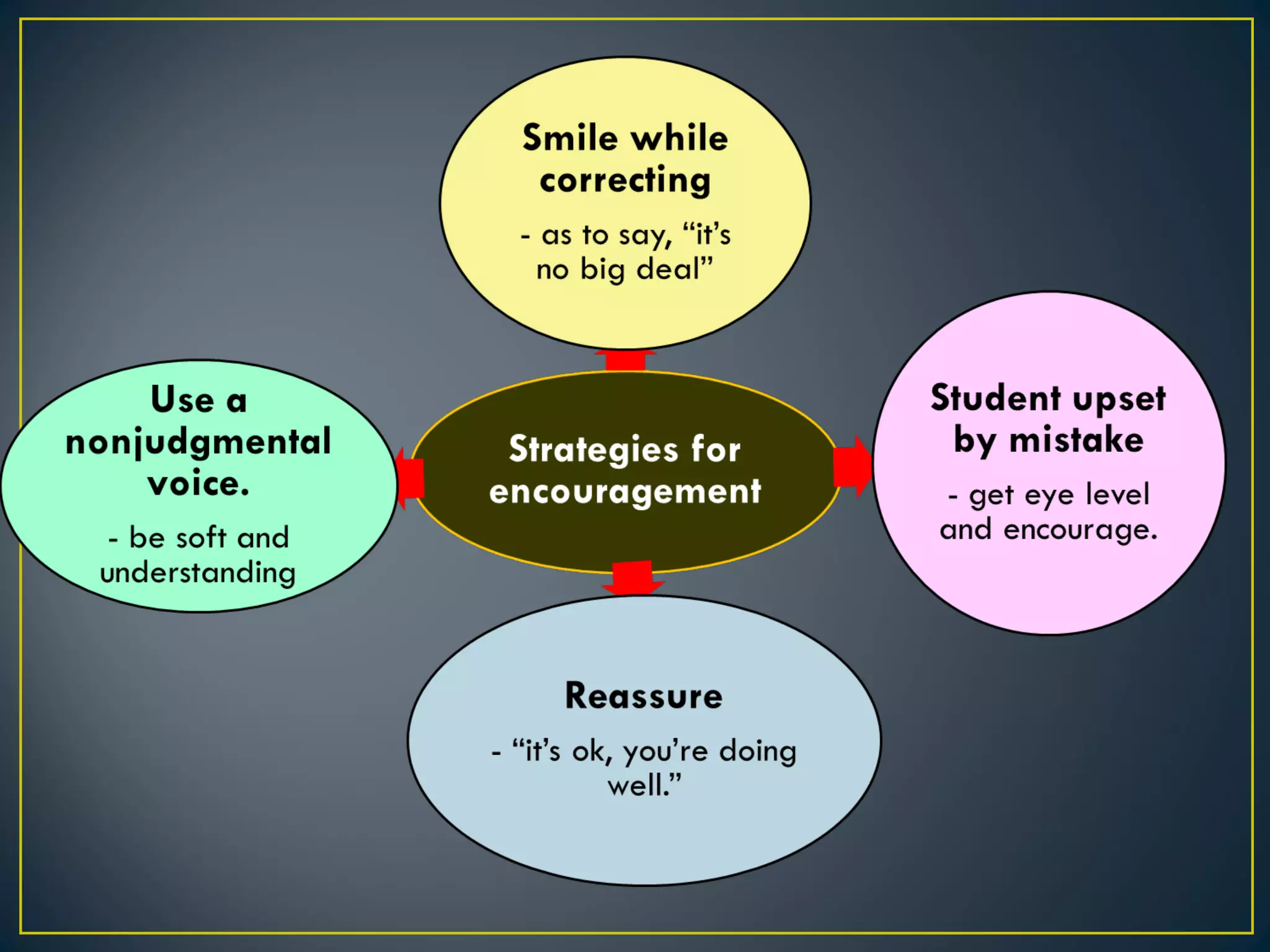
•Reward being correct, but ENCOURAGE
when incorrect: 
1.Almost every teacher of young learners rewards
students with words of praise.
2.On the other hand, encouraging students when
wrong is farmore beneficial to the psyche of the
student.
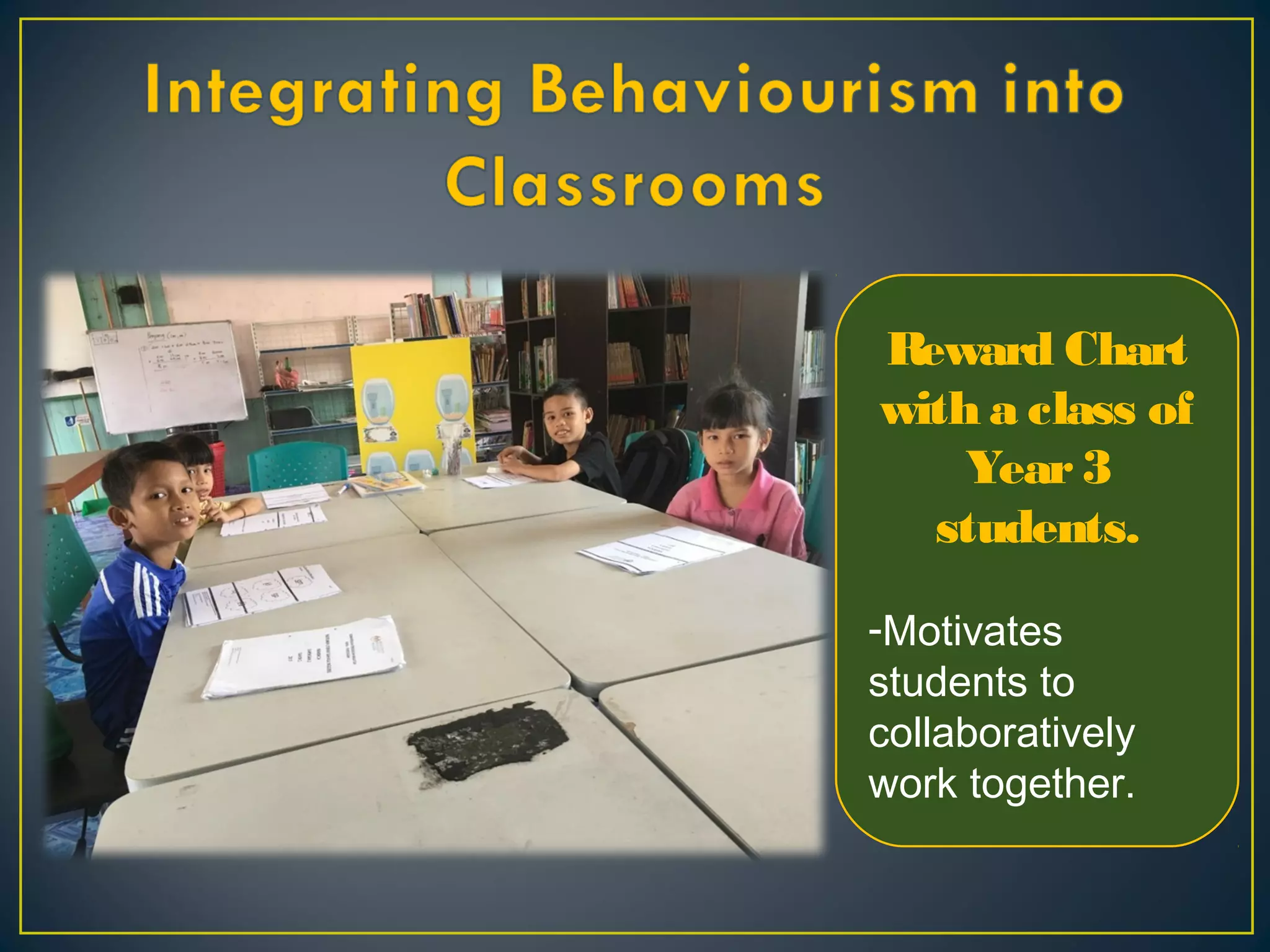
Reward Chart
with a class of
Year3
students.
-Motivates
students to
collaboratively
work together.
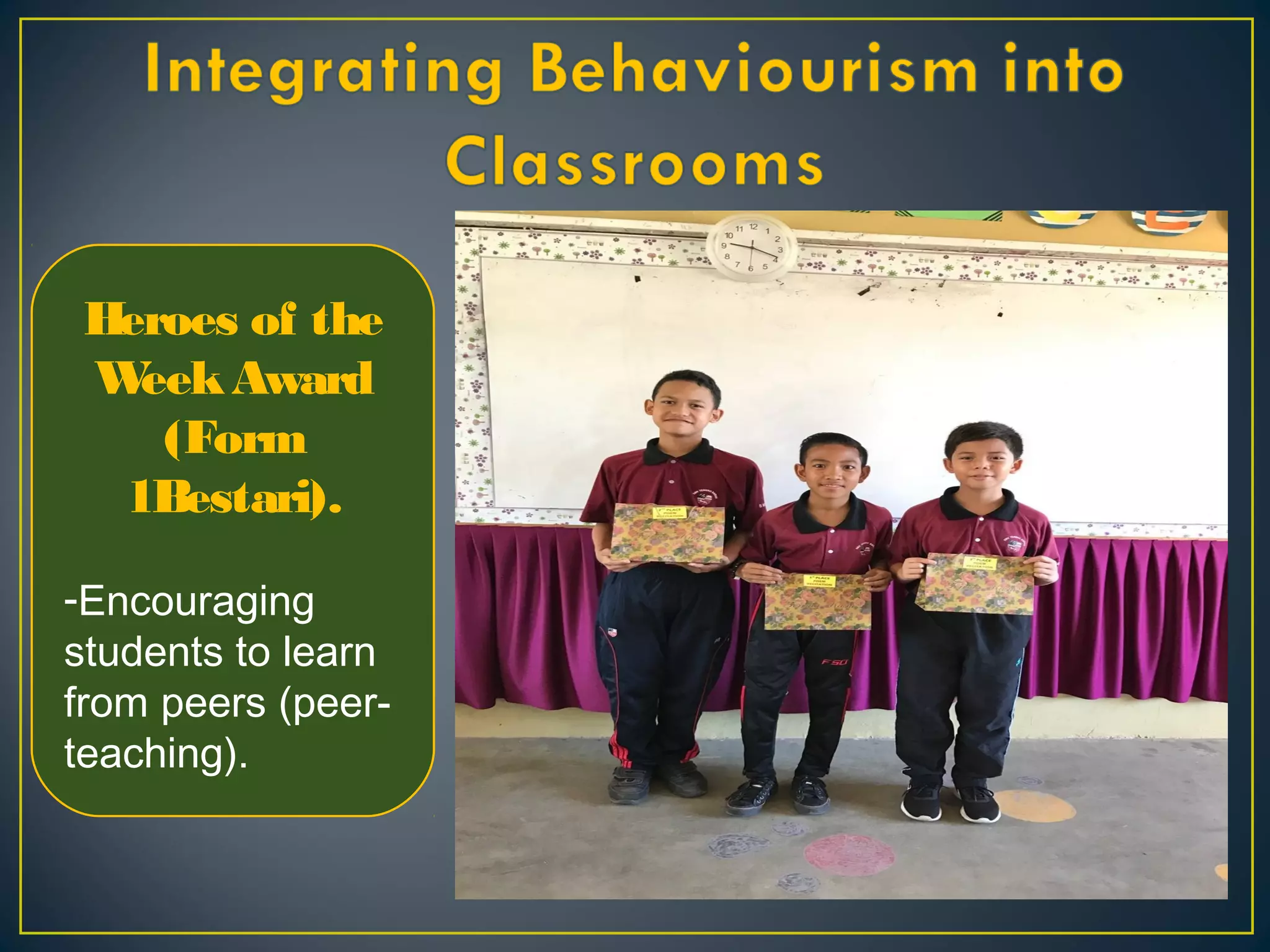
Heroes of the
WeekAward
(Form
1Bestari).
-Encouraging
students to learn
from peers (peer-
teaching).
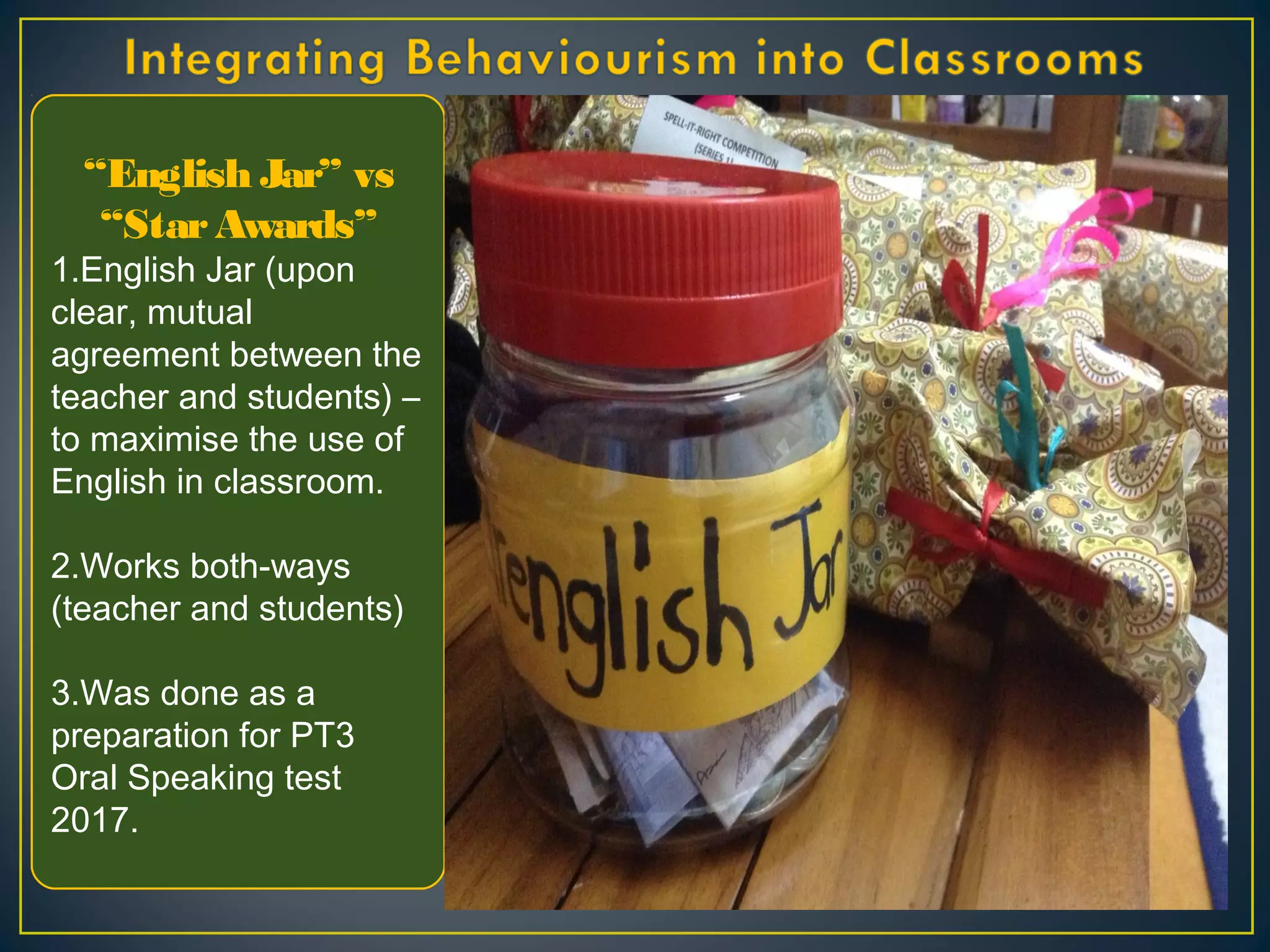
“English Jar” vs
“StarAwards”
1.English Jar (upon
clear, mutual
agreement between the
teacher and students) –
to maximise the use of
English in classroom.
2.Works both-ways
(teacher and students)
3.Was done as a
preparation for PT3
Oral Speaking test
2017.
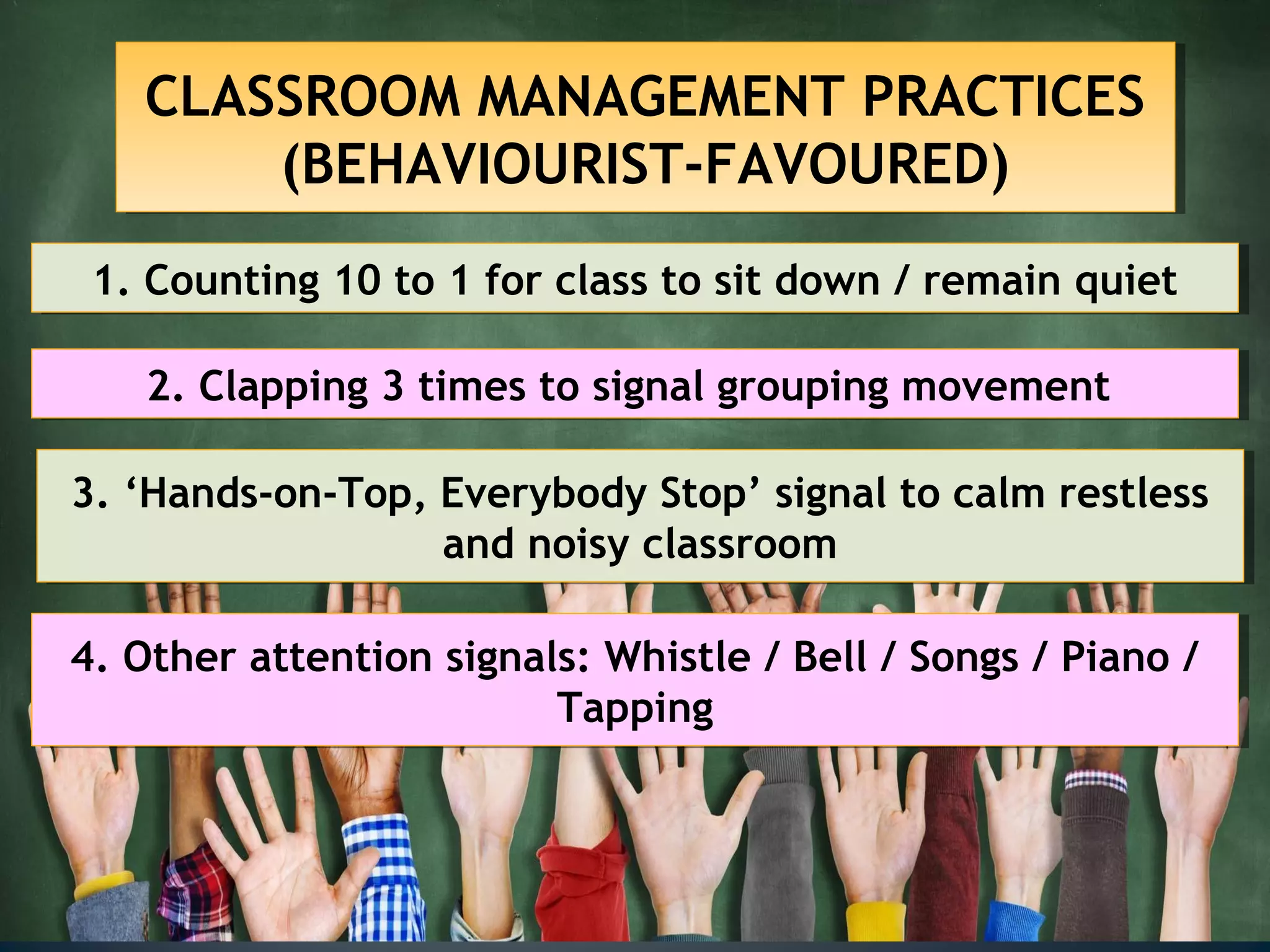
CLASSROOM MANAGEMENT PRACTICES
(BEHAVIOURIST-FAVOURED)
CLASSROOM MANAGEMENT PRACTICES
(BEHAVIOURIST-FAVOURED)
1. Counting 10 to 1 for class to sit down / remain quiet1. Counting 10 to 1 for class to sit down / remain quiet
2. Clapping 3 times to signal grouping movement2. Clapping 3 times to signal grouping movement
3. ‘Hands-on-Top, Everybody Stop’ signal to calm restless
and noisy classroom
3. ‘Hands-on-Top, Everybody Stop’ signal to calm restless
and noisy classroom
4. Other attention signals: Whistle / Bell / Songs / Piano /
Tapping
4. Other attention signals: Whistle / Bell / Songs / Piano /
Tapping
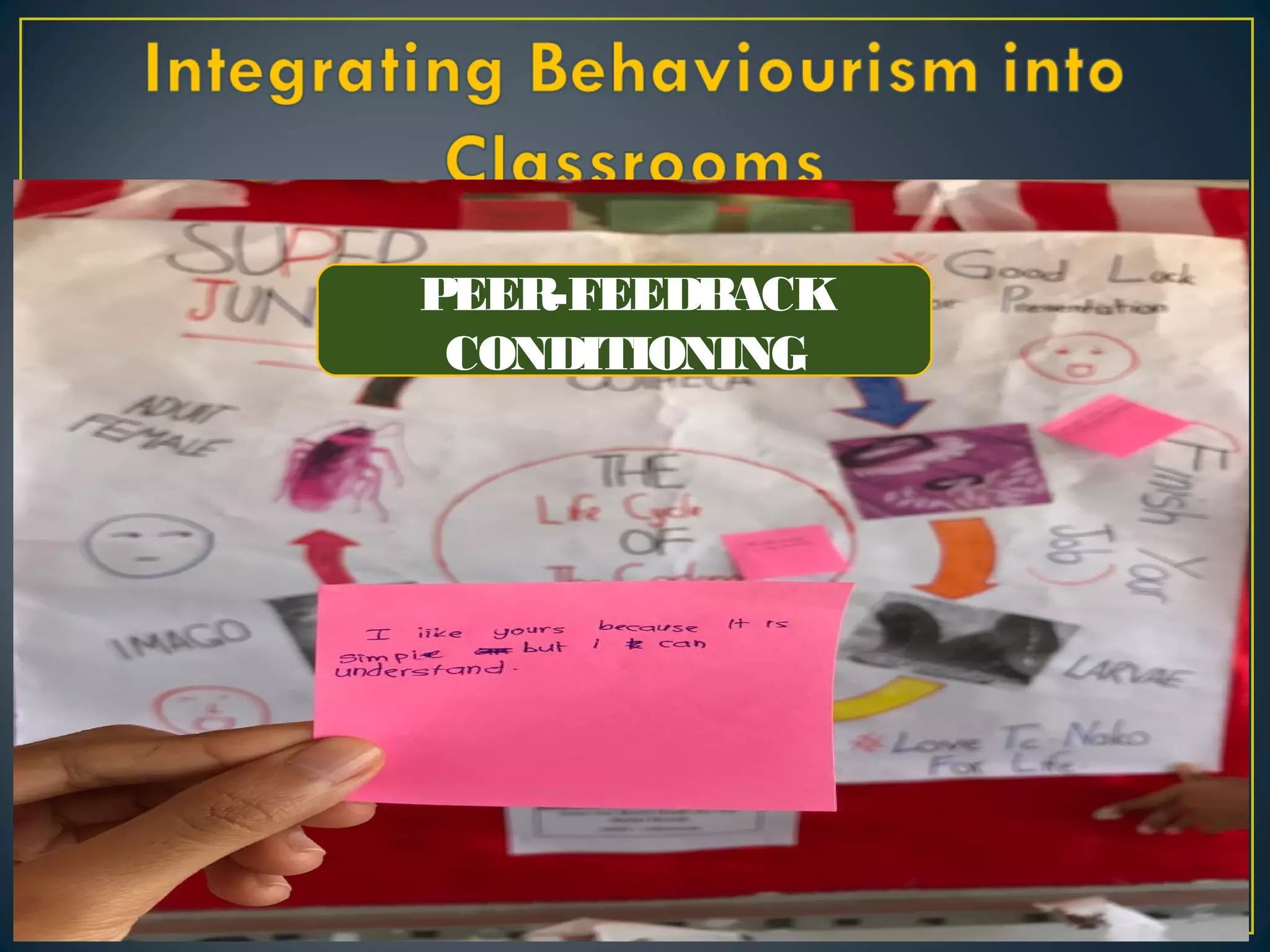
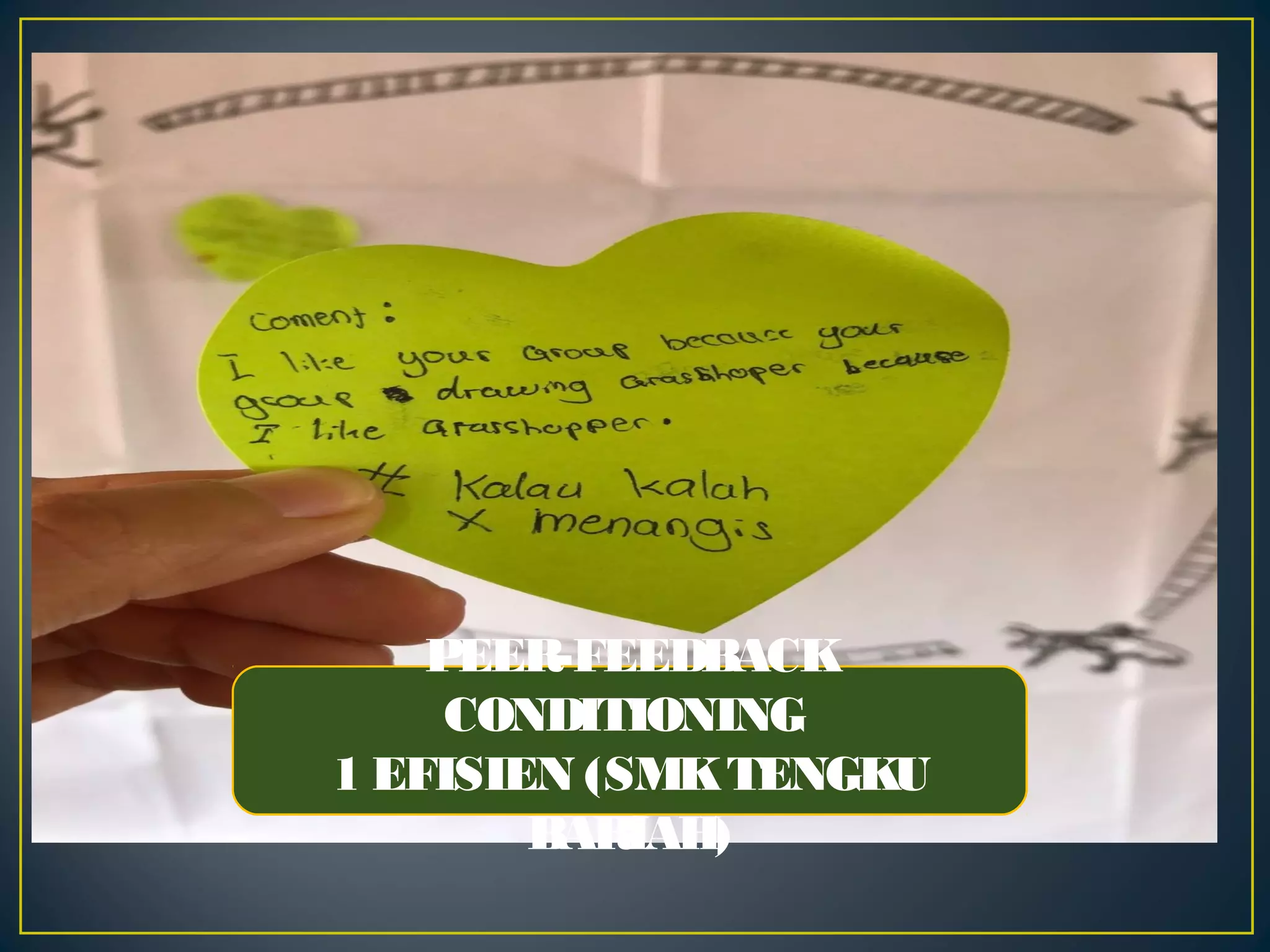
PEER-FEEDBACK
CONDITIONING
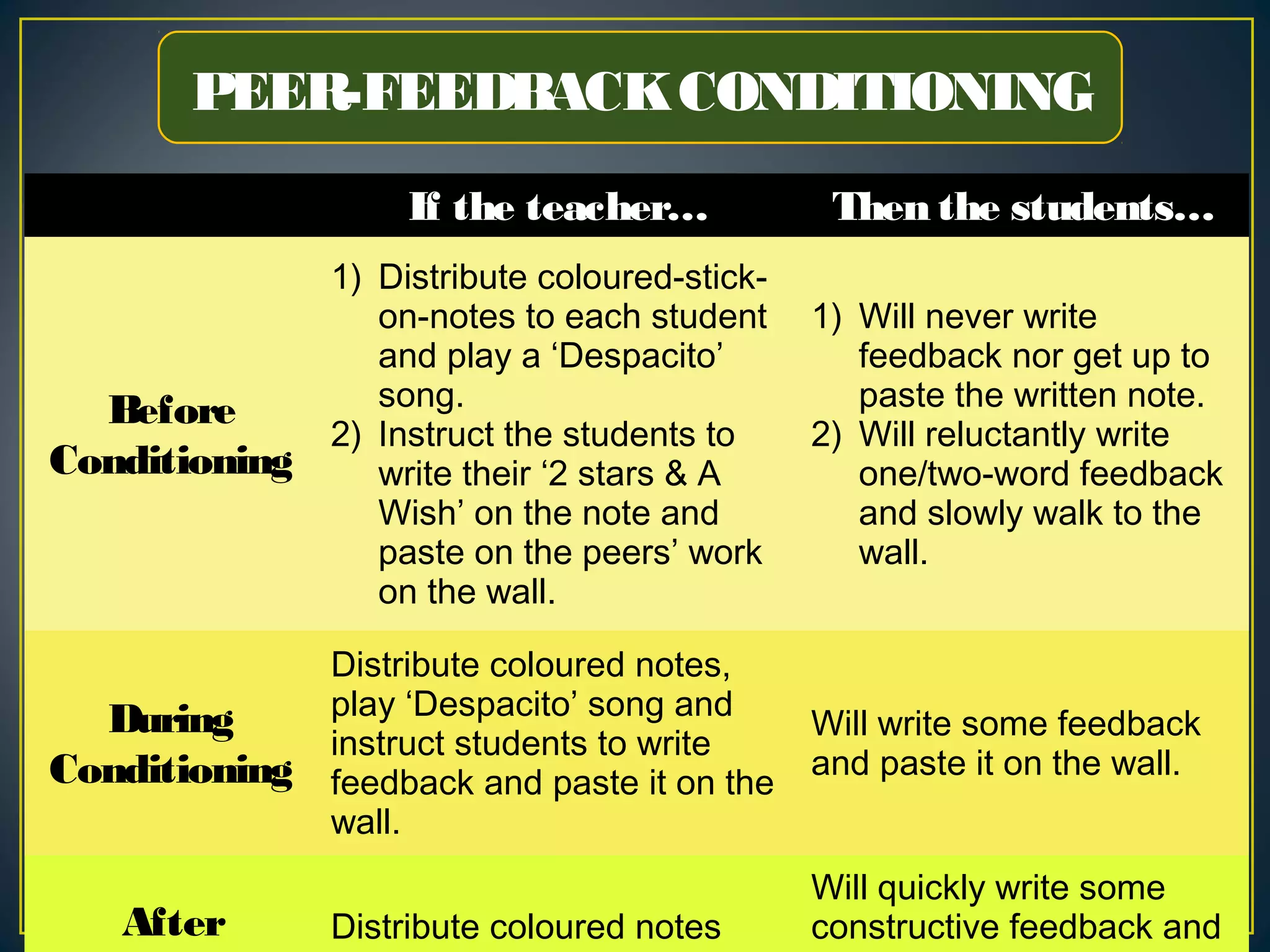
PEER-FEEDBACKCONDITIONING
If the teacher… Then the students…
Before
Conditioning
1) Distribute coloured-stick-
on-notes to each student
and play a ‘Despacito’
song.
2) Instruct the students to
write their ‘2 stars & A
Wish’ on the note and
paste on the peers’ work
on the wall.
1) Will never write
feedback nor get up to
paste the written note.
2) Will reluctantly write
one/two-word feedback
and slowly walk to the
wall.
During
Conditioning
Distribute coloured notes,
play ‘Despacito’ song and
instruct students to write
feedback and paste it on the
wall.
Will write some feedback
and paste it on the wall.
After Distribute coloured notes
Will quickly write some
constructive feedback and
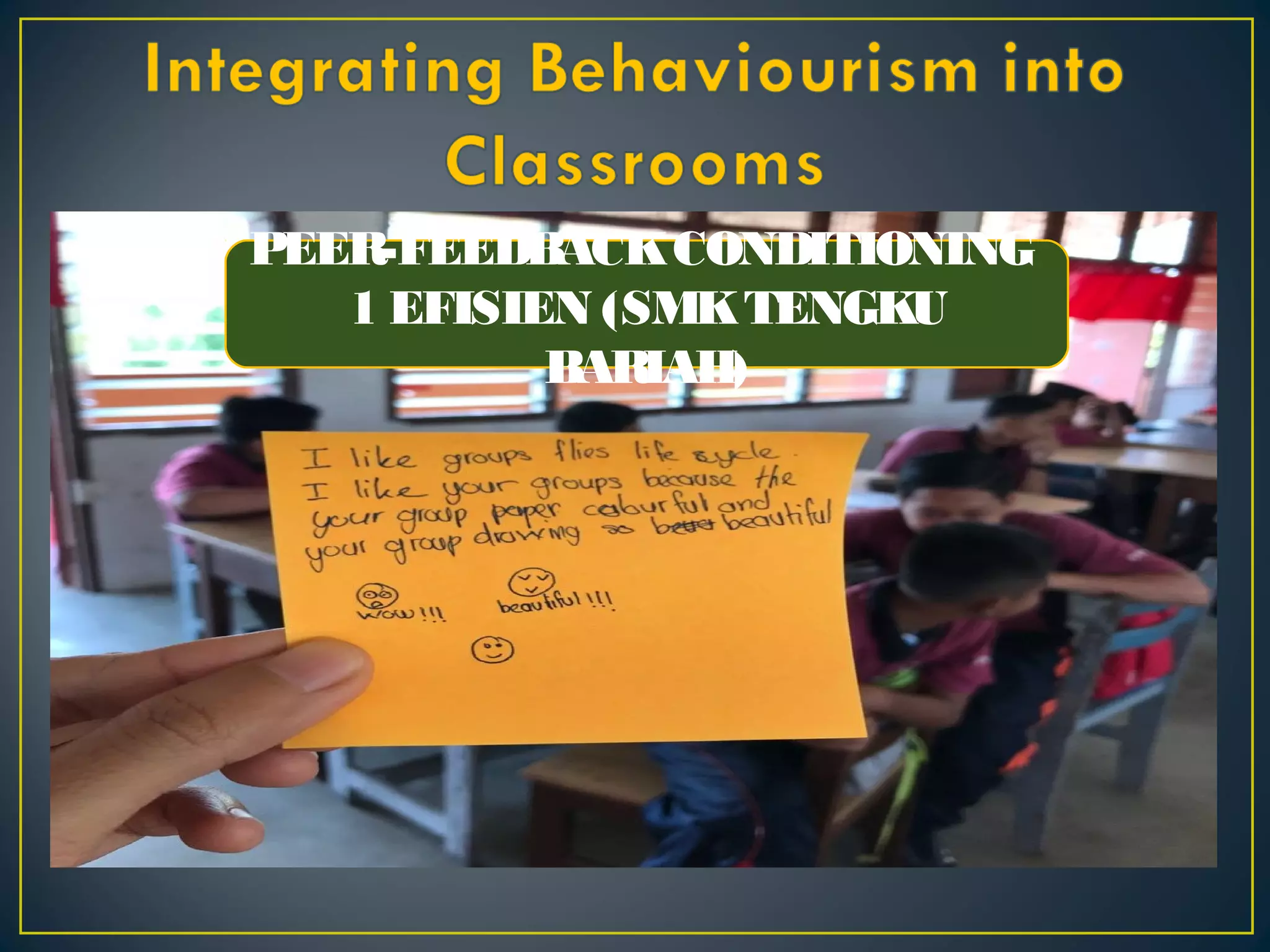
PEER-FEEDBACKCONDITIONING
1 EFISIEN (SMKTENGKU
BARIAH)
PEER-FEEDBACK
CONDITIONING
1 EFISIEN (SMKTENGKU
BARIAH)
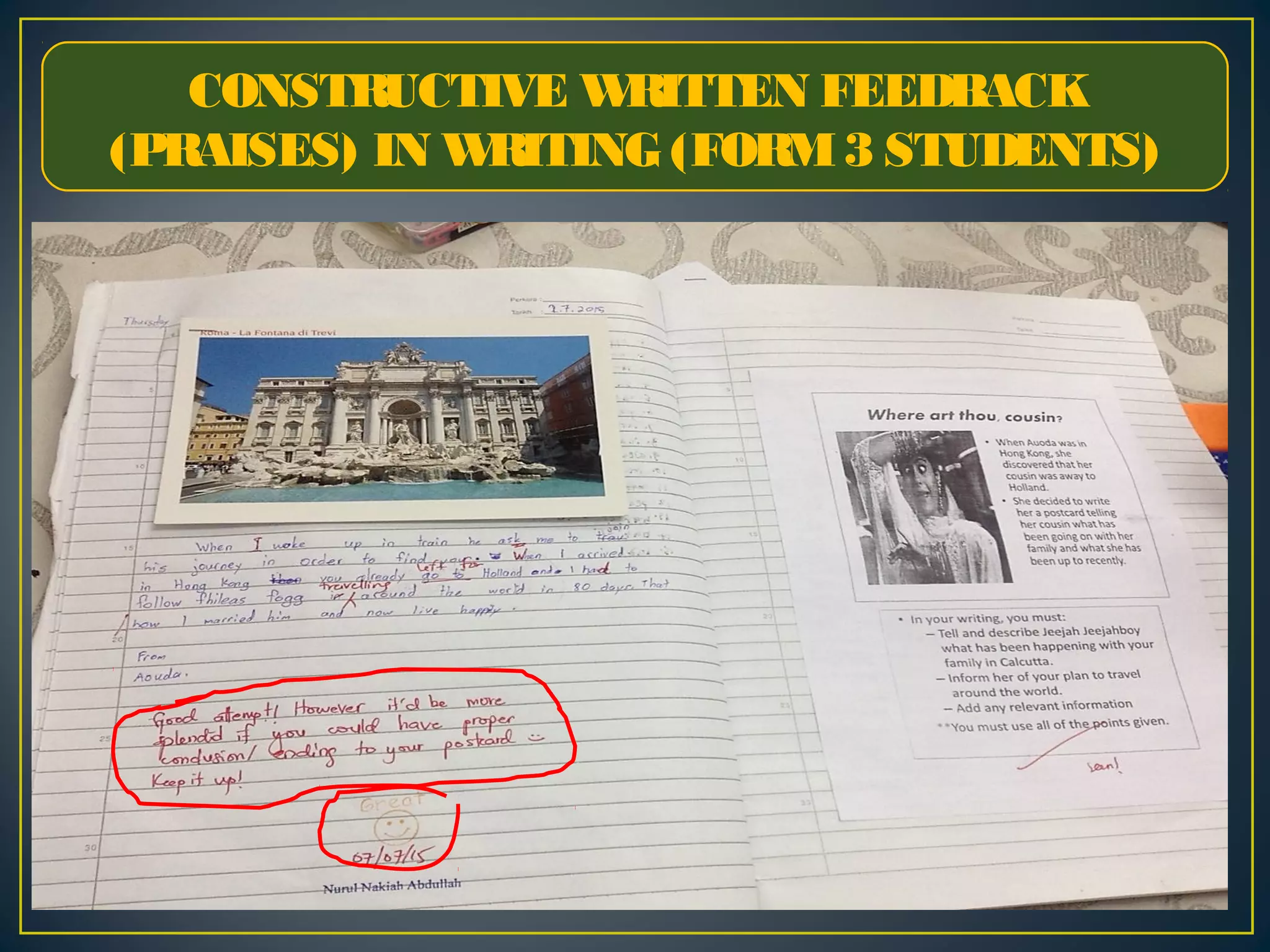
CONSTRUCTIVE WRITTEN FEEDBACK
(PRAISES) IN WRITING (FORM3 STUDENTS)
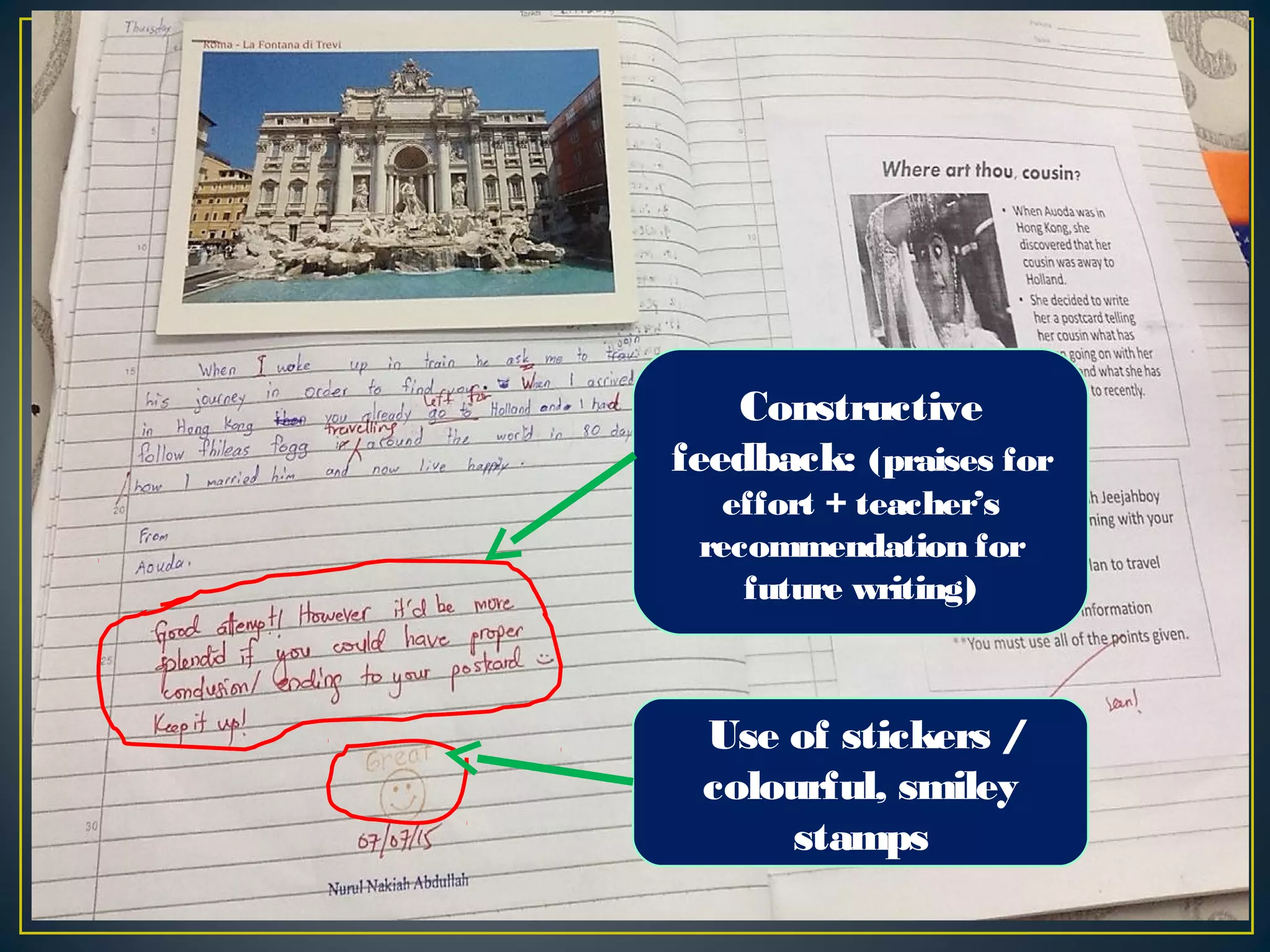
Constructive
feedback: (praises for
effort + teacher’s
recommendation for
future writing)
Use of stickers /
colourful, smiley
stamps
• McLeod, S. (2007). Retrieved from:
http://www.tesolclass.com/applying-sla-theories/behaviorism/
• Kimble, (1925). Retrieved from:
https://principlesoflearning.wordpress.com/dissertation/chapte
• Anonymous. (n.d.). Retrieved from:
https://www.simplypsychology.org/behaviorism.html
John watson & behaviourism

John watson & behaviourism

  • 1.
    GGGE 6313 PSYCHOLINGUISTICS ANDLANGUAGETEACHING ASSIGNMENT: EXTENSIVE READING (PPT) DATE: 22 DECEMBER2017 SUBMIT TO: DRMASLAWATI MOHAMAD NAMES (GROUP2) MATRIC NUMBERS SITI NORAIN BINTI DUKA GP05720 NURUL NAKIAH BINTI ABDULLAH GP05705 NITHIA PRATHIBA THEVAR D/O KAMALANATHAN GP05685 MUHAMMAD NAQIUDDIN BIN HASHIM GP05677 THEEBANRAJ S/O NAGARAJAN GP05731
  • 2.
  • 3.
    Cheese NAAN –John Watson’s Behaviourist
  • 5.
    John Broadus Watson January9, 1878 American psychologist Conducted research on animal behavior, child rearing and advertising. Proponent of Behaviorism Jan. 1878- Sept. 1958
  • 6.
    “Give me adozen healthy infants, well-formed, and my own specified world to bring them up in and I guarantee to take any one at random and train him to become any type of specialist I might select- doctor, lawyer, artist, merchant-chief and, yes, even beggar- man and thief, regardless of his talents, penchants, tendencies, abilities, vocations, and race of his ancestors.”
  • 7.
    Idea that behavior isacquired through conditioning. Language production was the result of stimuli that produced the formation of a habit. A learner’s response to stimuli can be reinforced using positive or negative feedback.
  • 8.
    Involves pairing anaturally occurring stimulus with a response. Then a previous neutral stimulus is paired with the naturally occurring stimulus. The neutral stimulus begins to evoke the same response without the natural occurring stimulus. A method that occurs using negative and positive reinforcement (or rewards and punishments).
  • 9.
    STAGE 1: BEFORE CONDITIONING STAGE1: BEFORE CONDITIONING STAGE 3: AFTER CONDITIONING STAGE 3: AFTER CONDITIONING STAGE 2: DURING CONDITIONING STAGE 2: DURING CONDITIONING CLASSICAL CONDITIONING CLASSICAL CONDITIONING
  • 10.
    In this stage,the unconditioned stimulus (UCS) produces an unconditioned response (UCR)in an organism. In basic terms, this means that a stimulus in the environment has produced a behavior / response which is unlearned. Therefore is a natural response which has not been taught.
  • 11.
    This stage alsoinvolves another stimulus which has no effect on a person and is called the neutral stimulus (NS).  The NS could be a person, object, place, etc. The neutral stimulus in classical conditioning does not produce a response until it is paired with the unconditioned stimulus.
  • 12.
    During this stagea stimulus which produces no response (i.e. neutral) is associated with the unconditioned stimulus at which point it now becomes known as the conditioned stimulus (CS). However, one trail learning can happen on certain occasions when it is not necessary for an association to be strengthened over time
  • 13.
    Now the conditionedstimulus (CS) has been associated with the unconditioned stimulus (UCS) to create a new conditioned response (CR).
  • 15.
    Watson was interestedin taking Pavlov's research further to show that emotional reactions could be classically conditioned in people.  The participant in the experiment was a child Known as Little Albert A 9 month baby Watson exposed the child to a series of stimuli including a white rat, a rabbit, a monkey, masks and burning newspapers and observed the boy's reactions
  • 17.
    STAGE 1: BEFORECONDITIONING The boy initially showed no fear of any of the objects shown STAGE 2: DURING CONDITIONING The next time Albert was exposed the rat, Watson made a loud noise of hitting metal pipe with hammer. STAGE 3: AFTER CONDITIONING Naturally, the child began to cry after hearing the loud noise. After repeatedly pairing the white rat with the loud noise, Albert began to cry simply after seeing the rat.
  • 20.
    • Behaviorism isseen when teachers use the following methods: • Testing specific skills • More individual work than group learning • Using positive and negative reinforcement
  • 21.
    1.Students learn through experiencesand practices. 2.Learning is also modified with positive and negative reinforcements 3.Students begin to give predicted responses to a stimulus.
  • 22.
  • 24.
    Teacher: I wanta hamburger. (ho lding a picture o f a ham burg e r) •Students: I want a hamburger. •Teacher: hot dog. (ho lding a picture o f a ho t do g ) •Students: hot dog. •Teacher: No! (e m phasis) Iwant a hot dog. •Students: I want a hot dog. •Teacher: Good job!
  • 25.
    •Reward being correct,but ENCOURAGE when incorrect:  1.Almost every teacher of young learners rewards students with words of praise. 2.On the other hand, encouraging students when wrong is farmore beneficial to the psyche of the student.
  • 27.
    Reward Chart with aclass of Year3 students. -Motivates students to collaboratively work together.
  • 28.
  • 29.
    “English Jar” vs “StarAwards” 1.EnglishJar (upon clear, mutual agreement between the teacher and students) – to maximise the use of English in classroom. 2.Works both-ways (teacher and students) 3.Was done as a preparation for PT3 Oral Speaking test 2017.
  • 30.
    CLASSROOM MANAGEMENT PRACTICES (BEHAVIOURIST-FAVOURED) CLASSROOMMANAGEMENT PRACTICES (BEHAVIOURIST-FAVOURED) 1. Counting 10 to 1 for class to sit down / remain quiet1. Counting 10 to 1 for class to sit down / remain quiet 2. Clapping 3 times to signal grouping movement2. Clapping 3 times to signal grouping movement 3. ‘Hands-on-Top, Everybody Stop’ signal to calm restless and noisy classroom 3. ‘Hands-on-Top, Everybody Stop’ signal to calm restless and noisy classroom 4. Other attention signals: Whistle / Bell / Songs / Piano / Tapping 4. Other attention signals: Whistle / Bell / Songs / Piano / Tapping
  • 31.
  • 32.
    PEER-FEEDBACKCONDITIONING If the teacher…Then the students… Before Conditioning 1) Distribute coloured-stick- on-notes to each student and play a ‘Despacito’ song. 2) Instruct the students to write their ‘2 stars & A Wish’ on the note and paste on the peers’ work on the wall. 1) Will never write feedback nor get up to paste the written note. 2) Will reluctantly write one/two-word feedback and slowly walk to the wall. During Conditioning Distribute coloured notes, play ‘Despacito’ song and instruct students to write feedback and paste it on the wall. Will write some feedback and paste it on the wall. After Distribute coloured notes Will quickly write some constructive feedback and
  • 33.
  • 34.
  • 35.
    CONSTRUCTIVE WRITTEN FEEDBACK (PRAISES)IN WRITING (FORM3 STUDENTS)
  • 36.
    Constructive feedback: (praises for effort+ teacher’s recommendation for future writing) Use of stickers / colourful, smiley stamps
  • 38.
    • McLeod, S.(2007). Retrieved from: http://www.tesolclass.com/applying-sla-theories/behaviorism/ • Kimble, (1925). Retrieved from: https://principlesoflearning.wordpress.com/dissertation/chapte • Anonymous. (n.d.). Retrieved from: https://www.simplypsychology.org/behaviorism.html