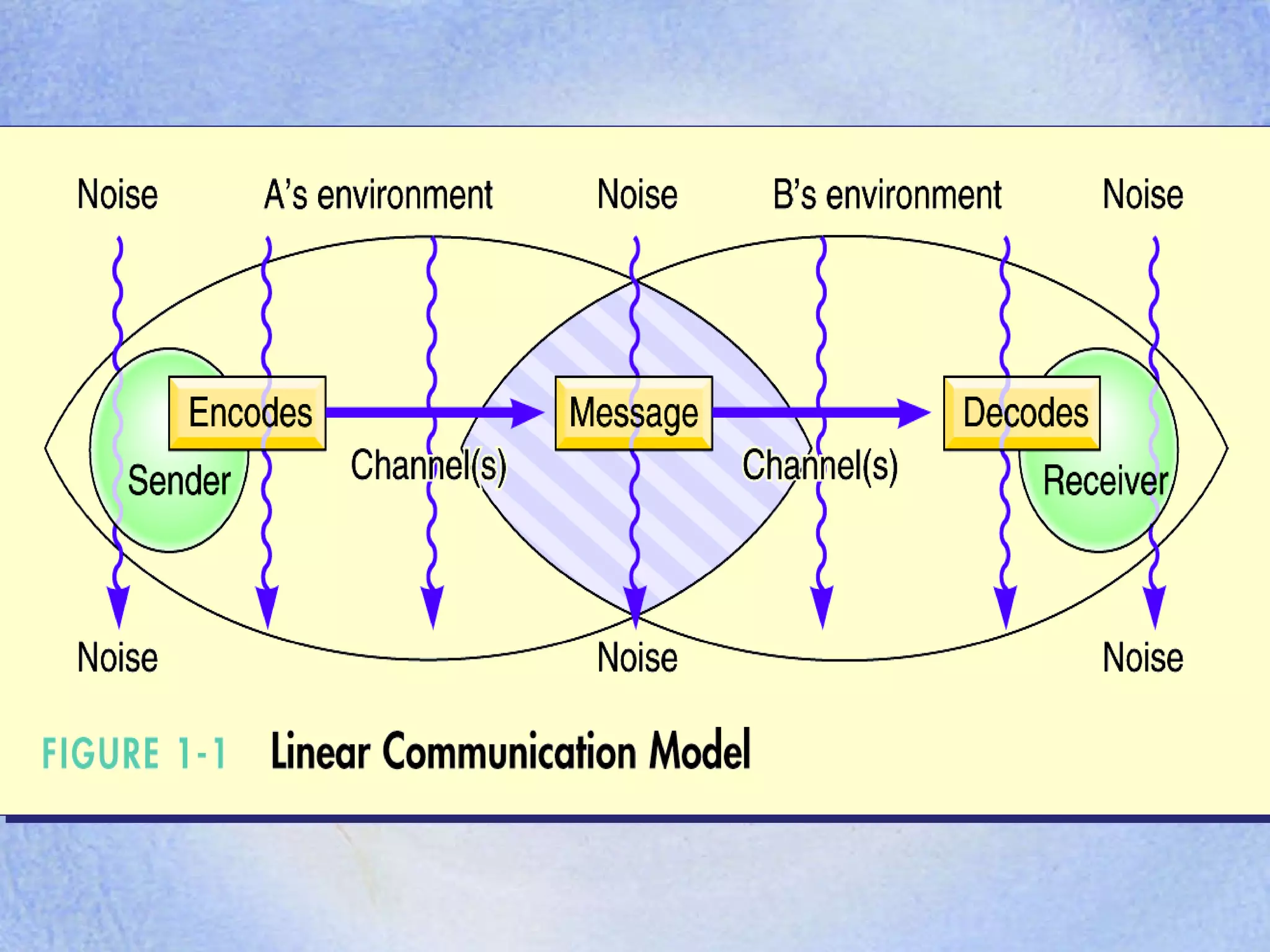
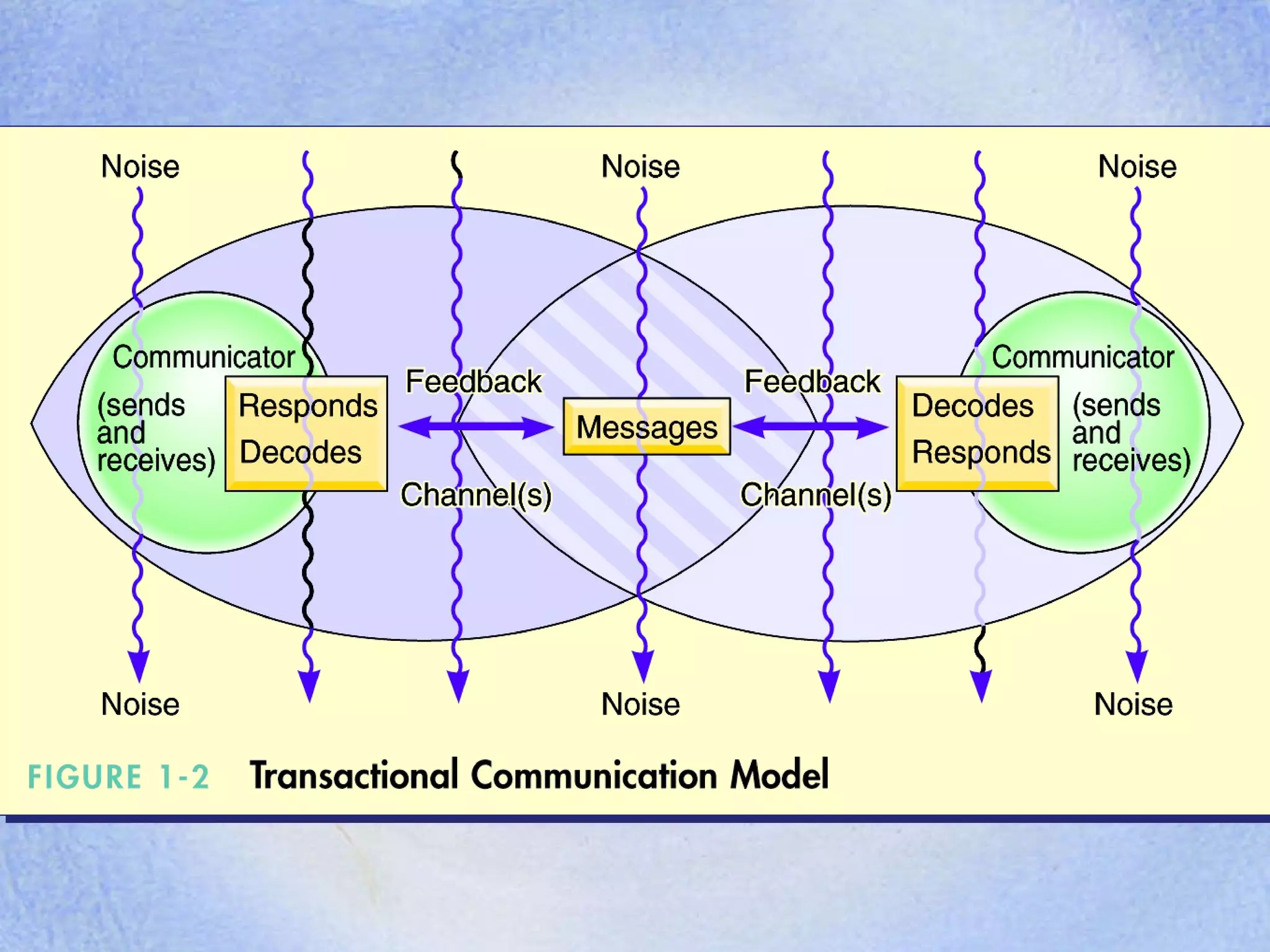
Communication Survey What did you learn were your strengths?  Your weak areas?  Was there anything that surprised you or was a new way of looking at communication?  3.  Considering the last question, what “type” do you think you are?  Does it fit you?  What did you learn about dealing with people who are different types?  Think about  someone in your life who you would consider to have a different style than you;  give an example of a problem you had in the past which  relates to a style difference and then give suggestions on how to improve communication with him/her based on the information given.
The Importance of Communication The Power of Silence The Power of Isolation Contact and Companionship
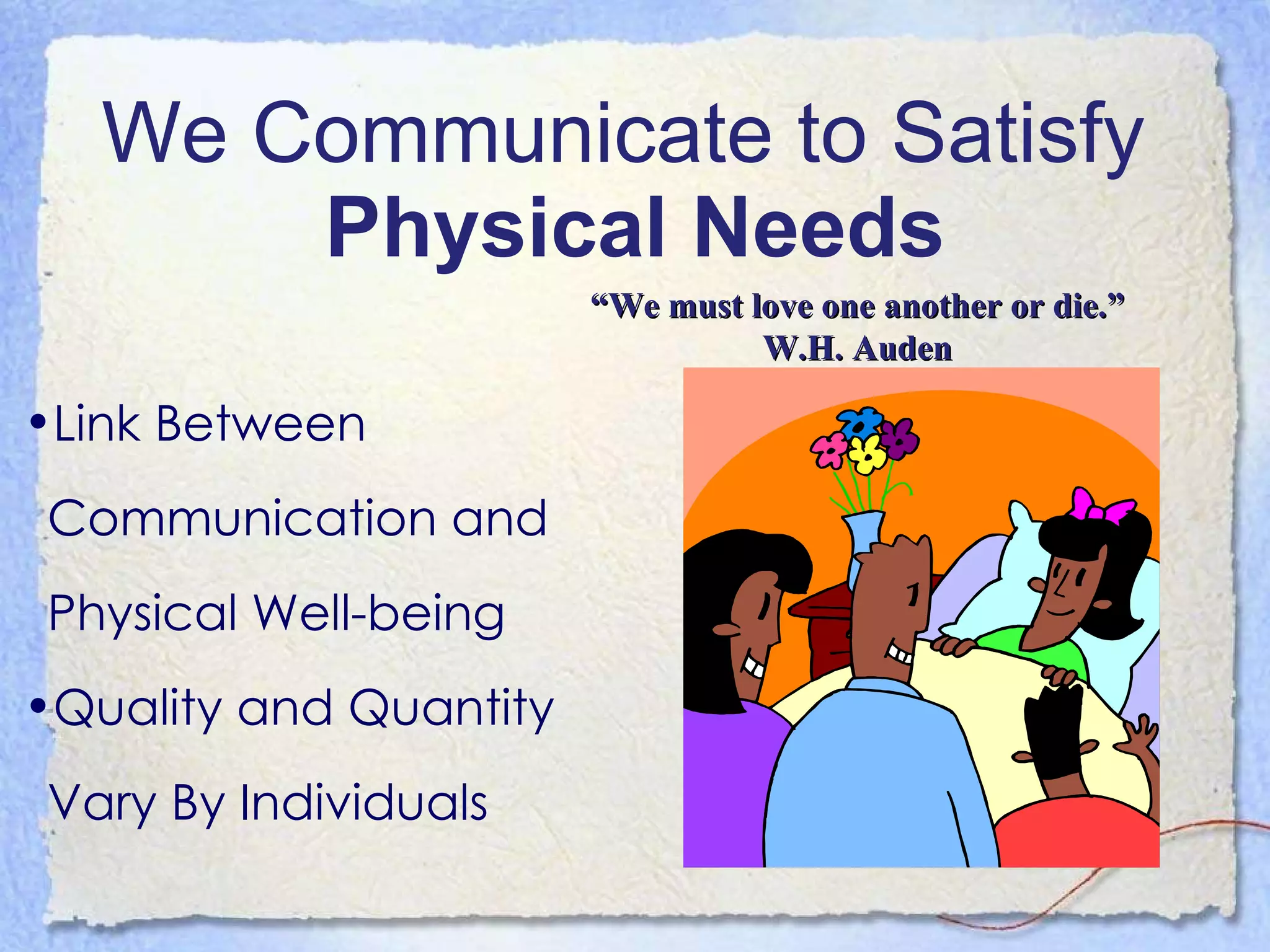
We Communicate to Satisfy  Physical Needs Link Between Communication and Physical Well-being Quality and Quantity Vary By Individuals “ We must love one another or die.” W.H. Auden
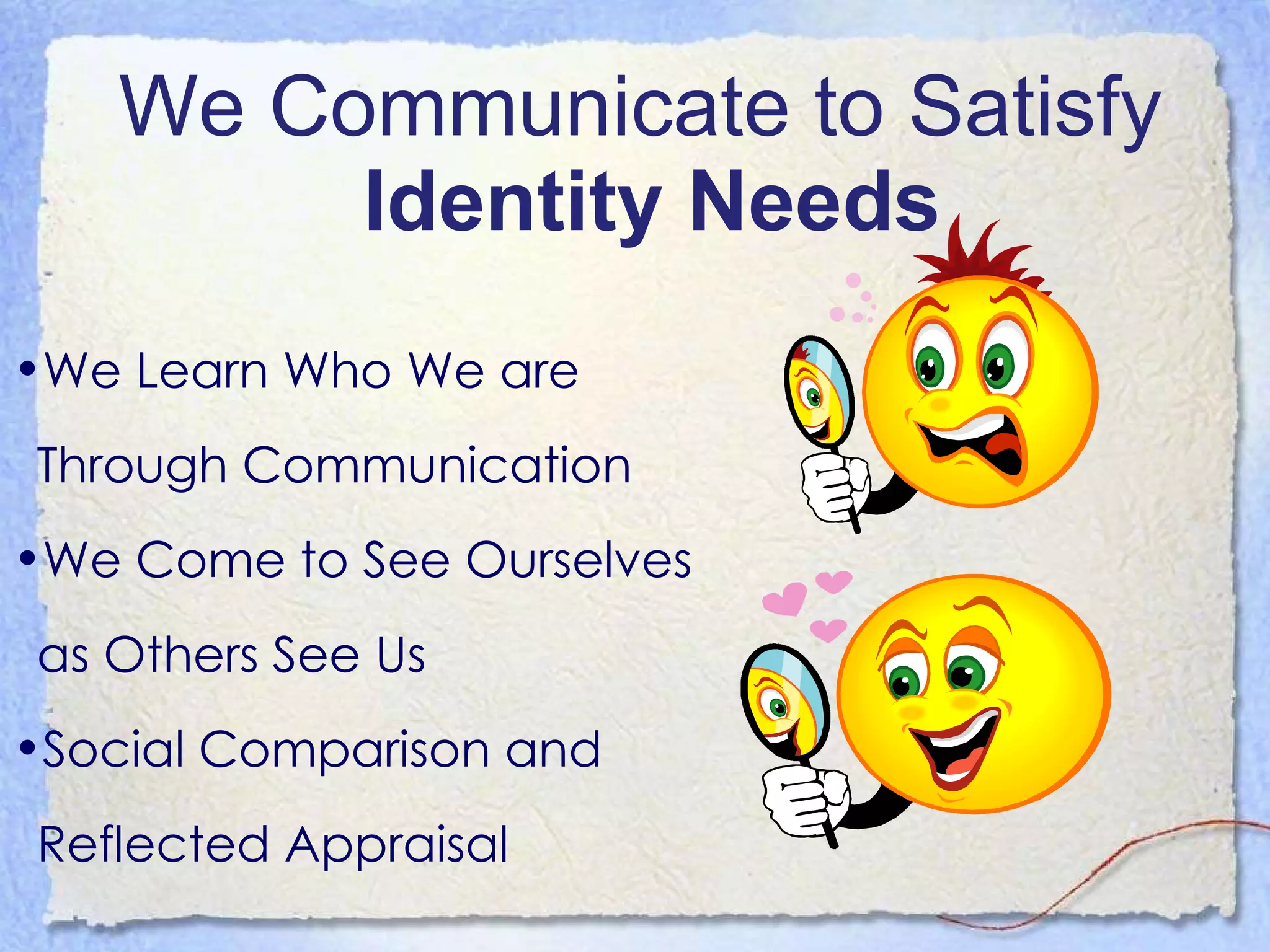
We Communicate to Satisfy  Identity Needs We Learn Who We are Through Communication We Come to See Ourselves as Others See Us Social Comparison and Reflected Appraisal
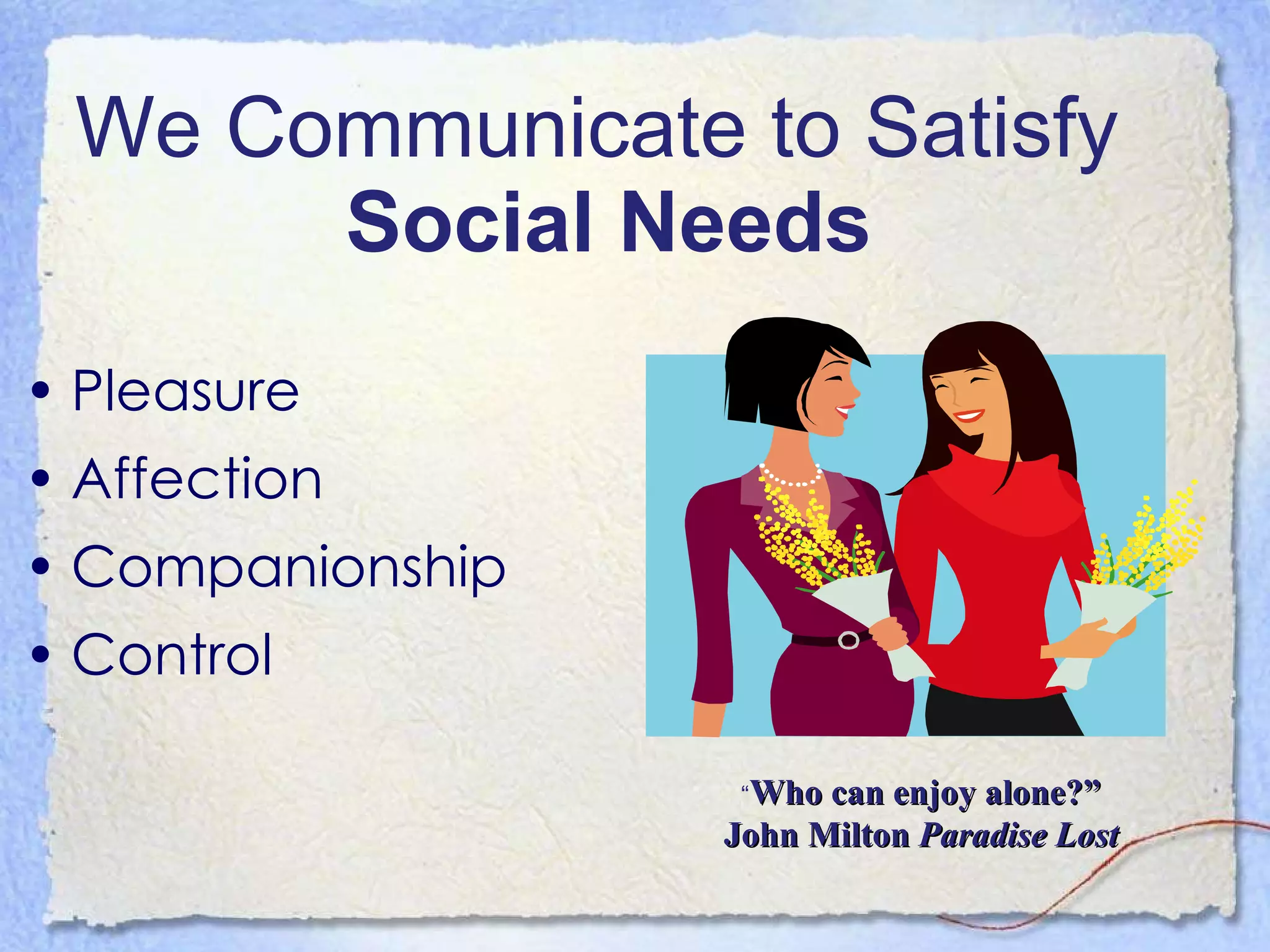
We Communicate to Satisfy  Social Needs Pleasure  Affection Companionship Control “ Who can enjoy alone?” John Milton  Paradise Lost
We Communicate to Satisfy  Practical Needs  (Instrumental) Goals Communication Skills Top Factor in Getting Jobs Keeping a Job and Advancement Tied to Communication Skills
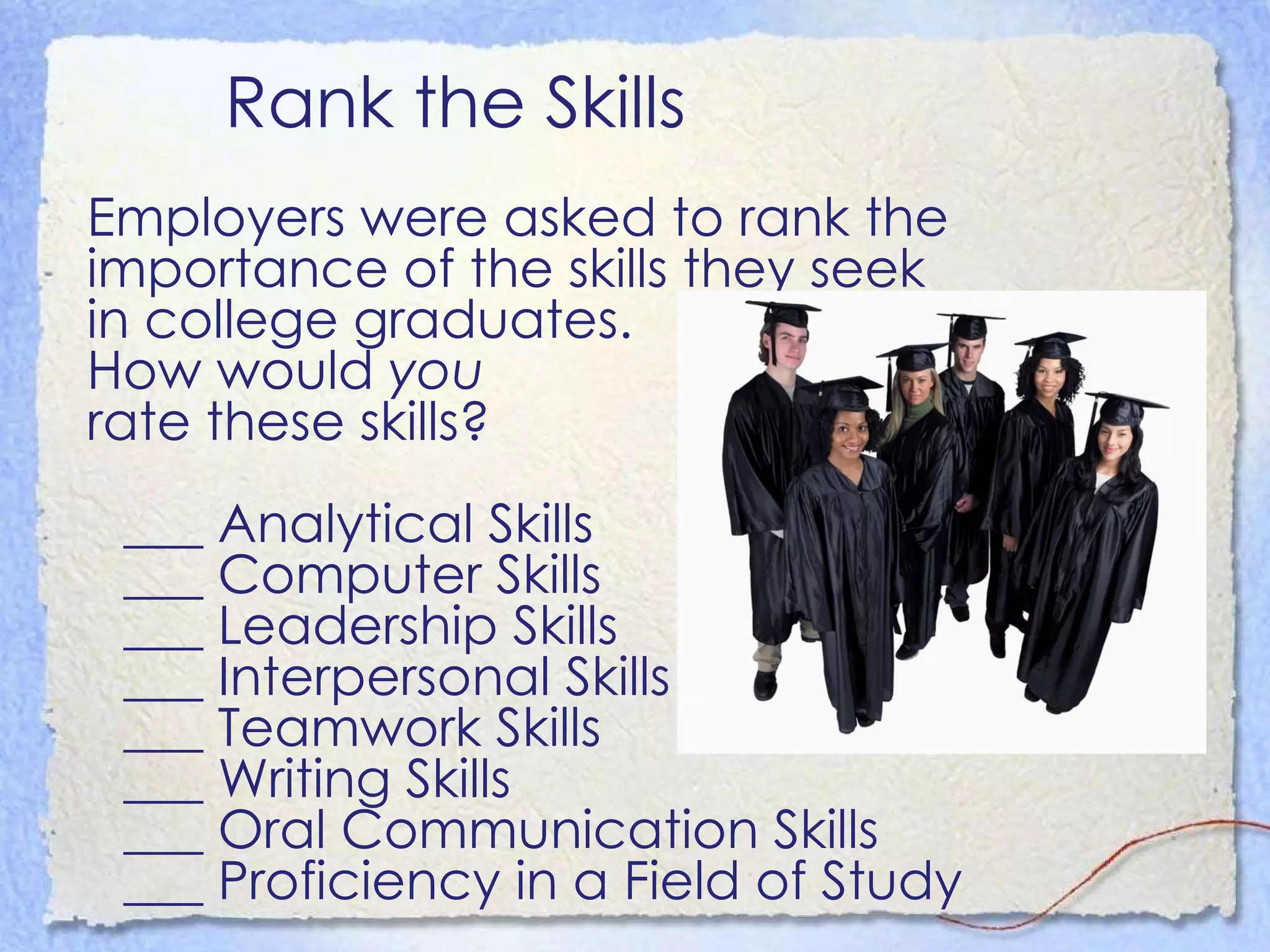
Rank the Skills Employers were asked to rank the  importance of the skills they seek in college graduates.  How would  you   rate these skills? ___ Analytical Skills ___ Computer Skills ___ Leadership Skills  ___ Interpersonal Skills ___ Teamwork Skills  ___ Writing Skills ___ Oral Communication Skills ___ Proficiency in a Field of Study
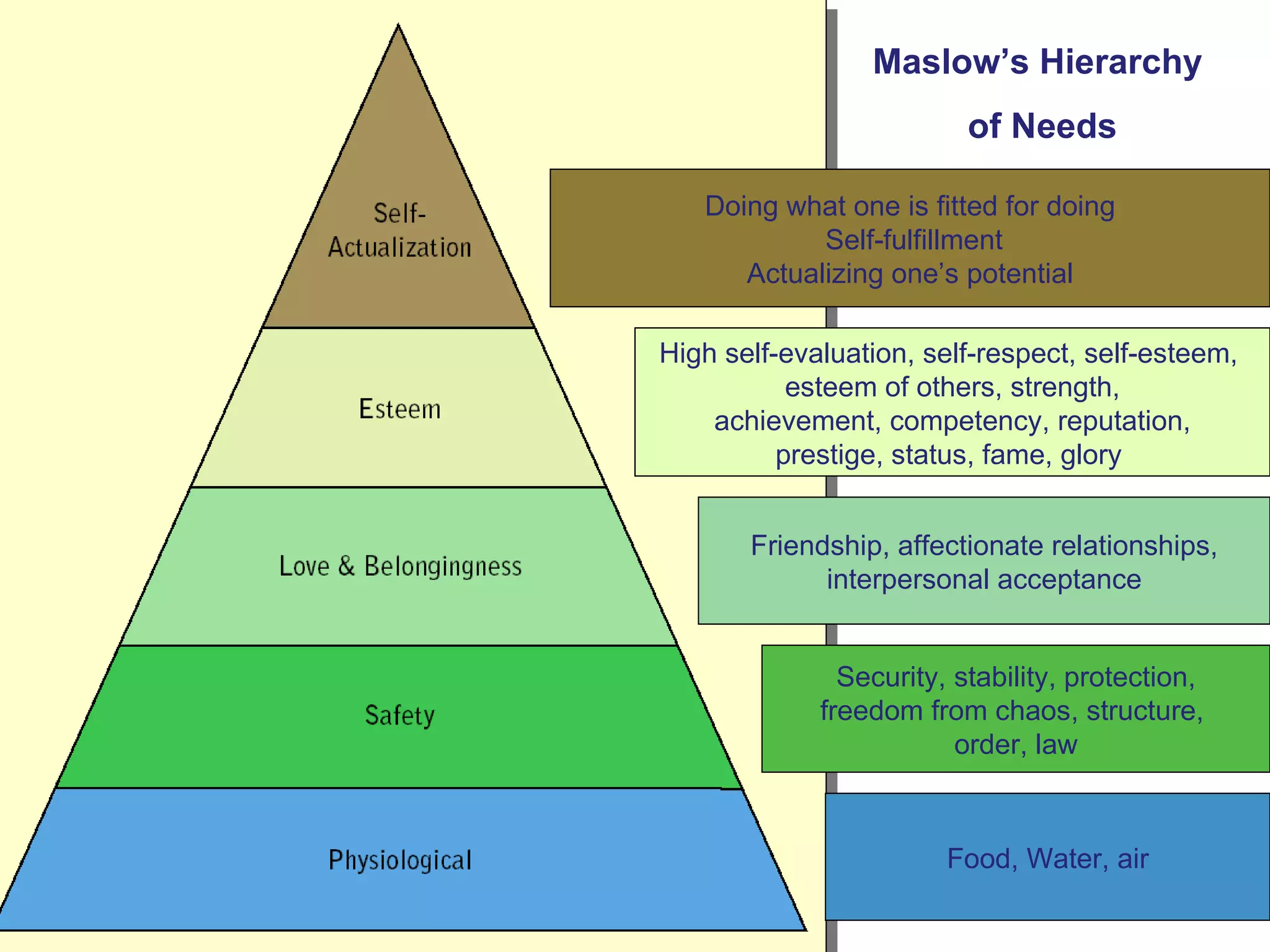
Doing what one is fitted for doing Self-fulfillment Actualizing one’s potential High self-evaluation, self-respect, self-esteem,  esteem of others, strength, achievement, competency, reputation,  prestige, status, fame, glory  Friendship, affectionate relationships, interpersonal acceptance Security, stability, protection, freedom from chaos, structure,  order, law Food, Water, air Maslow’s Hierarchy  of Needs
 
 
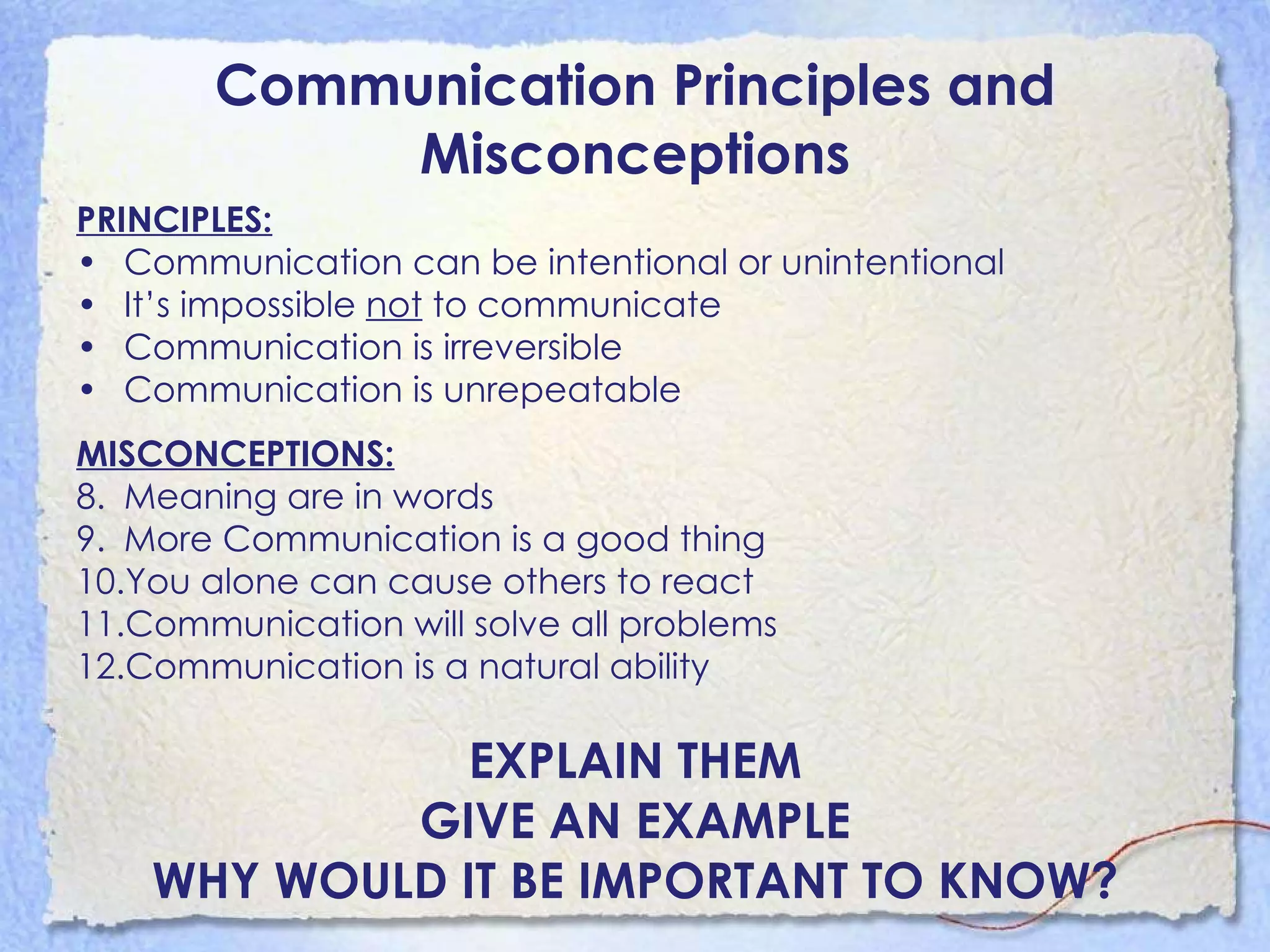
Communication Principles and Misconceptions PRINCIPLES: Communication can be intentional or unintentional It’s impossible  not  to communicate Communication is irreversible Communication is unrepeatable MISCONCEPTIONS: Meaning are in words More Communication is a good thing You alone can cause others to react Communication will solve all problems Communication is a natural ability EXPLAIN THEM GIVE AN EXAMPLE WHY WOULD IT BE IMPORTANT TO KNOW?
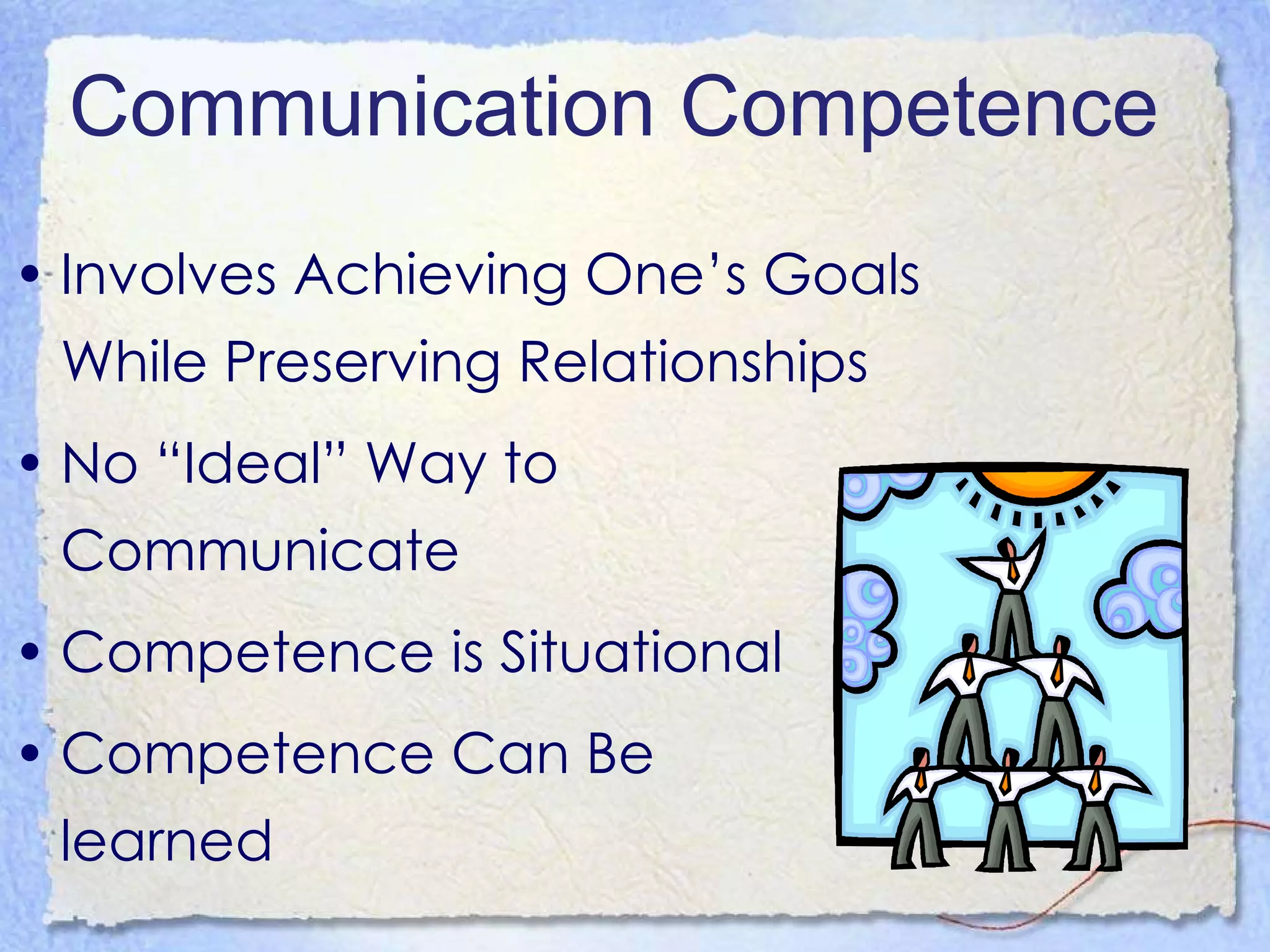
Communication Competence Involves Achieving One’s Goals While Preserving Relationships No “Ideal” Way to Communicate Competence is Situational Competence Can Be  learned
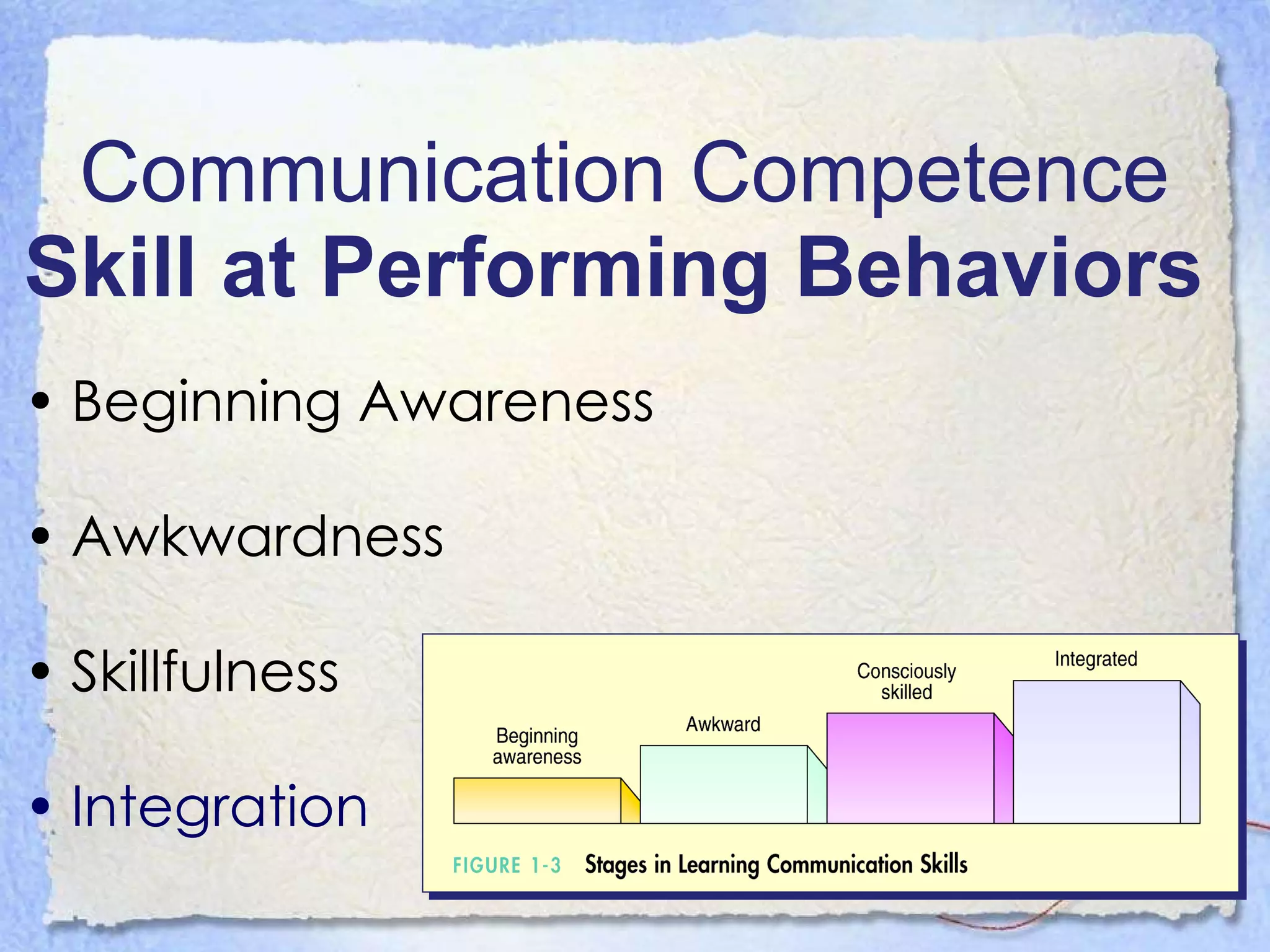
Characteristics of Competent Communicators Wide Range of Behaviors Ability to Choose Most Appropriate Behavior Skill at Performing Behaviors How do you learn a skill?
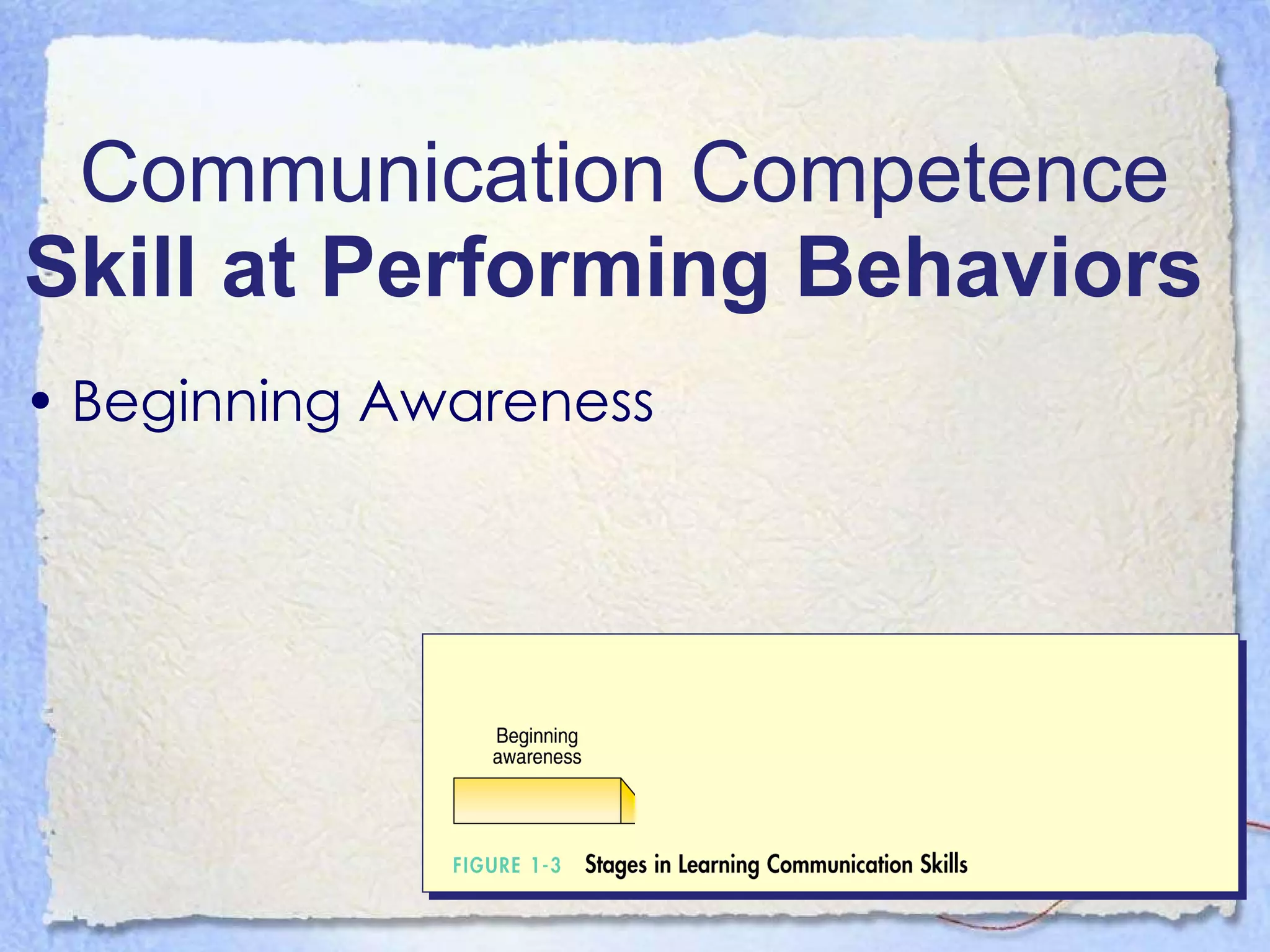
Communication Competence Skill at Performing Behaviors   Beginning Awareness
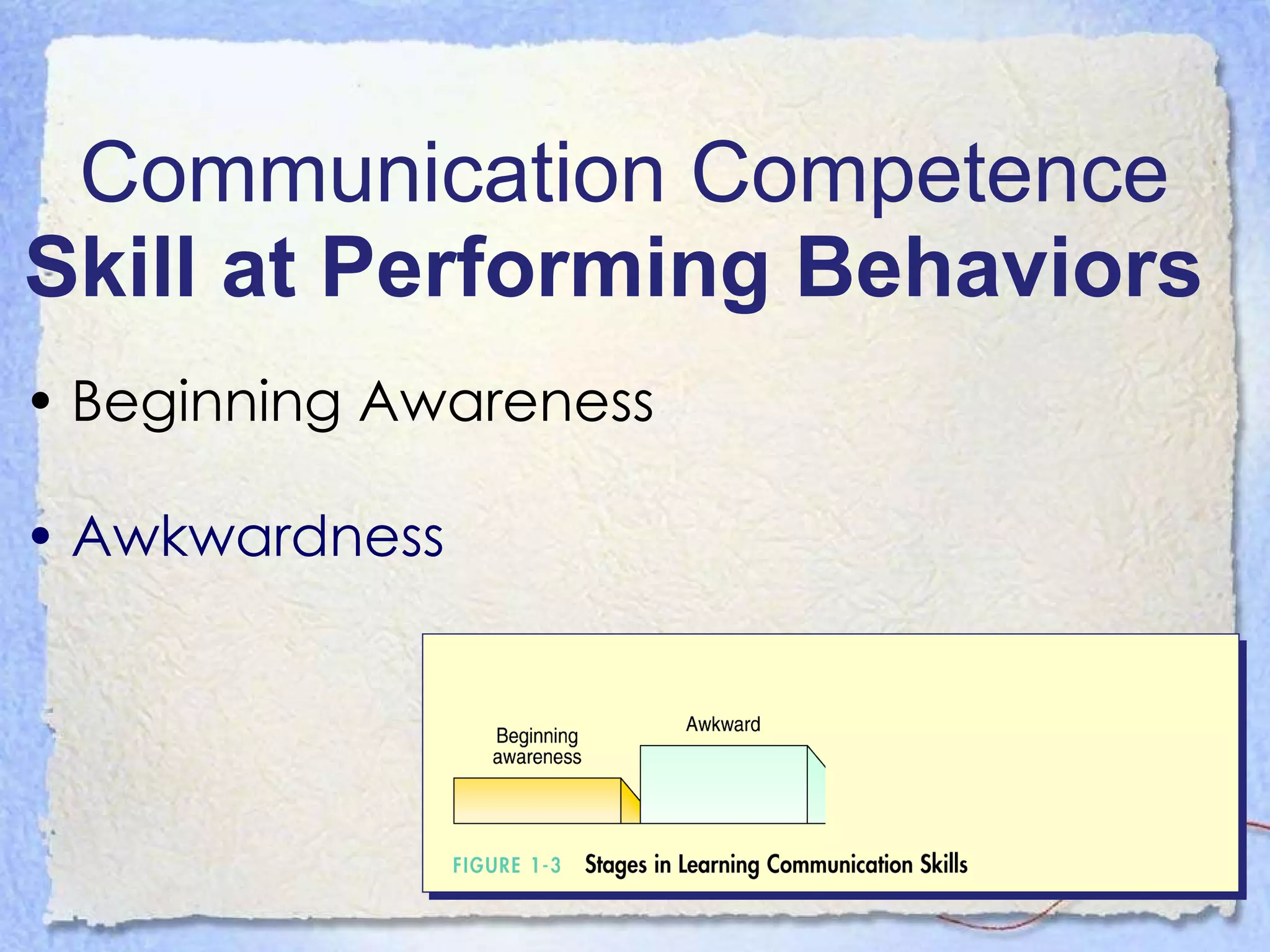
Communication Competence Skill at Performing Behaviors   Beginning Awareness Awkwardness
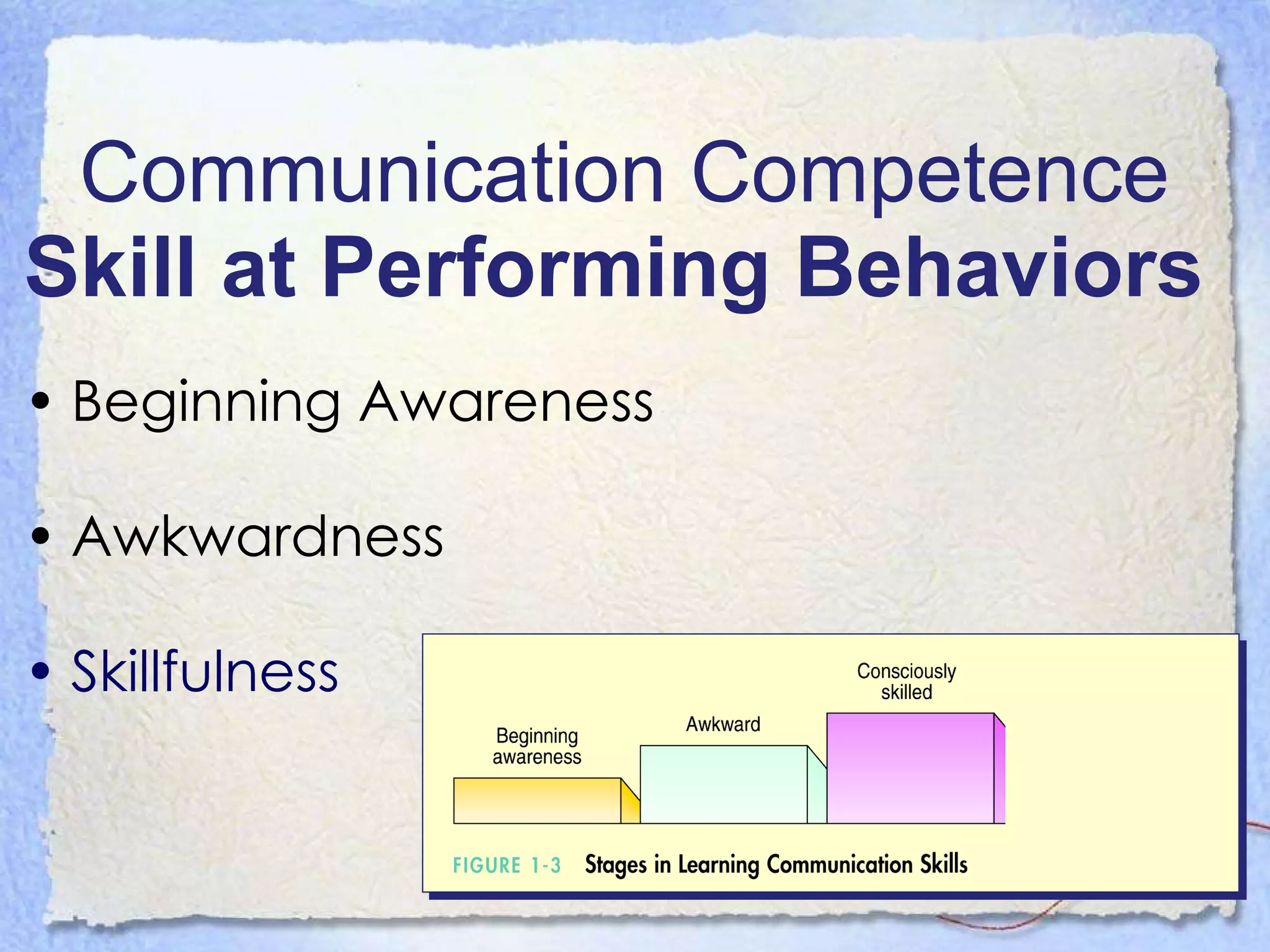
Communication Competence Skill at Performing Behaviors   Beginning Awareness Awkwardness Skillfulness
Communication Competence Skill at Performing Behaviors   Beginning Awareness Awkwardness Skillfulness Integration
Characteristics of Competent Communicators Wide Range of Behaviors Ability to Choose Most Appropriate Behavior Skill at Performing Behaviors Cognitive complexity/empathy Self-monitoring Commitment

Introduction for students

  • 1.
    Communication Survey Whatdid you learn were your strengths? Your weak areas? Was there anything that surprised you or was a new way of looking at communication? 3. Considering the last question, what “type” do you think you are? Does it fit you? What did you learn about dealing with people who are different types? Think about someone in your life who you would consider to have a different style than you; give an example of a problem you had in the past which relates to a style difference and then give suggestions on how to improve communication with him/her based on the information given.
  • 2.
    The Importance ofCommunication The Power of Silence The Power of Isolation Contact and Companionship
  • 3.
    We Communicate toSatisfy Physical Needs Link Between Communication and Physical Well-being Quality and Quantity Vary By Individuals “ We must love one another or die.” W.H. Auden
  • 4.
    We Communicate toSatisfy Identity Needs We Learn Who We are Through Communication We Come to See Ourselves as Others See Us Social Comparison and Reflected Appraisal
  • 5.
    We Communicate toSatisfy Social Needs Pleasure Affection Companionship Control “ Who can enjoy alone?” John Milton Paradise Lost
  • 6.
    We Communicate toSatisfy Practical Needs (Instrumental) Goals Communication Skills Top Factor in Getting Jobs Keeping a Job and Advancement Tied to Communication Skills
  • 7.
    Rank the SkillsEmployers were asked to rank the importance of the skills they seek in college graduates. How would you rate these skills? ___ Analytical Skills ___ Computer Skills ___ Leadership Skills ___ Interpersonal Skills ___ Teamwork Skills ___ Writing Skills ___ Oral Communication Skills ___ Proficiency in a Field of Study
  • 8.
    Doing what oneis fitted for doing Self-fulfillment Actualizing one’s potential High self-evaluation, self-respect, self-esteem, esteem of others, strength, achievement, competency, reputation, prestige, status, fame, glory Friendship, affectionate relationships, interpersonal acceptance Security, stability, protection, freedom from chaos, structure, order, law Food, Water, air Maslow’s Hierarchy of Needs
  • 9.
  • 10.
  • 11.
    Communication Principles andMisconceptions PRINCIPLES: Communication can be intentional or unintentional It’s impossible not to communicate Communication is irreversible Communication is unrepeatable MISCONCEPTIONS: Meaning are in words More Communication is a good thing You alone can cause others to react Communication will solve all problems Communication is a natural ability EXPLAIN THEM GIVE AN EXAMPLE WHY WOULD IT BE IMPORTANT TO KNOW?
  • 12.
    Communication Competence InvolvesAchieving One’s Goals While Preserving Relationships No “Ideal” Way to Communicate Competence is Situational Competence Can Be learned
  • 13.
    Characteristics of CompetentCommunicators Wide Range of Behaviors Ability to Choose Most Appropriate Behavior Skill at Performing Behaviors How do you learn a skill?
  • 14.
    Communication Competence Skillat Performing Behaviors Beginning Awareness
  • 15.
    Communication Competence Skillat Performing Behaviors Beginning Awareness Awkwardness
  • 16.
    Communication Competence Skillat Performing Behaviors Beginning Awareness Awkwardness Skillfulness
  • 17.
    Communication Competence Skillat Performing Behaviors Beginning Awareness Awkwardness Skillfulness Integration
  • 18.
    Characteristics of CompetentCommunicators Wide Range of Behaviors Ability to Choose Most Appropriate Behavior Skill at Performing Behaviors Cognitive complexity/empathy Self-monitoring Commitment

Editor's Notes

  • #4 Drink your tea alone or with others? Do you notice the effect of social contact on your physical health or the physical health of others?
  • #7 How do you get others to behave in ways that you want - in a game of sports, on the job, in your household?