Communication & Influence


                 Team Members:

Brandon Luong                    Matt Brown
  Brian Turner                   Russell Veals
   Gene White                    Victoria Landrum
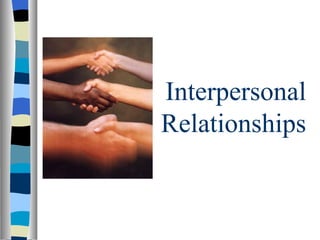
Interpersonal
Relationships
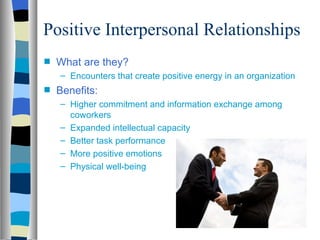
Positive Interpersonal Relationships
s   What are they?
    – Encounters that create positive energy in an organization
s   Benefits:
    – Higher commitment and information exchange among
      coworkers
    – Expanded intellectual capacity
    – Better task performance
    – More positive emotions
    – Physical well-being
Positive Interpersonal Relationships
s   Organizational example:
    Business Student Ambassadors
s   What we do:
    – Work with each other within our organization as student
      officers by sharing responsibilities
    – Build relationships by holding socials
    – Be open, friendly, and welcoming to new students
s   How it helps:
    –   High sense of accomplishment
    –   More feelings of camaraderie
    –   Mutual trust and responsibility
    –   Attractive to new or unsociable students
Positive Interpersonal Relationships
s   Organizational example:
    Lewis Landscaping
s   What we do:
    – Support coworkers by finishing their tasks for them
    – Converse about similar topics of interest while working
    – Spend time with each other while working to be able to
      recognize emotional ups and downs
s   How it helps:
    – Faster task completion
    – Fun, supportive working environment
    – Higher level of “team spirit”
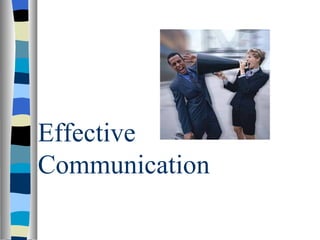
Effective
Communication
Effective Communication
s   What is communication?
    – The act of conveying information by, to or between people or
      groups
s   Importance of Effective Communication
    – The most important skill in building and strengthening
      positive relationships giving the people an enhanced feeling
      of trust, openness and support.
    – In studies, communication problems are identified as the
      single largest impediment to positive relationships and
      positive performance in organizations.
Effective Communication
s   Reasons for difficulties include:
    – People are often given an abundance of information that
      was poorly presented, as a result information gets lost
    – Lack of context, often times information lacks significant
      meaning to the person receiving the messages
    – Last, the effective interpretation and use of the information
      still depends on the relationship the recipient has with the
      sender
s   Results
    –   Misunderstandings
    –   Lack of Information
    –   Decrease in employee performance
    –   Decrease in profitability or productivity for an organization
Example of Ineffective
Communication
  http://www.youtube.com/watch?v=gBKKgtsWqZQ
Example of Effective
Communication
s   Organizational example:
     – Global Foundation (GF)
s   Had communication problems: officers did not
    understand roles, duties, obligations, etc.
s   MGMT 389 skills applied = more effective group
s   Results:
    –   Work gets done on a timely manner
    –   Information is flowed without interruption
    –   More support and group efforts
    –   Stronger board members
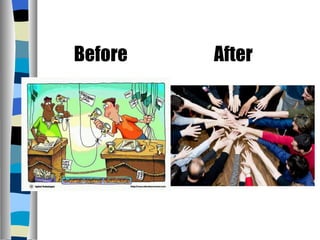
Before   After
Power and Influence
Building a Strong Power Base
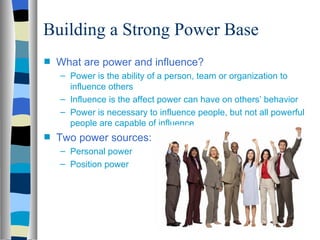
s   What are power and influence?
    – Power is the ability of a person, team or organization to
      influence others
    – Influence is the affect power can have on others’ behavior
    – Power is necessary to influence people, but not all powerful
      people are capable of influence
s   Two power sources:
    – Personal power
    – Position power
Building a Strong Power Base
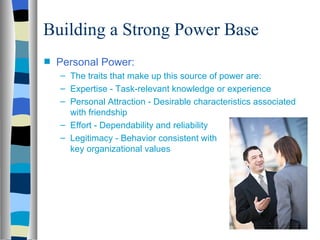
s   Personal Power:
    – The traits that make up this source of power are:
    – Expertise - Task-relevant knowledge or experience
    – Personal Attraction - Desirable characteristics associated
      with friendship
    – Effort - Dependability and reliability
    – Legitimacy - Behavior consistent with
      key organizational values
Building a Strong Power Base
s   Position Power:
    – The traits that make up this source of power are:
    – Centrality - Being in the middle of communication
    – Latitude/Job Flexibility - Freedom to exercise one’s own
      judgment
    – Visibility - Whether or not influential people in the company
      see how well or poorly you are performing
    – Relevance - Being directly related to the central objectives
      and issues in an organization
Building a Strong Power Base
s   Organizational example:
Using Influence Wisely
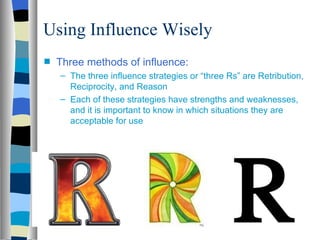
s   Three methods of influence:
    – The three influence strategies or “three Rs” are Retribution,
      Reciprocity, and Reason
    – Each of these strategies have strengths and weaknesses,
      and it is important to know in which situations they are
      acceptable for use
Using Influence Wisely
s   Retribution:
    – The strategy of forcing others to do as you say
    – The direct method uses coercion; the indirect method uses
      intimidation
    – It is useful when quick results are required, but the drawback
      is that it can cause employees to resent their superiors
s   Reciprocity
    – The strategy of convincing others to want to do what you say
    – The direct method uses bargaining; the indirect method uses
      the approach of making others feel obligated to agree
    – The drawback is that this strategy can lead to people
      believing that terms of assignments, etc. are open for debate
Using Influence Wisely
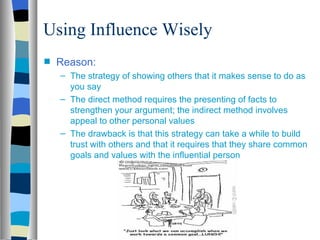
s   Reason:
    – The strategy of showing others that it makes sense to do as
      you say
    – The direct method requires the presenting of facts to
      strengthen your argument; the indirect method involves
      appeal to other personal values
    – The drawback is that this strategy can take a while to build
      trust with others and that it requires that they share common
      goals and values with the influential person
Using Influence Wisely
s   Organizational example:
The End
Thanks for listening!
Works Cited
s   Luong, Brandon. Personal Interview. 19
    Sep 2010.

Communication & Influence

  • 1.
    Communication & Influence Team Members: Brandon Luong Matt Brown Brian Turner Russell Veals Gene White Victoria Landrum
  • 2.
  • 3.
    Positive Interpersonal Relationships s What are they? – Encounters that create positive energy in an organization s Benefits: – Higher commitment and information exchange among coworkers – Expanded intellectual capacity – Better task performance – More positive emotions – Physical well-being
  • 4.
    Positive Interpersonal Relationships s Organizational example: Business Student Ambassadors s What we do: – Work with each other within our organization as student officers by sharing responsibilities – Build relationships by holding socials – Be open, friendly, and welcoming to new students s How it helps: – High sense of accomplishment – More feelings of camaraderie – Mutual trust and responsibility – Attractive to new or unsociable students
  • 5.
    Positive Interpersonal Relationships s Organizational example: Lewis Landscaping s What we do: – Support coworkers by finishing their tasks for them – Converse about similar topics of interest while working – Spend time with each other while working to be able to recognize emotional ups and downs s How it helps: – Faster task completion – Fun, supportive working environment – Higher level of “team spirit”
  • 6.
  • 7.
    Effective Communication s What is communication? – The act of conveying information by, to or between people or groups s Importance of Effective Communication – The most important skill in building and strengthening positive relationships giving the people an enhanced feeling of trust, openness and support. – In studies, communication problems are identified as the single largest impediment to positive relationships and positive performance in organizations.
  • 8.
    Effective Communication s Reasons for difficulties include: – People are often given an abundance of information that was poorly presented, as a result information gets lost – Lack of context, often times information lacks significant meaning to the person receiving the messages – Last, the effective interpretation and use of the information still depends on the relationship the recipient has with the sender s Results – Misunderstandings – Lack of Information – Decrease in employee performance – Decrease in profitability or productivity for an organization
  • 9.
    Example of Ineffective Communication http://www.youtube.com/watch?v=gBKKgtsWqZQ
  • 10.
    Example of Effective Communication s Organizational example: – Global Foundation (GF) s Had communication problems: officers did not understand roles, duties, obligations, etc. s MGMT 389 skills applied = more effective group s Results: – Work gets done on a timely manner – Information is flowed without interruption – More support and group efforts – Stronger board members
  • 11.
    Before After
  • 12.
  • 13.
    Building a StrongPower Base s What are power and influence? – Power is the ability of a person, team or organization to influence others – Influence is the affect power can have on others’ behavior – Power is necessary to influence people, but not all powerful people are capable of influence s Two power sources: – Personal power – Position power
  • 14.
    Building a StrongPower Base s Personal Power: – The traits that make up this source of power are: – Expertise - Task-relevant knowledge or experience – Personal Attraction - Desirable characteristics associated with friendship – Effort - Dependability and reliability – Legitimacy - Behavior consistent with key organizational values
  • 15.
    Building a StrongPower Base s Position Power: – The traits that make up this source of power are: – Centrality - Being in the middle of communication – Latitude/Job Flexibility - Freedom to exercise one’s own judgment – Visibility - Whether or not influential people in the company see how well or poorly you are performing – Relevance - Being directly related to the central objectives and issues in an organization
  • 16.
    Building a StrongPower Base s Organizational example:
  • 17.
    Using Influence Wisely s Three methods of influence: – The three influence strategies or “three Rs” are Retribution, Reciprocity, and Reason – Each of these strategies have strengths and weaknesses, and it is important to know in which situations they are acceptable for use
  • 18.
    Using Influence Wisely s Retribution: – The strategy of forcing others to do as you say – The direct method uses coercion; the indirect method uses intimidation – It is useful when quick results are required, but the drawback is that it can cause employees to resent their superiors s Reciprocity – The strategy of convincing others to want to do what you say – The direct method uses bargaining; the indirect method uses the approach of making others feel obligated to agree – The drawback is that this strategy can lead to people believing that terms of assignments, etc. are open for debate
  • 19.
    Using Influence Wisely s Reason: – The strategy of showing others that it makes sense to do as you say – The direct method requires the presenting of facts to strengthen your argument; the indirect method involves appeal to other personal values – The drawback is that this strategy can take a while to build trust with others and that it requires that they share common goals and values with the influential person
  • 20.
    Using Influence Wisely s Organizational example:
  • 21.
  • 22.
    Works Cited s Luong, Brandon. Personal Interview. 19 Sep 2010.