Intro to Key Performance
Indicators [Infographic]
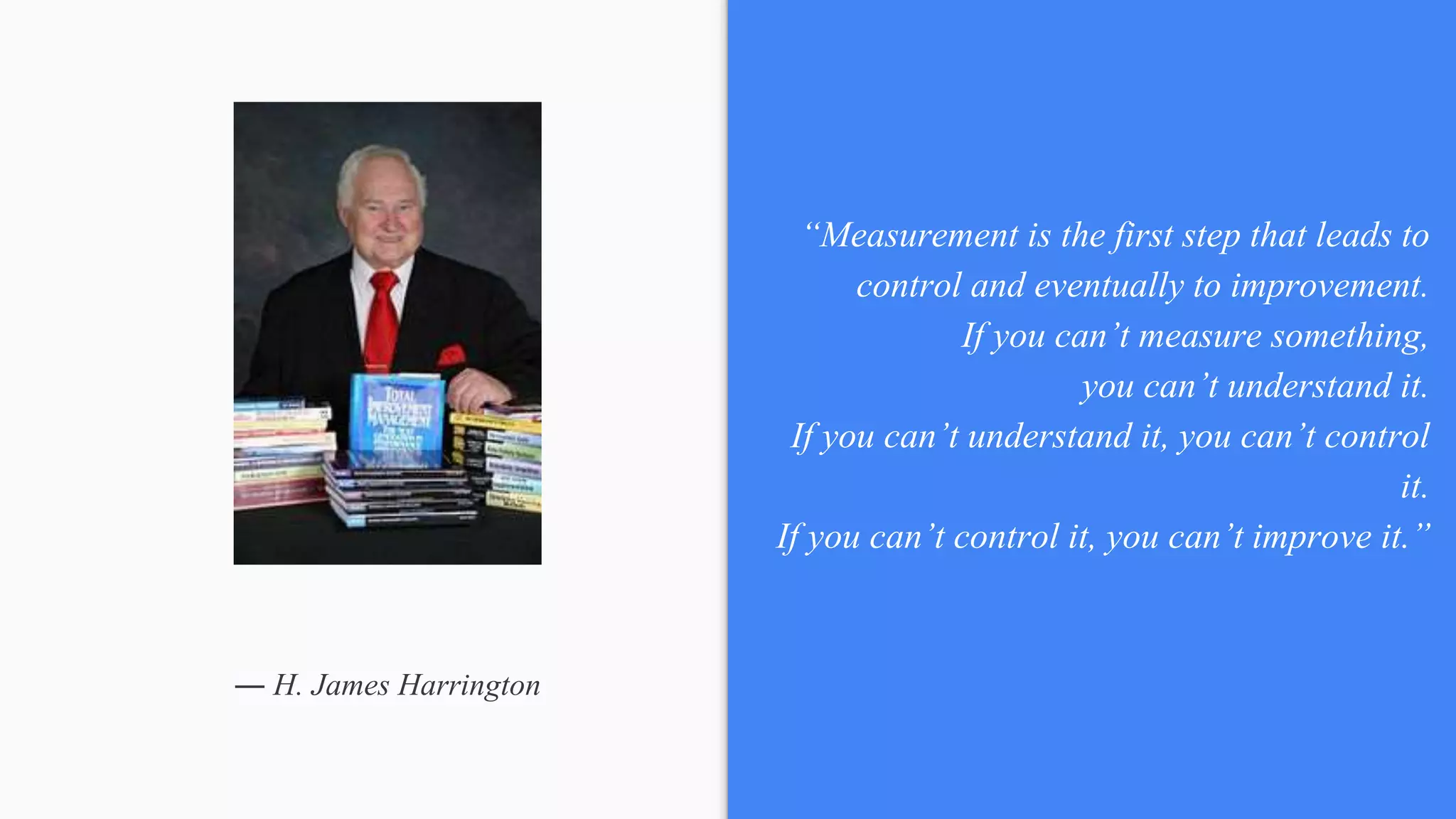
― H. James Harrington
“Measurement is the first step that leads to
control and eventually to improvement.
If you can’t measure something,
you can’t understand it.
If you can’t understand it, you can’t control
it.
If you can’t control it, you can’t improve it.”
KPIs
A Key Performance Indicator (KPI) is a measurable value that demonstrates
how effectively a company is achieving key business objectives. Companies
use KPIs to evaluate their success at reaching their goals.
KPIs can be measured in different fields of your business from sales,
marketing to financial and accounting departments. Each department has
certain indicators that need to be measured and analyzed.
Every area of business has specific
metrics that should be monitored,
measured and analyzed – marketers
track campaign statistics, sales
teams monitor new opportunities and
leads, and HR managers control the
turnover rate.
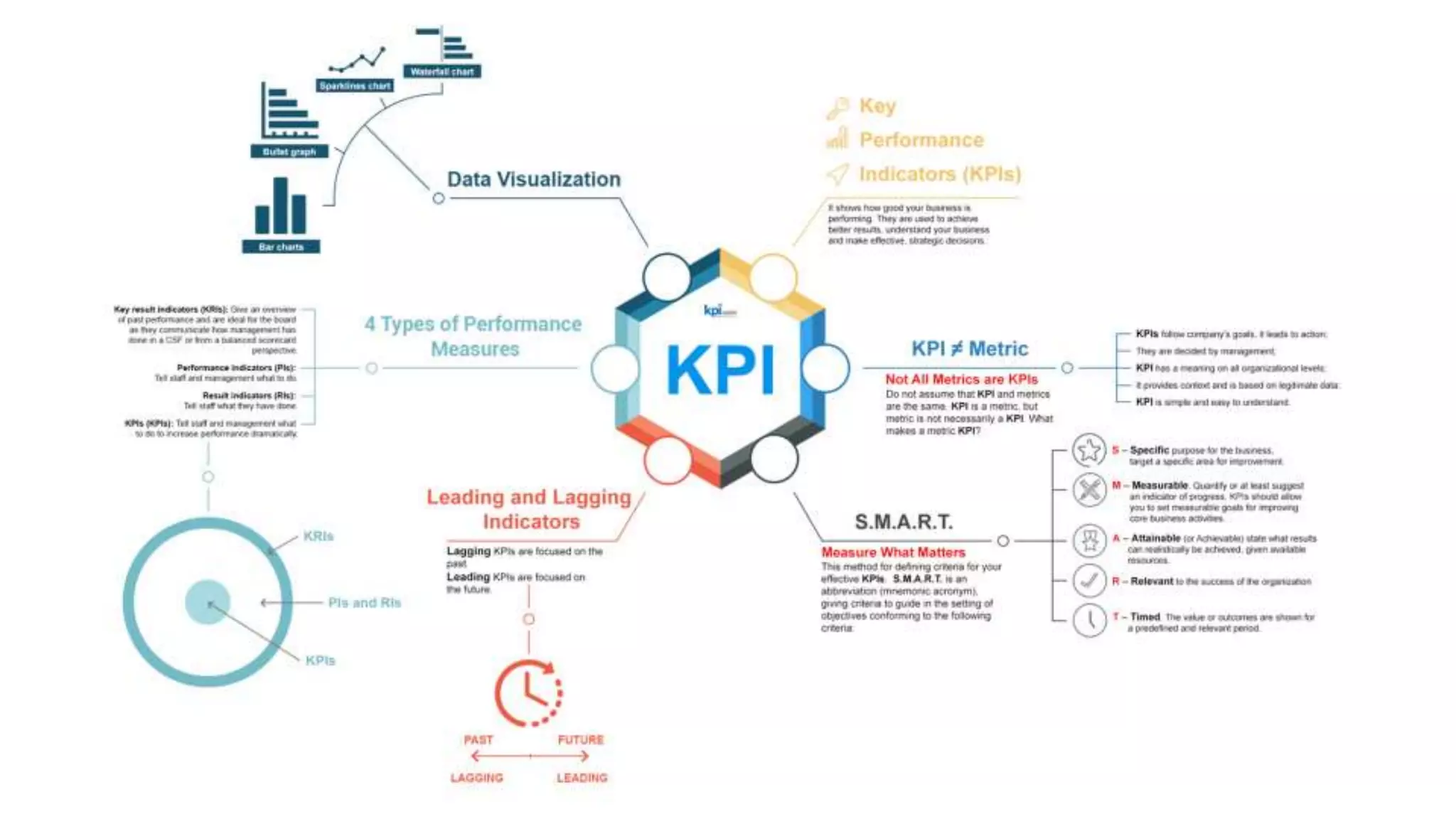
Not all metrics are necessary KPIs.
And not all KPIs need to be
measured and significant for the
company. Various determination
methods help us to define what
KPIs we need to take into account
in our specific area of activity.
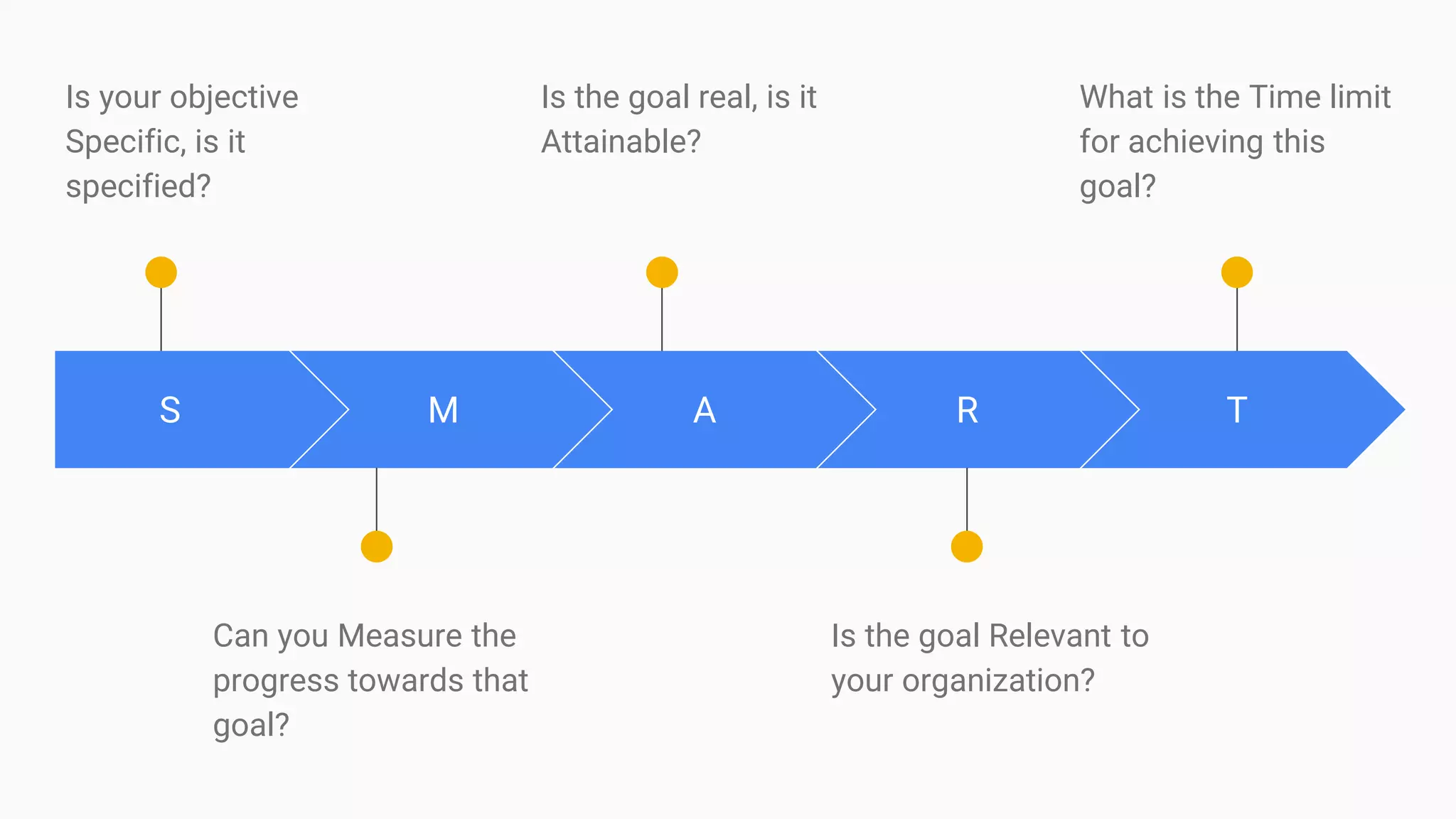
S
Is your objective
Specific, is it
specified?
M
Can you Measure the
progress towards that
goal?
A
Is the goal real, is it
Attainable?
R
Is the goal Relevant to
your organization?
T
What is the Time limit
for achieving this
goal?
KPIs can be divided into
Lagging and Leading
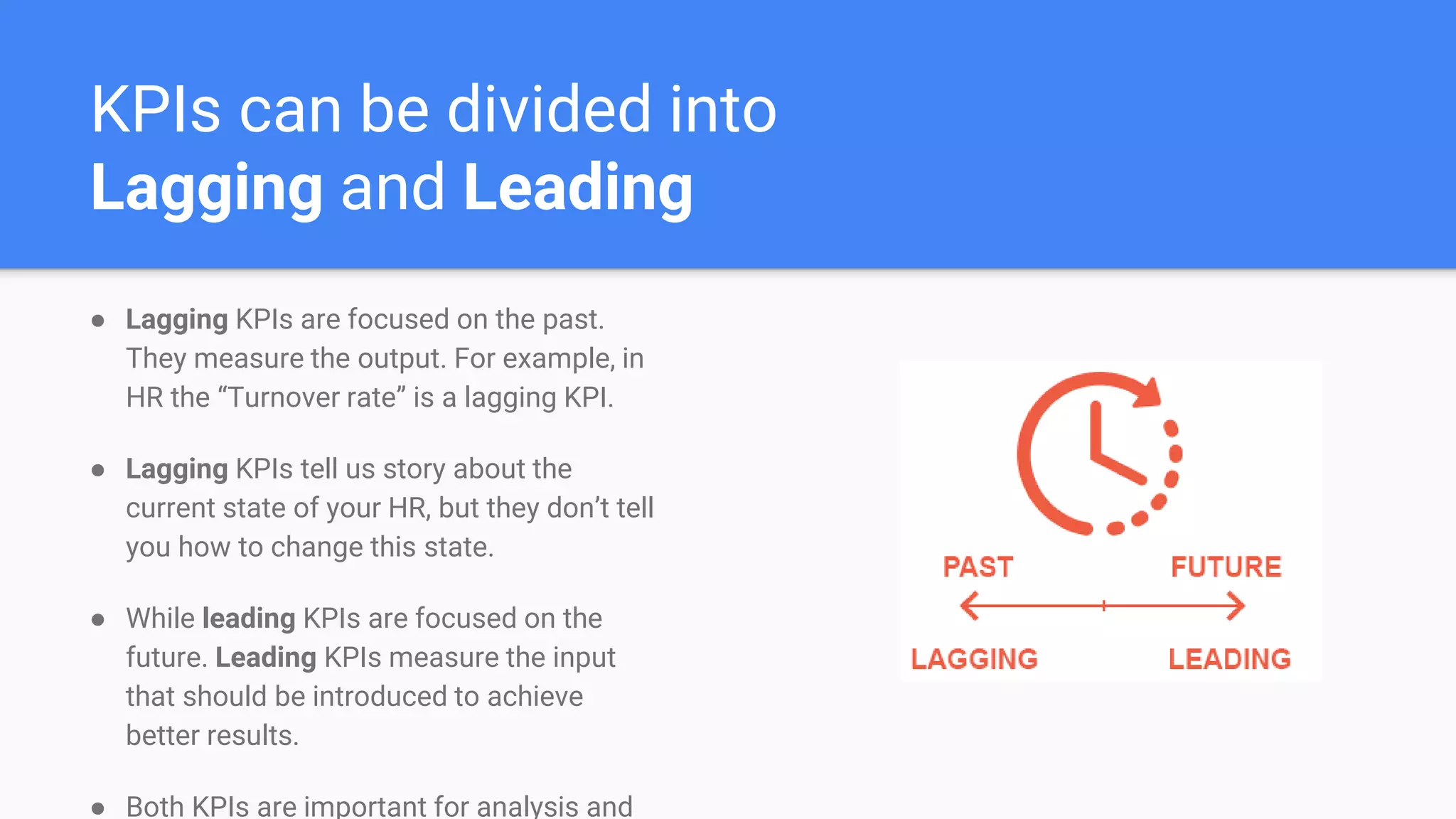
● Lagging KPIs are focused on the past.
They measure the output. For example, in
HR the “Turnover rate” is a lagging KPI.
● Lagging KPIs tell us story about the
current state of your HR, but they don’t tell
you how to change this state.
● While leading KPIs are focused on the
future. Leading KPIs measure the input
that should be introduced to achieve
better results.
● Both KPIs are important for analysis and
Different types of performance measure:
KRIs, PIs, RIs, KPIs.
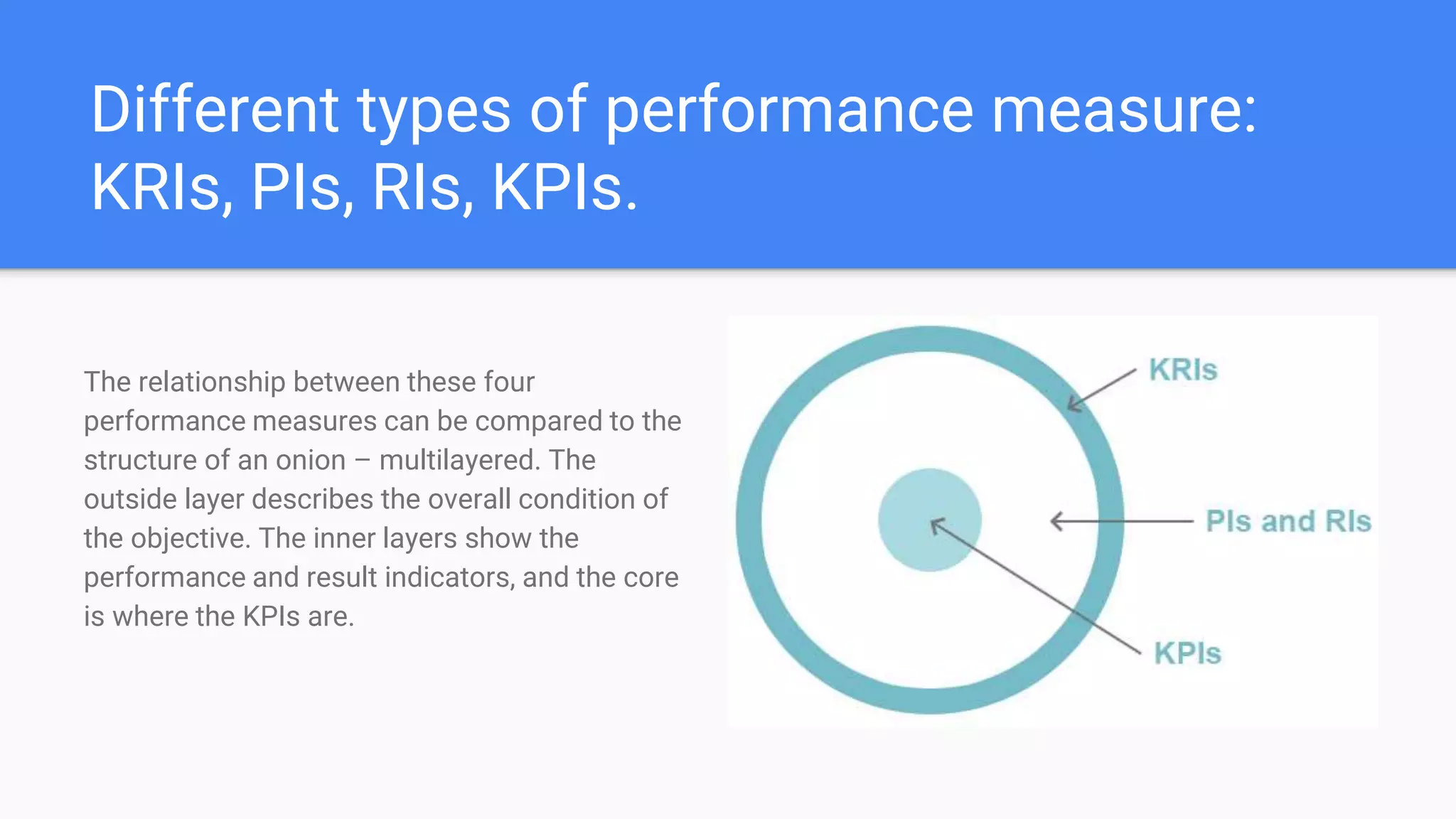
The relationship between these four
performance measures can be compared to the
structure of an onion – multilayered. The
outside layer describes the overall condition of
the objective. The inner layers show the
performance and result indicators, and the core
is where the KPIs are.
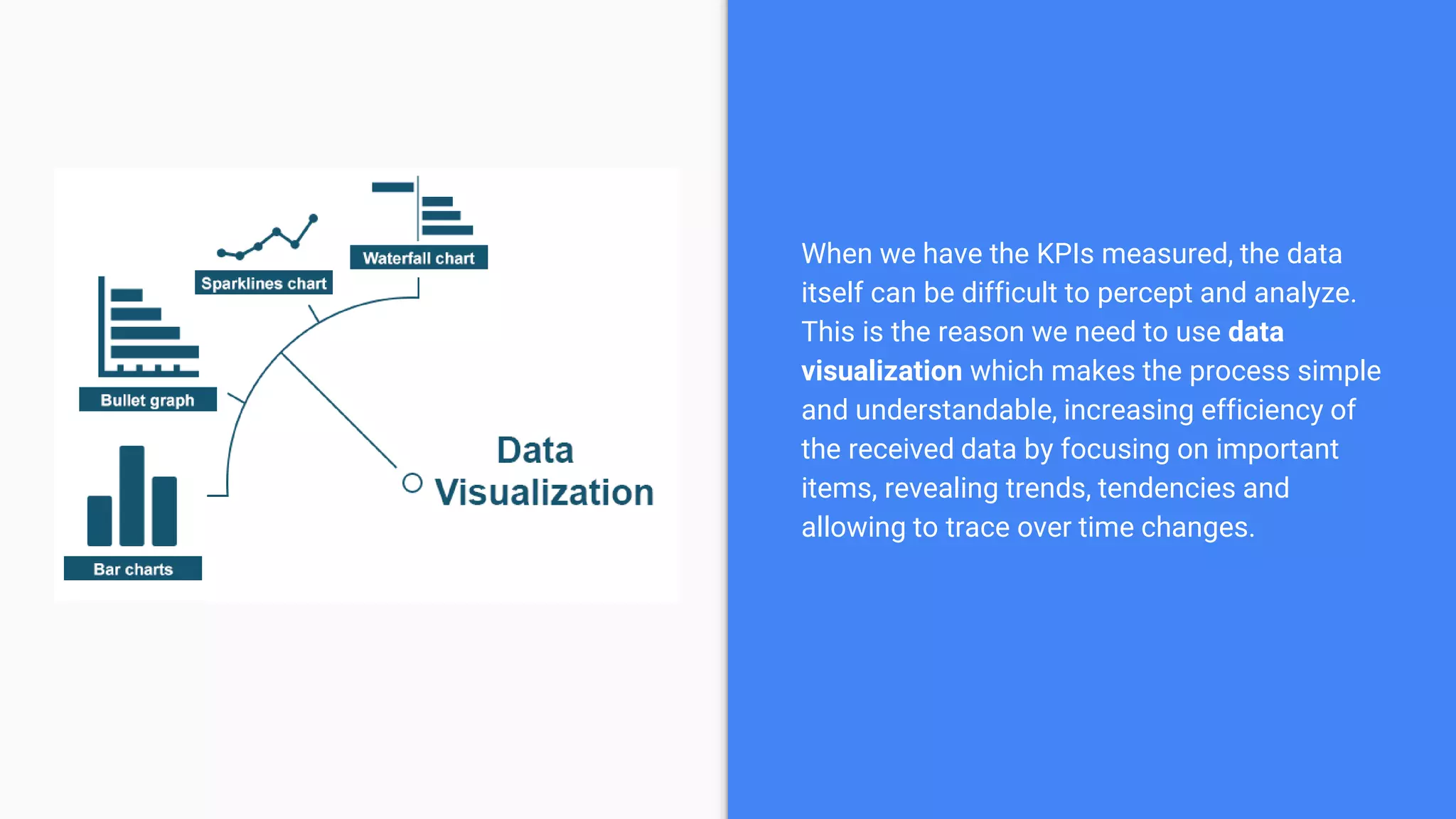
When we have the KPIs measured, the data
itself can be difficult to percept and analyze.
This is the reason we need to use data
visualization which makes the process simple
and understandable, increasing efficiency of
the received data by focusing on important
items, revealing trends, tendencies and
allowing to trace over time changes.

Intro to Key Performance Indicators [Infographic]

  • 1.
    Intro to KeyPerformance Indicators [Infographic]
  • 2.
    ― H. JamesHarrington “Measurement is the first step that leads to control and eventually to improvement. If you can’t measure something, you can’t understand it. If you can’t understand it, you can’t control it. If you can’t control it, you can’t improve it.”
  • 3.
    KPIs A Key PerformanceIndicator (KPI) is a measurable value that demonstrates how effectively a company is achieving key business objectives. Companies use KPIs to evaluate their success at reaching their goals. KPIs can be measured in different fields of your business from sales, marketing to financial and accounting departments. Each department has certain indicators that need to be measured and analyzed.
  • 4.
    Every area ofbusiness has specific metrics that should be monitored, measured and analyzed – marketers track campaign statistics, sales teams monitor new opportunities and leads, and HR managers control the turnover rate. Not all metrics are necessary KPIs. And not all KPIs need to be measured and significant for the company. Various determination methods help us to define what KPIs we need to take into account in our specific area of activity.
  • 6.
    S Is your objective Specific,is it specified? M Can you Measure the progress towards that goal? A Is the goal real, is it Attainable? R Is the goal Relevant to your organization? T What is the Time limit for achieving this goal?
  • 7.
    KPIs can bedivided into Lagging and Leading ● Lagging KPIs are focused on the past. They measure the output. For example, in HR the “Turnover rate” is a lagging KPI. ● Lagging KPIs tell us story about the current state of your HR, but they don’t tell you how to change this state. ● While leading KPIs are focused on the future. Leading KPIs measure the input that should be introduced to achieve better results. ● Both KPIs are important for analysis and
  • 8.
    Different types ofperformance measure: KRIs, PIs, RIs, KPIs. The relationship between these four performance measures can be compared to the structure of an onion – multilayered. The outside layer describes the overall condition of the objective. The inner layers show the performance and result indicators, and the core is where the KPIs are.
  • 9.
    When we havethe KPIs measured, the data itself can be difficult to percept and analyze. This is the reason we need to use data visualization which makes the process simple and understandable, increasing efficiency of the received data by focusing on important items, revealing trends, tendencies and allowing to trace over time changes.