INTRODUCTION OF KPI
(Key Performance
Indicator)
What is KPI?
 A performance measurement system
used to evaluate factors that are crucial to
the success of an organization.
 Performance Plan: A contract between boss
and subordinate in regards to performance
expectations within a specified time frame.
 Performance Appraisal: A face-to-face
session where the boss provides feedback to
the subordinate on where he / she stands
pertaining to the performance expectations
stipulated on the performance plan
What is KPI?
 Individual: The score or the rating on the
performance appraisal is tied to the
organization’s reward, recognition or (even
punitive system); i.e., merit increment, bonus,
promotion, transfer.
 Organizations use the results of performance
appraisals as a basis of manpower planning,
employee development, succession planning as
well as a protection against legal suits from
employees who have been fired or demoted.
Why KPI?
 Is it good? Is it effective?
 Does the employee know the company’s goal?
 Are our employees satisfied with the appraisals? Most managers dislike to conduct
appraisal sessions? Why?
◦ Existence of grey areas
◦ Scoring and rating system unclear
◦ Avoidance of confrontations
 What if We make them feel like they are being heard? By…
◦ Setingt a clear target with a specific time frame to achieve;
◦ Encouraging more communication between superior and subordinate;
◦ Transparent rating system to avoid bias or other issue.
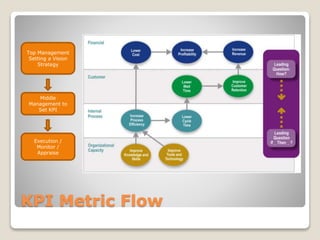
KPI Metric Flow
Top Management
Setting a Vision
Strategy
Middle
Management to
Set KPI
Execution /
Monitor /
Appraise
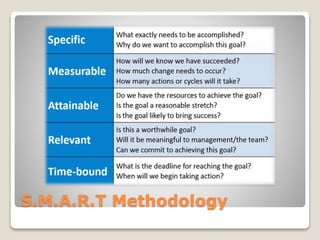
S.M.A.R.T Methodology
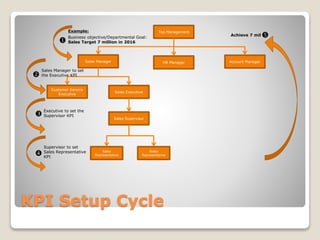
KPI Setup Cycle
Top Management
Sales Manager HR Manager Account Manager
Customer Service
Executive
Sales Executive
Sales Supervisor
Sales
Representative
Sales
Representative
Supervisor to set
Sales Representative
KPI





Example:
Business objective/Departmental Goal:
Sales Target 7 million in 2016
Sales Manager to set
the Executive KPI
Executive to set the
Supervisor KPI
Achieve 7 mil
Content of KPI
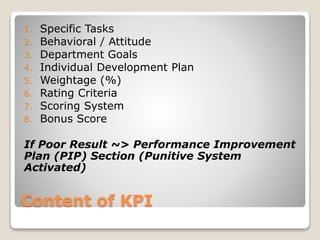
1. Specific Tasks
2. Behavioral / Attitude
3. Department Goals
4. Individual Development Plan
5. Weightage (%)
6. Rating Criteria
7. Scoring System
8. Bonus Score
If Poor Result ~> Performance Improvement
Plan (PIP) Section (Punitive System
Activated)
Example
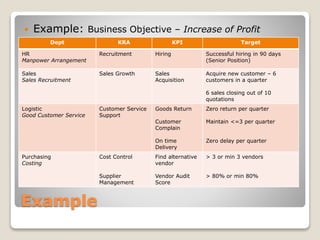
 Example: Business Objective – Increase of Profit
Dept KRA KPI Target
HR
Manpower Arrangement
Recruitment Hiring Successful hiring in 90 days
(Senior Position)
Sales
Sales Recruitment
Sales Growth Sales
Acquisition
Acquire new customer – 6
customers in a quarter
6 sales closing out of 10
quotations
Logistic
Good Customer Service
Customer Service
Support
Goods Return
Customer
Complain
On time
Delivery
Zero return per quarter
Maintain <=3 per quarter
Zero delay per quarter
Purchasing
Costing
Cost Control
Supplier
Management
Find alternative
vendor
Vendor Audit
Score
> 3 or min 3 vendors
> 80% or min 80%
KPI Template
 Let’s go to Excel Template
THE END

Intro of KPI

  • 1.
    INTRODUCTION OF KPI (KeyPerformance Indicator)
  • 2.
    What is KPI? A performance measurement system used to evaluate factors that are crucial to the success of an organization.  Performance Plan: A contract between boss and subordinate in regards to performance expectations within a specified time frame.  Performance Appraisal: A face-to-face session where the boss provides feedback to the subordinate on where he / she stands pertaining to the performance expectations stipulated on the performance plan
  • 3.
    What is KPI? Individual: The score or the rating on the performance appraisal is tied to the organization’s reward, recognition or (even punitive system); i.e., merit increment, bonus, promotion, transfer.  Organizations use the results of performance appraisals as a basis of manpower planning, employee development, succession planning as well as a protection against legal suits from employees who have been fired or demoted.
  • 4.
    Why KPI?  Isit good? Is it effective?  Does the employee know the company’s goal?  Are our employees satisfied with the appraisals? Most managers dislike to conduct appraisal sessions? Why? ◦ Existence of grey areas ◦ Scoring and rating system unclear ◦ Avoidance of confrontations  What if We make them feel like they are being heard? By… ◦ Setingt a clear target with a specific time frame to achieve; ◦ Encouraging more communication between superior and subordinate; ◦ Transparent rating system to avoid bias or other issue.
  • 5.
    KPI Metric Flow TopManagement Setting a Vision Strategy Middle Management to Set KPI Execution / Monitor / Appraise
  • 6.
  • 7.
    KPI Setup Cycle TopManagement Sales Manager HR Manager Account Manager Customer Service Executive Sales Executive Sales Supervisor Sales Representative Sales Representative Supervisor to set Sales Representative KPI      Example: Business objective/Departmental Goal: Sales Target 7 million in 2016 Sales Manager to set the Executive KPI Executive to set the Supervisor KPI Achieve 7 mil
  • 8.
    Content of KPI 1.Specific Tasks 2. Behavioral / Attitude 3. Department Goals 4. Individual Development Plan 5. Weightage (%) 6. Rating Criteria 7. Scoring System 8. Bonus Score If Poor Result ~> Performance Improvement Plan (PIP) Section (Punitive System Activated)
  • 9.
    Example  Example: BusinessObjective – Increase of Profit Dept KRA KPI Target HR Manpower Arrangement Recruitment Hiring Successful hiring in 90 days (Senior Position) Sales Sales Recruitment Sales Growth Sales Acquisition Acquire new customer – 6 customers in a quarter 6 sales closing out of 10 quotations Logistic Good Customer Service Customer Service Support Goods Return Customer Complain On time Delivery Zero return per quarter Maintain <=3 per quarter Zero delay per quarter Purchasing Costing Cost Control Supplier Management Find alternative vendor Vendor Audit Score > 3 or min 3 vendors > 80% or min 80%
  • 10.
    KPI Template  Let’sgo to Excel Template
  • 11.