
Week 9 Lecture
Film Technology
The influence of technology
• How has technology influenced film in….?
• Theaters
• Home Video
• Filmmaking
• Are those changes for good or bad?
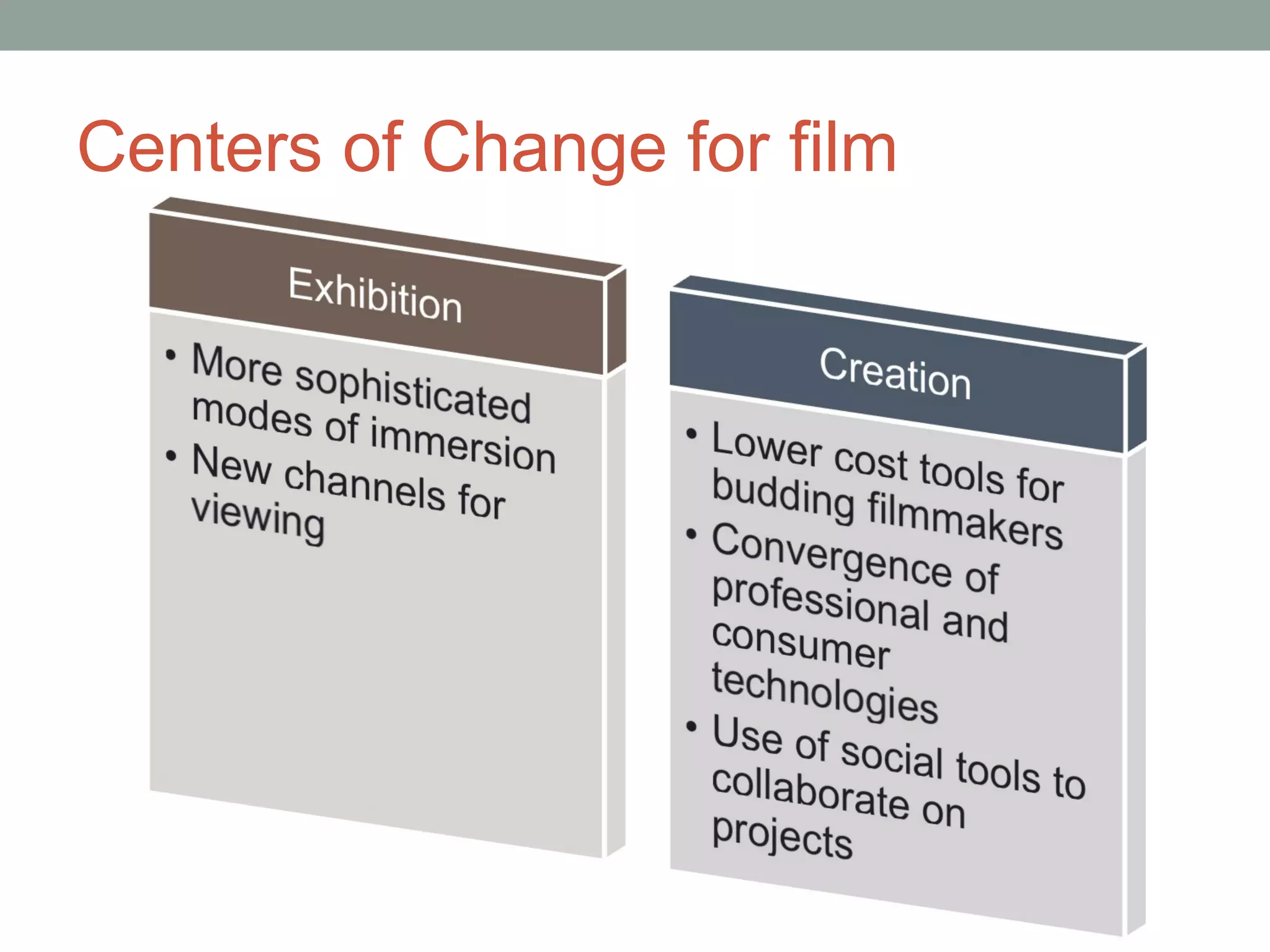
Centers of Change for film
How has Technology Spurred the Growth of
Film?
• Technology has always been a force for developing the
ways that movies are made
• The Introduction of synchronous sound with 1927’s The Jazz Singer
allowed filmmakers to begin a whole new era of storytelling
• Over the years, different filmmakers had tried to increase the width of
the screen to make films more of a spectacle.
• We also see a shift towards low cost production which may make it
possible for unknown talents to be discovered as filmmakers
Historical Example: The shift to
Widescreen
• From Belton’s “Technology and
Innovation”
• Post WWII, theaters saw a major drop off
in attendance
• Families were moving to the suburbs and
began to engage in more active forms of
recreation
• Theaters had to also compete with the
increasing amount of households that had
television sets
• Theaters sought to find ways to make
movie watching a more active experience
for audiences
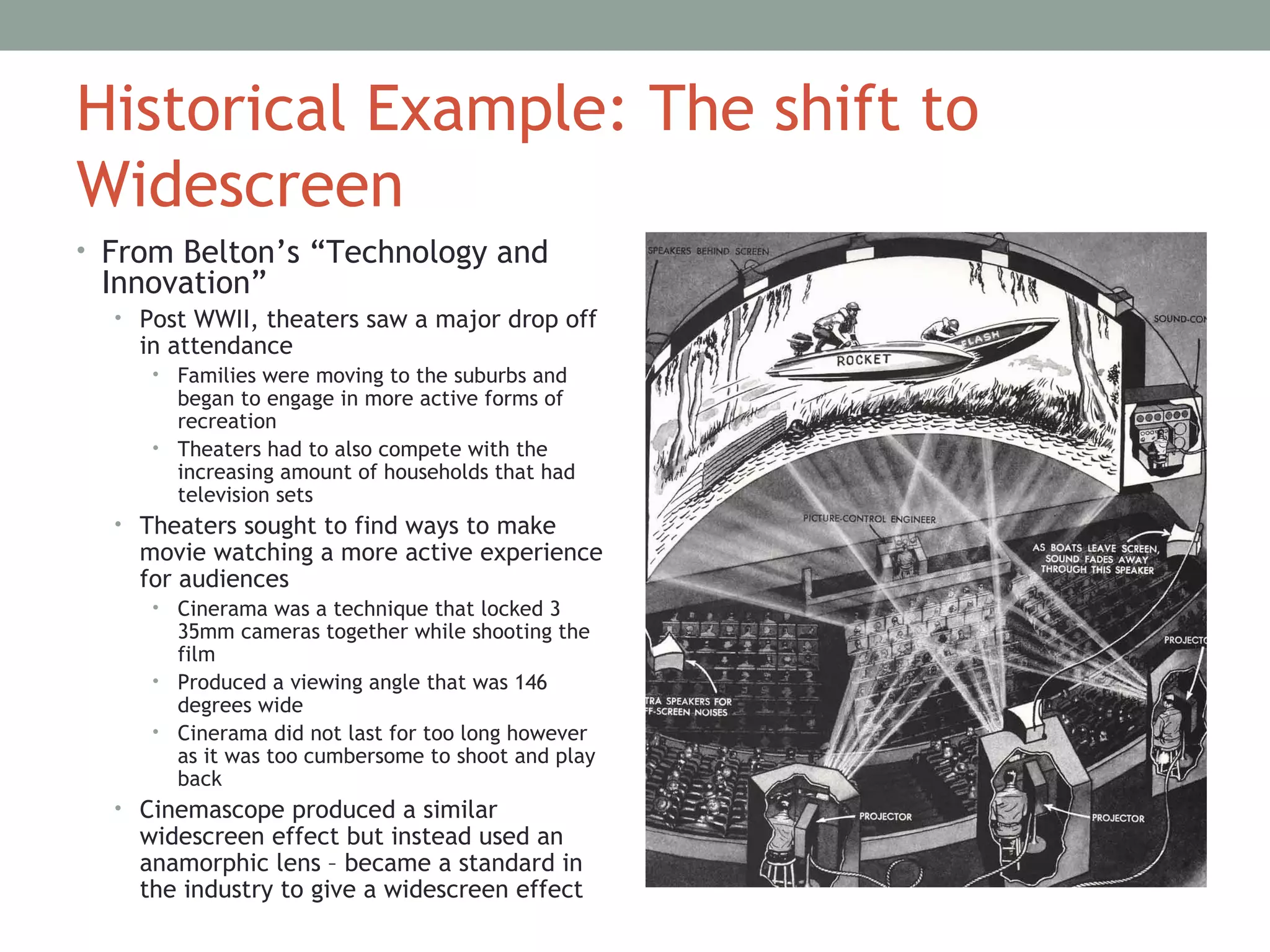
• Cinerama was a technique that locked 3
35mm cameras together while shooting the
film
• Produced a viewing angle that was 146
degrees wide
• Cinerama did not last for too long however
as it was too cumbersome to shoot and play
back
• Cinemascope produced a similar
widescreen effect but instead used an
anamorphic lens – became a standard in
the industry to give a widescreen effect
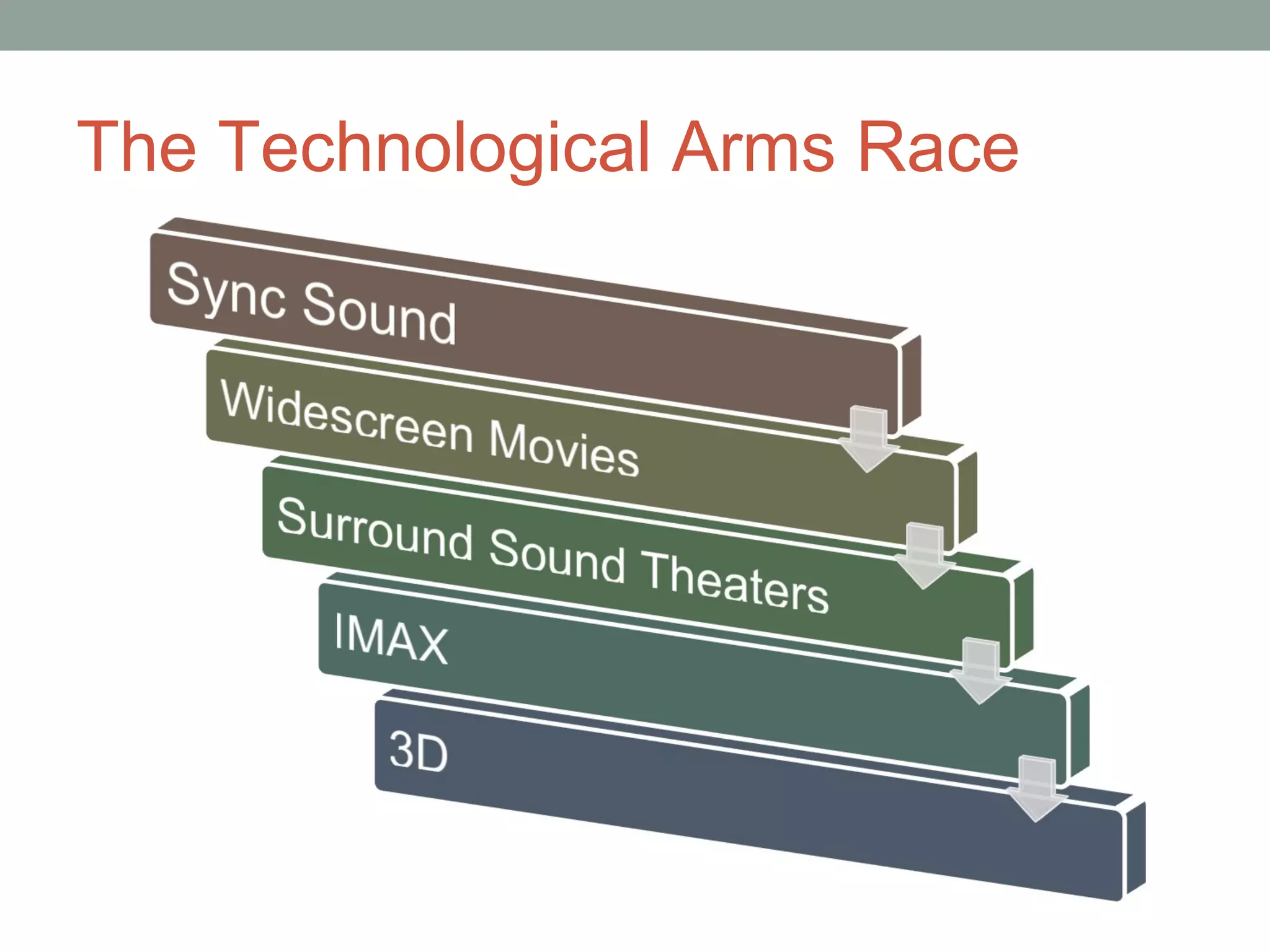
The Technological Arms Race
What are some of the current trends
that we are seeing?
New Distribution Channels
3-D and IMAX Movies
• Film Studios now are presented with the same conundrum that
studios in the 1950’s were faced with “How do you keep an
audiences attention that is increasingly diverted?”
• The latest iteration is 3D and IMAX
• These films create a destination experience for audiences – They
cannot be recreated at home
• Releasing movies in a 3D and IMAX format allows them to charge
premium pricing – often 5 more dollars per ticket
• What has been your experience in watching a 3D movie? Do you feel
that the industry is really moving in this direction?
The future in film production
• As non-linear editing systems become more affordable,
we will probably see more and more low budget feature
films getting bought and released by major studios
• Paranormal Activity was made with a budget of $15,000
• The film had a 7-day shooting schedule
• The film has since made over 100 million dollars at the box office
• Colin: $70 Zombie film that played at the Cannes film
festival
• Justin Bieber’s Never Say Never Directors Cut
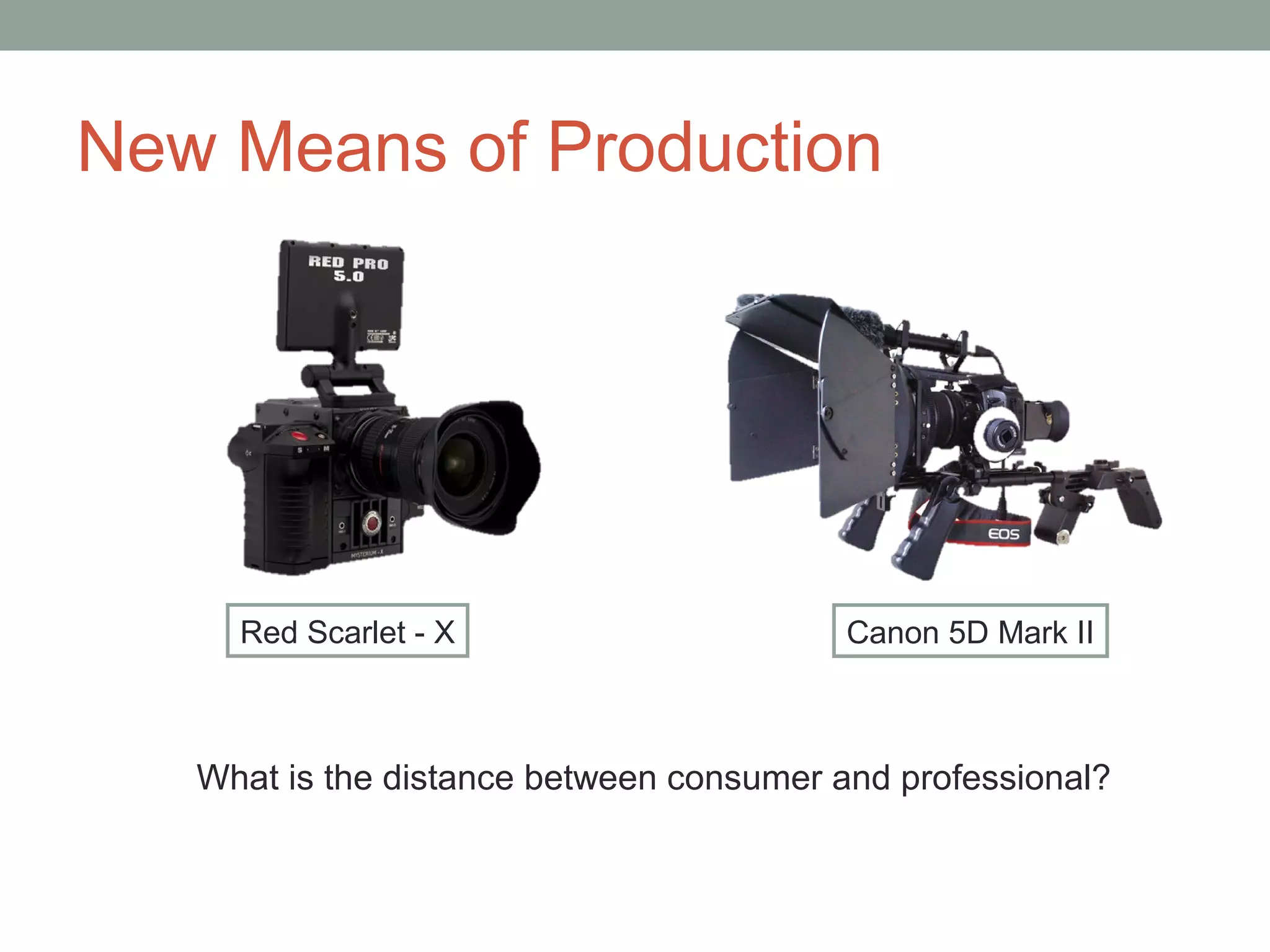
New Means of Production
Red Scarlet - X Canon 5D Mark II
What is the distance between consumer and professional?
The Future in Film Distribution
• Increasingly, we will see film content that is delivered to
households digitally through various means
• DVD and Blu-Ray
• On-Demand through cable television
• Netflix Instant Streaming
• Hulu and other online video sites
• How have you seen the way that you access media
content change over the past 5 years? What do you see
happening in the future of film?
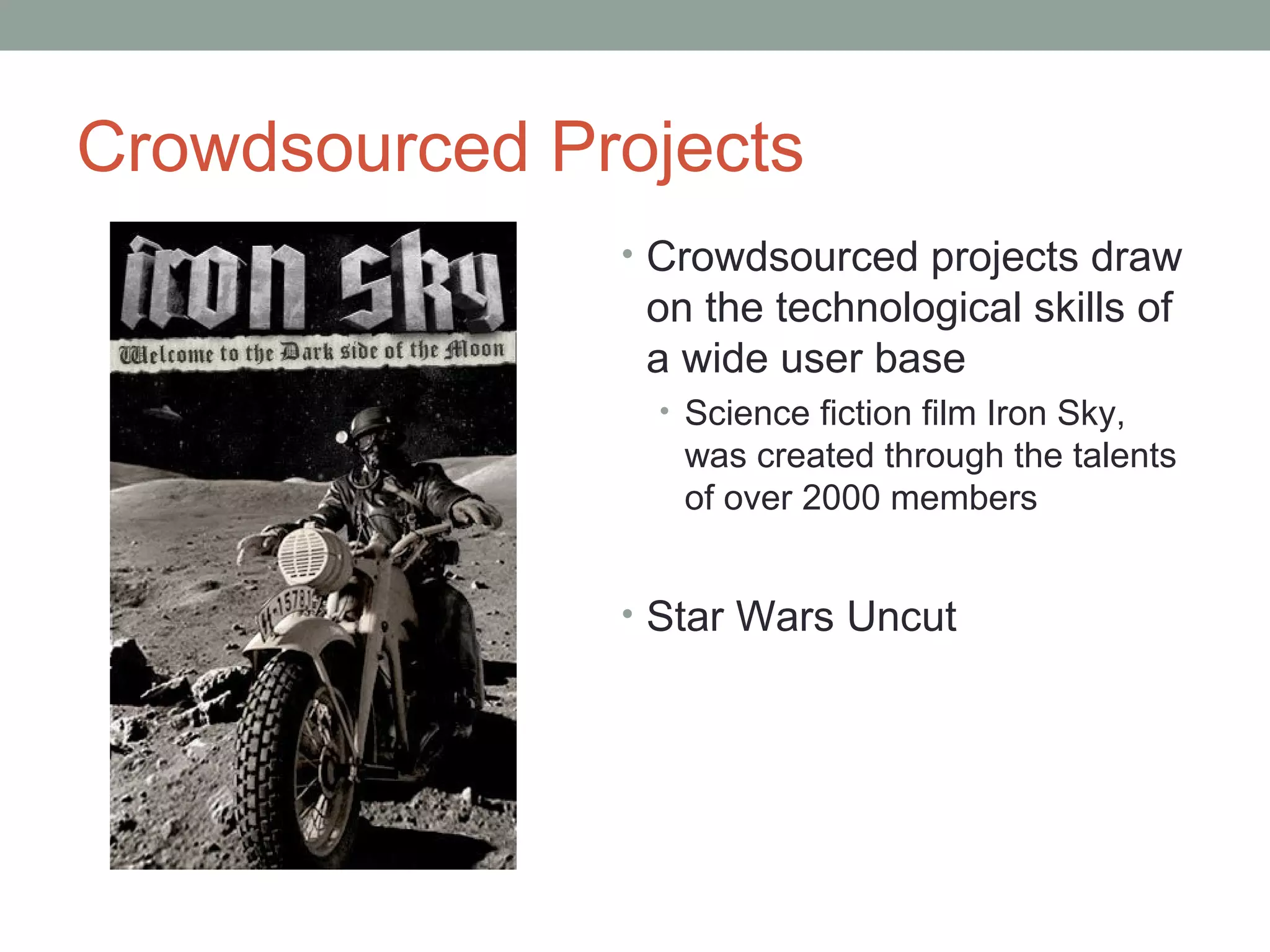
Crowdsourced Projects
• Crowdsourced projects draw
on the technological skills of
a wide user base
• Science fiction film Iron Sky,
was created through the talents
of over 2000 members
• Star Wars Uncut

Intro to Film: Technology

  • 1.
  • 2.
    The influence oftechnology • How has technology influenced film in….? • Theaters • Home Video • Filmmaking • Are those changes for good or bad?
  • 3.
  • 4.
    How has TechnologySpurred the Growth of Film? • Technology has always been a force for developing the ways that movies are made • The Introduction of synchronous sound with 1927’s The Jazz Singer allowed filmmakers to begin a whole new era of storytelling • Over the years, different filmmakers had tried to increase the width of the screen to make films more of a spectacle. • We also see a shift towards low cost production which may make it possible for unknown talents to be discovered as filmmakers
  • 5.
    Historical Example: Theshift to Widescreen • From Belton’s “Technology and Innovation” • Post WWII, theaters saw a major drop off in attendance • Families were moving to the suburbs and began to engage in more active forms of recreation • Theaters had to also compete with the increasing amount of households that had television sets • Theaters sought to find ways to make movie watching a more active experience for audiences • Cinerama was a technique that locked 3 35mm cameras together while shooting the film • Produced a viewing angle that was 146 degrees wide • Cinerama did not last for too long however as it was too cumbersome to shoot and play back • Cinemascope produced a similar widescreen effect but instead used an anamorphic lens – became a standard in the industry to give a widescreen effect
  • 6.
  • 7.
    What are someof the current trends that we are seeing?
  • 8.
  • 9.
    3-D and IMAXMovies • Film Studios now are presented with the same conundrum that studios in the 1950’s were faced with “How do you keep an audiences attention that is increasingly diverted?” • The latest iteration is 3D and IMAX • These films create a destination experience for audiences – They cannot be recreated at home • Releasing movies in a 3D and IMAX format allows them to charge premium pricing – often 5 more dollars per ticket • What has been your experience in watching a 3D movie? Do you feel that the industry is really moving in this direction?
  • 10.
    The future infilm production • As non-linear editing systems become more affordable, we will probably see more and more low budget feature films getting bought and released by major studios • Paranormal Activity was made with a budget of $15,000 • The film had a 7-day shooting schedule • The film has since made over 100 million dollars at the box office • Colin: $70 Zombie film that played at the Cannes film festival • Justin Bieber’s Never Say Never Directors Cut
  • 11.
    New Means ofProduction Red Scarlet - X Canon 5D Mark II What is the distance between consumer and professional?
  • 12.
    The Future inFilm Distribution • Increasingly, we will see film content that is delivered to households digitally through various means • DVD and Blu-Ray • On-Demand through cable television • Netflix Instant Streaming • Hulu and other online video sites • How have you seen the way that you access media content change over the past 5 years? What do you see happening in the future of film?
  • 13.
    Crowdsourced Projects • Crowdsourcedprojects draw on the technological skills of a wide user base • Science fiction film Iron Sky, was created through the talents of over 2000 members • Star Wars Uncut