Download as PDF, PPTX
![Strided load
uint8x8x2_t vld2_u8
(const uint8_t *)
Form of expected instruction(s):
vld2.8 {d0, d1}, [r0]](https://image.slidesharecdn.com/intrinsics-demo-140320094326-phpapp01/75/Q4-11-NEON-Intrinsics-15-2048.jpg)
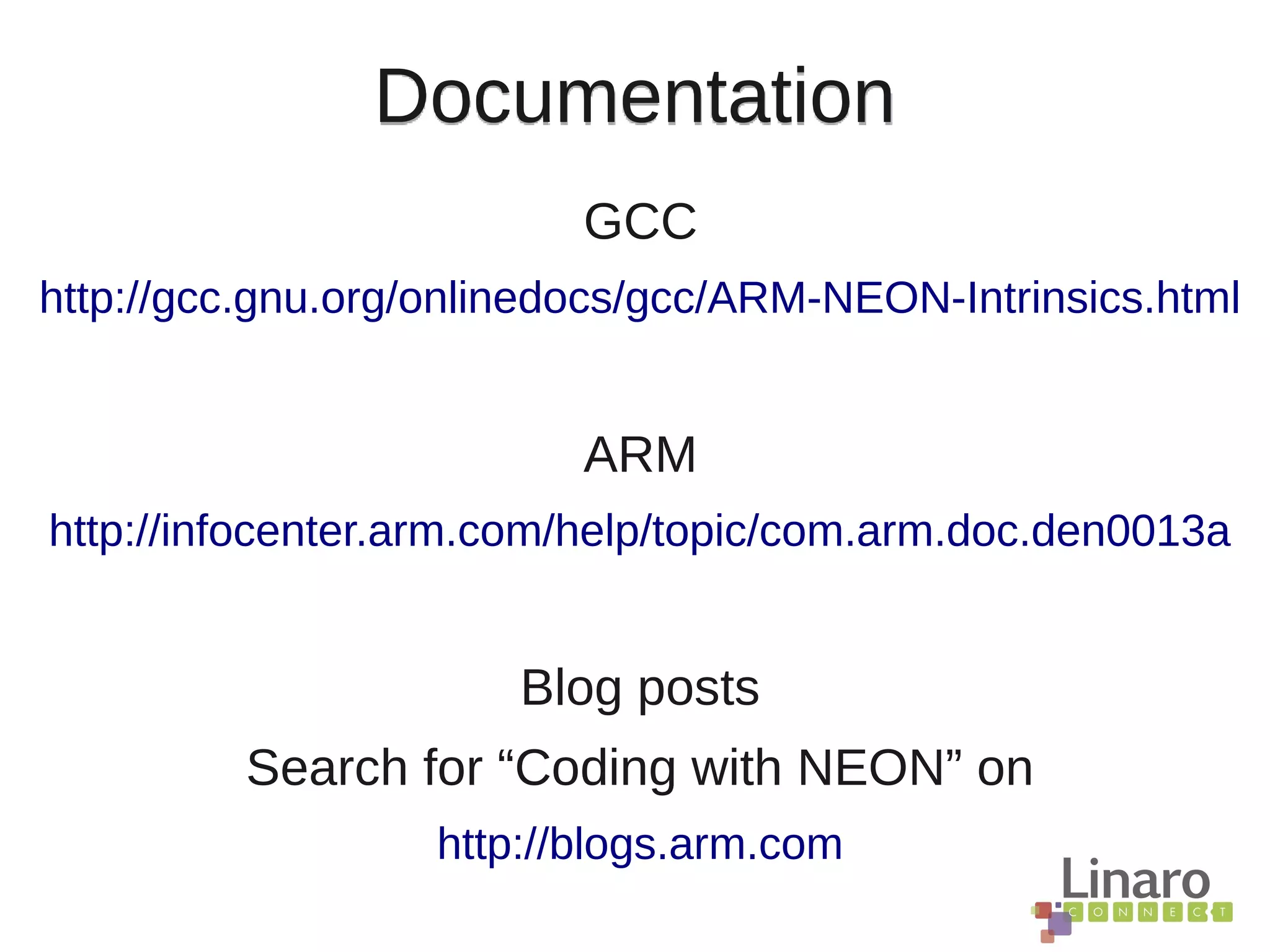
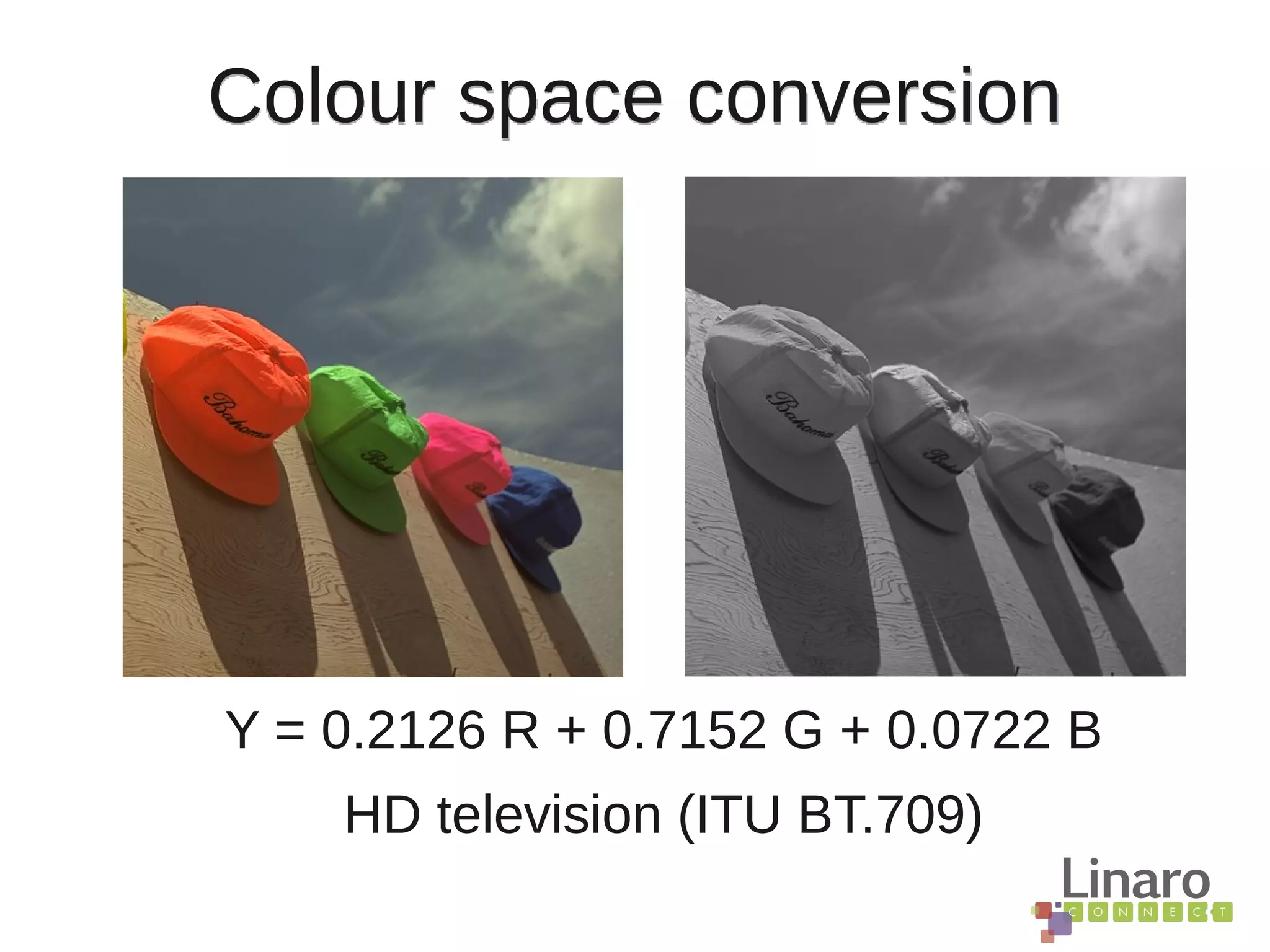
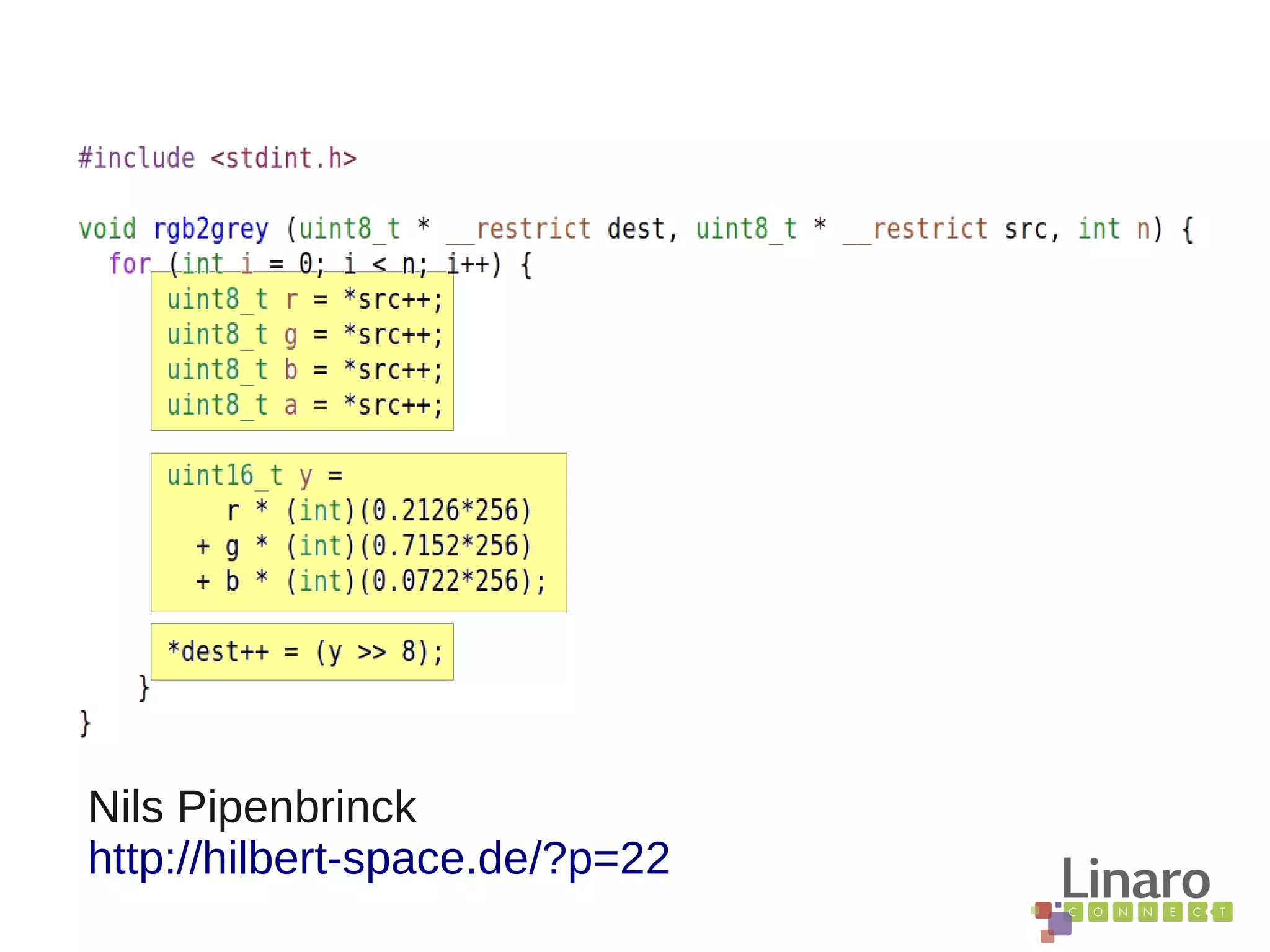
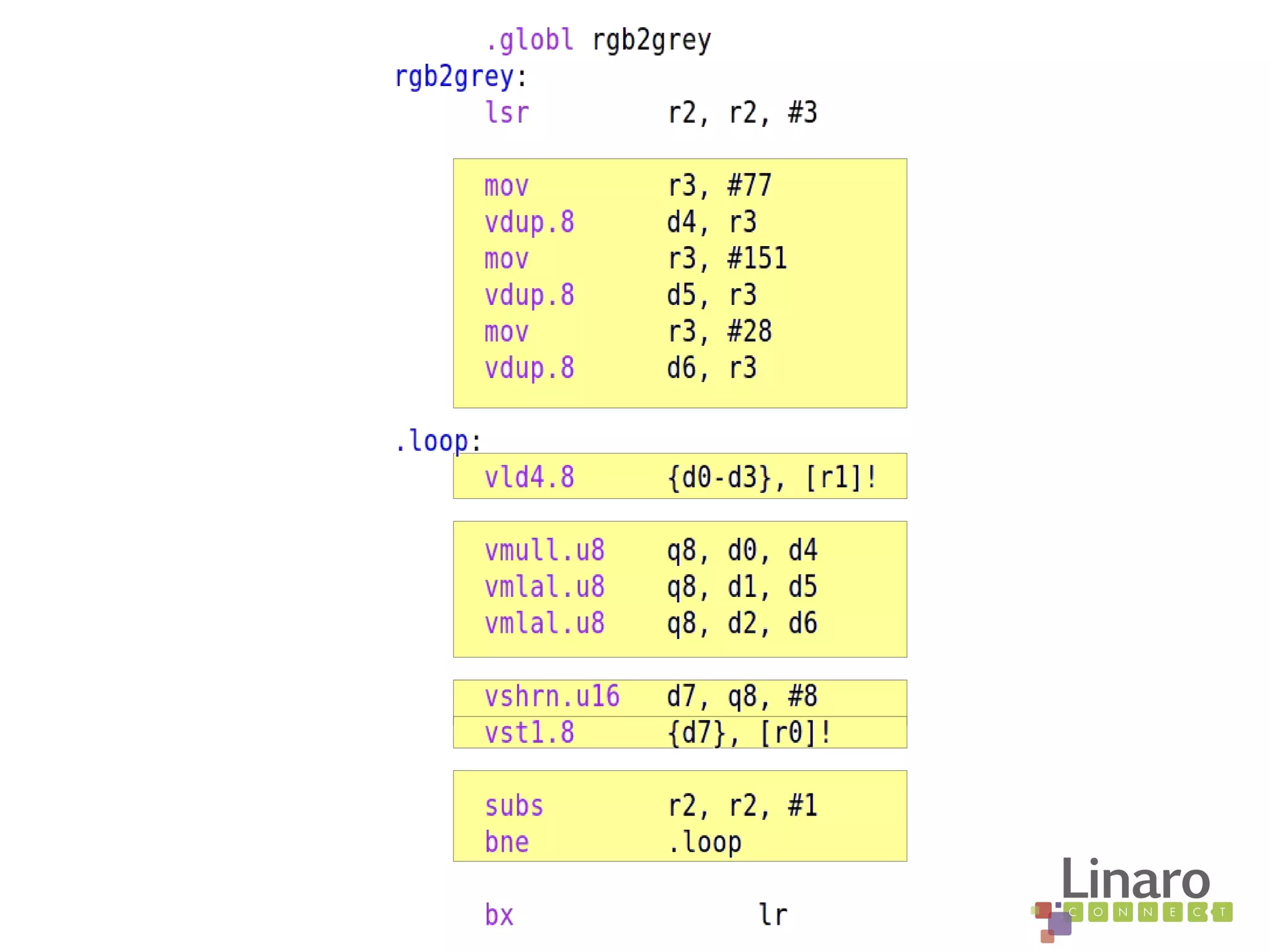
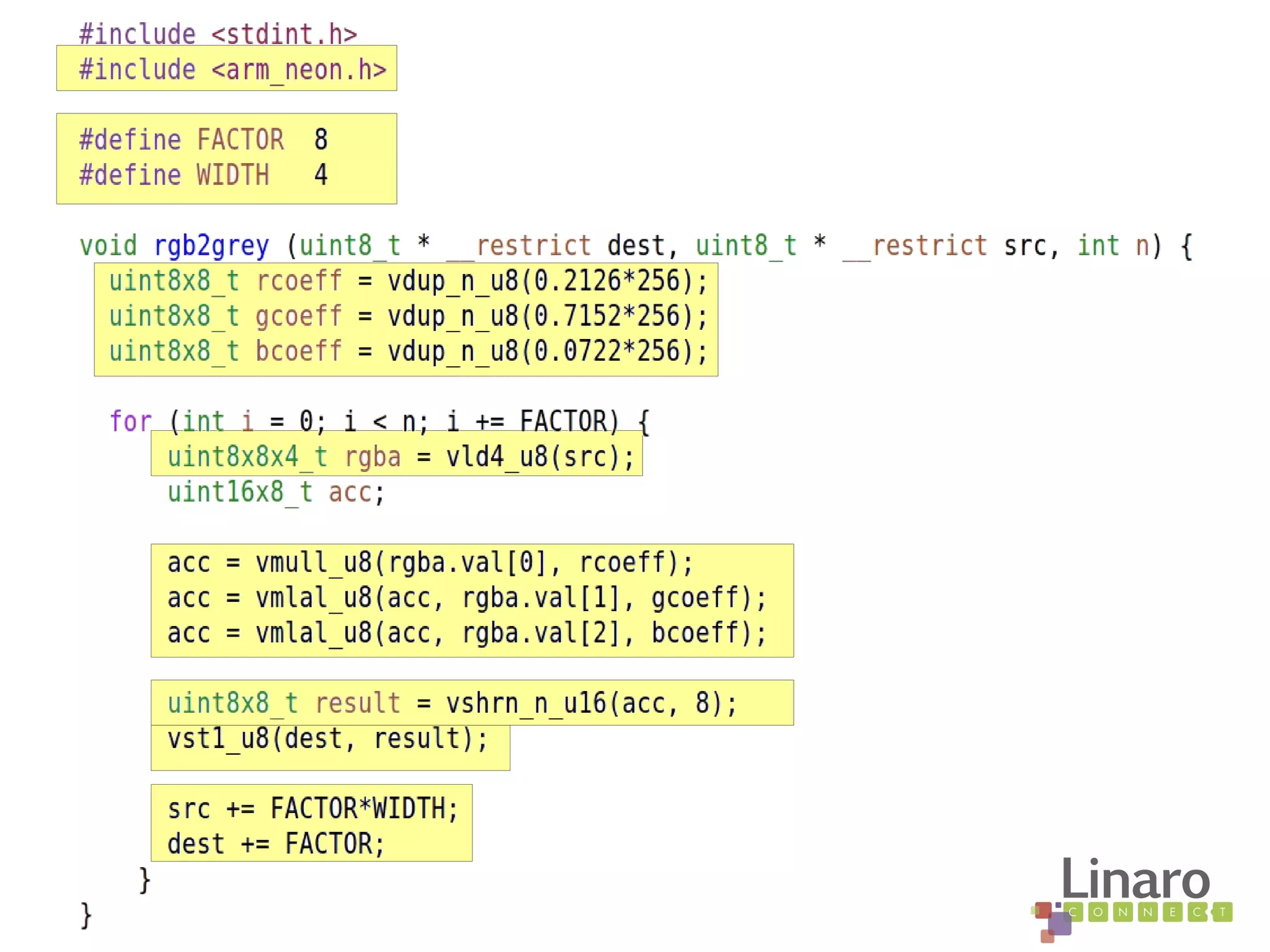
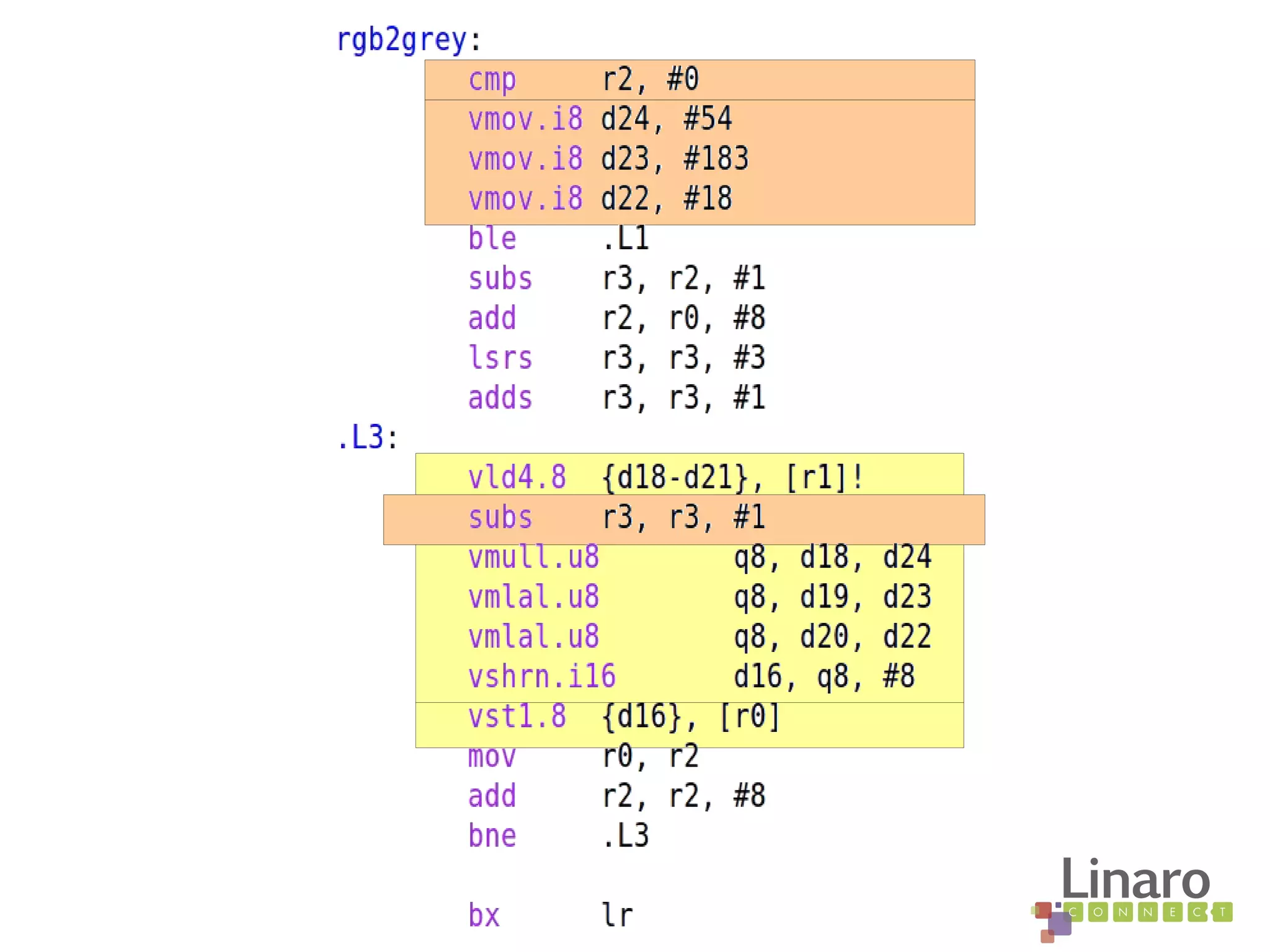
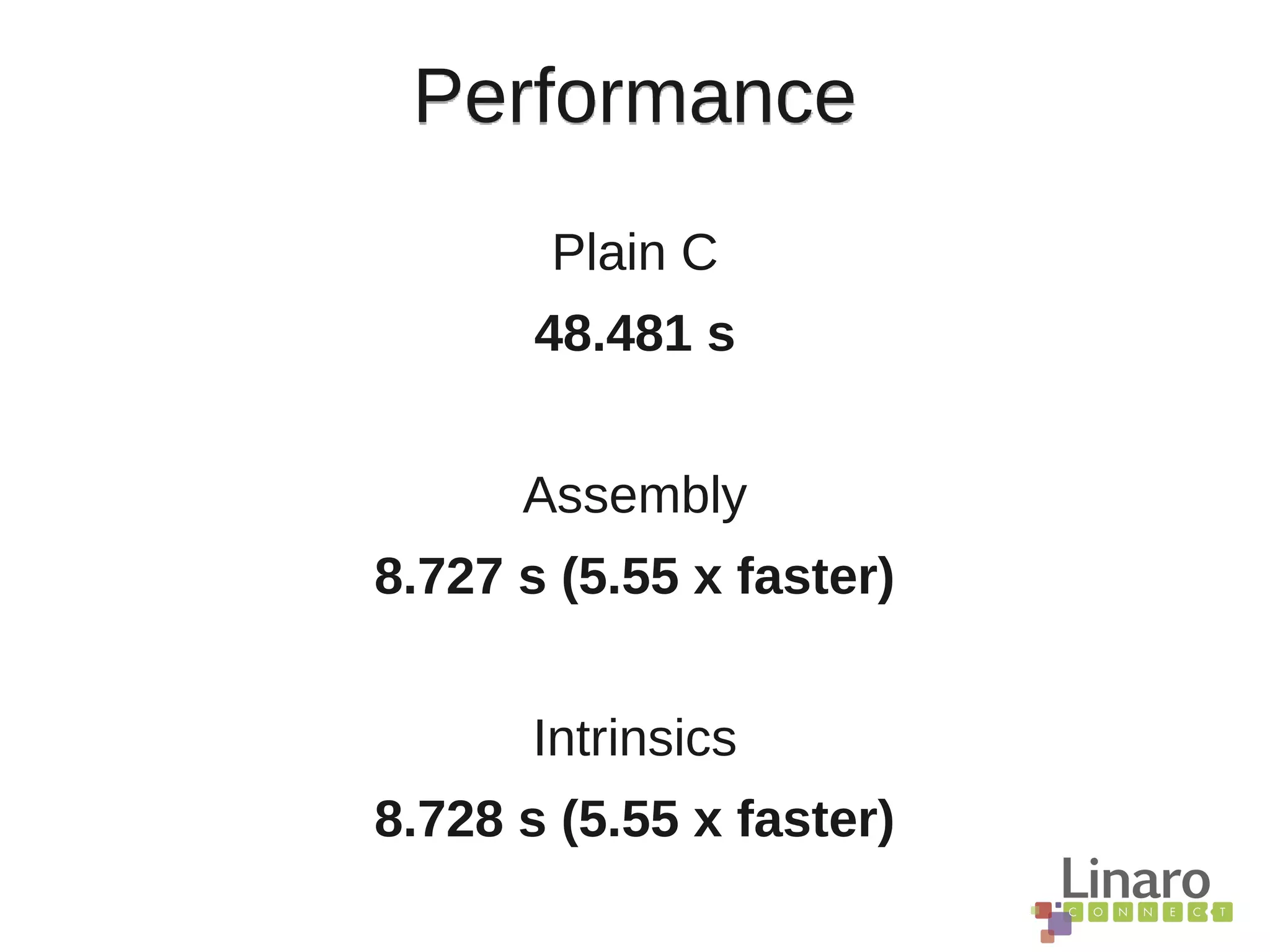
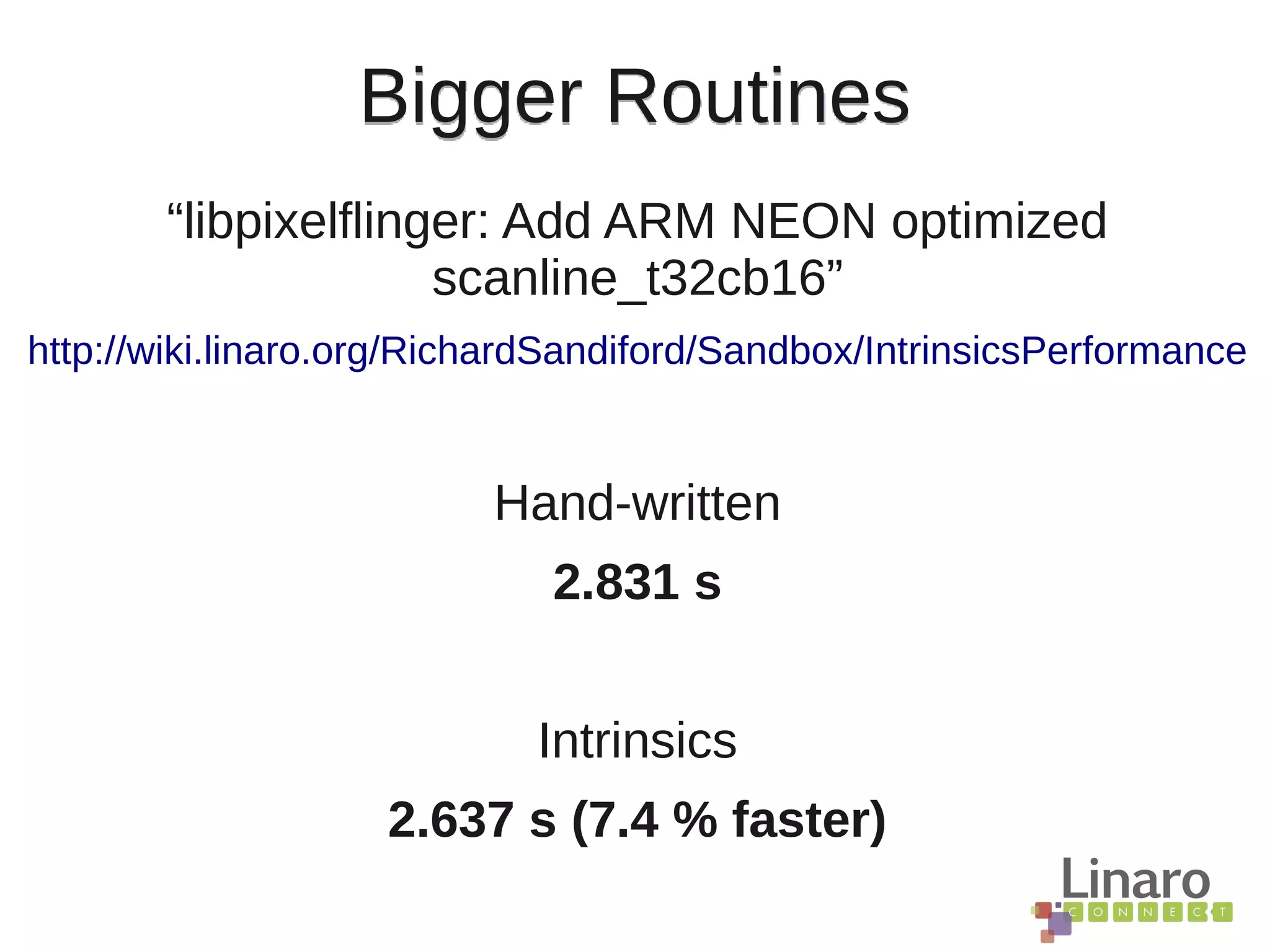


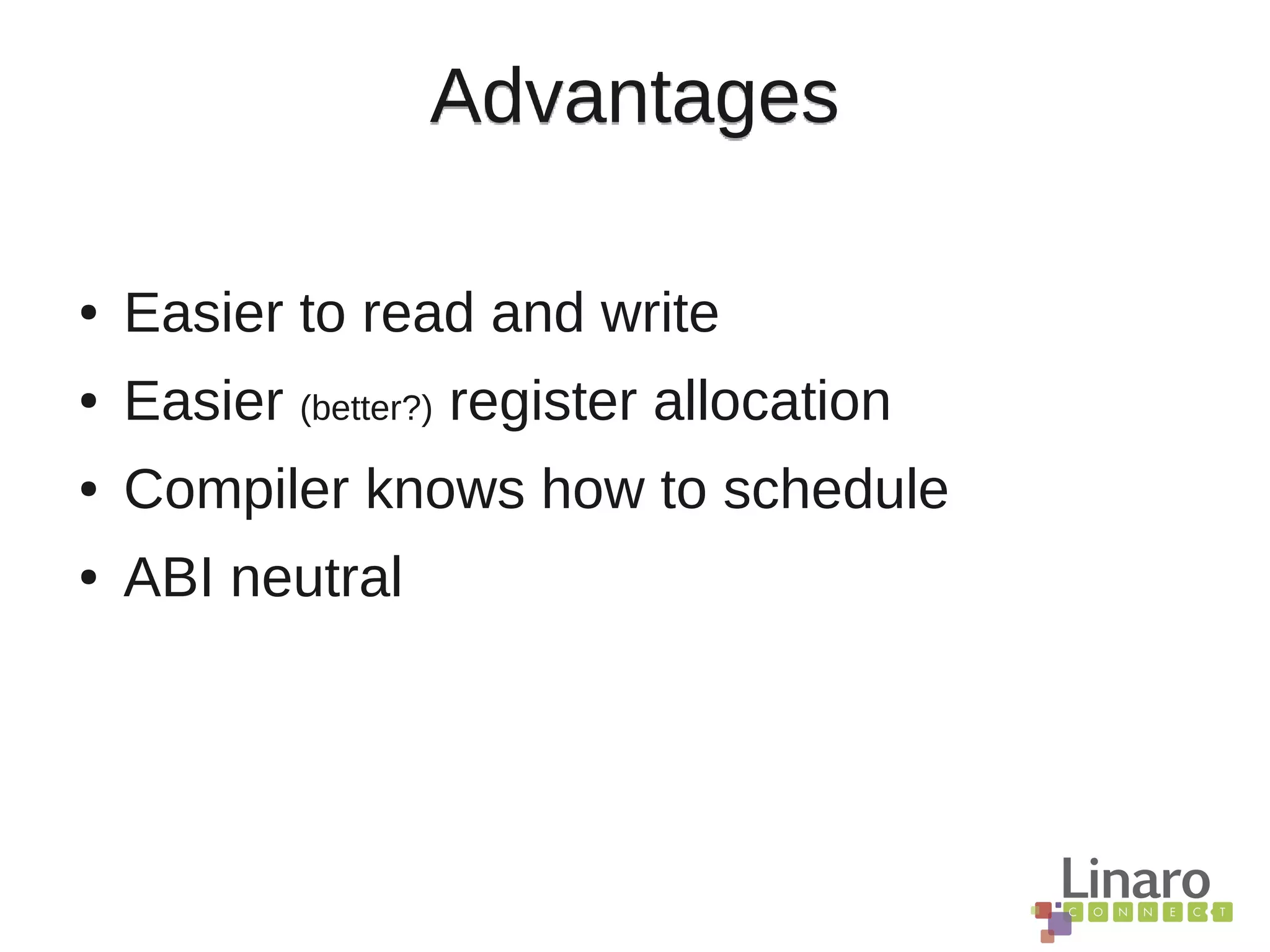
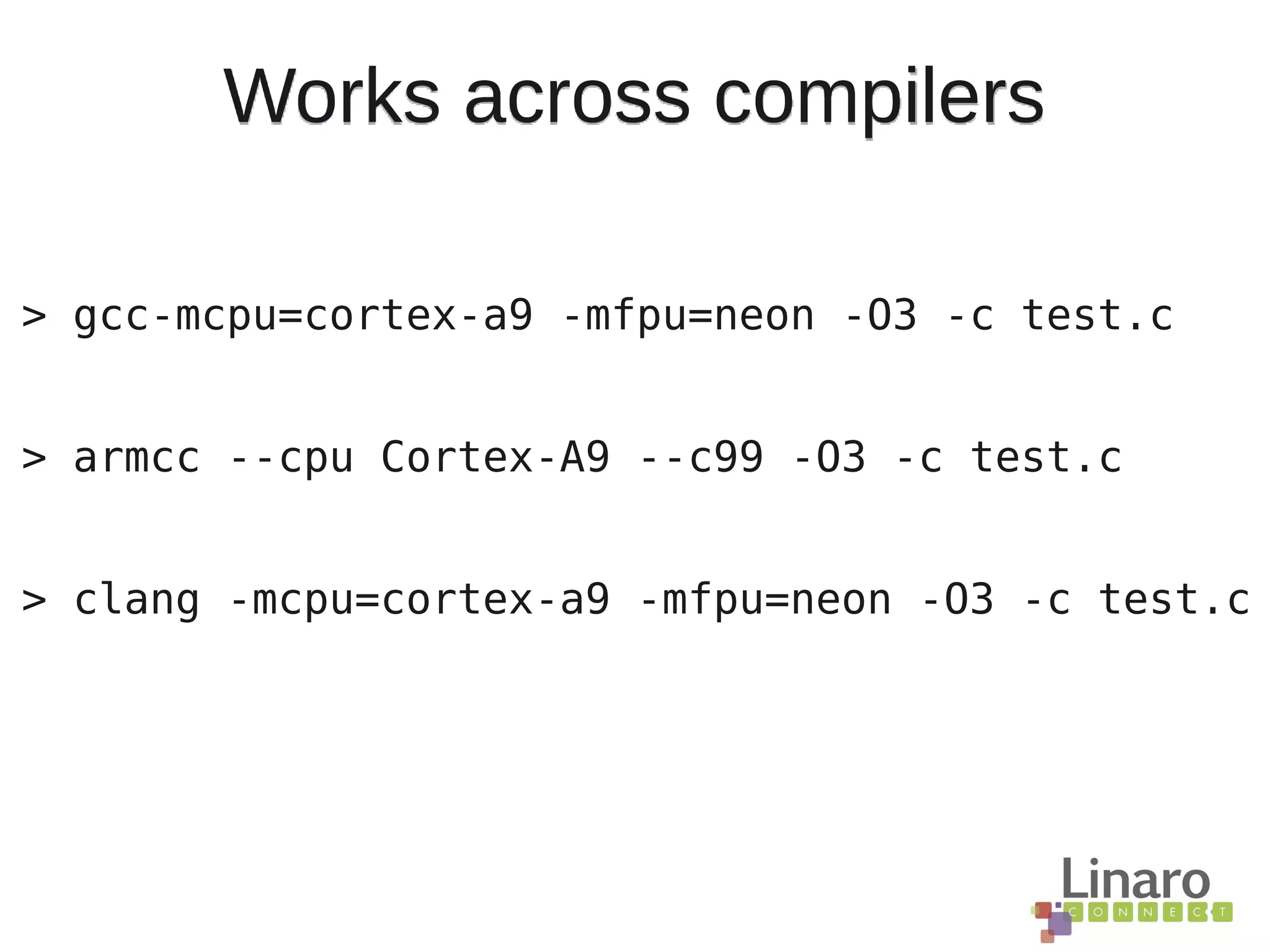
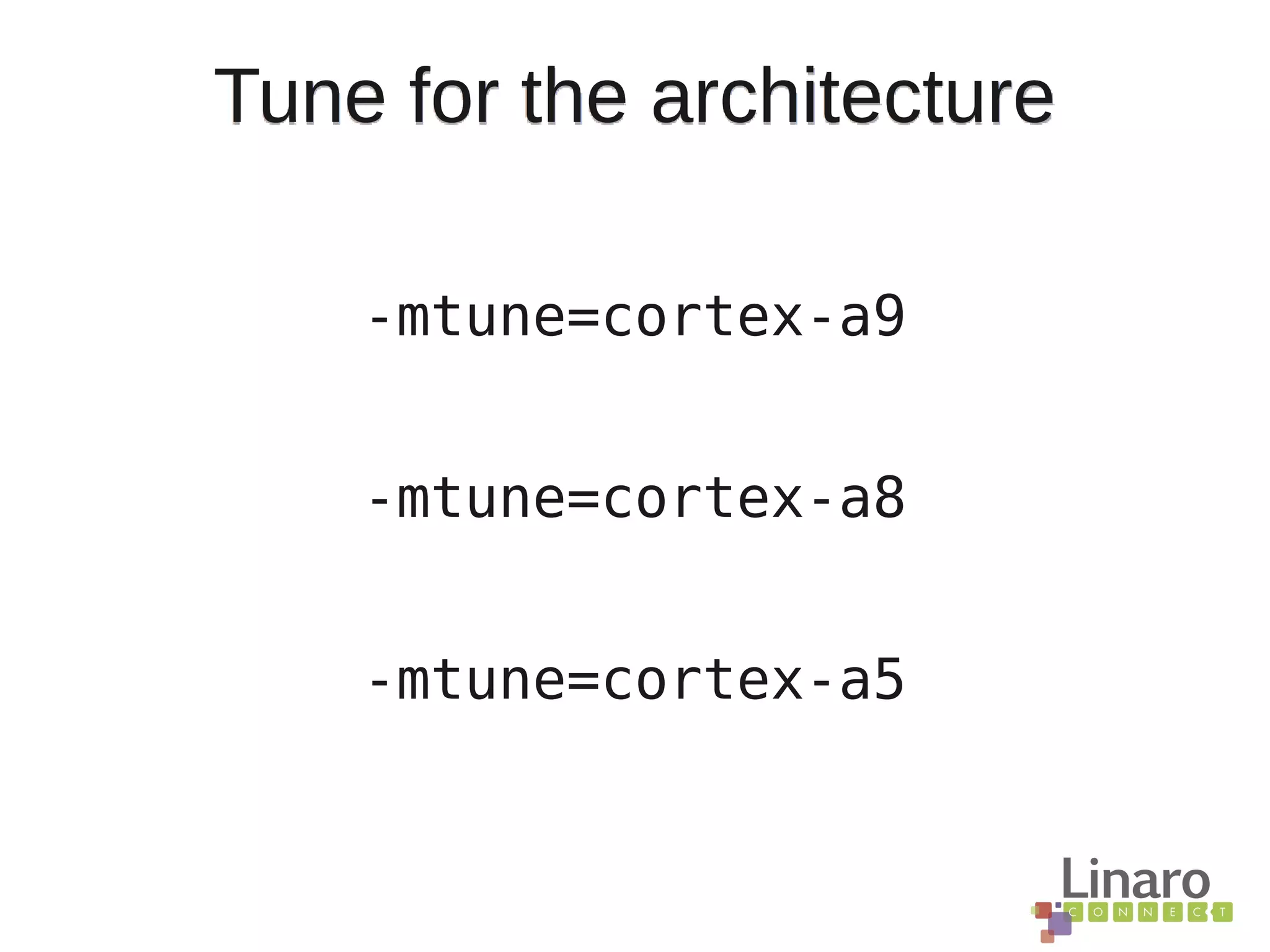
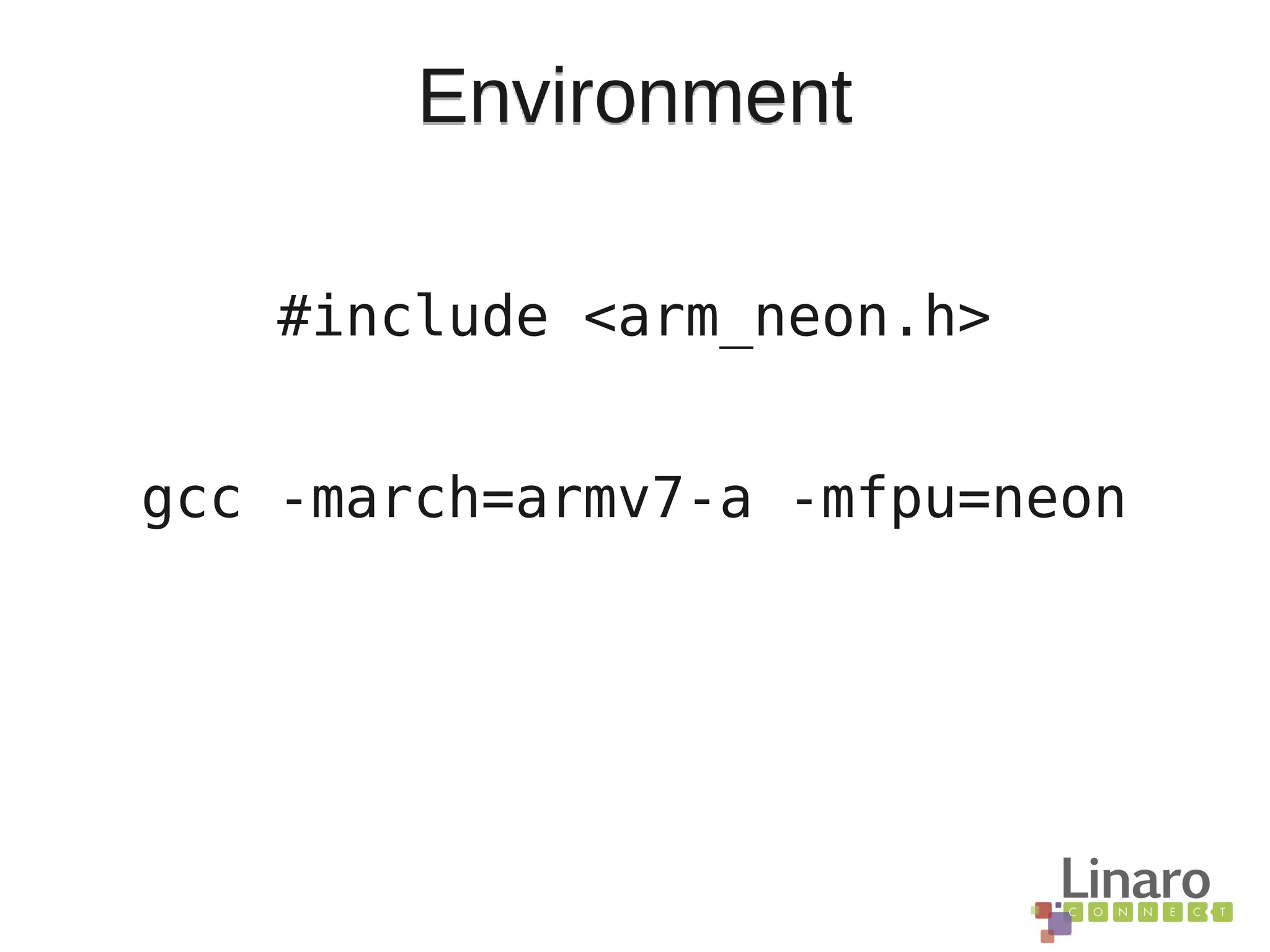
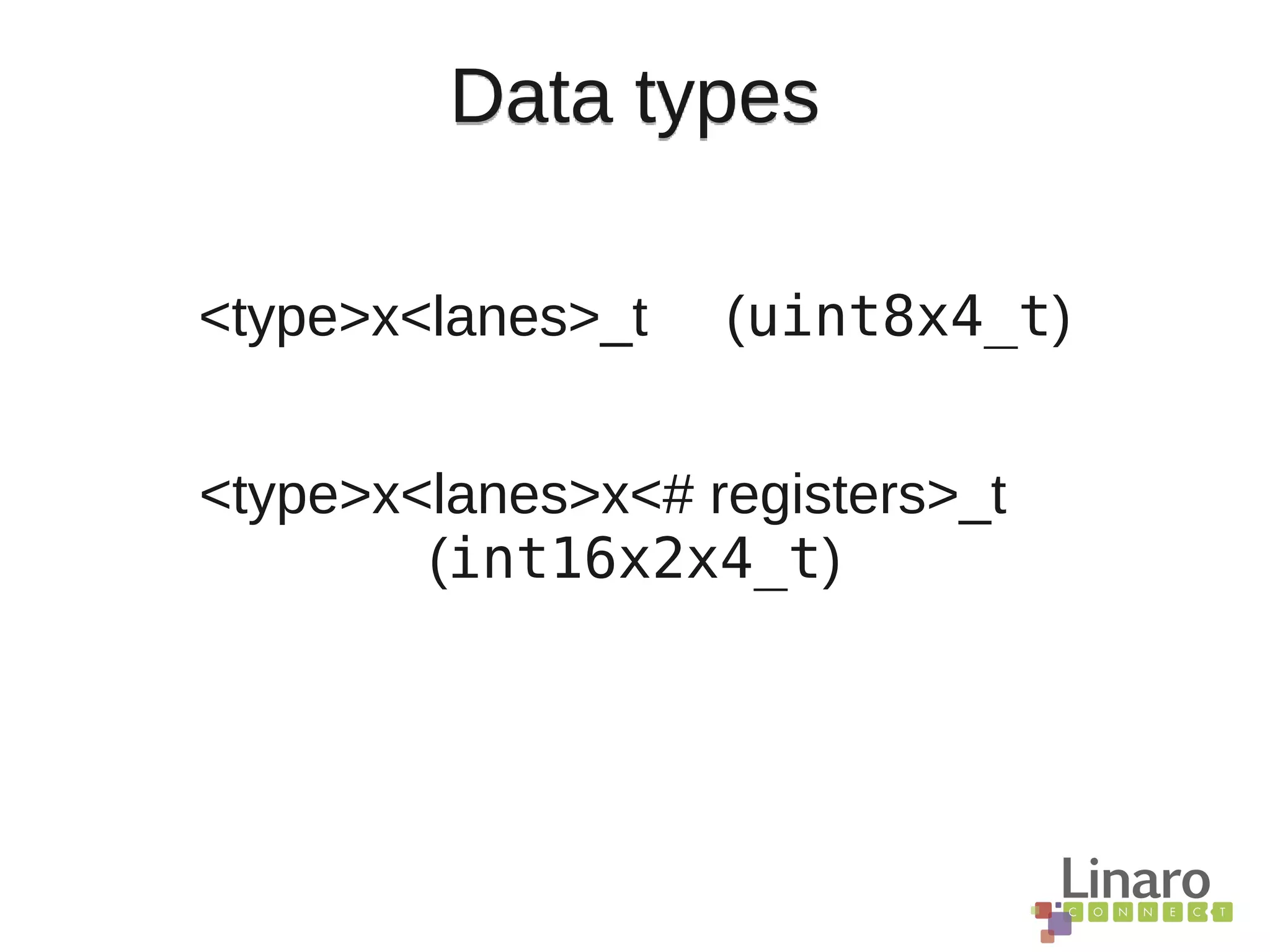
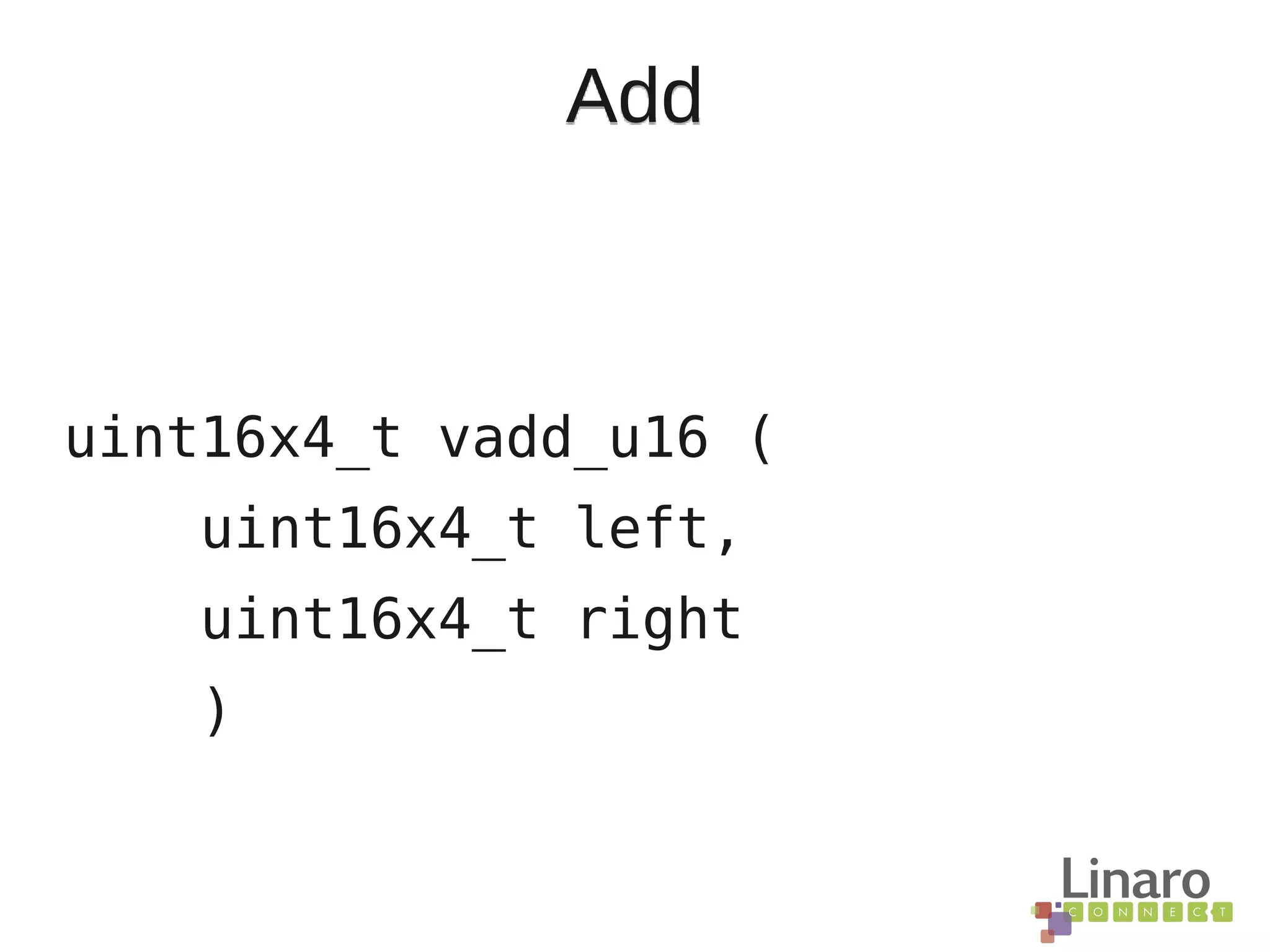
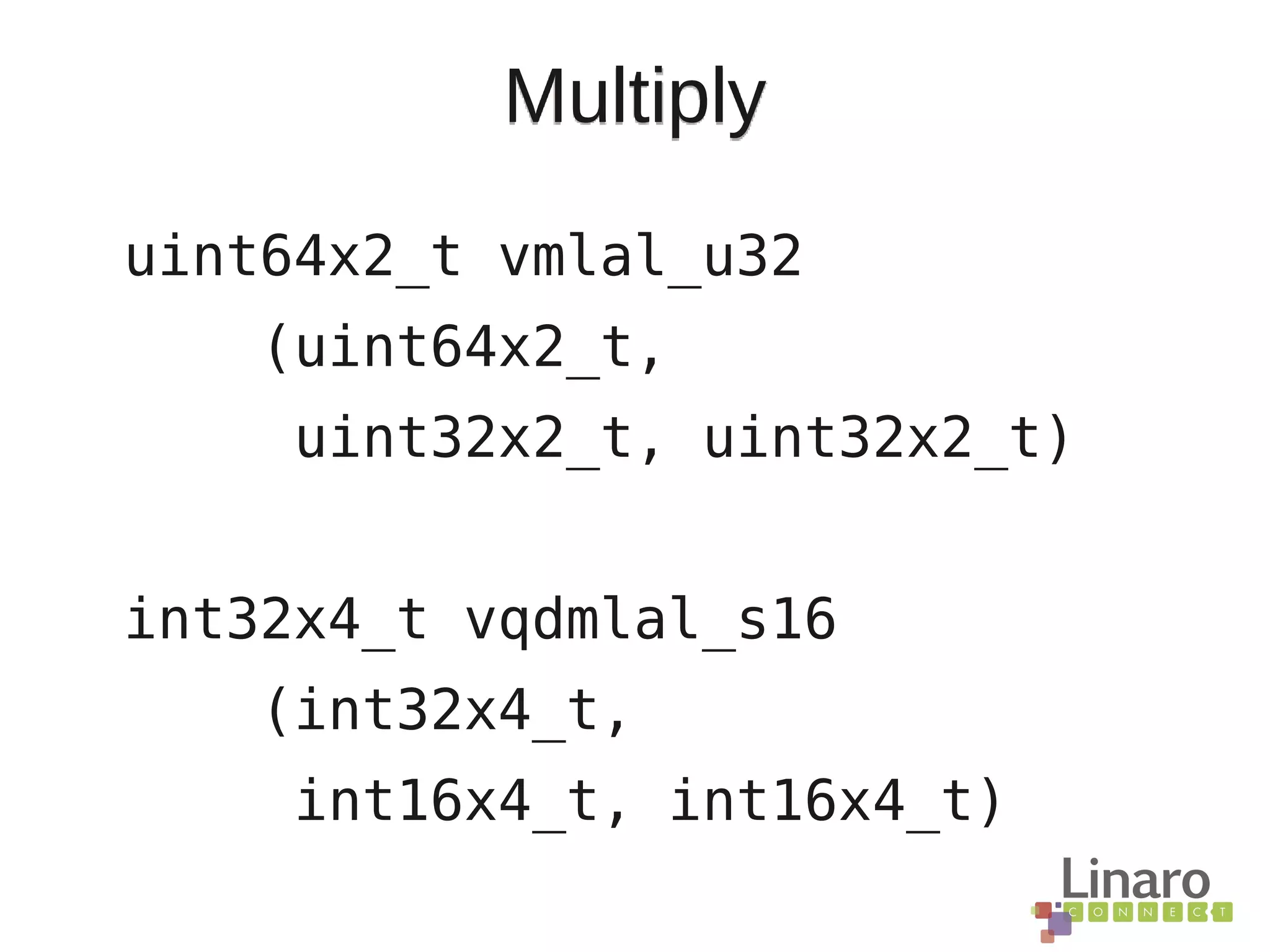
This document discusses NEON intrinsics and how to use them to optimize code for ARM processors that support SIMD instructions. It provides an overview of NEON, describes the data types and some common instructions, and gives examples of using intrinsics for tasks like color space conversion. Performance tests show intrinsics code can be 5-7 times faster than plain C and on par with hand-written assembly. Guidelines are provided for writing efficient NEON intrinsics code.


