Downloaded 29 times



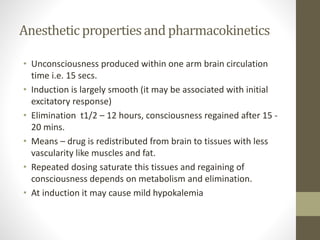
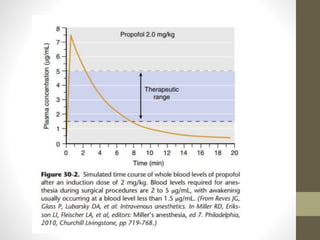
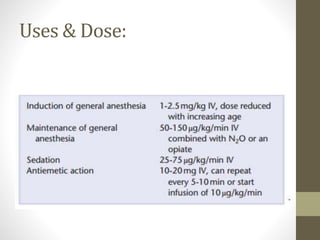

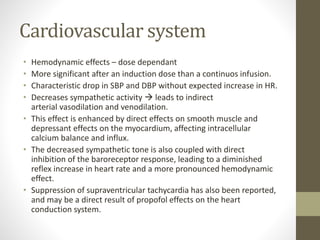
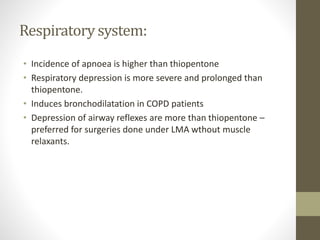
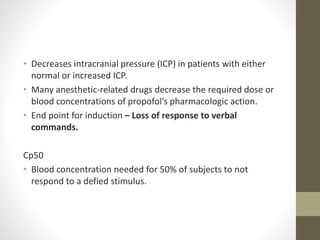
![• The onset of hypnosis after a dose of 2.5 mg/kg is rapid (one arm–
brain circulation), with a peak effect seen at 90 to 100 seconds.
• The median effective dose (ED50) of propofol for loss of
consciousness is 1 to 1.5 mg/kg after a bolus.
• The duration of hypnosis is dose dependent and is 5 to 10 minutes
after 2 to 2.5 mg/kg.
• Age markedly affects the induction dose, which is highest at younger
than 2 years (95% effective dose [ED95], 2.88 mg/kg) and decreases
with increasing age.
• This is a direct result of the altered pharmacokinetics in children and
in older adults.
• Children exhibit a relatively larger central compartment and thus
need a higher dose to ensure a similar blood drug concentration.](https://image.slidesharecdn.com/intravenousanaesthetics-200611135808/85/Intra-venous-anaesthetics-43-320.jpg)


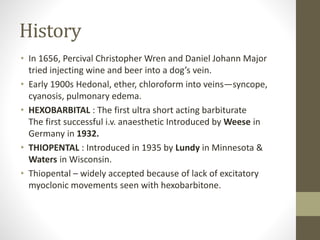
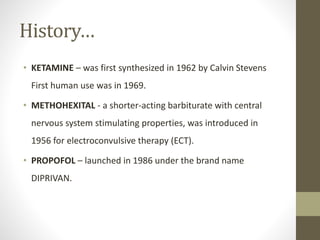
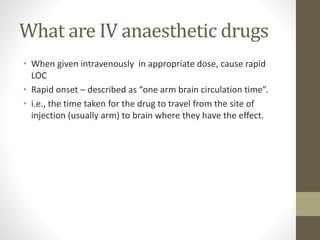
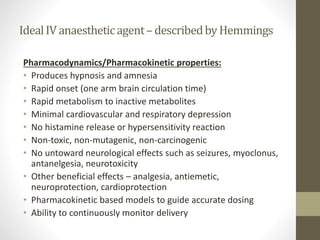
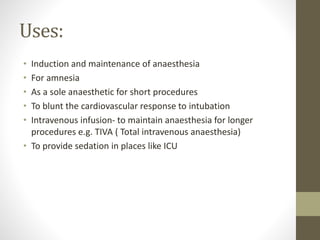
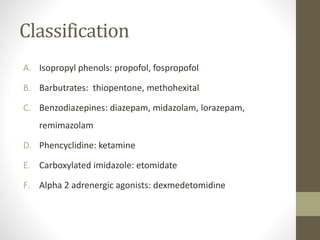
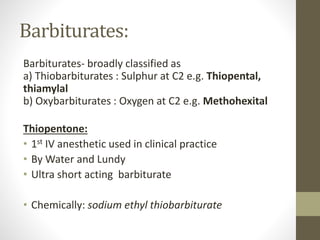
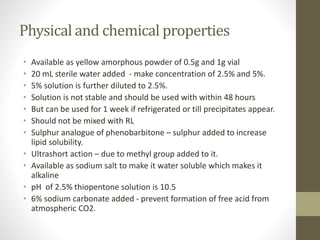
Intravenous anaesthetics have been used since the 1600s when wine and beer were injected into dogs. Early intravenous anaesthetics caused adverse effects. Thiopental was the first widely accepted intravenous anaesthetic due to its rapid onset and lack of excitatory effects. Other intravenous anaesthetics developed include ketamine, methohexital, and propofol. Propofol is now one of the most commonly used intravenous anaesthetics due to its rapid onset, short duration of action, and minimal side effects. Intravenous anaesthetics work primarily by enhancing the effects of the inhibitory neurotransmitter GABA at GABA-A receptors in the brain, causing sedation and loss of consciousness. They must have properties allowing for rapid onset,


