INTRACANAL
MEDICATION
CONTENTS
 INTRODUCTION
 RATIONALE OF INTRACANAL MEDICATION
 FUNCTION
 ANTI BACTERIAL AGENTS
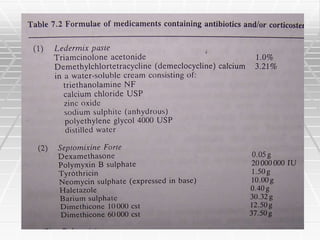
ANTIBIOTICS
ALCOHOLS
PHENOLIC COMPOUNDS
HEAVY METALS SALTS
CATIONIC DETERGENTS
HALOGEN
STERIODS
 CALCIUM HYDROXIDE
 DISTRIBUTION OF MEDICAMENTS APPLIED TO THE
ROOT CANAL
 Diffusion And Solubility
 Penetration Of Dentine
 Effect Of The Smear Layer
 TEMPORARY SEAL
 CONCLUSION
 REFERENCES
INTRODUCTION
 Since the beginning of the practice of the RCT, a
variety of chemically active materials have been
placed in to the root canal space either
temporarily or permanently for various reasons.
 Many of these practices were not based on
proper rationale.
 In modern endodontics, the placement of specific
chemicals during the inter appointment period
between visits of a multivisit procedure forms
part of the chemical preparation of the root
canal system prior to placement of a permanent
seal by obturation.
RATIONALE FOR INTRACANAL
MEDICATION
Main rationale using such medication is to help
fulfill part of the aim of root canal system
preparation that is to help degrade residual
microbial biofilm and organic tissue and to kill
remaining bacteria.
The medication should, therefore , also prevent
bacteria recolonization of the root canal system,
from either those bacteria left behind after
preparation or new invaders through lateral
communication or the coronal access.
A ROOT CANAL MEDICAMENT SHOULD
THEREFORE IDEALLY:
 Be able to kill all root canal bacteria
 Have long lasting anti-bacterial effect
 Not be inactivated by the presence of
organic material
 Be able to help degrade residual organic
tissue
 Be able to help degrade residual microbial
biofilm
 Not be irritating to periapical tissues or have
system toxicity
 Be able to induce regeneration of periapical
tissues
 Not affect the physical properties of the
temporary access cavity restoration
 Not to able to diffuse through the temporary seal
 Be easily placed and removed
 Be radiopaque
 Have anodyne properties
 Not stain the tooth
FUNCTIONS
 PRIMARY
 SECONDARY
PRIMARY FUNCTION OF
ENDODONTIC MEDICAMENTS IS
 ANTI MICROBIAL ACTIVITY
 ANTI SEPSIS
 DISINFECTION
ASEPSIS
 Is the assurance that no bacteria are
present in the field of operation.
 It entails the use not only of clean , but of
definitively sterile instruments and utensils,
liquids, etc.
ANTI SEPSIS
 Is the endeavor to eliminate infecting or
contaminating microbes.
 In vital pulp extripation ,anti septic measures are
necessary to prevent infection if there is a
breach in the chain of asepsis.
 Irrigating solutions and inter appointment
dressings need to be antibacterial in action to
prevent any micro organisms which may
contaminate the canal system from multiplying
and establishing themselves.
DISINFECTION
 Is the elimination of pathogenic micro organisms
,usually by chemical or physical means.
 Disinfection by antiseptic agents is what is
attempted in the treatment of infected teeth.
 It entails mechanical removal of tissue and
debris containing microbes , irrigation and
dressing with antiseptic agents , also, surgical
removal of an infected apex serves the
antiseptic effects of treatment.
SECONDARY FUNCTIONS OF
MEDICAMENTS
 HARD TISSUE FORMATION
 PAIN CONTROL
 EXUDATION CONTROL
 RESORPTION CONTROL
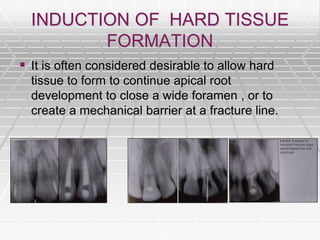
INDUCTION OF HARD TISSUE
FORMATION
 It is often considered desirable to allow hard
tissue to form to continue apical root
development to close a wide foramen , or to
create a mechanical barrier at a fracture line.
PAIN CONTROL
 Pain is often associated with infection, and
the primary means of pain control in
endodontic treatment is infection control.
 Pharmacological agents which result in
pain reduction through a decrease in the
tissue response in inflammation may have
a role in further alleviating clinical pain
from both infectious and aseptic pulp
periodontal inflammation.
CONTROL OF EXUDATION OR
BLEEDING
 Persistent exudation in root canal may
occur , despite apparently successful
clinical and technical aspects of the
treatment .
 Exudation reflects inflammation , how ever
and residual infection should be
suspected.
 Therefore ,treatment is aimed at dealing
with potential infection as well as drying or
coagulating the exudating surface.
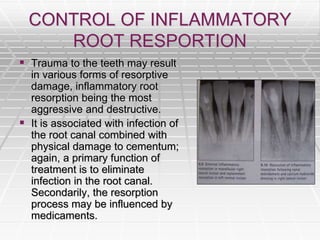
CONTROL OF INFLAMMATORY
ROOT RESPORTION
 Trauma to the teeth may result
in various forms of resorptive
damage, inflammatory root
resorption being the most
aggressive and destructive.
 It is associated with infection of
the root canal combined with
physical damage to cementum;
again, a primary function of
treatment is to eliminate
infection in the root canal.
Secondarily, the resorption
process may be influenced by
medicaments.
ANTIBACTERIAL AGENTS
 Known as antimicrobial agents fall
largely into groups
1. Conventional antiseptics
2. Chemotherapeutics
MODE OF ACTION
 Conventional antimicrobial agents attack cells in
various ways, many not fully understood.
 When used in higher concentrations, many
preparations have such a direct destructive effect
on the bacteria as to cause, among other things,
denaturation of cell proteins.
 Most proteins in the cell occur at the disperse
phase of a collodial system.
 The bacterial cell membrane serves as a selective
barrier, regulating concentration of vital
substances within and around the cell, and is
necessary for the metabolism and function of the
cell. Thus, the cell membrane must remain intact.
 Some substances as simple as detergents acts as
germicides by modifying and damaging the
physical and chemical properties of the bacterial
cell membrane.
 Enzymatic proteins containing cysteine have side
chains terminating in sulfhydryl (-SH) groups.
Such substances as iodine , chlorine, and heavy
metals , which oxidise or bind –SH group, are
strong enzyme inhibiters and therefore have a
destructive effect on microbial cells.
 The catalytic effect of enzymes is caused by their
affinity to a natural substrate.
 A competitor is any chemical compound similar to
the substrate that can combine with the active
enzyme center but cannot be metabolized.
 Through such chemical antagonism the
competitor remains attached to the
enzyme and thus prevents it from being
active with the natural substrate.
 Several substances such as the cyanides
and sulfonamides can function as
competitors and therefore act as
antiseptics .
Antibiotics
 The successful use of various antibiotics , both
systemically and topically , in other fields of medicine
made them likely candidates for antibacterial action in
the root canal .
 There are three main concerns about the local use of
antibiotics in the root canal .
1 Sensitization:
 Topical application of an antibiotic increases the risk of
the patient becoming allergic to it .
 Induced allergy to an antibiotic may limit the options for
treatment of more severe infections which would
otherwise be curable with that particular drug .
2 Development of bacterial drug resistance:
 The drug kinetics of antibiotics applied in
the root canal not well known .
 Wide spread use of antibiotics causes a
general increase in pathogenic and indigenous
micro organisms that are resistance to a variety
of antibiotics .
3 Limited spectrum:
 No one antibiotic is efficacious against
all endodontic micro organism .
 Sulpha Preparations
Sulphathiazole as part of a dressing was
advocated in the 50s and 60s
They are effective against many gram –ve and
gram +ve micro organisms , sulpha drugs are
ineffective against enterocolli and pseudomonas
organism .
 Penicillin
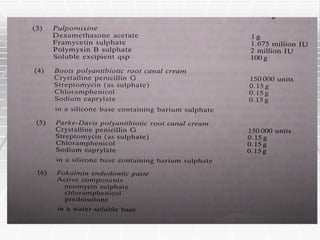
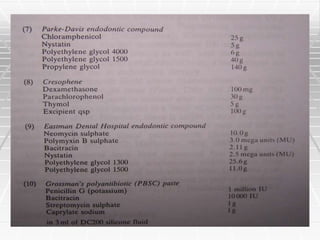
Grossmans polyantibiotic paste contained
penicillin as an important ingredient .
B-lactamase produced by several species
found in the root canal makes them resistant to
penicillin .
Metronidazole:
 Has Good Effect Against Several Gram
Negative Anaerobic Organisms.
 Suggested As An Irrigating Solution, As
An Intracanal Dressing, For Parenteral
Application In Combination with Other
Antibiotics, in particular Penicillin.
 TETRACYCLINE:
 It shows affinity for hard tissues and may
be retained on tooth surfaces.
 Its antimicrobial spectrum is quite narrow.
 CLINDAMYCIN:
 One study has reported on the use of it as
an interappointment dressing, but only
limited antibacterial efficacy could be
demonstrated.
ALCOHOLS
 Ethyl alcohol and Isopropyl alcohol denature
proteins when applied in high concentrations.
 Alcohols are not recommended as intra canal
antiseptics because of their poor antimicrobial
effect.
 Neither dipping or flaming of instruments are
reliable methods of killing microorganisms.
 However it is used for dehydration of dentin in
the root canal, which will improve the sealing
capability of endodontic sealer.
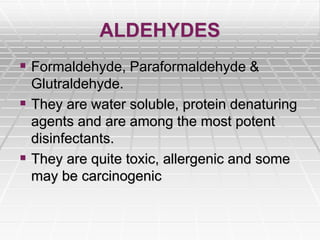
ALDEHYDES
 Formaldehyde, Paraformaldehyde &
Glutraldehyde.
 They are water soluble, protein denaturing
agents and are among the most potent
disinfectants.
 They are quite toxic, allergenic and some
may be carcinogenic
 FORMACRESOL:
 It contains formaldehyde as its main
ingredient and is still a widely used
medicament for pulpotomy procedure, but its
toxic and mutagenic properties are of
concern.
 PARAFORMALDEHYDE:
 It is the polymer form of formaldehyde, best
known for its inclusion in the root canal
filling materials N2 and Endomethasone.
 It slowly decomposes to give its monomer,
formaldehyde; Its toxic, allergenic &
genotoxic.
PHENOLIC COMPOUNDS
 Phenol or carbolic acid is the classic compound
for controlling microorganisms and serves as the
basis for a number of derivatives extensively
used in dentistry.
 A protoplasm poison, phenol is highly effective in
as low a concentration as 1 to 2%.
 It is often liquefied in camphor and used in
endodontics as a solution of camphorated
phenol (Phenol-35%, Camphor-60%, Ethyl
alcohol-10%).
 Camphorating process aims at developing a less
caustic medicament as a result of the slow
release of phenol.
 CAMPHORATED PHENOL:
 Least toxic
 Has excellent antimicrobial property paired with
good anodyne activity.
 In clinical use, the phenolic compounds are
relatively ineffective as antiseptics.
 Bystrom and associates found that after using
camphorated phenol or camphorated
paramonochlorophenol for 2 weeks as intracanal
dressing, only two thirds of the cases were free
of cultivable bacteria.
 MONOCHLORPHENOL:
 Is a derivative of phenol that has three isomers ,
of which paramonochlorphenol is the most
effective.
 The antimicrobial effect of monochlorphenol is
good ,and approximately 1% monochlorphenol
is needed for elimination of the typical root canal
flora in vitro .
 Parachlorphenol commercially available
concentrations ( 98% in water or 35% in
camphor ) is too toxic to be a rational alternative
in endodontic therapy.
 The water solution of MCP has a significantly
better penetrating effect in dentin than does
CMCP .
 Thymol:
 Is included in many endodontic preparations
developed earlier ,such as Endomathasone ,
Mynol cement , and Tubli-seal .
 Thymols toxicity is equal to or higher than that of
phenol, although its antimicrobial effect is better
, which is often the case of phenol derivatives .
 It is seldom recommended as an intracanal
antiseptic in modern endodontics .
 Cresol:
 Has three isomers , of which metacresol is most effective
as an antiseptic .
 The most frequently used formula in endodontics is
Formocresol (formaldehyde ,19% , cresol 35% , water
and glcerine 46 % ) .
 Formocresol thus works as a poison and causes
widespread destruction of living tissue .
 The bacterial effect of formocresol is good at a level as
low as 2% of the concentration generally used .
 For clinical control of infections , an 8.75% solution of
formaldehyde in alcohol ( alcoformol ) was sufficient for
the treatment of necrotic pulps and a 3.5 % solution was
sufficient for teeth with vital pulps .
 Creosote
 Is a mixture of phenol derivatives Guaiacol , the methyl
ether of pyrocatechin , is the major constituent (60 to 90
% ) of creosote .
 Beechwood creoste has long been used in endodontic
therapy and gave the old time dental office its familiar
odor .
 Coolidge recommended the use of cresatin
(metacresylacetate ) , the acetic acid of metecresol , in
combination with benzene as an endodontic
medicament.
 Biocompatibility studies show that the effect on tissues
ranges from mild to severe .
 Based on the adverse possibilities , the use of cresatin
as an intracanal medicament should be discouraged .
 Heavy Metal Salts
 Salts of silver, copper , and mercury
coagulate proteins , act as enzyme inhibitors ,
and are generally toxic .
 With the exception of mercury salts , they have
no clinically value .
 The mercury salts group includes Mercurophen ,
metaphen , Mercurochrome , and Merthiolate.
 Phenyl- mercuric borate is another toxic organic
mercury antiseptic , well known in endodontics
because of its inclusion in the N2 formula .
 Cationic Detergents
 The quarternary ammonium compounds are odorless
and stable solutions with low-surfurce tensions and good
cleansing effects .
 These cationic detergents were initially considered ideal
antiseptics , but more recently have been shown to have
significant toxicity .
 The antimicrobial effects of these compounds are not
strong . In addition , cationic detergents may inhibit or
delay wound healing .
 Salvizol is a detergent suggested for irrigating root
canals during instrumentation .
 Its low –surface tension and chelating effect aid
biomechanical cleansing .
 Salvizol induces irritation of tissue at levels similar to
those of iodophores but less than that of sodium
hypochlorite or quartenary ammonium compounds.
 Halogens
 Chlorine and iodine are the bases of a number of oxidising
antiseptics commonly used in endodontic pratice . Chlorine is
more antimicrobial than iodine .
 Hypochlorite was first used by Semmelweis in 1847 as a hand
disinfectant . This initial use of pottas sium hypochlorite was
later followed by sodium hypochlorite as Carrel and Dakin
introduced its use for wound disinfection .
 When hypochlorite contacts tissue proteins , nitrogen ,
formaldehyde , and acetaldehyde are formed within a short
time . The peptide links are broken up of dissolve the proteins
.
 During the process, hydrogen in the amino groups is replaced
by chlorine thereby forming chloramine, which plays an
important role in antimicrobial effectiveness .
 Thus , necrotic tissue and pus are dissolved, and the
antimicrobial agent can better reach and clean the infected
areas .
 Temperature increase significantly improves the antimirobial
effect of sodium hypochlorite .
 Dakin suggested a 0.5 % solution a concentration with
low toxicity affecting only necrotic tissue . A 1% sodium
sodium hypochlorite solution, however, is more potent
and provides an increased antimicrobial effect .
 Higher concentration of NaOCl ( 2.5% and 5% ) actively
attack living tissue without contributing significantly to
treatment. Its effect is also severely limited in confined
areas .
 Chloramine –T is a chlorine compound with excellent
antimicrobial qualities . Chloramine ( 5% ), which has a
low toxicity , is a good alternative intracanal dressing
when a history of allergy prevents the use of iodine
compounds.
 Chloramine is also used for disinfecting guttapercha
points .It also remains stable for a long time if stored in
cold and protected from light .
 Iodine
 Iodine has been used for many years and is known for its
mild effect on living tissue.
 The two most common preparations used in dentistry are
iodine tincture ( 5% iodine in alcohol ) and iodine
potassium iodide ( iodine-2% ) , potassium iodide- 4% ,
distilled water -94% .
 The former solution is advocated for surface disinfection
of the endodontic field, and the latter is advocated for
intracanal medication.
 Iodine potassium iodide has an excellent antimicrobial
activity and has only minimal toxicity and tissue irritating
qualities, thus it continues to provide an active
antimicrobial effect at a concentration that is not
cytotoxic.The vapor forming effect makes it suitable for
antimicrobial use in root canals.
 Iodophores
 They are organic solutions of iodine and
because of their low –surface tension, are
excellent aids, for cleaning root canals. Iodine in
iodophores does not cause allergic reactions.
 The most commonly used preparations are
Wescodyne, providing 1.5% iodine and Iodopax,
providing 5% iodine .
 Both preparations are stock solutions with the
same toxicity levels based on their iodine
content .
 The iodine concentrations must be at least
0.05%, which corresponds to a 3% solution of
wescodyne and 1% of iodopax.
 STEROIDS:
 Steroids (Prednisolone, Triamcinalone,
Hydrocortisone) have been used in root canals
mainly for pain relief and there is limited clinical
evidence of their anodyne action.
 The commercially available paste popularly used
is Ledermix, which contains the antibiotic
tetracycline.
 Mixing the paste with Ca(OH)2 has been
advocated, but this gives little advantage and
may decrease the effectiveness of the individual
components, as there is no synergism between
the separate materials.
 Calcium Hydroxide
 Calcium hydroxide cannot be categorized as a
conventional antiseptic, but has been shown
clinically effective in eliminating
microorganisms from the root canal space.
 Hermann introduced calcium hydroxide paste as
an endodontic antimicrobial agent in 1920.
 Calcium hydroxide paste for intracanal use is
normally a thick suspension of the ca(OH)2
powder in sterile water or saline. In such water
suspension , less than 0.2% of the powder is
dissolved into calcium and hydroxyl ions.
 Because it is a powerful alkaline this results in
a paste with pH approximately 12.5%.Calcium
hydroxide in a nonaqueous medium is
needed.
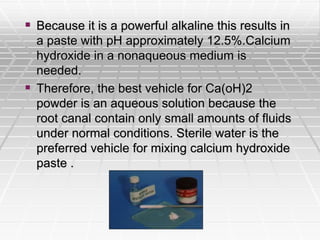
 Therefore, the best vehicle for Ca(oH)2
powder is an aqueous solution because the
root canal contain only small amounts of fluids
under normal conditions. Sterile water is the
preferred vehicle for mixing calcium hydroxide
paste .
 The mixture of Ca(OH)2 powder with
cresatin results in the formation of calcium
cresylate and acetic acid, which prevents
the pH from reaching optimal high levels.
 Without sufficient water available,
camphorated paramonochlorphenol forms
calcium parachlorphenolate, thus
preventing further hydrolysis.
 When exposed for a long time to the Co2
in air, Ca(oH)2 turns into CaCo3, which is
hardly soluble in water and has pH of 8.
 Cohen and Lasfargues demonstrated that the
transformation of Ca(oH)2 to CaCo3 occurs
extremely slowly in closed containers, and only
1 to 2 % had converted after several months .
 Nevertheless, sufficient OH- ion are available to
sustain an optimal pH. Thus, under normal
usage, Ca(oH)2 powder or mixed pastes have a
long shelf life.
 In a clinical comparative study Bystrom showed
that Ca(oH)2 paste effectively eliminated all
microorganisms in infected root canals when the
dressing was maintained for 4 weeks.
 In a 5-year clinical study ,Safavi and associates
reported that Ca(oH)2 was more effective than
iodine potassium iodide in effectively disinfecting
infected root canals.
 Safavi further reported that calcium hydroxide
hydrolyzed the lipid moiety of bacterial LPS
known to play a role in the bone resorption
process.
 This calcium hydroxide degradation of LPS,
released from bacterial cell lysis may be an
important reason for the beneficial effects
obtained with calcium hydroxide in clinical
endodontics.
 In a recent study, 1 week of dressing resulted in
total absence of microorganism
 The instrumentation in this last study, however,
was augmented with a 3-minute ultrasonification
with the irrigation fluid before the placement of
the Ca(oH)2 paste.
 In vitro study on infected dentin, Safavi and
colleagues demonstrated that calcium hydroxide
paste requires at least 24hrs to effectively
disinfect dentin compared to less than 10
minutes required by an iodine solution.
 Several of the in vitro studies assessing the
effectiveness of Ca(OH)2 are using
streptococcus faecium as a test organism
because it is a fast growing resistant bacterium
often isolated from root canals.
 Clinical testing has shown that intracanal
dressing with Ca(OH)2 paste allows the cleaning
of narrow canal space by hand instrumentation
to be as effective as any method in which
ultrasonic debridement is employed.
 Ca(OH)2 FOR “Weeping” CASES:
 One of the most perplexing conditions to treat is the
tooth with constant clear or reddish exudation associated
with a large apical radiolucency.
 The tooth often is asymptomatic, but it may be tender to
percussion or sensitive to digital pressure over the apex.
 When opened at the start of the endodontic appointment
the exudate will be clear.
 But the similar condition will still be present even in the
next appointment. This is referred to as a weeping canal.
 The answer to this recalcitrant problem is to dry the
canal with sterile paper points and place Ca(OH)2 in the
canal.
 In the next appointment a perfectly dry clean canal is
seen.
 The exact mechanism for the action of Ca(OH)2 in this
type of case is an object of much conjecture. It is closely
related to the pH of the periapical tissues, which must be
acidic in the weeping stage. The Ph is converted by the
paste to a more basic environment.
 Mode of Application For Different
Antiseptics:
 Basically two methods are practiced for
depositing an antiseptic.
 1.the medicament can be applied on a cotton
pellet or absorbent paper point placed in the
pulp space
 2. the root canal can be flooded with the
preparation. The latter method allows a more
precise application of the medicament as it is
brought in contact with the target micro
organisms.
 Application using a cotton pellet requires
vaporization of the medicament so that it can
reach microbes in the pulp space.
 Germicidal vapors must dissolve in the tissues and
cells to be effective.
 For vaporization to be antimicrobially effective,
therefore, the concentration of the medicament
applied on a cotton pellet must be 100 to 1000 times
higher than that of a medicament applied directly.
 Only medicaments containing chlorine, iodine, and
formaldehyde are reasonably effective.
 Most deposited antiseptics also become inactive in
the root canal within a short period.
 Iodine and Chlorine compounds lose much of their
activity within 1 day , camphorated phenols and
cresatin within 1 to 5 days, and formocresol within 1
week .
DISTRIBUTION OF MEDICAMENTS
APPLIED TO THE ROOT CANAL
 There is limited knowledge on the actual
distribution, in hard and soft tissues, of
medicaments applied to the root canal.
 There is also limited knowledge on the
localization of microorganisms, inflamed
tissues and cells targeted by the
medicament.
 Diffusion and solubility
 Lipid-soluble substances may have difficulty reaching
targets at a distance in the tissues.
 Amphipathic drugs may have particular benefits; it may
not be coincidental that aldehydes and phenol
derivatives have had clinical.
 Thus aqueous solutions of para-mono-chlorphenol may
penetrate further and have greater antimicrobial activity
than the more concentrated lipid solute.
 The low but significant solubility in water of calcium
hydroxide has the dual advantage of limiting its toxic
effects while the depot of the compound in suspension at
the same time provides continuous release of the agent.
 Vaporizing agents have been advocated on the premise
that the vapor would be more permeating than liquids.
 Penetration of dentine
 Studies in vivo have found the raised pH
effect of calcium hydroxide to pervade the width
of dentin, but to decrease rapidly in the tissues
beyond. The application of calcium hydroxide on
a dentin surface in turn significantly reduces its
permeability.
 In vitro calcium hydroxide is slower than many
other medicaments in killing bacteria in
experimentally infected dentinal tubules.
 Eugenol, which occurs in several root canal
sealer formulations, decreases in concentration
by 100-fold over 1mm of dentin.
 Moreover, intact cementum appears to be an
effective, if not complete, barrier to medicament
penetration.
 Effect of the smear layer
 Bacteriological data, both in vitro as well as in vivo, indicate
that medicaments penetrate to act more effectively when
applied in root canal that has been treated to remove the
smear layer.
 In infected teeth with chronic apical periodontitis one may
assume that bacteria are lodged peripheral to the main canal
where the medicaments are applied.
 The removal of smear layer with the use of EDTA seems
prudent in these cases.
 Following complete disinfection or in the treatment of a non-
infected tooth, retention or recreation of the smear layer may
be advantageous in adding to the sealing-off of the canal by
final filling.
 It should also be recognized that a plug of dentine smear is
frequently formed at the apical part of the instrumented canal.
 This may impair the ability of any medicament to penetrate
the apex.
 Treatment Of Different Clinical Conditions
 Acute pulpitis
 Minimal amount of time:
Single rooted tooth –pulpectomy
 No medicament needed.
 Closed dressing to be given.
Multirooted tooth – pulpotomy
 Formocresol dressing
 Closed dressing given
 Considerable amount of time
Single rooted tooth – pulpectomy and canal preparation
 no medicament needed
 Closed dressing
Multirooted tooth – pulpectomy
 no medicament needed
 Closed dressing
 Acute pulpitis with acute apical periodontitis
 Minimal amount of time
Nonmolar – pulpectomy
 No medicament is needed
 Closed dressing given
Molar – pulpectomy of largest canal
 CMCP given
 Closed dressing given
 Considerable amount of time
Nonmolar – pulpectomy and preparation of canal
 No medicament is needed
 Closed dressing given
Molar – pulpectomy
 No medicament is needed
 Closed dressing given
 Pulp necrosis
 Canal debridement
 No medicament is needed.
 Closed dressing given.
 Acute periapical abscess
 Minimal amount of time
Incision and drainage, through tooth or through tissue
Systemic antibiotics given .
Open dressing given.
Second appointment, canal debridement
No medicament
Open dressing given
Third appointment, irrigate and dry , do not file
NO medicament or sulpha
Closed dressing given
SEALING AGENTS FOR
INTERTREATMENT DRESSINGS
 Endodontic treatment usually takes two or more
appointments, some type temporary sealing
agent is needed to close the access cavity
between visits.
 The material selected must provide for effective
closure against microorganisms and salivary
contamination, which would bring irritants to the
periapical tissue if allowed free passage. The
access sealant must retain the intracanal
medicament.
TYPES OF AVAILABLE SEALING AGENTS
 According to radioisotopes studies, silver
amalgam plus cavity varnish is the most
effective sealant in dentistry.
 Unfortunately it is difficult and time consuming
and have to be drilled out at the next appointed.
 Zinc oxide Eugenol provides an excellent seal
and is much easier to place and remove. The
addition of zinc acetate crystals speeds the set
of ZOE without decreasing its sealant properties.
 Cavit and Cavit G were introduced for use in
endodontics . They are easy to apply and
removed with spoon excavator.But they have
been proved poor on radiographic studies. They
remain a second choice after ZOE.
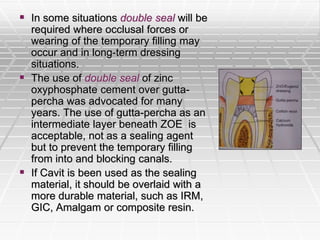
 In some situations double seal will be
required where occlusal forces or
wearing of the temporary filling may
occur and in long-term dressing
situations.
 The use of double seal of zinc
oxyphosphate cement over gutta-
percha was advocated for many
years. The use of gutta-percha as an
intermediate layer beneath ZOE is
acceptable, not as a sealing agent
but to prevent the temporary filling
from into and blocking canals.
 If Cavit is been used as the sealing
material, it should be overlaid with a
more durable material, such as IRM,
GIC, Amalgam or composite resin.
 A light cured material, TERM (Temporary
Endodontic Restorative Material )has been
introduced. Its major advantage are ease with
which it may be used, since it may be placed
with a syringe from sterile prepacked compules,
and it sets by exposure to visible light for 20
seconds.
 Its disadvantage is that the manufacturer
advises to use TERM for 1 month or less
because of several reports that its sealing ability
decreases rapidly after 2 months.
CONCLUSIONS
 When all facts are considered, two medicaments
can be chosen to treat infected root canals.
They are Ca(OH)2 paste or a 2% concentration
of iodine potassium iodide.
 The most effective safest intracanal medicament
antiseptic, regardless of mode, is the iodine
potassium iodide solution.
 The iodine solution is, however, very short
acting, and if the time period exceeds 3 days the
next choice is Ca(OH)2 as it allows longer
intervisit periods while still being highly effective.
REFERENCES
 ENDODONTICS-INGLE 3rd & 4th Edition
 PATHWAYS OF PULP-COHEN 7th & 8th
Edition
 ENDODONTIC THERAPY-WEINE 5th &
6th Edition
 ENDONTICS-E. NICHOLLS 3rd Edition
 ENDODONTICS IN CLINICAL
PRACTICE-F.J HARTY 3rd Edition
 ENDODONTICS-C. STOCK 3rd Edition
 ENDONTICS:PRODEM SOLVING IN
CLINICAL PRACTICE-T.T PITTFORD
THANK YOU

intracanal medicament

  • 1.
  • 2.
    CONTENTS  INTRODUCTION  RATIONALEOF INTRACANAL MEDICATION  FUNCTION  ANTI BACTERIAL AGENTS ANTIBIOTICS ALCOHOLS PHENOLIC COMPOUNDS HEAVY METALS SALTS CATIONIC DETERGENTS HALOGEN STERIODS
  • 3.
     CALCIUM HYDROXIDE DISTRIBUTION OF MEDICAMENTS APPLIED TO THE ROOT CANAL  Diffusion And Solubility  Penetration Of Dentine  Effect Of The Smear Layer  TEMPORARY SEAL  CONCLUSION  REFERENCES
  • 4.
    INTRODUCTION  Since thebeginning of the practice of the RCT, a variety of chemically active materials have been placed in to the root canal space either temporarily or permanently for various reasons.  Many of these practices were not based on proper rationale.  In modern endodontics, the placement of specific chemicals during the inter appointment period between visits of a multivisit procedure forms part of the chemical preparation of the root canal system prior to placement of a permanent seal by obturation.
  • 5.
    RATIONALE FOR INTRACANAL MEDICATION Mainrationale using such medication is to help fulfill part of the aim of root canal system preparation that is to help degrade residual microbial biofilm and organic tissue and to kill remaining bacteria. The medication should, therefore , also prevent bacteria recolonization of the root canal system, from either those bacteria left behind after preparation or new invaders through lateral communication or the coronal access.
  • 6.
    A ROOT CANALMEDICAMENT SHOULD THEREFORE IDEALLY:  Be able to kill all root canal bacteria  Have long lasting anti-bacterial effect  Not be inactivated by the presence of organic material  Be able to help degrade residual organic tissue  Be able to help degrade residual microbial biofilm
  • 7.
     Not beirritating to periapical tissues or have system toxicity  Be able to induce regeneration of periapical tissues  Not affect the physical properties of the temporary access cavity restoration  Not to able to diffuse through the temporary seal  Be easily placed and removed  Be radiopaque  Have anodyne properties  Not stain the tooth
  • 8.
  • 9.
    PRIMARY FUNCTION OF ENDODONTICMEDICAMENTS IS  ANTI MICROBIAL ACTIVITY  ANTI SEPSIS  DISINFECTION
  • 10.
    ASEPSIS  Is theassurance that no bacteria are present in the field of operation.  It entails the use not only of clean , but of definitively sterile instruments and utensils, liquids, etc.
  • 11.
    ANTI SEPSIS  Isthe endeavor to eliminate infecting or contaminating microbes.  In vital pulp extripation ,anti septic measures are necessary to prevent infection if there is a breach in the chain of asepsis.  Irrigating solutions and inter appointment dressings need to be antibacterial in action to prevent any micro organisms which may contaminate the canal system from multiplying and establishing themselves.
  • 12.
    DISINFECTION  Is theelimination of pathogenic micro organisms ,usually by chemical or physical means.  Disinfection by antiseptic agents is what is attempted in the treatment of infected teeth.  It entails mechanical removal of tissue and debris containing microbes , irrigation and dressing with antiseptic agents , also, surgical removal of an infected apex serves the antiseptic effects of treatment.
  • 13.
    SECONDARY FUNCTIONS OF MEDICAMENTS HARD TISSUE FORMATION  PAIN CONTROL  EXUDATION CONTROL  RESORPTION CONTROL
  • 14.
    INDUCTION OF HARDTISSUE FORMATION  It is often considered desirable to allow hard tissue to form to continue apical root development to close a wide foramen , or to create a mechanical barrier at a fracture line.
  • 15.
    PAIN CONTROL  Painis often associated with infection, and the primary means of pain control in endodontic treatment is infection control.  Pharmacological agents which result in pain reduction through a decrease in the tissue response in inflammation may have a role in further alleviating clinical pain from both infectious and aseptic pulp periodontal inflammation.
  • 16.
    CONTROL OF EXUDATIONOR BLEEDING  Persistent exudation in root canal may occur , despite apparently successful clinical and technical aspects of the treatment .  Exudation reflects inflammation , how ever and residual infection should be suspected.  Therefore ,treatment is aimed at dealing with potential infection as well as drying or coagulating the exudating surface.
  • 17.
    CONTROL OF INFLAMMATORY ROOTRESPORTION  Trauma to the teeth may result in various forms of resorptive damage, inflammatory root resorption being the most aggressive and destructive.  It is associated with infection of the root canal combined with physical damage to cementum; again, a primary function of treatment is to eliminate infection in the root canal. Secondarily, the resorption process may be influenced by medicaments.
  • 18.
    ANTIBACTERIAL AGENTS  Knownas antimicrobial agents fall largely into groups 1. Conventional antiseptics 2. Chemotherapeutics
  • 19.
    MODE OF ACTION Conventional antimicrobial agents attack cells in various ways, many not fully understood.  When used in higher concentrations, many preparations have such a direct destructive effect on the bacteria as to cause, among other things, denaturation of cell proteins.  Most proteins in the cell occur at the disperse phase of a collodial system.  The bacterial cell membrane serves as a selective barrier, regulating concentration of vital substances within and around the cell, and is necessary for the metabolism and function of the cell. Thus, the cell membrane must remain intact.
  • 20.
     Some substancesas simple as detergents acts as germicides by modifying and damaging the physical and chemical properties of the bacterial cell membrane.  Enzymatic proteins containing cysteine have side chains terminating in sulfhydryl (-SH) groups. Such substances as iodine , chlorine, and heavy metals , which oxidise or bind –SH group, are strong enzyme inhibiters and therefore have a destructive effect on microbial cells.  The catalytic effect of enzymes is caused by their affinity to a natural substrate.  A competitor is any chemical compound similar to the substrate that can combine with the active enzyme center but cannot be metabolized.
  • 21.
     Through suchchemical antagonism the competitor remains attached to the enzyme and thus prevents it from being active with the natural substrate.  Several substances such as the cyanides and sulfonamides can function as competitors and therefore act as antiseptics .
  • 22.
    Antibiotics  The successfuluse of various antibiotics , both systemically and topically , in other fields of medicine made them likely candidates for antibacterial action in the root canal .  There are three main concerns about the local use of antibiotics in the root canal . 1 Sensitization:  Topical application of an antibiotic increases the risk of the patient becoming allergic to it .  Induced allergy to an antibiotic may limit the options for treatment of more severe infections which would otherwise be curable with that particular drug .
  • 23.
    2 Development ofbacterial drug resistance:  The drug kinetics of antibiotics applied in the root canal not well known .  Wide spread use of antibiotics causes a general increase in pathogenic and indigenous micro organisms that are resistance to a variety of antibiotics . 3 Limited spectrum:  No one antibiotic is efficacious against all endodontic micro organism .
  • 24.
     Sulpha Preparations Sulphathiazoleas part of a dressing was advocated in the 50s and 60s They are effective against many gram –ve and gram +ve micro organisms , sulpha drugs are ineffective against enterocolli and pseudomonas organism .  Penicillin Grossmans polyantibiotic paste contained penicillin as an important ingredient . B-lactamase produced by several species found in the root canal makes them resistant to penicillin .
  • 25.
    Metronidazole:  Has GoodEffect Against Several Gram Negative Anaerobic Organisms.  Suggested As An Irrigating Solution, As An Intracanal Dressing, For Parenteral Application In Combination with Other Antibiotics, in particular Penicillin.
  • 26.
     TETRACYCLINE:  Itshows affinity for hard tissues and may be retained on tooth surfaces.  Its antimicrobial spectrum is quite narrow.  CLINDAMYCIN:  One study has reported on the use of it as an interappointment dressing, but only limited antibacterial efficacy could be demonstrated.
  • 30.
    ALCOHOLS  Ethyl alcoholand Isopropyl alcohol denature proteins when applied in high concentrations.  Alcohols are not recommended as intra canal antiseptics because of their poor antimicrobial effect.  Neither dipping or flaming of instruments are reliable methods of killing microorganisms.  However it is used for dehydration of dentin in the root canal, which will improve the sealing capability of endodontic sealer.
  • 31.
    ALDEHYDES  Formaldehyde, Paraformaldehyde& Glutraldehyde.  They are water soluble, protein denaturing agents and are among the most potent disinfectants.  They are quite toxic, allergenic and some may be carcinogenic
  • 32.
     FORMACRESOL:  Itcontains formaldehyde as its main ingredient and is still a widely used medicament for pulpotomy procedure, but its toxic and mutagenic properties are of concern.  PARAFORMALDEHYDE:  It is the polymer form of formaldehyde, best known for its inclusion in the root canal filling materials N2 and Endomethasone.  It slowly decomposes to give its monomer, formaldehyde; Its toxic, allergenic & genotoxic.
  • 33.
    PHENOLIC COMPOUNDS  Phenolor carbolic acid is the classic compound for controlling microorganisms and serves as the basis for a number of derivatives extensively used in dentistry.  A protoplasm poison, phenol is highly effective in as low a concentration as 1 to 2%.  It is often liquefied in camphor and used in endodontics as a solution of camphorated phenol (Phenol-35%, Camphor-60%, Ethyl alcohol-10%).  Camphorating process aims at developing a less caustic medicament as a result of the slow release of phenol.
  • 34.
     CAMPHORATED PHENOL: Least toxic  Has excellent antimicrobial property paired with good anodyne activity.  In clinical use, the phenolic compounds are relatively ineffective as antiseptics.  Bystrom and associates found that after using camphorated phenol or camphorated paramonochlorophenol for 2 weeks as intracanal dressing, only two thirds of the cases were free of cultivable bacteria.
  • 35.
     MONOCHLORPHENOL:  Isa derivative of phenol that has three isomers , of which paramonochlorphenol is the most effective.  The antimicrobial effect of monochlorphenol is good ,and approximately 1% monochlorphenol is needed for elimination of the typical root canal flora in vitro .  Parachlorphenol commercially available concentrations ( 98% in water or 35% in camphor ) is too toxic to be a rational alternative in endodontic therapy.  The water solution of MCP has a significantly better penetrating effect in dentin than does CMCP .
  • 36.
     Thymol:  Isincluded in many endodontic preparations developed earlier ,such as Endomathasone , Mynol cement , and Tubli-seal .  Thymols toxicity is equal to or higher than that of phenol, although its antimicrobial effect is better , which is often the case of phenol derivatives .  It is seldom recommended as an intracanal antiseptic in modern endodontics .
  • 37.
     Cresol:  Hasthree isomers , of which metacresol is most effective as an antiseptic .  The most frequently used formula in endodontics is Formocresol (formaldehyde ,19% , cresol 35% , water and glcerine 46 % ) .  Formocresol thus works as a poison and causes widespread destruction of living tissue .  The bacterial effect of formocresol is good at a level as low as 2% of the concentration generally used .  For clinical control of infections , an 8.75% solution of formaldehyde in alcohol ( alcoformol ) was sufficient for the treatment of necrotic pulps and a 3.5 % solution was sufficient for teeth with vital pulps .
  • 38.
     Creosote  Isa mixture of phenol derivatives Guaiacol , the methyl ether of pyrocatechin , is the major constituent (60 to 90 % ) of creosote .  Beechwood creoste has long been used in endodontic therapy and gave the old time dental office its familiar odor .  Coolidge recommended the use of cresatin (metacresylacetate ) , the acetic acid of metecresol , in combination with benzene as an endodontic medicament.  Biocompatibility studies show that the effect on tissues ranges from mild to severe .  Based on the adverse possibilities , the use of cresatin as an intracanal medicament should be discouraged .
  • 39.
     Heavy MetalSalts  Salts of silver, copper , and mercury coagulate proteins , act as enzyme inhibitors , and are generally toxic .  With the exception of mercury salts , they have no clinically value .  The mercury salts group includes Mercurophen , metaphen , Mercurochrome , and Merthiolate.  Phenyl- mercuric borate is another toxic organic mercury antiseptic , well known in endodontics because of its inclusion in the N2 formula .
  • 40.
     Cationic Detergents The quarternary ammonium compounds are odorless and stable solutions with low-surfurce tensions and good cleansing effects .  These cationic detergents were initially considered ideal antiseptics , but more recently have been shown to have significant toxicity .  The antimicrobial effects of these compounds are not strong . In addition , cationic detergents may inhibit or delay wound healing .  Salvizol is a detergent suggested for irrigating root canals during instrumentation .  Its low –surface tension and chelating effect aid biomechanical cleansing .  Salvizol induces irritation of tissue at levels similar to those of iodophores but less than that of sodium hypochlorite or quartenary ammonium compounds.
  • 41.
     Halogens  Chlorineand iodine are the bases of a number of oxidising antiseptics commonly used in endodontic pratice . Chlorine is more antimicrobial than iodine .  Hypochlorite was first used by Semmelweis in 1847 as a hand disinfectant . This initial use of pottas sium hypochlorite was later followed by sodium hypochlorite as Carrel and Dakin introduced its use for wound disinfection .  When hypochlorite contacts tissue proteins , nitrogen , formaldehyde , and acetaldehyde are formed within a short time . The peptide links are broken up of dissolve the proteins .  During the process, hydrogen in the amino groups is replaced by chlorine thereby forming chloramine, which plays an important role in antimicrobial effectiveness .  Thus , necrotic tissue and pus are dissolved, and the antimicrobial agent can better reach and clean the infected areas .  Temperature increase significantly improves the antimirobial effect of sodium hypochlorite .
  • 42.
     Dakin suggesteda 0.5 % solution a concentration with low toxicity affecting only necrotic tissue . A 1% sodium sodium hypochlorite solution, however, is more potent and provides an increased antimicrobial effect .  Higher concentration of NaOCl ( 2.5% and 5% ) actively attack living tissue without contributing significantly to treatment. Its effect is also severely limited in confined areas .  Chloramine –T is a chlorine compound with excellent antimicrobial qualities . Chloramine ( 5% ), which has a low toxicity , is a good alternative intracanal dressing when a history of allergy prevents the use of iodine compounds.  Chloramine is also used for disinfecting guttapercha points .It also remains stable for a long time if stored in cold and protected from light .
  • 43.
     Iodine  Iodinehas been used for many years and is known for its mild effect on living tissue.  The two most common preparations used in dentistry are iodine tincture ( 5% iodine in alcohol ) and iodine potassium iodide ( iodine-2% ) , potassium iodide- 4% , distilled water -94% .  The former solution is advocated for surface disinfection of the endodontic field, and the latter is advocated for intracanal medication.  Iodine potassium iodide has an excellent antimicrobial activity and has only minimal toxicity and tissue irritating qualities, thus it continues to provide an active antimicrobial effect at a concentration that is not cytotoxic.The vapor forming effect makes it suitable for antimicrobial use in root canals.
  • 44.
     Iodophores  Theyare organic solutions of iodine and because of their low –surface tension, are excellent aids, for cleaning root canals. Iodine in iodophores does not cause allergic reactions.  The most commonly used preparations are Wescodyne, providing 1.5% iodine and Iodopax, providing 5% iodine .  Both preparations are stock solutions with the same toxicity levels based on their iodine content .  The iodine concentrations must be at least 0.05%, which corresponds to a 3% solution of wescodyne and 1% of iodopax.
  • 45.
     STEROIDS:  Steroids(Prednisolone, Triamcinalone, Hydrocortisone) have been used in root canals mainly for pain relief and there is limited clinical evidence of their anodyne action.  The commercially available paste popularly used is Ledermix, which contains the antibiotic tetracycline.  Mixing the paste with Ca(OH)2 has been advocated, but this gives little advantage and may decrease the effectiveness of the individual components, as there is no synergism between the separate materials.
  • 46.
     Calcium Hydroxide Calcium hydroxide cannot be categorized as a conventional antiseptic, but has been shown clinically effective in eliminating microorganisms from the root canal space.  Hermann introduced calcium hydroxide paste as an endodontic antimicrobial agent in 1920.  Calcium hydroxide paste for intracanal use is normally a thick suspension of the ca(OH)2 powder in sterile water or saline. In such water suspension , less than 0.2% of the powder is dissolved into calcium and hydroxyl ions.
  • 47.
     Because itis a powerful alkaline this results in a paste with pH approximately 12.5%.Calcium hydroxide in a nonaqueous medium is needed.  Therefore, the best vehicle for Ca(oH)2 powder is an aqueous solution because the root canal contain only small amounts of fluids under normal conditions. Sterile water is the preferred vehicle for mixing calcium hydroxide paste .
  • 48.
     The mixtureof Ca(OH)2 powder with cresatin results in the formation of calcium cresylate and acetic acid, which prevents the pH from reaching optimal high levels.  Without sufficient water available, camphorated paramonochlorphenol forms calcium parachlorphenolate, thus preventing further hydrolysis.  When exposed for a long time to the Co2 in air, Ca(oH)2 turns into CaCo3, which is hardly soluble in water and has pH of 8.
  • 49.
     Cohen andLasfargues demonstrated that the transformation of Ca(oH)2 to CaCo3 occurs extremely slowly in closed containers, and only 1 to 2 % had converted after several months .  Nevertheless, sufficient OH- ion are available to sustain an optimal pH. Thus, under normal usage, Ca(oH)2 powder or mixed pastes have a long shelf life.  In a clinical comparative study Bystrom showed that Ca(oH)2 paste effectively eliminated all microorganisms in infected root canals when the dressing was maintained for 4 weeks.
  • 50.
     In a5-year clinical study ,Safavi and associates reported that Ca(oH)2 was more effective than iodine potassium iodide in effectively disinfecting infected root canals.  Safavi further reported that calcium hydroxide hydrolyzed the lipid moiety of bacterial LPS known to play a role in the bone resorption process.  This calcium hydroxide degradation of LPS, released from bacterial cell lysis may be an important reason for the beneficial effects obtained with calcium hydroxide in clinical endodontics.
  • 51.
     In arecent study, 1 week of dressing resulted in total absence of microorganism  The instrumentation in this last study, however, was augmented with a 3-minute ultrasonification with the irrigation fluid before the placement of the Ca(oH)2 paste.  In vitro study on infected dentin, Safavi and colleagues demonstrated that calcium hydroxide paste requires at least 24hrs to effectively disinfect dentin compared to less than 10 minutes required by an iodine solution.
  • 52.
     Several ofthe in vitro studies assessing the effectiveness of Ca(OH)2 are using streptococcus faecium as a test organism because it is a fast growing resistant bacterium often isolated from root canals.  Clinical testing has shown that intracanal dressing with Ca(OH)2 paste allows the cleaning of narrow canal space by hand instrumentation to be as effective as any method in which ultrasonic debridement is employed.
  • 53.
     Ca(OH)2 FOR“Weeping” CASES:  One of the most perplexing conditions to treat is the tooth with constant clear or reddish exudation associated with a large apical radiolucency.  The tooth often is asymptomatic, but it may be tender to percussion or sensitive to digital pressure over the apex.  When opened at the start of the endodontic appointment the exudate will be clear.  But the similar condition will still be present even in the next appointment. This is referred to as a weeping canal.  The answer to this recalcitrant problem is to dry the canal with sterile paper points and place Ca(OH)2 in the canal.
  • 54.
     In thenext appointment a perfectly dry clean canal is seen.  The exact mechanism for the action of Ca(OH)2 in this type of case is an object of much conjecture. It is closely related to the pH of the periapical tissues, which must be acidic in the weeping stage. The Ph is converted by the paste to a more basic environment.
  • 55.
     Mode ofApplication For Different Antiseptics:  Basically two methods are practiced for depositing an antiseptic.  1.the medicament can be applied on a cotton pellet or absorbent paper point placed in the pulp space  2. the root canal can be flooded with the preparation. The latter method allows a more precise application of the medicament as it is brought in contact with the target micro organisms.  Application using a cotton pellet requires vaporization of the medicament so that it can reach microbes in the pulp space.
  • 56.
     Germicidal vaporsmust dissolve in the tissues and cells to be effective.  For vaporization to be antimicrobially effective, therefore, the concentration of the medicament applied on a cotton pellet must be 100 to 1000 times higher than that of a medicament applied directly.  Only medicaments containing chlorine, iodine, and formaldehyde are reasonably effective.  Most deposited antiseptics also become inactive in the root canal within a short period.  Iodine and Chlorine compounds lose much of their activity within 1 day , camphorated phenols and cresatin within 1 to 5 days, and formocresol within 1 week .
  • 57.
    DISTRIBUTION OF MEDICAMENTS APPLIEDTO THE ROOT CANAL  There is limited knowledge on the actual distribution, in hard and soft tissues, of medicaments applied to the root canal.  There is also limited knowledge on the localization of microorganisms, inflamed tissues and cells targeted by the medicament.
  • 58.
     Diffusion andsolubility  Lipid-soluble substances may have difficulty reaching targets at a distance in the tissues.  Amphipathic drugs may have particular benefits; it may not be coincidental that aldehydes and phenol derivatives have had clinical.  Thus aqueous solutions of para-mono-chlorphenol may penetrate further and have greater antimicrobial activity than the more concentrated lipid solute.  The low but significant solubility in water of calcium hydroxide has the dual advantage of limiting its toxic effects while the depot of the compound in suspension at the same time provides continuous release of the agent.  Vaporizing agents have been advocated on the premise that the vapor would be more permeating than liquids.
  • 59.
     Penetration ofdentine  Studies in vivo have found the raised pH effect of calcium hydroxide to pervade the width of dentin, but to decrease rapidly in the tissues beyond. The application of calcium hydroxide on a dentin surface in turn significantly reduces its permeability.  In vitro calcium hydroxide is slower than many other medicaments in killing bacteria in experimentally infected dentinal tubules.  Eugenol, which occurs in several root canal sealer formulations, decreases in concentration by 100-fold over 1mm of dentin.  Moreover, intact cementum appears to be an effective, if not complete, barrier to medicament penetration.
  • 60.
     Effect ofthe smear layer  Bacteriological data, both in vitro as well as in vivo, indicate that medicaments penetrate to act more effectively when applied in root canal that has been treated to remove the smear layer.  In infected teeth with chronic apical periodontitis one may assume that bacteria are lodged peripheral to the main canal where the medicaments are applied.  The removal of smear layer with the use of EDTA seems prudent in these cases.  Following complete disinfection or in the treatment of a non- infected tooth, retention or recreation of the smear layer may be advantageous in adding to the sealing-off of the canal by final filling.  It should also be recognized that a plug of dentine smear is frequently formed at the apical part of the instrumented canal.  This may impair the ability of any medicament to penetrate the apex.
  • 61.
     Treatment OfDifferent Clinical Conditions  Acute pulpitis  Minimal amount of time: Single rooted tooth –pulpectomy  No medicament needed.  Closed dressing to be given. Multirooted tooth – pulpotomy  Formocresol dressing  Closed dressing given  Considerable amount of time Single rooted tooth – pulpectomy and canal preparation  no medicament needed  Closed dressing Multirooted tooth – pulpectomy  no medicament needed  Closed dressing
  • 62.
     Acute pulpitiswith acute apical periodontitis  Minimal amount of time Nonmolar – pulpectomy  No medicament is needed  Closed dressing given Molar – pulpectomy of largest canal  CMCP given  Closed dressing given  Considerable amount of time Nonmolar – pulpectomy and preparation of canal  No medicament is needed  Closed dressing given Molar – pulpectomy  No medicament is needed  Closed dressing given
  • 63.
     Pulp necrosis Canal debridement  No medicament is needed.  Closed dressing given.  Acute periapical abscess  Minimal amount of time Incision and drainage, through tooth or through tissue Systemic antibiotics given . Open dressing given. Second appointment, canal debridement No medicament Open dressing given Third appointment, irrigate and dry , do not file NO medicament or sulpha Closed dressing given
  • 64.
    SEALING AGENTS FOR INTERTREATMENTDRESSINGS  Endodontic treatment usually takes two or more appointments, some type temporary sealing agent is needed to close the access cavity between visits.  The material selected must provide for effective closure against microorganisms and salivary contamination, which would bring irritants to the periapical tissue if allowed free passage. The access sealant must retain the intracanal medicament.
  • 65.
    TYPES OF AVAILABLESEALING AGENTS  According to radioisotopes studies, silver amalgam plus cavity varnish is the most effective sealant in dentistry.  Unfortunately it is difficult and time consuming and have to be drilled out at the next appointed.  Zinc oxide Eugenol provides an excellent seal and is much easier to place and remove. The addition of zinc acetate crystals speeds the set of ZOE without decreasing its sealant properties.  Cavit and Cavit G were introduced for use in endodontics . They are easy to apply and removed with spoon excavator.But they have been proved poor on radiographic studies. They remain a second choice after ZOE.
  • 66.
     In somesituations double seal will be required where occlusal forces or wearing of the temporary filling may occur and in long-term dressing situations.  The use of double seal of zinc oxyphosphate cement over gutta- percha was advocated for many years. The use of gutta-percha as an intermediate layer beneath ZOE is acceptable, not as a sealing agent but to prevent the temporary filling from into and blocking canals.  If Cavit is been used as the sealing material, it should be overlaid with a more durable material, such as IRM, GIC, Amalgam or composite resin.
  • 67.
     A lightcured material, TERM (Temporary Endodontic Restorative Material )has been introduced. Its major advantage are ease with which it may be used, since it may be placed with a syringe from sterile prepacked compules, and it sets by exposure to visible light for 20 seconds.  Its disadvantage is that the manufacturer advises to use TERM for 1 month or less because of several reports that its sealing ability decreases rapidly after 2 months.
  • 68.
    CONCLUSIONS  When allfacts are considered, two medicaments can be chosen to treat infected root canals. They are Ca(OH)2 paste or a 2% concentration of iodine potassium iodide.  The most effective safest intracanal medicament antiseptic, regardless of mode, is the iodine potassium iodide solution.  The iodine solution is, however, very short acting, and if the time period exceeds 3 days the next choice is Ca(OH)2 as it allows longer intervisit periods while still being highly effective.
  • 69.
    REFERENCES  ENDODONTICS-INGLE 3rd& 4th Edition  PATHWAYS OF PULP-COHEN 7th & 8th Edition  ENDODONTIC THERAPY-WEINE 5th & 6th Edition  ENDONTICS-E. NICHOLLS 3rd Edition  ENDODONTICS IN CLINICAL PRACTICE-F.J HARTY 3rd Edition
  • 70.
     ENDODONTICS-C. STOCK3rd Edition  ENDONTICS:PRODEM SOLVING IN CLINICAL PRACTICE-T.T PITTFORD
  • 71.