Interviewing techniques


              By Sapna Jangid
              SYMMS (HR) 04
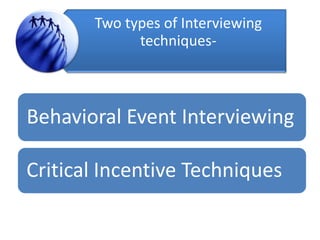
Two types of Interviewing
             techniques-


Behavioral Event Interviewing

Critical Incentive Techniques
Behavioral Event Interviewing
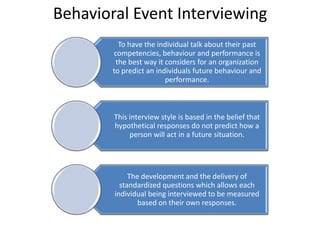
          To have the individual talk about their past
        competencies, behaviour and performance is
         the best way it considers for an organization
        to predict an individuals future behaviour and
                         performance.


        This interview style is based in the belief that
        hypothetical responses do not predict how a
             person will act in a future situation.


             The development and the delivery of
          standardized questions which allows each
        individual being interviewed to be measured
                based on their own responses.
Responsibilities as an interviewer or a panelist


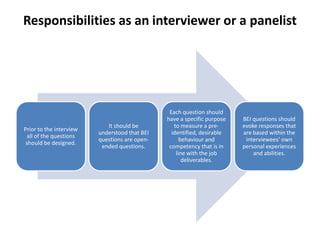
                                                Each question should
                                               have a specific purpose   BEI questions should
                            It should be          to measure a pre-      evoke responses that
Prior to the interview
                         understood that BEI     identified, desirable   are based within the
 all of the questions
                         questions are open-         behaviour and        interviewees’ own
 should be designed.
                          ended questions.      competency that is in    personal experiences
                                                   line with the job         and abilities.
                                                      deliverables.
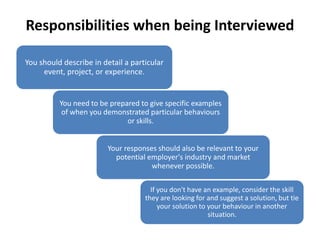
Responsibilities when being Interviewed

You should describe in detail a particular
     event, project, or experience.


          You need to be prepared to give specific examples
           of when you demonstrated particular behaviours
                              or skills.


                         Your responses should also be relevant to your
                           potential employer's industry and market
                                      whenever possible.

                                      If you don't have an example, consider the skill
                                    they are looking for and suggest a solution, but tie
                                         your solution to your behaviour in another
                                                          situation.
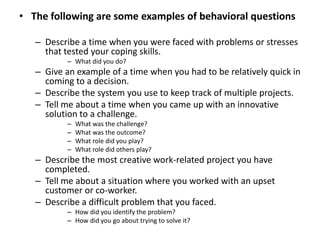
• The following are some examples of behavioral questions

   – Describe a time when you were faced with problems or stresses
     that tested your coping skills.
          – What did you do?
   – Give an example of a time when you had to be relatively quick in
     coming to a decision.
   – Describe the system you use to keep track of multiple projects.
   – Tell me about a time when you came up with an innovative
     solution to a challenge.
          –   What was the challenge?
          –   What was the outcome?
          –   What role did you play?
          –   What role did others play?
   – Describe the most creative work-related project you have
     completed.
   – Tell me about a situation where you worked with an upset
     customer or co-worker.
   – Describe a difficult problem that you faced.
          – How did you identify the problem?
          – How did you go about trying to solve it?
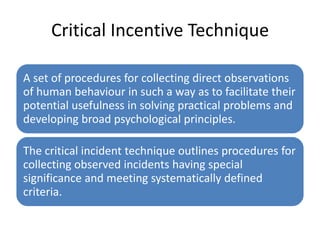
Critical Incentive Technique

A set of procedures for collecting direct observations
of human behaviour in such a way as to facilitate their
potential usefulness in solving practical problems and
developing broad psychological principles.

The critical incident technique outlines procedures for
collecting observed incidents having special
significance and meeting systematically defined
criteria.
Interviewing techniques

Interviewing techniques

  • 1.
    Interviewing techniques By Sapna Jangid SYMMS (HR) 04
  • 2.
    Two types ofInterviewing techniques- Behavioral Event Interviewing Critical Incentive Techniques
  • 3.
    Behavioral Event Interviewing To have the individual talk about their past competencies, behaviour and performance is the best way it considers for an organization to predict an individuals future behaviour and performance. This interview style is based in the belief that hypothetical responses do not predict how a person will act in a future situation. The development and the delivery of standardized questions which allows each individual being interviewed to be measured based on their own responses.
  • 4.
    Responsibilities as aninterviewer or a panelist Each question should have a specific purpose BEI questions should It should be to measure a pre- evoke responses that Prior to the interview understood that BEI identified, desirable are based within the all of the questions questions are open- behaviour and interviewees’ own should be designed. ended questions. competency that is in personal experiences line with the job and abilities. deliverables.
  • 5.
    Responsibilities when beingInterviewed You should describe in detail a particular event, project, or experience. You need to be prepared to give specific examples of when you demonstrated particular behaviours or skills. Your responses should also be relevant to your potential employer's industry and market whenever possible. If you don't have an example, consider the skill they are looking for and suggest a solution, but tie your solution to your behaviour in another situation.
  • 6.
    • The followingare some examples of behavioral questions – Describe a time when you were faced with problems or stresses that tested your coping skills. – What did you do? – Give an example of a time when you had to be relatively quick in coming to a decision. – Describe the system you use to keep track of multiple projects. – Tell me about a time when you came up with an innovative solution to a challenge. – What was the challenge? – What was the outcome? – What role did you play? – What role did others play? – Describe the most creative work-related project you have completed. – Tell me about a situation where you worked with an upset customer or co-worker. – Describe a difficult problem that you faced. – How did you identify the problem? – How did you go about trying to solve it?
  • 7.
    Critical Incentive Technique Aset of procedures for collecting direct observations of human behaviour in such a way as to facilitate their potential usefulness in solving practical problems and developing broad psychological principles. The critical incident technique outlines procedures for collecting observed incidents having special significance and meeting systematically defined criteria.