Effective Interviewing
Center for Career and Calling
Seattle Pacific University
May 2013
Preparation is the Key to Success
 Know yourself
 Know the organization and the position
 Practice, practice, practice
 Know the time and place – pre-plan
 Dress appropriately
 What to bring
More Tips
 Remain calm
 Memorize your resume
 Body language is important
 Speak clearly and articulately
 Elaborate on your responses (when practical)
 Focus consistently on positive, strong points
 Be prepared with pertinent questions
Showtime!
 Eye contact/ firm handshake
 Listen actively
 Answer the questions
 Ask informed questions
 Gracefully close – ASK for the JOB!
After the Interview
 Evaluate
 Send a thank you note (within 24 hrs.)
 Inquire
 Second interview
What is the Interviewer Looking For?
 Ability to communicate/ intelligence
 Self-confidence
 Willingness to accept responsibility
 Initiative/ Leadership/Communications Skills
 Energy level
 Imagination
 Interpersonal skills
 Flexibility/ Ability to handle conflict
 Self-knowledge
STORY TELLING:
The Key to Effective Interviewing!
 Situation
 Opportunity (Obstacle)
 ACTION (What did you do?)
 RESULTS (IMPACT!)
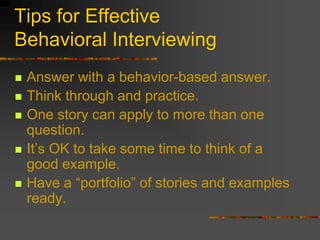
Tips for Effective
Behavioral Interviewing
 Answer with a behavior-based answer.
 Think through and practice.
 One story can apply to more than one
question.
 It’s OK to take some time to think of a
good example.
 Have a “portfolio” of stories and examples
ready.
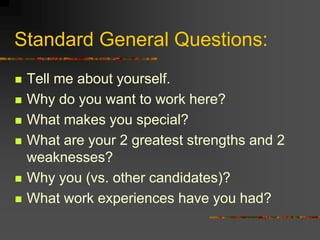
Standard General Questions:
 Tell me about yourself.
 Why do you want to work here?
 What makes you special?
 What are your 2 greatest strengths and 2
weaknesses?
 Why you (vs. other candidates)?
 What work experiences have you had?
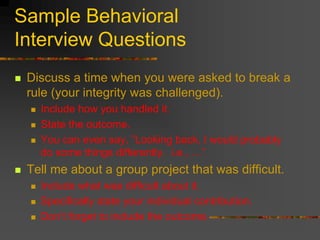
Sample Behavioral
Interview Questions
 Discuss a time when you were asked to break a
rule (your integrity was challenged).
 Include how you handled it.
 State the outcome.
 You can even say, ”Looking back, I would probably
do some things differently. i.e., …”
 Tell me about a group project that was difficult.
 Include what was difficult about it.
 Specifically state your individual contribution.
 Don’t forget to include the outcome.
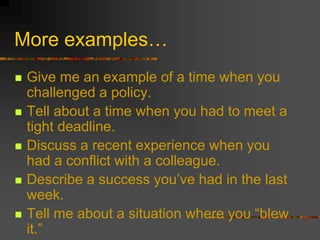
More examples…
 Give me an example of a time when you
challenged a policy.
 Tell about a time when you had to meet a
tight deadline.
 Discuss a recent experience when you
had a conflict with a colleague.
 Describe a success you’ve had in the last
week.
 Tell me about a situation where you “blew
it.”

Interviewing spu 05 2013

  • 1.
    Effective Interviewing Center forCareer and Calling Seattle Pacific University May 2013
  • 2.
    Preparation is theKey to Success  Know yourself  Know the organization and the position  Practice, practice, practice  Know the time and place – pre-plan  Dress appropriately  What to bring
  • 3.
    More Tips  Remaincalm  Memorize your resume  Body language is important  Speak clearly and articulately  Elaborate on your responses (when practical)  Focus consistently on positive, strong points  Be prepared with pertinent questions
  • 4.
    Showtime!  Eye contact/firm handshake  Listen actively  Answer the questions  Ask informed questions  Gracefully close – ASK for the JOB!
  • 5.
    After the Interview Evaluate  Send a thank you note (within 24 hrs.)  Inquire  Second interview
  • 6.
    What is theInterviewer Looking For?  Ability to communicate/ intelligence  Self-confidence  Willingness to accept responsibility  Initiative/ Leadership/Communications Skills  Energy level  Imagination  Interpersonal skills  Flexibility/ Ability to handle conflict  Self-knowledge
  • 7.
    STORY TELLING: The Keyto Effective Interviewing!  Situation  Opportunity (Obstacle)  ACTION (What did you do?)  RESULTS (IMPACT!)
  • 8.
    Tips for Effective BehavioralInterviewing  Answer with a behavior-based answer.  Think through and practice.  One story can apply to more than one question.  It’s OK to take some time to think of a good example.  Have a “portfolio” of stories and examples ready.
  • 9.
    Standard General Questions: Tell me about yourself.  Why do you want to work here?  What makes you special?  What are your 2 greatest strengths and 2 weaknesses?  Why you (vs. other candidates)?  What work experiences have you had?
  • 10.
    Sample Behavioral Interview Questions Discuss a time when you were asked to break a rule (your integrity was challenged).  Include how you handled it.  State the outcome.  You can even say, ”Looking back, I would probably do some things differently. i.e., …”  Tell me about a group project that was difficult.  Include what was difficult about it.  Specifically state your individual contribution.  Don’t forget to include the outcome.
  • 11.
    More examples…  Giveme an example of a time when you challenged a policy.  Tell about a time when you had to meet a tight deadline.  Discuss a recent experience when you had a conflict with a colleague.  Describe a success you’ve had in the last week.  Tell me about a situation where you “blew it.”