Interpretation of Capital
Structure Measures
Financial Management 2
K. V. Mendoza, MBA
Solvency
• Solvency is a
firm’s financial
ability to survive in
the long term by
paying its long-
term obligations
Capital Structures Measures
1. Capital Structure
2. Earning Power
3. Asset Coverage
Capital Structure Measures
1. Capital Structure-
includes the firm’s
sources of financing,
through:
 Equity
 Debt
Capital Structure Measures
2. Earning Power
(earnings
coverage)- is the
capacity of the
firm’s operations
to produce cash
inflows.
Capital Structure Measures
3. Asset Coverage-
provides assurance to
creditors that the firm
will be solvent in the
long term. Assets are
the source of earning
power.
Asset Composition-is
ordinarily indicative of the
financing structure.
Capital Structure Measures
3. Asset Coverage
Ratio of fixed
asset to equity
capital-indicates
the extent to which
shareholders
have financed non
current assets.
Fixed assets
Total Equity
 the greater the ratio,
the greater the risk
 If the ratio exceeds 1.0
the firm has some debt
financing
Capital Structure Measures
3. Asset Coverage
Ratio of net
tangible assets
to long term
debt-is a measure
of the firm’s ability
to pay its non
current obligations
Net Tangible Assets
Long Term Debt
 A high ratio assures
creditor’s of the firm’s
solvency
Capital Structure Measures
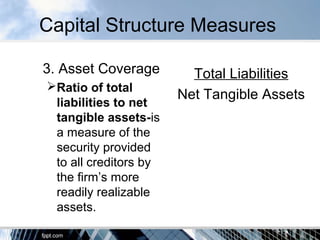
3. Asset Coverage
Ratio of total
liabilities to net
tangible assets-is
a measure of the
security provided
to all creditors by
the firm’s more
readily realizable
assets.
Total Liabilities
Net Tangible Assets
Capital Structure Measures
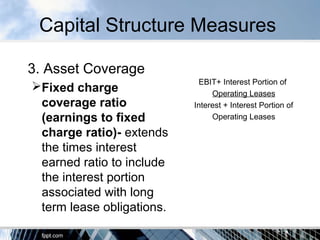
3. Asset Coverage
Fixed charge
coverage ratio
(earnings to fixed
charge ratio)- extends
the times interest
earned ratio to include
the interest portion
associated with long
term lease obligations.
EBIT+ Interest Portion of
Operating Leases
Interest + Interest Portion of
Operating Leases
END OF LECTURE

Interpretation of capital structure measures. fm2

  • 1.
    Interpretation of Capital StructureMeasures Financial Management 2 K. V. Mendoza, MBA
  • 2.
    Solvency • Solvency isa firm’s financial ability to survive in the long term by paying its long- term obligations
  • 3.
    Capital Structures Measures 1.Capital Structure 2. Earning Power 3. Asset Coverage
  • 4.
    Capital Structure Measures 1.Capital Structure- includes the firm’s sources of financing, through:  Equity  Debt
  • 5.
    Capital Structure Measures 2.Earning Power (earnings coverage)- is the capacity of the firm’s operations to produce cash inflows.
  • 6.
    Capital Structure Measures 3.Asset Coverage- provides assurance to creditors that the firm will be solvent in the long term. Assets are the source of earning power. Asset Composition-is ordinarily indicative of the financing structure.
  • 7.
    Capital Structure Measures 3.Asset Coverage Ratio of fixed asset to equity capital-indicates the extent to which shareholders have financed non current assets. Fixed assets Total Equity  the greater the ratio, the greater the risk  If the ratio exceeds 1.0 the firm has some debt financing
  • 8.
    Capital Structure Measures 3.Asset Coverage Ratio of net tangible assets to long term debt-is a measure of the firm’s ability to pay its non current obligations Net Tangible Assets Long Term Debt  A high ratio assures creditor’s of the firm’s solvency
  • 9.
    Capital Structure Measures 3.Asset Coverage Ratio of total liabilities to net tangible assets-is a measure of the security provided to all creditors by the firm’s more readily realizable assets. Total Liabilities Net Tangible Assets
  • 10.
    Capital Structure Measures 3.Asset Coverage Fixed charge coverage ratio (earnings to fixed charge ratio)- extends the times interest earned ratio to include the interest portion associated with long term lease obligations. EBIT+ Interest Portion of Operating Leases Interest + Interest Portion of Operating Leases
  • 11.

Editor's Notes

  • #2 http://wenku.baidu.com/view/31b12cacd1f34693daef3e60.html
  • #10 .