Interpretation of a
Partogram
B Y : Z O Y A N A W A Z I S H .
What is a
Partogram?
• Answering the whats and the whys :)
"A partogram is a composite graphical
record of fetal and maternal well-being
and the progress of labour on a single
piece of paper"
Whys i.e., Advantages of a Partogram
• Assess labour at a glance/saves you from going through hefty paperwork
each time you need to check the progress of labour.
• Abnormal progression of labour is detected early.
• Allows management and proper interventions of labour in case of
deviation from normal.
• Helps reduce complications to make birth a happy experience for both
the fetus and the mother.
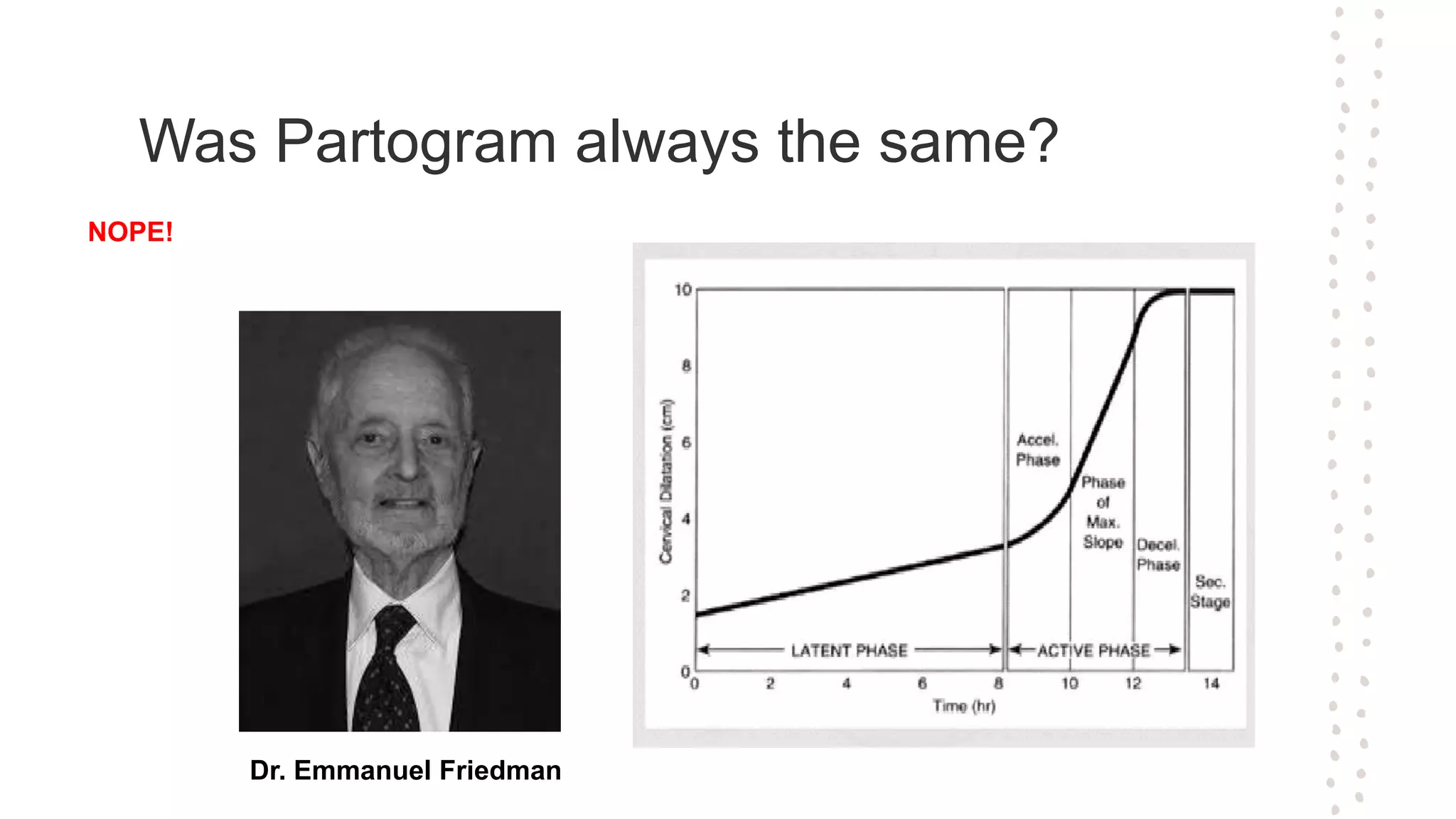
Was Partogram always the same?
NOPE!
Dr. Emmanuel Friedman
There's always room for improvement
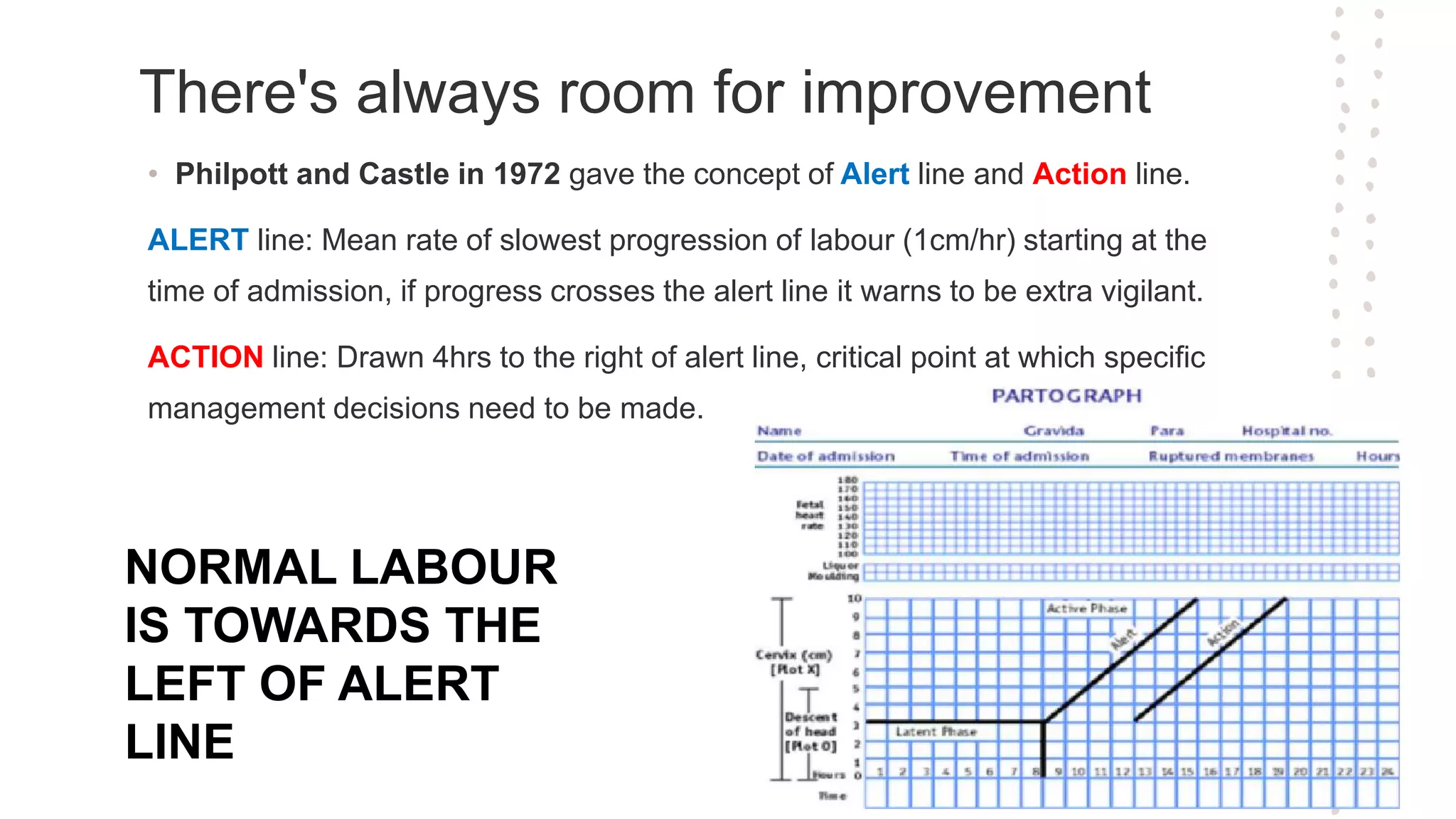
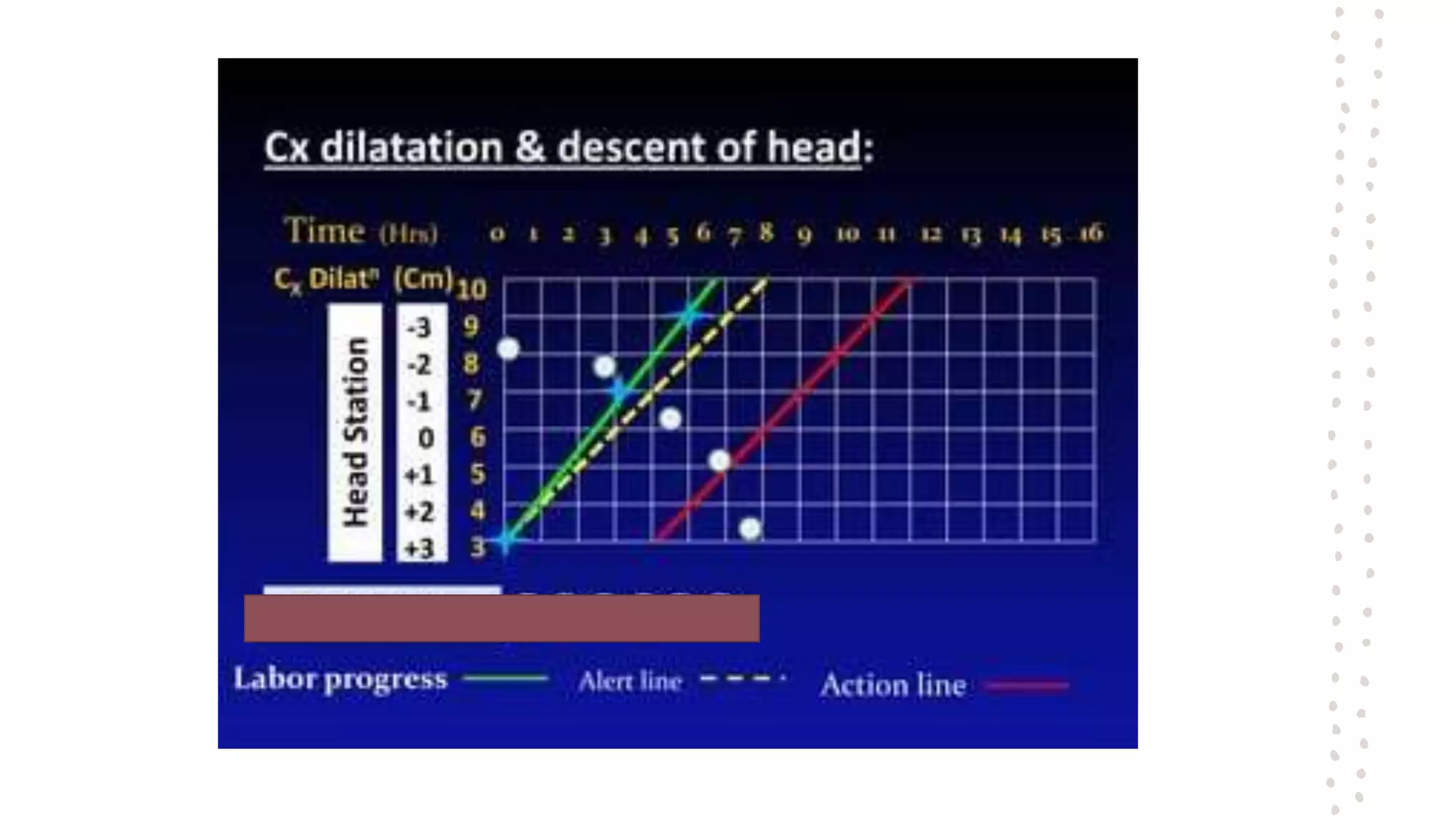
• Philpott and Castle in 1972 gave the concept of Alert line and Action line.
ALERT line: Mean rate of slowest progression of labour (1cm/hr) starting at the
time of admission, if progress crosses the alert line it warns to be extra vigilant.
ACTION line: Drawn 4hrs to the right of alert line, critical point at which specific
management decisions need to be made.
NORMAL LABOUR
IS TOWARDS THE
LEFT OF ALERT
LINE
Before we move on...
First stage of labour is divided into 2
phases:
Latent Phase: Cervical dilatation 0-3cm.
Contractions: 2/10 minutes lasting 20 seconds.
Lasts for 8 hours.
Active phase: Cervical dilatation 4-10cm
(1cm/hour).
Contractions: 3/10 minutes lasting 30 seconds.
WHO Partogram:
• Since it is difficult to differentiate the latent phase from
true labour and the prolonged latent phase is infrequent
and not usually associate with poor outcomes, the
usefulness of recording the latent phase was questioned
and it was removed from the Partogram in the 2000s. Now
we plot the cervical dilation from 4cm (active phase).
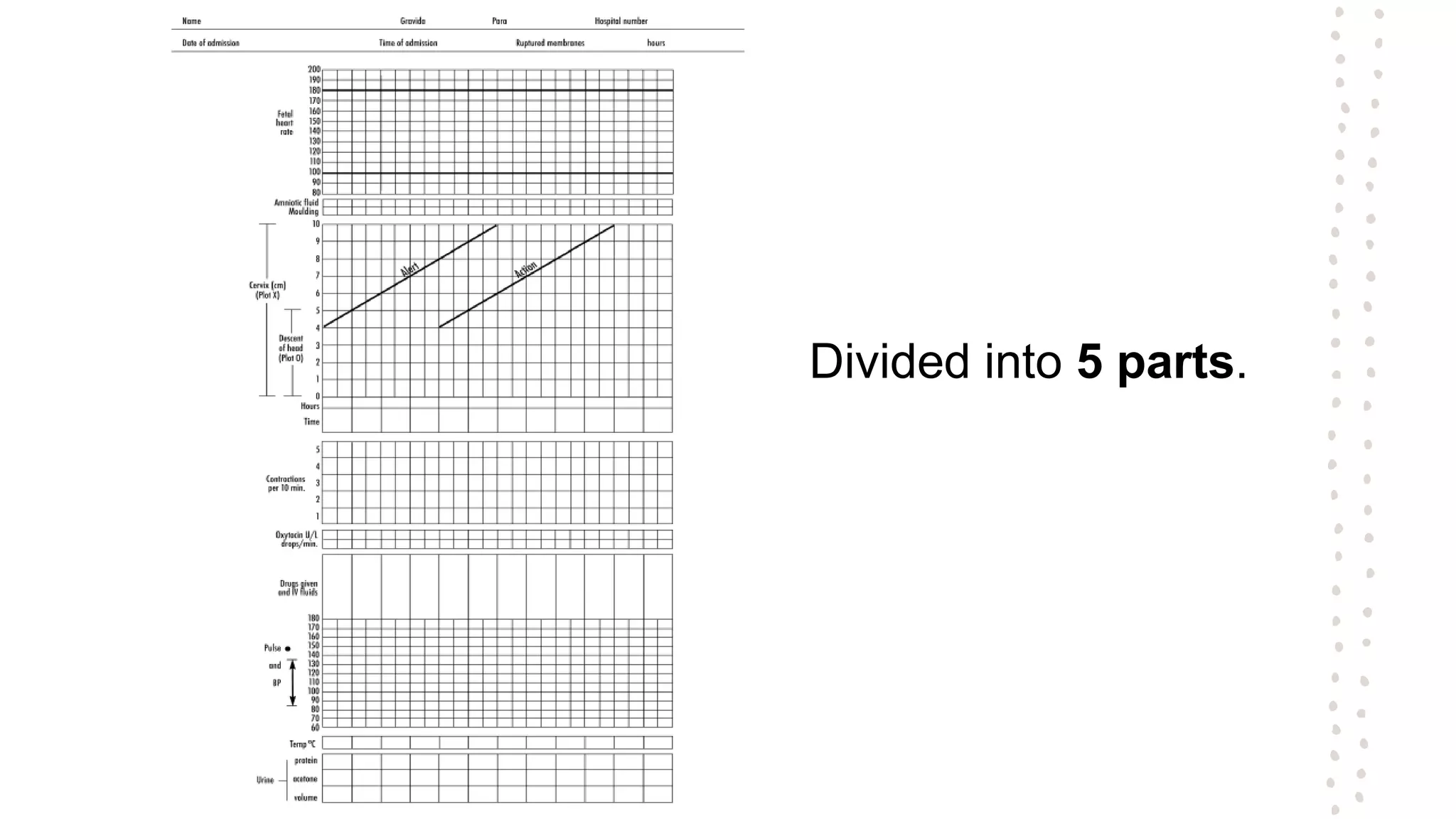
Divided into 5 parts.
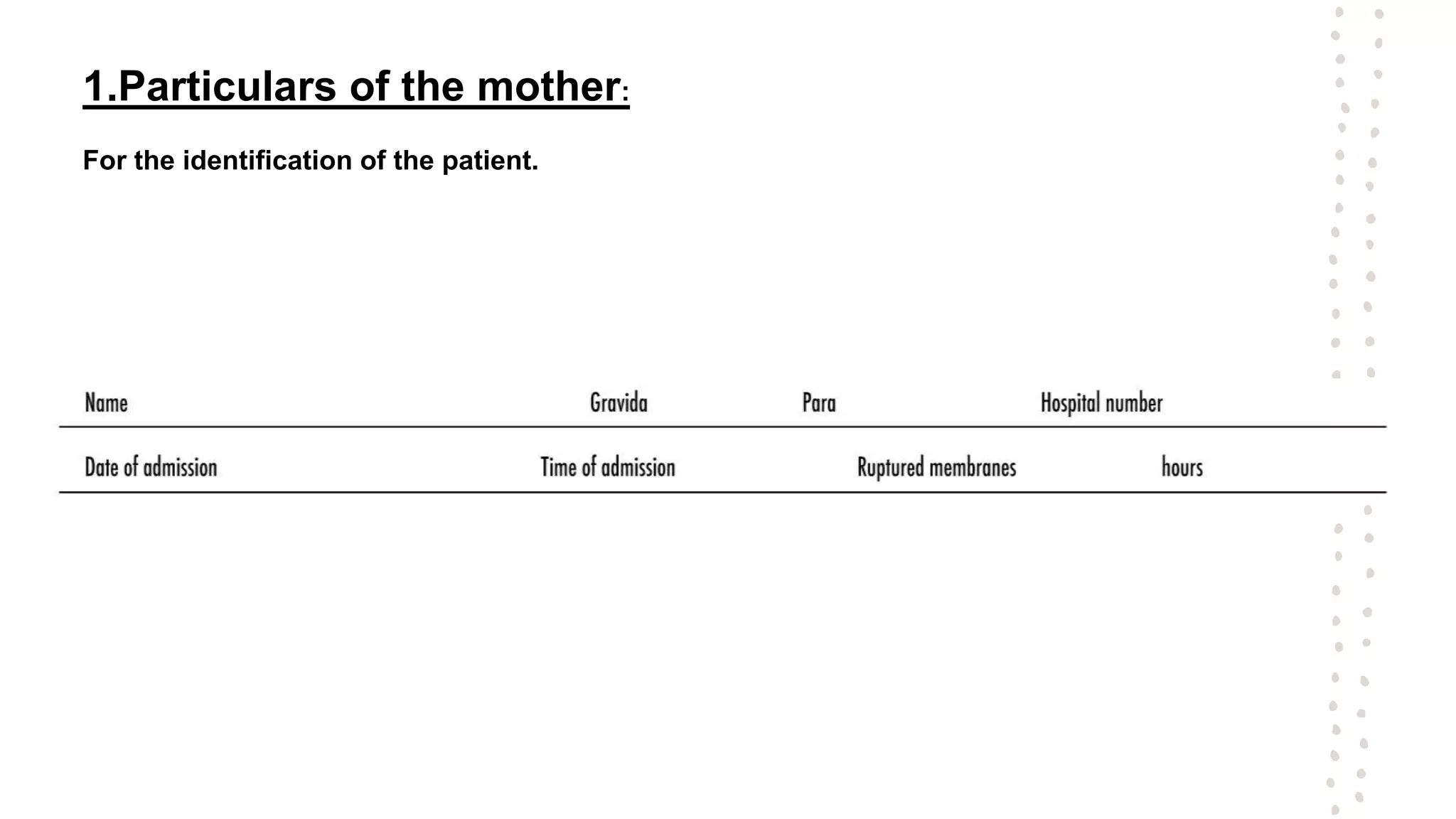
1.Particulars of the mother:
For the identification of the patient.
2.Fetal Condition:
• Fetal heart rate(Normal 120-160bpm) denoted by a" " recorded every 30 minutes(1 small
box= 30 minutes)
• Colour of the liquor: Tells us whether the fetus is in distress or not.
• If membranes are not ruptured it is denoted by an "I"
Normal liquor is CLEAR denoted by a "C"
Meconium stained liquour is GREEN and it is denoted by "M"
Blood stained liquour is RED and is denoted by "B"
• Moulding: Adequacy of the pelvis to accommodate fetal head
"0"= bones are not touching.
"+"= bones are touching and can be separated.
"++"= Bones are overlapping
"+++"= Severe overlapping(pressure on fetal brain)
FHR in normal range?
What's "I" and "C"?
Is there any moulding?
3.Progress of Labour: (recorded every 4 hours)
Cervical dilation (X)
Started by plotting on the alert line, 4cm dilated to the point of expected full dilation
at the rate of 1cm/hr.
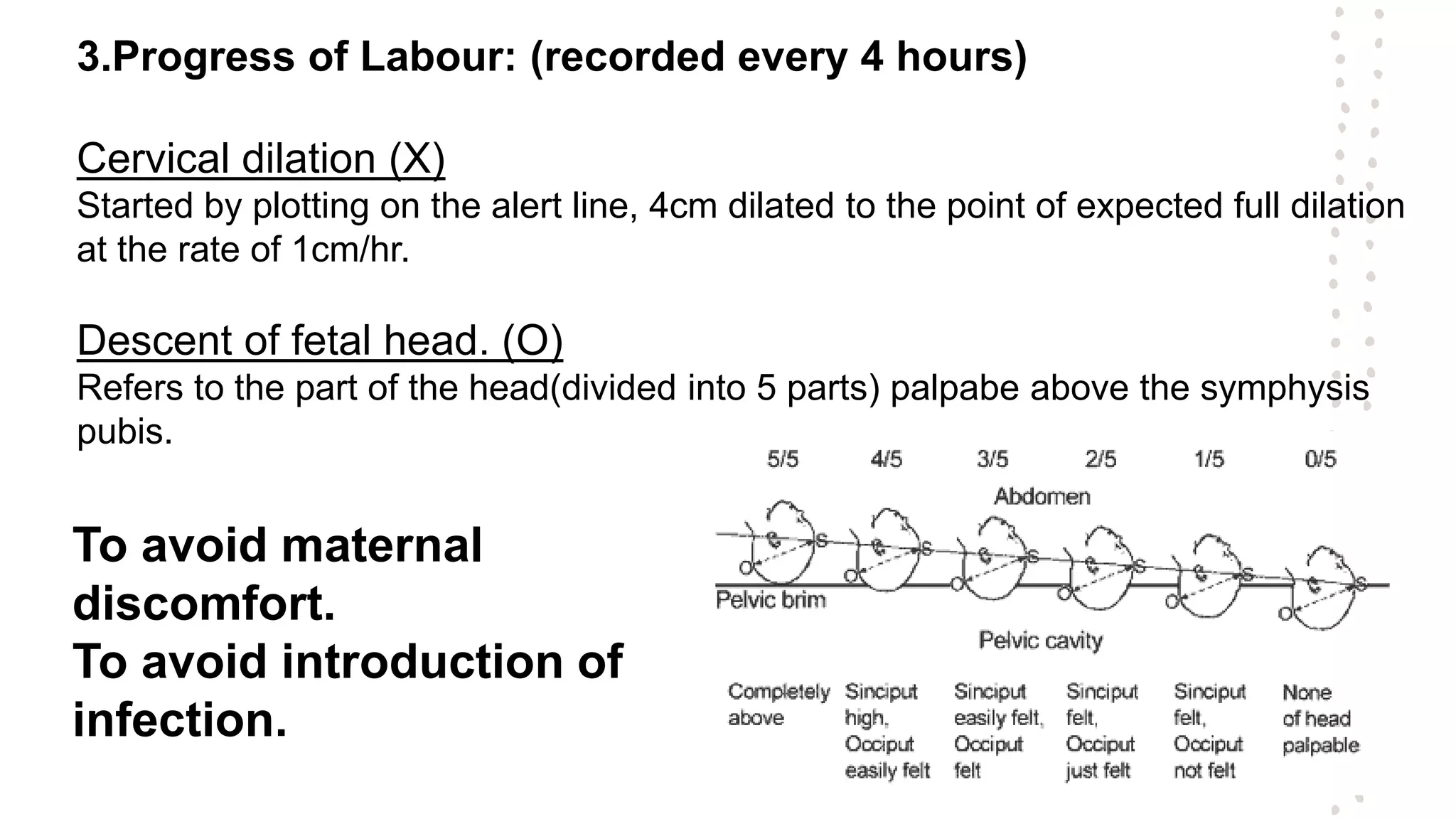
Descent of fetal head. (O)
Refers to the part of the head(divided into 5 parts) palpabe above the symphysis
pubis.
To avoid maternal
discomfort.
To avoid introduction of
infection.
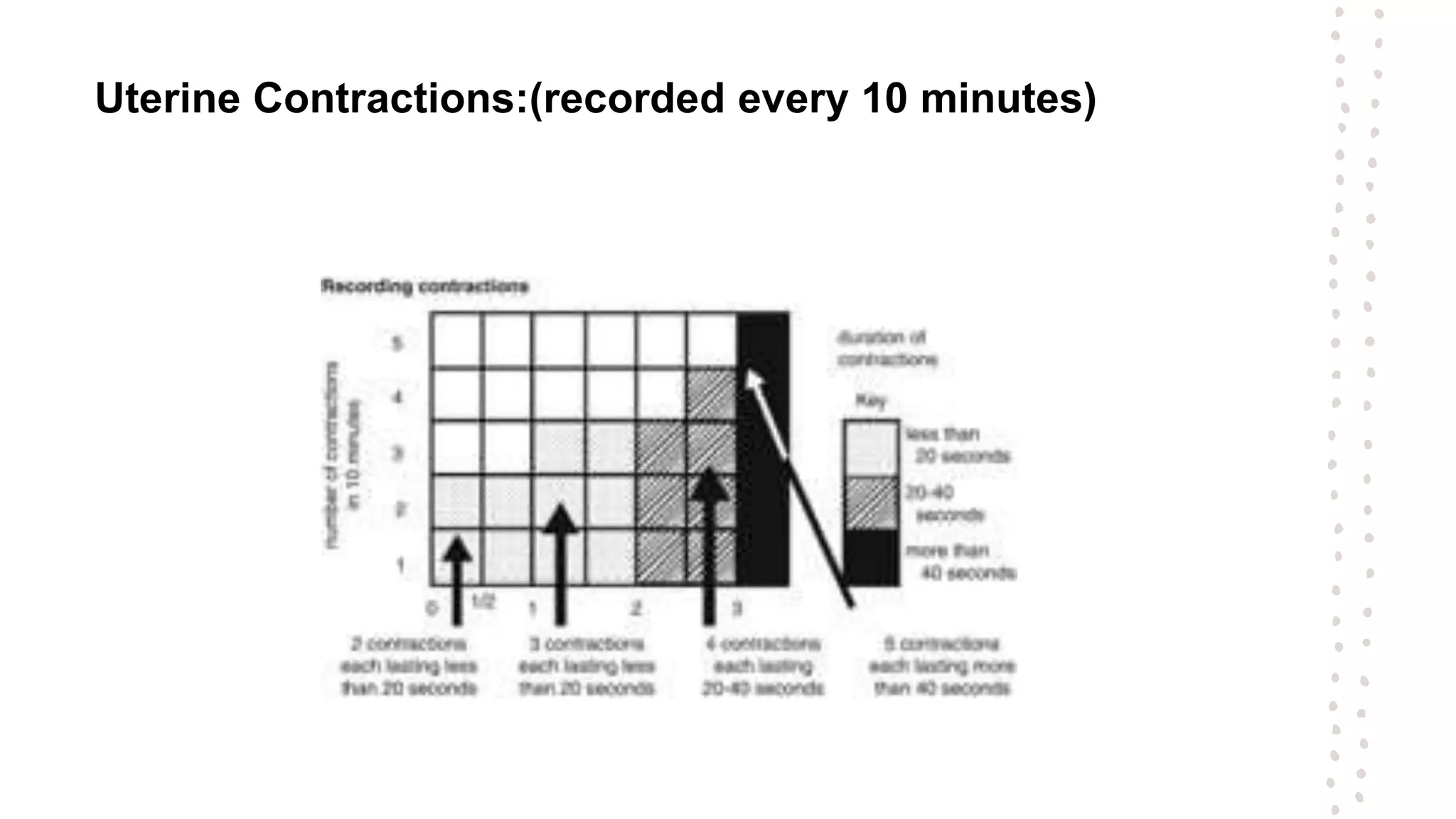
Uterine Contractions:(recorded every 10 minutes)
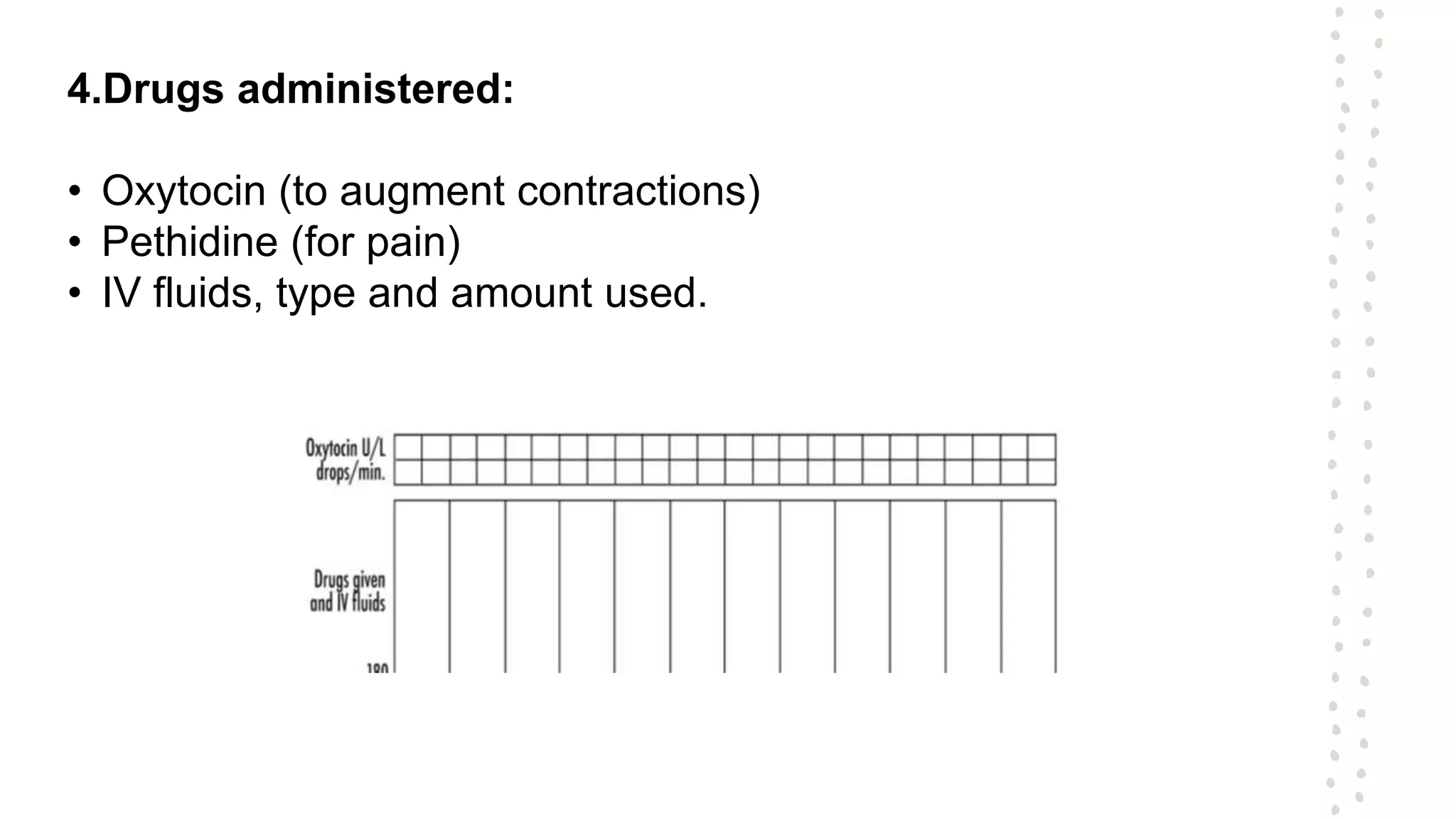
4.Drugs administered:
• Oxytocin (to augment contractions)
• Pethidine (for pain)
• IV fluids, type and amount used.
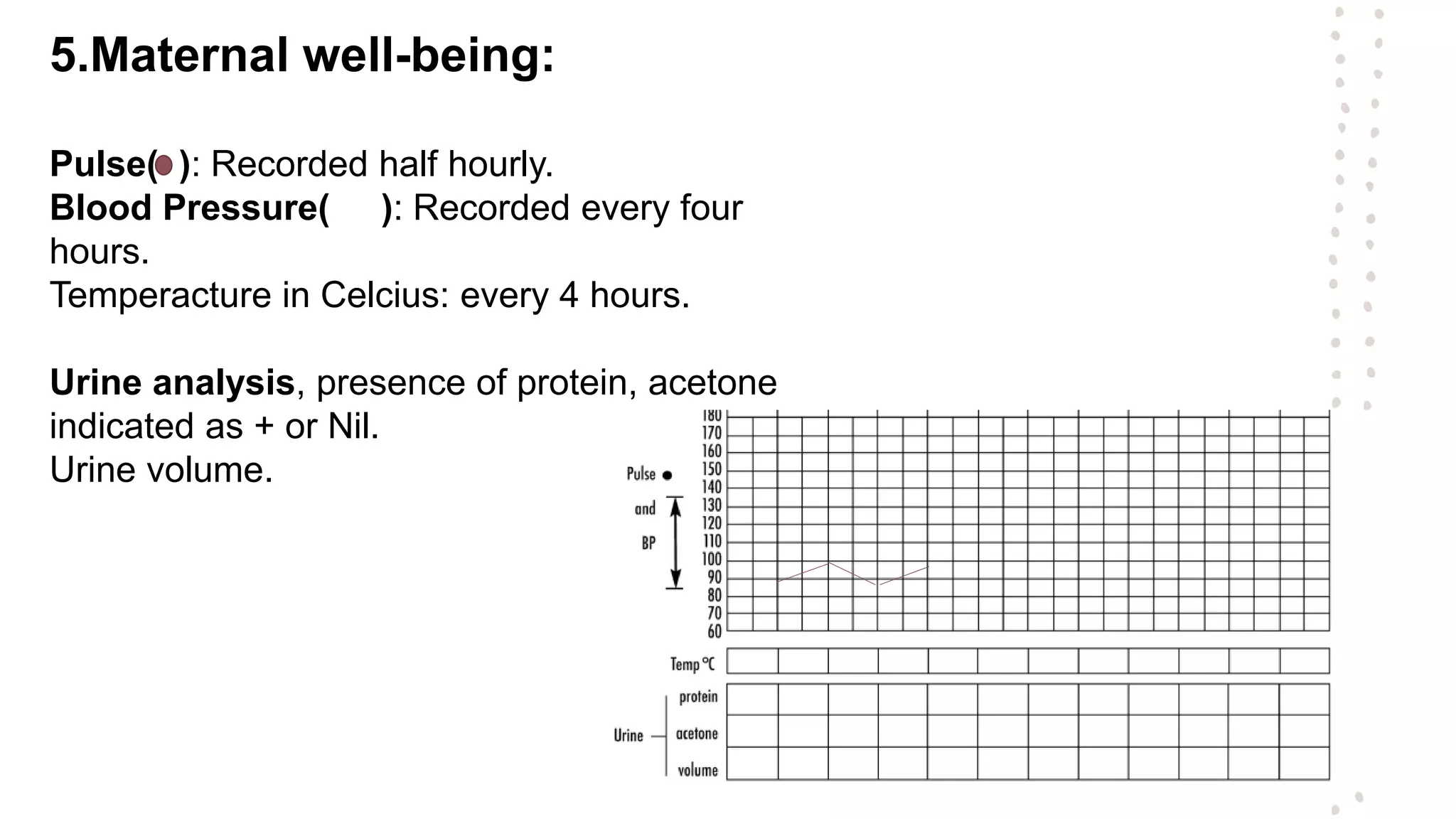
5.Maternal well-being:
Pulse( ): Recorded half hourly.
Blood Pressure( ): Recorded every four
hours.
Temperacture in Celcius: every 4 hours.
Urine analysis, presence of protein, acetone
indicated as + or Nil.
Urine volume.
Thankyou.

Interpretation of a Partogram.pptx

  • 1.
    Interpretation of a Partogram BY : Z O Y A N A W A Z I S H .
  • 2.
    What is a Partogram? •Answering the whats and the whys :) "A partogram is a composite graphical record of fetal and maternal well-being and the progress of labour on a single piece of paper"
  • 3.
    Whys i.e., Advantagesof a Partogram • Assess labour at a glance/saves you from going through hefty paperwork each time you need to check the progress of labour. • Abnormal progression of labour is detected early. • Allows management and proper interventions of labour in case of deviation from normal. • Helps reduce complications to make birth a happy experience for both the fetus and the mother.
  • 4.
    Was Partogram alwaysthe same? NOPE! Dr. Emmanuel Friedman
  • 5.
    There's always roomfor improvement • Philpott and Castle in 1972 gave the concept of Alert line and Action line. ALERT line: Mean rate of slowest progression of labour (1cm/hr) starting at the time of admission, if progress crosses the alert line it warns to be extra vigilant. ACTION line: Drawn 4hrs to the right of alert line, critical point at which specific management decisions need to be made. NORMAL LABOUR IS TOWARDS THE LEFT OF ALERT LINE
  • 6.
    Before we moveon... First stage of labour is divided into 2 phases: Latent Phase: Cervical dilatation 0-3cm. Contractions: 2/10 minutes lasting 20 seconds. Lasts for 8 hours. Active phase: Cervical dilatation 4-10cm (1cm/hour). Contractions: 3/10 minutes lasting 30 seconds.
  • 7.
    WHO Partogram: • Sinceit is difficult to differentiate the latent phase from true labour and the prolonged latent phase is infrequent and not usually associate with poor outcomes, the usefulness of recording the latent phase was questioned and it was removed from the Partogram in the 2000s. Now we plot the cervical dilation from 4cm (active phase).
  • 8.
  • 9.
    1.Particulars of themother: For the identification of the patient.
  • 10.
    2.Fetal Condition: • Fetalheart rate(Normal 120-160bpm) denoted by a" " recorded every 30 minutes(1 small box= 30 minutes) • Colour of the liquor: Tells us whether the fetus is in distress or not. • If membranes are not ruptured it is denoted by an "I" Normal liquor is CLEAR denoted by a "C" Meconium stained liquour is GREEN and it is denoted by "M" Blood stained liquour is RED and is denoted by "B" • Moulding: Adequacy of the pelvis to accommodate fetal head "0"= bones are not touching. "+"= bones are touching and can be separated. "++"= Bones are overlapping "+++"= Severe overlapping(pressure on fetal brain)
  • 11.
    FHR in normalrange? What's "I" and "C"? Is there any moulding?
  • 12.
    3.Progress of Labour:(recorded every 4 hours) Cervical dilation (X) Started by plotting on the alert line, 4cm dilated to the point of expected full dilation at the rate of 1cm/hr. Descent of fetal head. (O) Refers to the part of the head(divided into 5 parts) palpabe above the symphysis pubis. To avoid maternal discomfort. To avoid introduction of infection.
  • 14.
  • 15.
    4.Drugs administered: • Oxytocin(to augment contractions) • Pethidine (for pain) • IV fluids, type and amount used.
  • 16.
    5.Maternal well-being: Pulse( ):Recorded half hourly. Blood Pressure( ): Recorded every four hours. Temperacture in Celcius: every 4 hours. Urine analysis, presence of protein, acetone indicated as + or Nil. Urine volume.
  • 17.