Download to read offline
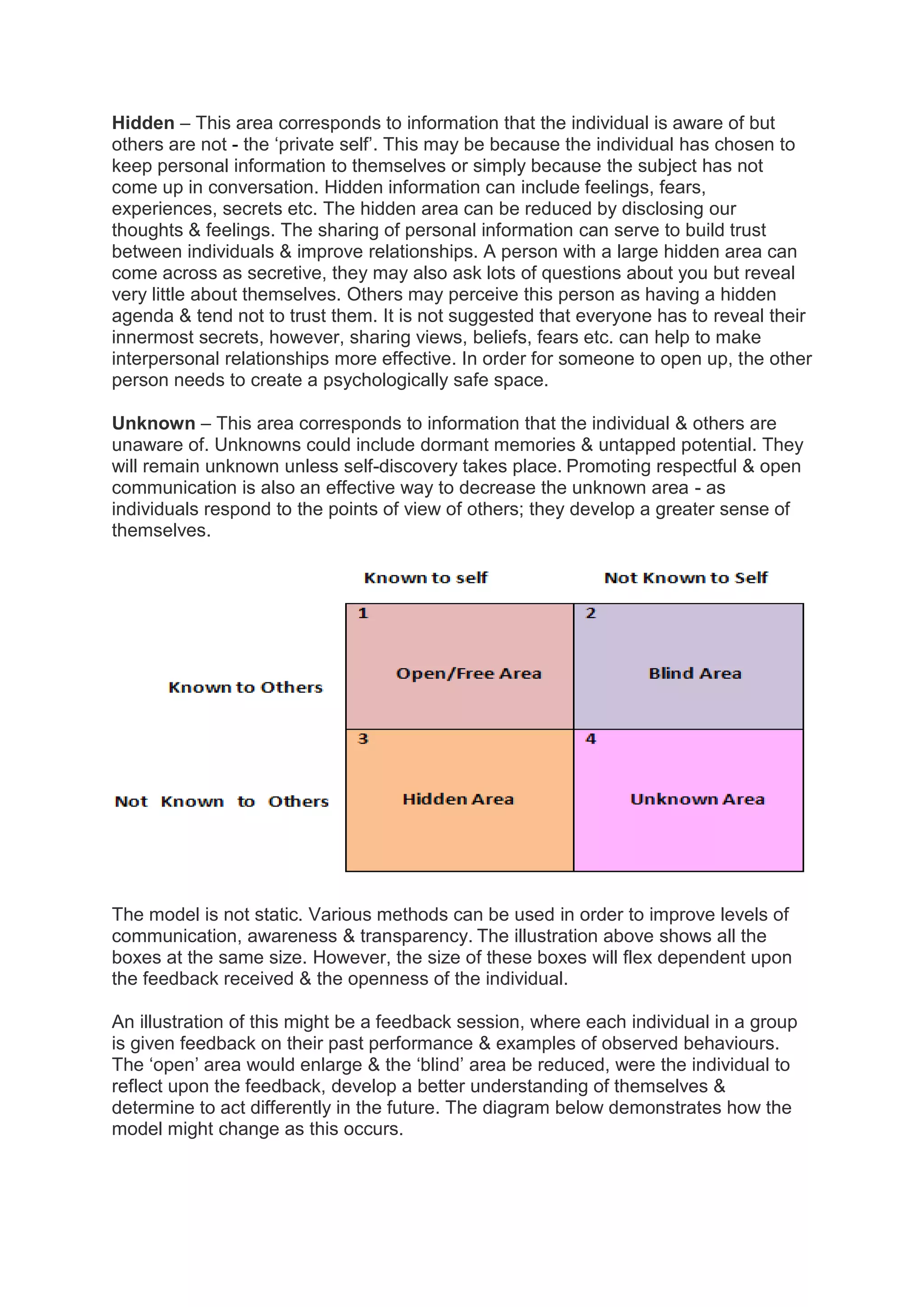


The Johari Window model, created by Joseph Luft and Harrington Ingham in 1955, is a tool for enhancing self-awareness and communication, emphasizing that trust is built through self-disclosure and feedback. It consists of four quadrants (open, blind, hidden, and unknown) that represent different aspects of self-awareness and interpersonal relationships, illustrating how feedback and sharing experiences can enlarge the open area while reducing blind and hidden areas. The model promotes a trusting environment where individuals feel safe to share their thoughts and feelings, ultimately improving team dynamics and individual performance.


