DISCLAIMER
WHAT IS IN IT??
INTERNAL AUDIT
BENEFITS OF INTERNAL AUDIT
THE AUDIT SCHEDULE
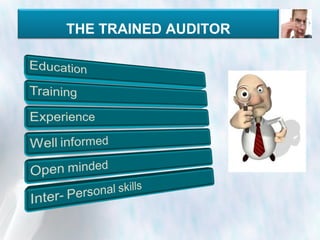
THE TRAINED AUDITOR
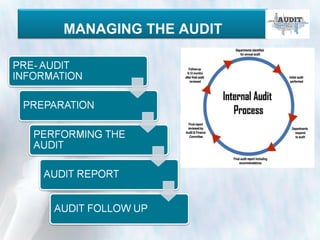
MANAGING THE AUDIT
WHAT IS IT ?
Napo in Safe on Site - episode 003 - Heading for a fall - YouTube[via torchb.mp4
PRINCIPLES OF QRM
TYPICAL QRM PROCESS
Risk Review
RiskCommunication
Risk Assessment
Risk Evaluation
unacceptable
Risk Control
Risk Analysis
Risk Reduction
Risk Identification
Review Events
Risk Acceptance
Initiate
Quality Risk Management Process
Output / Result of the
Quality Risk Management Process
RiskManagementtools
• What might go wrong or
has gone wrong?
• What is likelihood or
probability?
• What are the
consequences
(severity)?
• What is the level of
risk? Any mitigating
factors?
RISK ASSESSMENT
P – Probability of
Occurrence
High Likely to occur
Medium May occur
Low Unlikely to occur
Remote Very unlikely to occur
S – severity level if event occurs
Critical
Serious GMP non-
compliance
Patient injury possible
Moderate
Significant GMP non-
compliance
Impact on patient possible
Minor
Minor GMP non-
compliance
No patient impact
RISK ASSESSMENT
Risk = P x S
Severity
Probability Minor Moderate Critical
High
Unacceptable
risk
Intolerable risk Intolerable risk
Medium
Acceptable risk Unacceptable risk Intolerable risk
Low
Acceptable risk Acceptable risk Unacceptable
risk
Remote Acceptable risk Acceptable risk Acceptable risk
RISK ASSESSMENT
Severity (S)
Probability(P)
high
medium
low
risk
D
etectability(D
)
RISK ASSESSMENT
RISK CONTROL AND RISK REVIEW
QRM AND INTERNAL AUDIT
CONCERNS
?
Increasing
external
requirements
for best practice,
transparency and
compliance
• Public / Community
• Governments
• Regulators
• Investors / Creditors
Increasing
external
requirements
for best practice,
transparency and
compliance
• Public / Community
• Governments
• Regulators
• Investors / Creditors
Growing
complexity and
Scope of risks
• Globalisation
“Multinational”
• Multi-factor approaches
• Regulatory expectations
• Acceptance of
risk and uncertainty
Growing
complexity and
Scope of risks
• Globalisation
“Multinational”
• Multi-factor approaches
• Regulatory expectations
• Acceptance of
risk and uncertainty
Increasing
efforts and costs for sustainability.
E.g documentation, projects,
Systems
Increasing
efforts and costs for sustainability.
E.g documentation, projects,
Systems
QRM
THROUGH
INT. AUDIT
QRM
THROUGH
INT. AUDIT
Proactive
disclosure
build trust and
understanding
Proactive
disclosure
build trust and
understanding
Improve
communication
through sharing best
practice and science
based knowledge
Improve
communication
through sharing best
practice and science
based knowledge
• An appropriate integrated approach
helps to meet requirements more efficiently
Master complexity
Convert data into knowledge
e.g. by using methodology and tools
Master complexity
Convert data into knowledge
e.g. by using methodology and tools
NOVEL APPROACHES FOR QRM
THROUGH “INT. AUDIT”
CONCLUSION
Sharing information
WAY FORWARD
INTERNAL AUDIT IN PHARMACEUTICAL- AN ESSENTIAL TOOL

INTERNAL AUDIT IN PHARMACEUTICAL- AN ESSENTIAL TOOL

  • 2.
  • 4.
  • 6.
  • 8.
  • 10.
  • 11.
  • 12.
  • 14.
    WHAT IS IT? Napo in Safe on Site - episode 003 - Heading for a fall - YouTube[via torchb.mp4
  • 15.
  • 16.
    TYPICAL QRM PROCESS RiskReview RiskCommunication Risk Assessment Risk Evaluation unacceptable Risk Control Risk Analysis Risk Reduction Risk Identification Review Events Risk Acceptance Initiate Quality Risk Management Process Output / Result of the Quality Risk Management Process RiskManagementtools • What might go wrong or has gone wrong? • What is likelihood or probability? • What are the consequences (severity)? • What is the level of risk? Any mitigating factors?
  • 17.
    RISK ASSESSMENT P –Probability of Occurrence High Likely to occur Medium May occur Low Unlikely to occur Remote Very unlikely to occur S – severity level if event occurs Critical Serious GMP non- compliance Patient injury possible Moderate Significant GMP non- compliance Impact on patient possible Minor Minor GMP non- compliance No patient impact
  • 18.
    RISK ASSESSMENT Risk =P x S Severity Probability Minor Moderate Critical High Unacceptable risk Intolerable risk Intolerable risk Medium Acceptable risk Unacceptable risk Intolerable risk Low Acceptable risk Acceptable risk Unacceptable risk Remote Acceptable risk Acceptable risk Acceptable risk
  • 19.
  • 20.
  • 21.
    RISK CONTROL ANDRISK REVIEW
  • 22.
  • 23.
    CONCERNS ? Increasing external requirements for best practice, transparencyand compliance • Public / Community • Governments • Regulators • Investors / Creditors Increasing external requirements for best practice, transparency and compliance • Public / Community • Governments • Regulators • Investors / Creditors Growing complexity and Scope of risks • Globalisation “Multinational” • Multi-factor approaches • Regulatory expectations • Acceptance of risk and uncertainty Growing complexity and Scope of risks • Globalisation “Multinational” • Multi-factor approaches • Regulatory expectations • Acceptance of risk and uncertainty Increasing efforts and costs for sustainability. E.g documentation, projects, Systems Increasing efforts and costs for sustainability. E.g documentation, projects, Systems
  • 24.
    QRM THROUGH INT. AUDIT QRM THROUGH INT. AUDIT Proactive disclosure buildtrust and understanding Proactive disclosure build trust and understanding Improve communication through sharing best practice and science based knowledge Improve communication through sharing best practice and science based knowledge • An appropriate integrated approach helps to meet requirements more efficiently Master complexity Convert data into knowledge e.g. by using methodology and tools Master complexity Convert data into knowledge e.g. by using methodology and tools NOVEL APPROACHES FOR QRM THROUGH “INT. AUDIT”
  • 25.
  • 26.