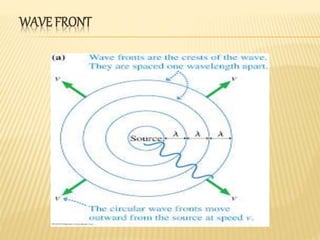
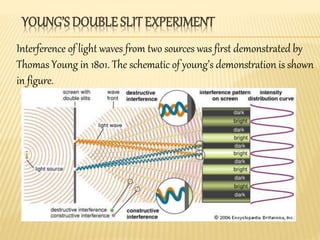
Light interference occurs when two light waves meet and their amplitudes combine, either constructively or destructively. Constructive interference occurs when the peaks and troughs of the waves align, amplifying the total amplitude. Destructive interference happens when peaks and troughs are out of phase, canceling each other out. Thomas Young first demonstrated light interference using a double-slit experiment, where light passing through two slits produces a pattern of bright and dark fringes on a screen due to the interference of the waves. Practical applications of light interference include sunglasses, camera lenses, and visors, which use interference to filter out harmful or inconvenient light wavelengths.



![Human Reproduction [ Reproductive System ] Notes @irfanullah_mehar Irfanullah...](https://cdn.slidesharecdn.com/ss_thumbnails/humanreproductionreproductivesystemnotesirfanullahmeharirfanullahmeharjanantantra-260111172350-56e85778-thumbnail.jpg?width=640&height=640&fit=bounds)


