UNIFYING THEMES
IN THE STUDY OF
LIFE
Describe how unifying themes (e.g., structure
and function, evolution, and ecosystems) in
the study of life show the connections among
living things and how they interact with each
other and with their environment. (S11/12LT-
IIa-3)
WHAT IS
AN
ORGANISM
?
An organism refers to a living
thing that has an organized structure, can
react to stimuli, reproduce, grow, adapt,
and maintain homeostasis. An organism
would, therefore, be any animal, plant,
fungus, protist, bacterium, or archaeon
on earth. These organisms may be
classified in various ways.
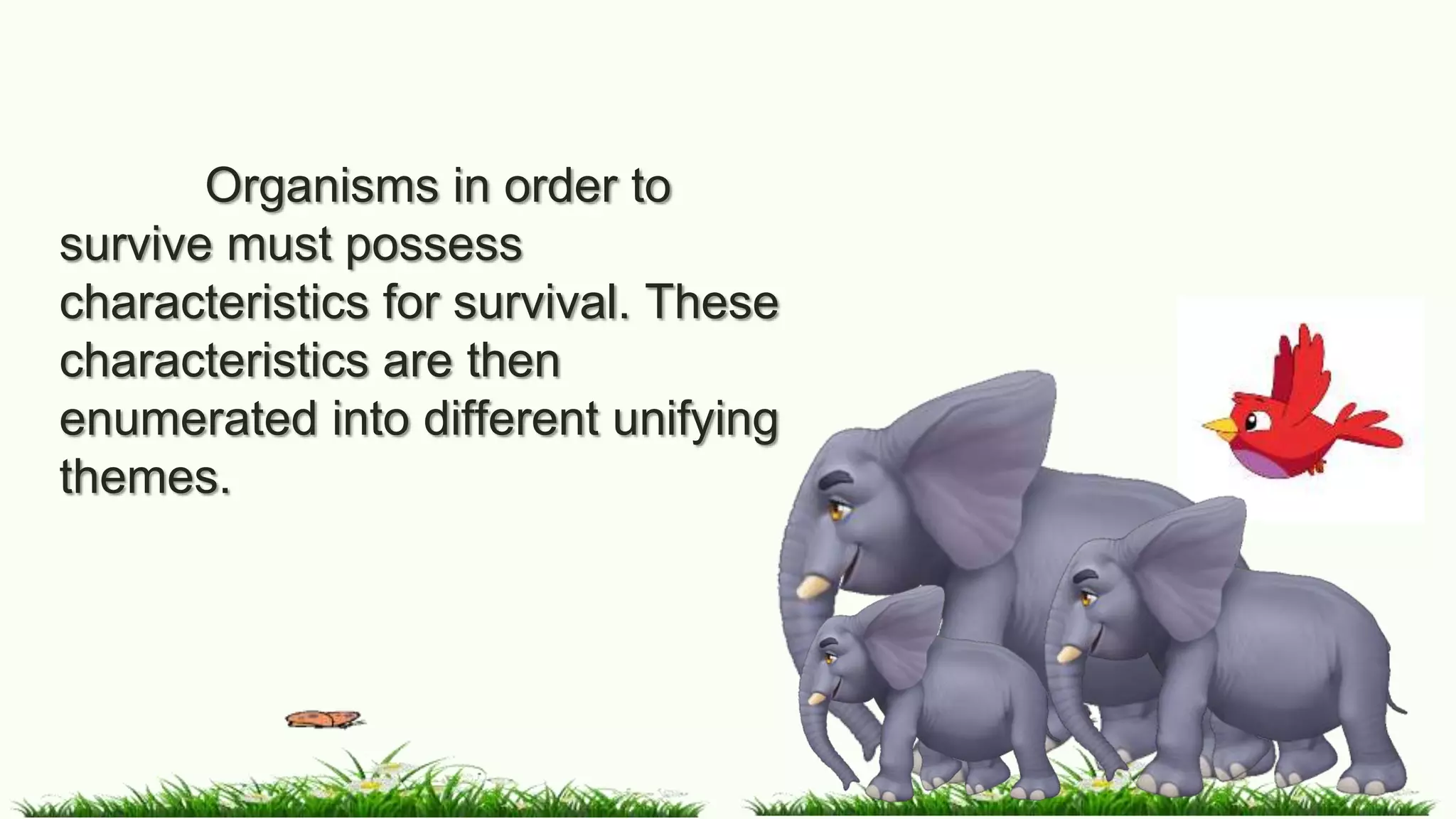
Organisms in order to
survive must possess
characteristics for survival. These
characteristics are then
enumerated into different unifying
themes.
UNIFYING
THEMES
OF LIFE
HIGH
DEGREE
OF
ORGANIZATI
ON
There is a hierarchy of
increasing complexity
within organism
structure, from the
molecular level to the
macro level
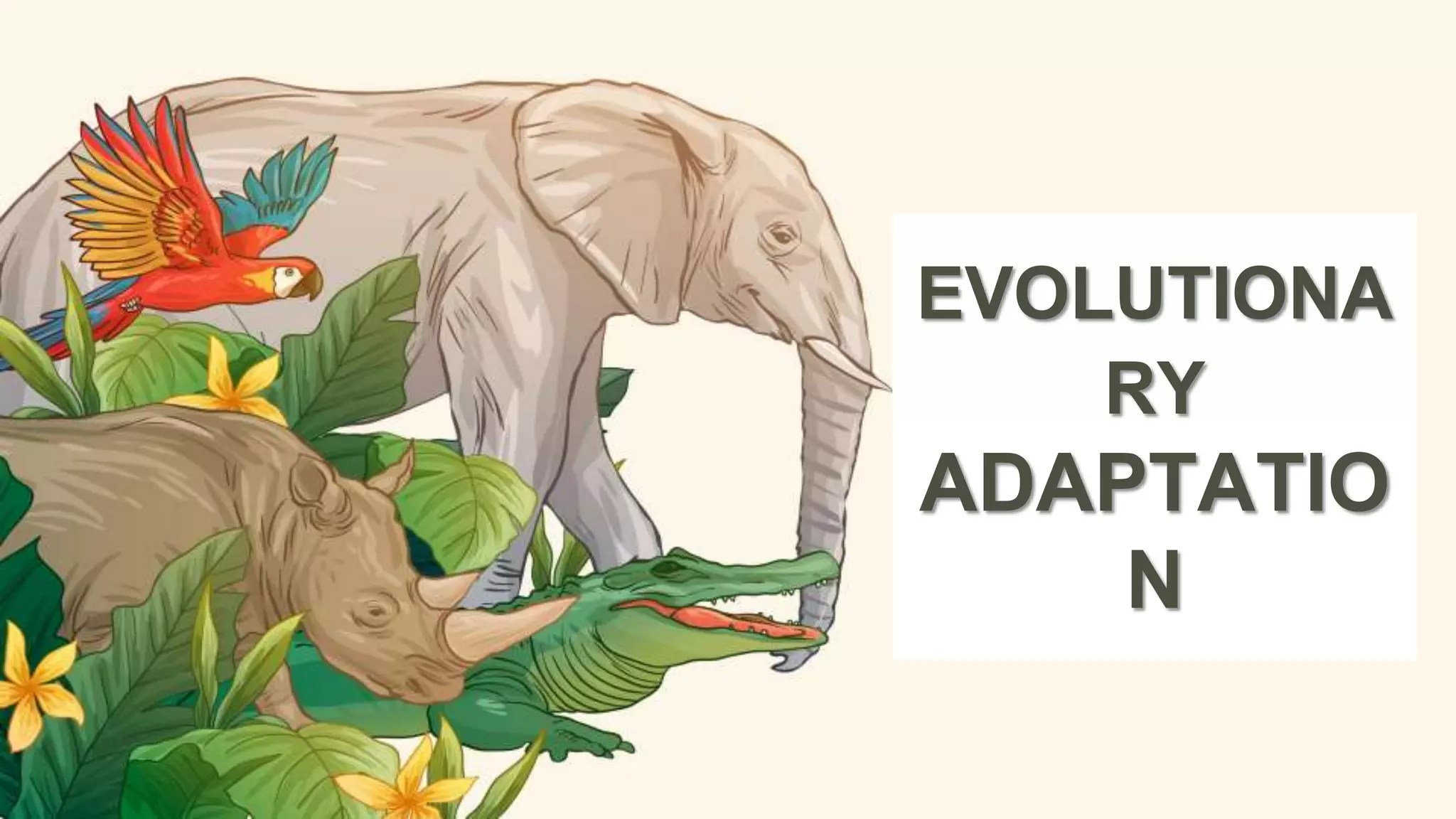
EVOLUTIONA
RY
ADAPTATIO
N
Evolutionary
adaptation, or simply
adaptation, is the
adjustment of organisms
to their environment in
order to improve their
chance at survival in that
environment
REGULATION
AND
HOMEOSTASI
S
homeostasis
refers to the self-
regulating process by
which biological
systems tend to
maintain stability while
adjusting to conditions
that are optimal for
survival
ACQUISITION
AND USE OF
ENERGY
Metabolism refers to
the sum of all chemical
processes that maintains
the living state of an
organism. It involves taking
in substances, breaking it
down to minute particle then
absorb by the body and use
as energy or material for
body construction. This
might be anabolism or
catabolism.
GROWTH
AND
DEVELOPME
NT
Growth refers to
the change that involves
physical change such as
size. Development on
the other hand refers to
the growth in function
and capability.
All organism
undergone life cycle from
juvenile to maturity.
ABILITY TO
RESPOND TO
STIMULI
Stimulus refers to a
thing that evokes a
specific functional
reaction in an organ or
tissue.
Every organisms
and organs has specific
reflex on each stimulus.
Failure to response
immediately to a stimulus
REPRODUCTI
ON
Reproduction refers to
the production of offspring –
either sexual or asexual.
Reproduction involves the
passing of genes from
parents to offspring.
Reproduction is a
fundamental feature of all
known life; each individual
organism exist as the result
of reproduction.
EVOLUTI
ON
Evolution refers to
the change in the physical
and heritable traits of
organisms over successive
generations. Organisms
change over time to adapt
to their environment to
survive. Extinction on the
other hand happens when
organism fail to adapt and
evolve from that
DIVERSITY
AND UNITY
No man is an
island. All organisms
need to interact with
each other to prosper
and survive. These
interactions later on
develops to
relationships and further
develop defined
characteristics that
Group of organisms forms
population and later on collectively
turns into community then to
biodiversity and lastly, a group of
biodiversity as it interacted with will
then form into Ecosystem. A study
of Ecosystem is termed ECOLOGY.
ECOLOGY is the branch of biology that deals
with the study of living organisms and their
relationships with each other and their environment
Output 1
in a drawing, illustrate the unifying themes of life.
Include all unifying themes on your illustartion

ELS - UNIFYING THEMES.pptx

  • 1.
    UNIFYING THEMES IN THESTUDY OF LIFE Describe how unifying themes (e.g., structure and function, evolution, and ecosystems) in the study of life show the connections among living things and how they interact with each other and with their environment. (S11/12LT- IIa-3)
  • 2.
  • 3.
    An organism refersto a living thing that has an organized structure, can react to stimuli, reproduce, grow, adapt, and maintain homeostasis. An organism would, therefore, be any animal, plant, fungus, protist, bacterium, or archaeon on earth. These organisms may be classified in various ways.
  • 4.
    Organisms in orderto survive must possess characteristics for survival. These characteristics are then enumerated into different unifying themes.
  • 5.
  • 6.
  • 7.
    There is ahierarchy of increasing complexity within organism structure, from the molecular level to the macro level
  • 8.
  • 9.
    Evolutionary adaptation, or simply adaptation,is the adjustment of organisms to their environment in order to improve their chance at survival in that environment
  • 10.
  • 11.
    homeostasis refers to theself- regulating process by which biological systems tend to maintain stability while adjusting to conditions that are optimal for survival
  • 12.
  • 13.
    Metabolism refers to thesum of all chemical processes that maintains the living state of an organism. It involves taking in substances, breaking it down to minute particle then absorb by the body and use as energy or material for body construction. This might be anabolism or catabolism.
  • 14.
  • 15.
    Growth refers to thechange that involves physical change such as size. Development on the other hand refers to the growth in function and capability. All organism undergone life cycle from juvenile to maturity.
  • 16.
  • 17.
    Stimulus refers toa thing that evokes a specific functional reaction in an organ or tissue. Every organisms and organs has specific reflex on each stimulus. Failure to response immediately to a stimulus
  • 18.
  • 19.
    Reproduction refers to theproduction of offspring – either sexual or asexual. Reproduction involves the passing of genes from parents to offspring. Reproduction is a fundamental feature of all known life; each individual organism exist as the result of reproduction.
  • 20.
  • 21.
    Evolution refers to thechange in the physical and heritable traits of organisms over successive generations. Organisms change over time to adapt to their environment to survive. Extinction on the other hand happens when organism fail to adapt and evolve from that
  • 22.
  • 23.
    No man isan island. All organisms need to interact with each other to prosper and survive. These interactions later on develops to relationships and further develop defined characteristics that
  • 24.
    Group of organismsforms population and later on collectively turns into community then to biodiversity and lastly, a group of biodiversity as it interacted with will then form into Ecosystem. A study of Ecosystem is termed ECOLOGY.
  • 25.
    ECOLOGY is thebranch of biology that deals with the study of living organisms and their relationships with each other and their environment
  • 26.
    Output 1 in adrawing, illustrate the unifying themes of life. Include all unifying themes on your illustartion

Editor's Notes

  • #8 1. from the DNA, it contains the program in producing structures starting with cells. Group of cells will make an organ, an organ will interconnect with other organ to form organ system and an group of organ system will comprise the whole individual Relationship exists between structure and function at all levels of biological organization. In biology, structure is always related to function. Hence, the hierarchy of structural levels is the basis for the biology organization. Structural levels are built on the levels that precede it. Within the many kinds of organisms in the living world, body structures seem to be carefully designed to carry out their functions. For example, hummingbird sucks nectar from a deep flower through its long tongue.
  • #10 1. organisms develop characteristics in order for them to adjust in any environment or situation they are thriving. Penguins, though not capable of flying and mostly thrive on polar environments have develop extra layer of skin made up of fats in order for them to survive extreme cold temperatures.
  • #12 If homeostasis is successful, life continues, if not, disaster or death ensues. Example, if an organism cannot balance the temperature of their body they might die or suffered from hypo or hyperthermia
  • #14 Catabolism – breaking down Anabolism – building up Energy is used by organisms to grow and do work. Without it life stops. Almost all the energy that living things need is obtained from the sun. Plants capture the energy from sunlight and use it to make complex molecules in a process called photosynthesis. These molecules then serve as the source of fuel for animals that eat them. The flow of energy among organisms helps determine how organisms interact within their environment
  • #18 Allergic reaction. Antigen and antibody response Ask for other examples.
  • #20 Reproduction will be discussed on the next topics