UNIT 3.
ECOSYSTEMS
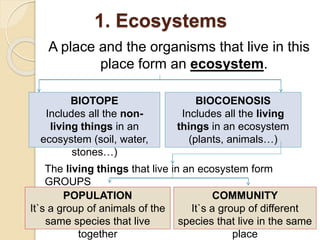
1. Ecosystems
A place and the organisms that live in this
place form an ecosystem.
BIOTOPE
Includes all the non-
living things in an
ecosystem (soil, water,
stones…)
BIOCOENOSIS
Includes all the living
things in an ecosystem
(plants, animals…)
The living things that live in an ecosystem form
GROUPS
POPULATION
It`s a group of animals of the
same species that live
together
COMMUNITY
It`s a group of different
species that live in the same
place
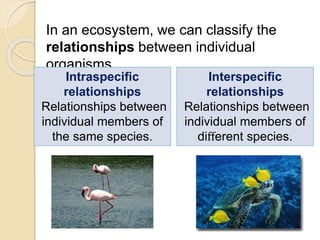
In an ecosystem, we can classify the
relationships between individual
organisms.
Intraspecific
relationships
Relationships between
individual members of
the same species.
Interspecific
relationships
Relationships between
individual members of
different species.
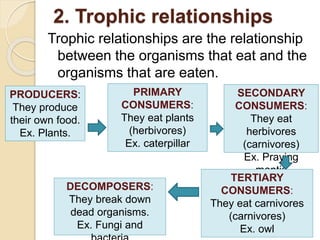
2. Trophic relationships
Trophic relationships are the relationship
between the organisms that eat and the
organisms that are eaten.
PRODUCERS:
They produce
their own food.
Ex. Plants.
PRIMARY
CONSUMERS:
They eat plants
(herbivores)
Ex. caterpillar
DECOMPOSERS:
They break down
dead organisms.
Ex. Fungi and
SECONDARY
CONSUMERS:
They eat
herbivores
(carnivores)
Ex. Praying
mantis
TERTIARY
CONSUMERS:
They eat carnivores
(carnivores)
Ex. owl
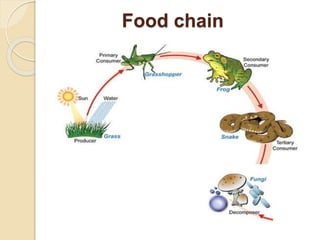
Food chain
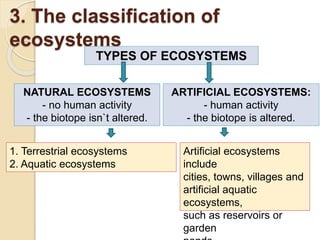
3. The classification of
ecosystems
TYPES OF ECOSYSTEMS
NATURAL ECOSYSTEMS
- no human activity
- the biotope isn`t altered.
ARTIFICIAL ECOSYSTEMS:
- human activity
- the biotope is altered.
Artificial ecosystems
include
cities, towns, villages and
artificial aquatic
ecosystems,
such as reservoirs or
garden
1. Terrestrial ecosystems
2. Aquatic ecosystems
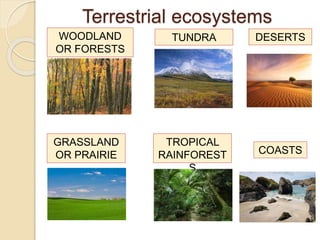
Terrestrial ecosystems
WOODLAND
OR FORESTS
TUNDRA
GRASSLAND
OR PRAIRIE
TROPICAL
RAINFOREST
S
COASTS
DESERTS
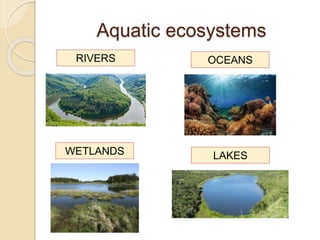
Aquatic ecosystems
RIVERS OCEANS
WETLANDS LAKES
4. The biosphere
The biosphere is all of the
ecosystems on the Earth. It
includes the oceans, the land, the
atmosphere and all the living things
on the planet.
HABITAT: Is the place where a population
lives. In an ecosystem we can find many
habitats.
Habitats can be aquatic or terrestrial.
BIOME: Is a group of ecosystems that
have similar geographic and climatic
conditions.
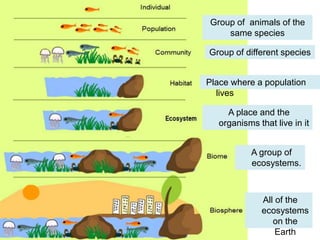
Individual
Individual
Group of different species
Group of animals of the
same species
Place where a population
lives
A place and the
organisms that live in it
All of the
ecosystems
on the
Earth
A group of
ecosystems.
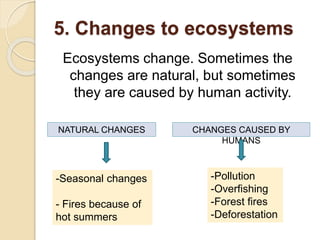
5. Changes to ecosystems
Ecosystems change. Sometimes the
changes are natural, but sometimes
they are caused by human activity.
NATURAL CHANGES CHANGES CAUSED BY
HUMANS
-Seasonal changes
- Fires because of
hot summers
-Pollution
-Overfishing
-Forest fires
-Deforestation

Unit 3 ecosystems

  • 1.
  • 2.
    1. Ecosystems A placeand the organisms that live in this place form an ecosystem. BIOTOPE Includes all the non- living things in an ecosystem (soil, water, stones…) BIOCOENOSIS Includes all the living things in an ecosystem (plants, animals…) The living things that live in an ecosystem form GROUPS POPULATION It`s a group of animals of the same species that live together COMMUNITY It`s a group of different species that live in the same place
  • 3.
    In an ecosystem,we can classify the relationships between individual organisms. Intraspecific relationships Relationships between individual members of the same species. Interspecific relationships Relationships between individual members of different species.
  • 4.
    2. Trophic relationships Trophicrelationships are the relationship between the organisms that eat and the organisms that are eaten. PRODUCERS: They produce their own food. Ex. Plants. PRIMARY CONSUMERS: They eat plants (herbivores) Ex. caterpillar DECOMPOSERS: They break down dead organisms. Ex. Fungi and SECONDARY CONSUMERS: They eat herbivores (carnivores) Ex. Praying mantis TERTIARY CONSUMERS: They eat carnivores (carnivores) Ex. owl
  • 5.
  • 6.
    3. The classificationof ecosystems TYPES OF ECOSYSTEMS NATURAL ECOSYSTEMS - no human activity - the biotope isn`t altered. ARTIFICIAL ECOSYSTEMS: - human activity - the biotope is altered. Artificial ecosystems include cities, towns, villages and artificial aquatic ecosystems, such as reservoirs or garden 1. Terrestrial ecosystems 2. Aquatic ecosystems
  • 7.
    Terrestrial ecosystems WOODLAND OR FORESTS TUNDRA GRASSLAND ORPRAIRIE TROPICAL RAINFOREST S COASTS DESERTS
  • 8.
  • 9.
    4. The biosphere Thebiosphere is all of the ecosystems on the Earth. It includes the oceans, the land, the atmosphere and all the living things on the planet.
  • 10.
    HABITAT: Is theplace where a population lives. In an ecosystem we can find many habitats. Habitats can be aquatic or terrestrial. BIOME: Is a group of ecosystems that have similar geographic and climatic conditions.
  • 11.
    Individual Individual Group of differentspecies Group of animals of the same species Place where a population lives A place and the organisms that live in it All of the ecosystems on the Earth A group of ecosystems.
  • 12.
    5. Changes toecosystems Ecosystems change. Sometimes the changes are natural, but sometimes they are caused by human activity. NATURAL CHANGES CHANGES CAUSED BY HUMANS -Seasonal changes - Fires because of hot summers -Pollution -Overfishing -Forest fires -Deforestation