
The Body Control Systems
                   Strathcona BGGS
                   Yr 9 Science 2013
The Body Control Systems


You are made up of somewhere between 50 000 000 000
000 – 75 000 000 000 000 (50 – 75 Trillion cells1.

To maintain and control all of these we have a number of
systems this year we will look at 2 of these.


1. Asimov, Isaac, The Human Body, New Rev Ed. p 79
In this Unit We will look at two systems involved in the
  control of the Human Body:

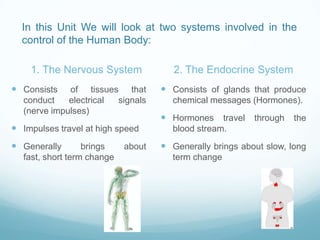
    1. The Nervous System              2. The Endocrine System
 Consists   of tissues that         Consists of glands that produce
  conduct    electrical signals       chemical messages (Hormones).
  (nerve impulses)
                                     Hormones travel through the
 Impulses travel at high speed       blood stream.

 Generally       brings    about    Generally brings about slow, long
  fast, short term change             term change
The Nervous System
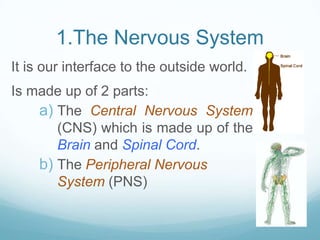
1.The Nervous System
It is our interface to the outside world.
Is made up of 2 parts:
    a) The Central Nervous System
       (CNS) which is made up of the
       Brain and Spinal Cord.
    b) The Peripheral Nervous
       System (PNS)
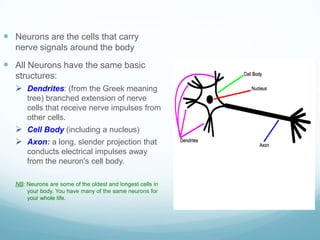
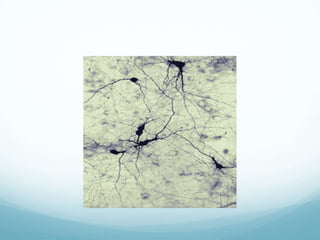
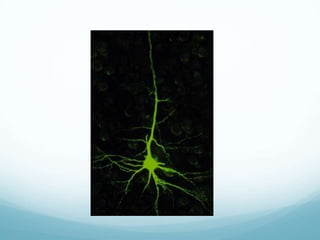
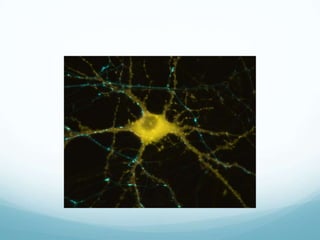
 Neurons are the cells that carry
   nerve signals around the body
 All Neurons have the same basic
   structures:
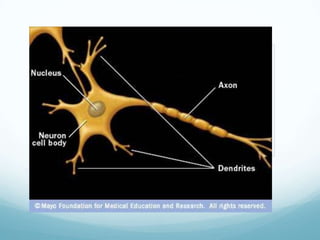
    Dendrites: (from the Greek meaning
       tree) branched extension of nerve
       cells that receive nerve impulses from
       other cells.
    Cell Body (including a nucleus)
    Axon: a long, slender projection that
       conducts electrical impulses away
       from the neuron's cell body.

   NB: Neurons are some of the oldest and longest cells in
       your body. You have many of the same neurons for
       your whole life.
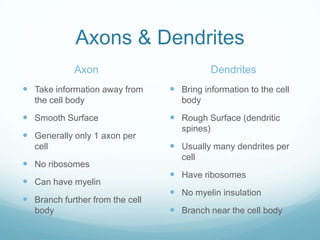
Axons & Dendrites
             Axon                             Dendrites
 Take information away from      Bring information to the cell
   the cell body                    body
 Smooth Surface                  Rough Surface (dendritic
                                    spines)
 Generally only 1 axon per
   cell                           Usually many dendrites per
                                    cell
 No ribosomes
                                  Have ribosomes
 Can have myelin
                                  No myelin insulation
 Branch further from the cell
   body                           Branch near the cell body
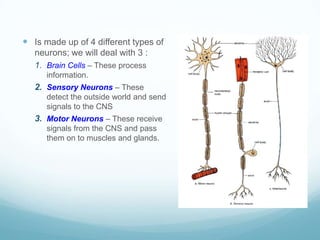
 Is made up of 4 different types of
   neurons; we will deal with 3 :
   1. Brain Cells – These process
      information.
   2. Sensory Neurons – These
      detect the outside world and send
      signals to the CNS
   3. Motor Neurons – These receive
      signals from the CNS and pass
      them on to muscles and glands.
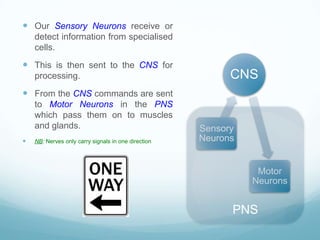
 Our Sensory Neurons receive or
    detect information from specialised
    cells.
 This is then sent to the CNS for
    processing.                                            CNS
 From the CNS commands are sent
    to Motor Neurons in the PNS
    which pass them on to muscles
    and glands.                                      Sensory
   NB: Nerves only carry signals in one direction   Neurons


                                                                Motor
                                                               Neurons


                                                           PNS
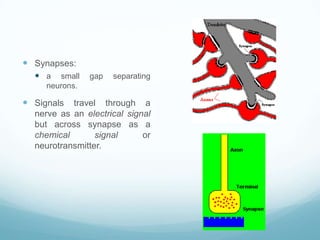
 Synapses:
   a   small   gap   separating
     neurons.

 Signals  travel through a
  nerve as an electrical signal
  but across synapse as a
  chemical       signal      or
  neurotransmitter.
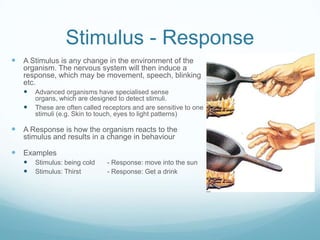
Stimulus - Response
 A Stimulus is any change in the environment of the
   organism. The nervous system will then induce a
   response, which may be movement, speech, blinking
   etc.
    Advanced organisms have specialised sense
       organs, which are designed to detect stimuli.
      These are often called receptors and are sensitive to one
       stimuli (e.g. Skin to touch, eyes to light patterns)

 A Response is how the organism reacts to the
   stimulus and results in a change in behaviour

 Examples
      Stimulus: being cold    - Response: move into the sun
      Stimulus: Thirst        - Response: Get a drink
The Reflex Arc
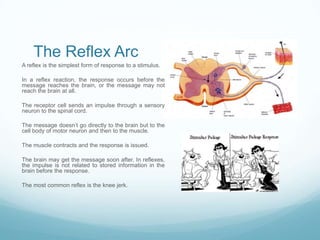
A reflex is the simplest form of response to a stimulus.

In a reflex reaction, the response occurs before the
message reaches the brain, or the message may not
reach the brain at all.

The receptor cell sends an impulse through a sensory
neuron to the spinal cord.

The message doesn’t go directly to the brain but to the
cell body of motor neuron and then to the muscle.

The muscle contracts and the response is issued.

The brain may get the message soon after. In reflexes,
the impulse is not related to stored information in the
brain before the response.

The most common reflex is the knee jerk.
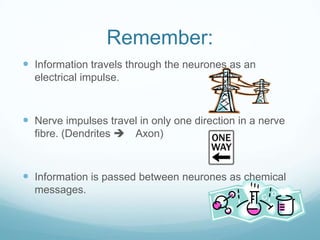
Remember:
 Information travels through the neurones as an
  electrical impulse.


 Nerve impulses travel in only one direction in a nerve
  fibre. (Dendrites    Axon)


 Information is passed between neurones as chemical
  messages.
Reference:       Work to be completed:
Person Science 9           Textbook:
7.1 Nervous Control          P234 q 1-5, 6, 9, 10, 12-
                              14,
pp225-6                    Homework Book:
                             p 82 7.1 The Nervous
pp228-31
                              system
                             p 83 7.2 Reflexes
                             p 84 7.3 Reaction Time

Body Control Systems Nervous System

  • 1.
    The Body ControlSystems Strathcona BGGS Yr 9 Science 2013
  • 2.
    The Body ControlSystems You are made up of somewhere between 50 000 000 000 000 – 75 000 000 000 000 (50 – 75 Trillion cells1. To maintain and control all of these we have a number of systems this year we will look at 2 of these. 1. Asimov, Isaac, The Human Body, New Rev Ed. p 79
  • 3.
    In this UnitWe will look at two systems involved in the control of the Human Body: 1. The Nervous System 2. The Endocrine System  Consists of tissues that  Consists of glands that produce conduct electrical signals chemical messages (Hormones). (nerve impulses)  Hormones travel through the  Impulses travel at high speed blood stream.  Generally brings about  Generally brings about slow, long fast, short term change term change
  • 4.
  • 5.
    1.The Nervous System Itis our interface to the outside world. Is made up of 2 parts: a) The Central Nervous System (CNS) which is made up of the Brain and Spinal Cord. b) The Peripheral Nervous System (PNS)
  • 6.
     Neurons arethe cells that carry nerve signals around the body  All Neurons have the same basic structures:  Dendrites: (from the Greek meaning tree) branched extension of nerve cells that receive nerve impulses from other cells.  Cell Body (including a nucleus)  Axon: a long, slender projection that conducts electrical impulses away from the neuron's cell body. NB: Neurons are some of the oldest and longest cells in your body. You have many of the same neurons for your whole life.
  • 7.
    Axons & Dendrites Axon Dendrites  Take information away from  Bring information to the cell the cell body body  Smooth Surface  Rough Surface (dendritic spines)  Generally only 1 axon per cell  Usually many dendrites per cell  No ribosomes  Have ribosomes  Can have myelin  No myelin insulation  Branch further from the cell body  Branch near the cell body
  • 12.
     Is madeup of 4 different types of neurons; we will deal with 3 : 1. Brain Cells – These process information. 2. Sensory Neurons – These detect the outside world and send signals to the CNS 3. Motor Neurons – These receive signals from the CNS and pass them on to muscles and glands.
  • 13.
     Our SensoryNeurons receive or detect information from specialised cells.  This is then sent to the CNS for processing. CNS  From the CNS commands are sent to Motor Neurons in the PNS which pass them on to muscles and glands. Sensory  NB: Nerves only carry signals in one direction Neurons Motor Neurons PNS
  • 14.
     Synapses:  a small gap separating neurons.  Signals travel through a nerve as an electrical signal but across synapse as a chemical signal or neurotransmitter.
  • 15.
    Stimulus - Response A Stimulus is any change in the environment of the organism. The nervous system will then induce a response, which may be movement, speech, blinking etc.  Advanced organisms have specialised sense organs, which are designed to detect stimuli.  These are often called receptors and are sensitive to one stimuli (e.g. Skin to touch, eyes to light patterns)  A Response is how the organism reacts to the stimulus and results in a change in behaviour  Examples  Stimulus: being cold - Response: move into the sun  Stimulus: Thirst - Response: Get a drink
  • 16.
    The Reflex Arc Areflex is the simplest form of response to a stimulus. In a reflex reaction, the response occurs before the message reaches the brain, or the message may not reach the brain at all. The receptor cell sends an impulse through a sensory neuron to the spinal cord. The message doesn’t go directly to the brain but to the cell body of motor neuron and then to the muscle. The muscle contracts and the response is issued. The brain may get the message soon after. In reflexes, the impulse is not related to stored information in the brain before the response. The most common reflex is the knee jerk.
  • 17.
    Remember:  Information travelsthrough the neurones as an electrical impulse.  Nerve impulses travel in only one direction in a nerve fibre. (Dendrites  Axon)  Information is passed between neurones as chemical messages.
  • 18.
    Reference: Work to be completed: Person Science 9  Textbook: 7.1 Nervous Control  P234 q 1-5, 6, 9, 10, 12- 14, pp225-6  Homework Book:  p 82 7.1 The Nervous pp228-31 system  p 83 7.2 Reflexes  p 84 7.3 Reaction Time