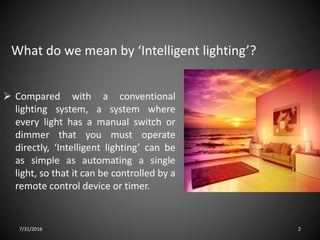
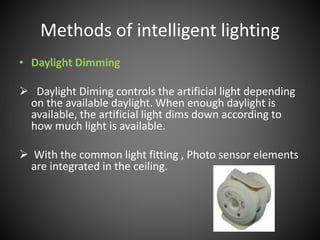
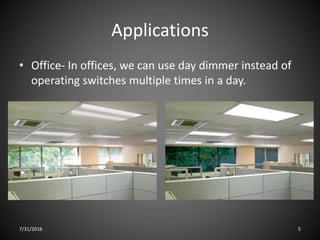
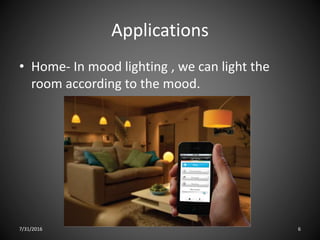
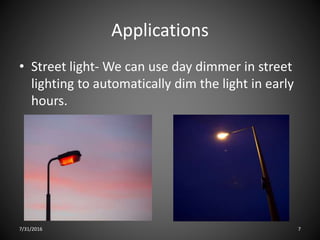
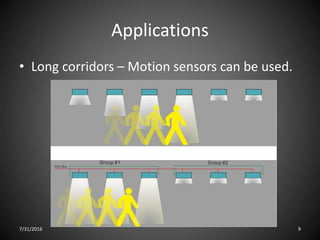
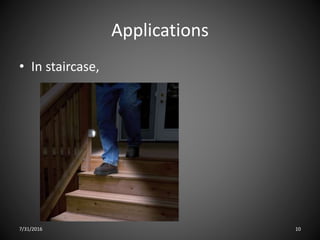
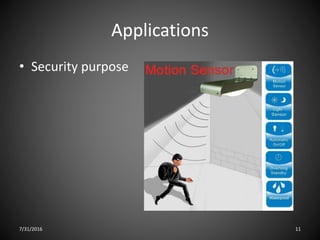
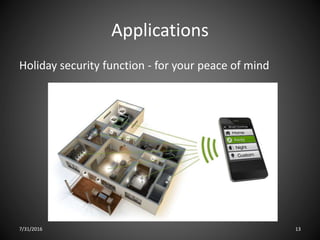
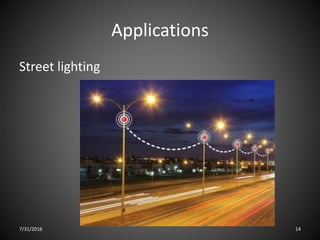
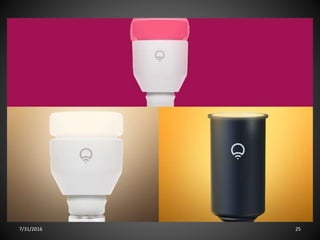
Intelligent lighting systems can automate lighting control to save energy and provide convenience. They involve controlling lights remotely through timers, sensors, or wireless networks. This allows adjusting lighting based on factors like daylight or occupancy. Intelligent lighting saves 19% of energy used for lighting worldwide by automating control. Examples of intelligent lighting methods include daylight dimming, occupancy sensors, and wireless lighting networks that can control multiple lights from a central system or mobile device. Applications include using sensors in offices, homes, streets, and corridors to automatically adjust lighting levels based on presence or daylight.




![Human presence detection based room light controller using pir2.pptx [repaired]](https://cdn.slidesharecdn.com/ss_thumbnails/humanpresencedetectionbasedroomlightcontrollerusingpir2-160418083434-thumbnail.jpg?width=640&height=640&fit=bounds)


