Integumentary System Anatomy and Physiology
System Includes Sweat glands Oil Glands Hair Nail Layers of skin Cutaneous membranes Skin pathogens Sensory receptors
The Skin The skin is the largest organ on or in the body Protects the body from foreign agents and germs Can sense temperature, pain, touch, and pressure The skin secrete fluids through the sweat glands and sebaceous The skin has three main layers
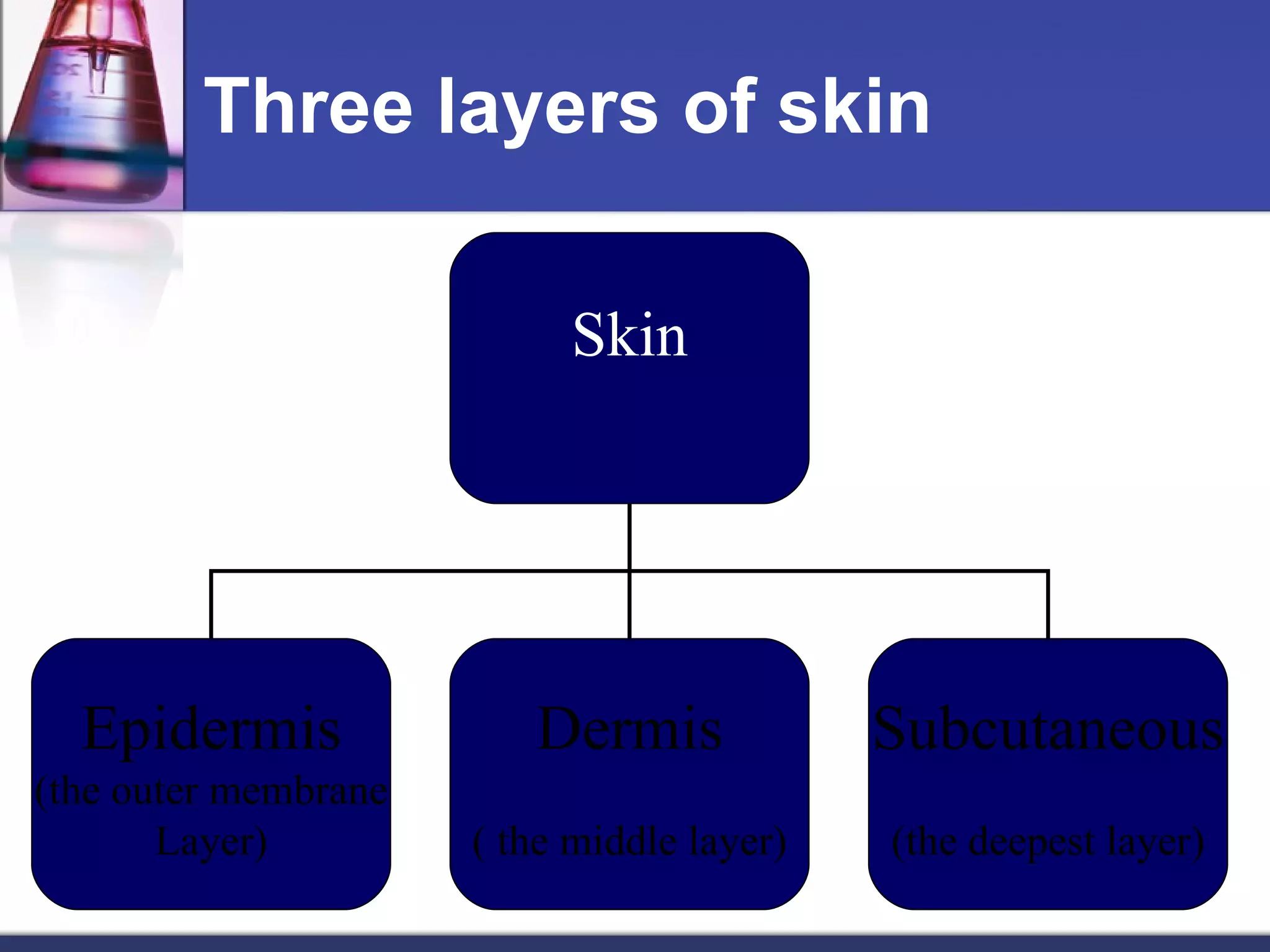
Three layers of skin Skin Epidermis (the outer membrane Layer) Dermis ( the middle layer) Subcutaneous (the deepest layer)
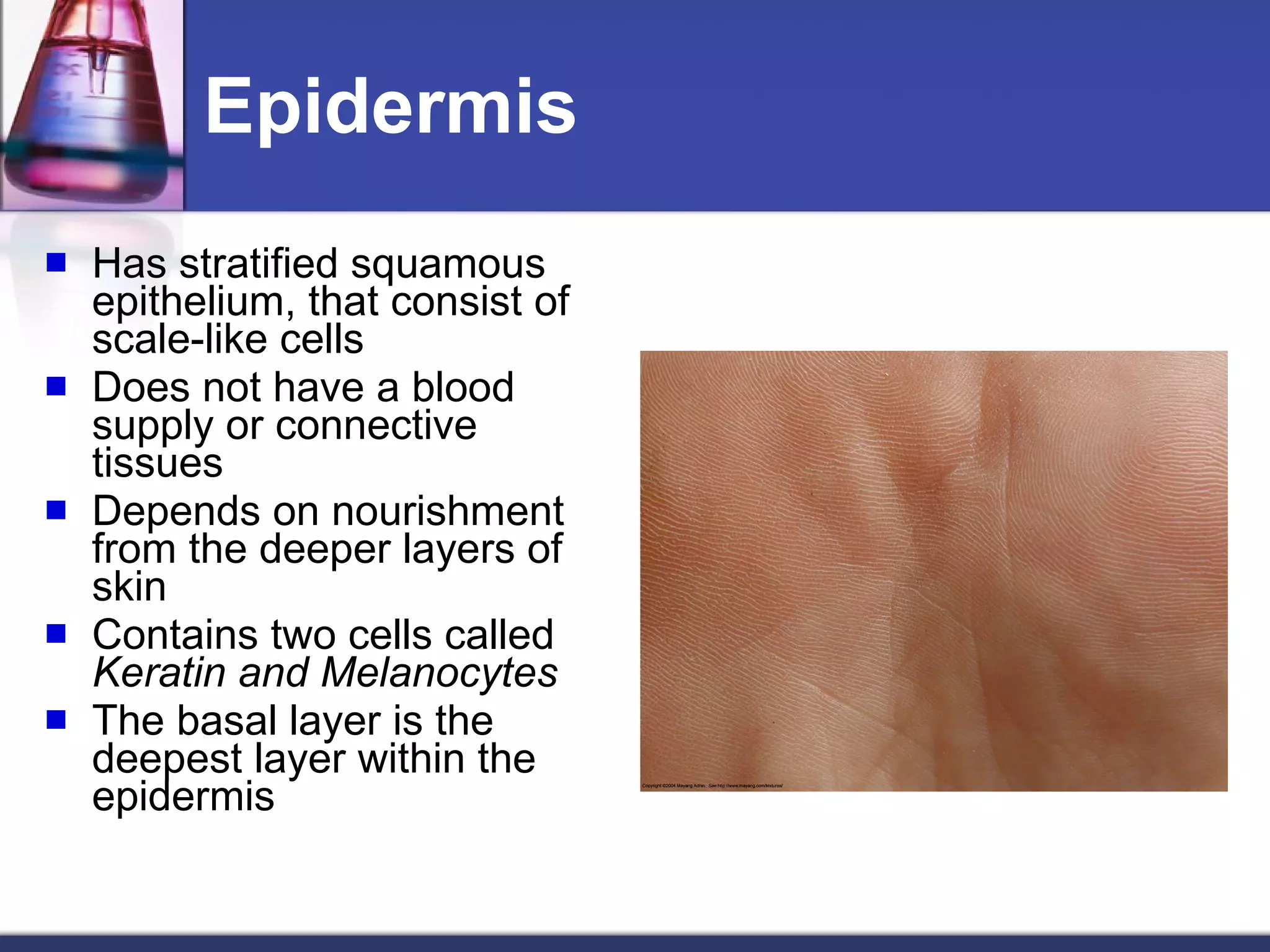
Epidermis Has stratified squamous epithelium, that consist of scale-like cells Does not have a blood supply or connective tissues Depends on nourishment from the deeper layers of skin Contains two cells called  Keratin and Melanocytes The basal layer is the deepest layer within the epidermis
Deeper layers   Dermis Compose of connective tissues Compose of collagen fibers Subcutaneous House cells called  lipocytes Act as an insulation for heat and cold Contains fatty tissues
Accessory Organs Hair  Nails Sweat Glands Sebaceous
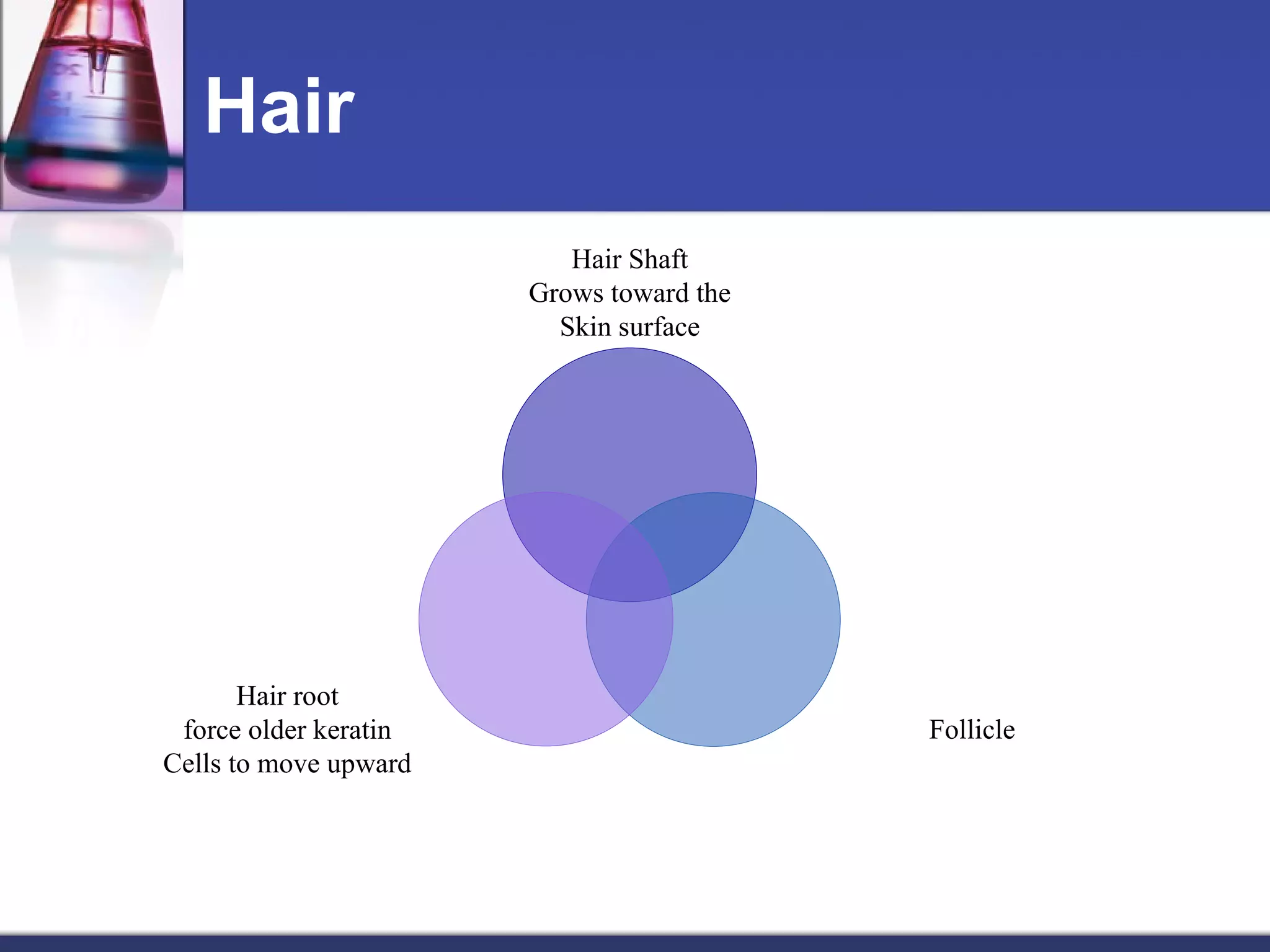
Hair Hair Shaft Grows toward the Skin surface Follicle Hair root force older keratin Cells to move upward
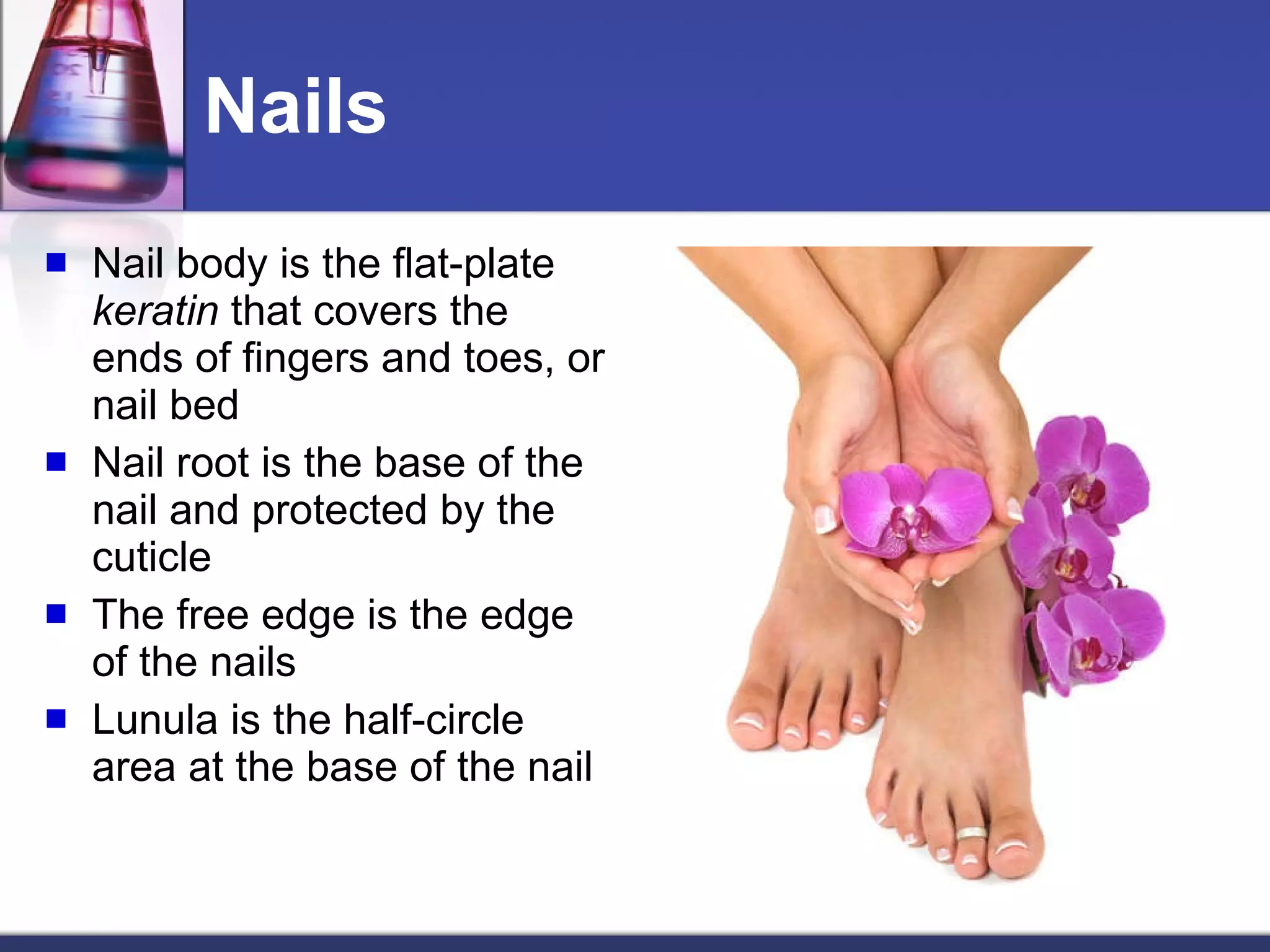
Nails Nail body is the flat-plate  keratin  that covers the ends of fingers and toes, or nail bed Nail root is the base of the nail and protected by the cuticle The free edge is the edge of the nails Lunula is the half-circle area at the base of the nail
Sweat Glands Sudoriferous glands are found throughout the body, and found in the  dermis Sweat duct is the surface of the skin Sweat pore is the opening of the skin
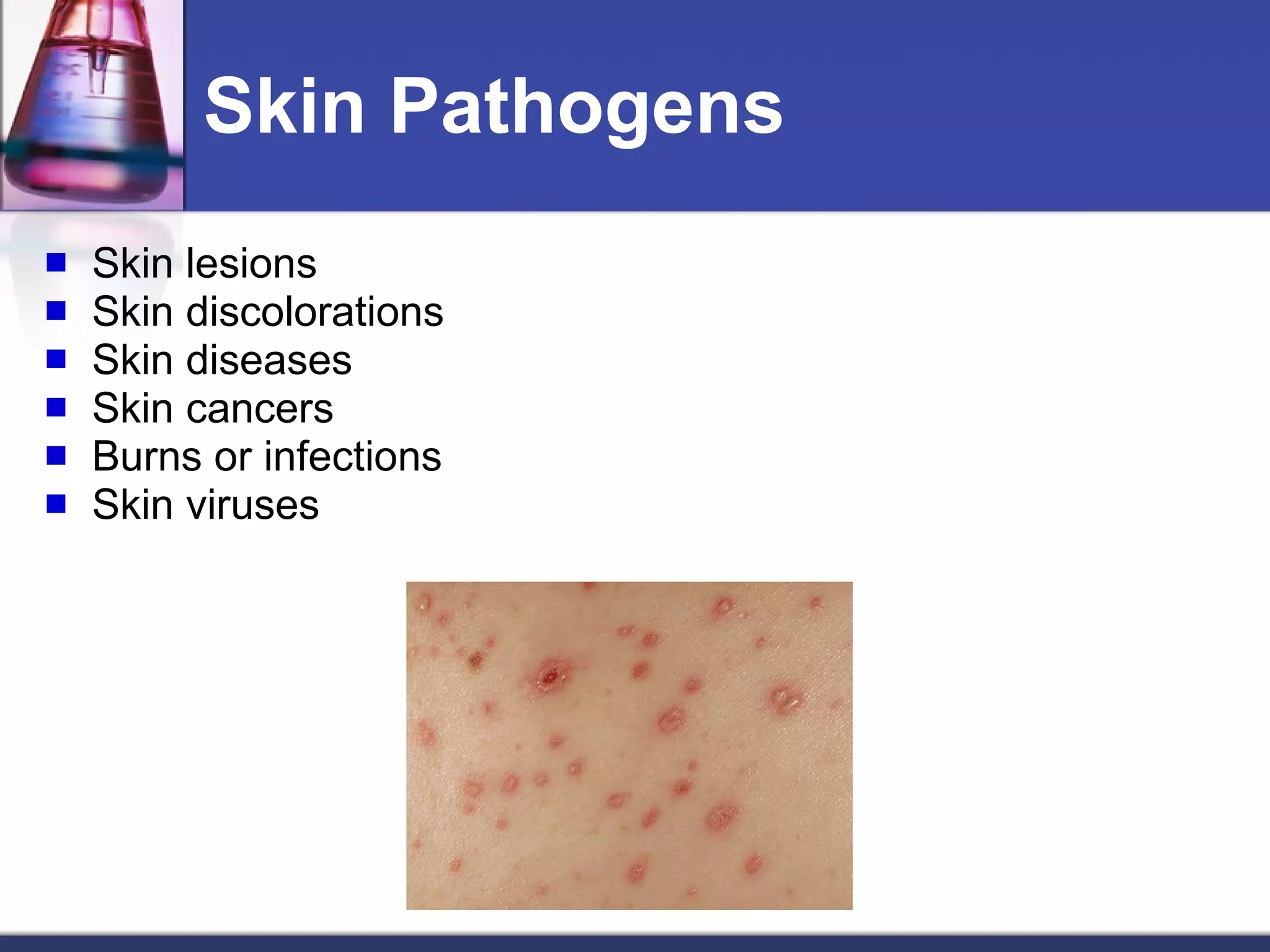
Skin Pathogens Skin lesions Skin discolorations Skin diseases  Skin cancers Burns or infections  Skin viruses
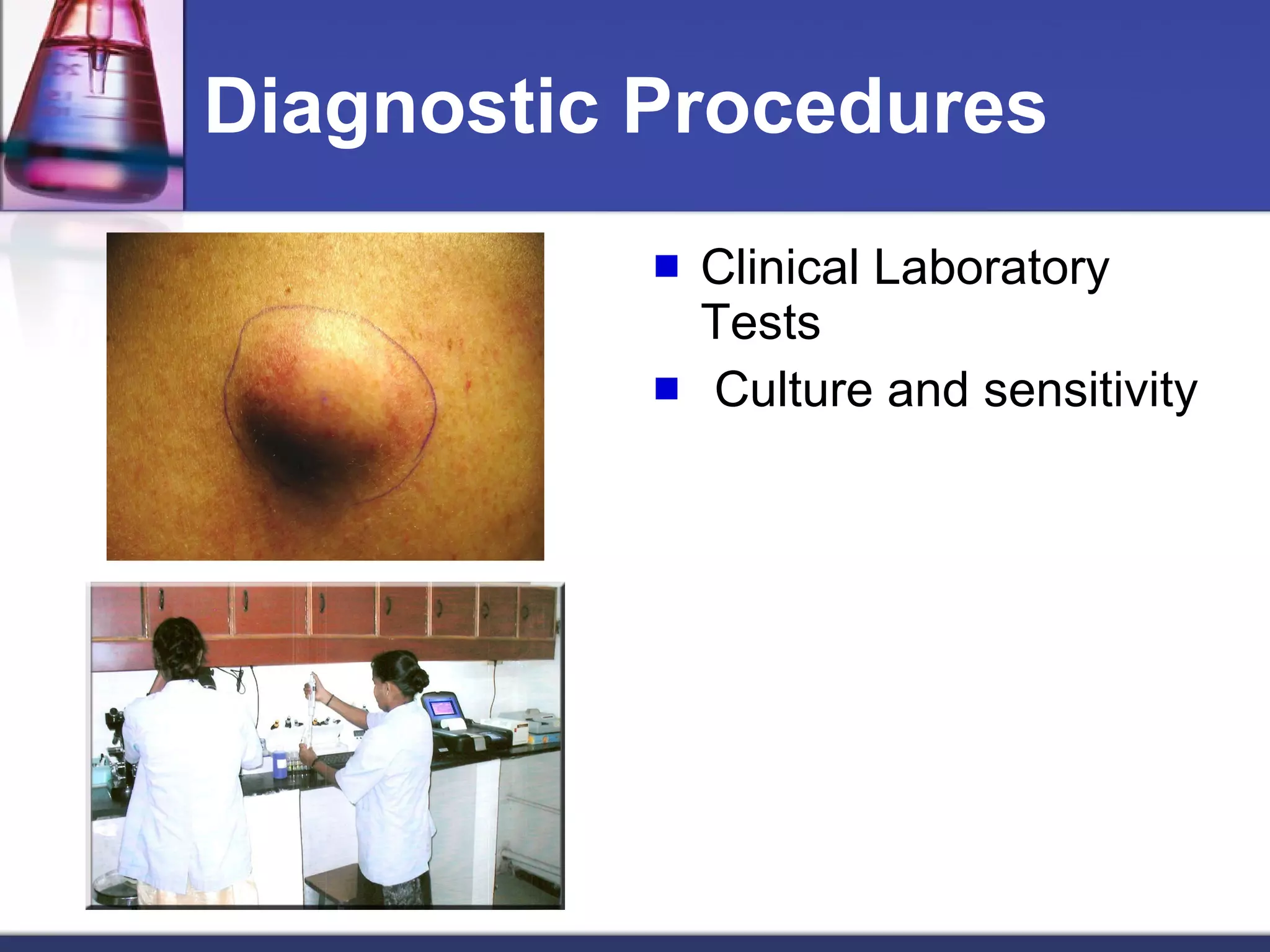
Diagnostic Procedures Clinical Laboratory Tests Culture and sensitivity
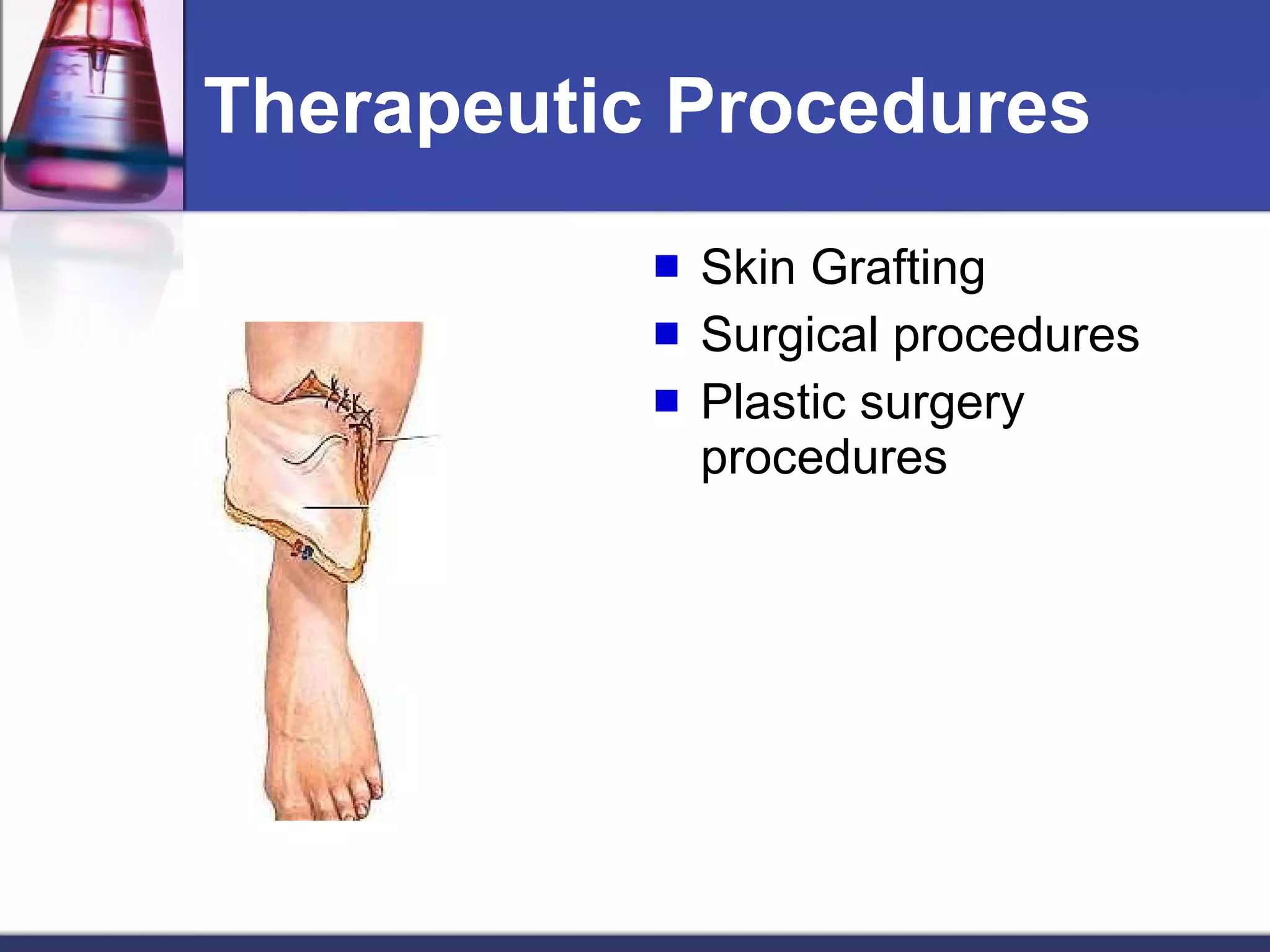
Therapeutic Procedures Skin Grafting Surgical procedures Plastic surgery procedures
The End

Integumentary System

  • 1.
  • 2.
    System Includes Sweatglands Oil Glands Hair Nail Layers of skin Cutaneous membranes Skin pathogens Sensory receptors
  • 3.
    The Skin Theskin is the largest organ on or in the body Protects the body from foreign agents and germs Can sense temperature, pain, touch, and pressure The skin secrete fluids through the sweat glands and sebaceous The skin has three main layers
  • 4.
    Three layers ofskin Skin Epidermis (the outer membrane Layer) Dermis ( the middle layer) Subcutaneous (the deepest layer)
  • 5.
    Epidermis Has stratifiedsquamous epithelium, that consist of scale-like cells Does not have a blood supply or connective tissues Depends on nourishment from the deeper layers of skin Contains two cells called Keratin and Melanocytes The basal layer is the deepest layer within the epidermis
  • 6.
    Deeper layers Dermis Compose of connective tissues Compose of collagen fibers Subcutaneous House cells called lipocytes Act as an insulation for heat and cold Contains fatty tissues
  • 7.
    Accessory Organs Hair Nails Sweat Glands Sebaceous
  • 8.
    Hair Hair ShaftGrows toward the Skin surface Follicle Hair root force older keratin Cells to move upward
  • 9.
    Nails Nail bodyis the flat-plate keratin that covers the ends of fingers and toes, or nail bed Nail root is the base of the nail and protected by the cuticle The free edge is the edge of the nails Lunula is the half-circle area at the base of the nail
  • 10.
    Sweat Glands Sudoriferousglands are found throughout the body, and found in the dermis Sweat duct is the surface of the skin Sweat pore is the opening of the skin
  • 11.
    Skin Pathogens Skinlesions Skin discolorations Skin diseases Skin cancers Burns or infections Skin viruses
  • 12.
    Diagnostic Procedures ClinicalLaboratory Tests Culture and sensitivity
  • 13.
    Therapeutic Procedures SkinGrafting Surgical procedures Plastic surgery procedures
  • 14.