Insulin
By
Dr. Jasmine Chaudhary
Associate Prof.
MMCP
• Insulin is a polypeptide hormone secreted from beta cells of Islets of
Langerhans of pancreas.
• It is mainly responsible for regulating blood glucose level in the body by
controlling carbohydrate, fat and protein metabolism.
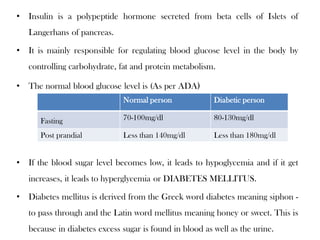
• The normal blood glucose level is (As per ADA)
• If the blood sugar level becomes low, it leads to hypoglycemia and if it get
increases, it leads to hyperglycemia or DIABETES MELLITUS.
• Diabetes mellitus is derived from the Greek word diabetes meaning siphon -
to pass through and the Latin word mellitus meaning honey or sweet. This is
because in diabetes excess sugar is found in blood as well as the urine.
Normal person Diabetic person
Fasting 70-100mg/dl 80-130mg/dl
Post prandial Less than 140mg/dl Less than 180mg/dl
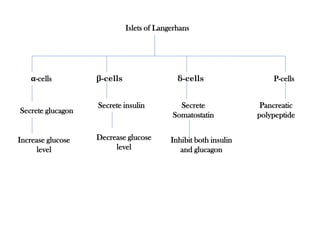
Islets of Langerhans
δ-cells
β-cells P-cells
α-cells
Increase glucose
level
Decrease glucose
level
Secrete glucagon
Secrete
Somatostatin
Inhibit both insulin
and glucagon
Pancreatic
polypeptide
Secrete insulin
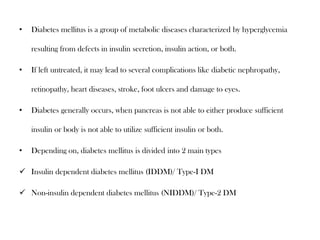
• Diabetes mellitus is a group of metabolic diseases characterized by hyperglycemia
resulting from defects in insulin secretion, insulin action, or both.
• If left untreated, it may lead to several complications like diabetic nephropathy,
retinopathy, heart diseases, stroke, foot ulcers and damage to eyes.
• Diabetes generally occurs, when pancreas is not able to either produce sufficient
insulin or body is not able to utilize sufficient insulin or both.
• Depending on, diabetes mellitus is divided into 2 main types
 Insulin dependent diabetes mellitus (IDDM)/ Type-I DM
 Non-insulin dependent diabetes mellitus (NIDDM)/ Type-2 DM
Type-I DM
• Pancreas lack the ability to synthesize/release insulin.
• Also known as Juvenile diabetes because it often begins in childhood.
• The cause is generally unknown.
• It is mainly an autoimmune condition which is caused by body
attacking its own pancreas with antibodies so damaged pancreas is not
able to produce enough insulin.
• Insulin therapy is the only treatment.
• No family history so may or may not be hereditary.
• Obesity is generally not the cause.
Type-II DM
• In this body is incapable of utilizing the synthesized insulin or insulin
secretion is not sufficient.
• Also known as adult onset diabetes as it generally begins after
adulthood.
• Primary cause is excessive body weight and not proper exercise.
• Oral hypoglycemic agents can be helpful.
• Most common type and generally hereditary.
A third type of diabetes mellitus generally occurs during pregnancy and it
is known as GESTATIONAL diabetes.
• It may occur in a woman without a previous history of diabetes.
• Unexplained weight loss and sometimes weight gain
• Polydipsia
• Polyphagia
• Polyuria
• Excessive fatigue/ lethargy
• Slow healing
• Excessive sleep
• Blurred vision
• Glucosuria
• Itchy skin
• Ketonemia
• Astouria
• Prolonged high glucose level may lead to glucose absorption in lens
of eye, leading to change in shape and result in vision changes.
Insulin
• Longest polypeptide of known structure (Mol wt: more than 6000).
• Term insulin was coined by DeMeyer in 1909 and sequence of amino
acids in insulin was characterized by Sanger in 1956.
Structure of Insulin
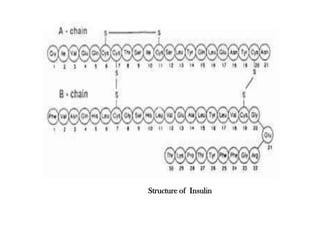
Made up of 2 Amino acid chain: Chain A and Chain B
Chain A : consists of 21 Aa
Chain B: Consists of 30 Aa
So Total 51 Aa are present in insulin. Both chains are linked to each other
by 2 disulfide bonds
• Ist Bridge: 7th Aa (Cysteine) of chain A with 7th Aa (Cysteine) of Chain
b
• 2nd Bridge: 20th Aa (Cysteine) of chain A with 19th Aa (Cysteine) of
Chain b
• 3rd bridge: within chain A itself (6th and 11th Aa of chain A)
Structure of Insulin
SAR of insulin
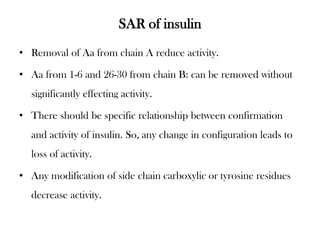
• Removal of Aa from chain A reduce activity.
• Aa from 1-6 and 26-30 from chain B: can be removed without
significantly effecting activity.
• There should be specific relationship between confirmation
and activity of insulin. So, any change in configuration leads to
loss of activity.
• Any modification of side chain carboxylic or tyrosine residues
decrease activity.
Biosynthesis of Insulin
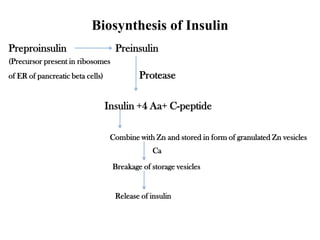
Preproinsulin Preinsulin
(Precursor present in ribosomes
of ER of pancreatic beta cells) Protease
Insulin +4 Aa+ C-peptide
Combine with Zn and stored in form of granulated Zn vesicles
Breakage of storage vesicles
Release of insulin
Ca
Physiological functions of insulin
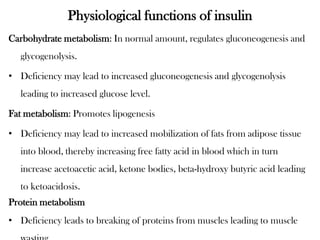
Carbohydrate metabolism: In normal amount, regulates gluconeogenesis and
glycogenolysis.
• Deficiency may lead to increased gluconeogenesis and glycogenolysis
leading to increased glucose level.
Fat metabolism: Promotes lipogenesis
• Deficiency may lead to increased mobilization of fats from adipose tissue
into blood, thereby increasing free fatty acid in blood which in turn
increase acetoacetic acid, ketone bodies, beta-hydroxy butyric acid leading
to ketoacidosis.
Protein metabolism
• Deficiency leads to breaking of proteins from muscles leading to muscle
Limitations of Insulin
• Insulin can’t be taken orally due to its proteinaceous nature so
metabolized by enzymes like pepsin, trypsin.
• On long term therapy, oedema at site of injection.
• Insulin therapy fails to give expected results, if there is no diet
control/exercise.
• If dose of insulin is not scheduled properly, fluctuations in blood
glucose levels leads to visual disturbances like cataract and there may
chances of hypoglycemic shock.

Insulin.pdf

  • 1.
  • 2.
    • Insulin isa polypeptide hormone secreted from beta cells of Islets of Langerhans of pancreas. • It is mainly responsible for regulating blood glucose level in the body by controlling carbohydrate, fat and protein metabolism. • The normal blood glucose level is (As per ADA) • If the blood sugar level becomes low, it leads to hypoglycemia and if it get increases, it leads to hyperglycemia or DIABETES MELLITUS. • Diabetes mellitus is derived from the Greek word diabetes meaning siphon - to pass through and the Latin word mellitus meaning honey or sweet. This is because in diabetes excess sugar is found in blood as well as the urine. Normal person Diabetic person Fasting 70-100mg/dl 80-130mg/dl Post prandial Less than 140mg/dl Less than 180mg/dl
  • 3.
    Islets of Langerhans δ-cells β-cellsP-cells α-cells Increase glucose level Decrease glucose level Secrete glucagon Secrete Somatostatin Inhibit both insulin and glucagon Pancreatic polypeptide Secrete insulin
  • 4.
    • Diabetes mellitusis a group of metabolic diseases characterized by hyperglycemia resulting from defects in insulin secretion, insulin action, or both. • If left untreated, it may lead to several complications like diabetic nephropathy, retinopathy, heart diseases, stroke, foot ulcers and damage to eyes. • Diabetes generally occurs, when pancreas is not able to either produce sufficient insulin or body is not able to utilize sufficient insulin or both. • Depending on, diabetes mellitus is divided into 2 main types  Insulin dependent diabetes mellitus (IDDM)/ Type-I DM  Non-insulin dependent diabetes mellitus (NIDDM)/ Type-2 DM
  • 5.
    Type-I DM • Pancreaslack the ability to synthesize/release insulin. • Also known as Juvenile diabetes because it often begins in childhood. • The cause is generally unknown. • It is mainly an autoimmune condition which is caused by body attacking its own pancreas with antibodies so damaged pancreas is not able to produce enough insulin. • Insulin therapy is the only treatment. • No family history so may or may not be hereditary. • Obesity is generally not the cause.
  • 6.
    Type-II DM • Inthis body is incapable of utilizing the synthesized insulin or insulin secretion is not sufficient. • Also known as adult onset diabetes as it generally begins after adulthood. • Primary cause is excessive body weight and not proper exercise. • Oral hypoglycemic agents can be helpful. • Most common type and generally hereditary. A third type of diabetes mellitus generally occurs during pregnancy and it is known as GESTATIONAL diabetes. • It may occur in a woman without a previous history of diabetes.
  • 7.
    • Unexplained weightloss and sometimes weight gain • Polydipsia • Polyphagia • Polyuria • Excessive fatigue/ lethargy • Slow healing • Excessive sleep • Blurred vision • Glucosuria • Itchy skin • Ketonemia • Astouria • Prolonged high glucose level may lead to glucose absorption in lens of eye, leading to change in shape and result in vision changes.
  • 8.
    Insulin • Longest polypeptideof known structure (Mol wt: more than 6000). • Term insulin was coined by DeMeyer in 1909 and sequence of amino acids in insulin was characterized by Sanger in 1956. Structure of Insulin Made up of 2 Amino acid chain: Chain A and Chain B Chain A : consists of 21 Aa Chain B: Consists of 30 Aa So Total 51 Aa are present in insulin. Both chains are linked to each other by 2 disulfide bonds • Ist Bridge: 7th Aa (Cysteine) of chain A with 7th Aa (Cysteine) of Chain b • 2nd Bridge: 20th Aa (Cysteine) of chain A with 19th Aa (Cysteine) of Chain b • 3rd bridge: within chain A itself (6th and 11th Aa of chain A)
  • 9.
  • 10.
    SAR of insulin •Removal of Aa from chain A reduce activity. • Aa from 1-6 and 26-30 from chain B: can be removed without significantly effecting activity. • There should be specific relationship between confirmation and activity of insulin. So, any change in configuration leads to loss of activity. • Any modification of side chain carboxylic or tyrosine residues decrease activity.
  • 11.
    Biosynthesis of Insulin PreproinsulinPreinsulin (Precursor present in ribosomes of ER of pancreatic beta cells) Protease Insulin +4 Aa+ C-peptide Combine with Zn and stored in form of granulated Zn vesicles Breakage of storage vesicles Release of insulin Ca
  • 12.
    Physiological functions ofinsulin Carbohydrate metabolism: In normal amount, regulates gluconeogenesis and glycogenolysis. • Deficiency may lead to increased gluconeogenesis and glycogenolysis leading to increased glucose level. Fat metabolism: Promotes lipogenesis • Deficiency may lead to increased mobilization of fats from adipose tissue into blood, thereby increasing free fatty acid in blood which in turn increase acetoacetic acid, ketone bodies, beta-hydroxy butyric acid leading to ketoacidosis. Protein metabolism • Deficiency leads to breaking of proteins from muscles leading to muscle
  • 13.
    Limitations of Insulin •Insulin can’t be taken orally due to its proteinaceous nature so metabolized by enzymes like pepsin, trypsin. • On long term therapy, oedema at site of injection. • Insulin therapy fails to give expected results, if there is no diet control/exercise. • If dose of insulin is not scheduled properly, fluctuations in blood glucose levels leads to visual disturbances like cataract and there may chances of hypoglycemic shock.