INSULIN
Student Name:- Abhishek Borkar
Class- B- pharm 3rd year
Shraddha Institute of Pharmacy Kondala zambre ,
Washim-444505
Guide by : prof. Shubhada Bhopale (M. pharm)
Diabetes Mellitus
• Diabetes mellitus is a metabolic disorder characterized by
hyperglycemia, glucosourea, hyperlipaemia, negative
nitrogen balance and sometimes ketonaemia.
• Two major types of diabetes mellitus:
• i) Insulin-dependent diabetes mellitus
(IDDM).
• ii) Non-Insulin-dependent diabetes
mellitus (NIDDM). Various symptoms are:
Feeling very thirsty and tired, high level of
glucose in urine, constant hunger
Insulin-dependent diabetes mellitus : There is β cell destruction in
pancreatic islets; majority of cases are autoimmune antibodies that
destroy β cell are detectable in blood, but some are idiopathic, there
are no β cell antibody are found. In all cases circulating insulin
levels are low.
Noninsulin-dependent diabetes mellitus : There is no loss or
moderate reduction in β cell mass, insulin in circulation is low,
normal or even high, no anti-β-cell antibody is demonstrable; has a
high degree of genetic predisposition, generally has a late onset.
Treatment
IDDM : Insulin must be injected or inhaled
NIDDM : Food control, exercise, medicines
i) Which increase insulin secretion
ii) Which increase the sensitivity of target organs to insulin
iii) Which decrease glucose absorption.
 it was isolated in 1921
 used in 1922
 insulin discovered by Banking and Best
 it is used as diabeties maliters.
 It contain 30 amino acid.
 insulin contain 2 chain chuin 1st 21-aminoamino acid 2nd
chain 30 amino acidl these Both are attached do each othee By
2 2-clisulphite Bond
 insulin secreated by pancreatic (Beta cell)
 insulin derivaced from animal species the pig insulin closely
Reacimble withHuman insulin
 it is an insoluble in pH 4 to 7
Insulin
Rouf Endoplasmic
Converted
Propralin insulin
Store into
It in golgo apparatus
In the from of
Pro-insulin (inactive)
Secrted into Blood
In that from of Insulin (active)
Storage
 It store in beta –cell
 Normal pancrease contain 200 unit of insulin
 Mainly Screated 50 unit daily
Release
 Release of insulin from beta –cell
 Involved food product hormone and gastroinststial
hormone
Pharmacological Action :-
carbo-Hydeate metabolism.
• peoduce to Fandamental defects
• Reduce entrey of glucose in cells.
• incress Release of glucose form livee into Circulation
• Both are produce hyperglycemiya glycourea
• in insulin defecancies High Rate of conversion of protein to
the glucose called as glycogenesis
fat-Metabolism
 insulin defancy peoduce Metabolism of fat into adipose
tissue.
 inthis concentration of tri-glyceride on ff-Rise
Penteln metabolism
 insulin defency peoduce glycose utilatization in protein
synthesis
 it peocluce peotein Becardown
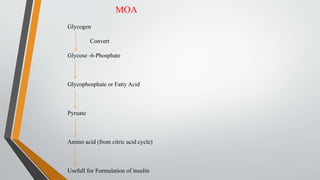
Glycogen
Convert
Glycose -6-Phosphate
Glycophosphate or Fatty Acid
Pyruate
Amino acid (from citric acid cycle)
Usefull for Formulation of insulin
MOA
Factor modifing Insulin action
 Dite
 Excries
 Insulin Secrection
Adverse reactions:
1. Gastrointestinal disorders
2. Allergy
3. Hypoglycemia Chlorpropamide forbidden for ageds &
patients with functional disorder in liver or kidney.
4. Granulocytopenia, cholestasis & hepatic injury
Clinical use:
1. Type 2 diabetes mellitus
2. Diabetes insupidus, chlorpropamide
insulin ppt Abhishek Borkar 15.pptx

insulin ppt Abhishek Borkar 15.pptx

  • 1.
    INSULIN Student Name:- AbhishekBorkar Class- B- pharm 3rd year Shraddha Institute of Pharmacy Kondala zambre , Washim-444505 Guide by : prof. Shubhada Bhopale (M. pharm)
  • 2.
    Diabetes Mellitus • Diabetesmellitus is a metabolic disorder characterized by hyperglycemia, glucosourea, hyperlipaemia, negative nitrogen balance and sometimes ketonaemia. • Two major types of diabetes mellitus: • i) Insulin-dependent diabetes mellitus (IDDM). • ii) Non-Insulin-dependent diabetes mellitus (NIDDM). Various symptoms are: Feeling very thirsty and tired, high level of glucose in urine, constant hunger
  • 3.
    Insulin-dependent diabetes mellitus: There is β cell destruction in pancreatic islets; majority of cases are autoimmune antibodies that destroy β cell are detectable in blood, but some are idiopathic, there are no β cell antibody are found. In all cases circulating insulin levels are low. Noninsulin-dependent diabetes mellitus : There is no loss or moderate reduction in β cell mass, insulin in circulation is low, normal or even high, no anti-β-cell antibody is demonstrable; has a high degree of genetic predisposition, generally has a late onset.
  • 4.
    Treatment IDDM : Insulinmust be injected or inhaled NIDDM : Food control, exercise, medicines i) Which increase insulin secretion ii) Which increase the sensitivity of target organs to insulin iii) Which decrease glucose absorption.
  • 5.
     it wasisolated in 1921  used in 1922  insulin discovered by Banking and Best  it is used as diabeties maliters.  It contain 30 amino acid.  insulin contain 2 chain chuin 1st 21-aminoamino acid 2nd chain 30 amino acidl these Both are attached do each othee By 2 2-clisulphite Bond  insulin secreated by pancreatic (Beta cell)  insulin derivaced from animal species the pig insulin closely Reacimble withHuman insulin  it is an insoluble in pH 4 to 7 Insulin
  • 6.
    Rouf Endoplasmic Converted Propralin insulin Storeinto It in golgo apparatus In the from of Pro-insulin (inactive) Secrted into Blood In that from of Insulin (active)
  • 7.
    Storage  It storein beta –cell  Normal pancrease contain 200 unit of insulin  Mainly Screated 50 unit daily Release  Release of insulin from beta –cell  Involved food product hormone and gastroinststial hormone
  • 8.
    Pharmacological Action :- carbo-Hydeatemetabolism. • peoduce to Fandamental defects • Reduce entrey of glucose in cells. • incress Release of glucose form livee into Circulation • Both are produce hyperglycemiya glycourea • in insulin defecancies High Rate of conversion of protein to the glucose called as glycogenesis fat-Metabolism  insulin defancy peoduce Metabolism of fat into adipose tissue.  inthis concentration of tri-glyceride on ff-Rise Penteln metabolism  insulin defency peoduce glycose utilatization in protein synthesis  it peocluce peotein Becardown
  • 9.
    Glycogen Convert Glycose -6-Phosphate Glycophosphate orFatty Acid Pyruate Amino acid (from citric acid cycle) Usefull for Formulation of insulin MOA
  • 10.
    Factor modifing Insulinaction  Dite  Excries  Insulin Secrection
  • 11.
    Adverse reactions: 1. Gastrointestinaldisorders 2. Allergy 3. Hypoglycemia Chlorpropamide forbidden for ageds & patients with functional disorder in liver or kidney. 4. Granulocytopenia, cholestasis & hepatic injury Clinical use: 1. Type 2 diabetes mellitus 2. Diabetes insupidus, chlorpropamide