By
Dr. Dinesh Kumar G
Pharm. D
INSULIN
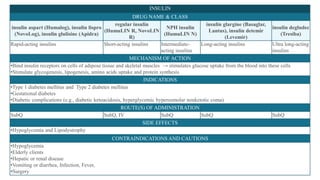
DRUG NAME & CLASS
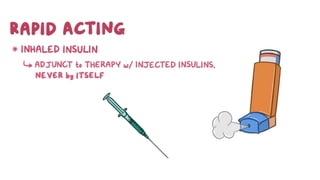
insulin aspart (Humalog), insulin lispro
(NovoLog), insulin glulisine (Apidra)
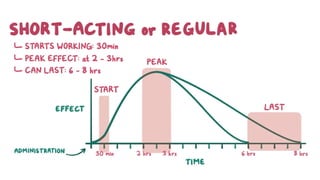
regular insulin
(HumuLIN R, NovoLIN
R)
NPH insulin
(HumuLIN N)
insulin glargine (Basaglar,
Lantus), insulin detemir
(Levemir)
insulin degludec
(Tresiba)
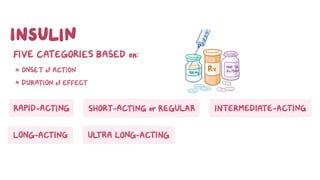
Rapid-acting insulins Short-acting insulins Intermediate-
acting insulins
Long-acting insulins Ultra long-acting
insulins
MECHANISM OF ACTION
•Bind insulin receptors on cells of adipose tissue and skeletal muscles → stimulates glucose uptake from the blood into these cells
•Stimulate glycogenesis, lipogenesis, amino acids uptake and protein synthesis
INDICATIONS
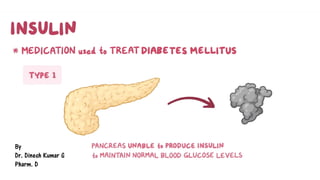
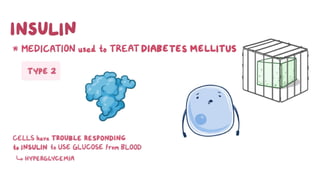
•Type 1 diabetes mellitus and Type 2 diabetes mellitus
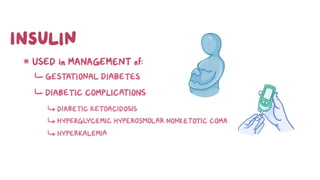
•Gestational diabetes
•Diabetic complications (e.g., diabetic ketoacidosis, hyperglycemic hyperosmolar nonketotic coma)
ROUTE(S) OF ADMINISTRATION
SubQ SubQ, IV SubQ SubQ SubQ
SIDE EFFECTS
•Hypoglycemia and Lipodystrophy
CONTRAINDICATIONS AND CAUTIONS
•Hypoglycemia
•Elderly clients
•Hepatic or renal disease
•Vomiting or diarrhea, Infection, Fever,
•Surgery
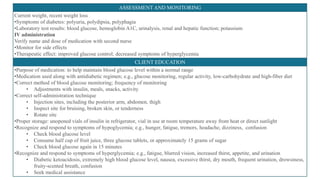
ASSESSMENT AND MONITORING
Current weight, recent weight loss
•Symptoms of diabetes: polyuria, polydipsia, polyphagia
•Laboratory test results: blood glucose, hemoglobin A1C, urinalysis, renal and hepatic function; potassium
IV administration
Verify name and dose of medication with second nurse
•Monitor for side effects
•Therapeutic effect: improved glucose control; decreased symptoms of hyperglycemia
CLIENT EDUCATION
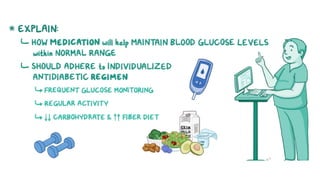
•Purpose of medication: to help maintain blood glucose level within a normal range
•Medication used along with antidiabetic regimen; e.g., glucose monitoring, regular activity, low-carbohydrate and high-fiber diet
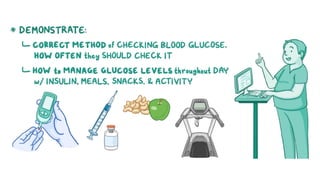
•Correct method of blood glucose monitoring; frequency of monitoring
• Adjustments with insulin, meals, snacks, activity
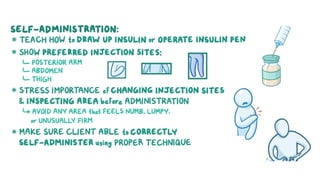
•Correct self-administration technique
• Injection sites, including the posterior arm, abdomen, thigh
• Inspect site for bruising, broken skin, or tenderness
• Rotate site
•Proper storage: unopened vials of insulin in refrigerator, vial in use at room temperature away from heat or direct sunlight
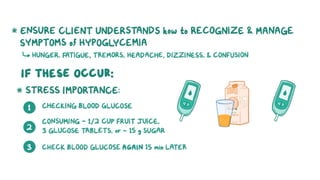
•Recognize and respond to symptoms of hypoglycemia; e.g., hunger, fatigue, tremors, headache, dizziness, confusion
• Check blood glucose level
• Consume half cup of fruit juice, three glucose tablets, or approximately 15 grams of sugar
• Check blood glucose again in 15 minutes
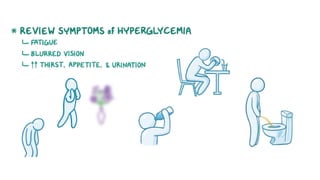
•Recognize and respond to symptoms of hyperglycemia; e.g., fatigue, blurred vision, increased thirst, appetite, and urination
• Diabetic ketoacidosis, extremely high blood glucose level, nausea, excessive thirst, dry mouth, frequent urination, drowsiness,
fruity-scented breath, confusion
• Seek medical assistance
Insulin

Insulin

  • 1.
  • 33.
    INSULIN DRUG NAME &CLASS insulin aspart (Humalog), insulin lispro (NovoLog), insulin glulisine (Apidra) regular insulin (HumuLIN R, NovoLIN R) NPH insulin (HumuLIN N) insulin glargine (Basaglar, Lantus), insulin detemir (Levemir) insulin degludec (Tresiba) Rapid-acting insulins Short-acting insulins Intermediate- acting insulins Long-acting insulins Ultra long-acting insulins MECHANISM OF ACTION •Bind insulin receptors on cells of adipose tissue and skeletal muscles → stimulates glucose uptake from the blood into these cells •Stimulate glycogenesis, lipogenesis, amino acids uptake and protein synthesis INDICATIONS •Type 1 diabetes mellitus and Type 2 diabetes mellitus •Gestational diabetes •Diabetic complications (e.g., diabetic ketoacidosis, hyperglycemic hyperosmolar nonketotic coma) ROUTE(S) OF ADMINISTRATION SubQ SubQ, IV SubQ SubQ SubQ SIDE EFFECTS •Hypoglycemia and Lipodystrophy CONTRAINDICATIONS AND CAUTIONS •Hypoglycemia •Elderly clients •Hepatic or renal disease •Vomiting or diarrhea, Infection, Fever, •Surgery
  • 34.
    ASSESSMENT AND MONITORING Currentweight, recent weight loss •Symptoms of diabetes: polyuria, polydipsia, polyphagia •Laboratory test results: blood glucose, hemoglobin A1C, urinalysis, renal and hepatic function; potassium IV administration Verify name and dose of medication with second nurse •Monitor for side effects •Therapeutic effect: improved glucose control; decreased symptoms of hyperglycemia CLIENT EDUCATION •Purpose of medication: to help maintain blood glucose level within a normal range •Medication used along with antidiabetic regimen; e.g., glucose monitoring, regular activity, low-carbohydrate and high-fiber diet •Correct method of blood glucose monitoring; frequency of monitoring • Adjustments with insulin, meals, snacks, activity •Correct self-administration technique • Injection sites, including the posterior arm, abdomen, thigh • Inspect site for bruising, broken skin, or tenderness • Rotate site •Proper storage: unopened vials of insulin in refrigerator, vial in use at room temperature away from heat or direct sunlight •Recognize and respond to symptoms of hypoglycemia; e.g., hunger, fatigue, tremors, headache, dizziness, confusion • Check blood glucose level • Consume half cup of fruit juice, three glucose tablets, or approximately 15 grams of sugar • Check blood glucose again in 15 minutes •Recognize and respond to symptoms of hyperglycemia; e.g., fatigue, blurred vision, increased thirst, appetite, and urination • Diabetic ketoacidosis, extremely high blood glucose level, nausea, excessive thirst, dry mouth, frequent urination, drowsiness, fruity-scented breath, confusion • Seek medical assistance