ORAL HYPOGLYCEMIC
AGENTS
PRESENTED BY
PRADEEPAN RAMASAMY,
M.PHARM 2ND SEMESTER,
DEPARTMENT OF PHARMACOLOGY,
COP SRIPMS.
CONTENTS
INTRODUCTION
TYPES OF DIABETES MELLITUS
ORAL HYPOGLYCEMIC AGENTS
COMPARISON
CONCLUSION
BIBLIOGRAPHY
INTRODUCTION
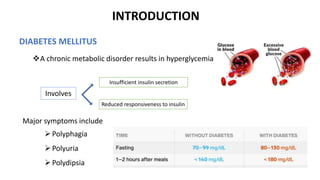
DIABETES MELLITUS
A chronic metabolic disorder results in hyperglycemia
Involves
Insufficient insulin secretion
Reduced responsiveness to insulin
Major symptoms include
Polyphagia
Polyuria
Polydipsia
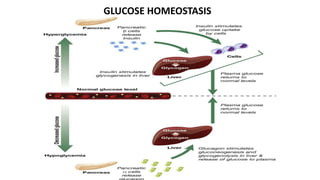
GLUCOSE HOMEOSTASIS
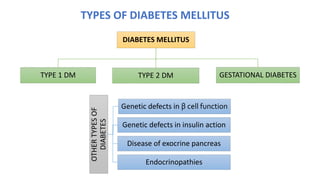
DIABETES MELLITUS
TYPE 1 DM TYPE 2 DM GESTATIONAL DIABETES
TYPES OF DIABETES MELLITUS
OTHER
TYPES
OF
DIABETES Genetic defects in β cell function
Genetic defects in insulin action
Disease of exocrine pancreas
Endocrinopathies
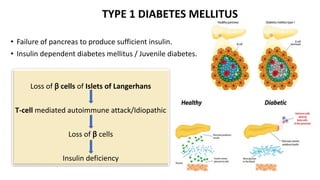
TYPE 1 DIABETES MELLITUS
• Failure of pancreas to produce sufficient insulin.
• Insulin dependent diabetes mellitus / Juvenile diabetes.
Loss of β cells of Islets of Langerhans
T-cell mediated autoimmune attack/Idiopathic
Loss of β cells
Insulin deficiency
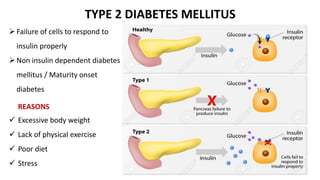
TYPE 2 DIABETES MELLITUS
Failure of cells to respond to
insulin properly
Non insulin dependent diabetes
mellitus / Maturity onset
diabetes
 Excessive body weight
 Lack of physical exercise
 Poor diet
 Stress
REASONS
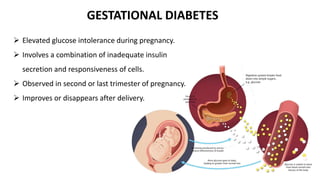
GESTATIONAL DIABETES
 Elevated glucose intolerance during pregnancy.
 Involves a combination of inadequate insulin
secretion and responsiveness of cells.
 Observed in second or last trimester of pregnancy.
 Improves or disappears after delivery.
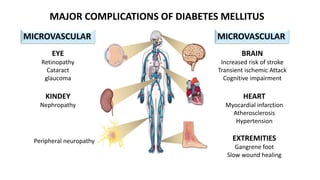
MAJOR COMPLICATIONS OF DIABETES MELLITUS
MICROVASCULAR MICROVASCULAR
EYE
Retinopathy
Cataract
glaucoma
KINDEY
Nephropathy
Peripheral neuropathy
BRAIN
Increased risk of stroke
Transient ischemic Attack
Cognitive impairment
HEART
Myocardial infarction
Atherosclerosis
Hypertension
EXTREMITIES
Gangrene foot
Slow wound healing
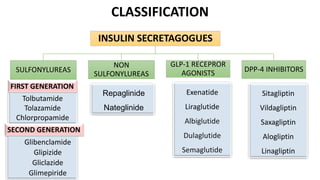
INSULIN SECRETAGOGUES
SULFONYLUREAS
NON
SULFONYLUREAS
GLP-1 RECEPROR
AGONISTS DPP-4 INHIBITORS
Tolbutamide
Tolazamide
Chlorpropamide
Glibenclamide
Glipizide
Gliclazide
Glimepiride
Repaglinide
Nateglinide
Exenatide
Liraglutide
Albiglutide
Dulaglutide
Semaglutide
Sitagliptin
Vildagliptin
Saxagliptin
Alogliptin
Linagliptin
FIRST GENERATION
SECOND GENERATION
CLASSIFICATION
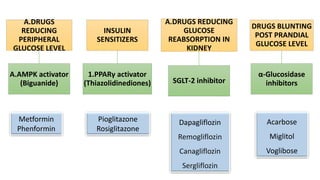
A.DRUGS
REDUCING
PERIPHERAL
GLUCOSE LEVEL
A.AMPK activator
(Biguanide)
INSULIN
SENSITIZERS
1.PPARγ activator
(Thiazolidinediones)
A.DRUGS REDUCING
GLUCOSE
REABSORPTION IN
KIDNEY
SGLT-2 inhibitor
DRUGS BLUNTING
POST PRANDIAL
GLUCOSE LEVEL
α-Glucosidase
inhibitors
Pioglitazone
Rosiglitazone
Metformin
Phenformin
Acarbose
Miglitol
Voglibose
Dapagliflozin
Remogliflozin
Canagliflozin
Sergliflozin
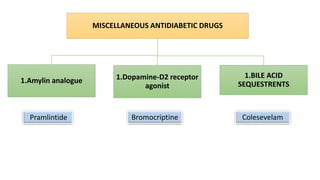
MISCELLANEOUS ANTIDIABETIC DRUGS
1.Amylin analogue 1.Dopamine-D2 receptor
agonist
1.BILE ACID
SEQUESTRENTS
Pramlintide Bromocriptine Colesevelam
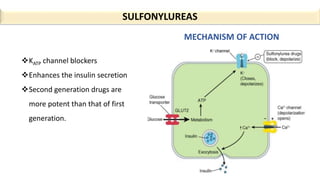
MECHANISM OF ACTION
SULFONYLUREAS
KATP channel blockers
Enhances the insulin secretion
Second generation drugs are
more potent than that of first
generation.
 Given orally which binds to plasma proteins(90-99%).
 Metabolised in liver.
 Excreted by kidney.
 Tolbutamide - short duration of action (6-12 hrs) .
 glipizide & glyburide - intermediate acting.
 glimepiride & gliclazide - last about 24 hours.
 Glibenclamide - 150 times more potent than tolbutamide.
PHARMACOKINETICS
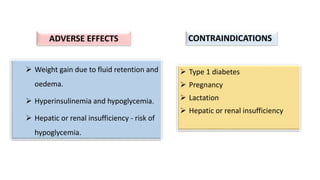
 Type 1 diabetes
 Pregnancy
 Lactation
 Hepatic or renal insufficiency
 Weight gain due to fluid retention and
oedema.
 Hyperinsulinemia and hypoglycemia.
 Hepatic or renal insufficiency - risk of
hypoglycemia.
CONTRAINDICATIONS
ADVERSE EFFECTS
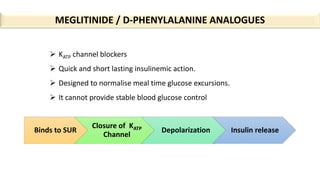
MEGLITINIDE / D-PHENYLALANINE ANALOGUES
 KATP channel blockers
 Quick and short lasting insulinemic action.
 Designed to normalise meal time glucose excursions.
 It cannot provide stable blood glucose control
Binds to SUR
Closure of KATP
Channel
Depolarization Insulin release
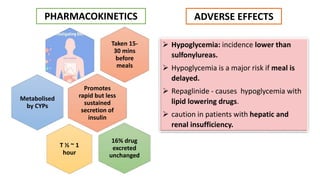
 Hypoglycemia: incidence lower than
sulfonylureas.
 Hypoglycemia is a major risk if meal is
delayed.
 Repaglinide - causes hypoglycemia with
lipid lowering drugs.
 caution in patients with hepatic and
renal insufficiency.
Taken 15-
30 mins
before
meals
T ½ ~ 1
hour
Metabolised
by CYPs
16% drug
excreted
unchanged
Promotes
rapid but less
sustained
secretion of
insulin
PHARMACOKINETICS ADVERSE EFFECTS
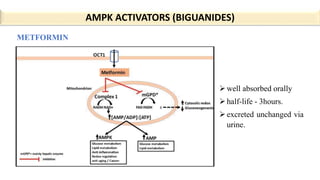
AMPK ACTIVATORS (BIGUANIDES)
METFORMIN
well absorbed orally
half-life - 3hours.
excreted unchanged via
urine.
 Nausea, vomiting and diarrhoea
 Gastro intestinal disturbances
 Lactic acidosis
 Long term use affects vitamin B12 absorption.
 Renal failure
 Hepatic insufficiency
 Hypoxic pulmonary disease
 Heart failure
ADVERSE EFFECTS CONTRAINDICATIONS
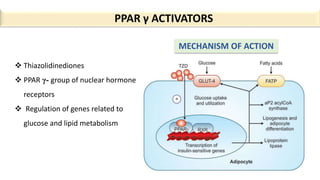
PPAR γ ACTIVATORS
 Thiazolidinediones
 PPAR γ- group of nuclear hormone
receptors
 Regulation of genes related to
glucose and lipid metabolism
MECHANISM OF ACTION
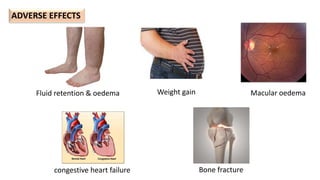
ADVERSE EFFECTS
congestive heart failure Bone fracture
Macular oedema
Fluid retention & oedema Weight gain
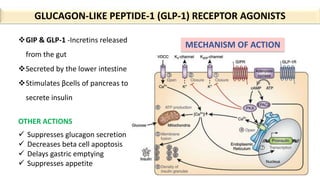
GLUCAGON-LIKE PEPTIDE-1 (GLP-1) RECEPTOR AGONISTS
GIP & GLP-1 -Incretins released
from the gut
Secreted by the lower intestine
Stimulates βcells of pancreas to
secrete insulin
MECHANISM OF ACTION
 Suppresses glucagon secretion
 Decreases beta cell apoptosis
 Delays gastric emptying
 Suppresses appetite
OTHER ACTIONS
EXENATIDE
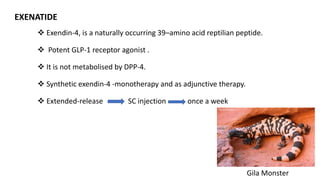
 Exendin-4, is a naturally occurring 39–amino acid reptilian peptide.
 Potent GLP-1 receptor agonist .
 It is not metabolised by DPP-4.
 Synthetic exendin-4 -monotherapy and as adjunctive therapy.
 Extended-release SC injection once a week
Gila Monster
PHARMACOKINETICS
 Long-acting synthetic agents.
 Exenatide - SC inj. (typically before meals).
 Rapidly absorbed
 Peak concentrations - 2 hours
 Half-life - 2–3 hours
 Clearance of drugs primarily by kidneys.
 Albiglutide has a half-life of 5–7 days.
 Semaglutide - oral drug
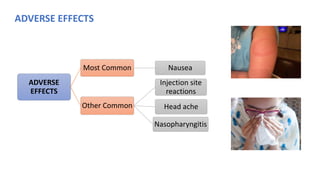
ADVERSE
EFFECTS
Most Common Nausea
Other Common
Injection site
reactions
Head ache
Nasopharyngitis
ADVERSE EFFECTS
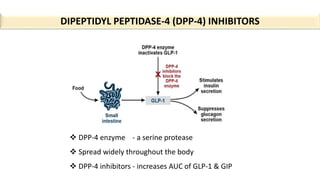
DIPEPTIDYL PEPTIDASE-4 (DPP-4) INHIBITORS
 DPP-4 enzyme - a serine protease
 Spread widely throughout the body
 DPP-4 inhibitors - increases AUC of GLP-1 & GIP
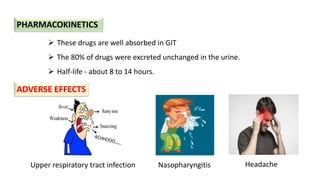
 These drugs are well absorbed in GIT
 The 80% of drugs were excreted unchanged in the urine.
 Half-life - about 8 to 14 hours.
Upper respiratory tract infection Nasopharyngitis Headache
ADVERSE EFFECTS
PHARMACOKINETICS
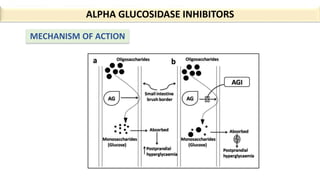
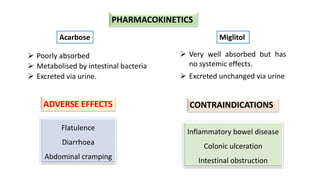
ALPHA GLUCOSIDASE INHIBITORS
MECHANISM OF ACTION
 Poorly absorbed
 Metabolised by intestinal bacteria
 Excreted via urine.
PHARMACOKINETICS
ADVERSE EFFECTS
 Very well absorbed but has
no systemic effects.
 Excreted unchanged via urine
Acarbose Miglitol
CONTRAINDICATIONS
Flatulence
Diarrhoea
Abdominal cramping
Inflammatory bowel disease
Colonic ulceration
Intestinal obstruction
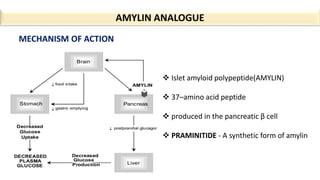
AMYLIN ANALOGUE
MECHANISM OF ACTION
 Islet amyloid polypeptide(AMYLIN)
 37–amino acid peptide
 produced in the pancreatic β cell
 PRAMINITIDE - A synthetic form of amylin
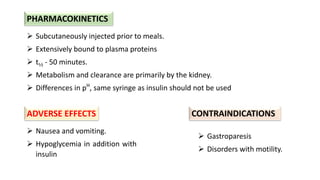
 Subcutaneously injected prior to meals.
 Extensively bound to plasma proteins
 t½ - 50 minutes.
 Metabolism and clearance are primarily by the kidney.
 Differences in pH
, same syringe as insulin should not be used
 Nausea and vomiting.
 Hypoglycemia in addition with
insulin
 Gastroparesis
 Disorders with motility.
ADVERSE EFFECTS CONTRAINDICATIONS
PHARMACOKINETICS
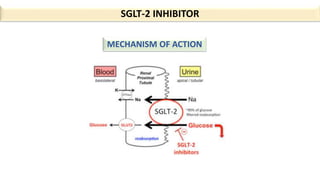
SGLT-2 INHIBITOR
MECHANISM OF ACTION
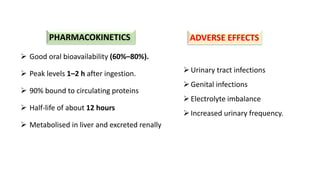
Urinary tract infections
Genital infections
Electrolyte imbalance
Increased urinary frequency.
 Good oral bioavailability (60%–80%).
 Peak levels 1–2 h after ingestion.
 90% bound to circulating proteins
 Half-life of about 12 hours
 Metabolised in liver and excreted renally
PHARMACOKINETICS ADVERSE EFFECTS
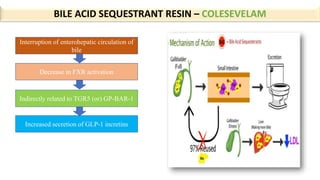
Interruption of enterohepatic circulation of
bile
Decrease in FXR activation
Indirectly related to TGR5 (or) GP-BAR-1
Increased secretion of GLP-1 incretins
BILE ACID SEQUESTRANT RESIN – COLESEVELAM
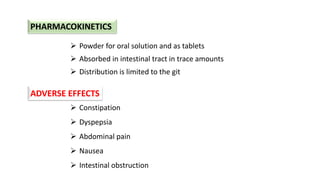
 Powder for oral solution and as tablets
 Absorbed in intestinal tract in trace amounts
 Distribution is limited to the git
 Constipation
 Dyspepsia
 Abdominal pain
 Nausea
 Intestinal obstruction
PHARMACOKINETICS
ADVERSE EFFECTS
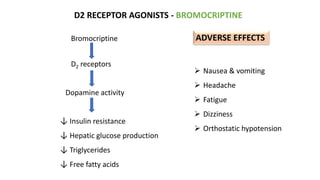
D2 RECEPTOR AGONISTS - BROMOCRIPTINE
 Nausea & vomiting
 Headache
 Fatigue
 Dizziness
 Orthostatic hypotension
Bromocriptine
D2 receptors
Dopamine activity
↓ Insulin resistance
↓ Hepatic glucose production
↓ Triglycerides
↓ Free fatty acids
ADVERSE EFFECTS
COMPARING DIFFERENT CLASSES
OF
ORAL HYPOGLYCEMIC AGENTS
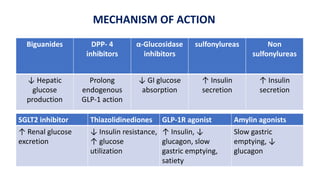
Biguanides DPP- 4
inhibitors
α-Glucosidase
inhibitors
sulfonylureas Non
sulfonylureas
↓ Hepatic
glucose
production
Prolong
endogenous
GLP-1 action
↓ GI glucose
absorption
↑ Insulin
secretion
↑ Insulin
secretion
SGLT2 inhibitor Thiazolidinediones GLP-1R agonist Amylin agonists
↑ Renal glucose
excretion
↓ Insulin resistance,
↑ glucose
utilization
↑ Insulin, ↓
glucagon, slow
gastric emptying,
satiety
Slow gastric
emptying, ↓
glucagon
MECHANISM OF ACTION
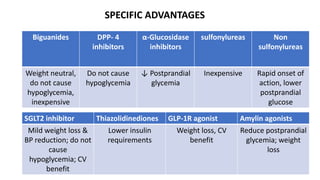
Biguanides DPP- 4
inhibitors
α-Glucosidase
inhibitors
sulfonylureas Non
sulfonylureas
Weight neutral,
do not cause
hypoglycemia,
inexpensive
Do not cause
hypoglycemia
↓ Postprandial
glycemia
Inexpensive Rapid onset of
action, lower
postprandial
glucose
SGLT2 inhibitor Thiazolidinediones GLP-1R agonist Amylin agonists
Mild weight loss &
BP reduction; do not
cause
hypoglycemia; CV
benefit
Lower insulin
requirements
Weight loss, CV
benefit
Reduce postprandial
glycemia; weight
loss
SPECIFIC ADVANTAGES
Biguanides DPP- 4 inhibitors α-Glucosidase
inhibitors
sulfonylureas Non
sulfonylureas
Diarrhoea,
nausea,
lactic
acidosis
Expensive GI flatulence,
liver function
tests
Hypoglycemia,
weight gain
Hypoglycemia,
precautions for
elderly and renal
impairment
SGLT2 inhibitor Thiazolidinediones GLP-1R agonist Amylin agonists
↑ Rate of lower
urinary tract and
genital mycotic
infections;
hypotension; rarely
DKA
↑ Rate of lower
urinary tract and
genital mycotic
infections;
hypotension; rarely
DKA
Injection, nausea,
↑ risk of
hypoglycemia with
insulin secretagogues
Injection, nausea,
↑ risk of
hypoglycemia with
insulin
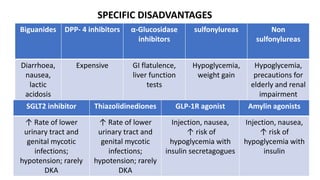
SPECIFIC DISADVANTAGES
Biguanides DPP- 4
inhibitors
α-Glucosidase
inhibitors
sulfonylureas Non
sulfonylureas
Diarrhoea,
nausea, lactic
acidosis
↓ Dose with
renal disease
Renal/liver
disease
Renal/liver
disease
Renal/liver
disease
SGLT2 inhibitor Thiazolidinediones GLP-1R agonist Amylin agonists
Renal disease CHF, liver disease Renal disease, agents
that also slow GI
motility, pancreatitis
Agents that also
slow GI motility
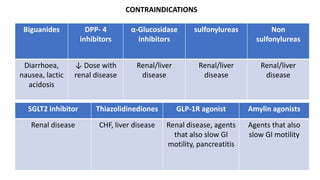
CONTRAINDICATIONS
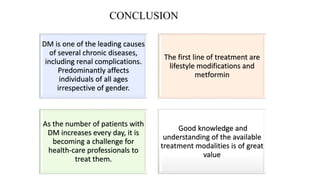
CONCLUSION
DM is one of the leading causes
of several chronic diseases,
including renal complications.
Predominantly affects
individuals of all ages
irrespective of gender.
The first line of treatment are
lifestyle modifications and
metformin
As the number of patients with
DM increases every day, it is
becoming a challenge for
health-care professionals to
treat them.
Good knowledge and
understanding of the available
treatment modalities is of great
value
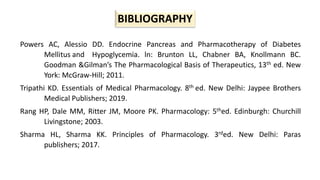
BIBLIOGRAPHY
Powers AC, Alessio DD. Endocrine Pancreas and Pharmacotherapy of Diabetes
Mellitus and Hypoglycemia. ln: Brunton LL, Chabner BA, Knollmann BC.
Goodman &Gilman’s The Pharmacological Basis of Therapeutics, 13th ed. New
York: McGraw-Hill; 2011.
Tripathi KD. Essentials of Medical Pharmacology. 8th ed. New Delhi: Jaypee Brothers
Medical Publishers; 2019.
Rang HP, Dale MM, Ritter JM, Moore PK. Pharmacology: 5thed. Edinburgh: Churchill
Livingstone; 2003.
Sharma HL, Sharma KK. Principles of Pharmacology. 3rded. New Delhi: Paras
publishers; 2017.
ORAL HYPOGLYCEMIC AGENTS

ORAL HYPOGLYCEMIC AGENTS

  • 1.
    ORAL HYPOGLYCEMIC AGENTS PRESENTED BY PRADEEPANRAMASAMY, M.PHARM 2ND SEMESTER, DEPARTMENT OF PHARMACOLOGY, COP SRIPMS.
  • 2.
    CONTENTS INTRODUCTION TYPES OF DIABETESMELLITUS ORAL HYPOGLYCEMIC AGENTS COMPARISON CONCLUSION BIBLIOGRAPHY
  • 3.
    INTRODUCTION DIABETES MELLITUS A chronicmetabolic disorder results in hyperglycemia Involves Insufficient insulin secretion Reduced responsiveness to insulin Major symptoms include Polyphagia Polyuria Polydipsia
  • 4.
  • 5.
    DIABETES MELLITUS TYPE 1DM TYPE 2 DM GESTATIONAL DIABETES TYPES OF DIABETES MELLITUS OTHER TYPES OF DIABETES Genetic defects in β cell function Genetic defects in insulin action Disease of exocrine pancreas Endocrinopathies
  • 6.
    TYPE 1 DIABETESMELLITUS • Failure of pancreas to produce sufficient insulin. • Insulin dependent diabetes mellitus / Juvenile diabetes. Loss of β cells of Islets of Langerhans T-cell mediated autoimmune attack/Idiopathic Loss of β cells Insulin deficiency
  • 7.
    TYPE 2 DIABETESMELLITUS Failure of cells to respond to insulin properly Non insulin dependent diabetes mellitus / Maturity onset diabetes  Excessive body weight  Lack of physical exercise  Poor diet  Stress REASONS
  • 8.
    GESTATIONAL DIABETES  Elevatedglucose intolerance during pregnancy.  Involves a combination of inadequate insulin secretion and responsiveness of cells.  Observed in second or last trimester of pregnancy.  Improves or disappears after delivery.
  • 9.
    MAJOR COMPLICATIONS OFDIABETES MELLITUS MICROVASCULAR MICROVASCULAR EYE Retinopathy Cataract glaucoma KINDEY Nephropathy Peripheral neuropathy BRAIN Increased risk of stroke Transient ischemic Attack Cognitive impairment HEART Myocardial infarction Atherosclerosis Hypertension EXTREMITIES Gangrene foot Slow wound healing
  • 11.
    INSULIN SECRETAGOGUES SULFONYLUREAS NON SULFONYLUREAS GLP-1 RECEPROR AGONISTSDPP-4 INHIBITORS Tolbutamide Tolazamide Chlorpropamide Glibenclamide Glipizide Gliclazide Glimepiride Repaglinide Nateglinide Exenatide Liraglutide Albiglutide Dulaglutide Semaglutide Sitagliptin Vildagliptin Saxagliptin Alogliptin Linagliptin FIRST GENERATION SECOND GENERATION CLASSIFICATION
  • 12.
    A.DRUGS REDUCING PERIPHERAL GLUCOSE LEVEL A.AMPK activator (Biguanide) INSULIN SENSITIZERS 1.PPARγactivator (Thiazolidinediones) A.DRUGS REDUCING GLUCOSE REABSORPTION IN KIDNEY SGLT-2 inhibitor DRUGS BLUNTING POST PRANDIAL GLUCOSE LEVEL α-Glucosidase inhibitors Pioglitazone Rosiglitazone Metformin Phenformin Acarbose Miglitol Voglibose Dapagliflozin Remogliflozin Canagliflozin Sergliflozin
  • 13.
    MISCELLANEOUS ANTIDIABETIC DRUGS 1.Amylinanalogue 1.Dopamine-D2 receptor agonist 1.BILE ACID SEQUESTRENTS Pramlintide Bromocriptine Colesevelam
  • 14.
    MECHANISM OF ACTION SULFONYLUREAS KATPchannel blockers Enhances the insulin secretion Second generation drugs are more potent than that of first generation.
  • 15.
     Given orallywhich binds to plasma proteins(90-99%).  Metabolised in liver.  Excreted by kidney.  Tolbutamide - short duration of action (6-12 hrs) .  glipizide & glyburide - intermediate acting.  glimepiride & gliclazide - last about 24 hours.  Glibenclamide - 150 times more potent than tolbutamide. PHARMACOKINETICS
  • 16.
     Type 1diabetes  Pregnancy  Lactation  Hepatic or renal insufficiency  Weight gain due to fluid retention and oedema.  Hyperinsulinemia and hypoglycemia.  Hepatic or renal insufficiency - risk of hypoglycemia. CONTRAINDICATIONS ADVERSE EFFECTS
  • 17.
    MEGLITINIDE / D-PHENYLALANINEANALOGUES  KATP channel blockers  Quick and short lasting insulinemic action.  Designed to normalise meal time glucose excursions.  It cannot provide stable blood glucose control Binds to SUR Closure of KATP Channel Depolarization Insulin release
  • 18.
     Hypoglycemia: incidencelower than sulfonylureas.  Hypoglycemia is a major risk if meal is delayed.  Repaglinide - causes hypoglycemia with lipid lowering drugs.  caution in patients with hepatic and renal insufficiency. Taken 15- 30 mins before meals T ½ ~ 1 hour Metabolised by CYPs 16% drug excreted unchanged Promotes rapid but less sustained secretion of insulin PHARMACOKINETICS ADVERSE EFFECTS
  • 19.
    AMPK ACTIVATORS (BIGUANIDES) METFORMIN wellabsorbed orally half-life - 3hours. excreted unchanged via urine.
  • 20.
     Nausea, vomitingand diarrhoea  Gastro intestinal disturbances  Lactic acidosis  Long term use affects vitamin B12 absorption.  Renal failure  Hepatic insufficiency  Hypoxic pulmonary disease  Heart failure ADVERSE EFFECTS CONTRAINDICATIONS
  • 21.
    PPAR γ ACTIVATORS Thiazolidinediones  PPAR γ- group of nuclear hormone receptors  Regulation of genes related to glucose and lipid metabolism MECHANISM OF ACTION
  • 22.
    ADVERSE EFFECTS congestive heartfailure Bone fracture Macular oedema Fluid retention & oedema Weight gain
  • 23.
    GLUCAGON-LIKE PEPTIDE-1 (GLP-1)RECEPTOR AGONISTS GIP & GLP-1 -Incretins released from the gut Secreted by the lower intestine Stimulates βcells of pancreas to secrete insulin MECHANISM OF ACTION  Suppresses glucagon secretion  Decreases beta cell apoptosis  Delays gastric emptying  Suppresses appetite OTHER ACTIONS
  • 24.
    EXENATIDE  Exendin-4, isa naturally occurring 39–amino acid reptilian peptide.  Potent GLP-1 receptor agonist .  It is not metabolised by DPP-4.  Synthetic exendin-4 -monotherapy and as adjunctive therapy.  Extended-release SC injection once a week Gila Monster
  • 25.
    PHARMACOKINETICS  Long-acting syntheticagents.  Exenatide - SC inj. (typically before meals).  Rapidly absorbed  Peak concentrations - 2 hours  Half-life - 2–3 hours  Clearance of drugs primarily by kidneys.  Albiglutide has a half-life of 5–7 days.  Semaglutide - oral drug
  • 26.
    ADVERSE EFFECTS Most Common Nausea OtherCommon Injection site reactions Head ache Nasopharyngitis ADVERSE EFFECTS
  • 27.
    DIPEPTIDYL PEPTIDASE-4 (DPP-4)INHIBITORS  DPP-4 enzyme - a serine protease  Spread widely throughout the body  DPP-4 inhibitors - increases AUC of GLP-1 & GIP
  • 28.
     These drugsare well absorbed in GIT  The 80% of drugs were excreted unchanged in the urine.  Half-life - about 8 to 14 hours. Upper respiratory tract infection Nasopharyngitis Headache ADVERSE EFFECTS PHARMACOKINETICS
  • 29.
  • 30.
     Poorly absorbed Metabolised by intestinal bacteria  Excreted via urine. PHARMACOKINETICS ADVERSE EFFECTS  Very well absorbed but has no systemic effects.  Excreted unchanged via urine Acarbose Miglitol CONTRAINDICATIONS Flatulence Diarrhoea Abdominal cramping Inflammatory bowel disease Colonic ulceration Intestinal obstruction
  • 31.
    AMYLIN ANALOGUE MECHANISM OFACTION  Islet amyloid polypeptide(AMYLIN)  37–amino acid peptide  produced in the pancreatic β cell  PRAMINITIDE - A synthetic form of amylin
  • 32.
     Subcutaneously injectedprior to meals.  Extensively bound to plasma proteins  t½ - 50 minutes.  Metabolism and clearance are primarily by the kidney.  Differences in pH , same syringe as insulin should not be used  Nausea and vomiting.  Hypoglycemia in addition with insulin  Gastroparesis  Disorders with motility. ADVERSE EFFECTS CONTRAINDICATIONS PHARMACOKINETICS
  • 33.
  • 34.
    Urinary tract infections Genitalinfections Electrolyte imbalance Increased urinary frequency.  Good oral bioavailability (60%–80%).  Peak levels 1–2 h after ingestion.  90% bound to circulating proteins  Half-life of about 12 hours  Metabolised in liver and excreted renally PHARMACOKINETICS ADVERSE EFFECTS
  • 35.
    Interruption of enterohepaticcirculation of bile Decrease in FXR activation Indirectly related to TGR5 (or) GP-BAR-1 Increased secretion of GLP-1 incretins BILE ACID SEQUESTRANT RESIN – COLESEVELAM
  • 36.
     Powder fororal solution and as tablets  Absorbed in intestinal tract in trace amounts  Distribution is limited to the git  Constipation  Dyspepsia  Abdominal pain  Nausea  Intestinal obstruction PHARMACOKINETICS ADVERSE EFFECTS
  • 37.
    D2 RECEPTOR AGONISTS- BROMOCRIPTINE  Nausea & vomiting  Headache  Fatigue  Dizziness  Orthostatic hypotension Bromocriptine D2 receptors Dopamine activity ↓ Insulin resistance ↓ Hepatic glucose production ↓ Triglycerides ↓ Free fatty acids ADVERSE EFFECTS
  • 38.
  • 39.
    Biguanides DPP- 4 inhibitors α-Glucosidase inhibitors sulfonylureasNon sulfonylureas ↓ Hepatic glucose production Prolong endogenous GLP-1 action ↓ GI glucose absorption ↑ Insulin secretion ↑ Insulin secretion SGLT2 inhibitor Thiazolidinediones GLP-1R agonist Amylin agonists ↑ Renal glucose excretion ↓ Insulin resistance, ↑ glucose utilization ↑ Insulin, ↓ glucagon, slow gastric emptying, satiety Slow gastric emptying, ↓ glucagon MECHANISM OF ACTION
  • 40.
    Biguanides DPP- 4 inhibitors α-Glucosidase inhibitors sulfonylureasNon sulfonylureas Weight neutral, do not cause hypoglycemia, inexpensive Do not cause hypoglycemia ↓ Postprandial glycemia Inexpensive Rapid onset of action, lower postprandial glucose SGLT2 inhibitor Thiazolidinediones GLP-1R agonist Amylin agonists Mild weight loss & BP reduction; do not cause hypoglycemia; CV benefit Lower insulin requirements Weight loss, CV benefit Reduce postprandial glycemia; weight loss SPECIFIC ADVANTAGES
  • 41.
    Biguanides DPP- 4inhibitors α-Glucosidase inhibitors sulfonylureas Non sulfonylureas Diarrhoea, nausea, lactic acidosis Expensive GI flatulence, liver function tests Hypoglycemia, weight gain Hypoglycemia, precautions for elderly and renal impairment SGLT2 inhibitor Thiazolidinediones GLP-1R agonist Amylin agonists ↑ Rate of lower urinary tract and genital mycotic infections; hypotension; rarely DKA ↑ Rate of lower urinary tract and genital mycotic infections; hypotension; rarely DKA Injection, nausea, ↑ risk of hypoglycemia with insulin secretagogues Injection, nausea, ↑ risk of hypoglycemia with insulin SPECIFIC DISADVANTAGES
  • 42.
    Biguanides DPP- 4 inhibitors α-Glucosidase inhibitors sulfonylureasNon sulfonylureas Diarrhoea, nausea, lactic acidosis ↓ Dose with renal disease Renal/liver disease Renal/liver disease Renal/liver disease SGLT2 inhibitor Thiazolidinediones GLP-1R agonist Amylin agonists Renal disease CHF, liver disease Renal disease, agents that also slow GI motility, pancreatitis Agents that also slow GI motility CONTRAINDICATIONS
  • 43.
    CONCLUSION DM is oneof the leading causes of several chronic diseases, including renal complications. Predominantly affects individuals of all ages irrespective of gender. The first line of treatment are lifestyle modifications and metformin As the number of patients with DM increases every day, it is becoming a challenge for health-care professionals to treat them. Good knowledge and understanding of the available treatment modalities is of great value
  • 44.
    BIBLIOGRAPHY Powers AC, AlessioDD. Endocrine Pancreas and Pharmacotherapy of Diabetes Mellitus and Hypoglycemia. ln: Brunton LL, Chabner BA, Knollmann BC. Goodman &Gilman’s The Pharmacological Basis of Therapeutics, 13th ed. New York: McGraw-Hill; 2011. Tripathi KD. Essentials of Medical Pharmacology. 8th ed. New Delhi: Jaypee Brothers Medical Publishers; 2019. Rang HP, Dale MM, Ritter JM, Moore PK. Pharmacology: 5thed. Edinburgh: Churchill Livingstone; 2003. Sharma HL, Sharma KK. Principles of Pharmacology. 3rded. New Delhi: Paras publishers; 2017.