By
Dr. Dinesh Kumar G
Pharm. D
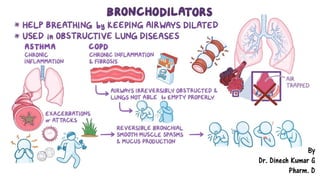
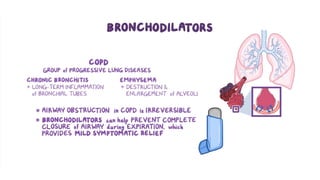
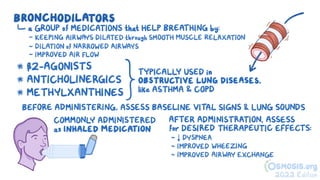
BRONCHODILATORS
DRUG NAME
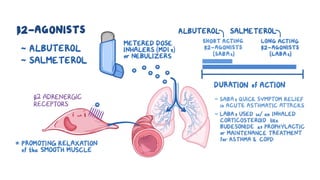
albuterol - short acting,
salmeterol - long acting
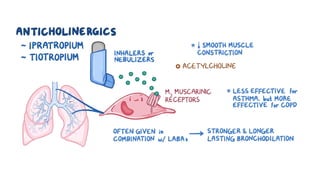
ipratropium bromide, tiotropium
bromide
theophylline
CLASS β-2 agonists Anticholinergics Methylxanthine
MECHANISM OF
ACTION
Bind to β2-adrenergic receptors on
bronchial smooth muscle cells to cause
smooth muscle relaxation
Bind to M3 muscarinic receptors on
tracheal and bronchial smooth muscles
and block acetylcholine from binding,
ultimately decreasing smooth muscle
contraction
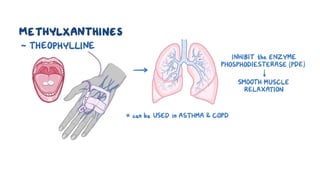
Enters smooth muscles of the airways
and inhibits the enzyme
phosphodiesterase, leading to smooth
muscle relaxation
INDICATIONS
Acute asthma attacks (short acting);
prophylactic or maintenance therapy for
asthma and COPD (long acting)
COPD (treatment of choice); asthma
(less effective)
Asthma and COPD
ROA INH (inhalers or nebulizers) PO, IV
SIDE EFFECTS
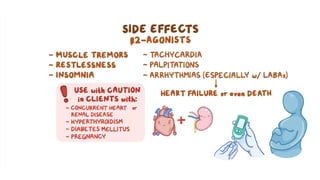
•Muscle tremors
•Restlessness
•Insomnia
•Tachycardia
•Palpitations
•Arrhythmias
•Pupil dilation
•Dry mouth
•Tachycardia
•Restlessness
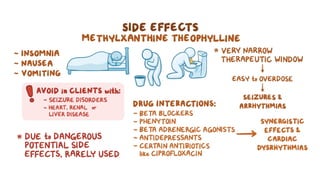
•Insomnia
•Nausea and vomiting
•Seizures
•Arrhythmias
•Gastric pain
•Hyperreflexia
CONTRAINDICAT
IONS AND
CAUTIONS
•Heart or renal disease
•Hyperthyroidism
•Diabetes mellitus
•Pregnancy
•Narrow angle glaucoma
•Heart disease
•Hyperthyroidism
•Hypersensitivity / allergic reaction
•Seizure disorder
•Heart, renal, or liver disease
•Drug interactions with beta blockers,
phenytoin, beta adrenergic agonists,
antidepressants, and certain antibiotics
can lead to synergistic effects and
cardiac dysrhythmias
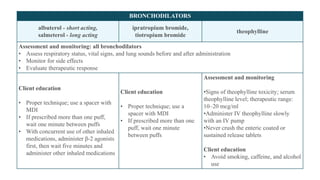
BRONCHODILATORS
albuterol - short acting,
salmeterol - long acting
ipratropium bromide,
tiotropium bromide
theophylline
Assessment and monitoring: all bronchodilators
• Assess respiratory status, vital signs, and lung sounds before and after administration
• Monitor for side effects
• Evaluate therapeutic response
Client education
• Proper technique; use a spacer with
MDI
• If prescribed more than one puff,
wait one minute between puffs
• With concurrent use of other inhaled
medications, administer β-2 agonists
first, then wait five minutes and
administer other inhaled medications
Client education
• Proper technique; use a
spacer with MDI
• If prescribed more than one
puff, wait one minute
between puffs
Assessment and monitoring
•Signs of theophylline toxicity; serum
theophylline level; therapeutic range:
10–20 mcg/ml
•Administer IV theophylline slowly
with an IV pump
•Never crush the enteric coated or
sustained release tablets
Client education
• Avoid smoking, caffeine, and alcohol
use
Bronchodilator

Bronchodilator

  • 1.
  • 17.
    BRONCHODILATORS DRUG NAME albuterol -short acting, salmeterol - long acting ipratropium bromide, tiotropium bromide theophylline CLASS β-2 agonists Anticholinergics Methylxanthine MECHANISM OF ACTION Bind to β2-adrenergic receptors on bronchial smooth muscle cells to cause smooth muscle relaxation Bind to M3 muscarinic receptors on tracheal and bronchial smooth muscles and block acetylcholine from binding, ultimately decreasing smooth muscle contraction Enters smooth muscles of the airways and inhibits the enzyme phosphodiesterase, leading to smooth muscle relaxation INDICATIONS Acute asthma attacks (short acting); prophylactic or maintenance therapy for asthma and COPD (long acting) COPD (treatment of choice); asthma (less effective) Asthma and COPD ROA INH (inhalers or nebulizers) PO, IV SIDE EFFECTS •Muscle tremors •Restlessness •Insomnia •Tachycardia •Palpitations •Arrhythmias •Pupil dilation •Dry mouth •Tachycardia •Restlessness •Insomnia •Nausea and vomiting •Seizures •Arrhythmias •Gastric pain •Hyperreflexia CONTRAINDICAT IONS AND CAUTIONS •Heart or renal disease •Hyperthyroidism •Diabetes mellitus •Pregnancy •Narrow angle glaucoma •Heart disease •Hyperthyroidism •Hypersensitivity / allergic reaction •Seizure disorder •Heart, renal, or liver disease •Drug interactions with beta blockers, phenytoin, beta adrenergic agonists, antidepressants, and certain antibiotics can lead to synergistic effects and cardiac dysrhythmias
  • 18.
    BRONCHODILATORS albuterol - shortacting, salmeterol - long acting ipratropium bromide, tiotropium bromide theophylline Assessment and monitoring: all bronchodilators • Assess respiratory status, vital signs, and lung sounds before and after administration • Monitor for side effects • Evaluate therapeutic response Client education • Proper technique; use a spacer with MDI • If prescribed more than one puff, wait one minute between puffs • With concurrent use of other inhaled medications, administer β-2 agonists first, then wait five minutes and administer other inhaled medications Client education • Proper technique; use a spacer with MDI • If prescribed more than one puff, wait one minute between puffs Assessment and monitoring •Signs of theophylline toxicity; serum theophylline level; therapeutic range: 10–20 mcg/ml •Administer IV theophylline slowly with an IV pump •Never crush the enteric coated or sustained release tablets Client education • Avoid smoking, caffeine, and alcohol use