DRUG NAME epinephrine (Adrenalin) norepinephrine isoproterenol
dobutamine
dopamine
CLASS
Bronchodilator Nonselective
adrenergic agonist
Nonselective
adrenergic agonist
Nonselective beta-
adrenergic agonist
β1-agonist
β1- and α-agonist
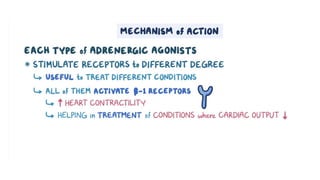
MECHANISM
of ACTION
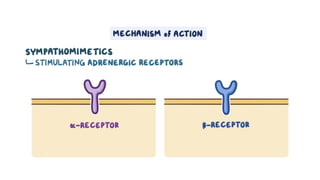
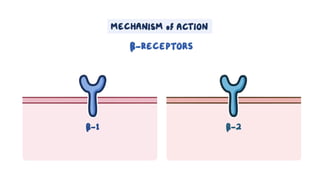
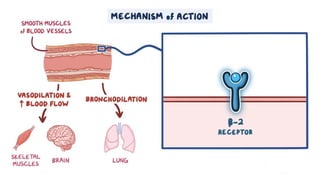
Stimulates β1- and β2-
agonist →
bronchodilation, cardiac and
CNS stimulation
Stimulates β-receptors
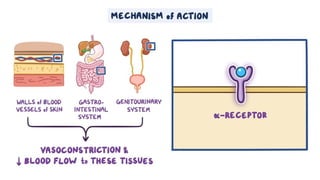
and α-receptors →
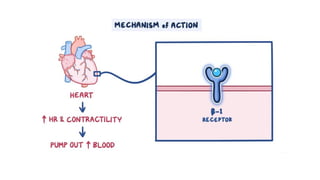
increases contractility,
heart rate, and cardiac
output, increases blood
pressure
Stimulates β1- and β2-
agonist →
bronchodilation,
cardiac and CNS
stimulation
Stimulates β1-
adrenergic receptors
→ increases
contractility and
cardiac output
Stimulates β1-
adrenergic receptors
→ increases
contractility and
cardiac output
Stimulates β1- and
α-receptors →
vasoconstriction →
increases blood
pressure
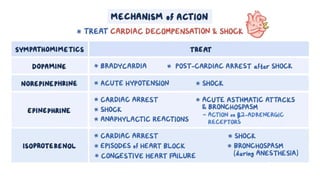
INDICATIONS
•Acute asthmatic attacks
•Bronchospasm
•Anaphylaxis, allergic
reactions
•Cardiac arrest
•Shock
•Acute hypotension
•Shock
•Episodes of heart
block
•Cardiac arrest, CPR
•Bronchospasm
occurring during
anesthesia
•Shock, congestive
heart failure
•Cardiac
decompensation
•Unlabeled: cardiog
enic shock in
children
•Shock
•Hypotension
•Unlabeled:
bradycardia
•Cardiac arrest
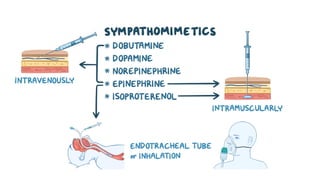
ROA IV, IM, INH, ET tube IV IV,IM IV IV
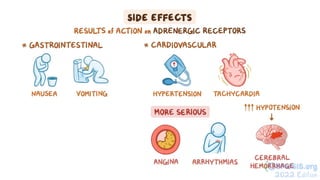
SIDE EFFECTS
•CV: palpitations, tachycardia, hypertension, angina, arrhythmias
•GI: nausea, vomiting
•CNS: cerebral hemorrhage
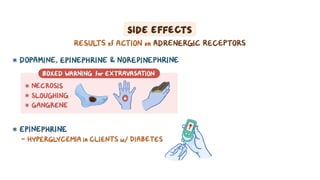
•Dopamine, epinephrine, norepinephrine: extravasation (boxed warning), tissue necrosis, sloughing,
gangrene
•Epinephrine: hyperglycemia (clients with diabetes)
CONTRA-
INDICATIONS &
CAUTIONS
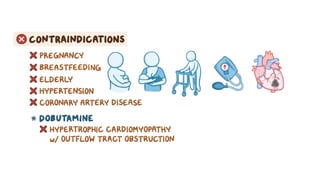
•Pregnancy and breastfeeding
•Elderly clients
•Hypertension or coronary artery disease
•Dobutamine: hypertrophic cardiomyopathy with outflow tract obstruction
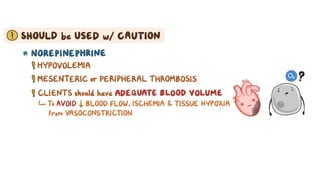
•Norepinephrine: hypovolemia, mesenteric or peripheral thrombosis
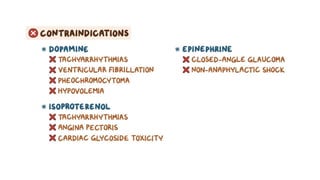
•Dopamine: tachyarrhythmias, ventricular fibrillation, pheochromocytoma, hypovolemia
•Isoproterenol: tachyarrhythmias, angina pectoris, cardiac glycoside toxicity
•Epinephrine:closed-angle glaucoma, non-anaphylactic shock
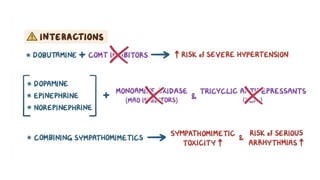
Drug interactions:
Dobutamine: COMT inhibitors
•Dopamine, epinephrine, norepinephrine: MAO inhibitors, TCAs
•Combining sympathomimetic medications
SYMPATHOMIMETIC MEDICATIONS
ASSESSMENT &
MONITORING
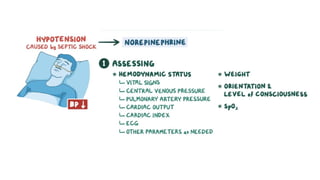
Norepinephrine
Weight
•Orientation, LOC
•Hemodynamic status
•Respiratory status
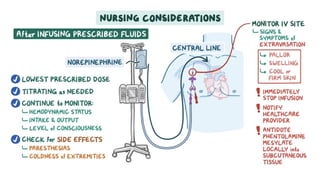
Intervention and monitoring
Administer via central line
•Low dose titrated based on client’s response
Monitoring
Hemodynamic status
•Intake and output
•LOC
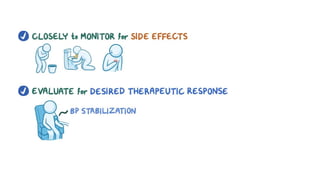
•Side effects
• Paresthesias, cool extremities
• Extravasation
• Stop infusion
• Notify health care provider
• Administer phentolamine mesylate subcutaneously
•Evaluate for the therapeutic response of blood pressure stabilization.
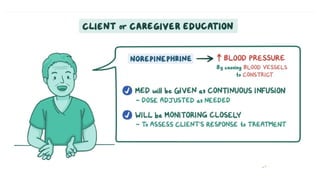
CLIENT EDUCATION
•Purpose of medication: increase their blood pressure
•Administered as a continuous infusion, adjusted as needed
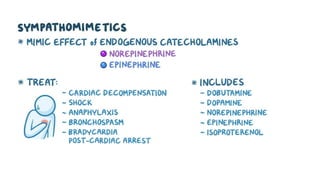
Sympathomimetics

Sympathomimetics

  • 24.
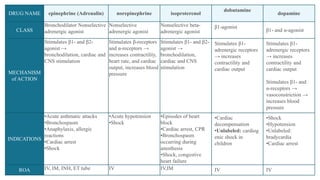
    DRUG NAME epinephrine(Adrenalin) norepinephrine isoproterenol dobutamine dopamine CLASS Bronchodilator Nonselective adrenergic agonist Nonselective adrenergic agonist Nonselective beta- adrenergic agonist β1-agonist β1- and α-agonist MECHANISM of ACTION Stimulates β1- and β2- agonist → bronchodilation, cardiac and CNS stimulation Stimulates β-receptors and α-receptors → increases contractility, heart rate, and cardiac output, increases blood pressure Stimulates β1- and β2- agonist → bronchodilation, cardiac and CNS stimulation Stimulates β1- adrenergic receptors → increases contractility and cardiac output Stimulates β1- adrenergic receptors → increases contractility and cardiac output Stimulates β1- and α-receptors → vasoconstriction → increases blood pressure INDICATIONS •Acute asthmatic attacks •Bronchospasm •Anaphylaxis, allergic reactions •Cardiac arrest •Shock •Acute hypotension •Shock •Episodes of heart block •Cardiac arrest, CPR •Bronchospasm occurring during anesthesia •Shock, congestive heart failure •Cardiac decompensation •Unlabeled: cardiog enic shock in children •Shock •Hypotension •Unlabeled: bradycardia •Cardiac arrest ROA IV, IM, INH, ET tube IV IV,IM IV IV
  • 25.
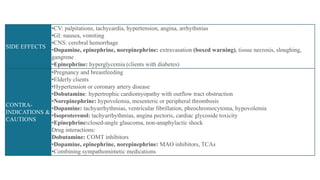
    SIDE EFFECTS •CV: palpitations,tachycardia, hypertension, angina, arrhythmias •GI: nausea, vomiting •CNS: cerebral hemorrhage •Dopamine, epinephrine, norepinephrine: extravasation (boxed warning), tissue necrosis, sloughing, gangrene •Epinephrine: hyperglycemia (clients with diabetes) CONTRA- INDICATIONS & CAUTIONS •Pregnancy and breastfeeding •Elderly clients •Hypertension or coronary artery disease •Dobutamine: hypertrophic cardiomyopathy with outflow tract obstruction •Norepinephrine: hypovolemia, mesenteric or peripheral thrombosis •Dopamine: tachyarrhythmias, ventricular fibrillation, pheochromocytoma, hypovolemia •Isoproterenol: tachyarrhythmias, angina pectoris, cardiac glycoside toxicity •Epinephrine:closed-angle glaucoma, non-anaphylactic shock Drug interactions: Dobutamine: COMT inhibitors •Dopamine, epinephrine, norepinephrine: MAO inhibitors, TCAs •Combining sympathomimetic medications
  • 26.
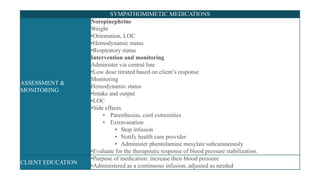
    SYMPATHOMIMETIC MEDICATIONS ASSESSMENT & MONITORING Norepinephrine Weight •Orientation,LOC •Hemodynamic status •Respiratory status Intervention and monitoring Administer via central line •Low dose titrated based on client’s response Monitoring Hemodynamic status •Intake and output •LOC •Side effects • Paresthesias, cool extremities • Extravasation • Stop infusion • Notify health care provider • Administer phentolamine mesylate subcutaneously •Evaluate for the therapeutic response of blood pressure stabilization. CLIENT EDUCATION •Purpose of medication: increase their blood pressure •Administered as a continuous infusion, adjusted as needed