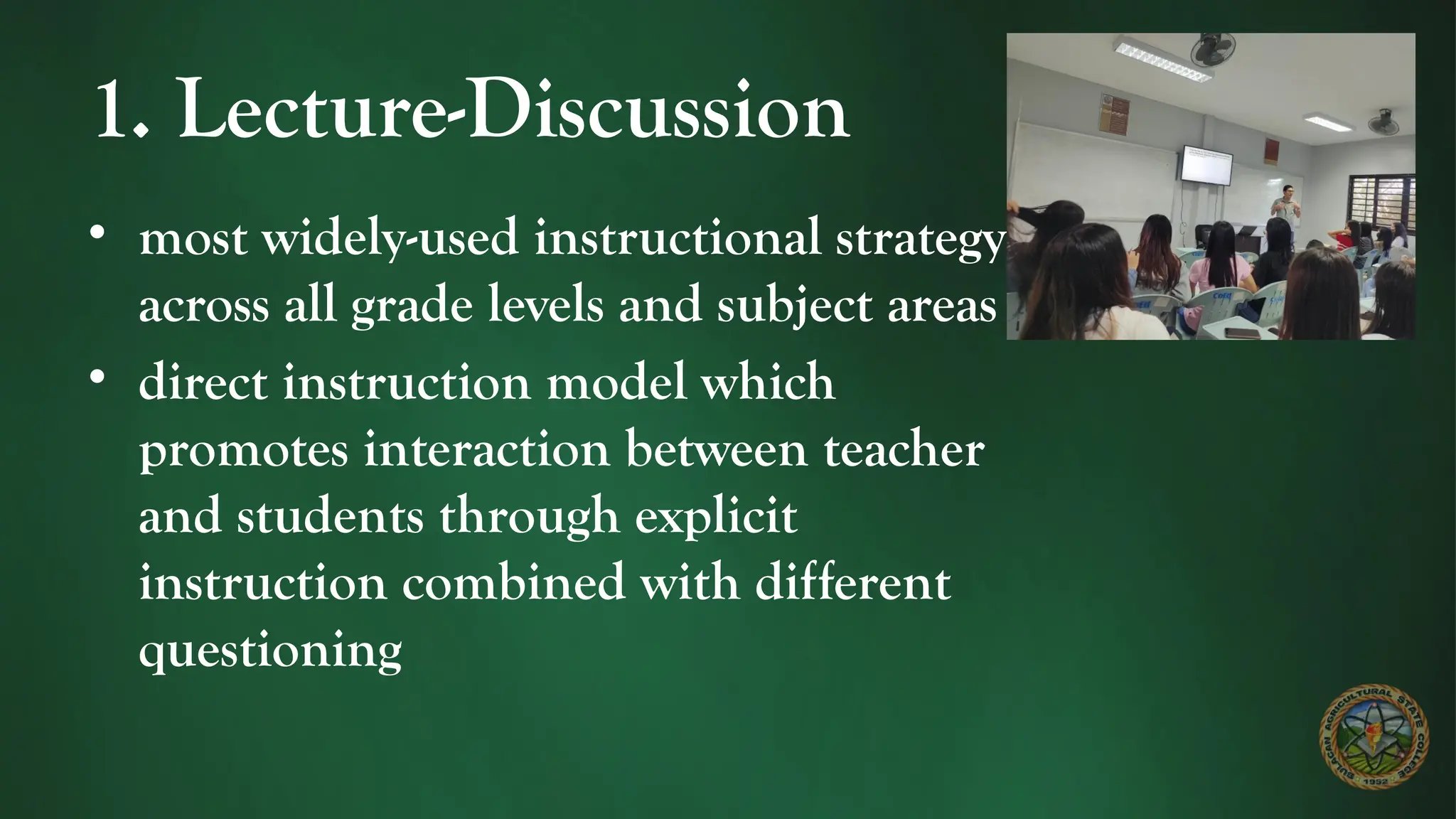
1. Lecture-Discussion
• most widely-used instructional strategy
across all grade levels and subject areas
• direct instruction model which
promotes interaction between teacher
and students through explicit
instruction combined with different
questioning
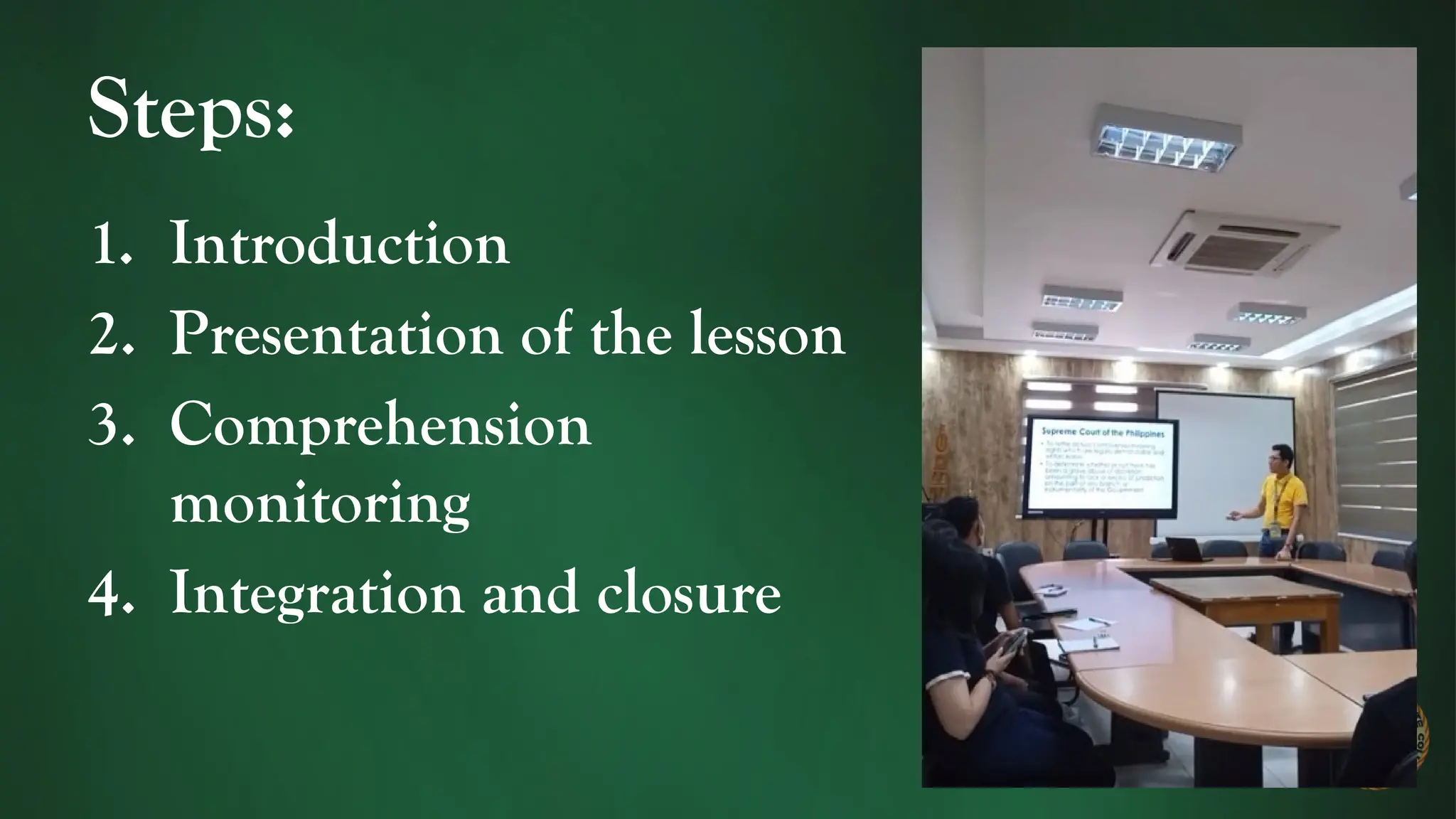
Steps:
1. Introduction
2. Presentation of the lesson
3. Comprehension
monitoring
4. Integration and closure
Tips:
• Plan the lesson in detail and practice your presentation.
• Be brief in the presentation of the lesson.
• Use a questioning script to develop your questions.
• Use numerous concrete examples, media, graphic
organizers.
• Pause occasionally after giving questions.
• Use in moderation and integrated with other strategies.
2. Using Graphic Organizers
• provide visual representation in developing and
summarizing students’ learning components
• enables learners to see information in a pattern
that uses labels
• presenting information in precise ways,
highlighting relationships and organization of
concepts
Types of Graphic Organizers:
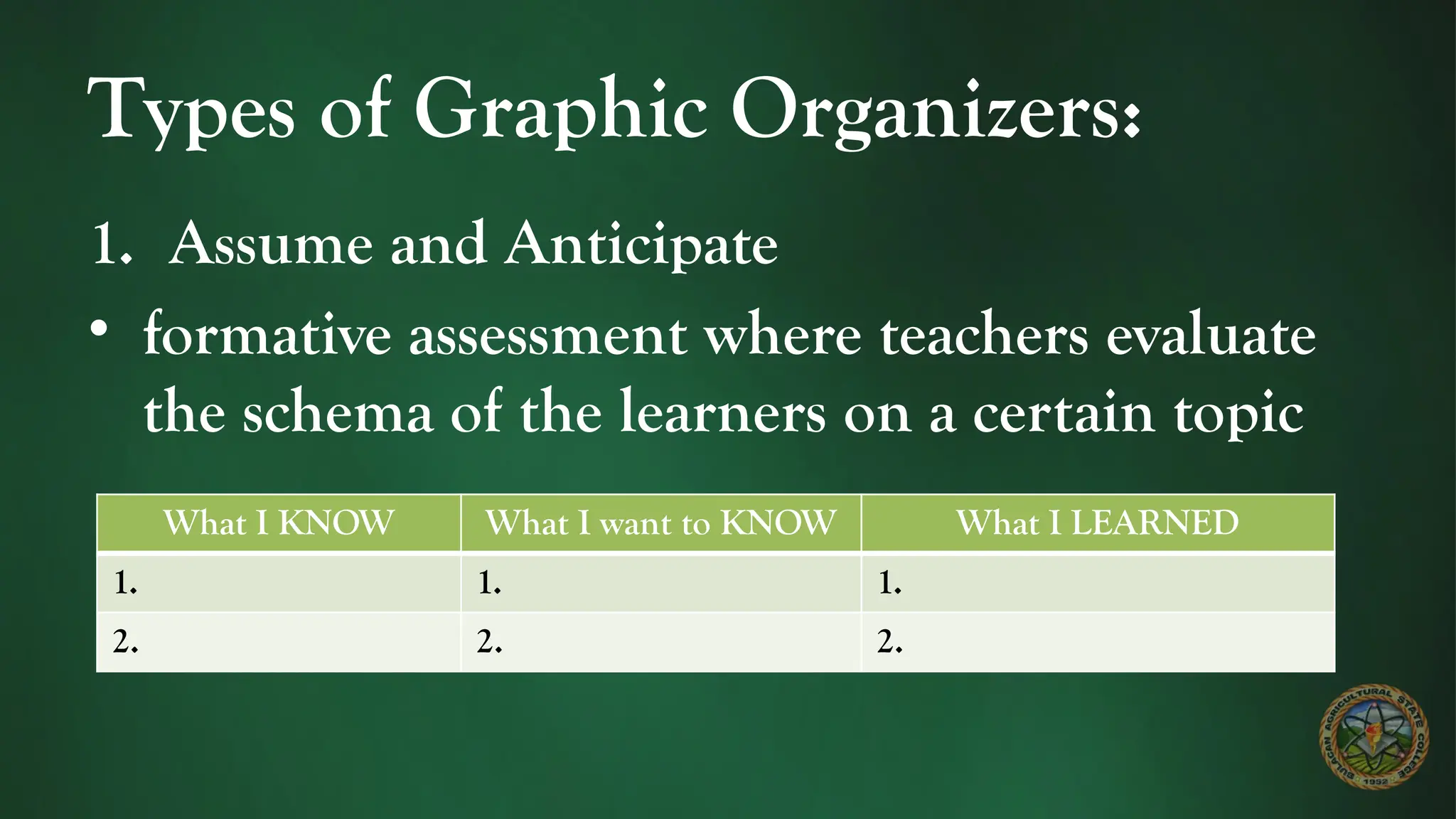
1. Assume and Anticipate
• formative assessment where teachers evaluate
the schema of the learners on a certain topic
What I KNOW What I want to KNOW What I LEARNED
1. 1. 1.
2. 2. 2.
Types of Graphic Organizers:
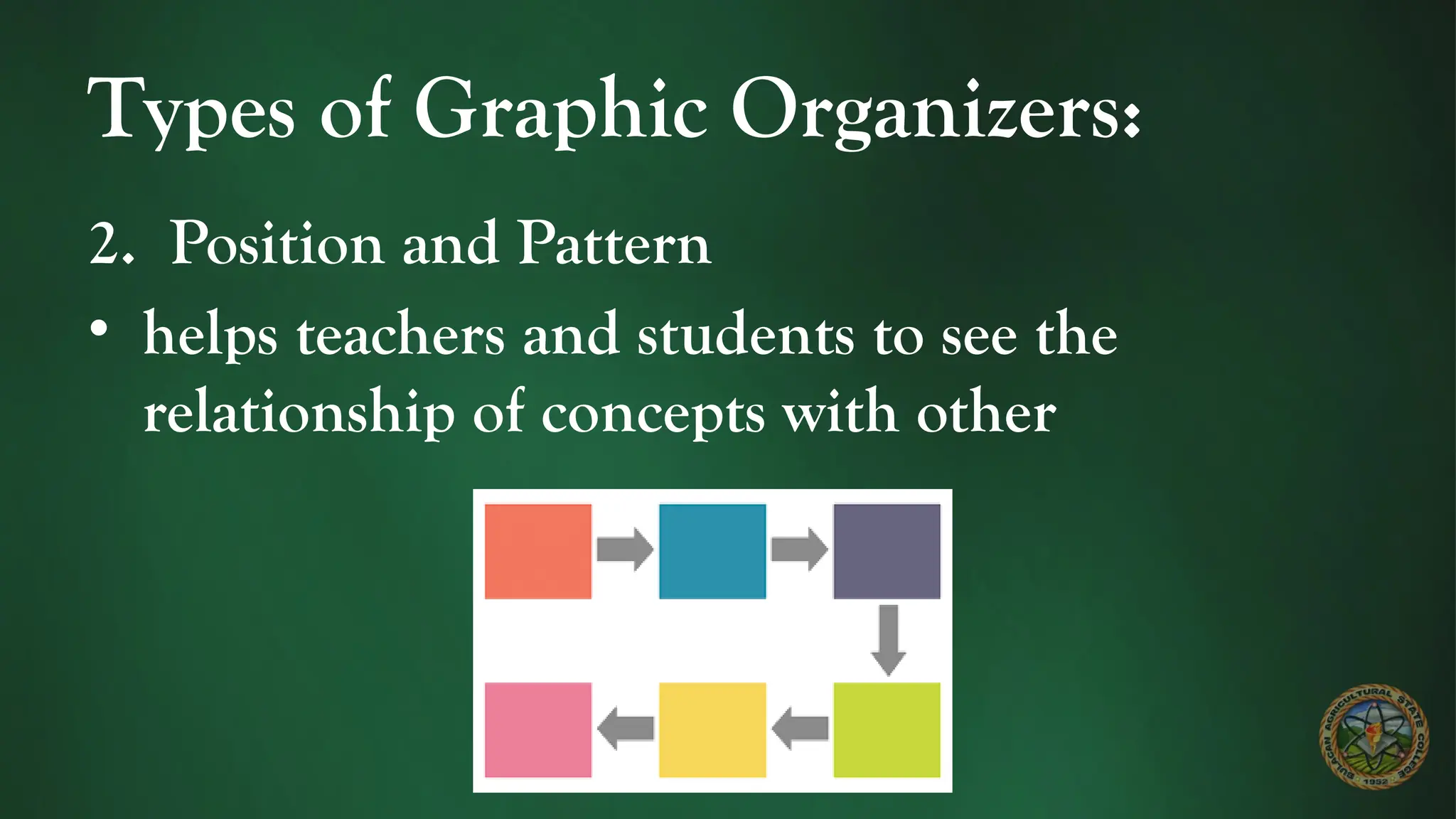
2. Position and Pattern
• helps teachers and students to see the
relationship of concepts with other
Types of Graphic Organizers:
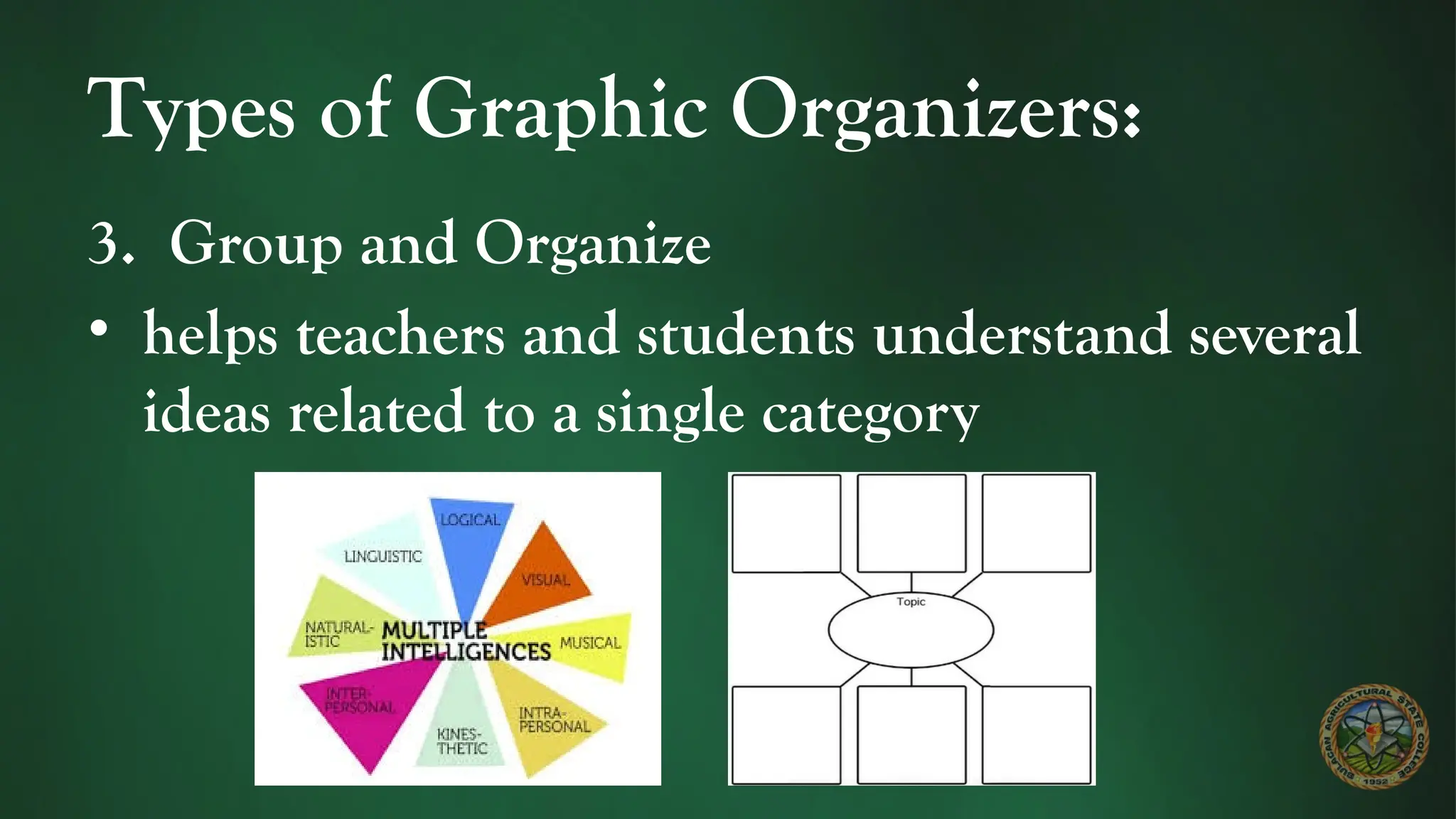
3. Group and Organize
• helps teachers and students understand several
ideas related to a single category
Types of Graphic Organizers:
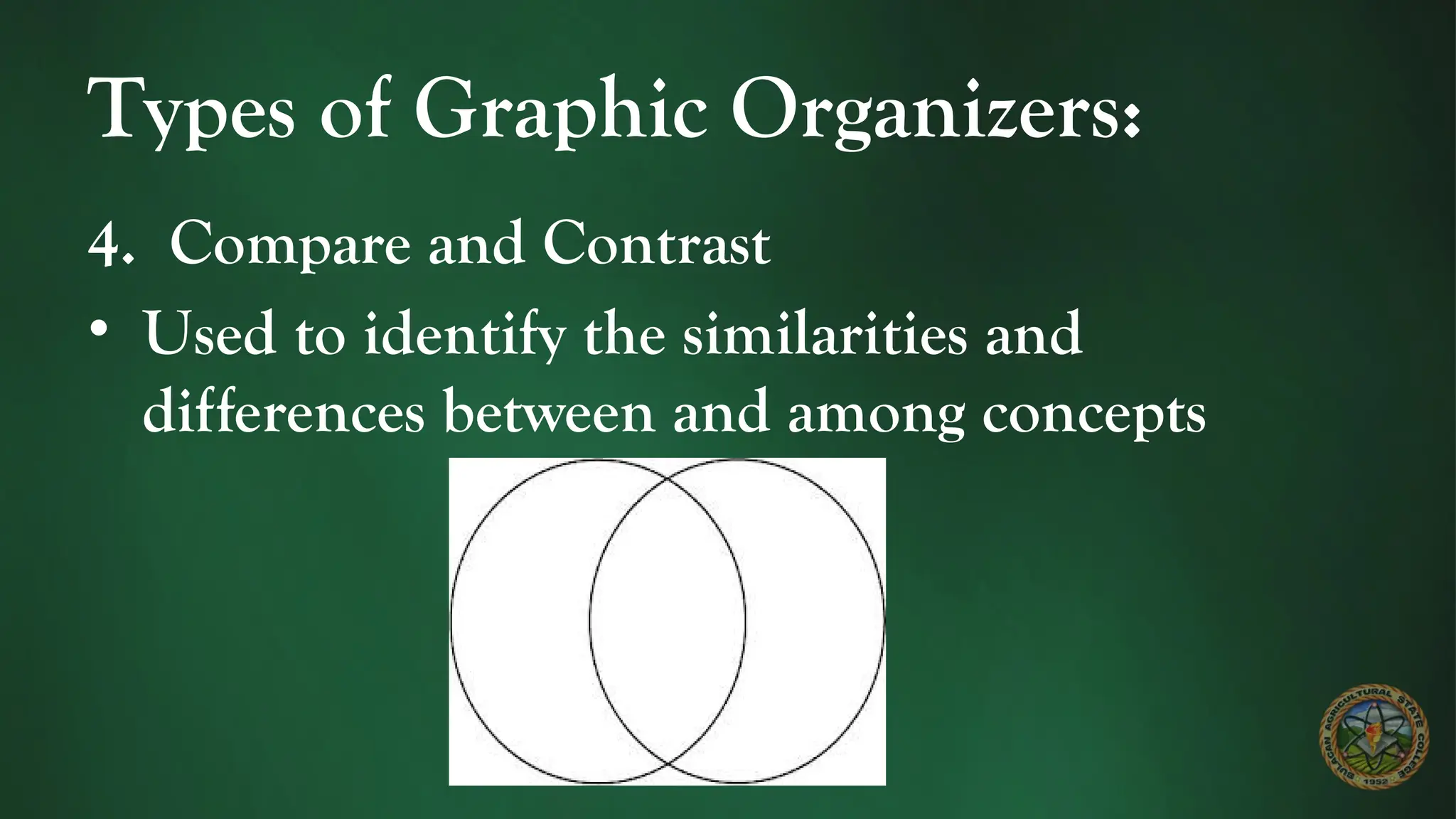
4. Compare and Contrast
• Used to identify the similarities and
differences between and among concepts
Types of Graphic Organizers:
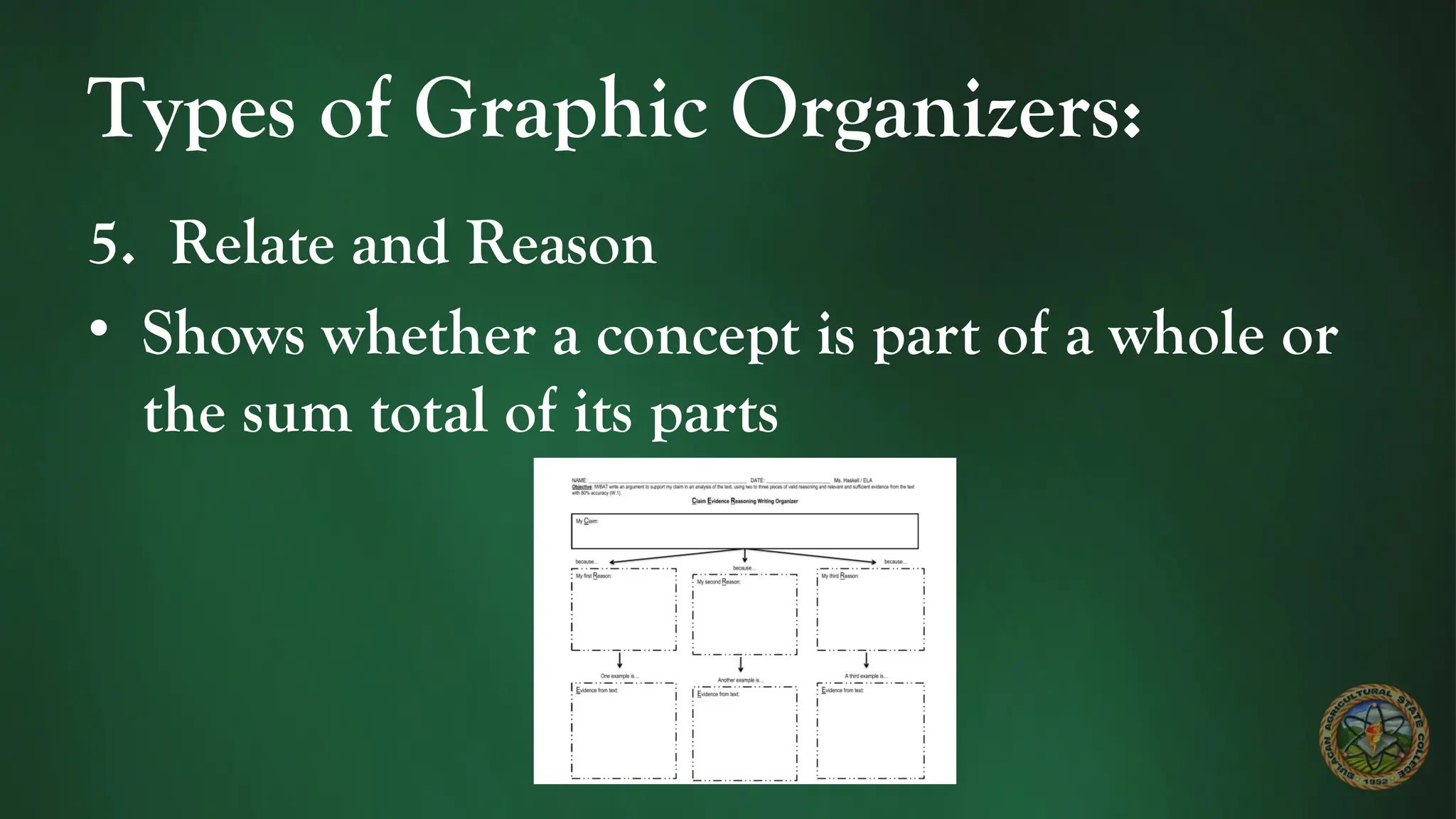
5. Relate and Reason
• Shows whether a concept is part of a whole or
the sum total of its parts
Types of Graphic Organizers:
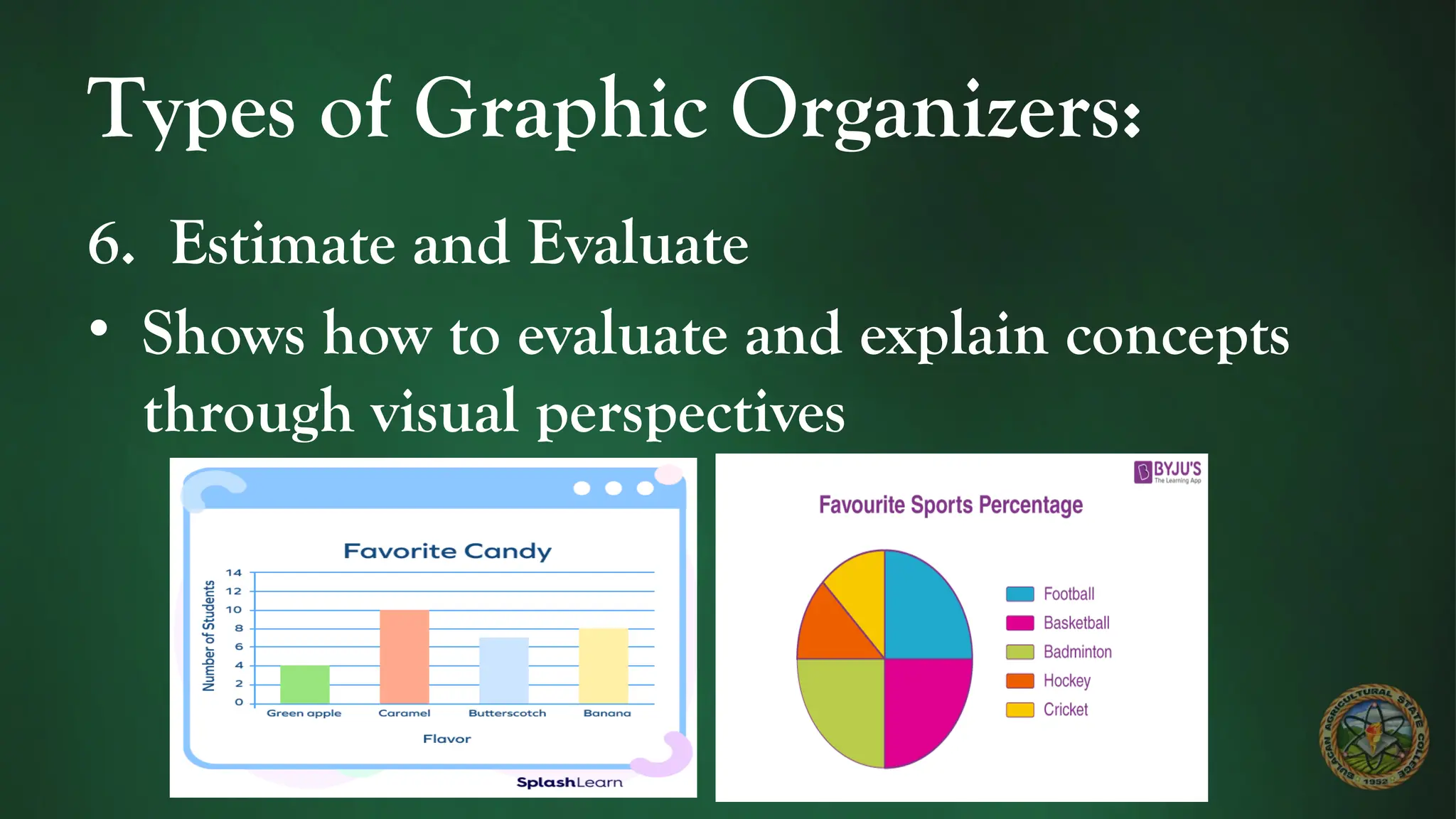
6. Estimate and Evaluate
• Shows how to evaluate and explain concepts
through visual perspectives
3. Inquiry-based Teaching Strategy
• Grounded on rational strategies
used to motivate learners to
generate responses through the
queries regarding issues
• It develops students’ metacognitive
skills through scaffolding,
reflection and generalization
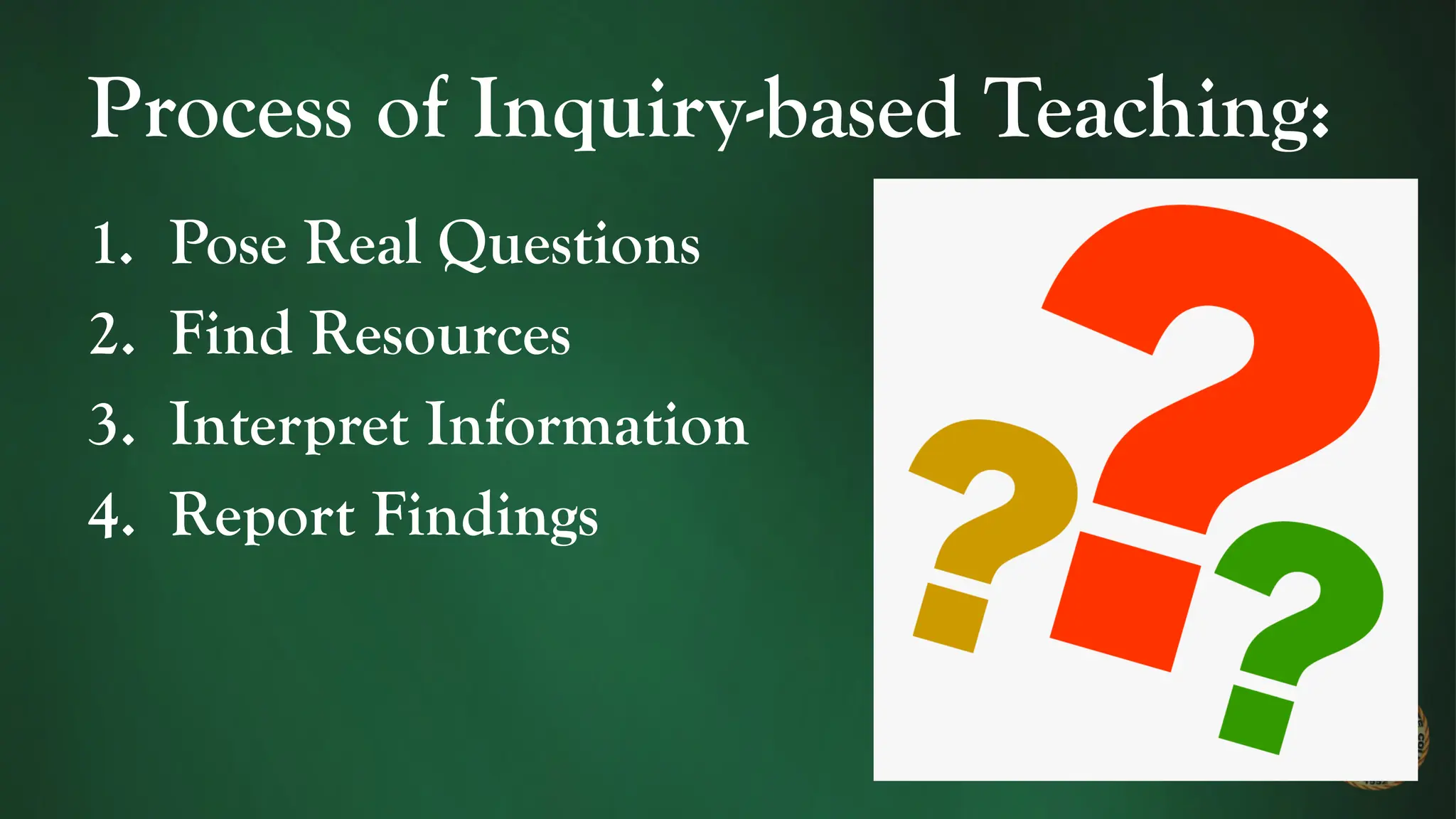
Process of Inquiry-based Teaching:
1. Pose Real Questions
2. Find Resources
3. Interpret Information
4. Report Findings
Questioning Techniques:
1. Might Question
• Question does not limit the
possible responses among
the learner but rather opens
up a range of possible
responses that allows
learners to reason out.
Example:
What might history
be? What might be
the answer to that
social issue?
Questioning Techniques:
2. What if Question
• Questions bring out
creativity, speculation,
and rationality among
the learners
Example:
What if there is an
earthquake; what
shall we do?
Questioning Techniques:
3. Different roles
Question
• Questions that allows
learners to have a
glimpse of possible roles
they might portray
Example:
If you’re a teacher
who expected to guide
your pupils, if there is
a naughty boy, will
you scold him?
Questioning Techniques:
4. Gadfly Question
• Several questions to
push learners to
answer questions
Example:
-What are the election
is all about?
-How important is it
for people to vote?
-What if people were
not allowed to vote?
Questioning Techniques:
5. Stingray Question
• Questions lead to
sudden change in the
course of questions
Example:
You said that love is
the answer; will love
change the situation
of the poor?
Questioning Techniques:
6. Midwife Question
• Questions are used to
elicit new ideas to the
learners
Example:
That is a very good
point. Can you
elaborate it further?
Questioning Techniques:
7. Ignoramus Question
• Teachers play dumb
for learners to elicit
responses
Example:
I don’t understand.
Can you further
explain it to me?
4. Case Study
• Structured, learner-centered strategy that
explores complex and value-laden issues
through problem-solving and decision
making
• Can be classified as: Live case studies,
Historical case studies, Economics case
studies, Social issues case studies or Student
developed case studies
Tips:
• Choose cases that are complex to provide a
challenge.
• Emphasize to students that the process is as
important as the product.
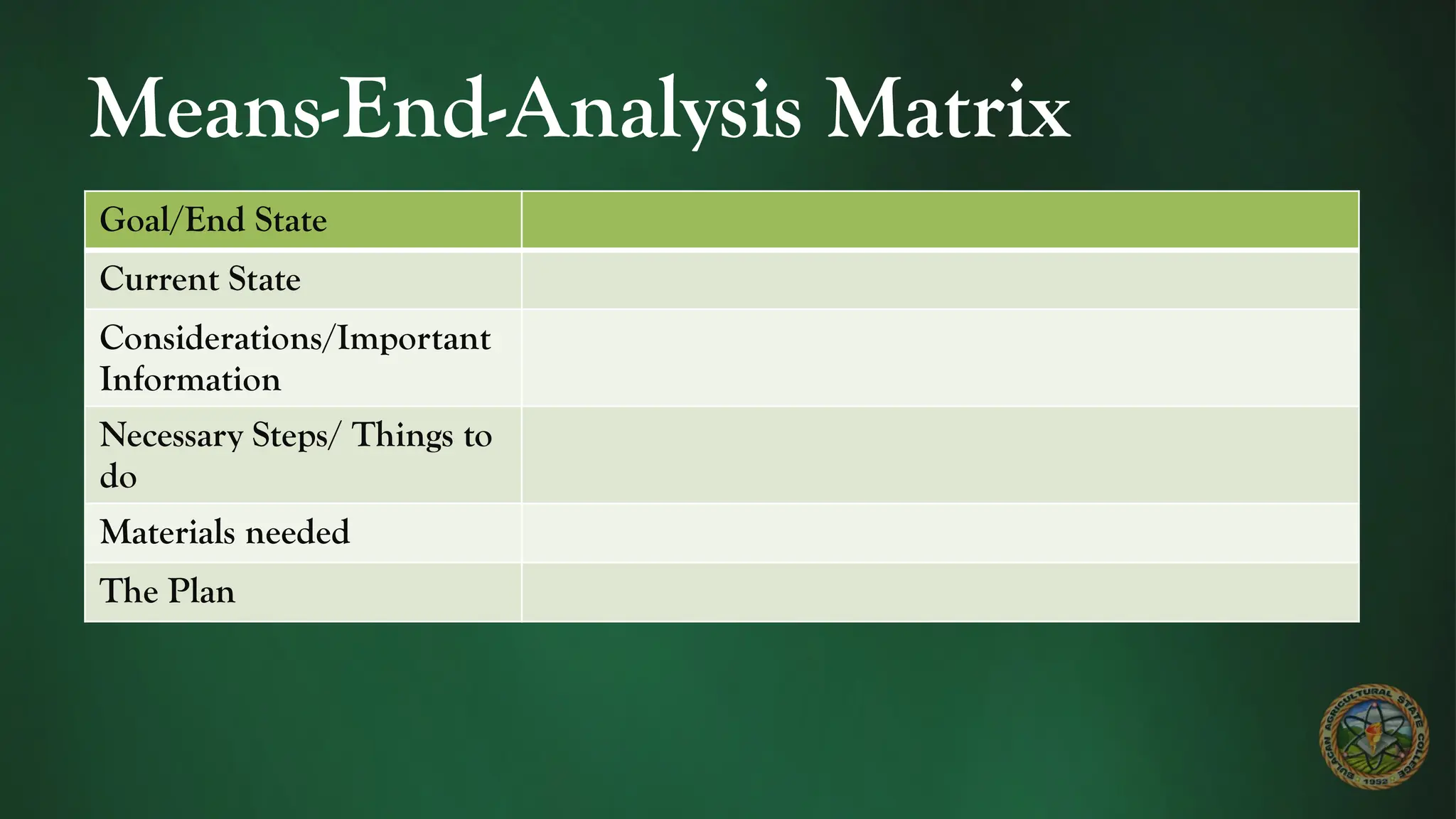
• Use Means-End-Analysis (MEA) to guide
students’ thinking process
Means-End-Analysis Matrix
Goal/End State
Current State
Considerations/Important
Information
Necessary Steps/ Things to
do
Materials needed
The Plan
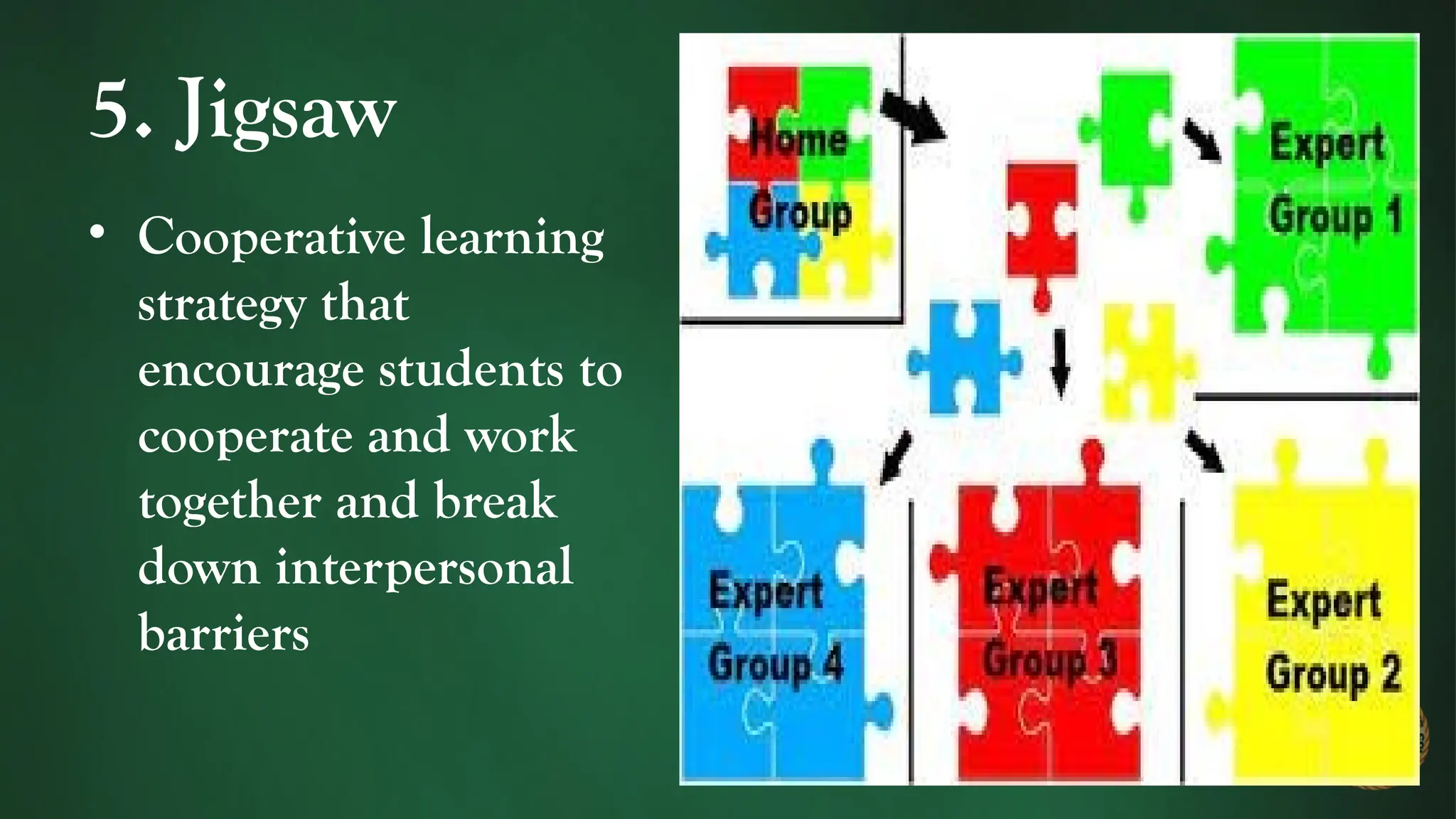
5. Jigsaw
• Cooperative learning
strategy that
encourage students to
cooperate and work
together and break
down interpersonal
barriers
Tips:
1. Emphasize that each member has a valuable
contribution to the group.
2. Ensure that the given materials are of equal
length and difficulty so that they can be mastered
by all students.
3. Allow sufficient time for interaction among
learners to ensue rich and deep discussions.
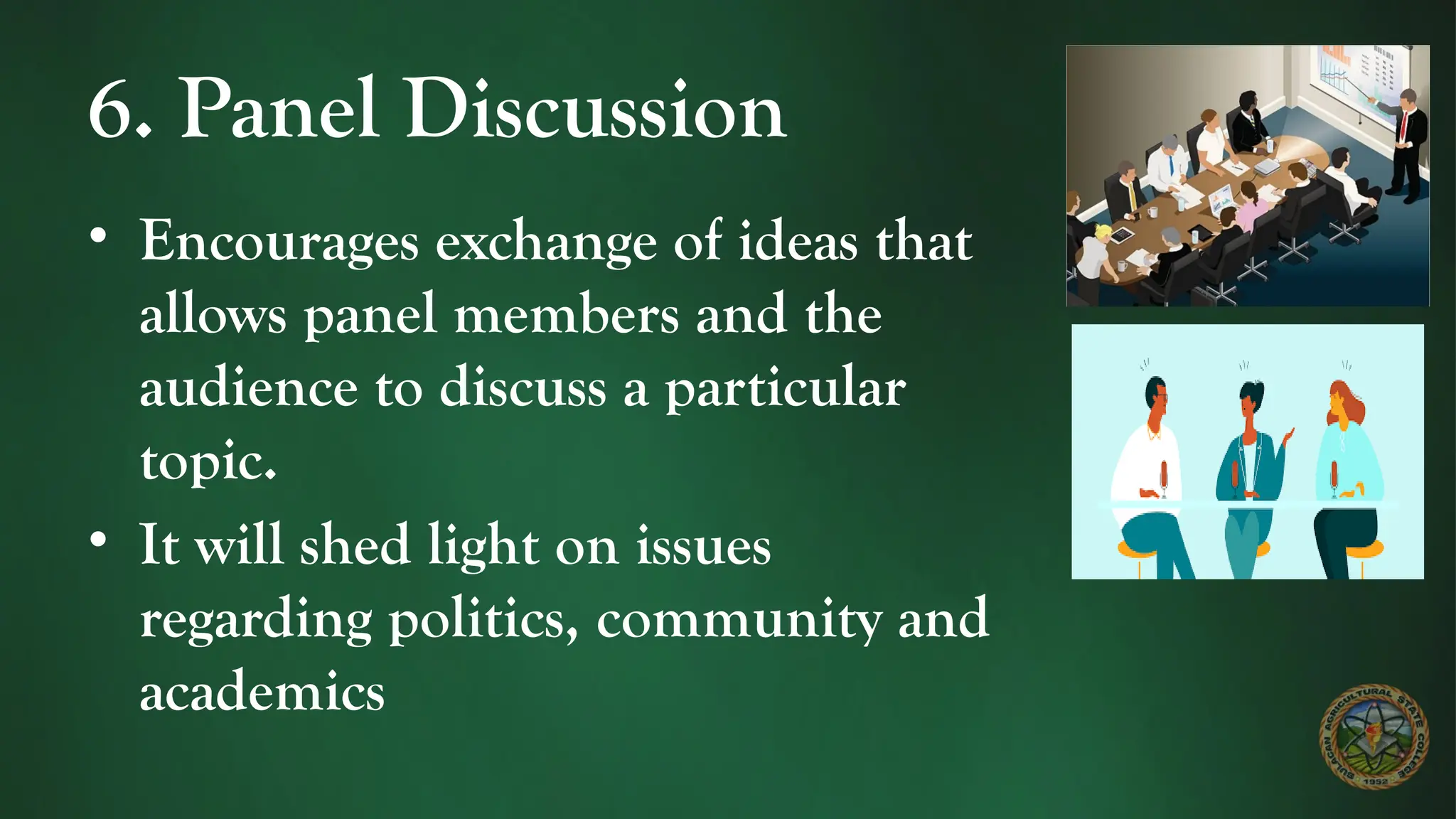
6. Panel Discussion
• Encourages exchange of ideas that
allows panel members and the
audience to discuss a particular
topic.
• It will shed light on issues
regarding politics, community and
academics
Tips:
• The teacher will act as the moderator.
• Group the learners depending on the number of
students.
• The moderator and panel members should create a
list of interview questions.
• The idea is to ask questions to bring out interesting
stories with spontaneity.
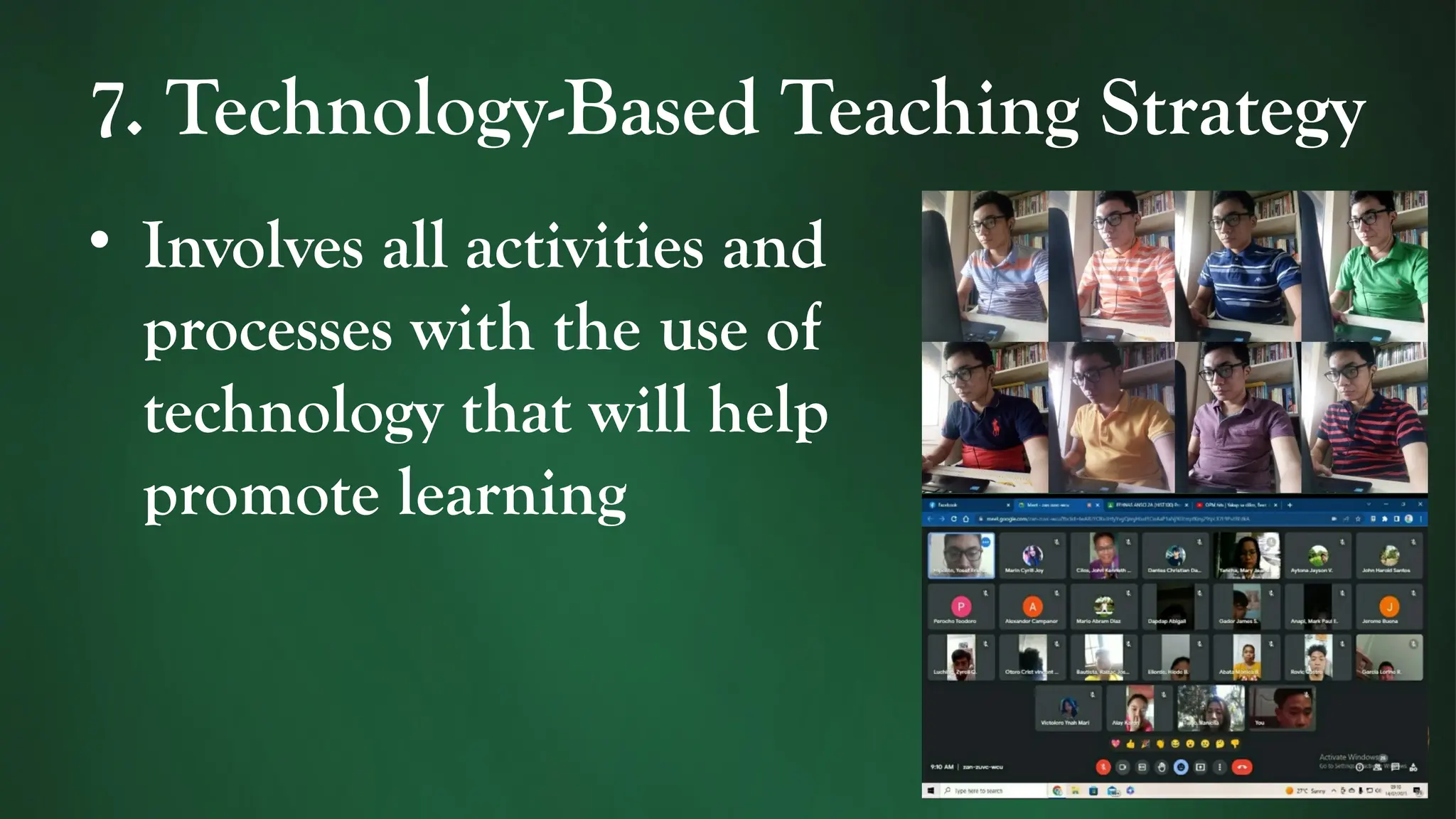
7. Technology-Based Teaching Strategy
• Involves all activities and
processes with the use of
technology that will help
promote learning
ADDIE Model (Stages of implementation)
1. Analysis
• goal-setting stage; targeting
learning competencies
2. Design
• goals, tools and performances
laid down
ADDIE Model (Stages of implementation)
3. Development
• production of various
methodologies
4. Implementation
• testing of methodology
ADDIE Model (Stages of implementation)
5. Evaluation
• assessing of processes and
outcomes of the methodology
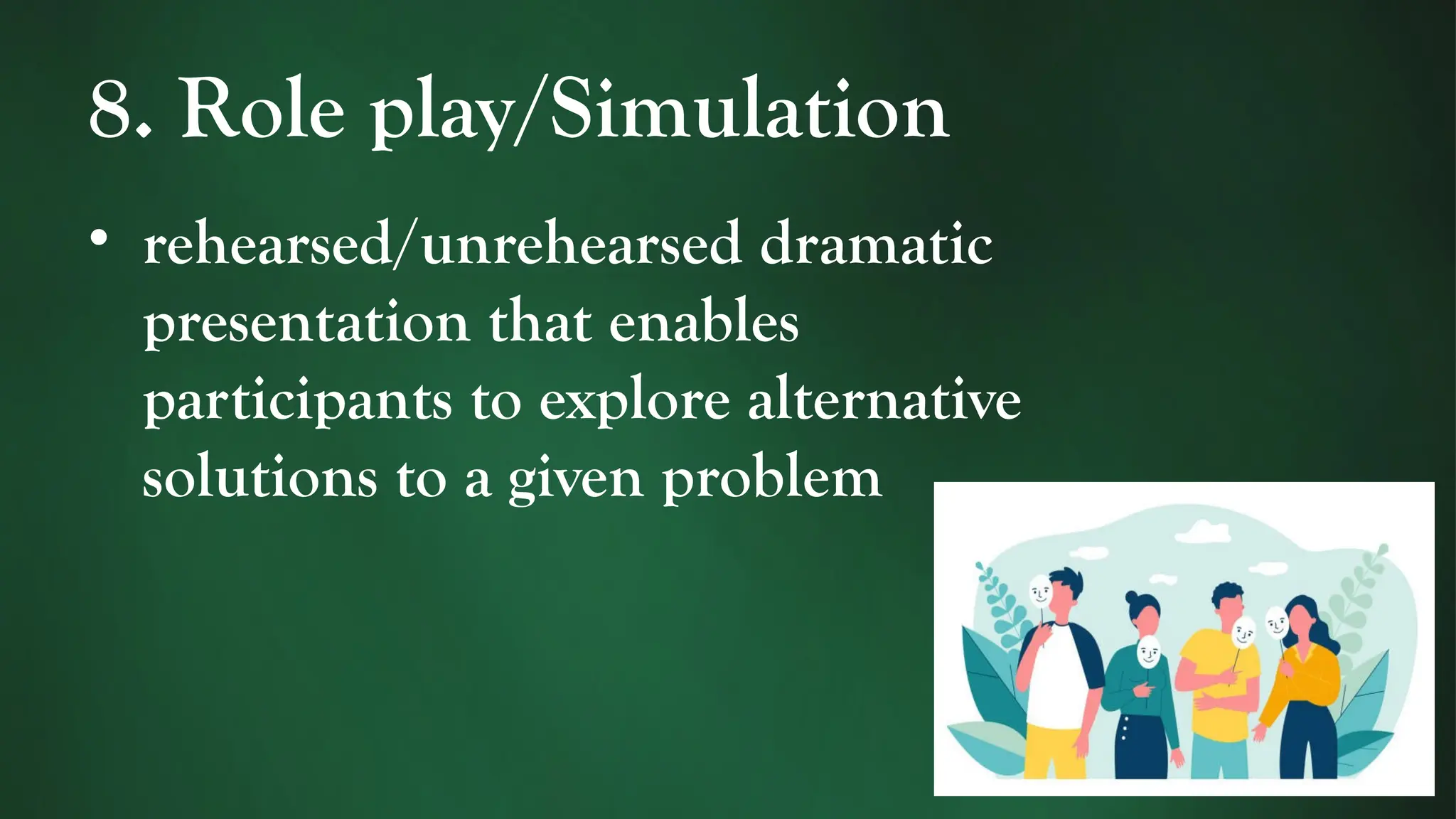
8. Role play/Simulation
• rehearsed/unrehearsed dramatic
presentation that enables
participants to explore alternative
solutions to a given problem
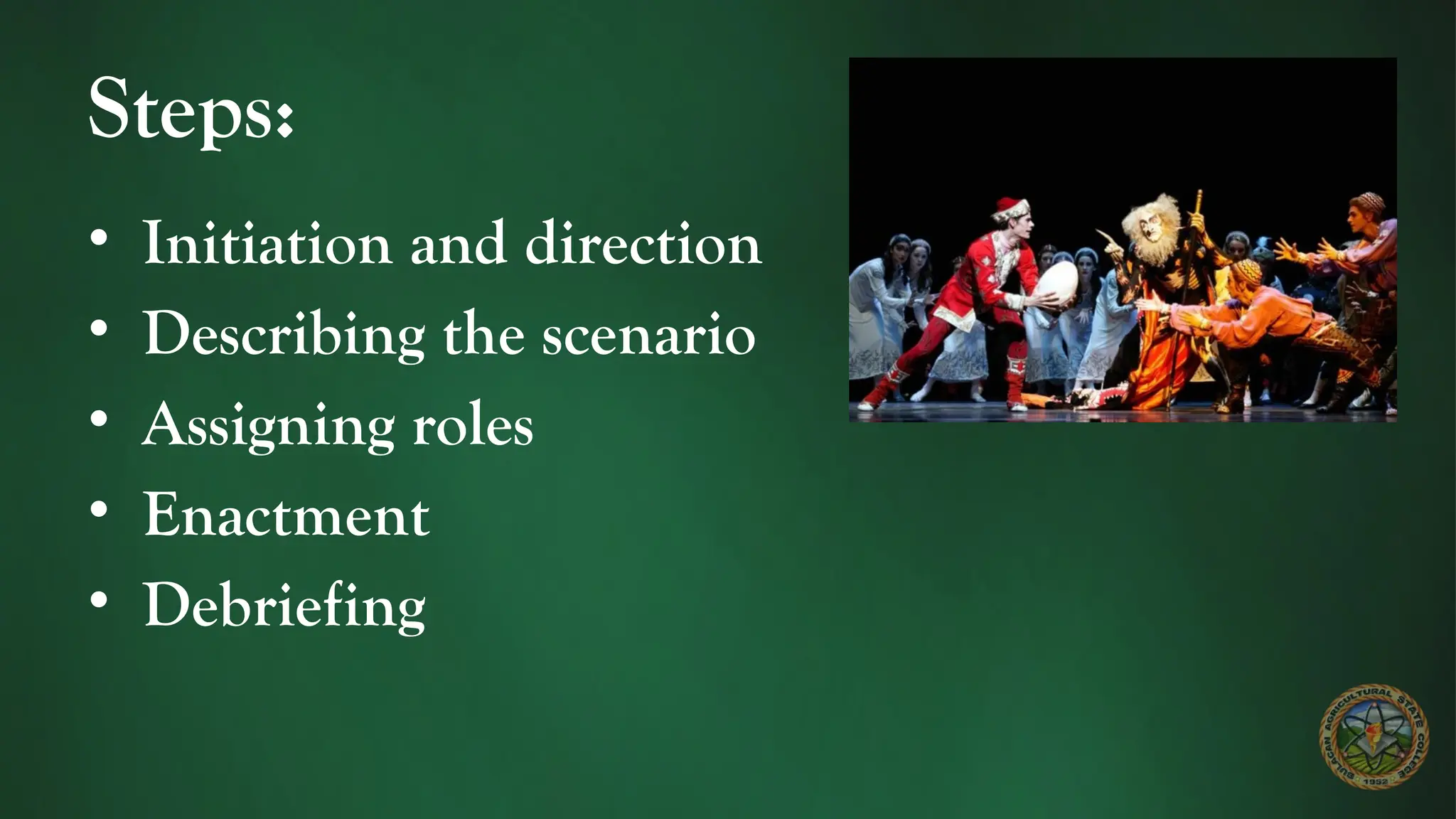
Steps:
• Initiation and direction
• Describing the scenario
• Assigning roles
• Enactment
• Debriefing
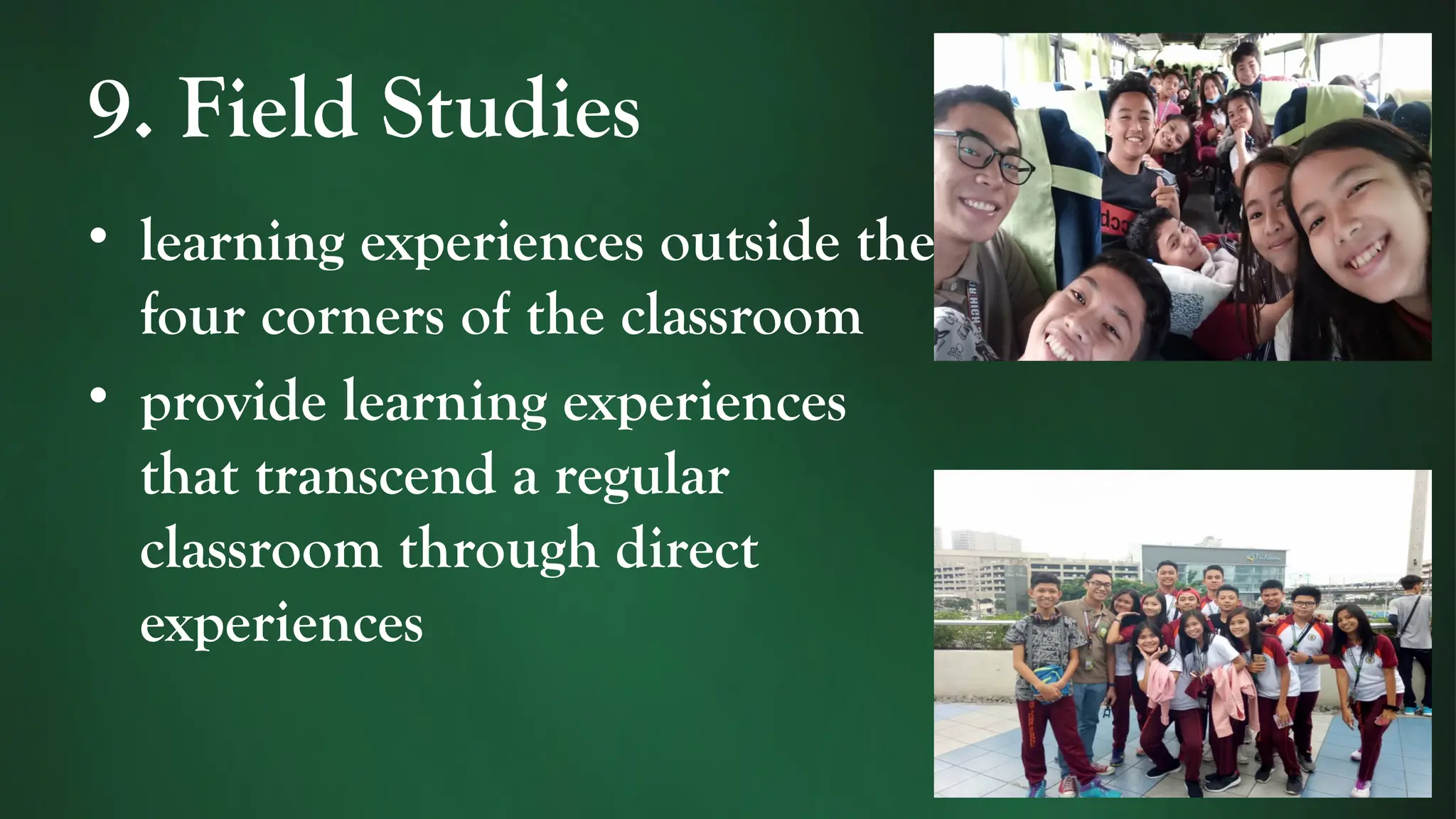
9. Field Studies
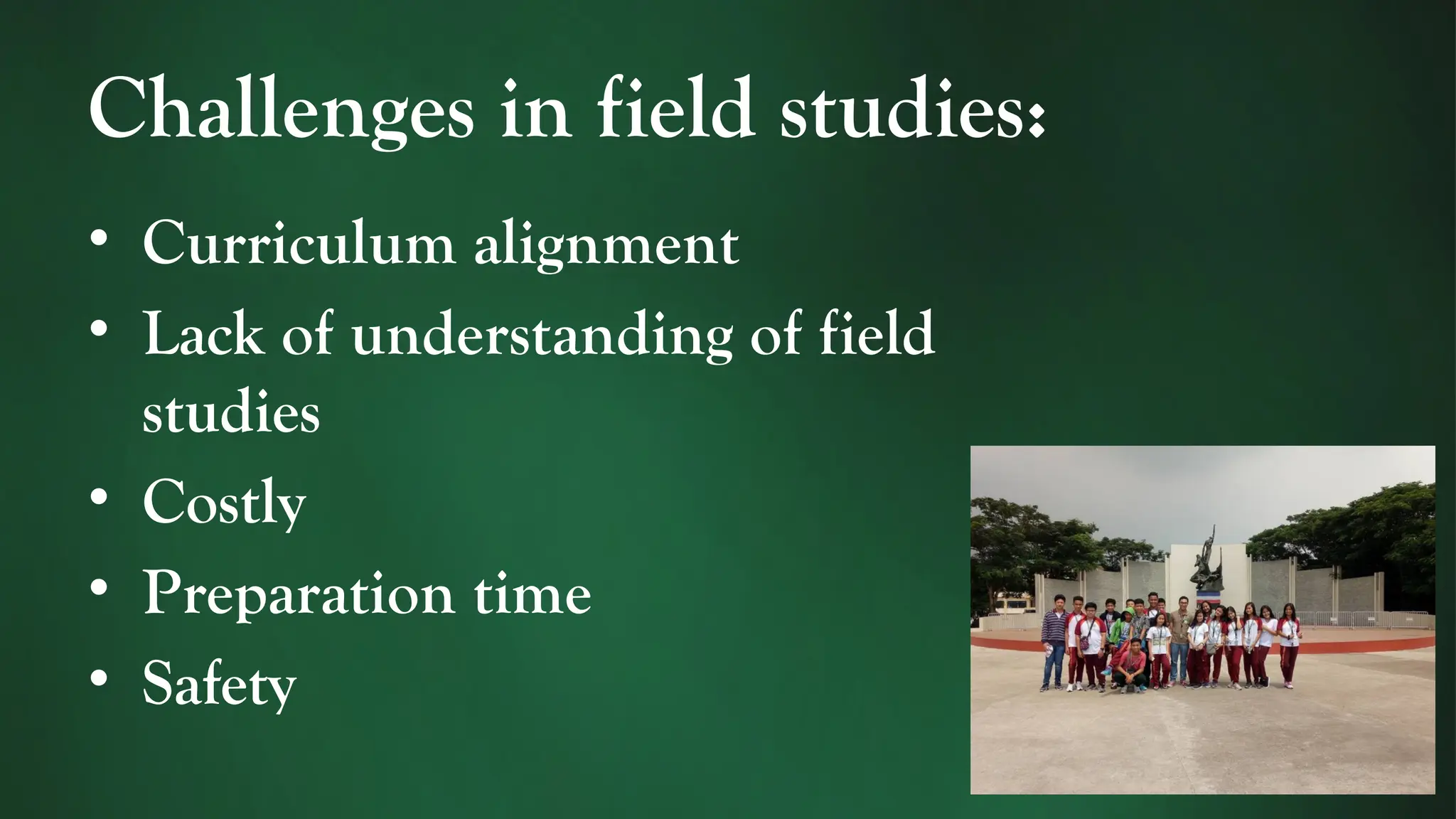
• learning experiences outside the
four corners of the classroom
• provide learning experiences
that transcend a regular
classroom through direct
experiences
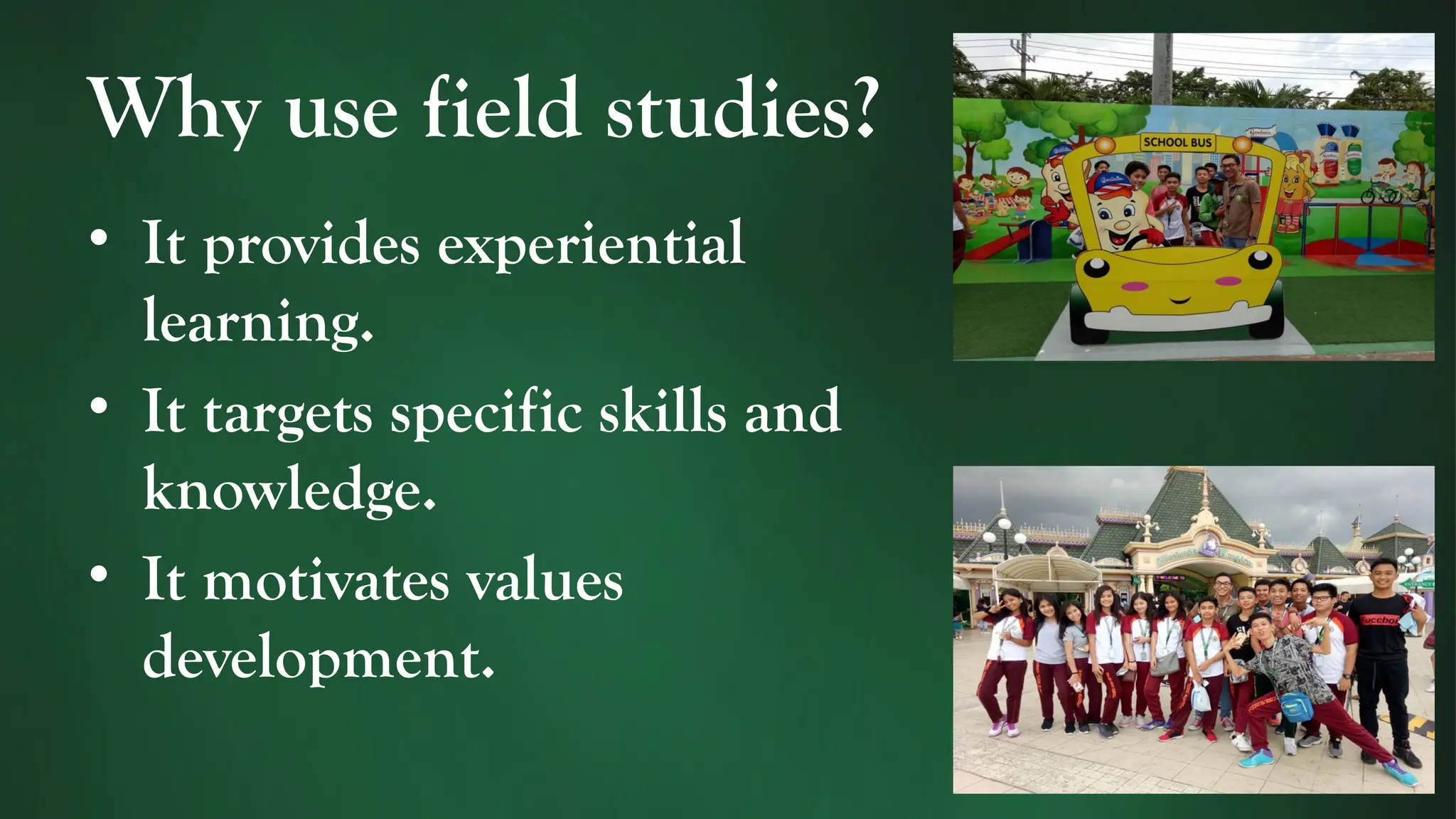
Why use field studies?
• It provides experiential
learning.
• It targets specific skills and
knowledge.
• It motivates values
development.
Challenges in field studies:
• Curriculum alignment
• Lack of understanding of field
studies
• Costly
• Preparation time
• Safety
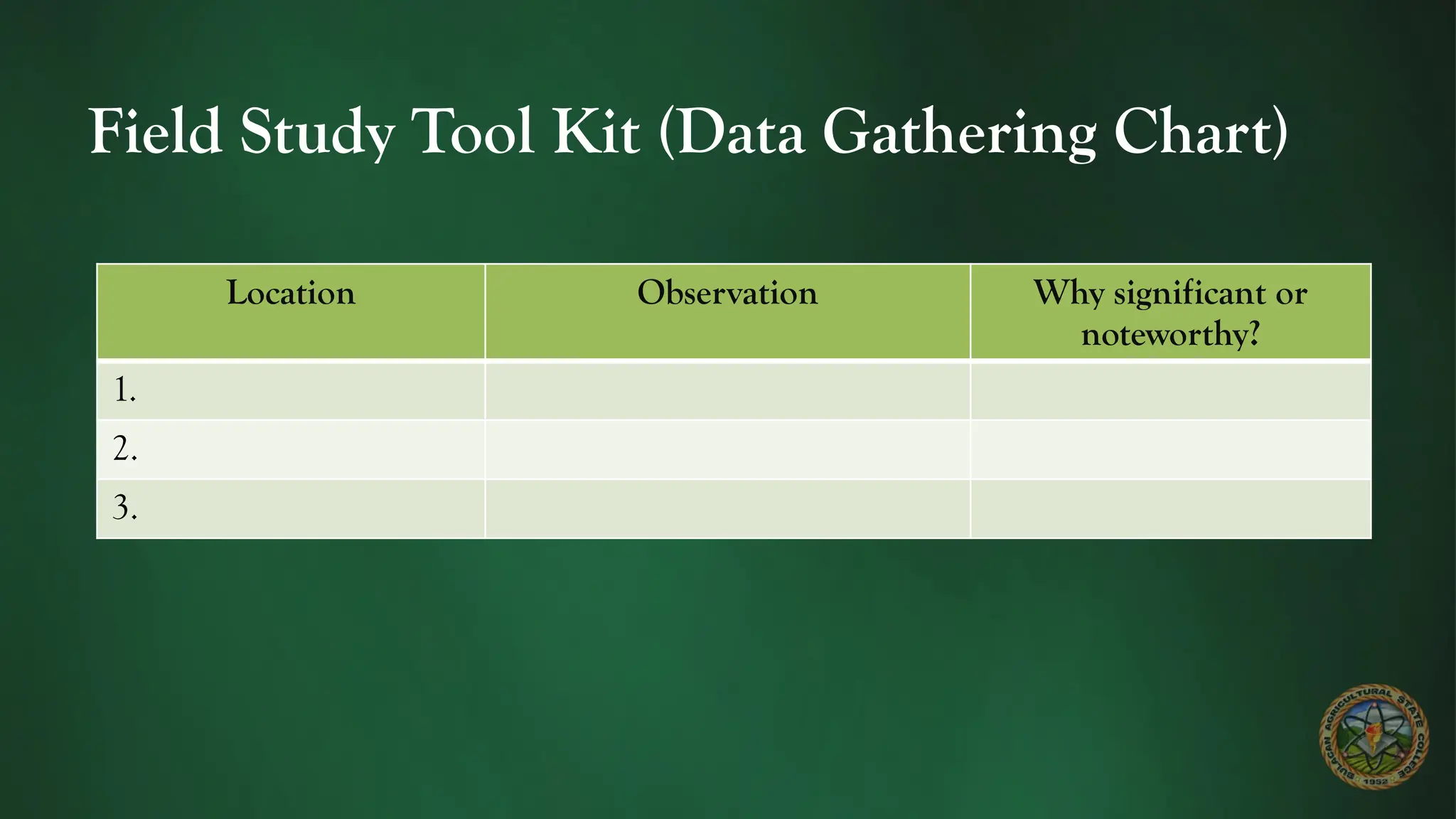
Field Study Tool Kit (Data Gathering Chart)
Location Observation Why significant or
noteworthy?
1.
2.
3.
Thank you!
Yosef Eric C. Hipolito, LPT, MAED, MED
Historian, Philippine Historical Association
yoseferichipolito19@gmail.com

Instructional strategies for Social Studies

  • 2.
    1. Lecture-Discussion • mostwidely-used instructional strategy across all grade levels and subject areas • direct instruction model which promotes interaction between teacher and students through explicit instruction combined with different questioning
  • 3.
    Steps: 1. Introduction 2. Presentationof the lesson 3. Comprehension monitoring 4. Integration and closure
  • 4.
    Tips: • Plan thelesson in detail and practice your presentation. • Be brief in the presentation of the lesson. • Use a questioning script to develop your questions. • Use numerous concrete examples, media, graphic organizers. • Pause occasionally after giving questions. • Use in moderation and integrated with other strategies.
  • 5.
    2. Using GraphicOrganizers • provide visual representation in developing and summarizing students’ learning components • enables learners to see information in a pattern that uses labels • presenting information in precise ways, highlighting relationships and organization of concepts
  • 6.
    Types of GraphicOrganizers: 1. Assume and Anticipate • formative assessment where teachers evaluate the schema of the learners on a certain topic What I KNOW What I want to KNOW What I LEARNED 1. 1. 1. 2. 2. 2.
  • 7.
    Types of GraphicOrganizers: 2. Position and Pattern • helps teachers and students to see the relationship of concepts with other
  • 8.
    Types of GraphicOrganizers: 3. Group and Organize • helps teachers and students understand several ideas related to a single category
  • 9.
    Types of GraphicOrganizers: 4. Compare and Contrast • Used to identify the similarities and differences between and among concepts
  • 10.
    Types of GraphicOrganizers: 5. Relate and Reason • Shows whether a concept is part of a whole or the sum total of its parts
  • 11.
    Types of GraphicOrganizers: 6. Estimate and Evaluate • Shows how to evaluate and explain concepts through visual perspectives
  • 12.
    3. Inquiry-based TeachingStrategy • Grounded on rational strategies used to motivate learners to generate responses through the queries regarding issues • It develops students’ metacognitive skills through scaffolding, reflection and generalization
  • 13.
    Process of Inquiry-basedTeaching: 1. Pose Real Questions 2. Find Resources 3. Interpret Information 4. Report Findings
  • 14.
    Questioning Techniques: 1. MightQuestion • Question does not limit the possible responses among the learner but rather opens up a range of possible responses that allows learners to reason out. Example: What might history be? What might be the answer to that social issue?
  • 15.
    Questioning Techniques: 2. Whatif Question • Questions bring out creativity, speculation, and rationality among the learners Example: What if there is an earthquake; what shall we do?
  • 16.
    Questioning Techniques: 3. Differentroles Question • Questions that allows learners to have a glimpse of possible roles they might portray Example: If you’re a teacher who expected to guide your pupils, if there is a naughty boy, will you scold him?
  • 17.
    Questioning Techniques: 4. GadflyQuestion • Several questions to push learners to answer questions Example: -What are the election is all about? -How important is it for people to vote? -What if people were not allowed to vote?
  • 18.
    Questioning Techniques: 5. StingrayQuestion • Questions lead to sudden change in the course of questions Example: You said that love is the answer; will love change the situation of the poor?
  • 19.
    Questioning Techniques: 6. MidwifeQuestion • Questions are used to elicit new ideas to the learners Example: That is a very good point. Can you elaborate it further?
  • 20.
    Questioning Techniques: 7. IgnoramusQuestion • Teachers play dumb for learners to elicit responses Example: I don’t understand. Can you further explain it to me?
  • 21.
    4. Case Study •Structured, learner-centered strategy that explores complex and value-laden issues through problem-solving and decision making • Can be classified as: Live case studies, Historical case studies, Economics case studies, Social issues case studies or Student developed case studies
  • 22.
    Tips: • Choose casesthat are complex to provide a challenge. • Emphasize to students that the process is as important as the product. • Use Means-End-Analysis (MEA) to guide students’ thinking process
  • 23.
    Means-End-Analysis Matrix Goal/End State CurrentState Considerations/Important Information Necessary Steps/ Things to do Materials needed The Plan
  • 24.
    5. Jigsaw • Cooperativelearning strategy that encourage students to cooperate and work together and break down interpersonal barriers
  • 25.
    Tips: 1. Emphasize thateach member has a valuable contribution to the group. 2. Ensure that the given materials are of equal length and difficulty so that they can be mastered by all students. 3. Allow sufficient time for interaction among learners to ensue rich and deep discussions.
  • 26.
    6. Panel Discussion •Encourages exchange of ideas that allows panel members and the audience to discuss a particular topic. • It will shed light on issues regarding politics, community and academics
  • 27.
    Tips: • The teacherwill act as the moderator. • Group the learners depending on the number of students. • The moderator and panel members should create a list of interview questions. • The idea is to ask questions to bring out interesting stories with spontaneity.
  • 28.
    7. Technology-Based TeachingStrategy • Involves all activities and processes with the use of technology that will help promote learning
  • 30.
    ADDIE Model (Stagesof implementation) 1. Analysis • goal-setting stage; targeting learning competencies 2. Design • goals, tools and performances laid down
  • 31.
    ADDIE Model (Stagesof implementation) 3. Development • production of various methodologies 4. Implementation • testing of methodology
  • 32.
    ADDIE Model (Stagesof implementation) 5. Evaluation • assessing of processes and outcomes of the methodology
  • 34.
    8. Role play/Simulation •rehearsed/unrehearsed dramatic presentation that enables participants to explore alternative solutions to a given problem
  • 35.
    Steps: • Initiation anddirection • Describing the scenario • Assigning roles • Enactment • Debriefing
  • 36.
    9. Field Studies •learning experiences outside the four corners of the classroom • provide learning experiences that transcend a regular classroom through direct experiences
  • 37.
    Why use fieldstudies? • It provides experiential learning. • It targets specific skills and knowledge. • It motivates values development.
  • 38.
    Challenges in fieldstudies: • Curriculum alignment • Lack of understanding of field studies • Costly • Preparation time • Safety
  • 39.
    Field Study ToolKit (Data Gathering Chart) Location Observation Why significant or noteworthy? 1. 2. 3.
  • 40.
    Thank you! Yosef EricC. Hipolito, LPT, MAED, MED Historian, Philippine Historical Association yoseferichipolito19@gmail.com

Editor's Notes

  • #11 ACTIVITY A: Choose a lesson from AP Grade 5-6 and create a Brief Lesson plan with five major parts (Objective, Subject Matter, Procedure, Evaluation & Assignment) ACTIVITY B: Create a graphic organizer for each concept/topic: Regions of the Philippines, Branches of the Government and Presidents of the Philippines
  • #20 ASSIGNMENT: Give two examples of each type of Questioning.
  • #40 ACTIVITY/TASK: Role play of the instructional strategies (Jigsaw, Panel discussion, Technology-based, Field studies and Inquiry-based)