Inquiry Learning Saint Patrick’s School
http://saintpatricksinquiry.wikspaces.com
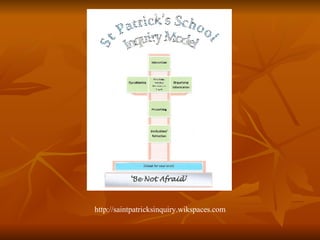
What is Inquiry? Inquiry learning is the process through which learners become interested in an issue or problem, ask themselves questions about it, access relevant information, organise the results, draw conclusions and then present them in some way for others to comment on. At Saint Patrick’s this process involves three strands:-
1. Inquiry Immersion – generating interest in an issue or problem Questioning – setting up the questions for study Accessing information to answer the questions – what is relevant to the study  -  becoming an expert Organising the information – to help raise the level of thinking about the issue/problem Drawing conclusions - about the issue/problem - creating a solution  Presenting the results for comment Evaluating the process
2. Thinking skills At St. Patrick’s School we tend to use  Edward de Bono’s thinking hats in Team 1 Bloom’s Taxonomy of thinking skills in Team 2
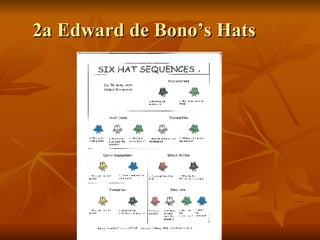
2a Edward de Bono’s Hats
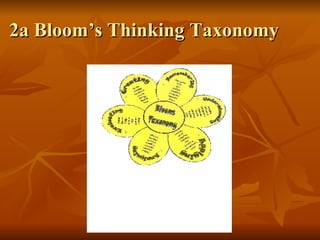
2a Bloom’s Thinking Taxonomy
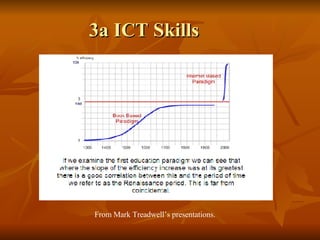
3a ICT Skills From Mark Treadwell’s presentations.
3b ICT Skills This means that our children need to become well versed in computer skills to enable them to make the best use of the Internet to access the information that they need for their learning now and in the future!
3c ICT Skills The New Zealand Ministry of Education have stated that the aim of education in our schools should be: “ - to improve learner achievement in an innovative education sector, fully connected and supported by the smart use of ICT”
3d ICT Skills As well as government commitment to this objective it has implications for schools in that they need to make sure that their children are provided with the opportunities to become “smart users of ICT”.  We do not want to become little islands of obsolescence!
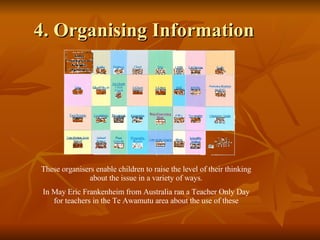
4. Organising Information These organisers enable children to raise the level of their thinking about the issue in a variety of ways. In May Eric Frankenheim from Australia ran a Teacher Only Day for teachers in the Te Awamutu area about the use of these
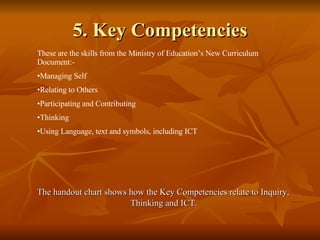
5. Key Competencies The handout chart shows how the Key Competencies relate to Inquiry, Thinking and ICT. These are the skills from the Ministry of Education’s New Curriculum Document:- Managing Self Relating to Others Participating and Contributing Thinking Using Language, text and symbols, including ICT
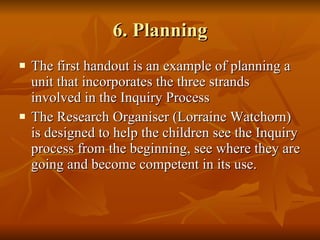
6. Planning The first handout is an example of planning a unit that incorporates the three strands involved in the Inquiry Process The Research Organiser (Lorraine Watchorn) is designed to help the children see the Inquiry process from the beginning, see where they are going and become competent in its use.

Inquiry Learning At St. Pats

  • 1.
    Inquiry Learning SaintPatrick’s School
  • 2.
  • 3.
    What is Inquiry?Inquiry learning is the process through which learners become interested in an issue or problem, ask themselves questions about it, access relevant information, organise the results, draw conclusions and then present them in some way for others to comment on. At Saint Patrick’s this process involves three strands:-
  • 4.
    1. Inquiry Immersion– generating interest in an issue or problem Questioning – setting up the questions for study Accessing information to answer the questions – what is relevant to the study - becoming an expert Organising the information – to help raise the level of thinking about the issue/problem Drawing conclusions - about the issue/problem - creating a solution Presenting the results for comment Evaluating the process
  • 5.
    2. Thinking skillsAt St. Patrick’s School we tend to use Edward de Bono’s thinking hats in Team 1 Bloom’s Taxonomy of thinking skills in Team 2
  • 6.
    2a Edward deBono’s Hats
  • 7.
  • 8.
    3a ICT SkillsFrom Mark Treadwell’s presentations.
  • 9.
    3b ICT SkillsThis means that our children need to become well versed in computer skills to enable them to make the best use of the Internet to access the information that they need for their learning now and in the future!
  • 10.
    3c ICT SkillsThe New Zealand Ministry of Education have stated that the aim of education in our schools should be: “ - to improve learner achievement in an innovative education sector, fully connected and supported by the smart use of ICT”
  • 11.
    3d ICT SkillsAs well as government commitment to this objective it has implications for schools in that they need to make sure that their children are provided with the opportunities to become “smart users of ICT”. We do not want to become little islands of obsolescence!
  • 12.
    4. Organising InformationThese organisers enable children to raise the level of their thinking about the issue in a variety of ways. In May Eric Frankenheim from Australia ran a Teacher Only Day for teachers in the Te Awamutu area about the use of these
  • 13.
    5. Key CompetenciesThe handout chart shows how the Key Competencies relate to Inquiry, Thinking and ICT. These are the skills from the Ministry of Education’s New Curriculum Document:- Managing Self Relating to Others Participating and Contributing Thinking Using Language, text and symbols, including ICT
  • 14.
    6. Planning Thefirst handout is an example of planning a unit that incorporates the three strands involved in the Inquiry Process The Research Organiser (Lorraine Watchorn) is designed to help the children see the Inquiry process from the beginning, see where they are going and become competent in its use.