Communication Workshop
Semira Rahemtulla
April 26, 2016
Who am I?
Most recently…
• Co-founder/CEO of PlayTell
Previously…
• Director, Product Mgmt @ Guidewire
(IPO 2010, $2.5B+ market cap)
• UX Designer @ Vividence
(Acq by Keynote)
• Harvard Ed.M; Stanford Computer
Science
Semira Rahemtulla
Cofounder of InnerSpace
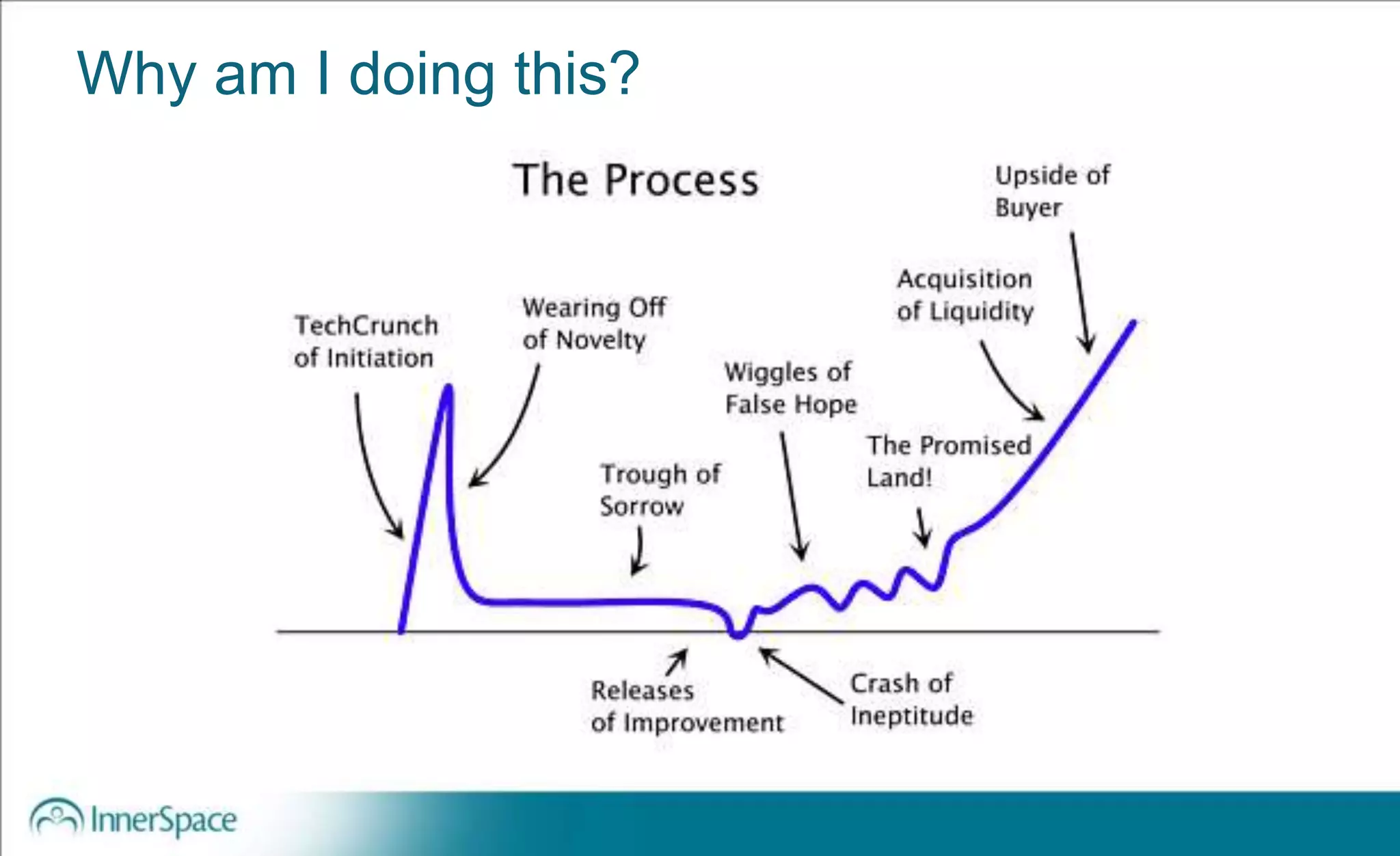
Why am I doing this?
One Big Idea
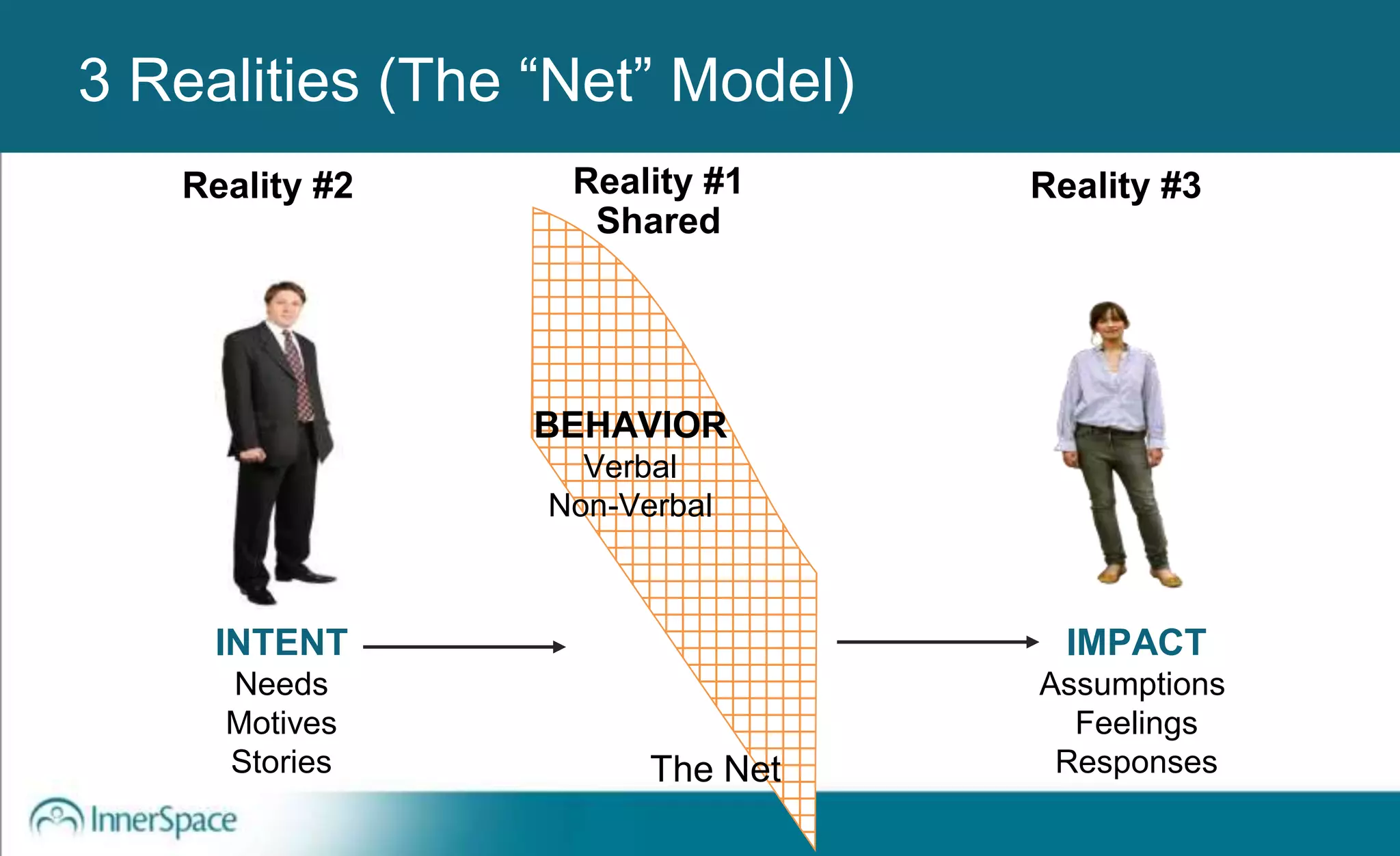
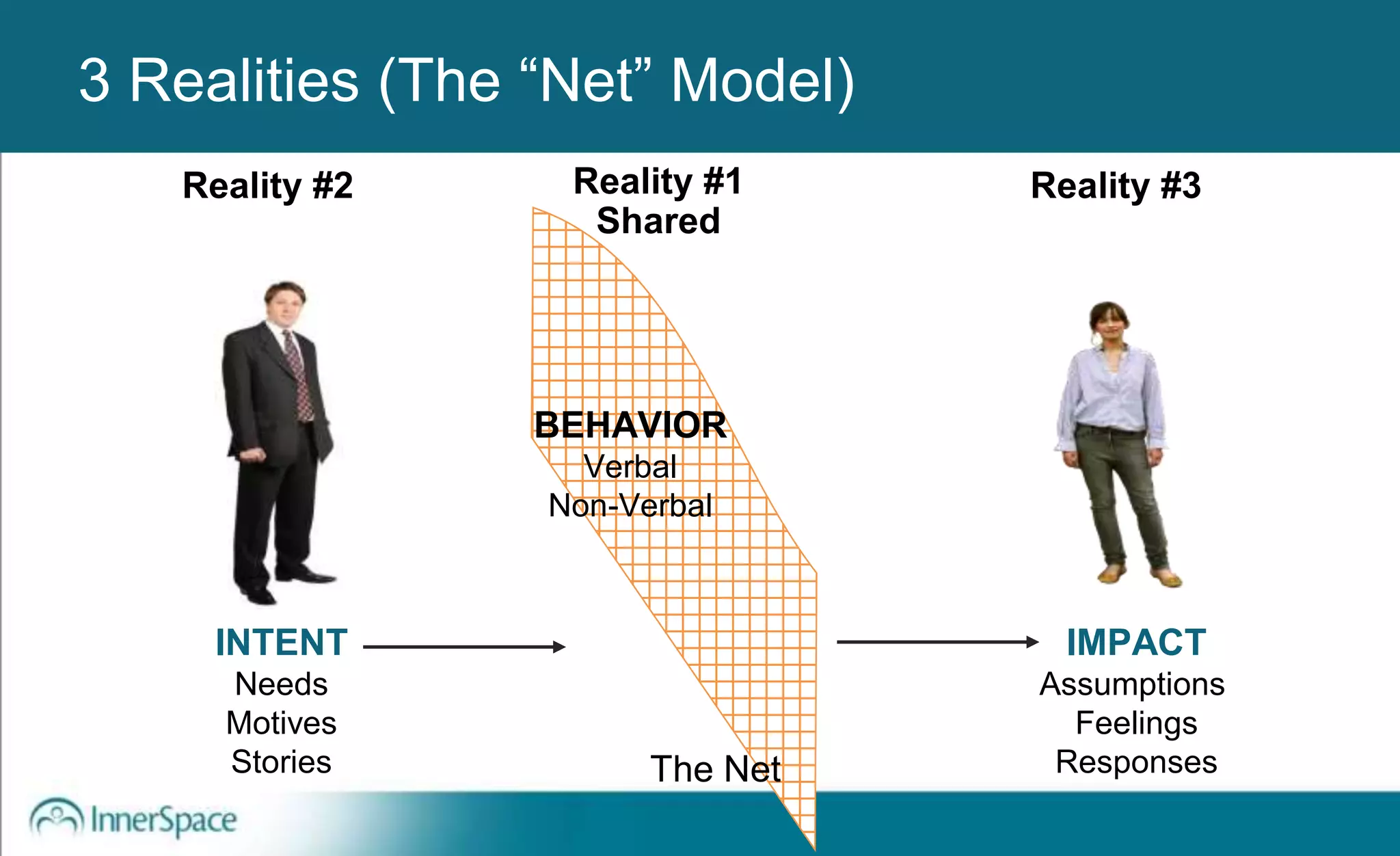
INTENT
Needs
Motives
Stories
Reality #2
IMPACT
Assumptions
Feelings
Responses
Reality #3
3 Realities (The “Net” Model)
The Net
BEHAVIOR
Verbal
Non-Verbal
Reality #1
Shared
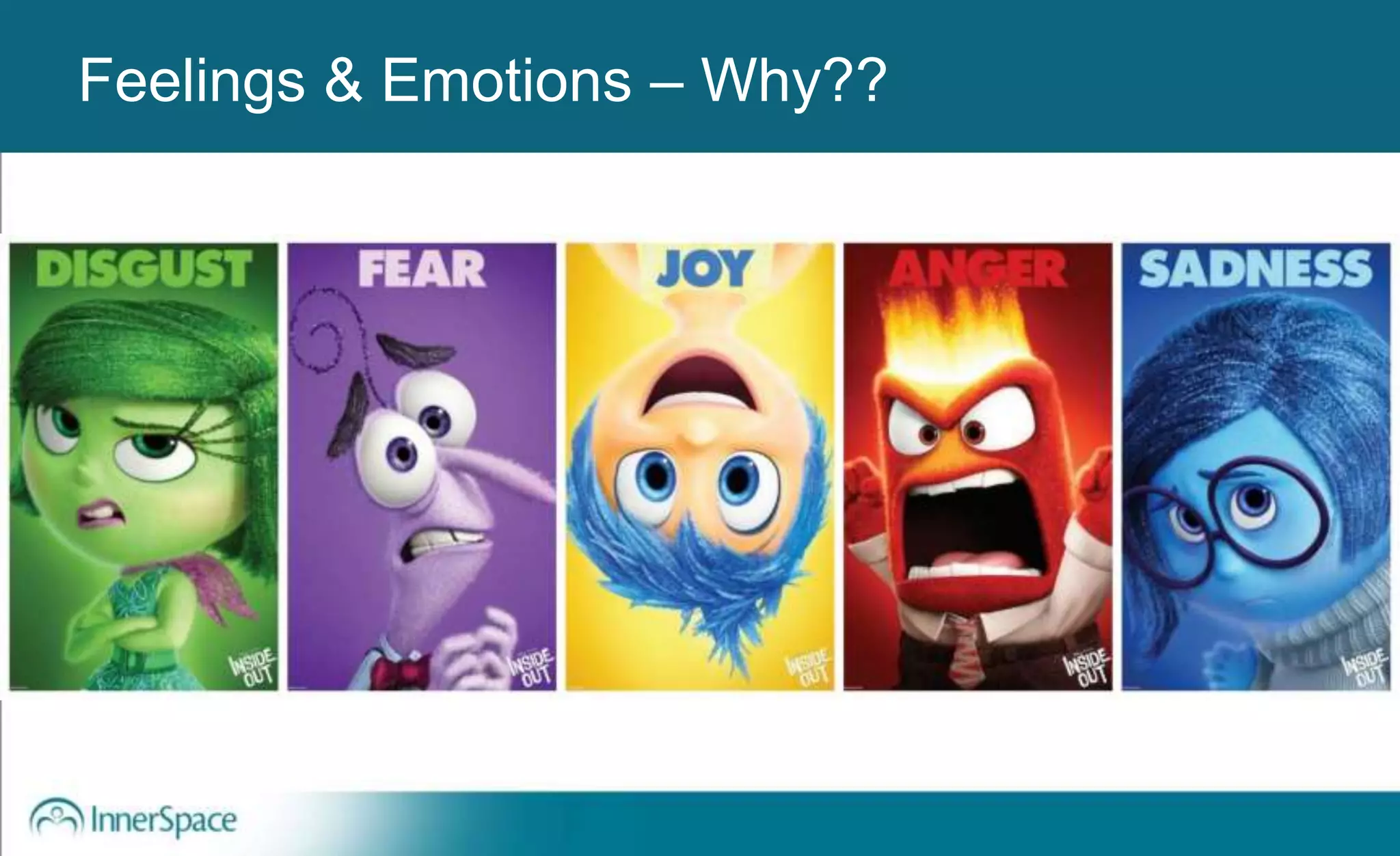
Feelings & Emotions – Why??Feelings & Emotions – Why??
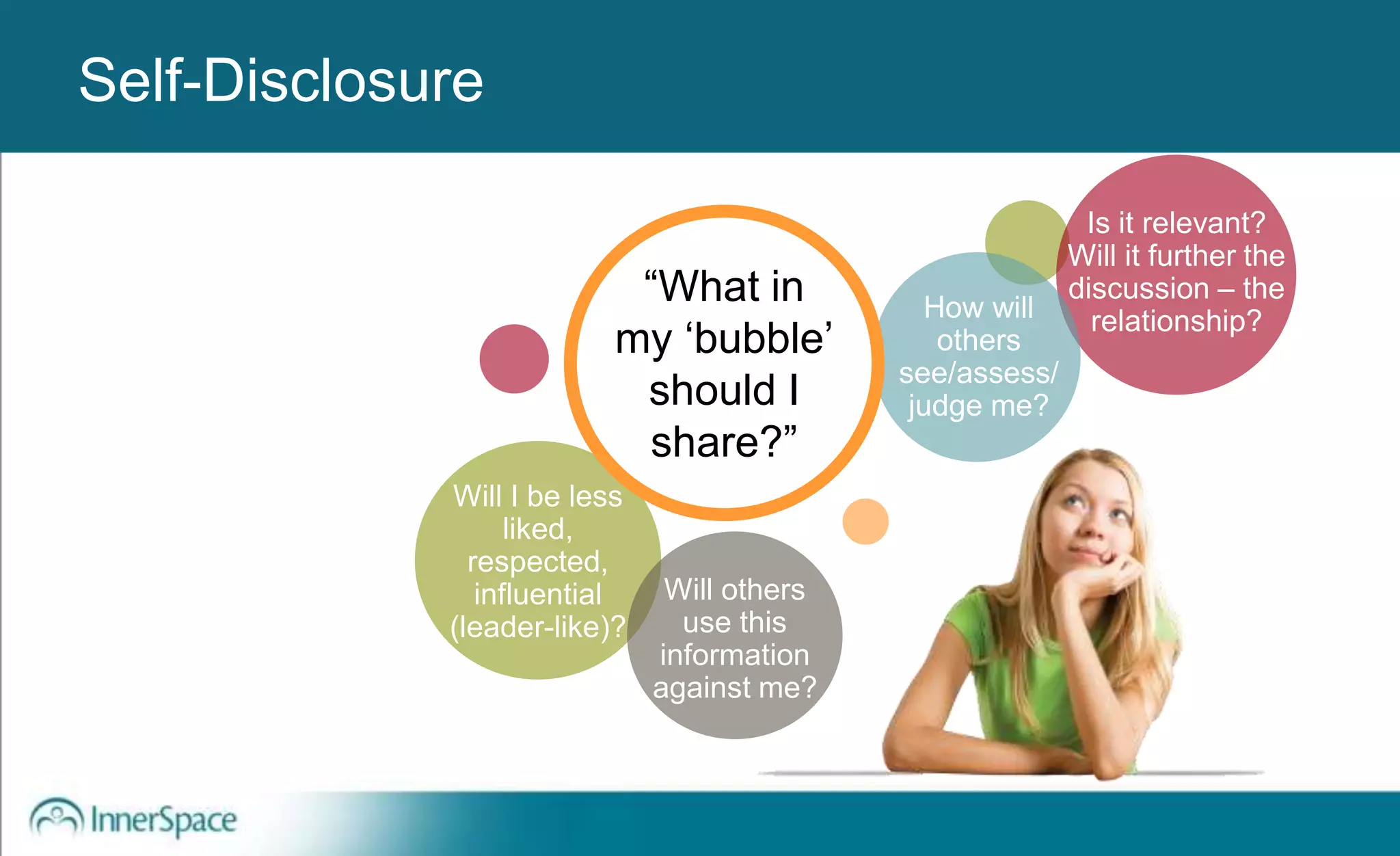
Self-Disclosure
Will I be less
liked,
respected,
influential
(leader-like)?
Is it relevant?
Will it further the
discussion – the
relationship?
Will others
use this
information
against me?
How will
others
see/assess/
judge me?
“What in
my ‘bubble’
should I
share?”
Self-Disclosure
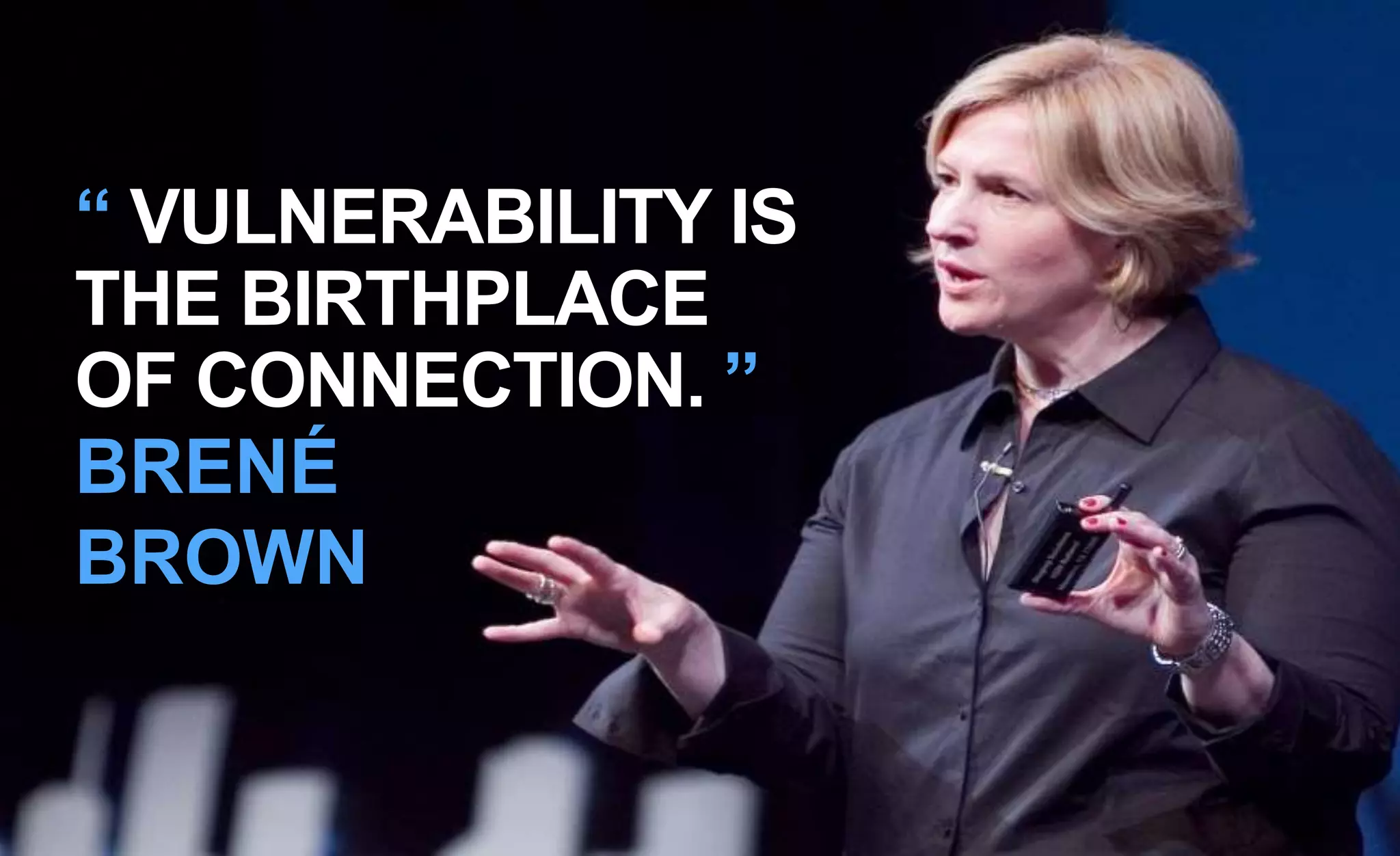
“ VULNERABILITY IS
THE BIRTHPLACE
OF CONNECTION. ”
BRENÉ
BROWN
Feedback & Influence
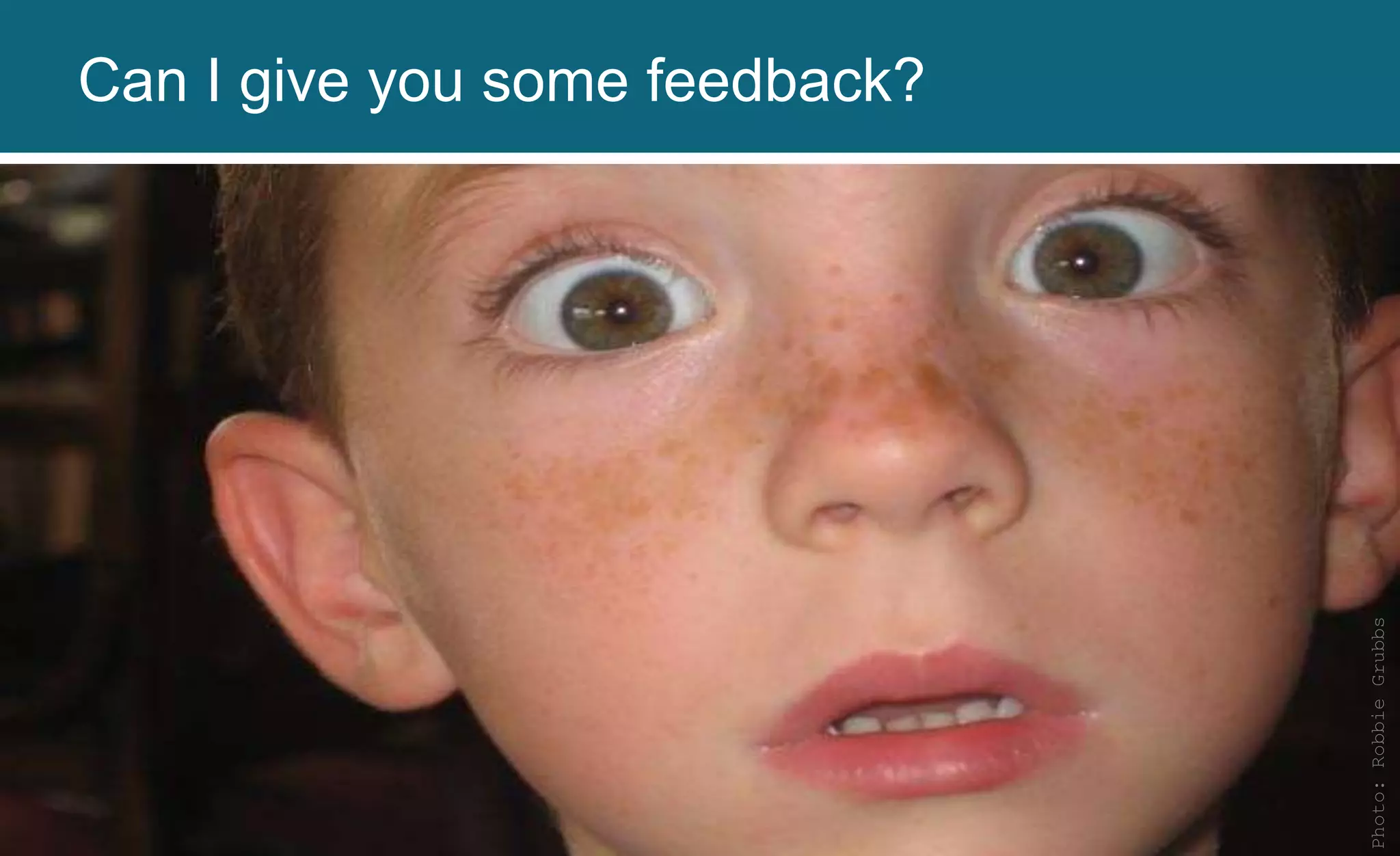
Photo:RobbieGrubbs
Can I give you some feedback?
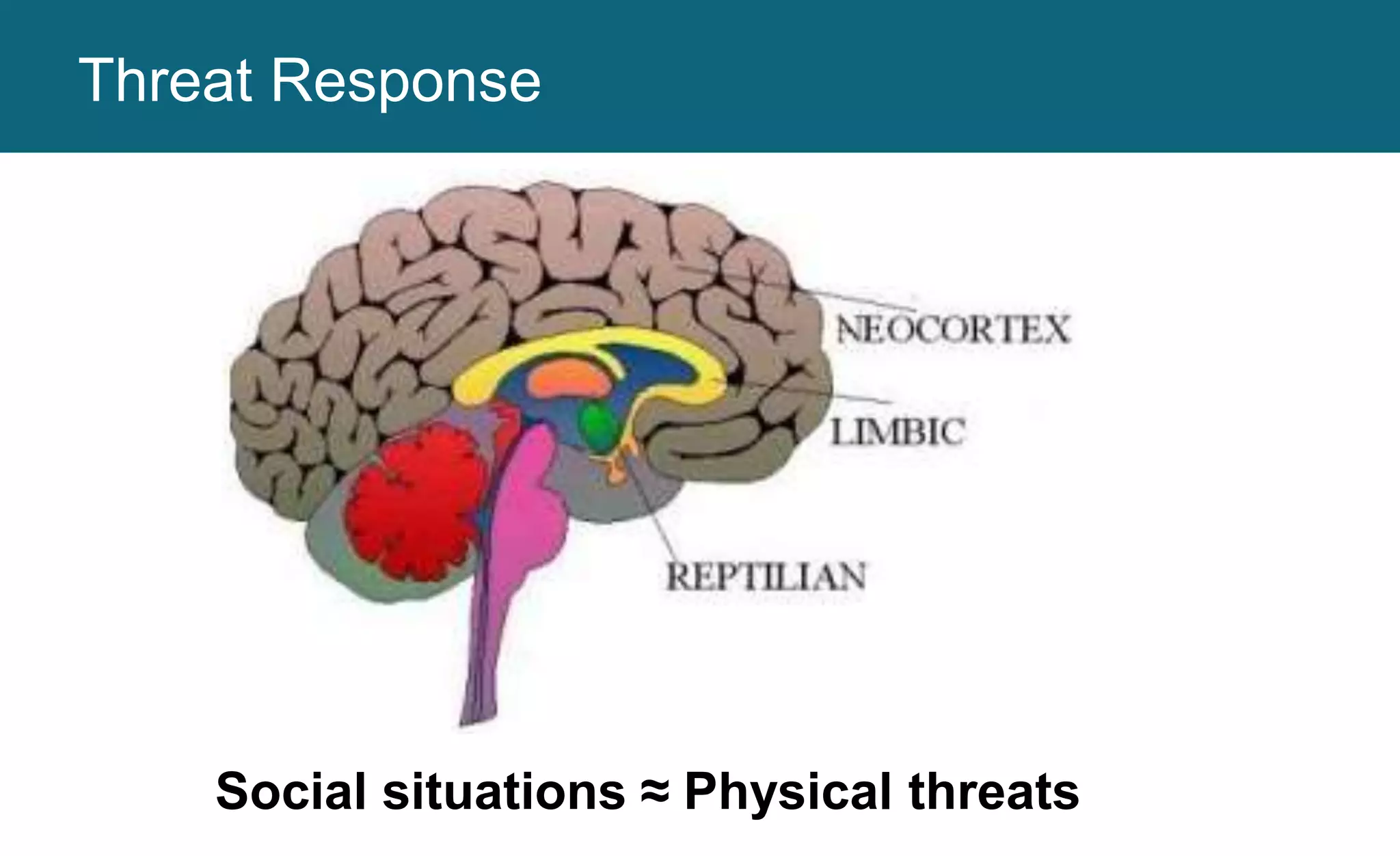
Social situations ≈ Physical threats
Threat Response
So… how do we communicate feedback
while minimizing defensiveness?
INTENT
Needs
Motives
Stories
Reality #2
IMPACT
Assumptions
Feelings
Responses
Reality #3
3 Realities (The “Net” Model)
The Net
BEHAVIOR
Verbal
Non-Verbal
Reality #1
Shared
Benefits of Self-Disclosure / VulnerabilityHow to Give Effective Feedback
• Focus on specific, observable behavior
When you do [x]…
• Describe the impact of that behavior on you
I feel [y]…
• Ask about the other person’s motives or
intentions
Can you tell me what’s going on for you?
Stay on your side of the net!
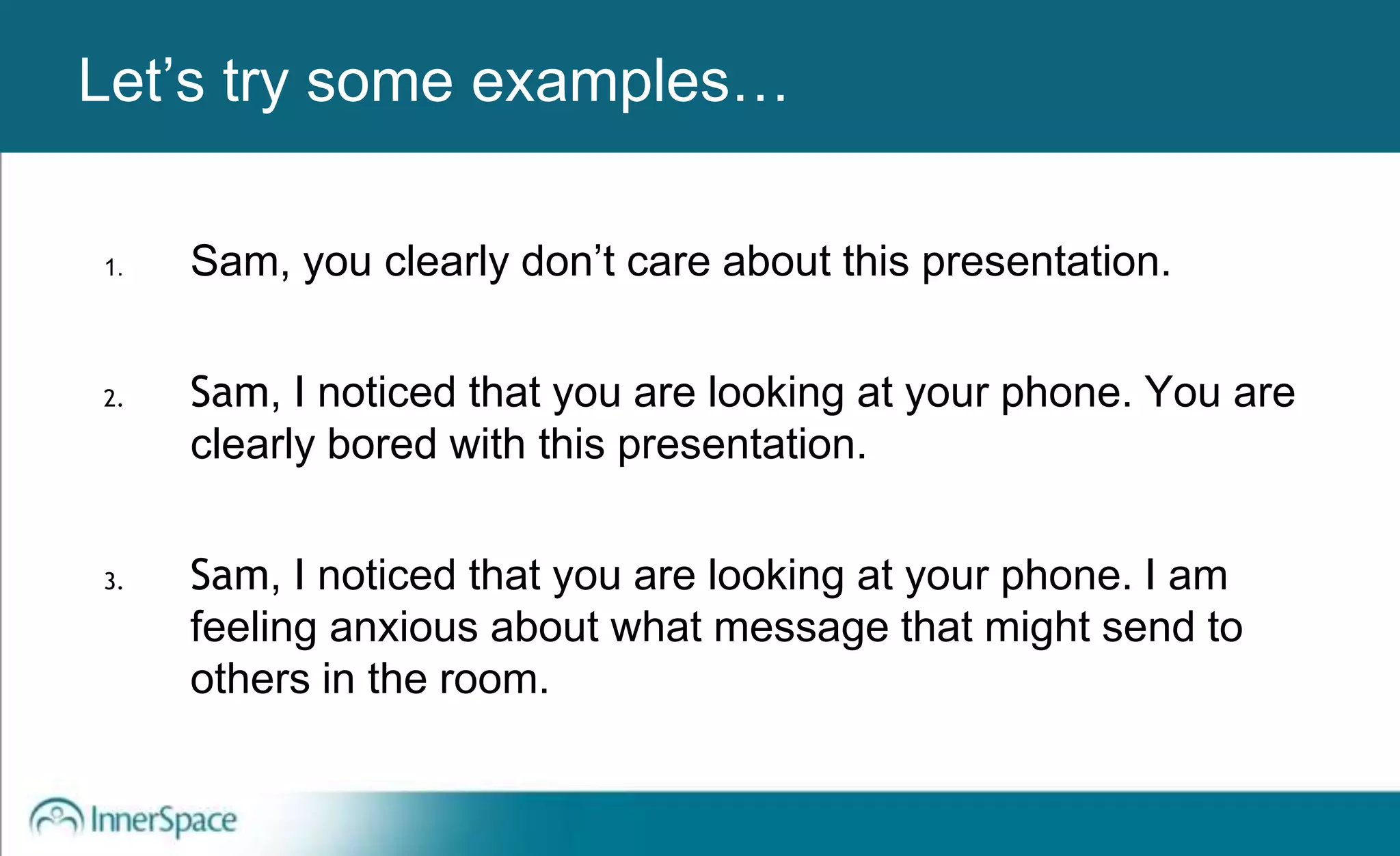
Benefits of Self-Disclosure / VulnerabilityLet’s try some examples…
1. Sam, you clearly don’t care about this presentation.
2. Sam, I noticed that you are looking at your phone. You are
clearly bored with this presentation.
3. Sam, I noticed that you are looking at your phone. I am
feeling anxious about what message that might send to
others in the room.
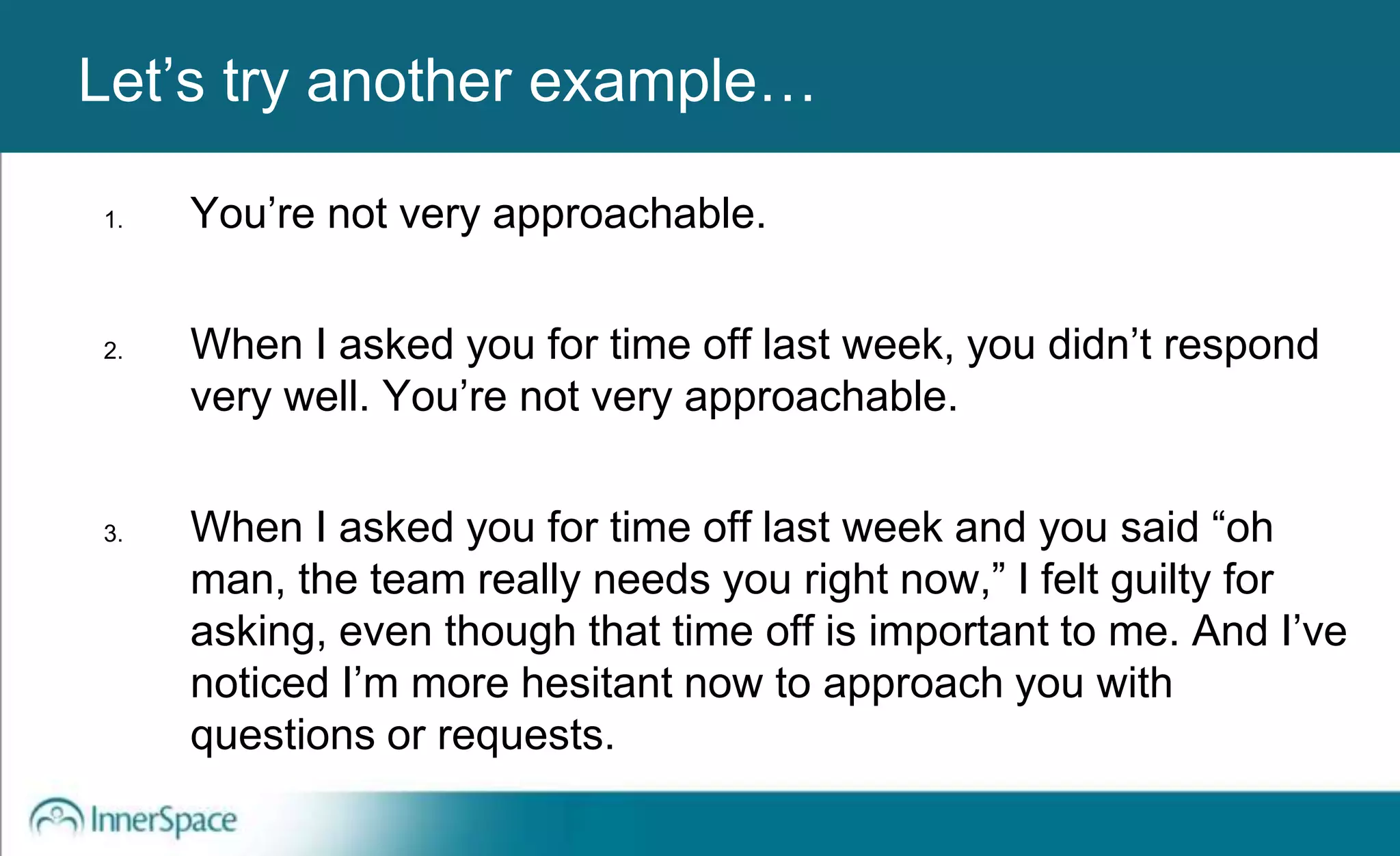
Benefits of Self-Disclosure / VulnerabilityLet’s try another example…
1. You’re not very approachable.
2. When I asked you for time off last week, you didn’t respond
very well. You’re not very approachable.
3. When I asked you for time off last week and you said “oh
man, the team really needs you right now,” I felt guilty for
asking, even though that time off is important to me. And I’ve
noticed I’m more hesitant now to approach you with
questions or requests.
Benefits of Self-Disclosure / VulnerabilityHow to Give Effective Feedback
When you do [x]…
I feel [y == emotion] that / like
And my story is [z].
Can you tell me what’s going on for you?
Photo by Ana Karenina [link]
1:1 Feedback
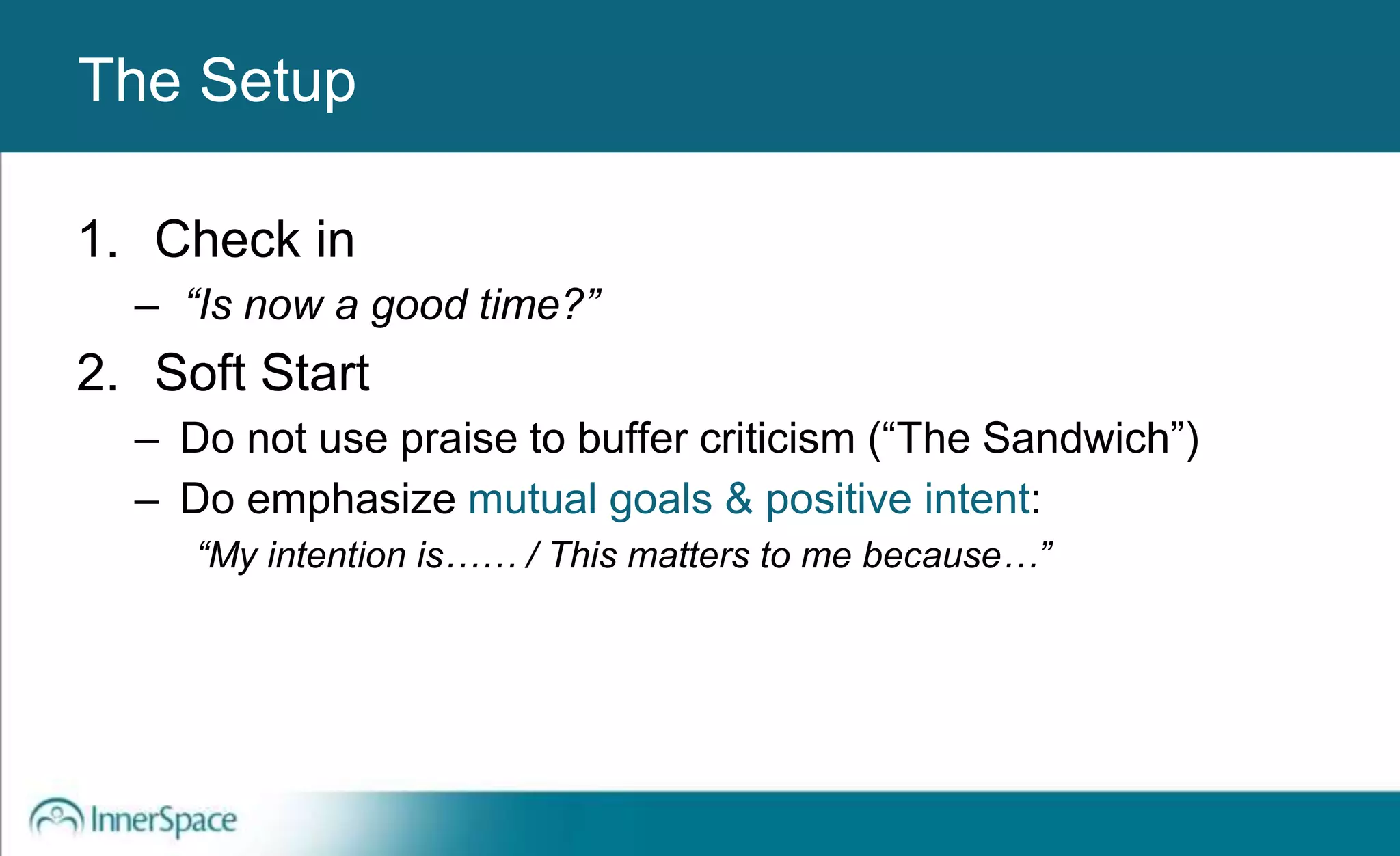
Benefits of Self-Disclosure / VulnerabilityThe Setup
1. Check in
– “Is now a good time?”
2. Soft Start
– Do not use praise to buffer criticism (“The Sandwich”)
– Do emphasize mutual goals & positive intent:
“My intention is…… / This matters to me because…”
Benefits of Self-Disclosure / VulnerabilityReceiving Feedback
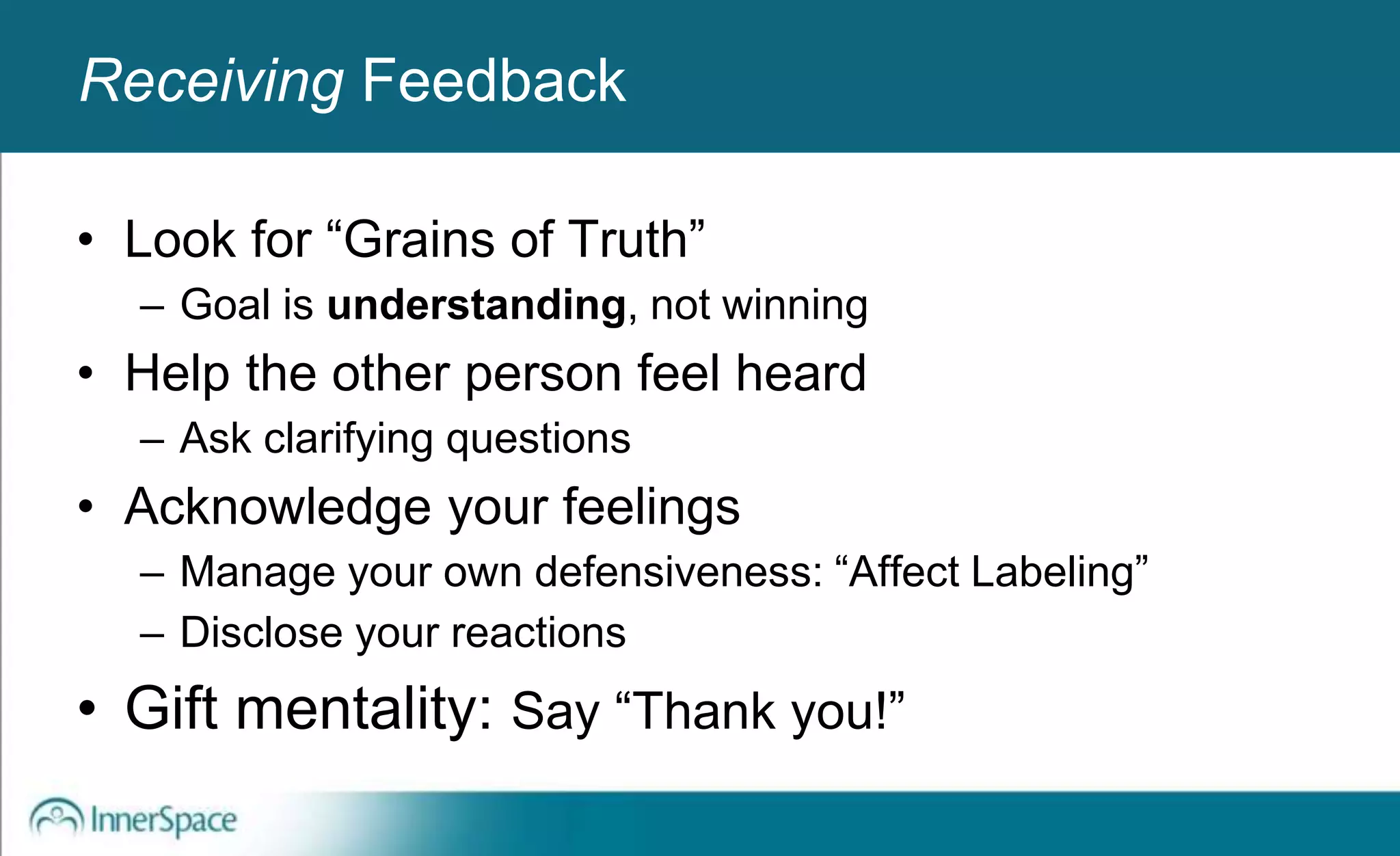
• Look for “Grains of Truth”
– Goal is understanding, not winning
• Help the other person feel heard
– Ask clarifying questions
• Acknowledge your feelings
– Manage your own defensiveness: “Affect Labeling”
– Disclose your reactions
• Gift mentality: Say “Thank you!”
Benefits of Self-Disclosure / VulnerabilityEnd with Agreements
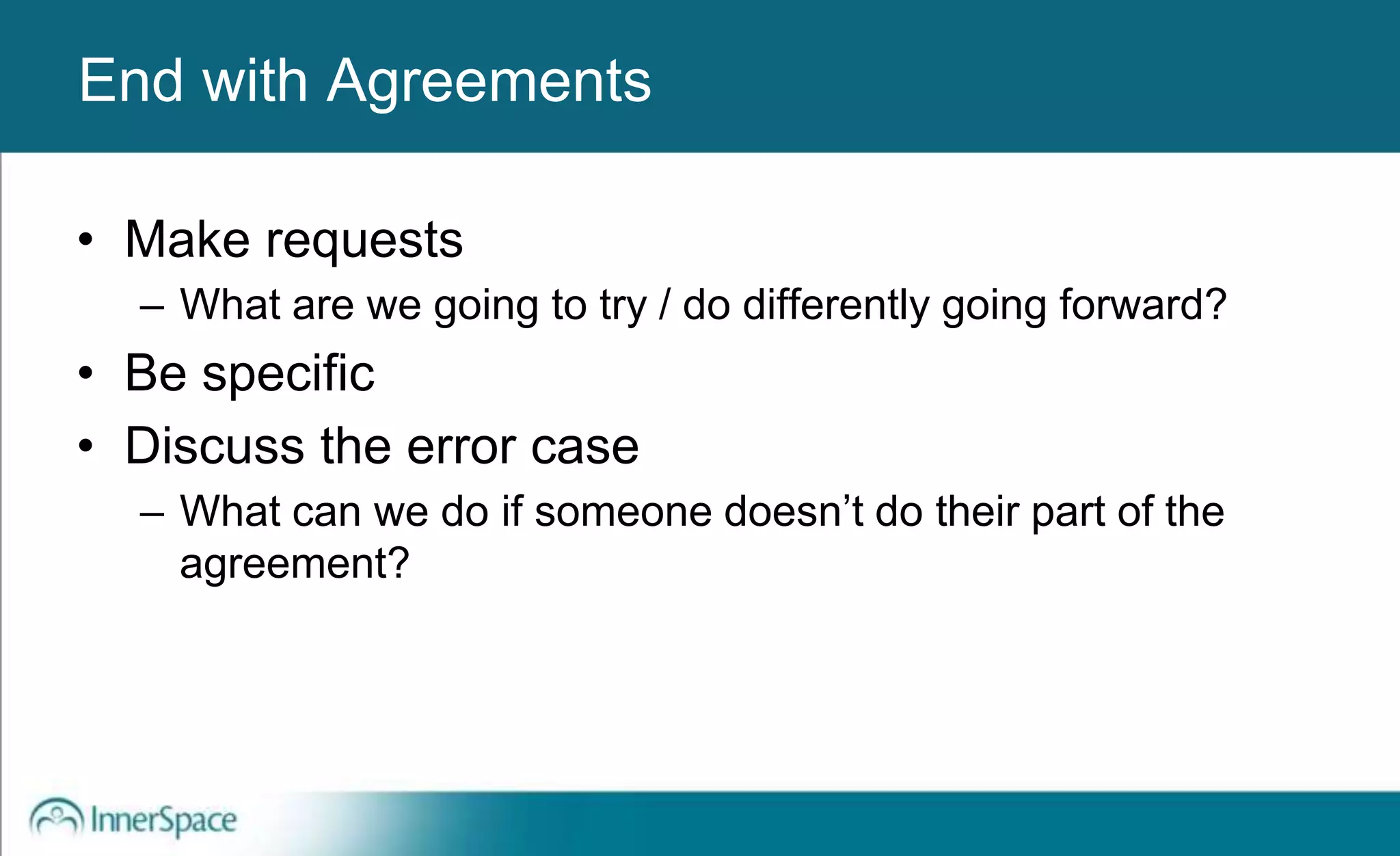
• Make requests
– What are we going to try / do differently going forward?
• Be specific
• Discuss the error case
– What can we do if someone doesn’t do their part of the
agreement?
Benefits of Self-Disclosure / VulnerabilityLast Reminder
Stay on your side of the net:
When you do [x]…
I feel [y]…
And my story is [z].
Can you tell me what’s going on for you?
Use the Vocabulary of Emotions.
Benefits of Self-Disclosure / VulnerabilitySuggested Topics For Feedback
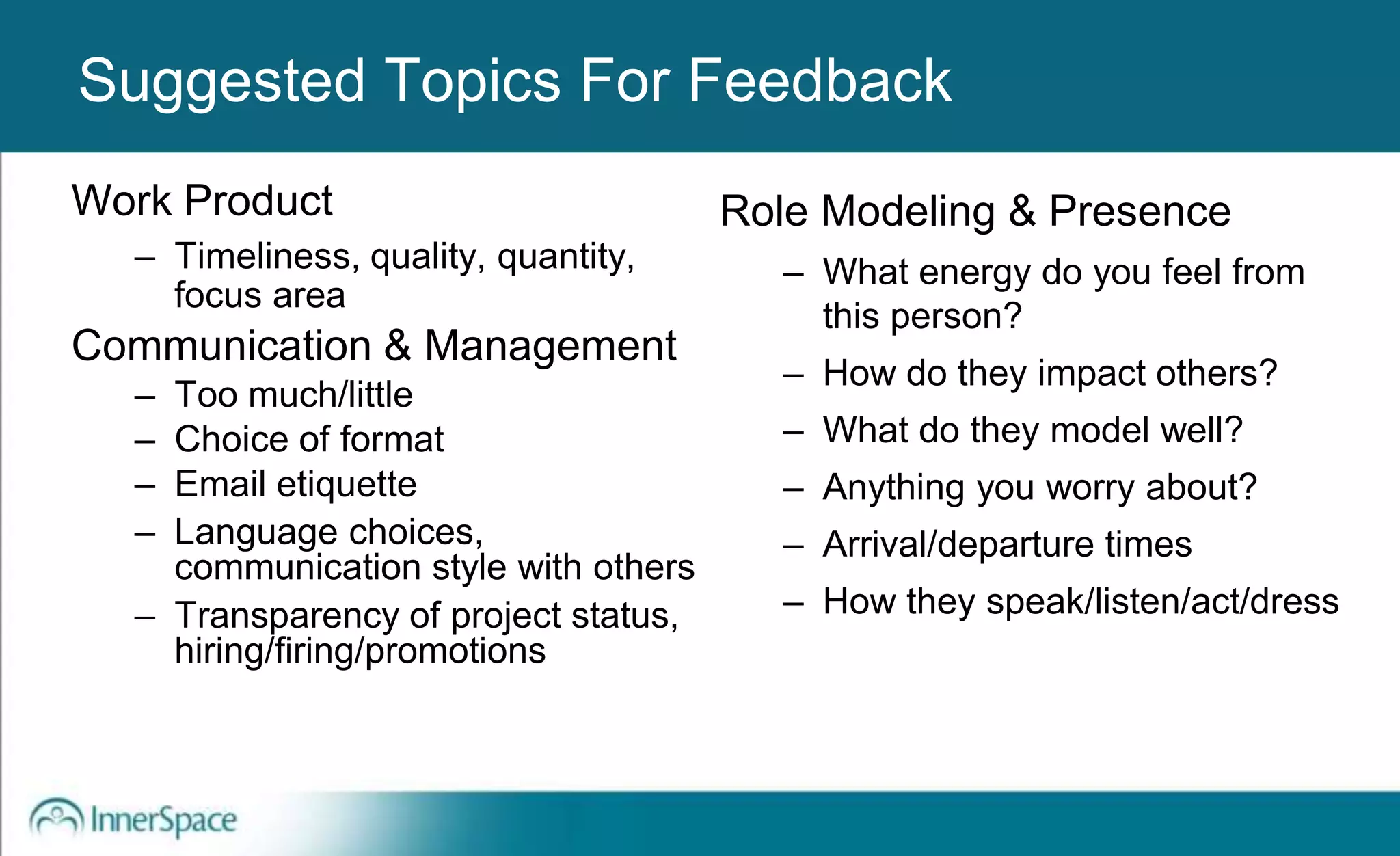
Work Product
– Timeliness, quality, quantity,
focus area
Communication & Management
– Too much/little
– Choice of format
– Email etiquette
– Language choices,
communication style with others
– Transparency of project status,
hiring/firing/promotions
Role Modeling & Presence
– What energy do you feel from
this person?
– How do they impact others?
– What do they model well?
– Anything you worry about?
– Arrival/departure times
– How they speak/listen/act/dress
Thanks, good-bye, and stay on
your side of the net 

InnerSpace / ClassDojo Communication Workshop

  • 1.
  • 2.
    Who am I? Mostrecently… • Co-founder/CEO of PlayTell Previously… • Director, Product Mgmt @ Guidewire (IPO 2010, $2.5B+ market cap) • UX Designer @ Vividence (Acq by Keynote) • Harvard Ed.M; Stanford Computer Science Semira Rahemtulla Cofounder of InnerSpace
  • 3.
    Why am Idoing this?
  • 4.
  • 5.
    INTENT Needs Motives Stories Reality #2 IMPACT Assumptions Feelings Responses Reality #3 3Realities (The “Net” Model) The Net BEHAVIOR Verbal Non-Verbal Reality #1 Shared
  • 6.
    Feelings & Emotions– Why??Feelings & Emotions – Why??
  • 7.
    Self-Disclosure Will I beless liked, respected, influential (leader-like)? Is it relevant? Will it further the discussion – the relationship? Will others use this information against me? How will others see/assess/ judge me? “What in my ‘bubble’ should I share?” Self-Disclosure
  • 8.
    “ VULNERABILITY IS THEBIRTHPLACE OF CONNECTION. ” BRENÉ BROWN
  • 9.
  • 10.
  • 11.
    Social situations ≈Physical threats Threat Response
  • 12.
    So… how dowe communicate feedback while minimizing defensiveness?
  • 13.
    INTENT Needs Motives Stories Reality #2 IMPACT Assumptions Feelings Responses Reality #3 3Realities (The “Net” Model) The Net BEHAVIOR Verbal Non-Verbal Reality #1 Shared
  • 14.
    Benefits of Self-Disclosure/ VulnerabilityHow to Give Effective Feedback • Focus on specific, observable behavior When you do [x]… • Describe the impact of that behavior on you I feel [y]… • Ask about the other person’s motives or intentions Can you tell me what’s going on for you? Stay on your side of the net!
  • 15.
    Benefits of Self-Disclosure/ VulnerabilityLet’s try some examples… 1. Sam, you clearly don’t care about this presentation. 2. Sam, I noticed that you are looking at your phone. You are clearly bored with this presentation. 3. Sam, I noticed that you are looking at your phone. I am feeling anxious about what message that might send to others in the room.
  • 16.
    Benefits of Self-Disclosure/ VulnerabilityLet’s try another example… 1. You’re not very approachable. 2. When I asked you for time off last week, you didn’t respond very well. You’re not very approachable. 3. When I asked you for time off last week and you said “oh man, the team really needs you right now,” I felt guilty for asking, even though that time off is important to me. And I’ve noticed I’m more hesitant now to approach you with questions or requests.
  • 17.
    Benefits of Self-Disclosure/ VulnerabilityHow to Give Effective Feedback When you do [x]… I feel [y == emotion] that / like And my story is [z]. Can you tell me what’s going on for you?
  • 18.
    Photo by AnaKarenina [link] 1:1 Feedback
  • 19.
    Benefits of Self-Disclosure/ VulnerabilityThe Setup 1. Check in – “Is now a good time?” 2. Soft Start – Do not use praise to buffer criticism (“The Sandwich”) – Do emphasize mutual goals & positive intent: “My intention is…… / This matters to me because…”
  • 20.
    Benefits of Self-Disclosure/ VulnerabilityReceiving Feedback • Look for “Grains of Truth” – Goal is understanding, not winning • Help the other person feel heard – Ask clarifying questions • Acknowledge your feelings – Manage your own defensiveness: “Affect Labeling” – Disclose your reactions • Gift mentality: Say “Thank you!”
  • 21.
    Benefits of Self-Disclosure/ VulnerabilityEnd with Agreements • Make requests – What are we going to try / do differently going forward? • Be specific • Discuss the error case – What can we do if someone doesn’t do their part of the agreement?
  • 22.
    Benefits of Self-Disclosure/ VulnerabilityLast Reminder Stay on your side of the net: When you do [x]… I feel [y]… And my story is [z]. Can you tell me what’s going on for you? Use the Vocabulary of Emotions.
  • 23.
    Benefits of Self-Disclosure/ VulnerabilitySuggested Topics For Feedback Work Product – Timeliness, quality, quantity, focus area Communication & Management – Too much/little – Choice of format – Email etiquette – Language choices, communication style with others – Transparency of project status, hiring/firing/promotions Role Modeling & Presence – What energy do you feel from this person? – How do they impact others? – What do they model well? – Anything you worry about? – Arrival/departure times – How they speak/listen/act/dress
  • 24.
    Thanks, good-bye, andstay on your side of the net 

Editor's Notes

  • #3 who are we lucky to be part of a team that took this stuff seriously (communication & culture) fortunate to be involved in the early part of a company that was well run and had a successful exit and was the founder of a company that may or may not have been well run, but didn't have a successful exit
  • #7 ***feelings & emotions music has treble and clef 1. if you only have cognition and words without feelings, you don't have the full score, the full story 2. most of the time, people are "leaky" -- however they are feeling, they are emoting non-verbally. incongruence btwn words v behavior comes at the expense of credibility. therefore want congruence (so you dont want *only* thoughts or *only* feelings -- you want to communicate both) 3. "there's no room for feelings in business" -- is inspiring pple important in business? how do you inspire people without making them feel something?  important for motivation  Suppressing leads to lack of congruence – we are leaky.
  • #10 1:21- 1:21
  • #11 Why is feedback scary? Might hurt person’s feelings if they knew how I feel? If I tell them how I really feel, they might tell me how they really feel?
  • #12 Feedback is scary, we’re sharing new information with someone that might change their understanding of their behavoural landscape, of our relationship, of themselves. So we need to talk a bi about threat response. In our next workshop, which doesn’t exist yet, we’re going to go more deeply into how it turns out these brains of ours actually work and what that implies for interpersonal relationships in general and startup life. But for now, the quick thing to know is that most higher order reasoning, executive function, empathy and social relationship, all exists in a thin layer on top of what is basically a reptilian brain. And that reptilian brain basically sits there asking the question over and over again – am I safe? Am I safe? And if the answer is yes, it sort of allows higher order things to happen. But if it detects a threat, it seizes control and we experience a threat response: We often call this the body gets ready for fight or flight. powerful cascade of physical cognitive and emotional responses to perceived danger. Blood flow to the core, adrenaline rush, sweaty palms, tight chest, cognitive capacity goes down, creativity goes down. Monitoring my level of fear is basically the top thing I do as a person to try to be my best self.
  • #19 Setting the Context for Feedback Groundrules Discussion (What groundrules would help me be an effective participant in giving and receiving feedback)   Organize folks so that each person has two people they work with/know well Give them time to plan feedback with each Bring them back and do “speed dating” format feedback– two rounds so that every person has done it twice Facilitator calls out time for switching "Second conversation" about feedback
  • #20 If an objective 3rd party jury was able to tell you that 50% of the feedback was correct and 50% was not, you have a choice about where to focus. Our suggestion is to spend 90% of your attention on the part that’s correct. The only opportunity in the part that’s not correct is in the possiblity of delicately correction an incorrect assumption. In the part that is true is a double benefit – improve the relationship, make the person feel heard In the part that isn’t true there’s a lot of risk: person doesn’t feel heard (risk to the relationship), miss an opportunity to learn, defensiveness, a fight, etc (75% risk)