INFORMATION TECHNOLOGY IN HUMAN RESOURCE MANAGEMENT
CONTENTS
 INTRODUCTION
 HRM MEANING
 E-HRM
 Application of IT in HRM
 TYPES OF EHRM
 ADVANTAGES
 DISADVANTAGES
 E- RECRUITMENT PROCESS
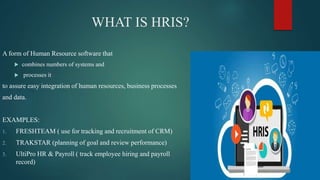
WHAT IS HRIS?
A form of Human Resource software that
 combines numbers of systems and
 processes it
to assure easy integration of human resources, business processes
and data.
EXAMPLES:
1. FRESHTEAM ( use for tracking and recruitment of CRM)
2. TRAKSTAR (planning of goal and review performance)
3. UltiPro HR & Payroll ( track employee hiring and payroll
record)
FEATURE OF HRIS
 IMROVED PLANNING AND PROGRAM DEVELOPMENT USING DSS
 FASTER INFORMATION PROCESSING AND IMPROVED RESPONSE
TIMES
 DECREASED ADMINISTRATIVE AND HR COSTS
 ACCURACY OF INFORMATION
 ENHANCED COMMUNICATION AT ALL LEVEL
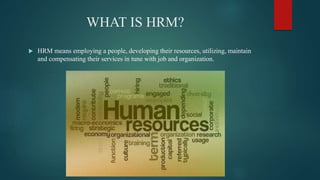
WHAT IS HRM?
 HRM means employing a people, developing their resources, utilizing, maintain
and compensating their services in tune with job and organization.
E-HRM
 E-HRM is the planning, implementation and application of information
technology for both networking and supporting in their shared performing of
Human Resource activities.
APPLICATION OF IT IN HRM
 Recruitment
 Training & Development
 Performance Management
 Payroll
 Work Time
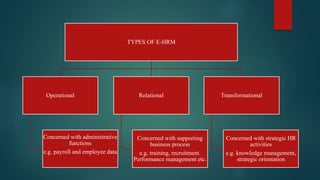
TYPES OF E-HRM
Operational
Concerned with administrative
functions
e.g. payroll and employee data
Relational
Concerned with supporting
business process
e.g. training, recruitment.
Performance management etc.
Transformational
Concerned with strategic HR
activities
e.g. knowledge management,
strategic orientation
ADVANTAGES OF E-HRM
 Better record keeping
 Good for routine task
 Improves accuracy and reduces human bias
 Maintain secrecy of staff in evaluation/feedback
giving
 Time and resources saver
 Organization system supportive
 Easy controlling approach
 Advancement of technology
 Standard provider
DISADVANTAGES OF E-HRM
 High cost of implementation and maintenance
 High cost of training and development before adopting e-HRM
 Not much useful for small scale industries
 Human relations may be replaced with just technical and inorganic relations
 Reduces the need for managers to interact with staff
 Subject to corruption/hacking/data losses
E-RECRUITMENT PROCESS
 Identify current needs of employment in the
organisation
 Posting job vacancies online
 Managing the applicant response
 Short listing of applicants with respect to job
specification
 Arranging and conducting job interviews
 Decision making regarding further process
THANK YOU

Information technology in human resource management

  • 1.
    INFORMATION TECHNOLOGY INHUMAN RESOURCE MANAGEMENT
  • 2.
    CONTENTS  INTRODUCTION  HRMMEANING  E-HRM  Application of IT in HRM  TYPES OF EHRM  ADVANTAGES  DISADVANTAGES  E- RECRUITMENT PROCESS
  • 3.
    WHAT IS HRIS? Aform of Human Resource software that  combines numbers of systems and  processes it to assure easy integration of human resources, business processes and data. EXAMPLES: 1. FRESHTEAM ( use for tracking and recruitment of CRM) 2. TRAKSTAR (planning of goal and review performance) 3. UltiPro HR & Payroll ( track employee hiring and payroll record)
  • 4.
    FEATURE OF HRIS IMROVED PLANNING AND PROGRAM DEVELOPMENT USING DSS  FASTER INFORMATION PROCESSING AND IMPROVED RESPONSE TIMES  DECREASED ADMINISTRATIVE AND HR COSTS  ACCURACY OF INFORMATION  ENHANCED COMMUNICATION AT ALL LEVEL
  • 5.
    WHAT IS HRM? HRM means employing a people, developing their resources, utilizing, maintain and compensating their services in tune with job and organization.
  • 6.
    E-HRM  E-HRM isthe planning, implementation and application of information technology for both networking and supporting in their shared performing of Human Resource activities.
  • 7.
    APPLICATION OF ITIN HRM  Recruitment  Training & Development  Performance Management  Payroll  Work Time
  • 8.
    TYPES OF E-HRM Operational Concernedwith administrative functions e.g. payroll and employee data Relational Concerned with supporting business process e.g. training, recruitment. Performance management etc. Transformational Concerned with strategic HR activities e.g. knowledge management, strategic orientation
  • 9.
    ADVANTAGES OF E-HRM Better record keeping  Good for routine task  Improves accuracy and reduces human bias  Maintain secrecy of staff in evaluation/feedback giving  Time and resources saver  Organization system supportive  Easy controlling approach  Advancement of technology  Standard provider
  • 10.
    DISADVANTAGES OF E-HRM High cost of implementation and maintenance  High cost of training and development before adopting e-HRM  Not much useful for small scale industries  Human relations may be replaced with just technical and inorganic relations  Reduces the need for managers to interact with staff  Subject to corruption/hacking/data losses
  • 11.
    E-RECRUITMENT PROCESS  Identifycurrent needs of employment in the organisation  Posting job vacancies online  Managing the applicant response  Short listing of applicants with respect to job specification  Arranging and conducting job interviews  Decision making regarding further process
  • 12.