Introduction
 A strategy:
 Indicates what an organization's key executives hope to
accomplish in the long run
 Is concerned with competition and aligning the resources
of the firm
 Good HR strategy results in a fit between
organizational strategy and HRM policies and
programs
 Recruitment, selection, outsourcing, telecommuting,
performance evaluation, compensation
 Strategic human resource management
 formulating and executing HR systems that produce the employee
competencies and behaviors the company needs to achieve its
strategic aims
 Taking a strategic HRM approach means:
 Making human resources management a top priority
 Integrating HRM with the company’s strategy, mission, and goals
 HRM can make significant contributions if included in the
strategic planning process from the outset
 The strategic management process helps determine:
 What must be done to achieve priority objectives
 How they will be achieved
Strategic HRM: A Key to Success
 Three levels of strategy apply to HRM activities:
 Strategic (long term)
 Managerial (medium term)
 Operational (short term)
 The HRM activities are:
 Employee selection/placement
 Rewards
 Appraisal
 Development
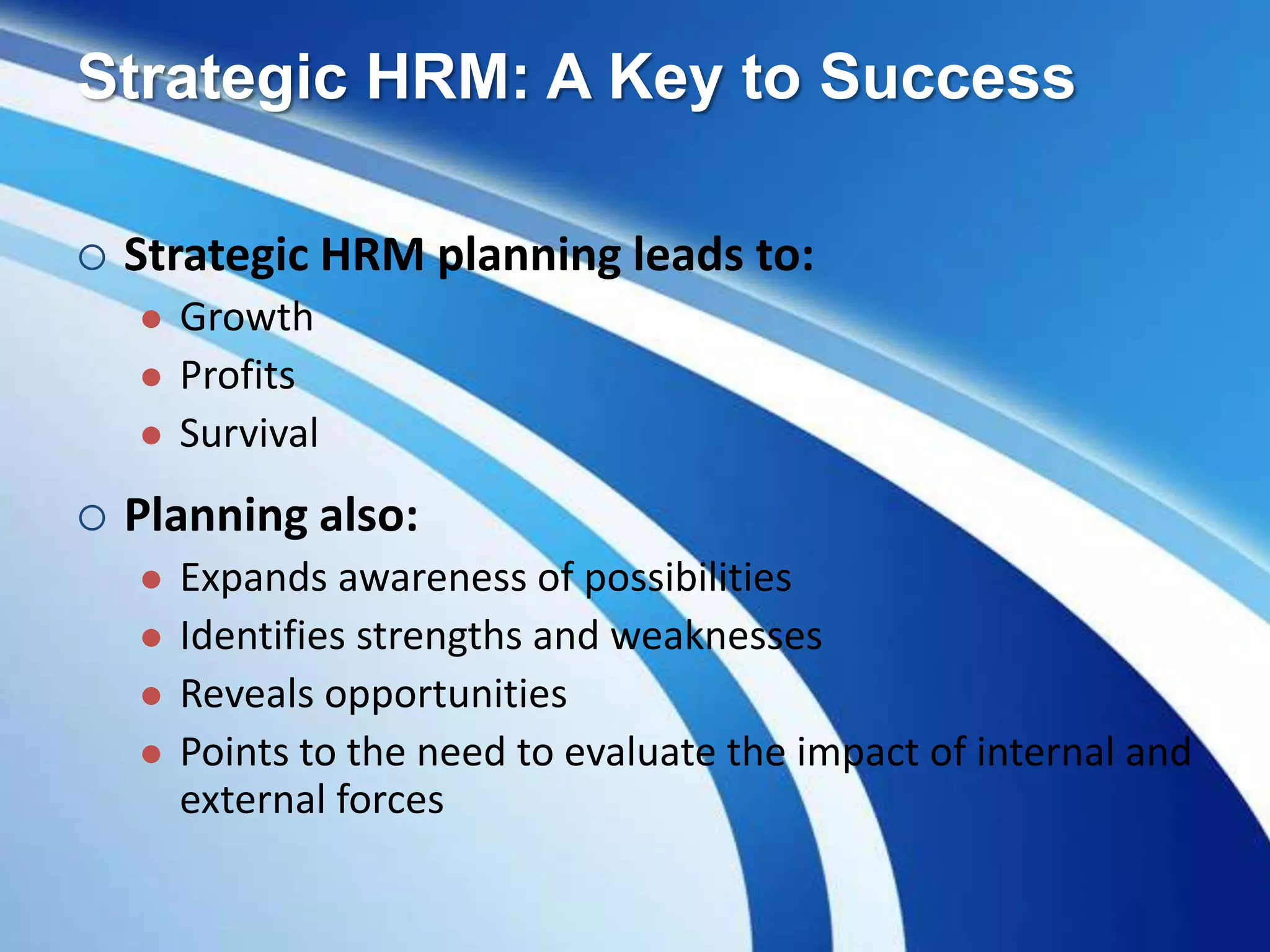
 Strategic HRM planning leads to:
 Growth
 Profits
 Survival
 Planning also:
 Expands awareness of possibilities
 Identifies strengths and weaknesses
 Reveals opportunities
 Points to the need to evaluate the impact of internal and
external forces
Strategic HRM: A Key to Success
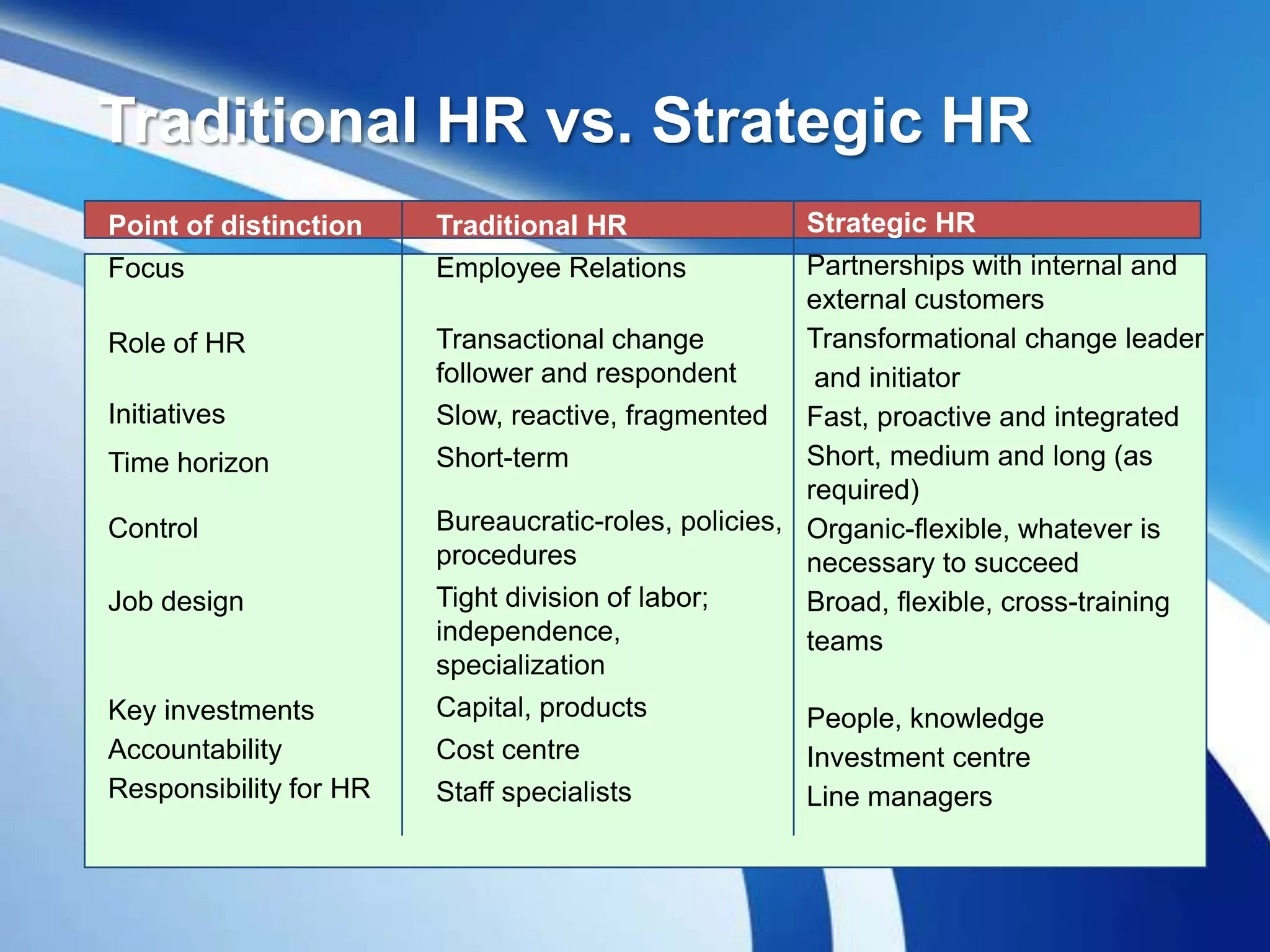
Traditional HR vs. Strategic HR
Point of distinction
Focus
Role of HR
Initiatives
Time horizon
Control
Job design
Key investments
Accountability
Responsibility for HR
Traditional HR
Employee Relations
Transactional change
follower and respondent
Slow, reactive, fragmented
Short-term
Bureaucratic-roles, policies,
procedures
Tight division of labor;
independence,
specialization
Capital, products
Cost centre
Staff specialists
Strategic HR
Partnerships with internal and
external customers
Transformational change leader
and initiator
Fast, proactive and integrated
Short, medium and long (as
required)
Organic-flexible, whatever is
necessary to succeed
Broad, flexible, cross-training
teams
People, knowledge
Investment centre
Line managers
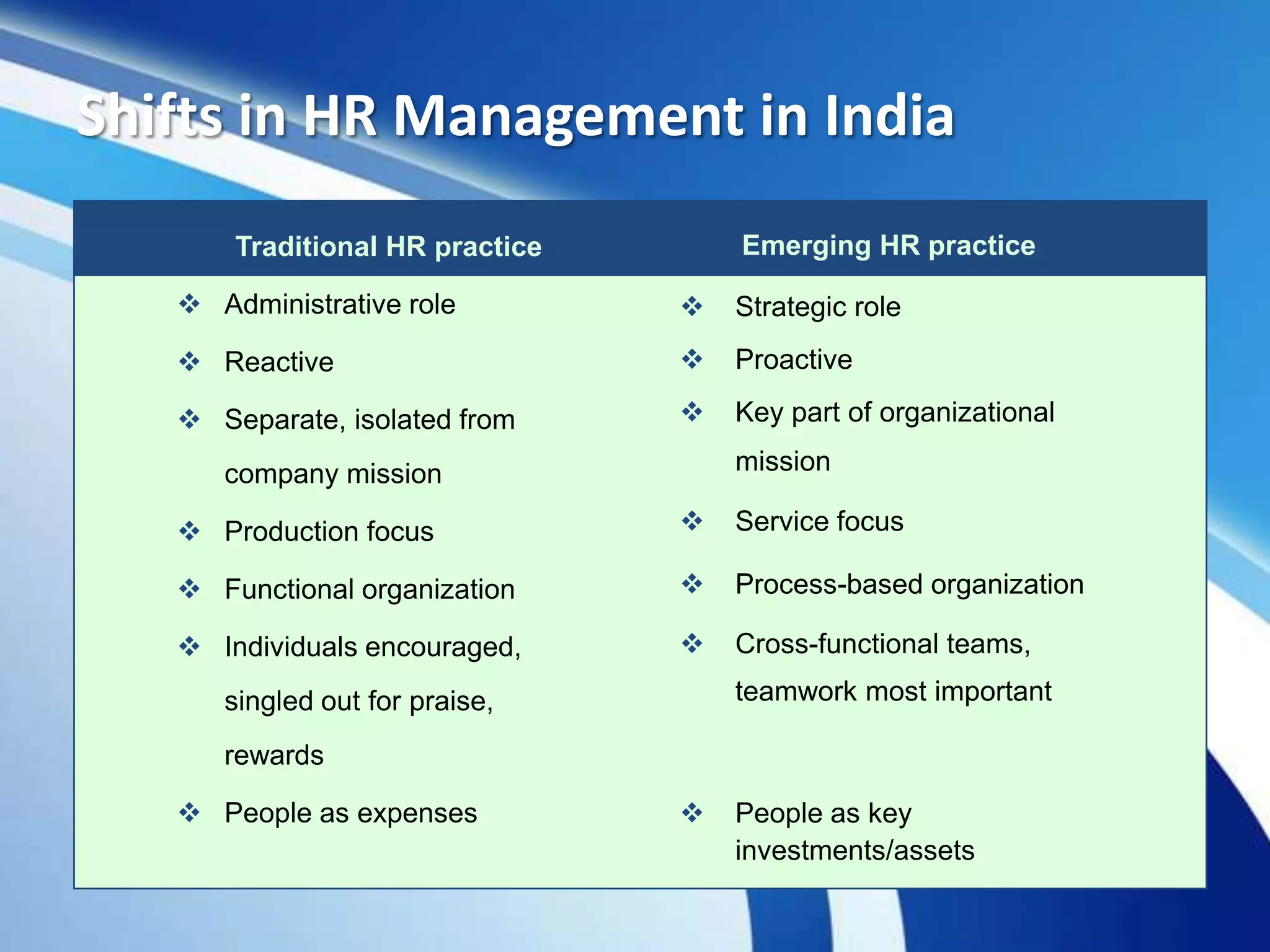
Shifts in HR Management in India
Emerging HR practice
 Strategic role
 Proactive
 Key part of organizational
mission
 Service focus
 Process-based organization
 Cross-functional teams,
teamwork most important
 People as key
investments/assets
Traditional HR practice
 Administrative role
 Reactive
 Separate, isolated from
company mission
 Production focus
 Functional organization
 Individuals encouraged,
singled out for praise,
rewards
 People as expenses
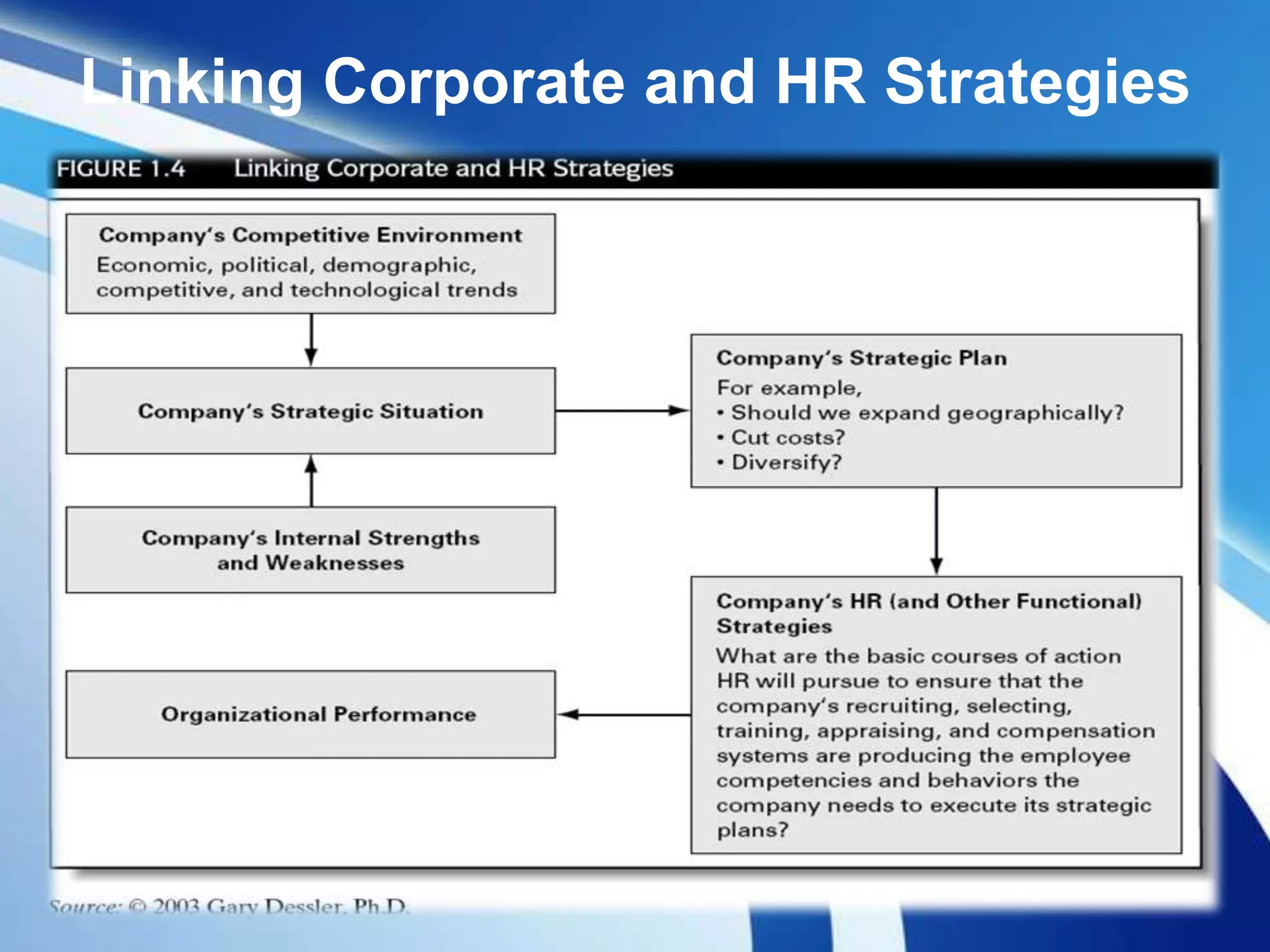
Linking Corporate and HR Strategies
Strategic Management Process
 Environmental Scanning
 Strategy Formulation
 Corporate level
 Business unit level
 Functional level
 Strategy Implementation
 Strategy Evaluation
HR Role in Strategic Management
 In strategy formulation
 HR manager supplies competitive intelligence that is
useful
 In strategy implementation
 Encouraging proactive behavior
 Explicit communication goals
 Stimulate critical thinking
 Productivity
 Quality and Service
 Proficient strategic management
A Model to Organize HRM
 ARDM means:
 Acquiring
 Rewarding
 Developing
 Maintaining and protecting
 The goals of the ARDM model are:
 Socially responsible and ethical practices
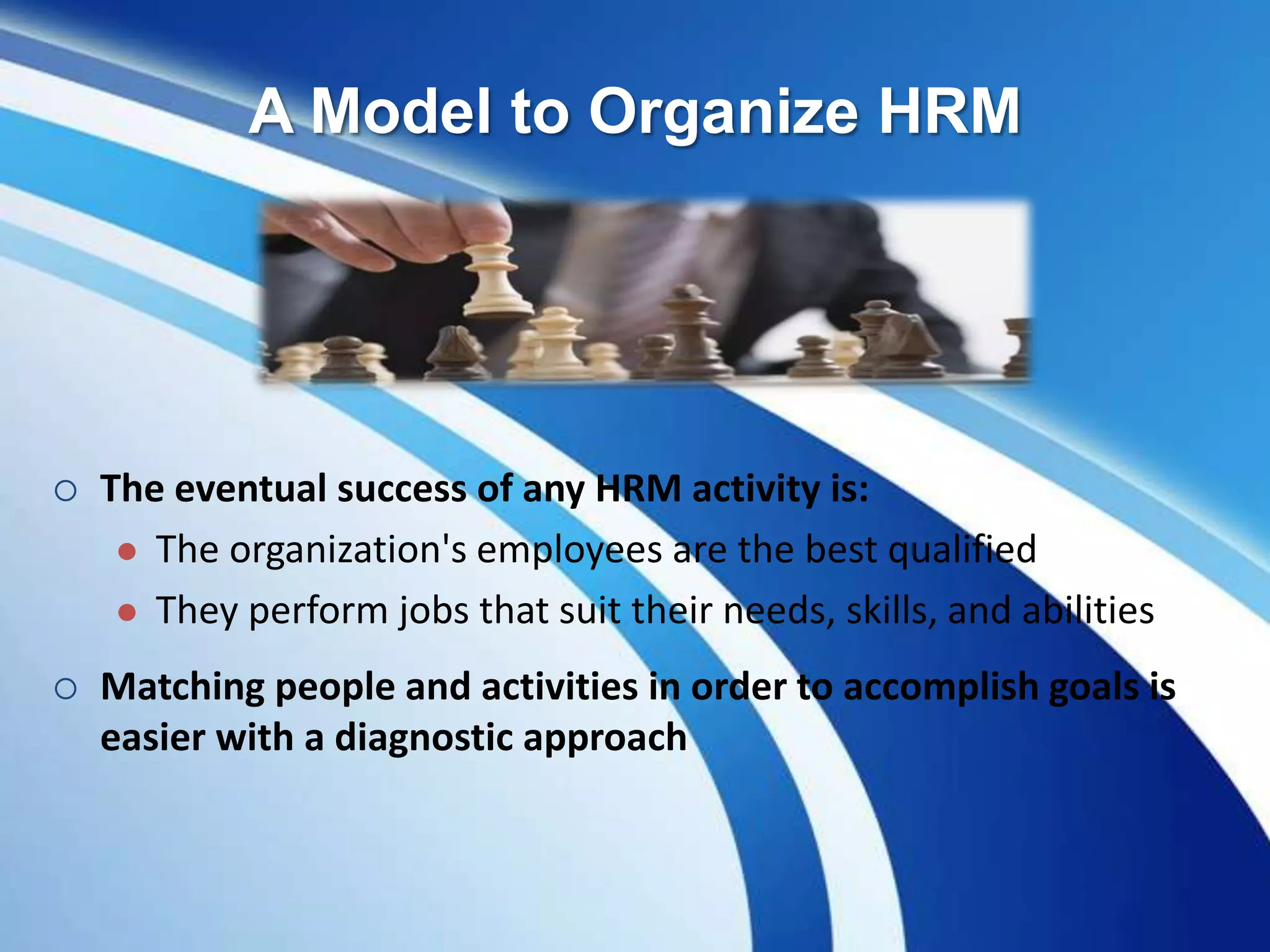
 The eventual success of any HRM activity is:
 The organization's employees are the best qualified
 They perform jobs that suit their needs, skills, and abilities
 Matching people and activities in order to accomplish goals is
easier with a diagnostic approach
A Model to Organize HRM
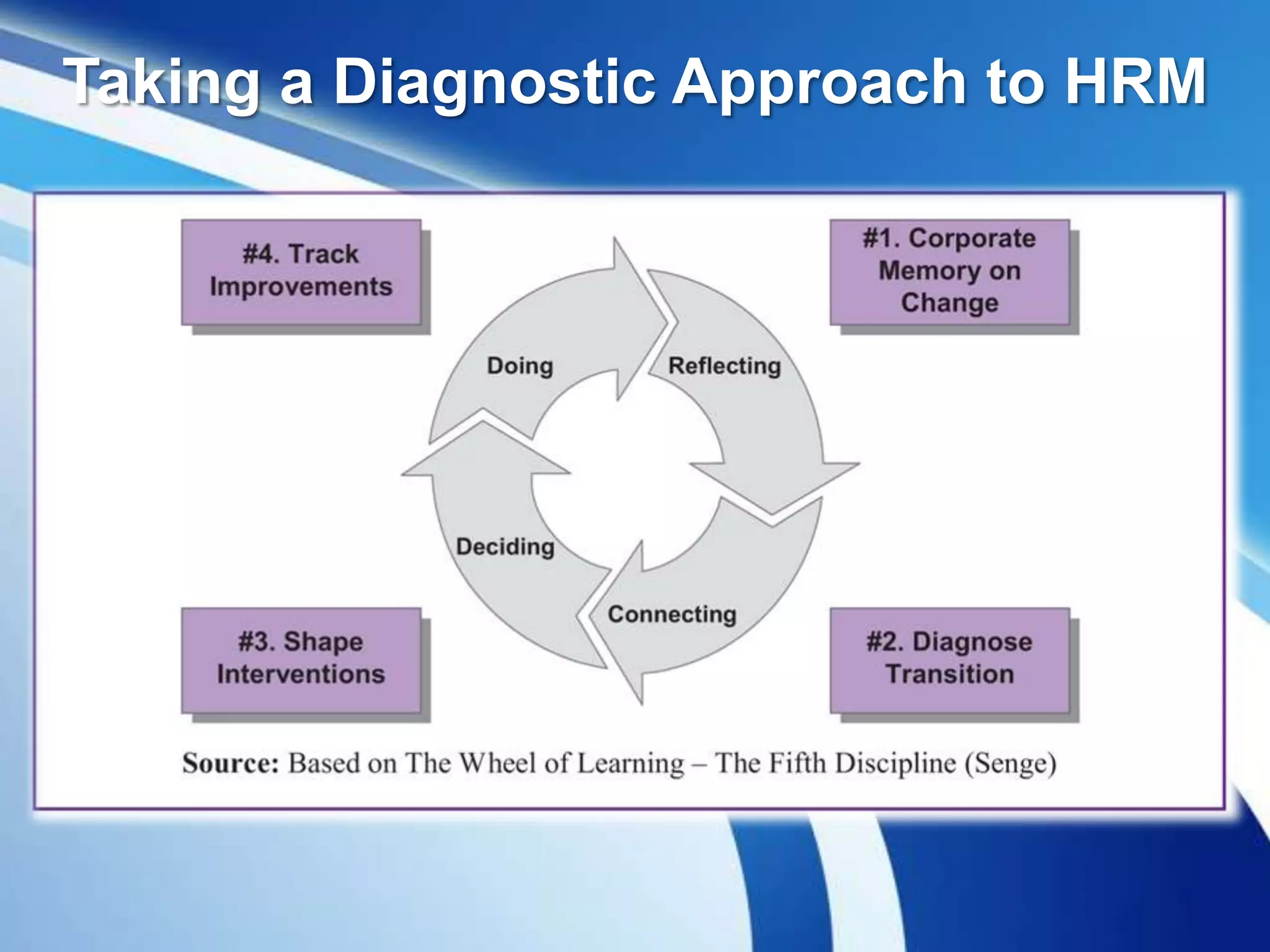
Taking a Diagnostic Approach to HRM
 The ARDM model has four specific steps:
 Diagnosis
 Prescription
 Implementation
 Evaluation
 Managers typically diagnose a work situation by observing
and identifying key factors
 A prescription is then made to translate the diagnosis into
action
 Most human resource problems are too complex to have a
single correct prescription
Taking a Diagnostic Approach to HRM
 Implementing a solution is the next step, followed by
evaluation
 Evaluation tells managers whether improvement in the
ARDM process is needed
 If an organization teaches its members to focus on ARDM
plus the environment, it is likely to achieve:
 Socially responsible, ethical behaviors
 Competitive, high-quality products and services
 The ARDM model calls for thorough, timely, and systematic
review of each situation
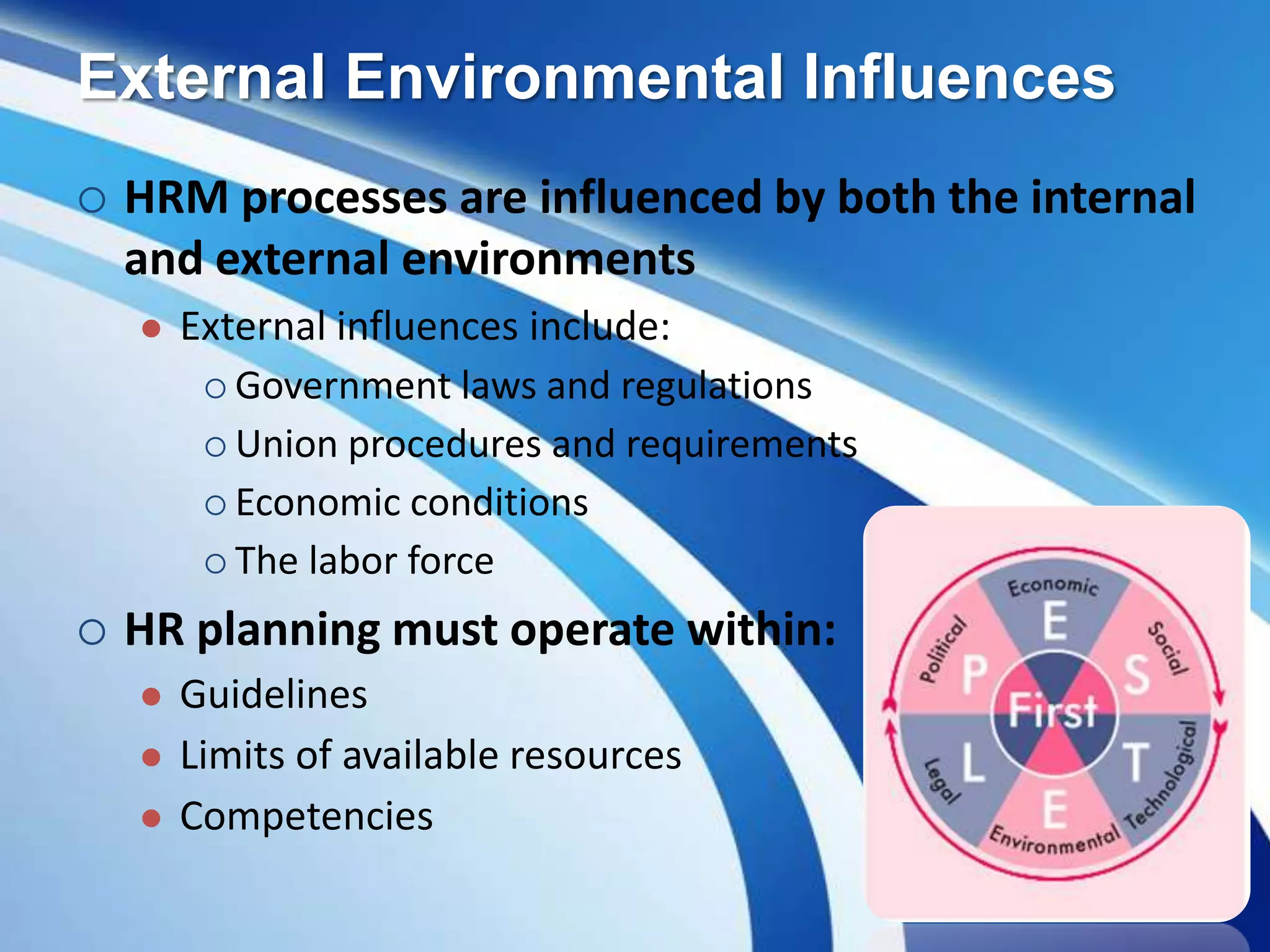
External Environmental Influences
 HRM processes are influenced by both the internal
and external environments
 External influences include:
 Government laws and regulations
 Union procedures and requirements
 Economic conditions
 The labor force
 HR planning must operate within:
 Guidelines
 Limits of available resources
 Competencies
Economic Conditions
 Two economic factors affect HRM programs:
 Productivity
 The work sector of the organization
 Productivity is:
 An important part of a nation's economic condition
 Representative of an organization’s overall efficiency
 The output of goods and services per unit of input
(resources) used in a production process
Economic Conditions
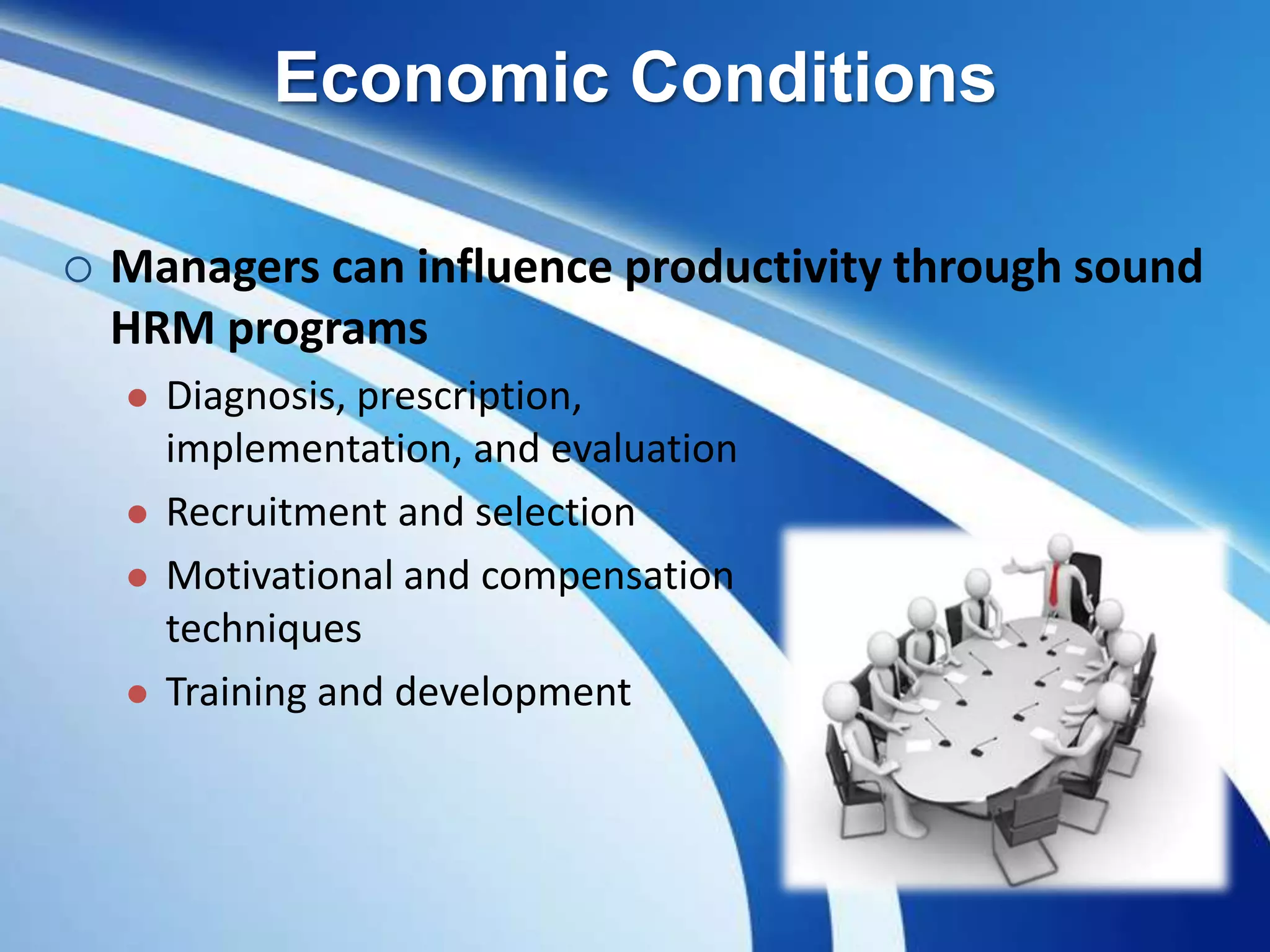
 Managers can influence productivity through sound
HRM programs
 Diagnosis, prescription,
implementation, and evaluation
 Recruitment and selection
 Motivational and compensation
techniques
 Training and development
Internal Environmental Influences
 HRM programs are influenced by:
 Strategy
 Goals
 Organizational culture
 Nature of the task
 Work groups
 The leader’s style and experience
Goals
 Organizational goals differ within and among
departments
 Most departments have similar goals
 Differences arise from the importance placed on the goals
 In organizations where profits take precedence,
HRM goals receive little attention
 This results in effectiveness problems (absenteeism,
performance decrements, high grievance rates)
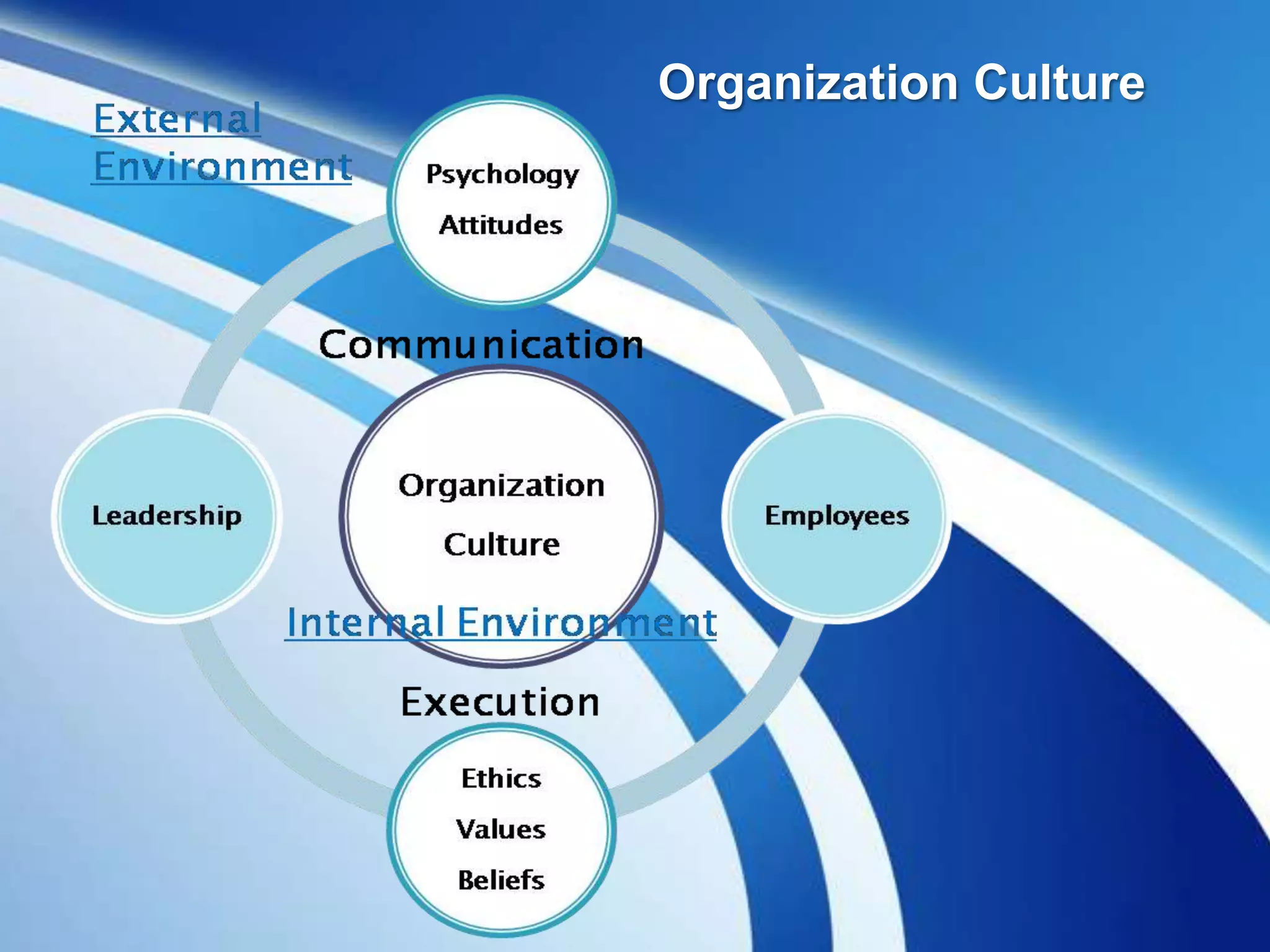
Organization Culture
 A firm's organizational culture is shown by:
 The way it does business
 How it treats customers and employees
 The autonomy or freedom that exists in the departments
or offices
 The degree of loyalty expressed by employees
Organization Culture
 Organization culture represents the perceptions
held by the employees
 There is no one "best" culture for the development of
human resources
 Culture can:
 Impact behavior, productivity, expectations
 Provide a benchmark for standards of performance
Work Group
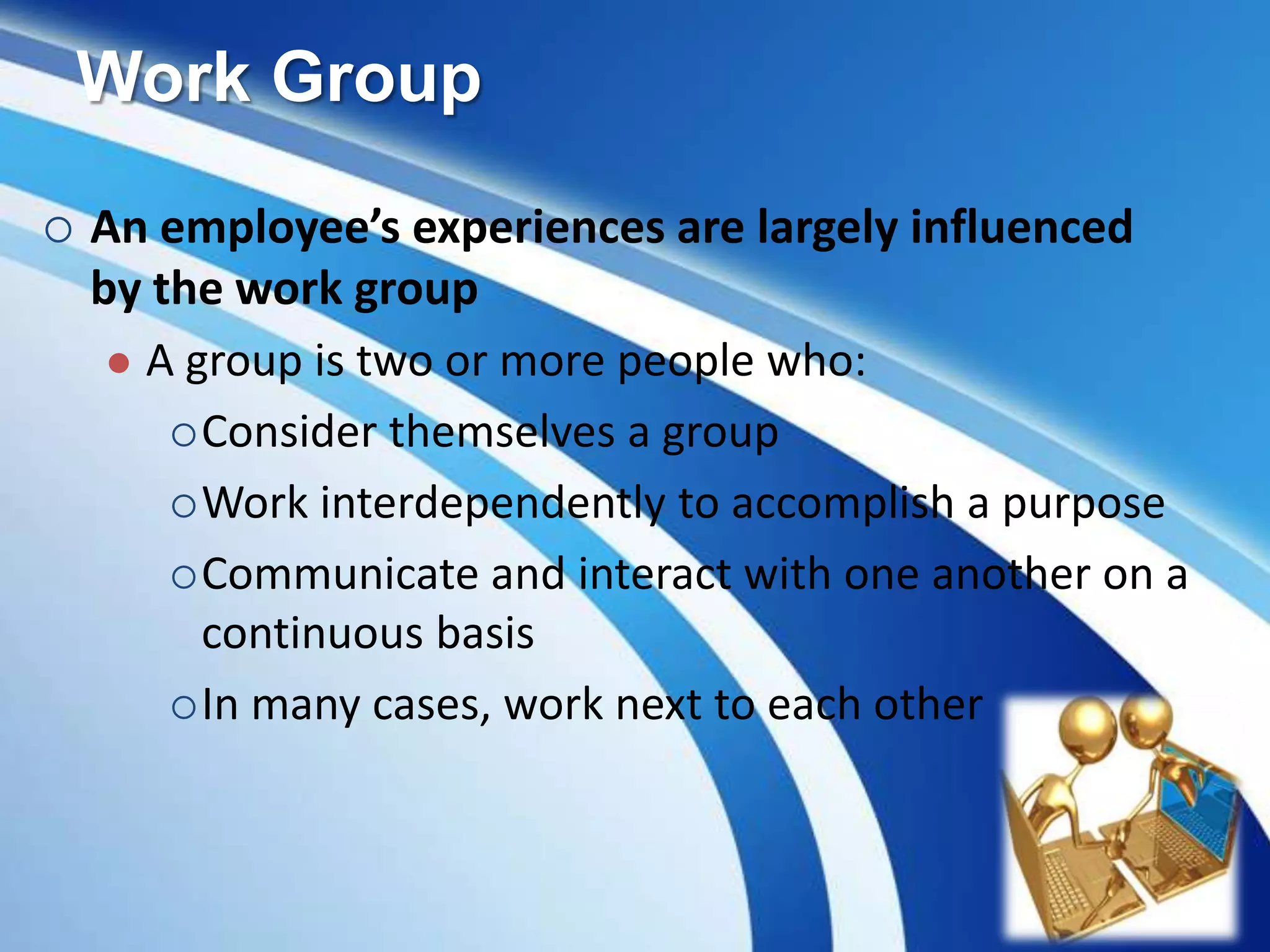
 An employee’s experiences are largely influenced
by the work group
 A group is two or more people who:
Consider themselves a group
Work interdependently to accomplish a purpose
Communicate and interact with one another on a
continuous basis
In many cases, work next to each other
Leader’s Style and Experience
 The experience and leadership style of the
operating manager directly affects HRM activities
 Orchestrating the skills, experiences, personalities, and
motives of individuals
 Facilitating interaction within work groups
 Providing direction, encouragement, and authority to
evoke desired behaviors
 Reinforcing desirable behavior

Strategic HRM

  • 3.
    Introduction  A strategy: Indicates what an organization's key executives hope to accomplish in the long run  Is concerned with competition and aligning the resources of the firm  Good HR strategy results in a fit between organizational strategy and HRM policies and programs  Recruitment, selection, outsourcing, telecommuting, performance evaluation, compensation
  • 4.
     Strategic humanresource management  formulating and executing HR systems that produce the employee competencies and behaviors the company needs to achieve its strategic aims  Taking a strategic HRM approach means:  Making human resources management a top priority  Integrating HRM with the company’s strategy, mission, and goals  HRM can make significant contributions if included in the strategic planning process from the outset  The strategic management process helps determine:  What must be done to achieve priority objectives  How they will be achieved
  • 5.
    Strategic HRM: AKey to Success  Three levels of strategy apply to HRM activities:  Strategic (long term)  Managerial (medium term)  Operational (short term)  The HRM activities are:  Employee selection/placement  Rewards  Appraisal  Development
  • 6.
     Strategic HRMplanning leads to:  Growth  Profits  Survival  Planning also:  Expands awareness of possibilities  Identifies strengths and weaknesses  Reveals opportunities  Points to the need to evaluate the impact of internal and external forces Strategic HRM: A Key to Success
  • 7.
    Traditional HR vs.Strategic HR Point of distinction Focus Role of HR Initiatives Time horizon Control Job design Key investments Accountability Responsibility for HR Traditional HR Employee Relations Transactional change follower and respondent Slow, reactive, fragmented Short-term Bureaucratic-roles, policies, procedures Tight division of labor; independence, specialization Capital, products Cost centre Staff specialists Strategic HR Partnerships with internal and external customers Transformational change leader and initiator Fast, proactive and integrated Short, medium and long (as required) Organic-flexible, whatever is necessary to succeed Broad, flexible, cross-training teams People, knowledge Investment centre Line managers
  • 8.
    Shifts in HRManagement in India Emerging HR practice  Strategic role  Proactive  Key part of organizational mission  Service focus  Process-based organization  Cross-functional teams, teamwork most important  People as key investments/assets Traditional HR practice  Administrative role  Reactive  Separate, isolated from company mission  Production focus  Functional organization  Individuals encouraged, singled out for praise, rewards  People as expenses
  • 9.
    Linking Corporate andHR Strategies
  • 10.
    Strategic Management Process Environmental Scanning  Strategy Formulation  Corporate level  Business unit level  Functional level  Strategy Implementation  Strategy Evaluation
  • 11.
    HR Role inStrategic Management  In strategy formulation  HR manager supplies competitive intelligence that is useful  In strategy implementation  Encouraging proactive behavior  Explicit communication goals  Stimulate critical thinking  Productivity  Quality and Service  Proficient strategic management
  • 12.
    A Model toOrganize HRM  ARDM means:  Acquiring  Rewarding  Developing  Maintaining and protecting  The goals of the ARDM model are:  Socially responsible and ethical practices
  • 13.
     The eventualsuccess of any HRM activity is:  The organization's employees are the best qualified  They perform jobs that suit their needs, skills, and abilities  Matching people and activities in order to accomplish goals is easier with a diagnostic approach A Model to Organize HRM
  • 14.
    Taking a DiagnosticApproach to HRM
  • 15.
    Taking a DiagnosticApproach to HRM  The ARDM model has four specific steps:  Diagnosis  Prescription  Implementation  Evaluation  Managers typically diagnose a work situation by observing and identifying key factors  A prescription is then made to translate the diagnosis into action  Most human resource problems are too complex to have a single correct prescription
  • 16.
    Taking a DiagnosticApproach to HRM  Implementing a solution is the next step, followed by evaluation  Evaluation tells managers whether improvement in the ARDM process is needed  If an organization teaches its members to focus on ARDM plus the environment, it is likely to achieve:  Socially responsible, ethical behaviors  Competitive, high-quality products and services  The ARDM model calls for thorough, timely, and systematic review of each situation
  • 17.
    External Environmental Influences HRM processes are influenced by both the internal and external environments  External influences include:  Government laws and regulations  Union procedures and requirements  Economic conditions  The labor force  HR planning must operate within:  Guidelines  Limits of available resources  Competencies
  • 18.
    Economic Conditions  Twoeconomic factors affect HRM programs:  Productivity  The work sector of the organization  Productivity is:  An important part of a nation's economic condition  Representative of an organization’s overall efficiency  The output of goods and services per unit of input (resources) used in a production process
  • 19.
    Economic Conditions  Managerscan influence productivity through sound HRM programs  Diagnosis, prescription, implementation, and evaluation  Recruitment and selection  Motivational and compensation techniques  Training and development
  • 20.
    Internal Environmental Influences HRM programs are influenced by:  Strategy  Goals  Organizational culture  Nature of the task  Work groups  The leader’s style and experience
  • 21.
    Goals  Organizational goalsdiffer within and among departments  Most departments have similar goals  Differences arise from the importance placed on the goals  In organizations where profits take precedence, HRM goals receive little attention  This results in effectiveness problems (absenteeism, performance decrements, high grievance rates)
  • 22.
  • 23.
    Organization Culture  Afirm's organizational culture is shown by:  The way it does business  How it treats customers and employees  The autonomy or freedom that exists in the departments or offices  The degree of loyalty expressed by employees
  • 24.
    Organization Culture  Organizationculture represents the perceptions held by the employees  There is no one "best" culture for the development of human resources  Culture can:  Impact behavior, productivity, expectations  Provide a benchmark for standards of performance
  • 25.
    Work Group  Anemployee’s experiences are largely influenced by the work group  A group is two or more people who: Consider themselves a group Work interdependently to accomplish a purpose Communicate and interact with one another on a continuous basis In many cases, work next to each other
  • 26.
    Leader’s Style andExperience  The experience and leadership style of the operating manager directly affects HRM activities  Orchestrating the skills, experiences, personalities, and motives of individuals  Facilitating interaction within work groups  Providing direction, encouragement, and authority to evoke desired behaviors  Reinforcing desirable behavior