



















The Organization
sets the Foundation
to Informal Learning


     Stan Skrabut
     @uwcesedtech
     #uwces
     http://www.slideshare.net/skrabut
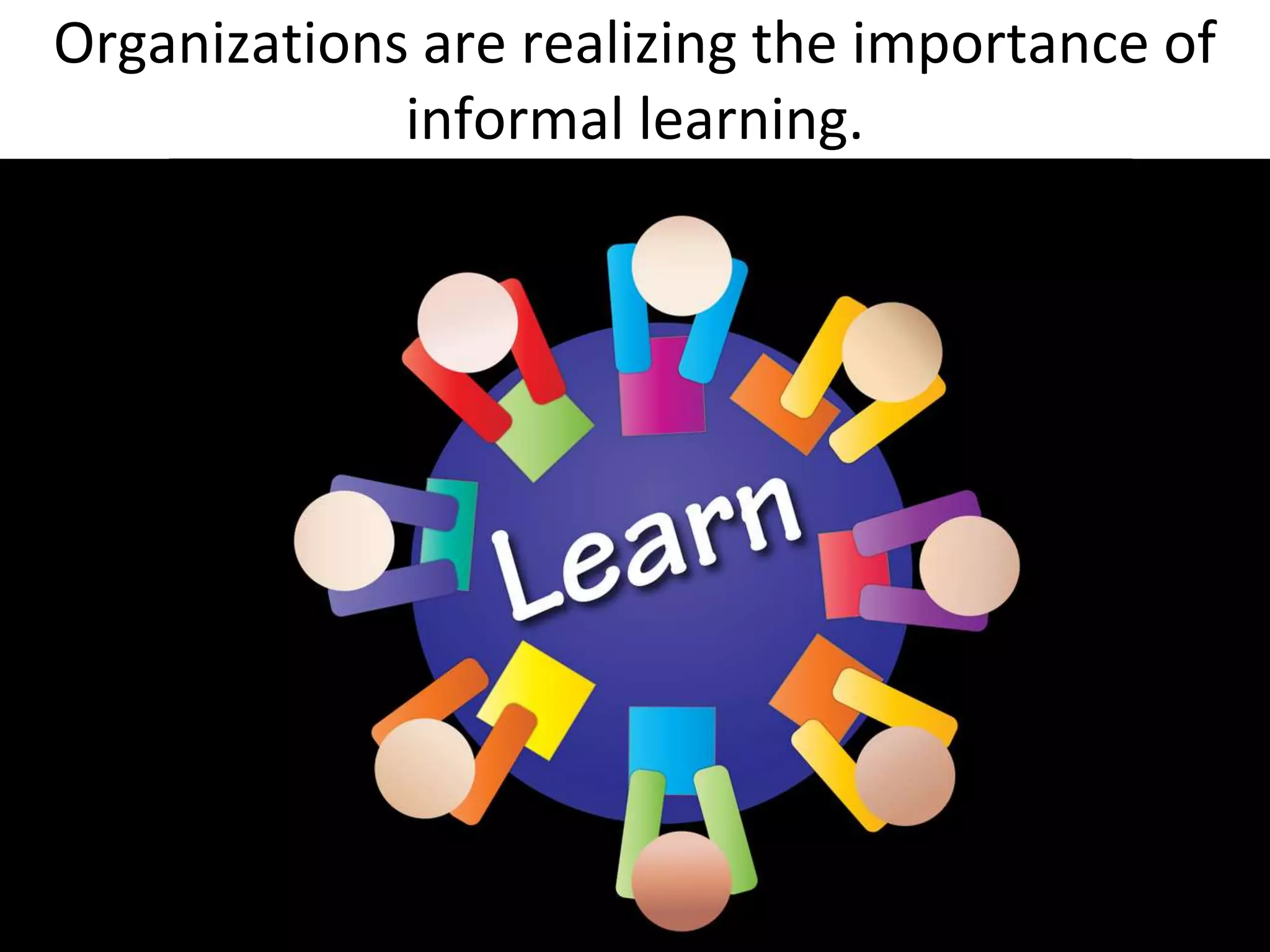
Organizations are realizing the importance of
             informal learning.
You are part of an organization where learning
               is a key function.
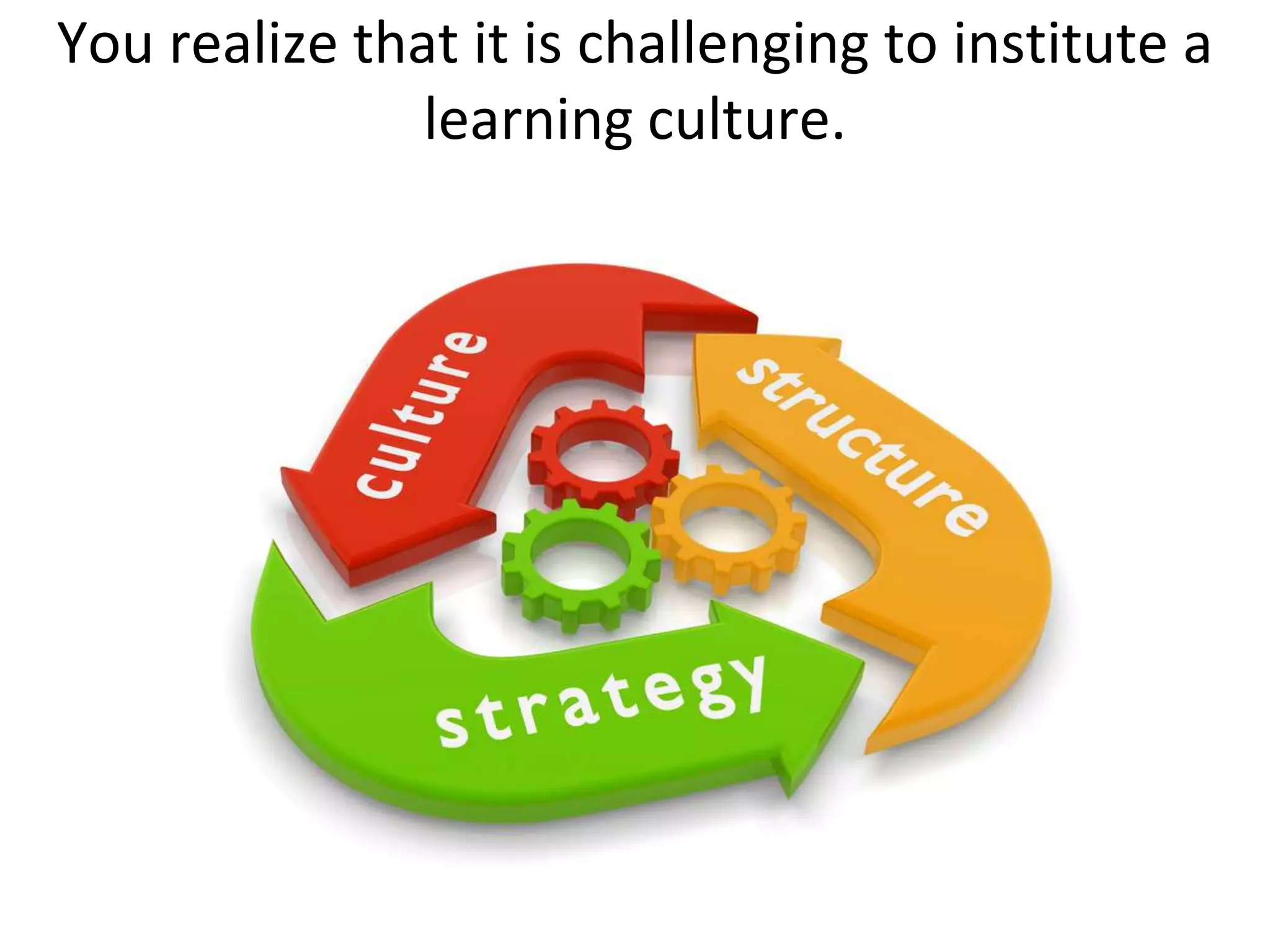
You realize that it is challenging to institute a
               learning culture.
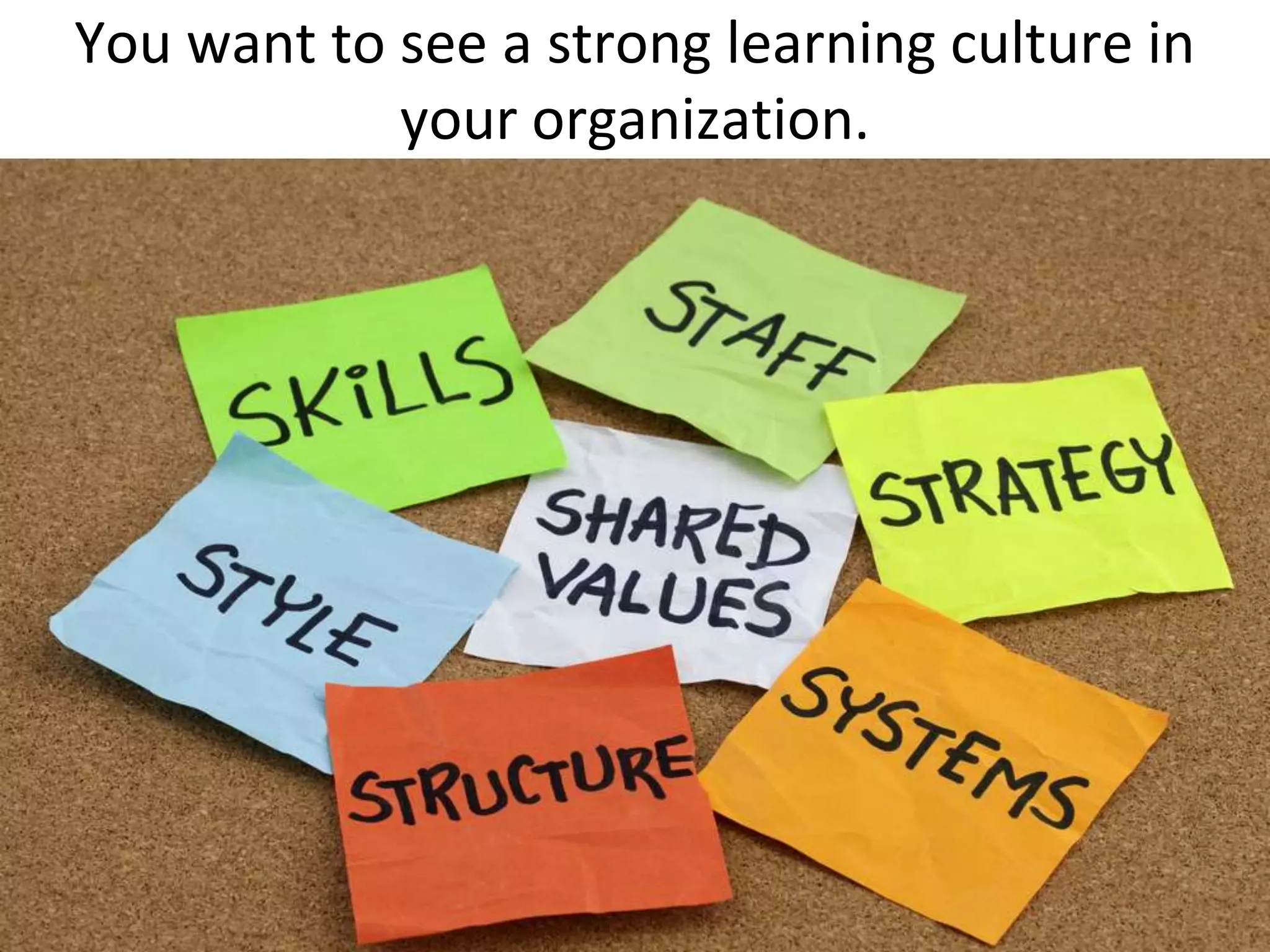
You want to see a strong learning culture in
            your organization.
Let me show you the four key cornerstones to
       the organizational foundation.
At every level of
the organization,
 efforts must be
 made to make a
positive learning
  environment.
Organizations are looking for alternative methods for
       instruction such as informal learning.
Because of information overload, organizations
    believe informal learning is a solution.
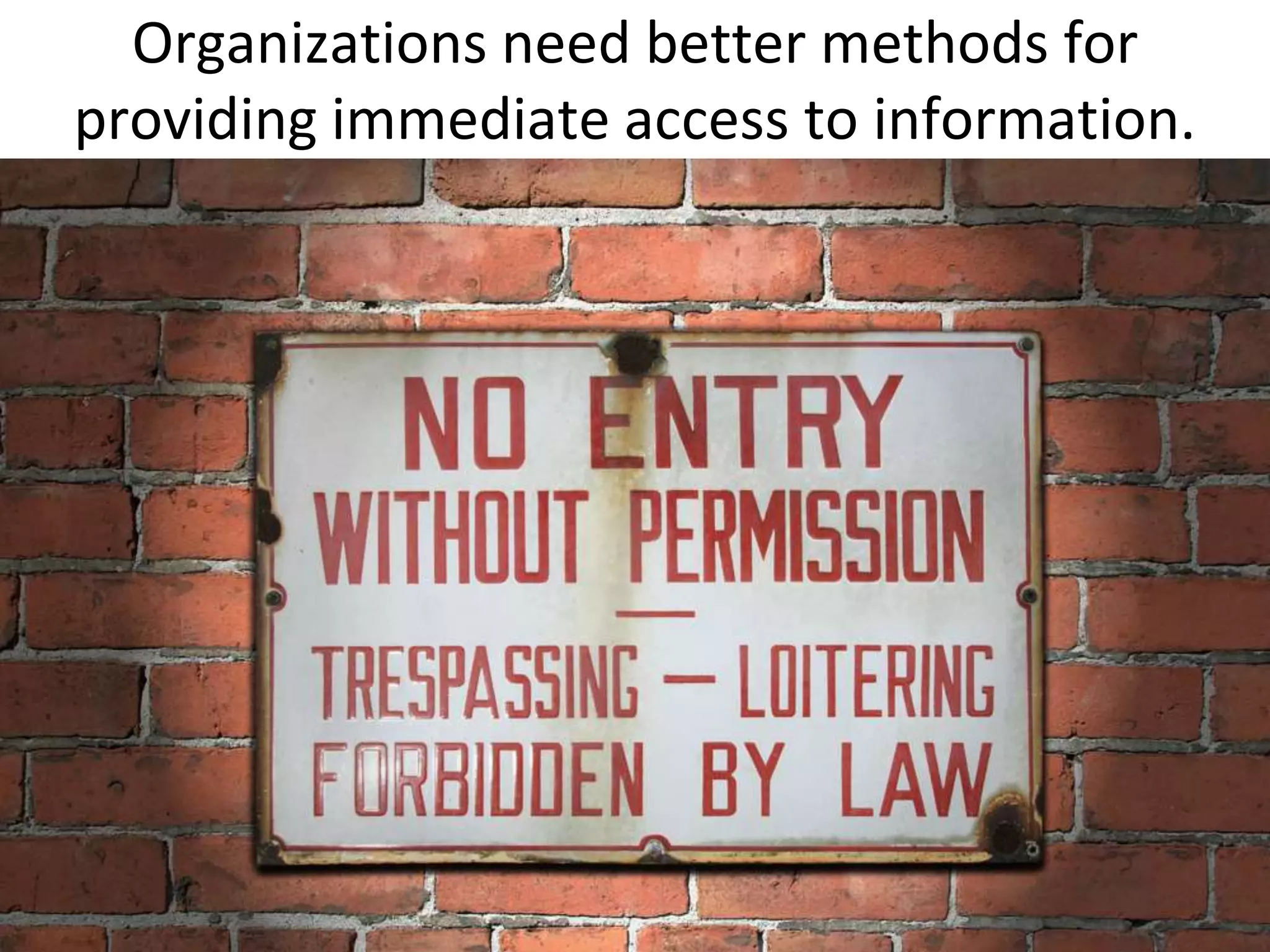
Organizations need better methods for
providing immediate access to information.
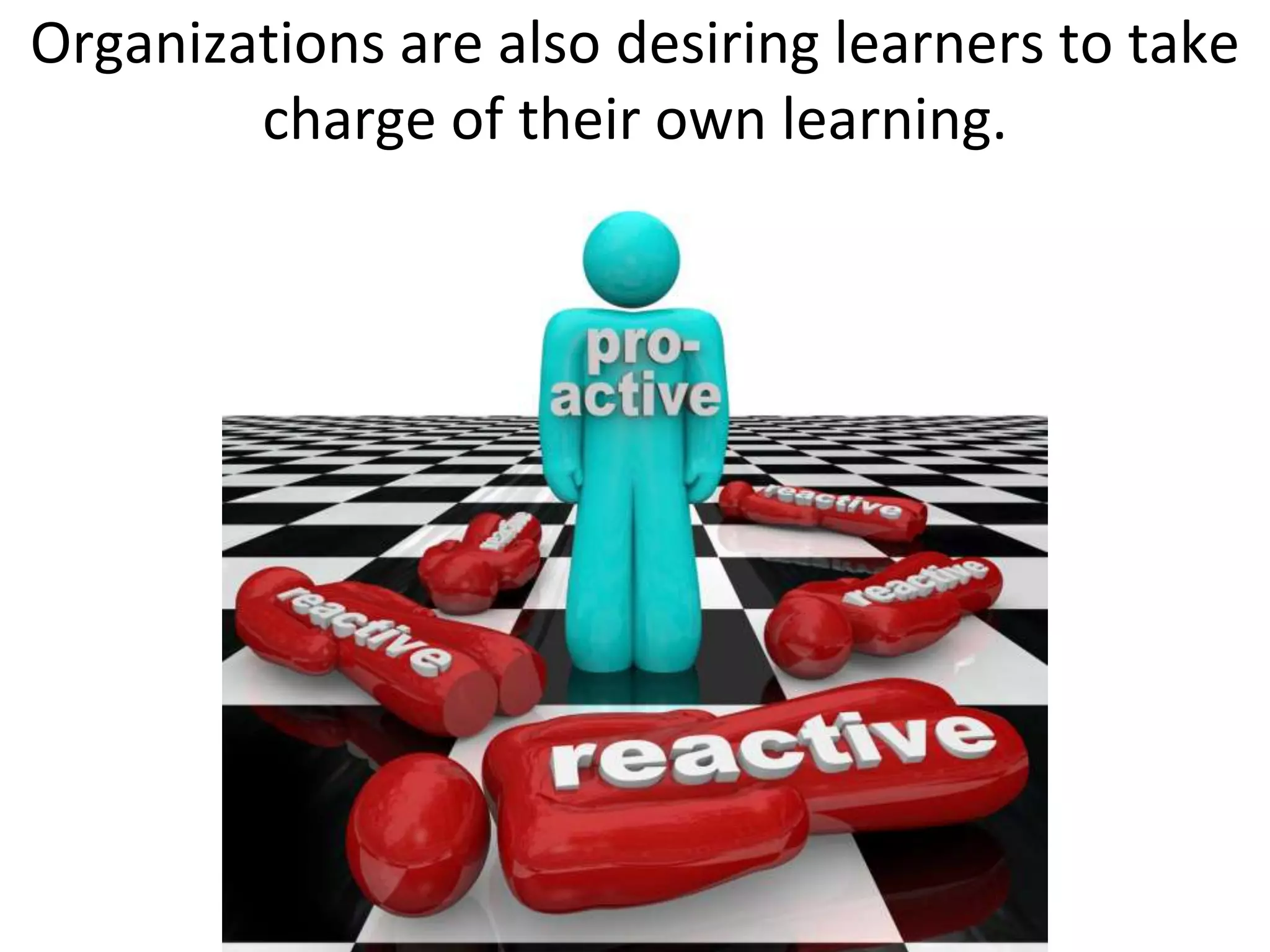
Organizations are also desiring learners to take
        charge of their own learning.
Look for ways to integrate informal learning
        into day-to-day operations.
Make informal learning a part of an individual's
                learning plan.
Organizations should allow time for quiet study
             during the work day.
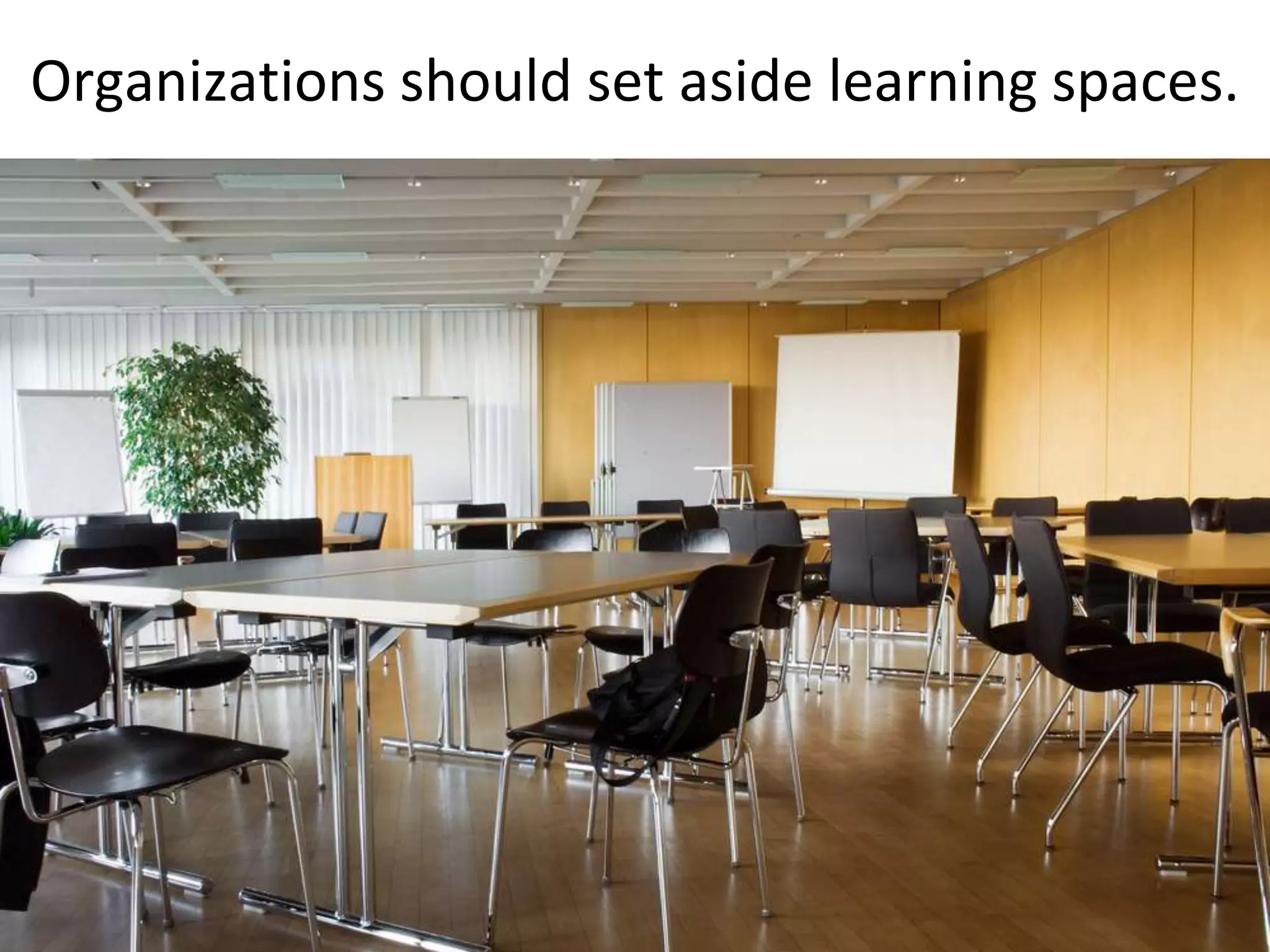
Organizations should set aside learning spaces.
Leaders should continuously encourage learning
         and publicize success stories.
Organizations should provide resources that are
          accessible and easy to use.
Collaboration and discussion is a key
component to a positive learning environment.
Allow opportunities for employees to get up and talk
    with others about work as a way of learning.
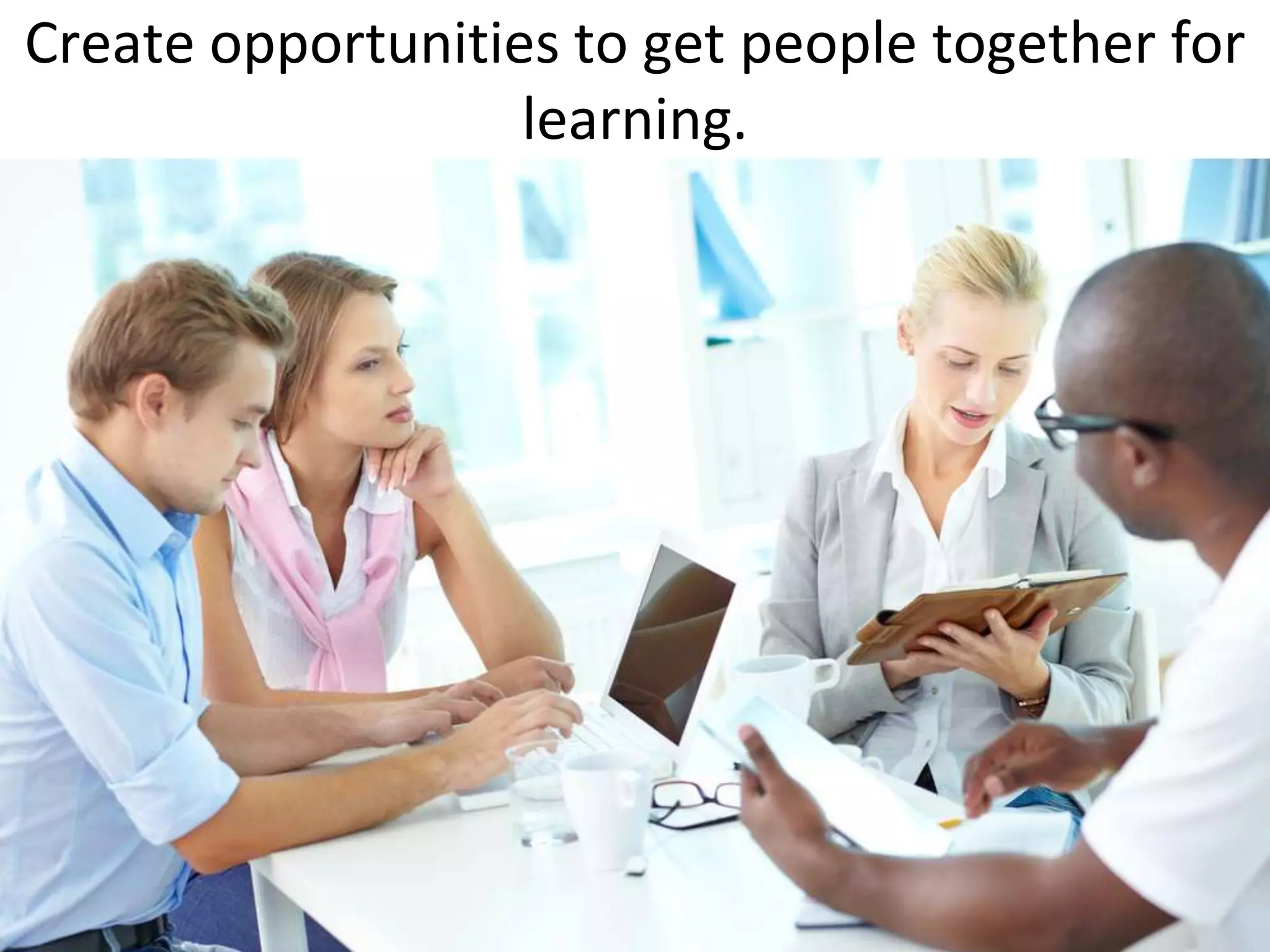
Create opportunities to get people together for
                   learning.
Do not try to formalize chats and networking, it
          will yield diminished results.
Everyone must
  understand their
 role in learning to
include employees,
    leaders, and
    supervisors.
Top management must have buy-in to the
          learning process.
Supervisors and managers are the key to informal
learning in the workplace; they must lead by example.
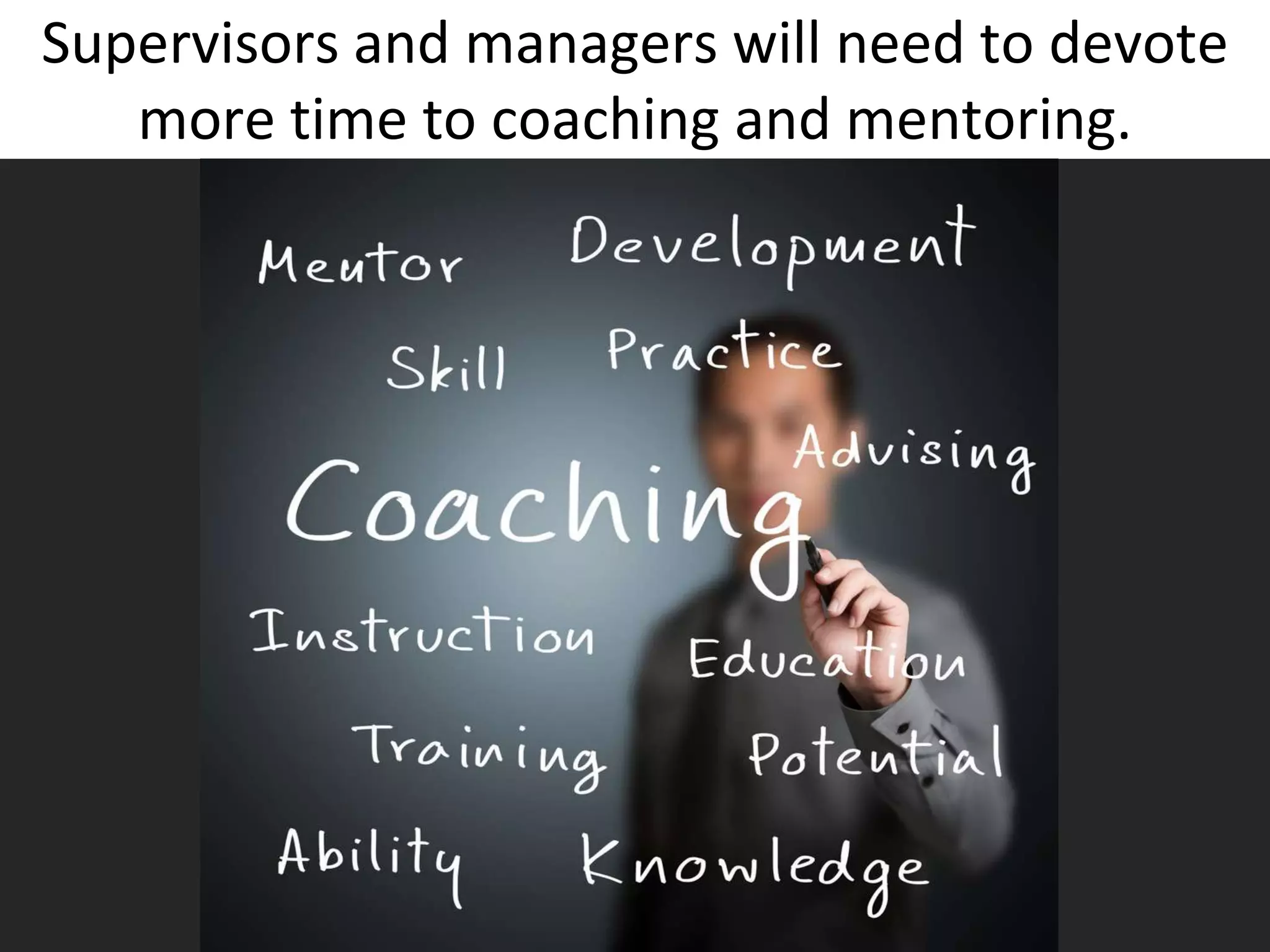
Supervisors and managers will need to devote
   more time to coaching and mentoring.
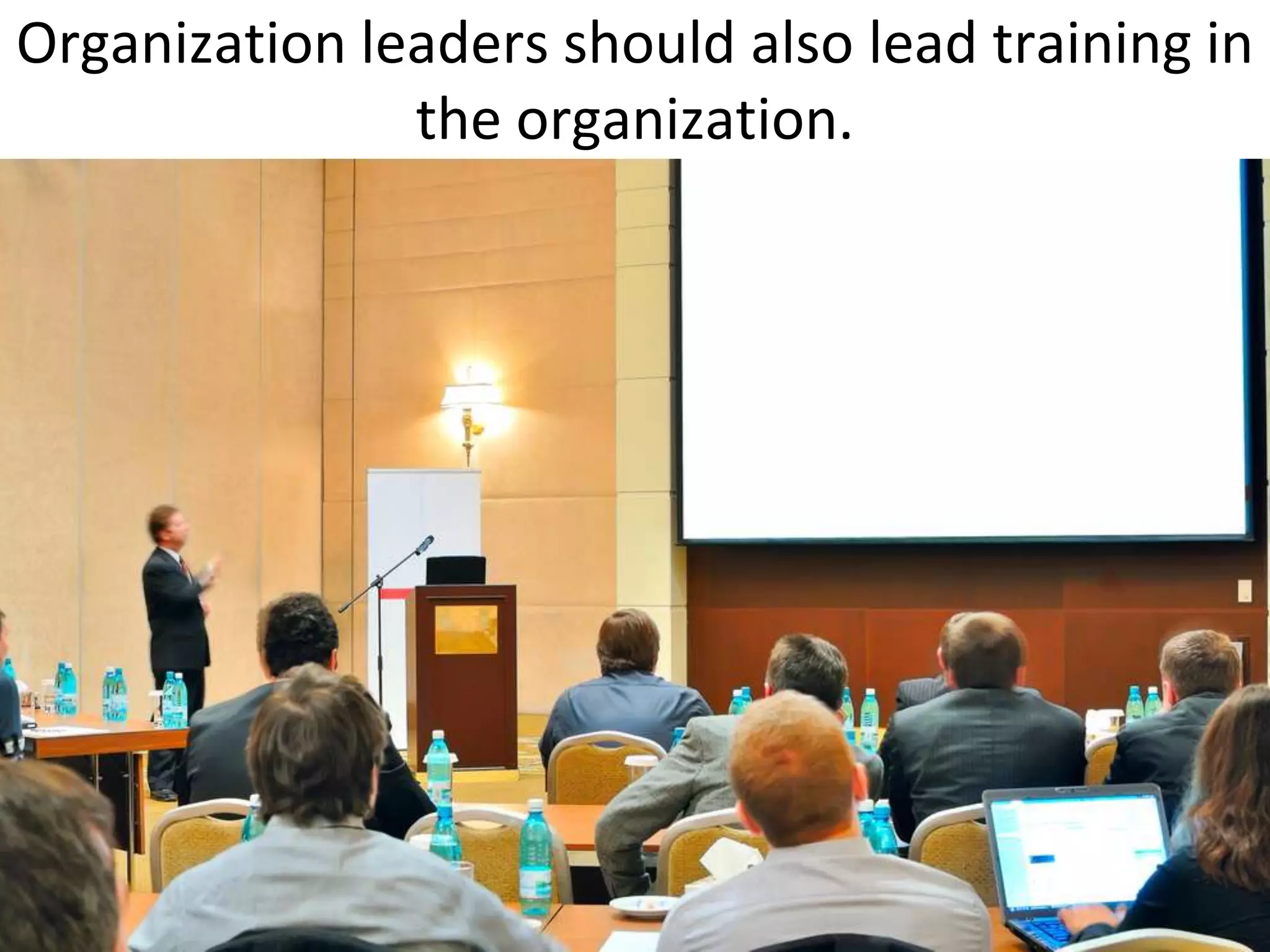
Organization leaders should also lead training in
               the organization.
Supervisors and organizations can support
learning by providing opportunities for learning.
Organizations should help provide tuition
               assistance.
Organizations should provide support for conferences
        and Internet learning opportunities.
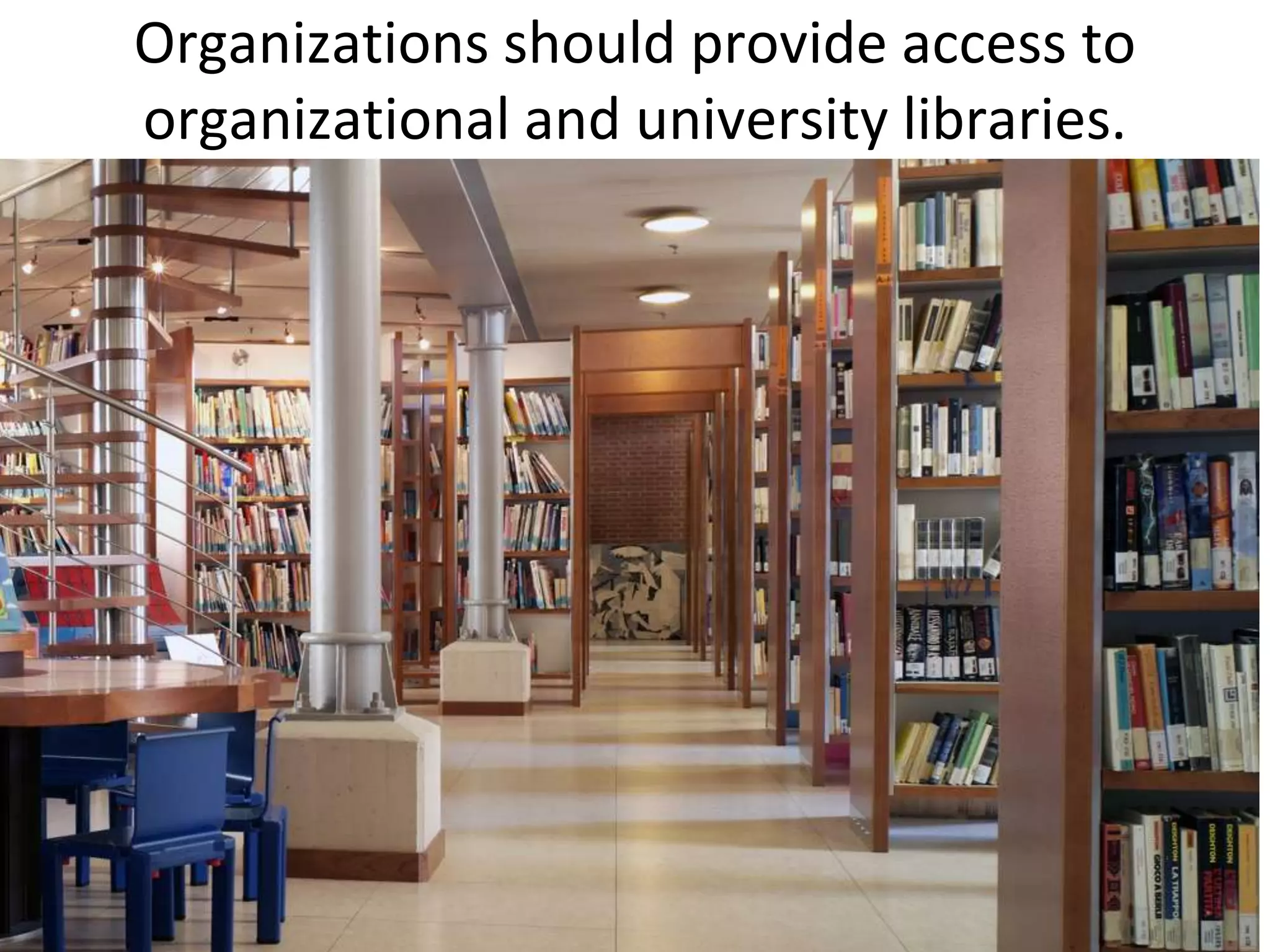
Organizations should provide access to
organizational and university libraries.
Organizations should recognize learning
    champions and achievements.
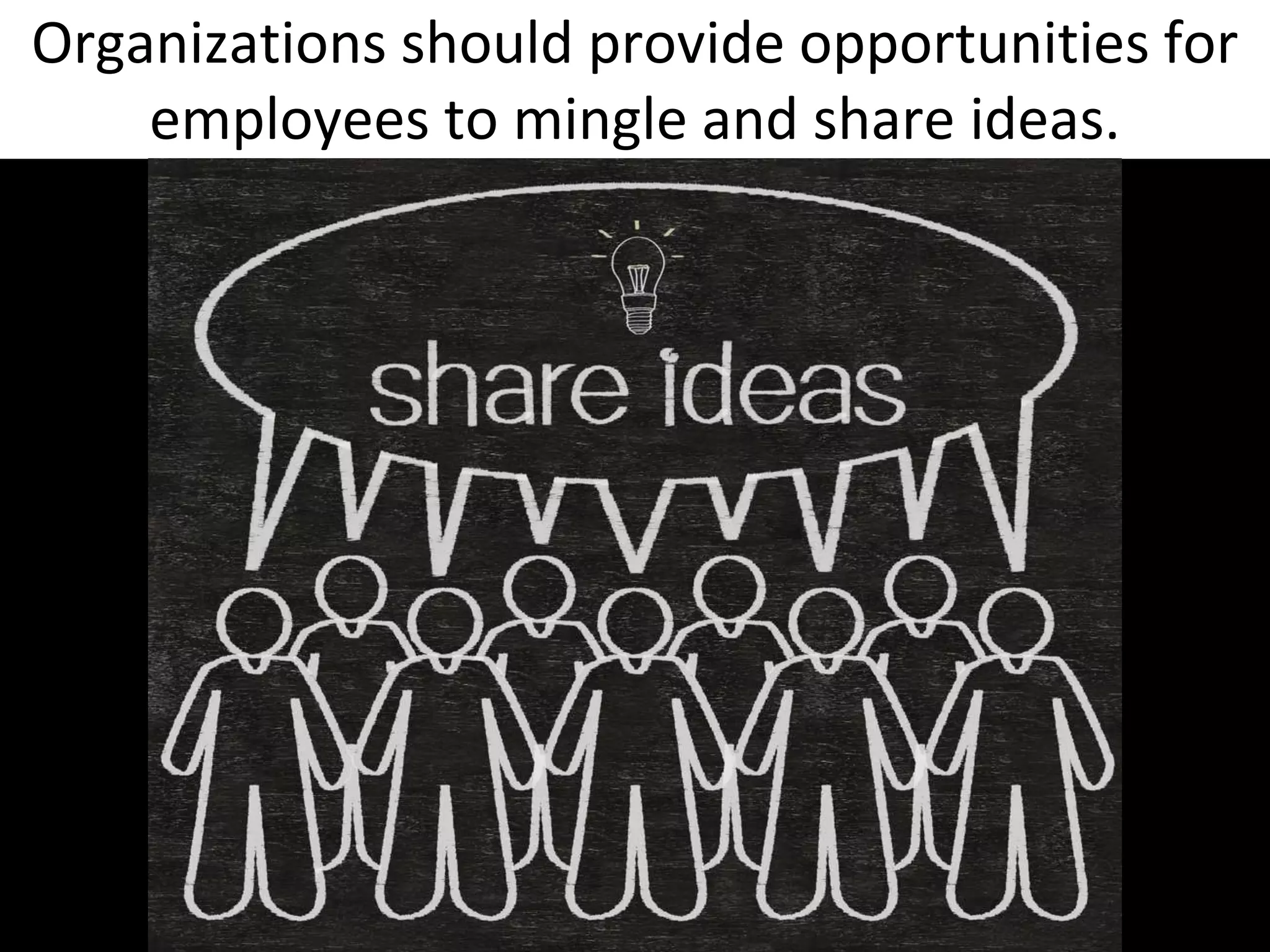
Organizations should provide opportunities for
    employees to mingle and share ideas.
Leaders should share books and articles they
                are reading.
Most importantly, leaders should remove
     policies that impede learning.
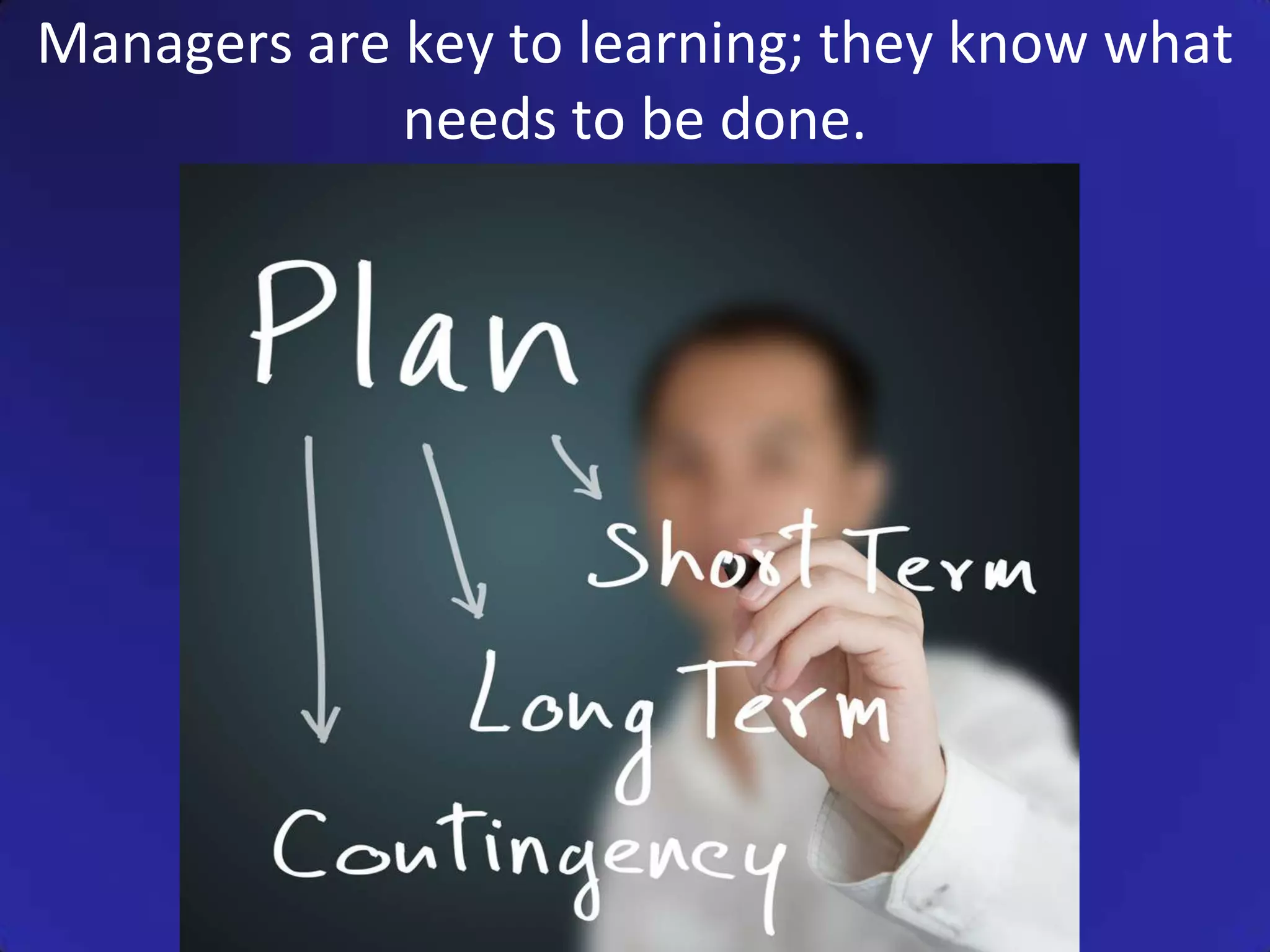
Managers are key to learning; they know what
             needs to be done.
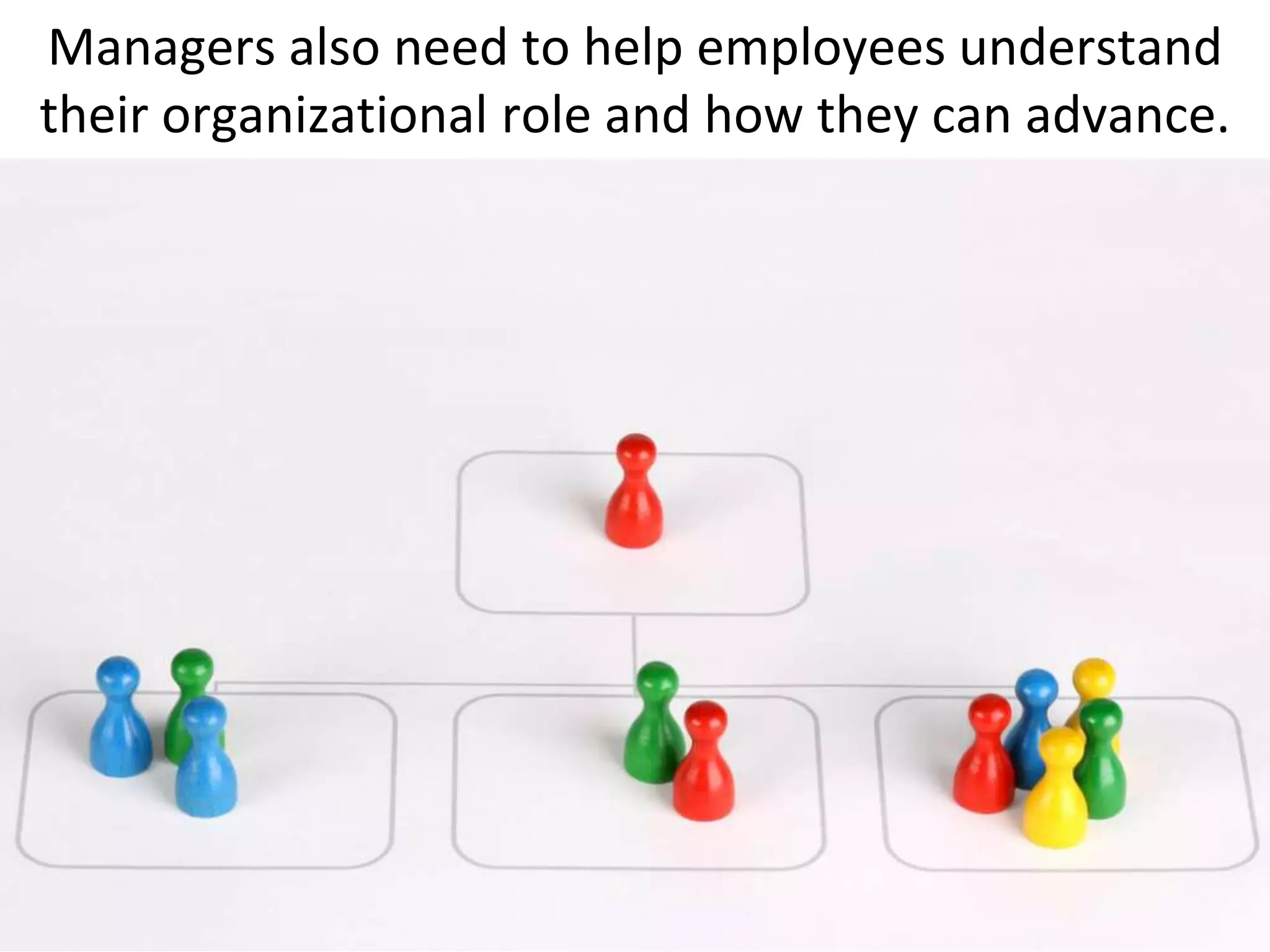
Managers also need to help employees understand
their organizational role and how they can advance.
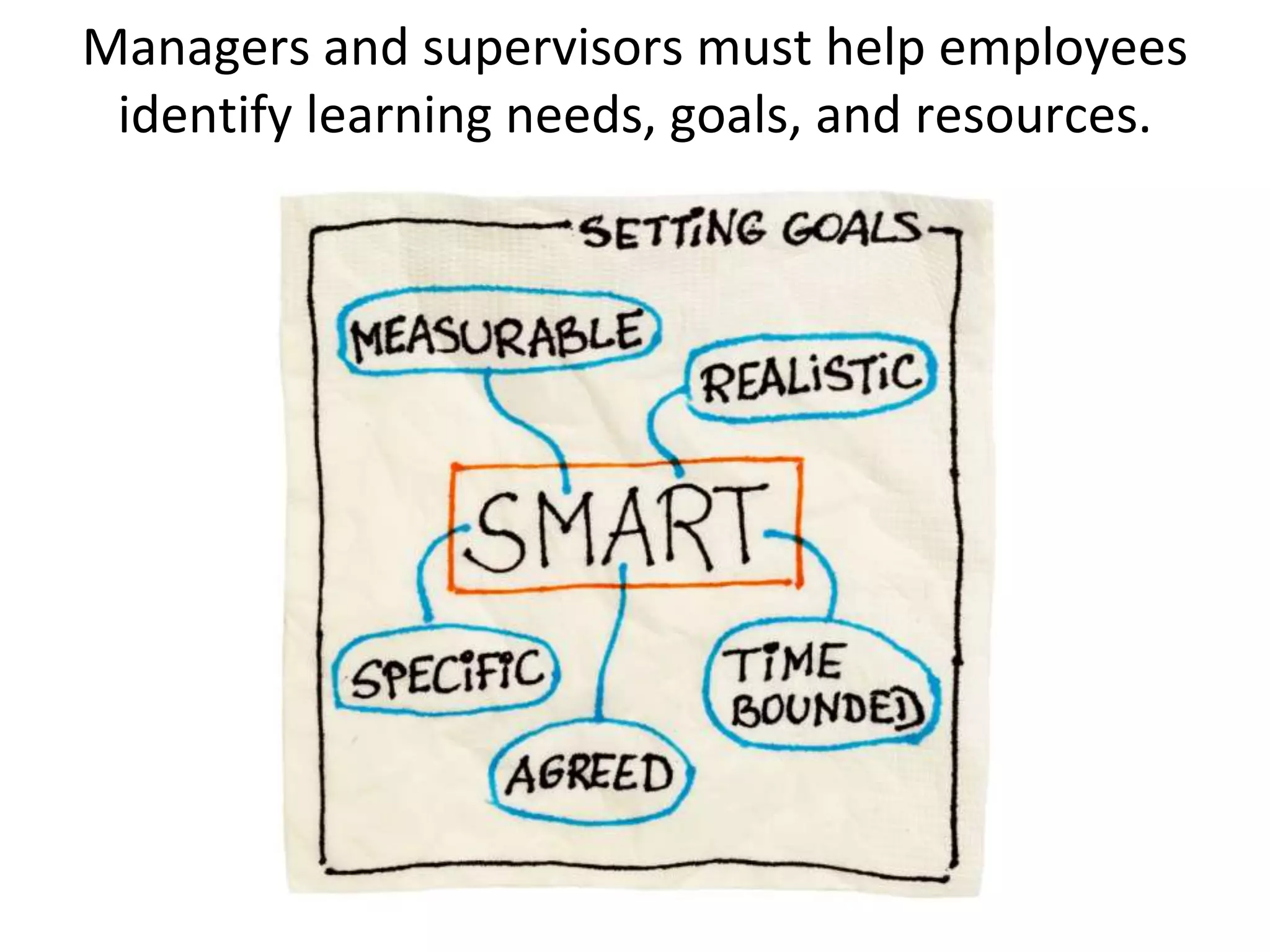
Managers and supervisors must help employees
 identify learning needs, goals, and resources.
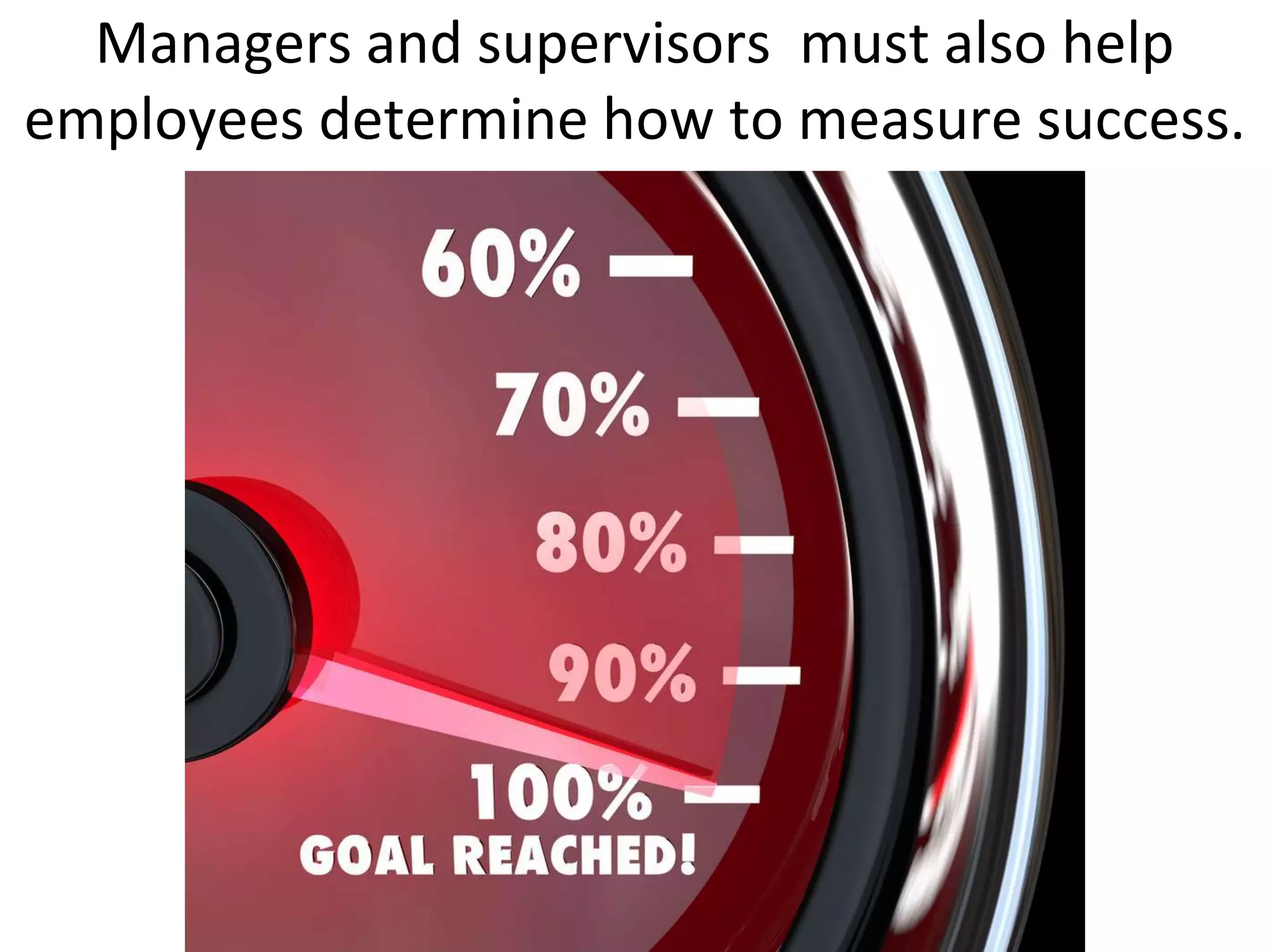
Managers and supervisors must also help
employees determine how to measure success.
Employees must
have easy access to
learning resources.
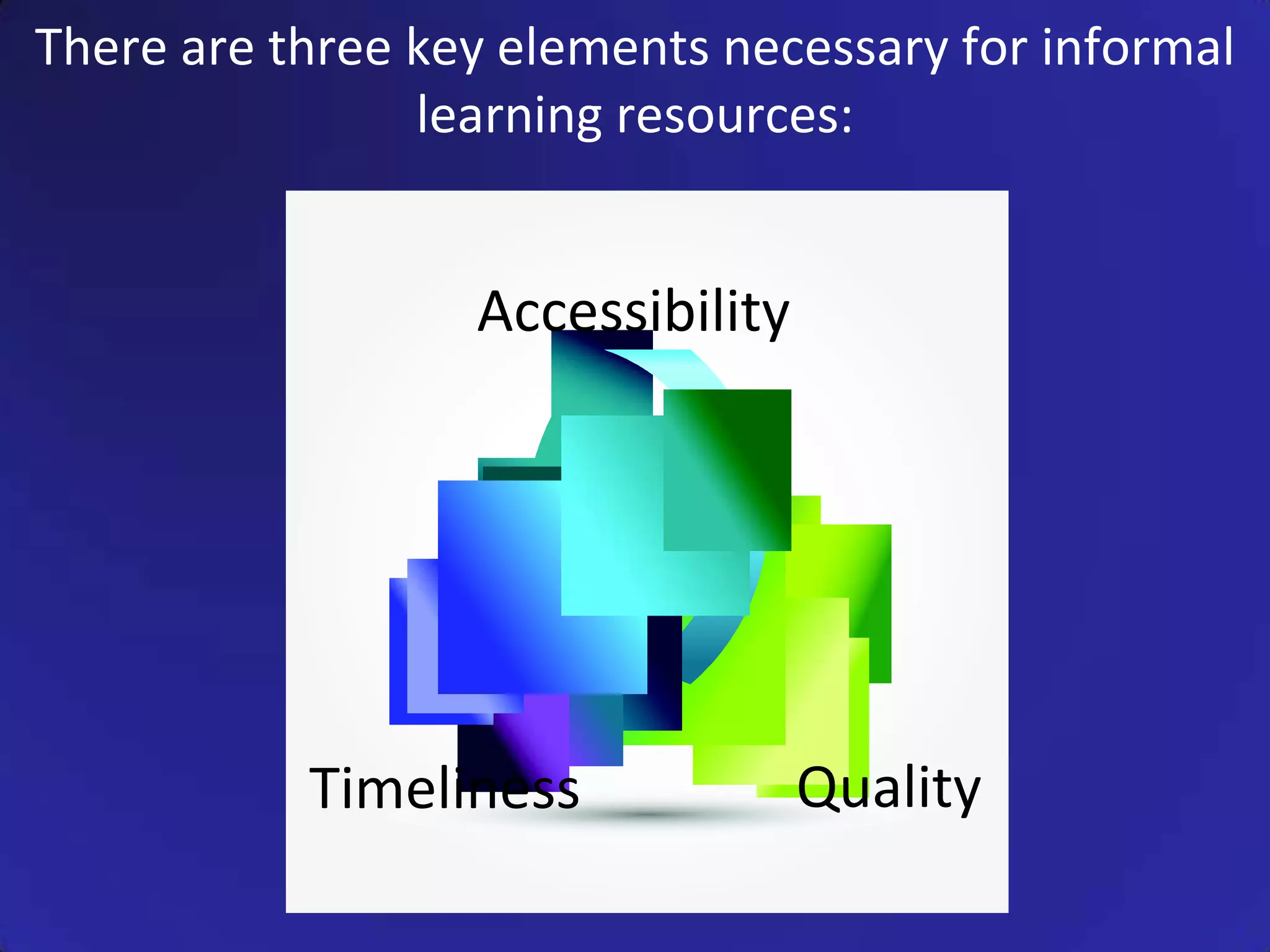
There are three key elements necessary for informal
                learning resources:


                  Accessibility


           Timeliness             Quality
It is important to chunk information for easy retrieval
       and use, especially in a mobile environment.
Technology can be a force multiplier in a
        learning environment.
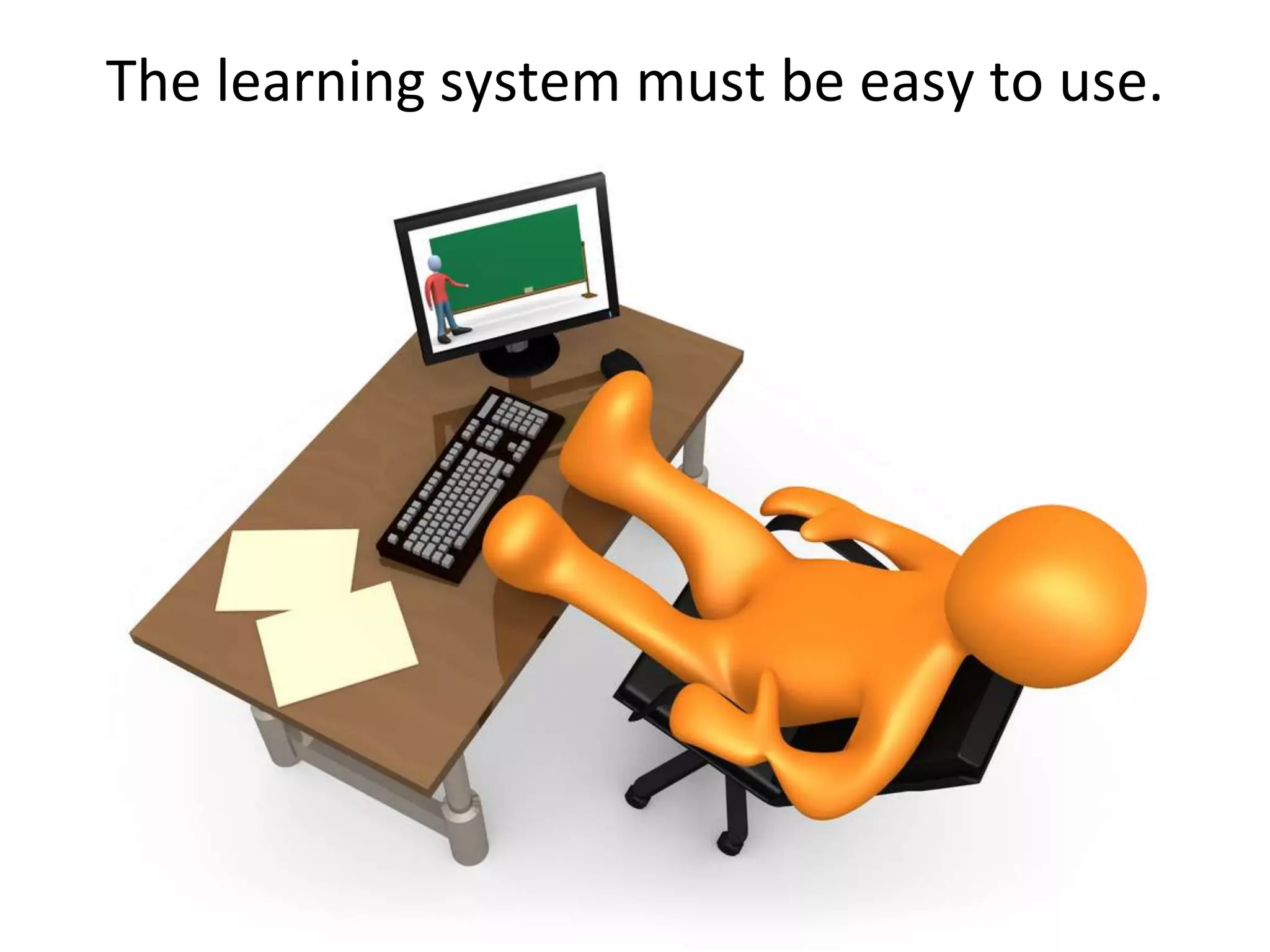
The learning system must be easy to use.
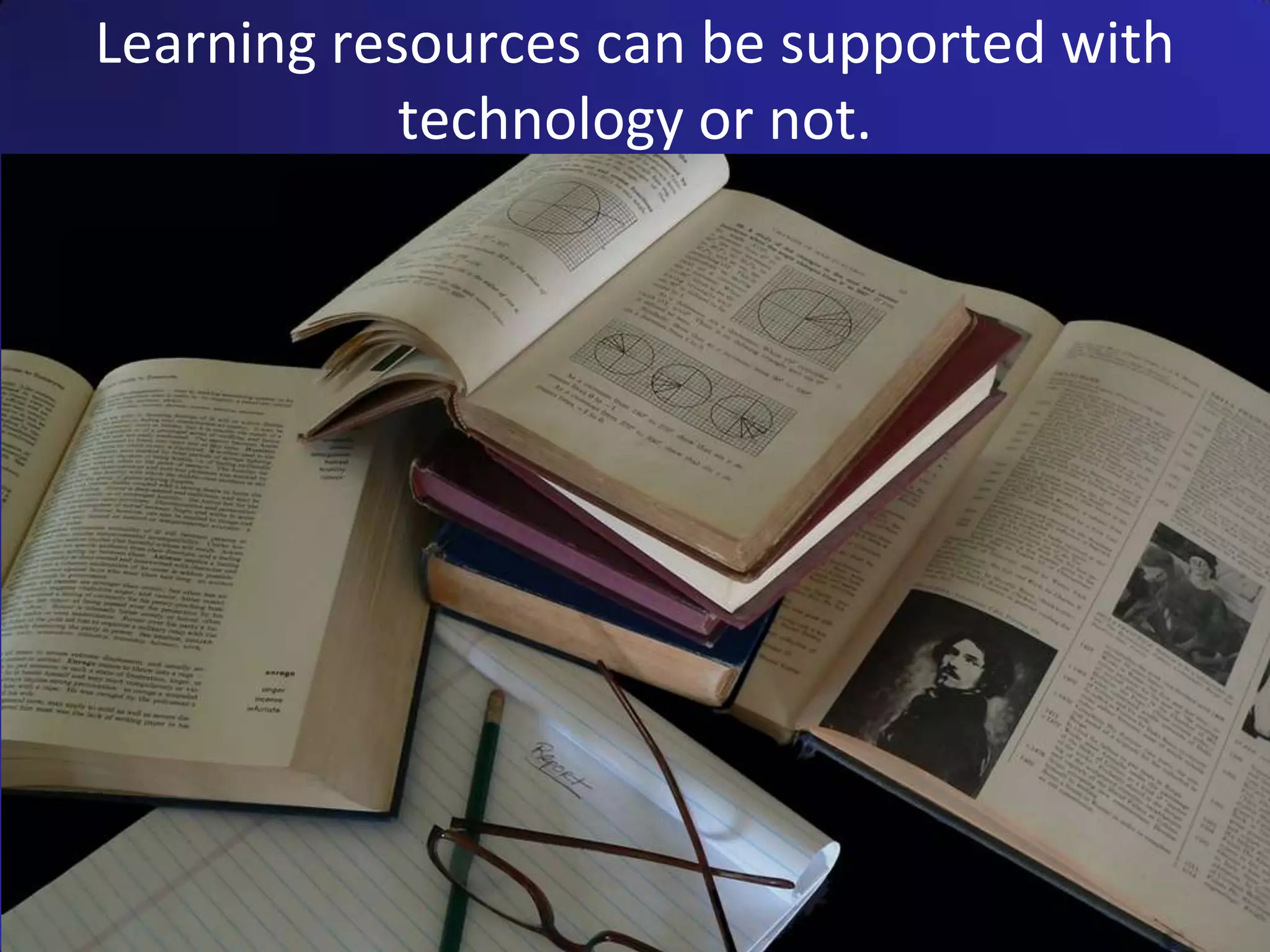
Learning resources can be supported with
            technology or not.
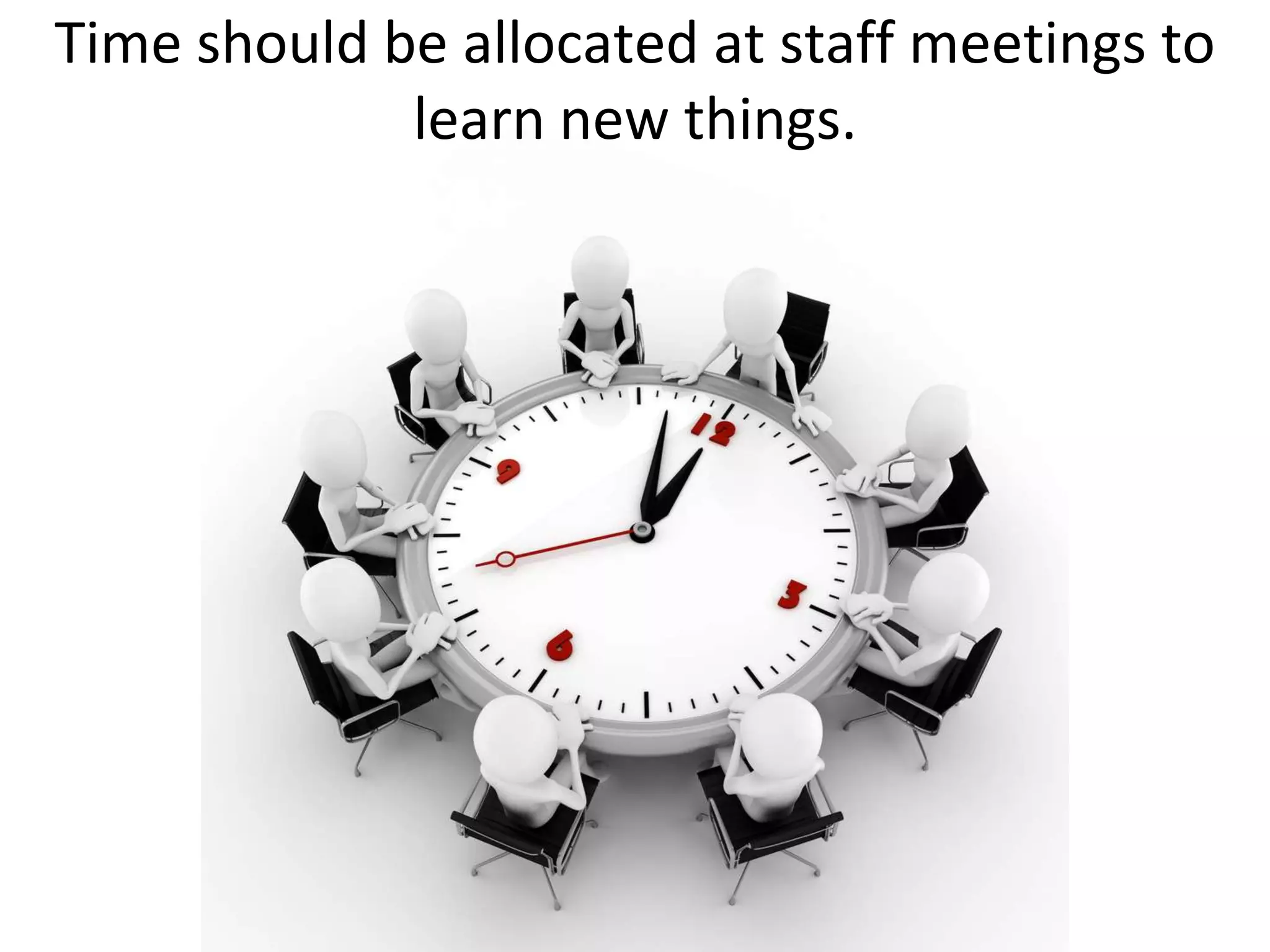
Time should be allocated at staff meetings to
             learn new things.
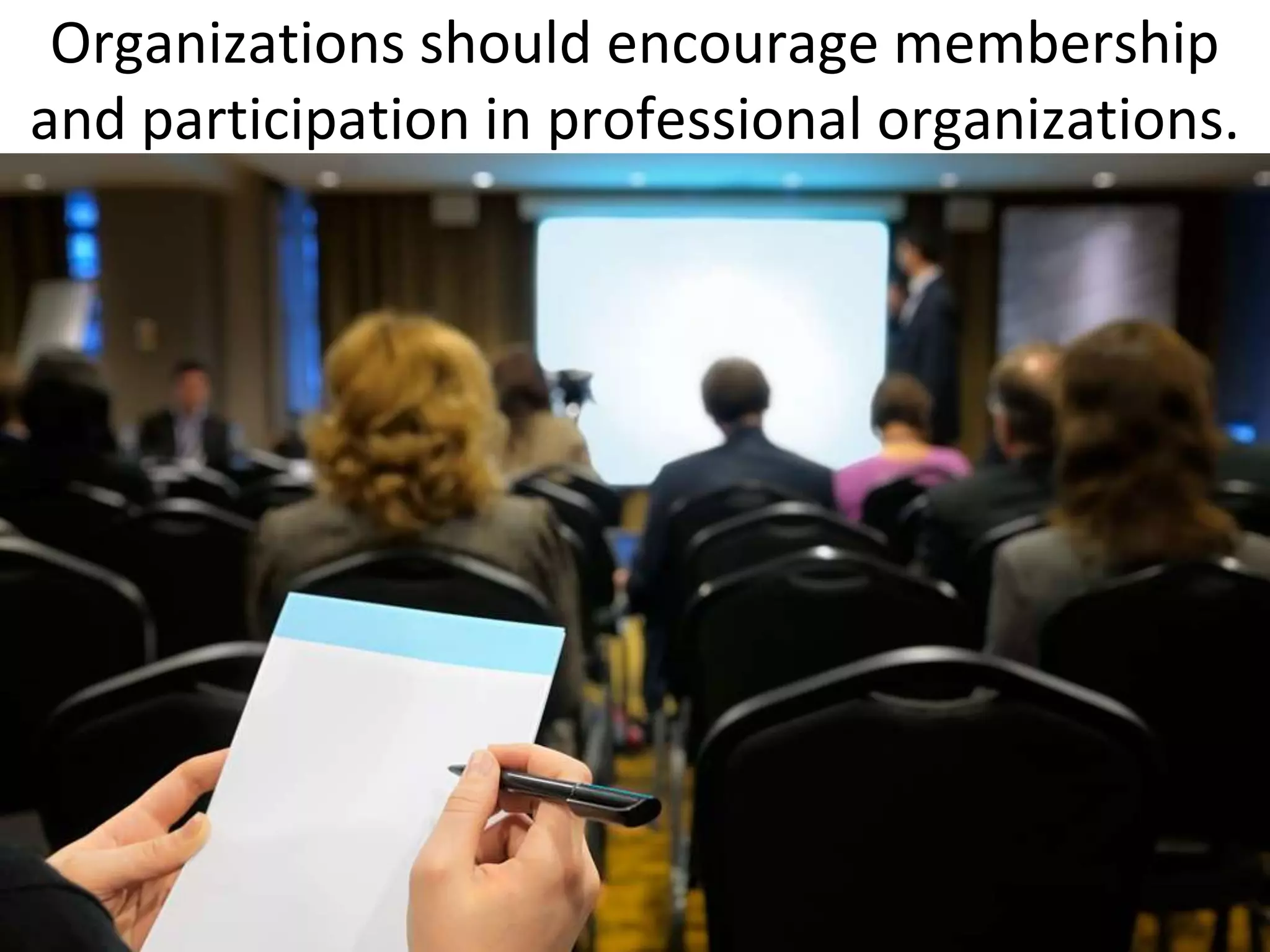
Organizations should encourage membership
and participation in professional organizations.
Employees should be encouraged to create video
  clips, write book reviews, and write articles.
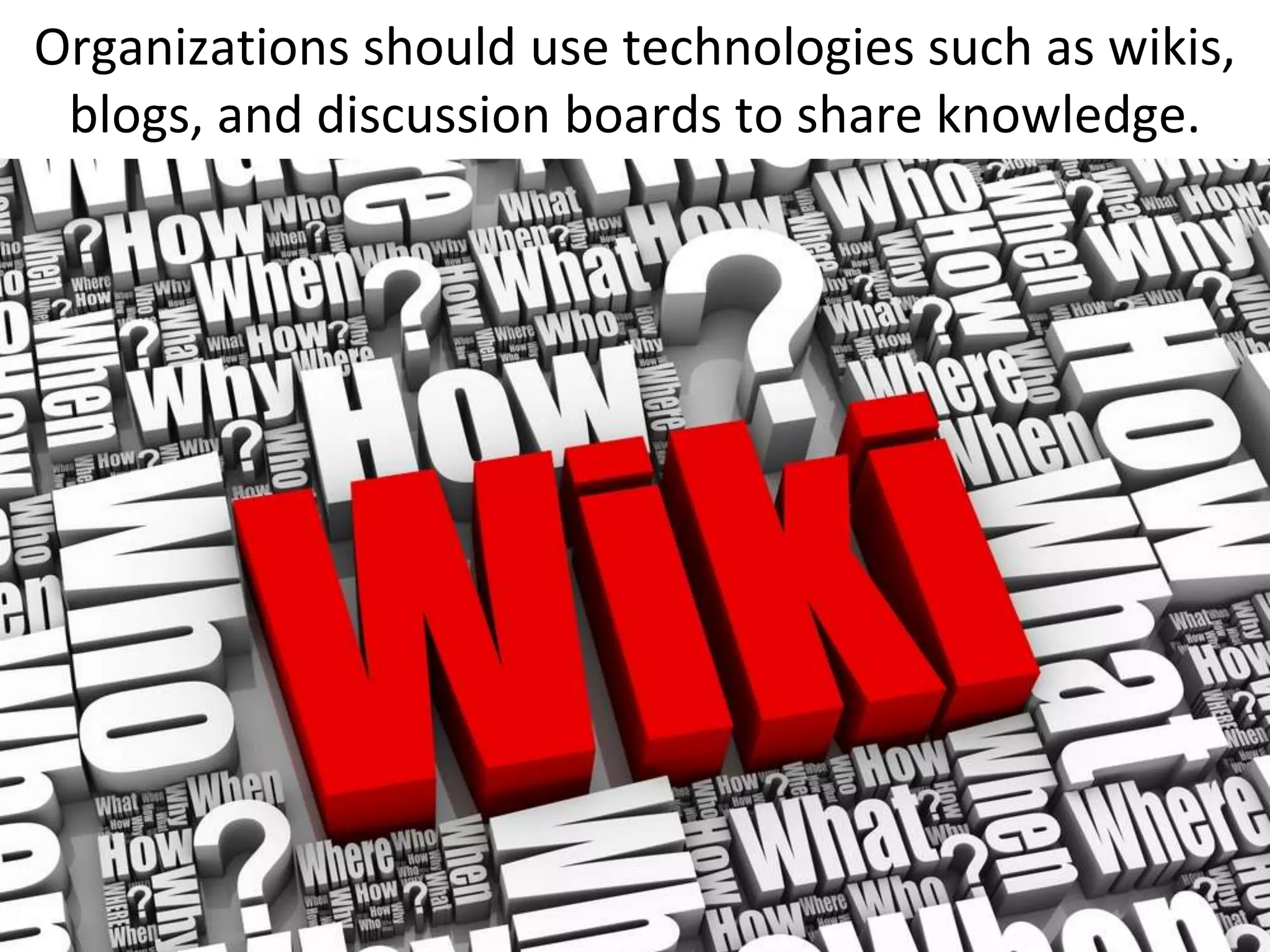
Organizations should use technologies such as wikis,
 blogs, and discussion boards to share knowledge.
Employees should be encouraged to teach a class for
    the benefit of the rest of the organization.
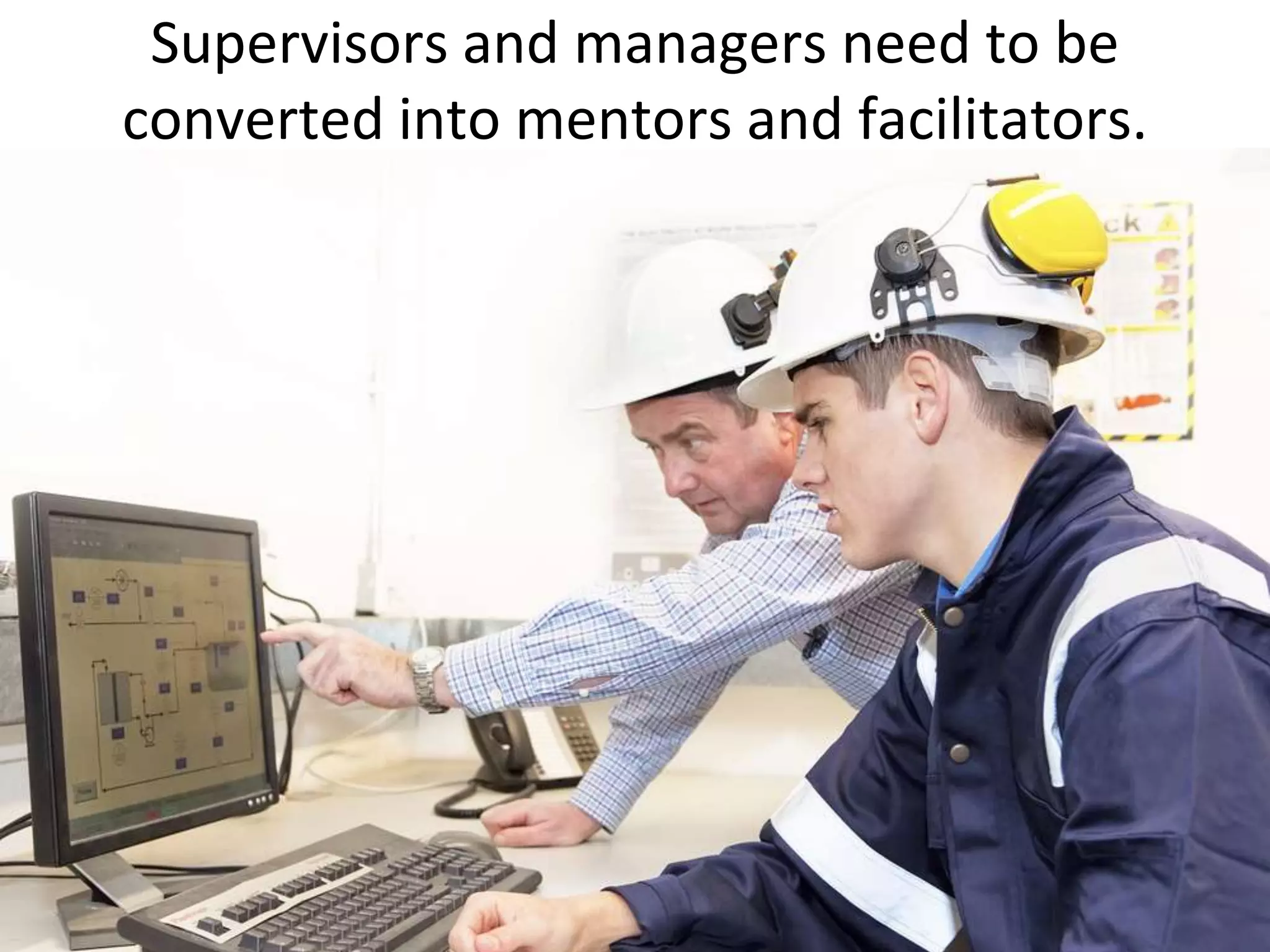
Supervisors and managers need to be
converted into mentors and facilitators.
Organizations need
   knowledge
 networks where
  employees can
continuously grow
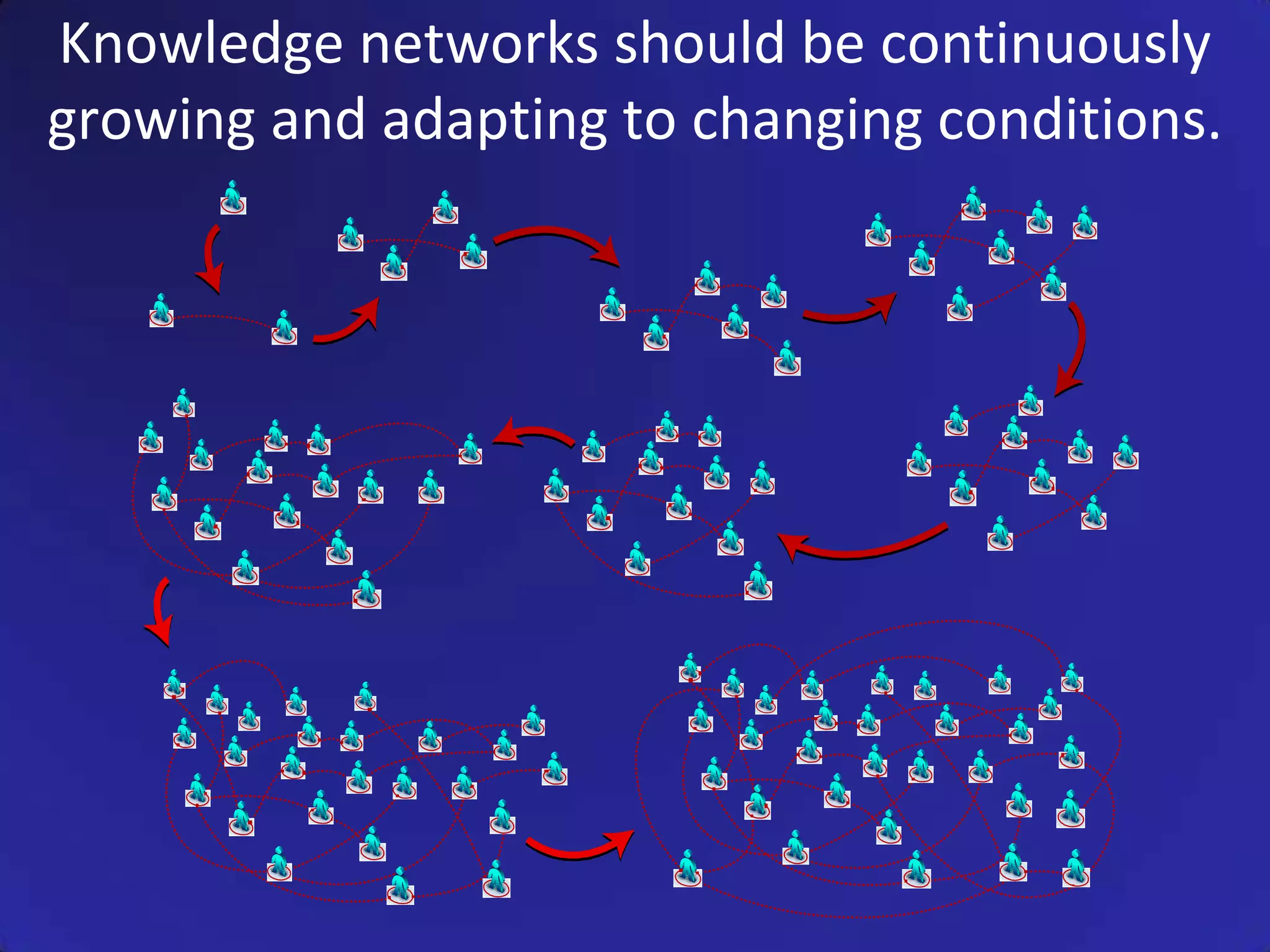
    and learn.
Knowledge networks should be continuously
growing and adapting to changing conditions.
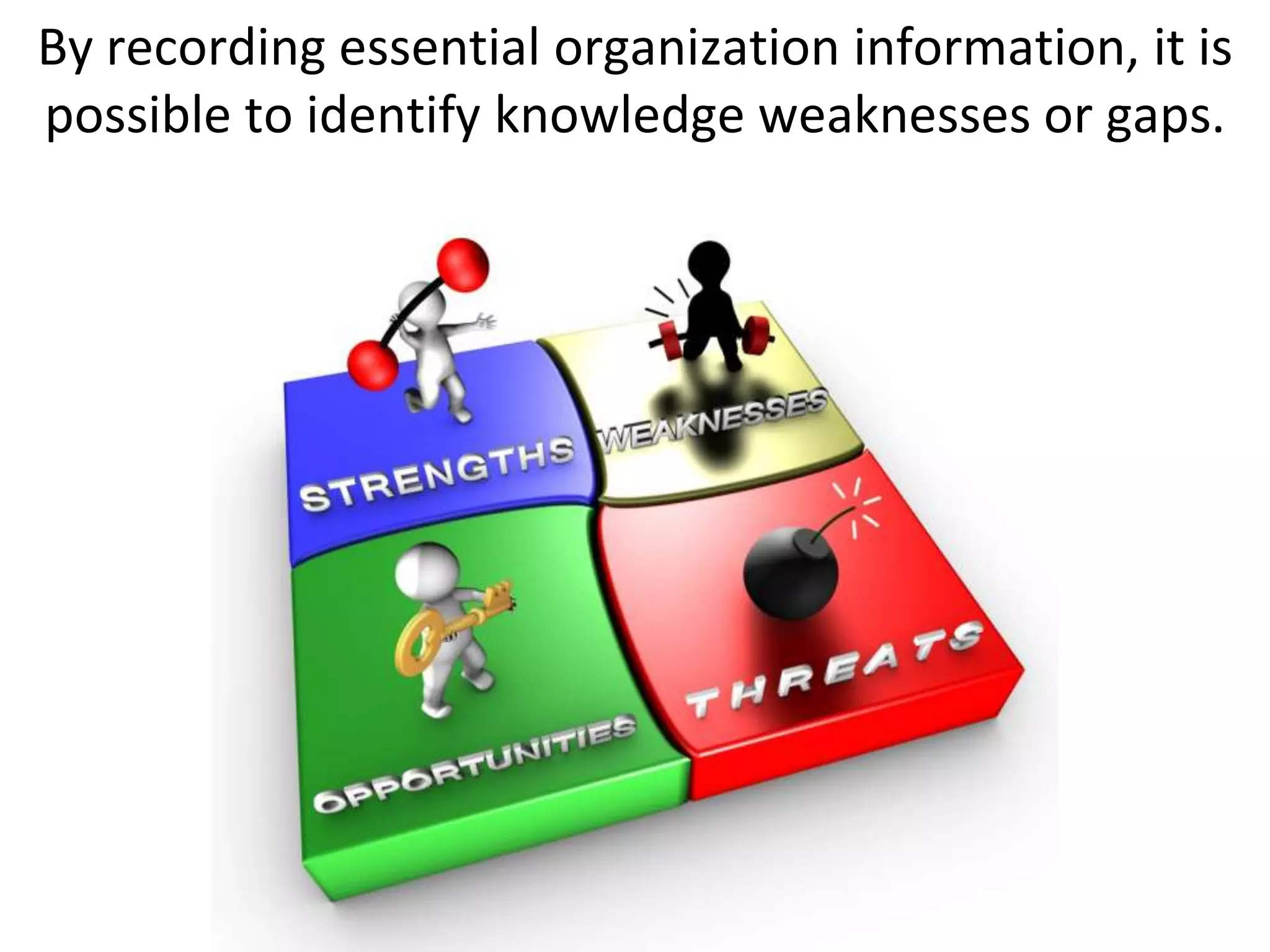
By recording essential organization information, it is
possible to identify knowledge weaknesses or gaps.
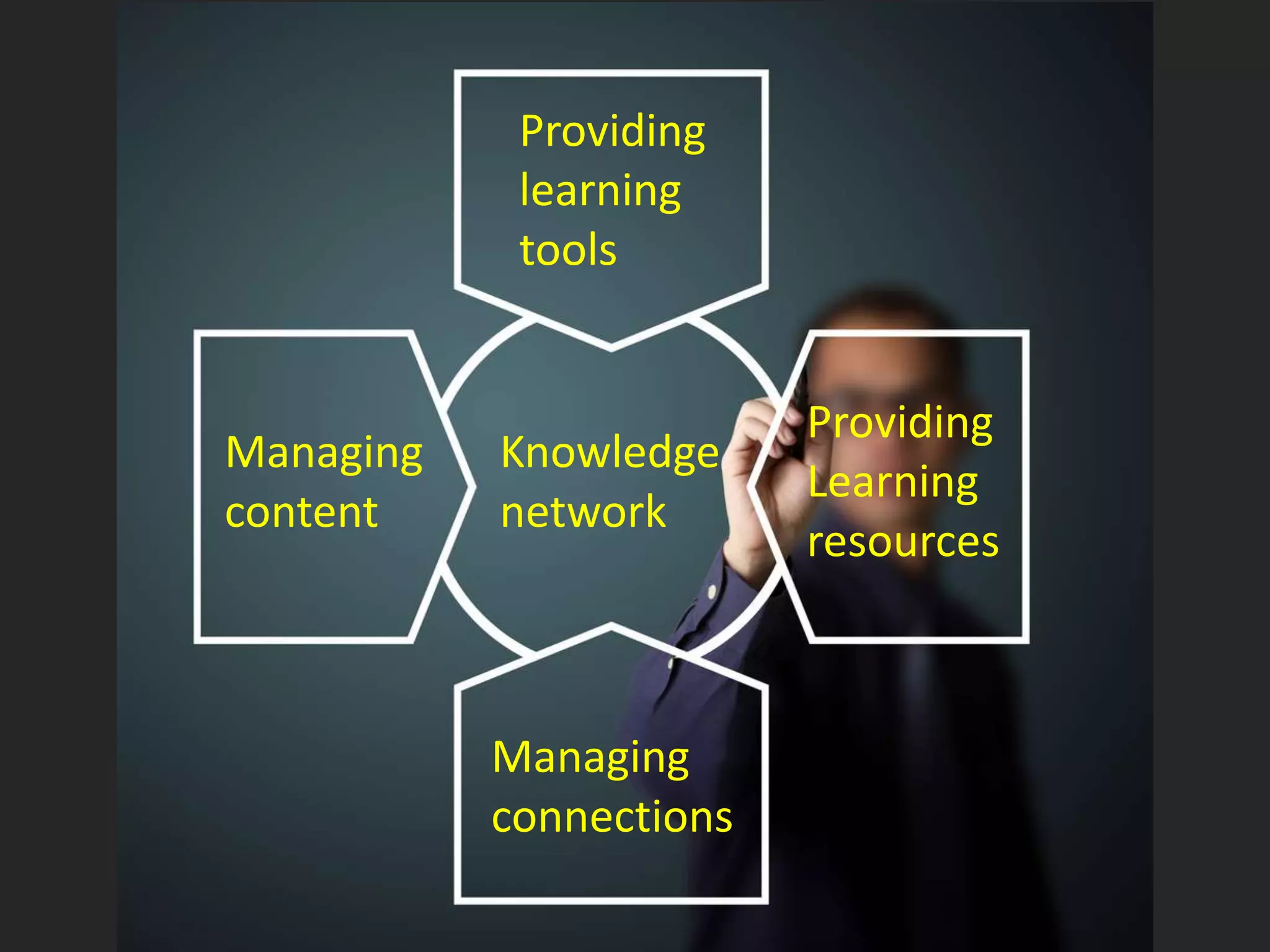
Providing
            learning
            tools


                         Providing
Managing   Knowledge
                         Learning
content    network
                         resources


           Managing
           connections
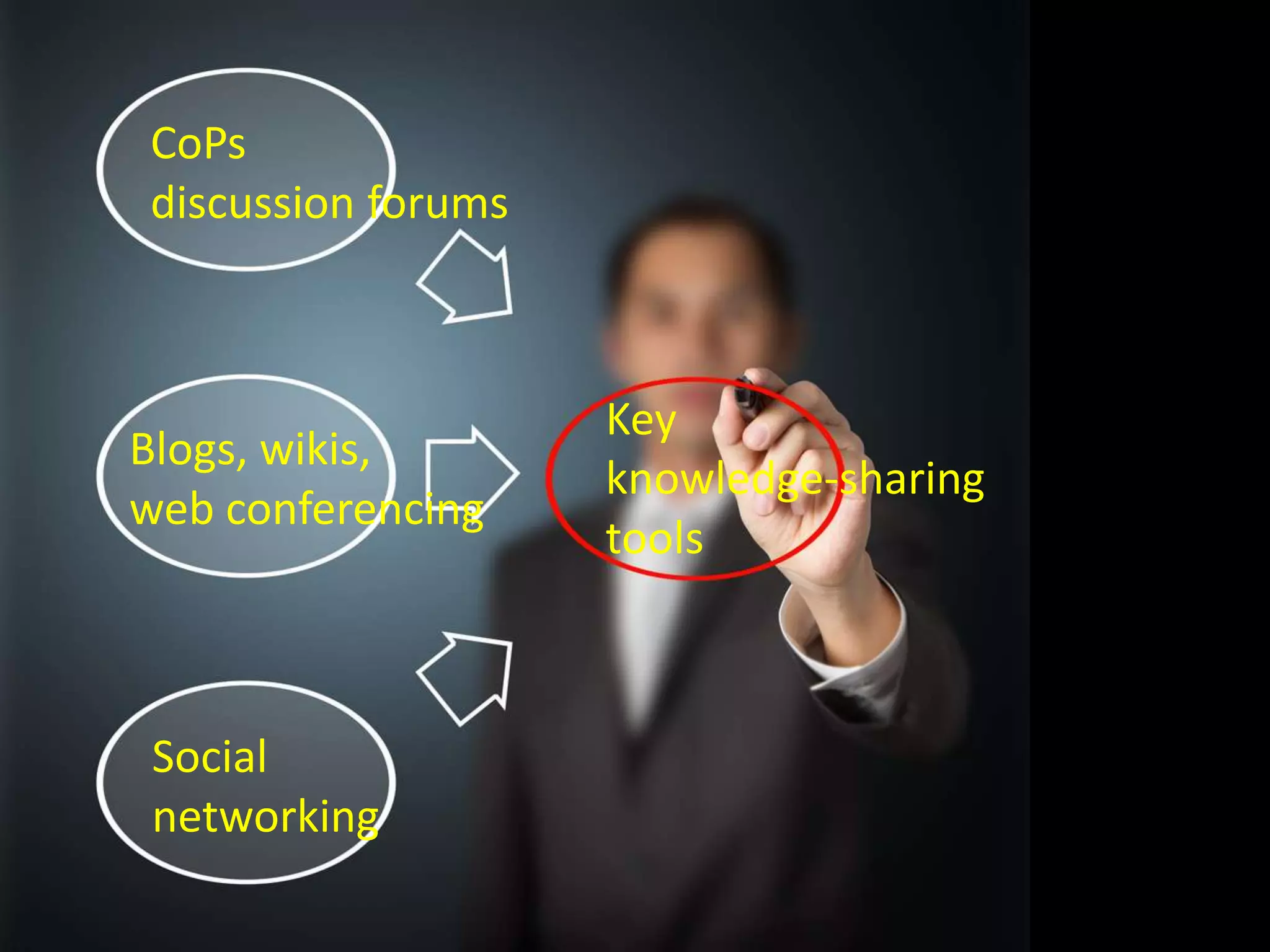
CoPs
discussion forums


                    Key
Blogs, wikis,
                    knowledge-sharing
web conferencing
                    tools


 Social
 networking
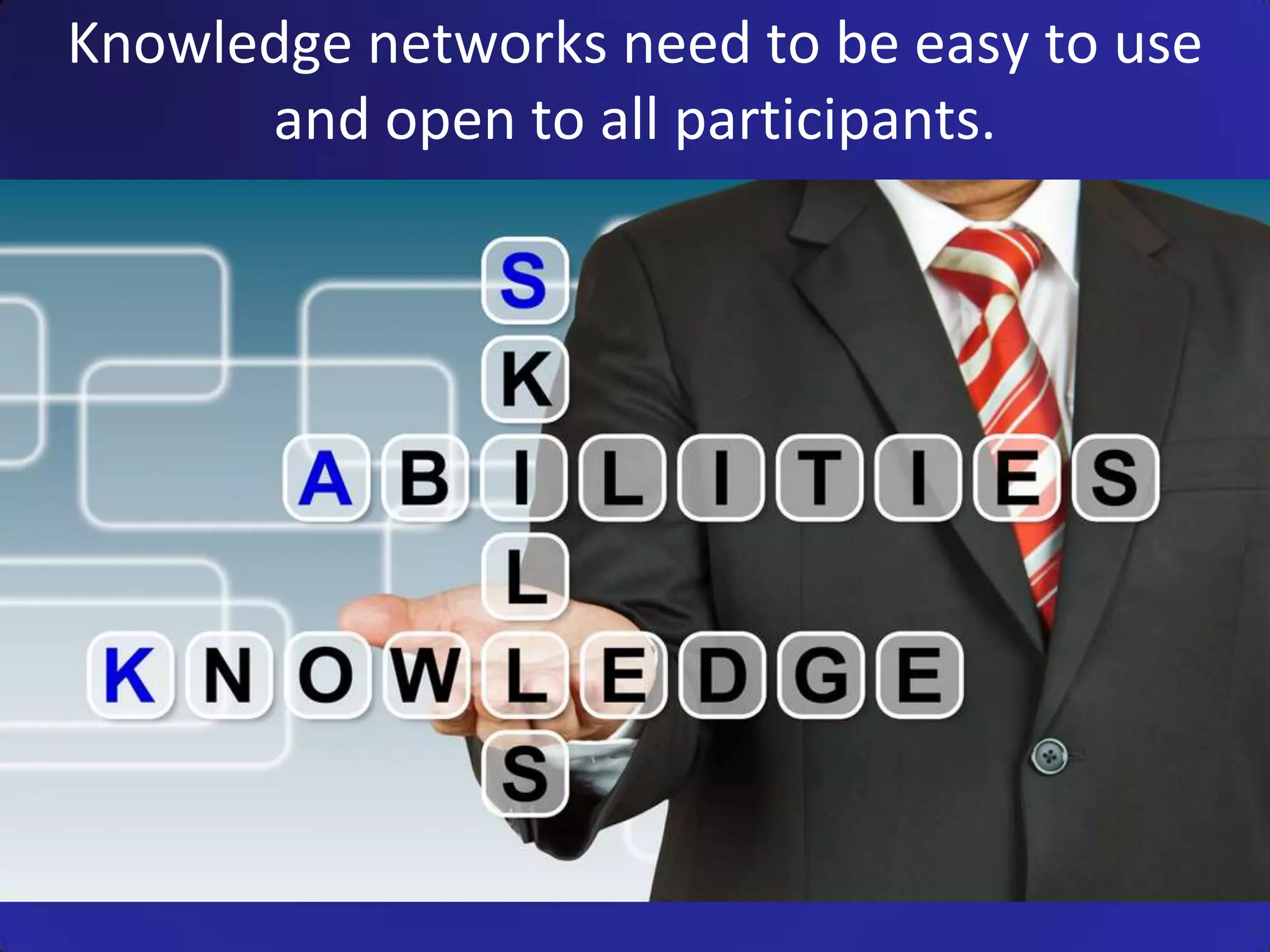
Knowledge networks need to be easy to use
      and open to all participants.
When creating a learning system keep the formality
  down, and let the workers easily add content.
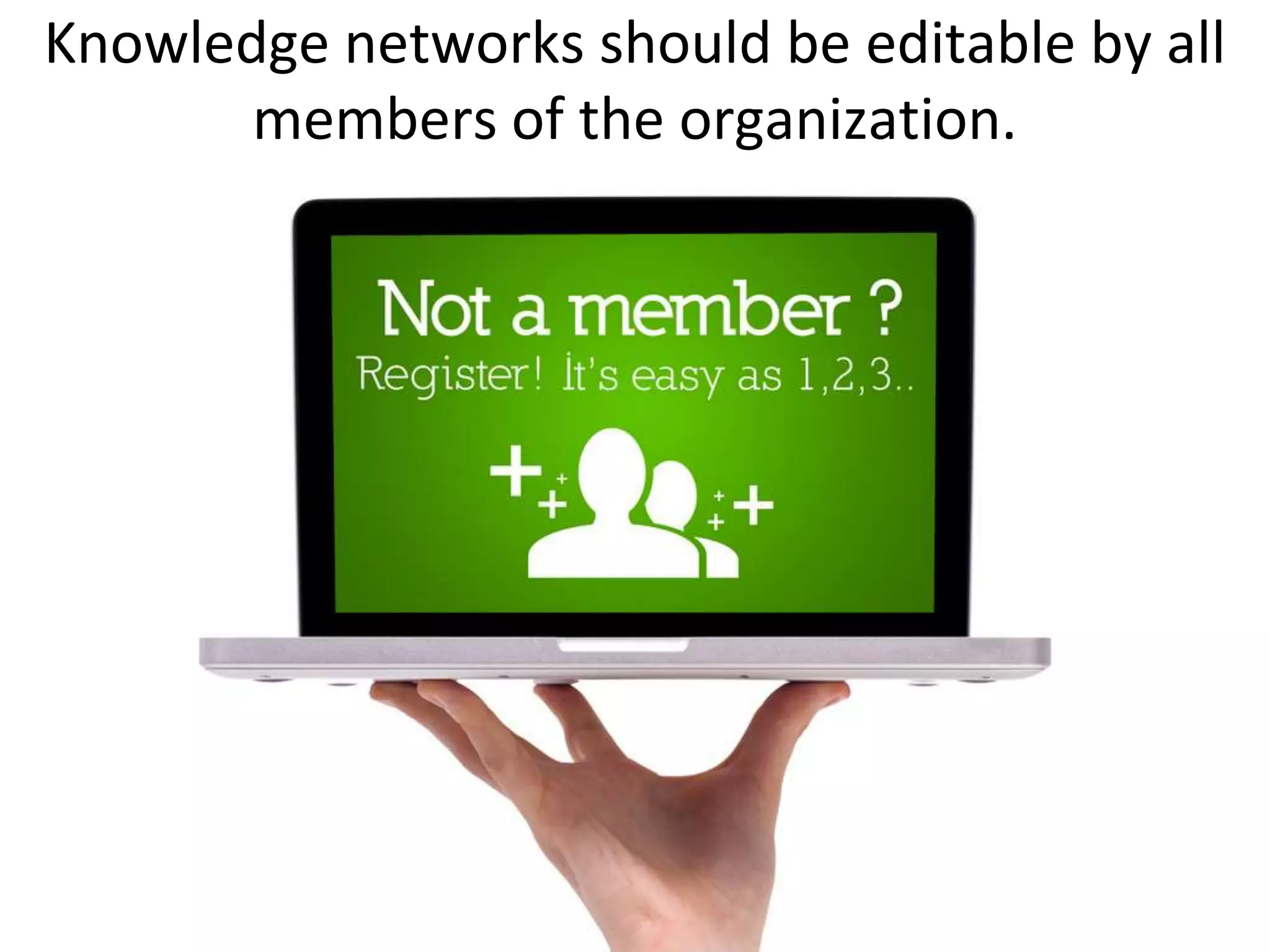
Knowledge networks should be editable by all
       members of the organization.
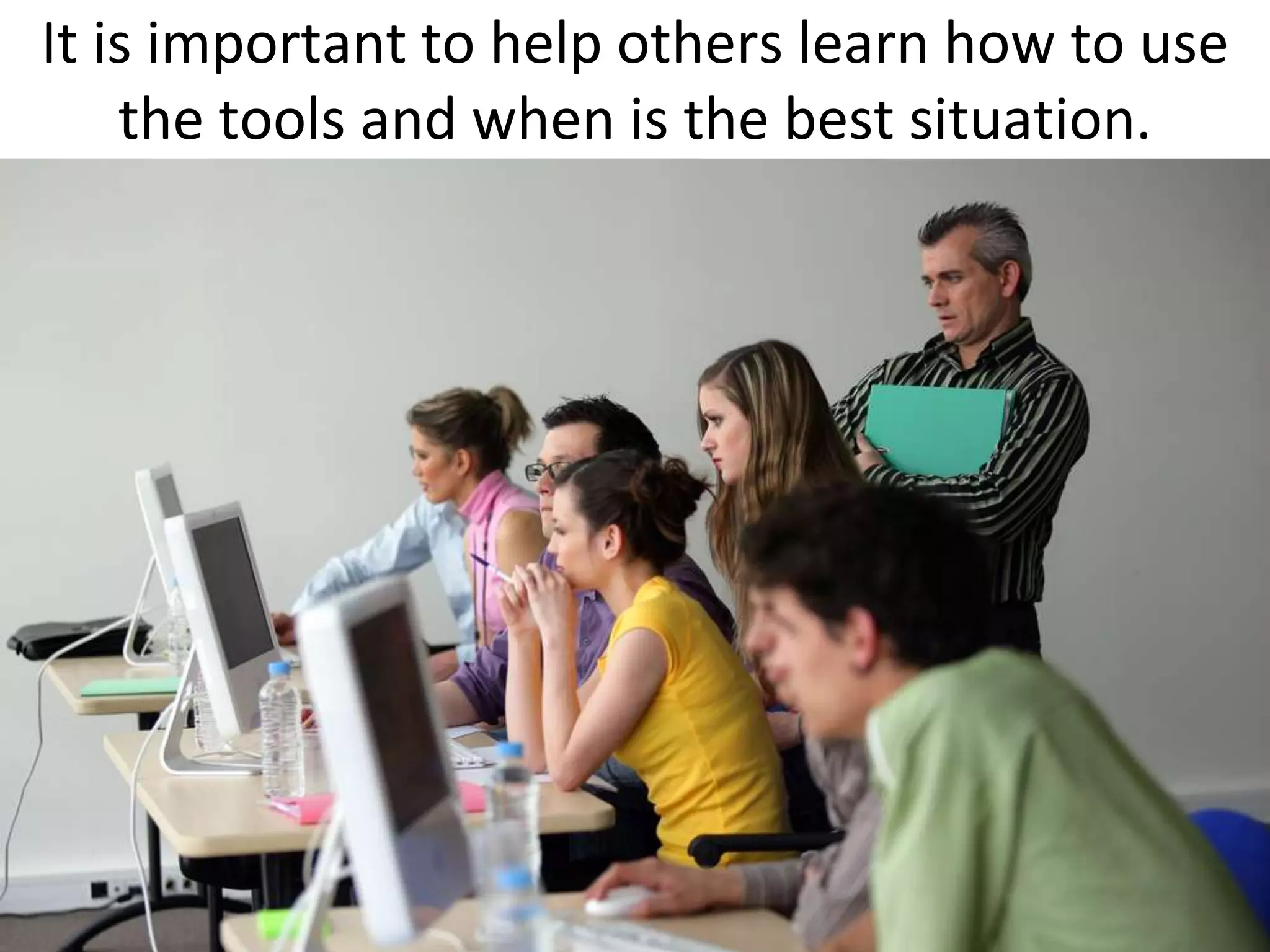
It is important to help others learn how to use
    the tools and when is the best situation.
Knowledge base systems help provide current
     answers in a just-in-time manner.
Teams are more inclined to collaborate while
 using tools such as wikis, blogs, and email.
Blogs and wikis can be used to consolidate
   information spread over many sites.
Information should be accessible through an aggregator
  rather than requiring a learner to always check back.
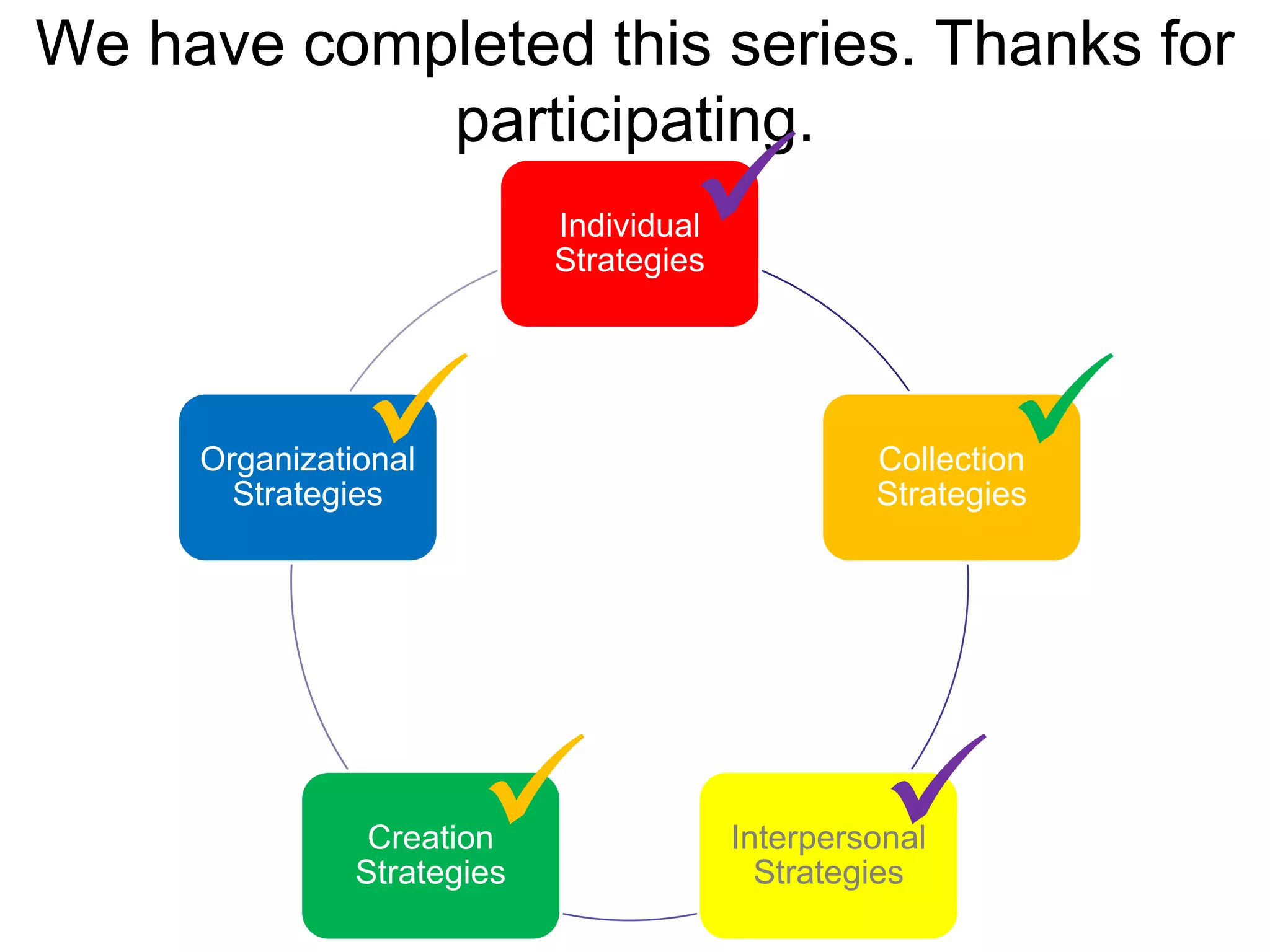
We have completed this series. Thanks for
            participating.
                                     
                            Individual
                            Strategies


               
     Organizational
       Strategies
                                                          
                                                  Collection
                                                  Strategies


                       
                Creation
               Strategies
                                                  
                                         Interpersonal
                                           Strategies
Questions?

Informal learning 6: The Organization sets the Foundation for Informal Learning

Editor's Notes

  • #45 http://www.shutterstock.com/gallery-3472p1.html?cr=00&pl=edit-00, Perry Correll