Have your Exercise Science
Message go Faster and Further
with Social Media
Stan Skrabut
@uwcesedtech
#uwces #RMACSM
http://www.slideshare.net/skrabut
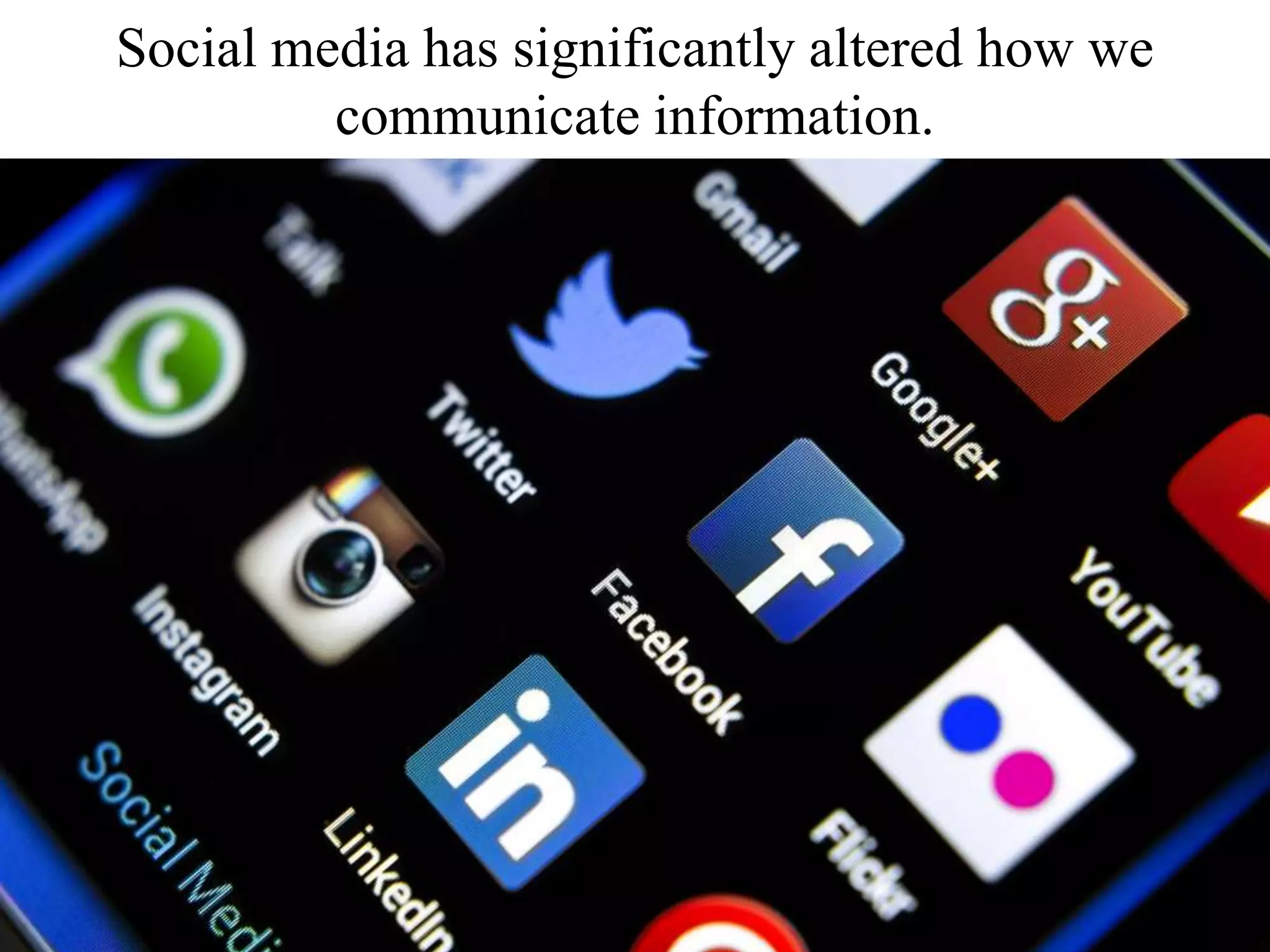
Social media has significantly altered how we
communicate information.
You are busy exercise science professionals.
You hear the buzz about social media but you don't
want to waste time and energy.
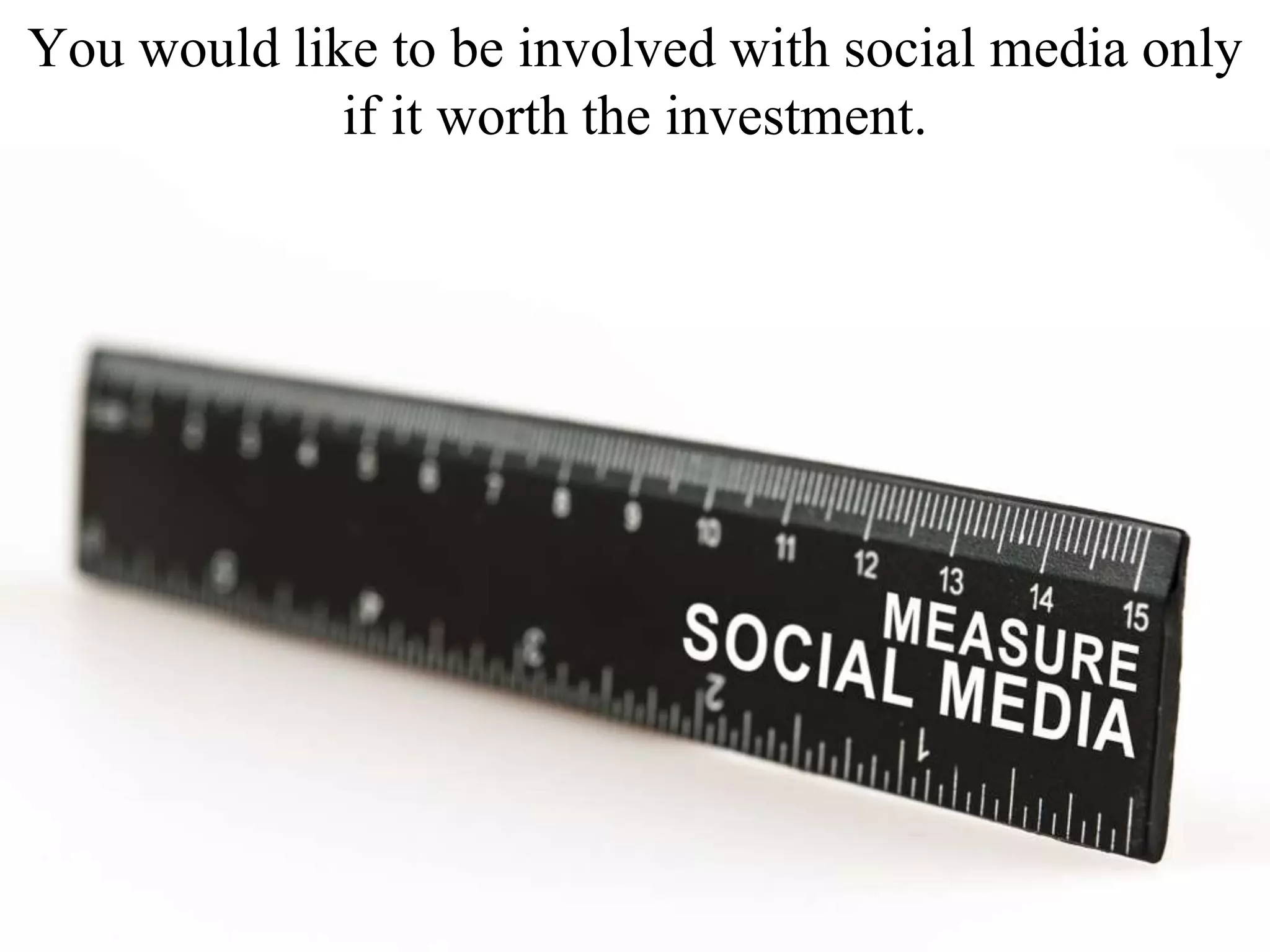
You would like to be involved with social media only
if it worth the investment.
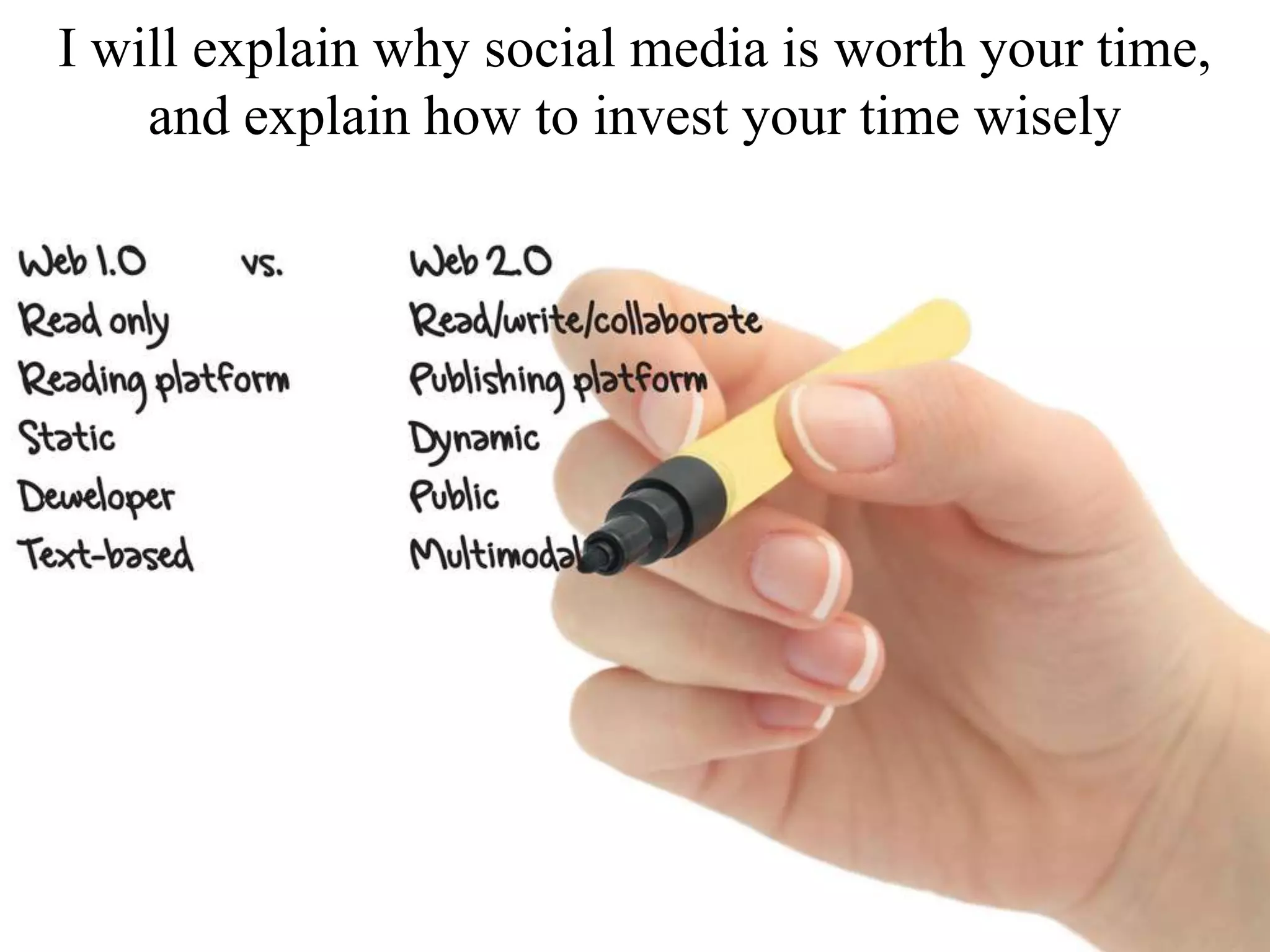
I will explain why social media is worth your time,
and explain how to invest your time wisely
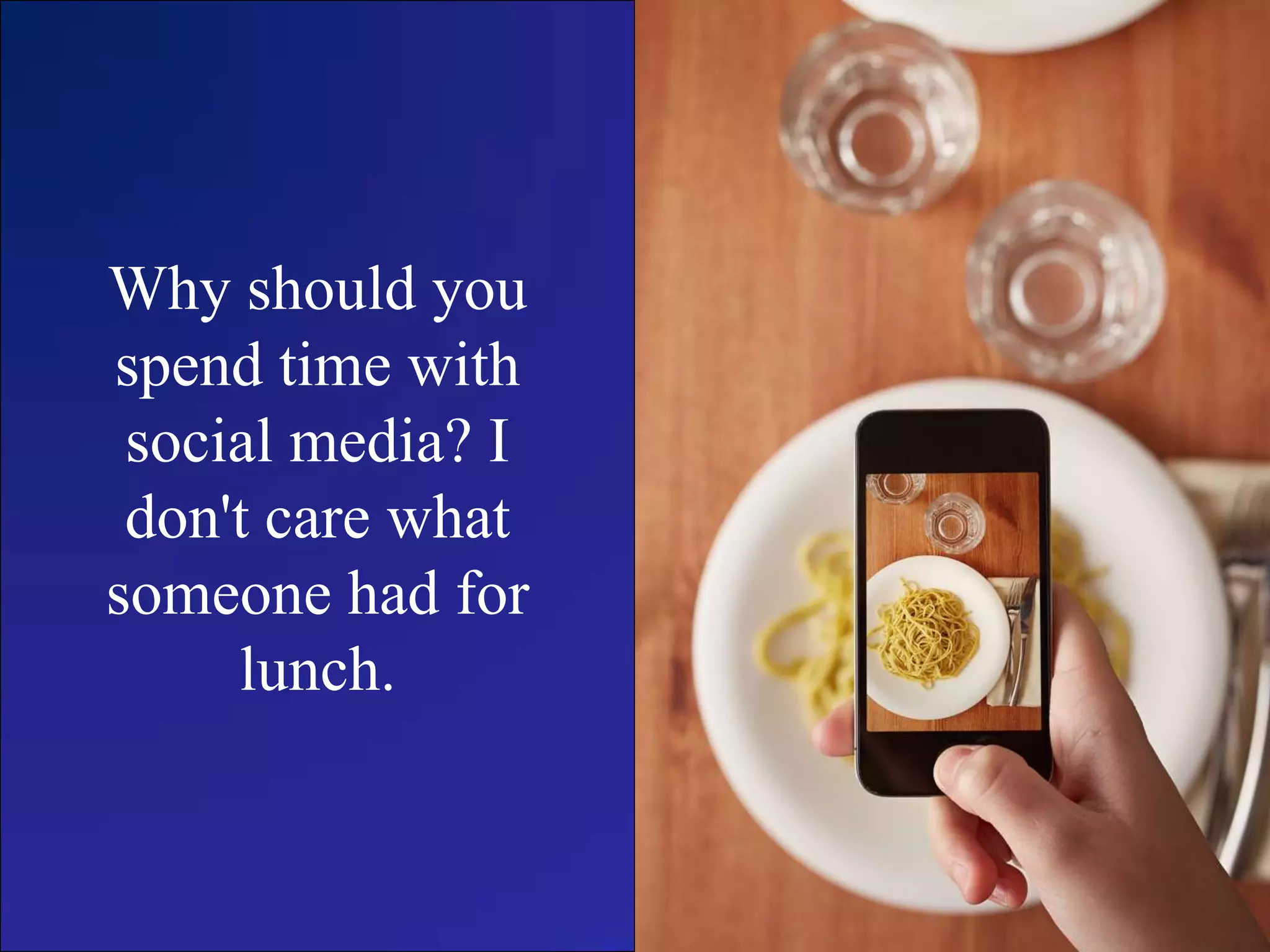
Why should you
spend time with
social media? I
don't care what
someone had for
lunch.
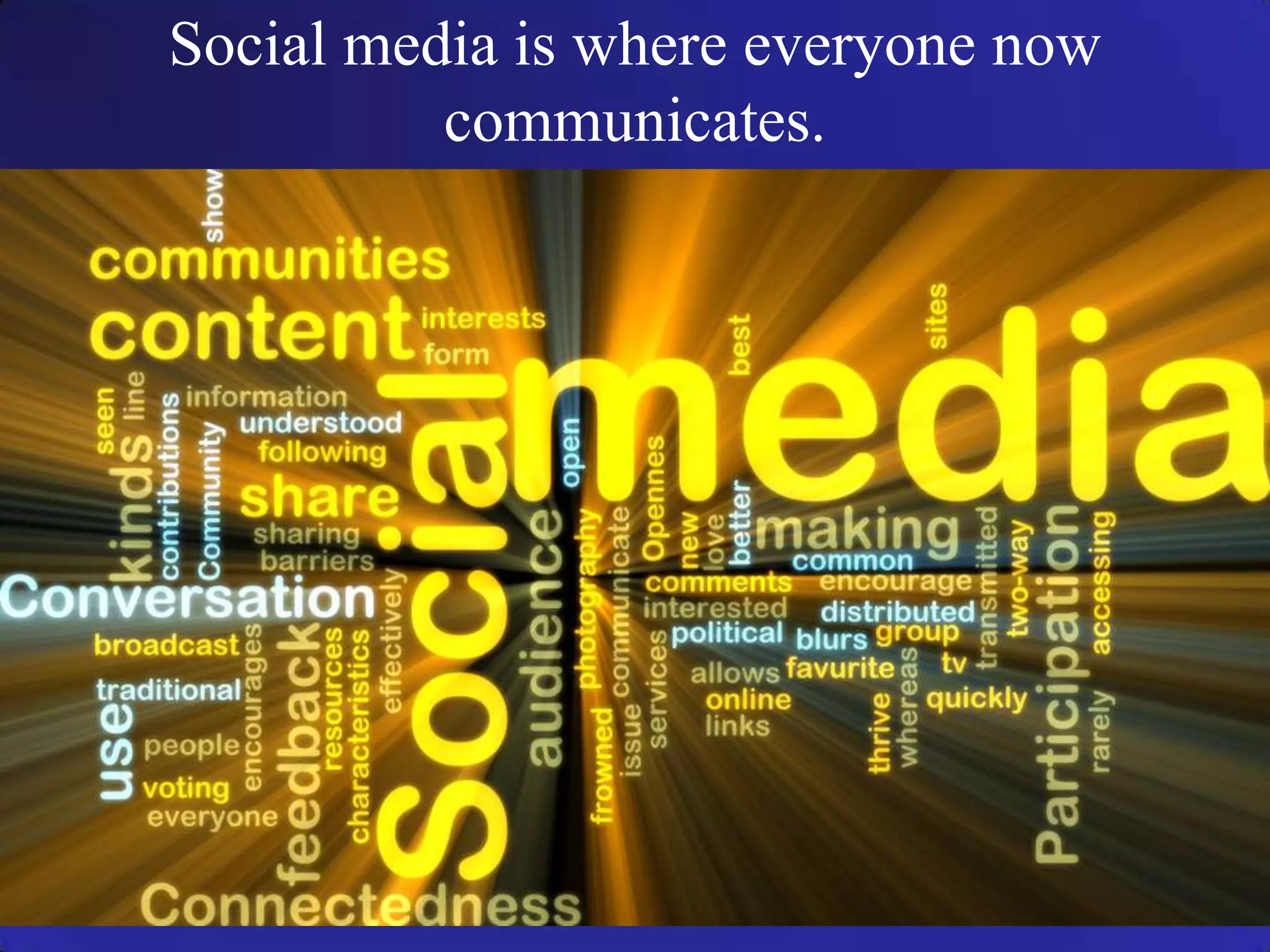
Social media is where everyone now
communicates.
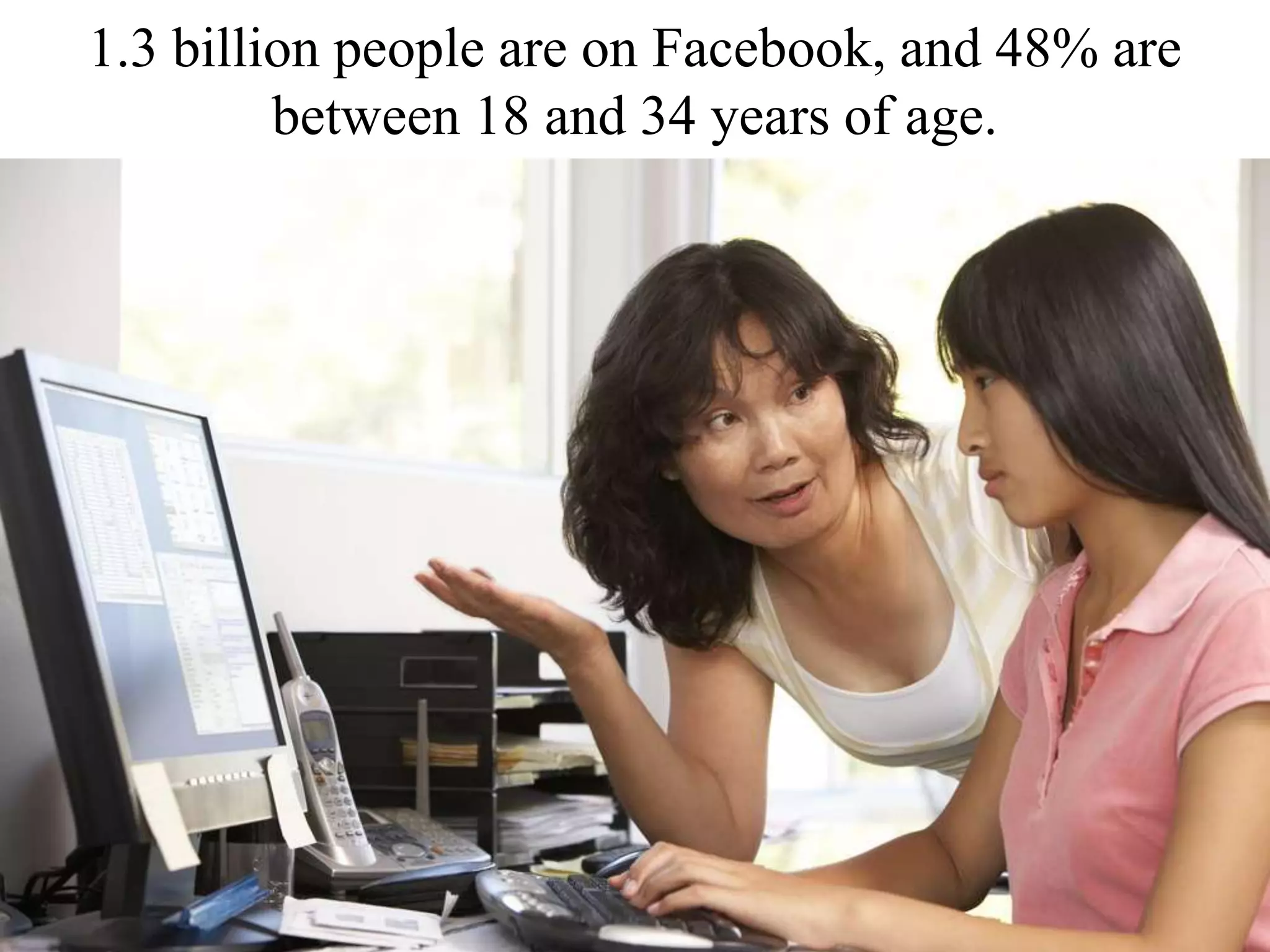
1.3 billion people are on Facebook, and 48% are
between 18 and 34 years of age.
Twitter has 646 million participants, and 58 million
tweets are sent per day.
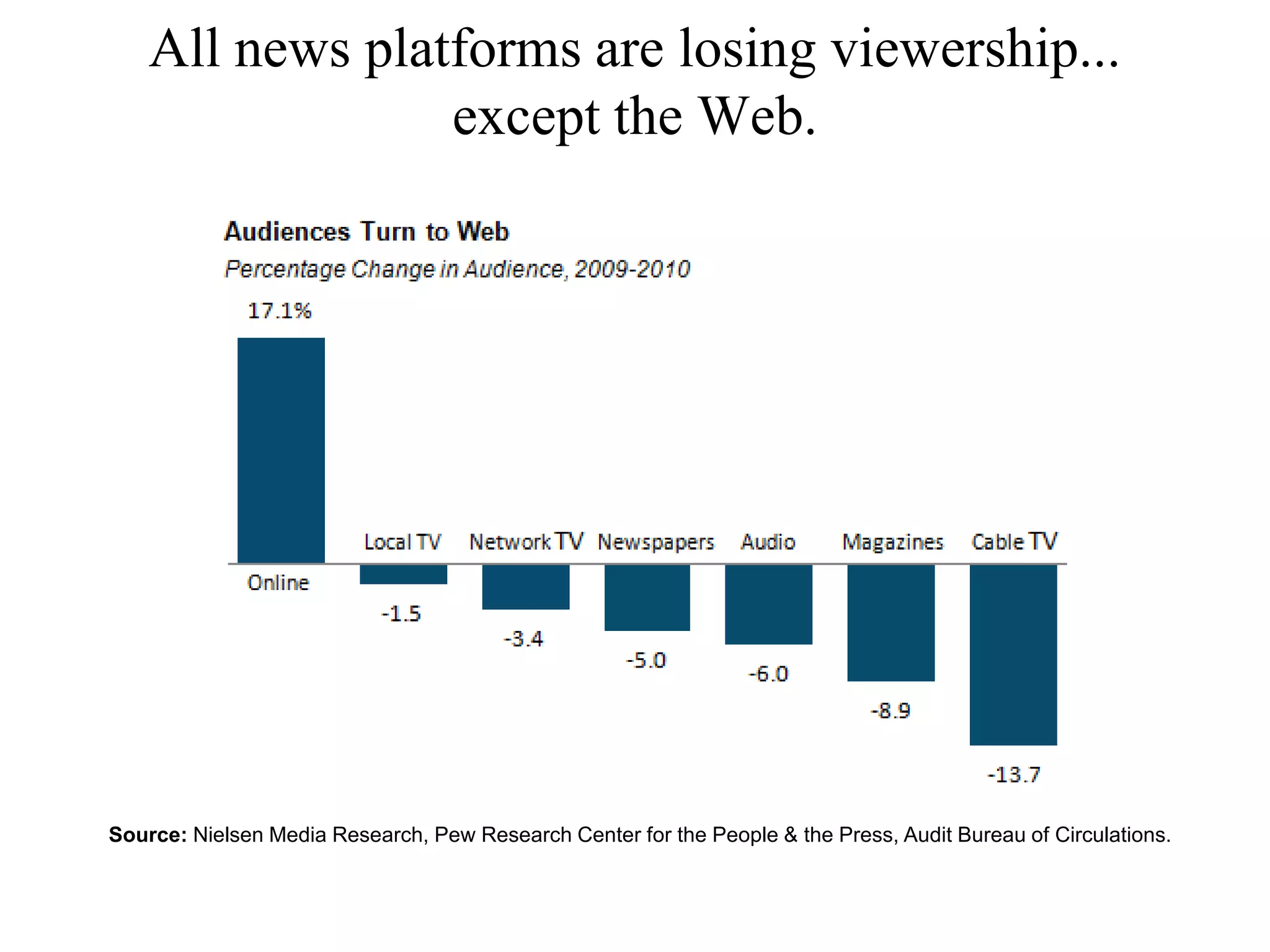
All news platforms are losing viewership...
except the Web.
Source: Nielsen Media Research, Pew Research Center for the People & the Press, Audit Bureau of Circulations.
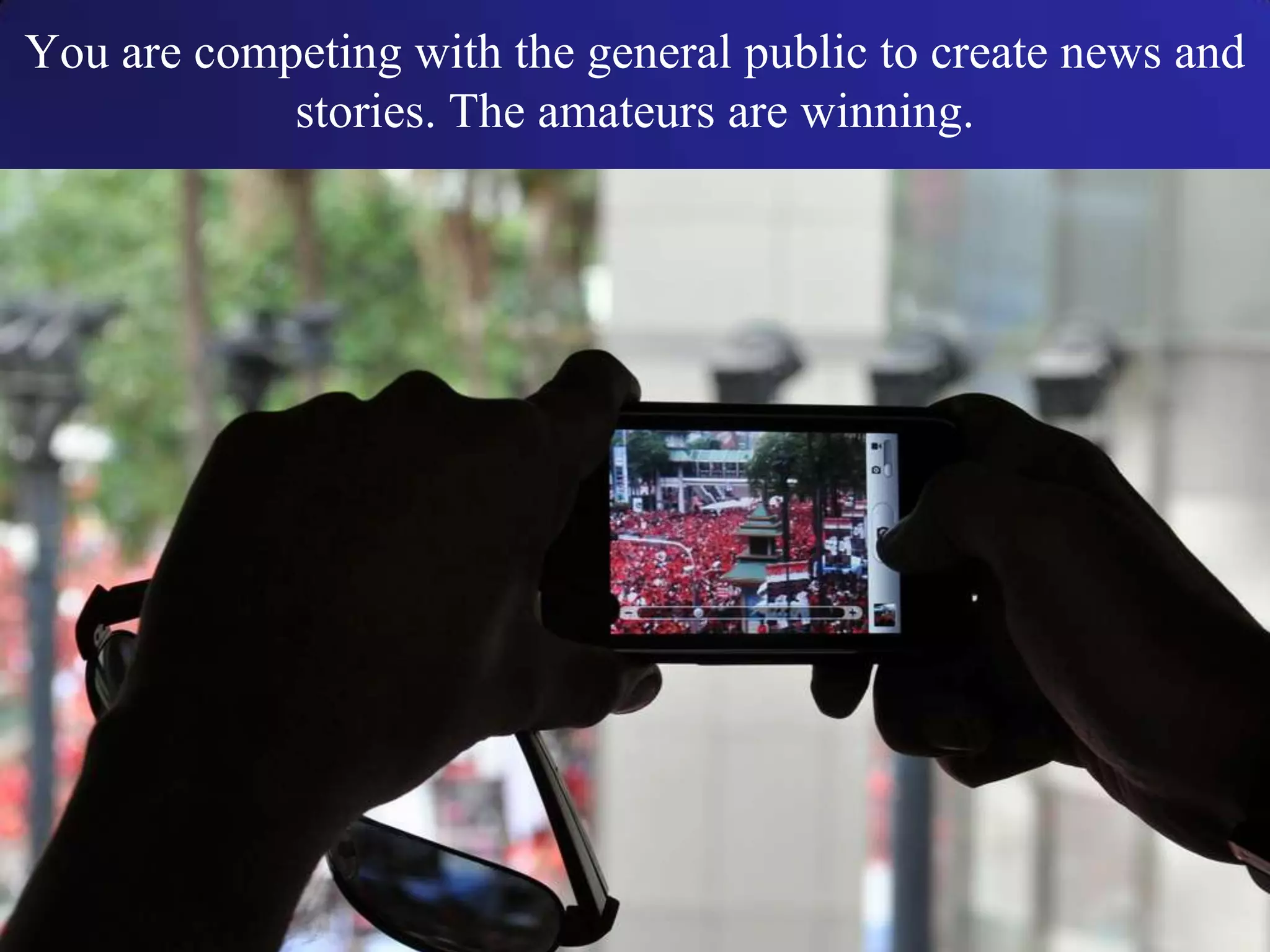
You are competing with the general public to create news and
stories. The amateurs are winning.
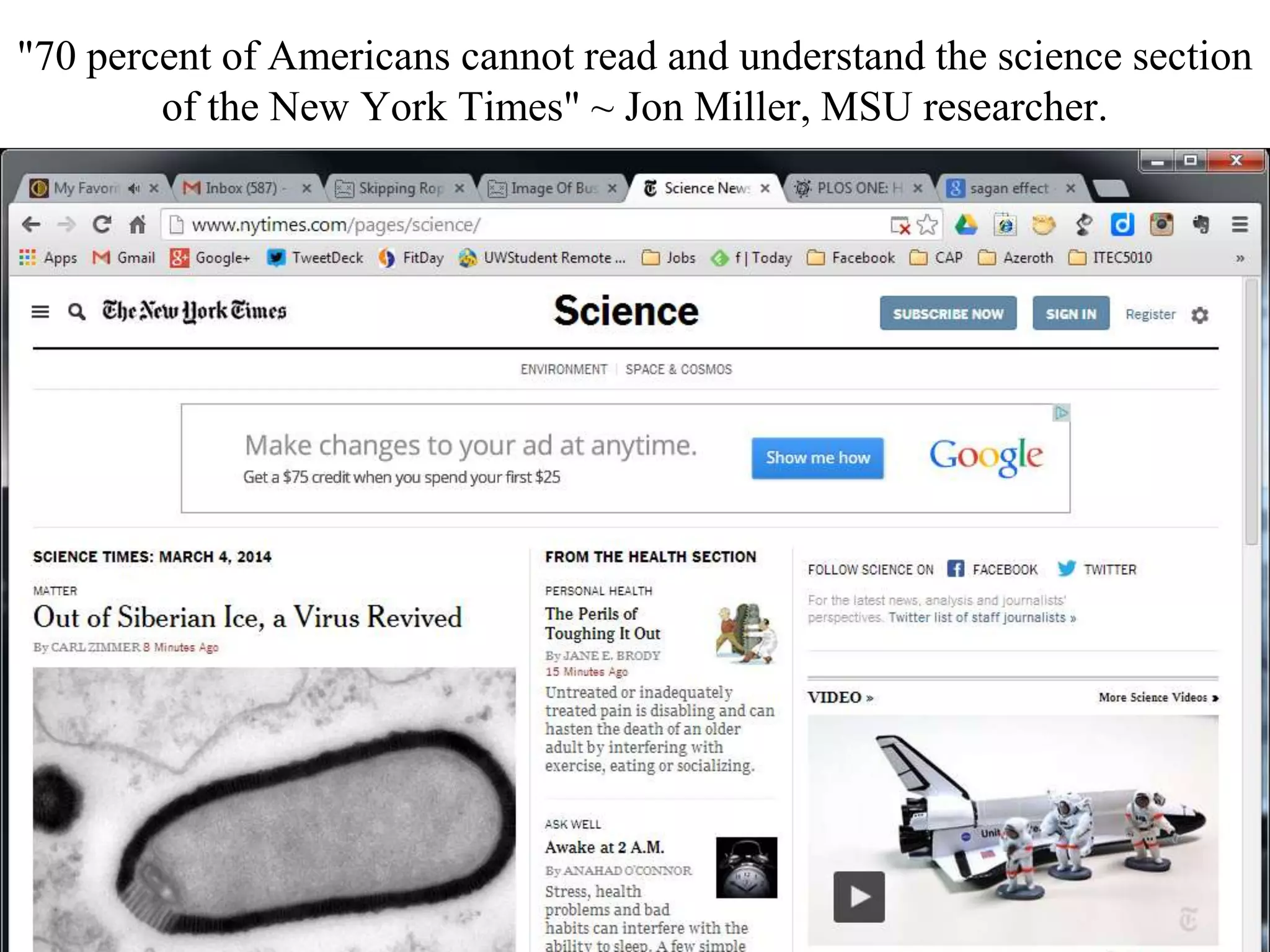
"70 percent of Americans cannot read and understand the science section
of the New York Times" ~ Jon Miller, MSU researcher.
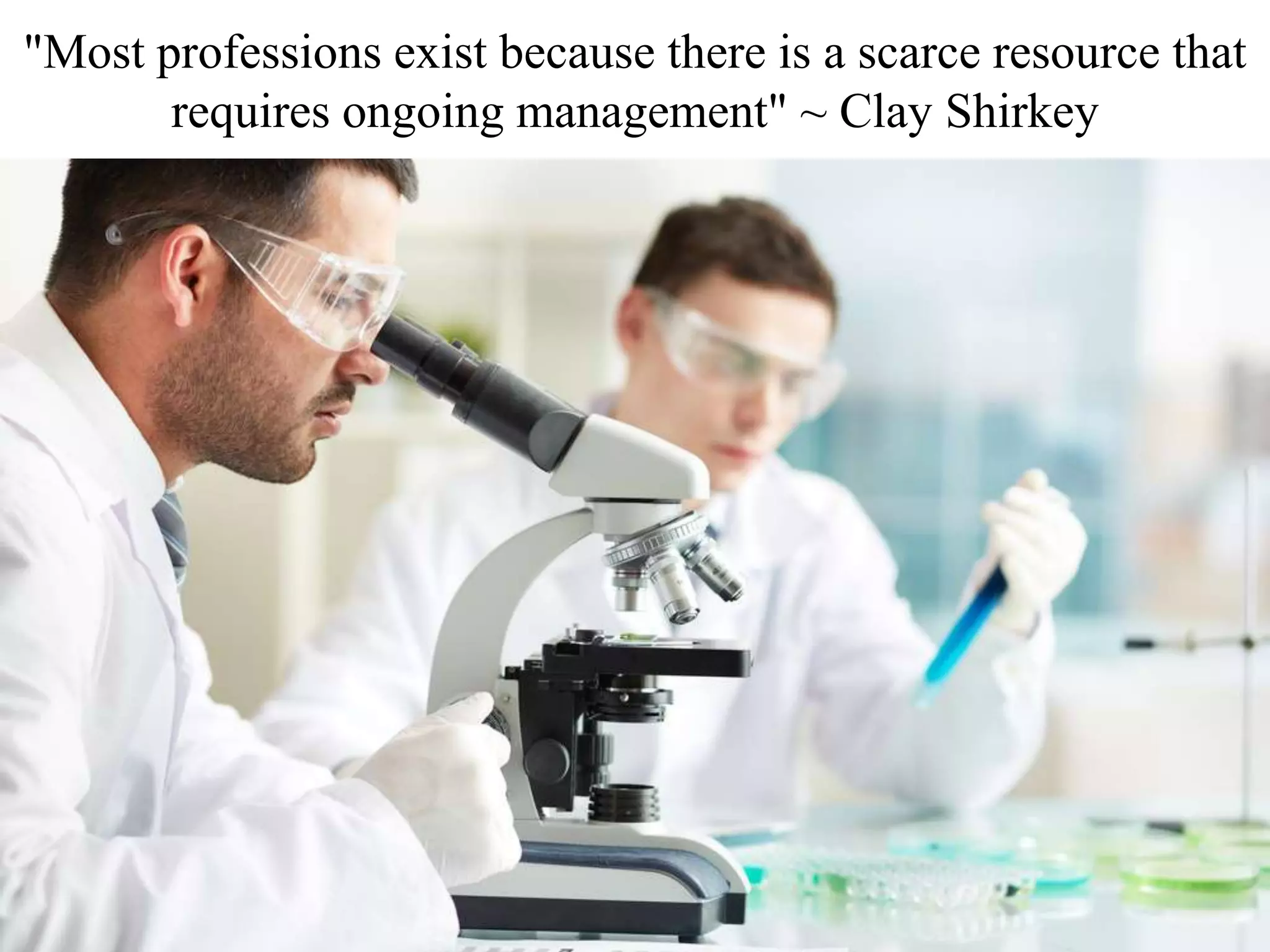
"Most professions exist because there is a scarce resource that
requires ongoing management" ~ Clay Shirkey
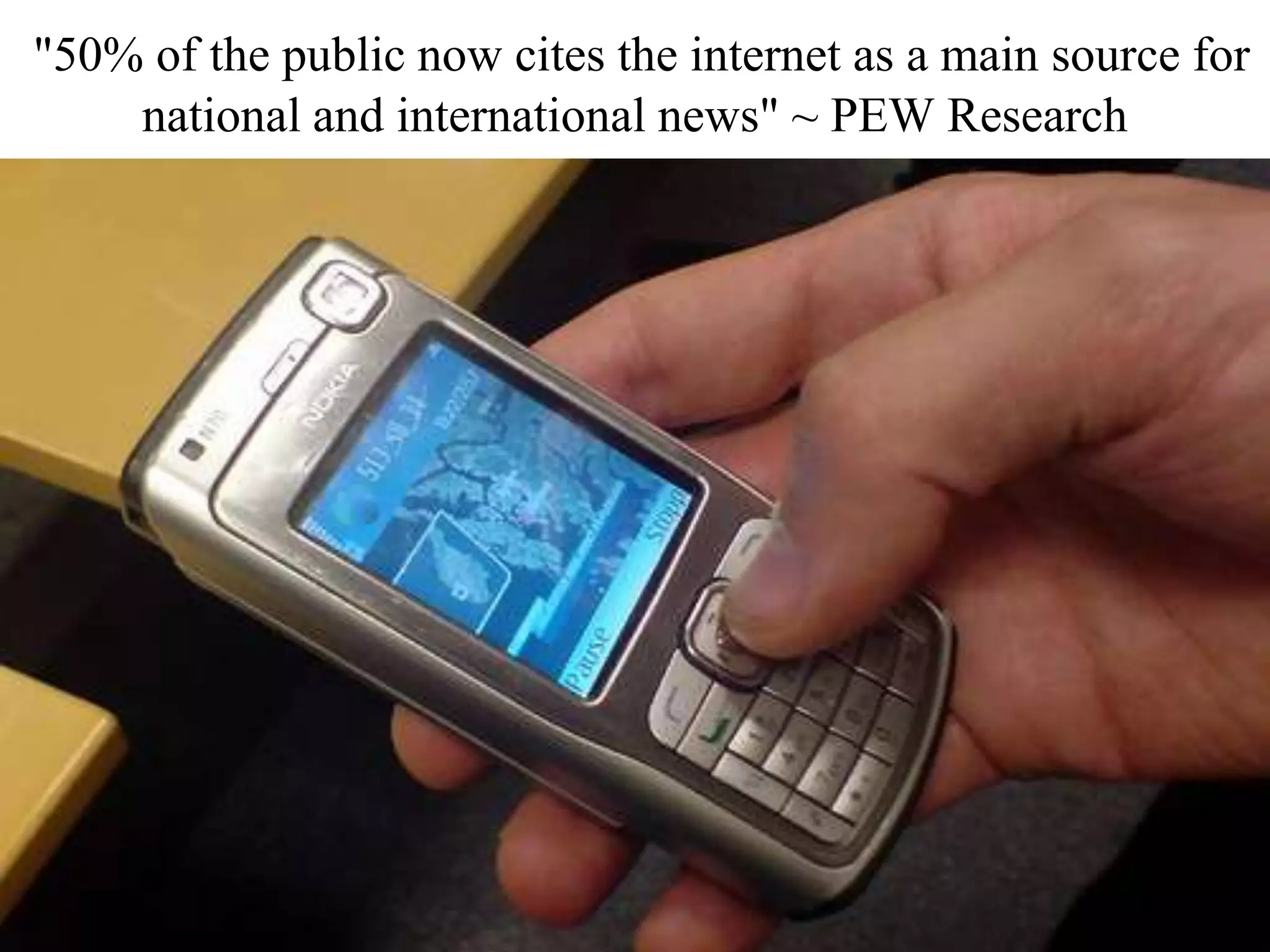
"50% of the public now cites the internet as a main source for
national and international news" ~ PEW Research
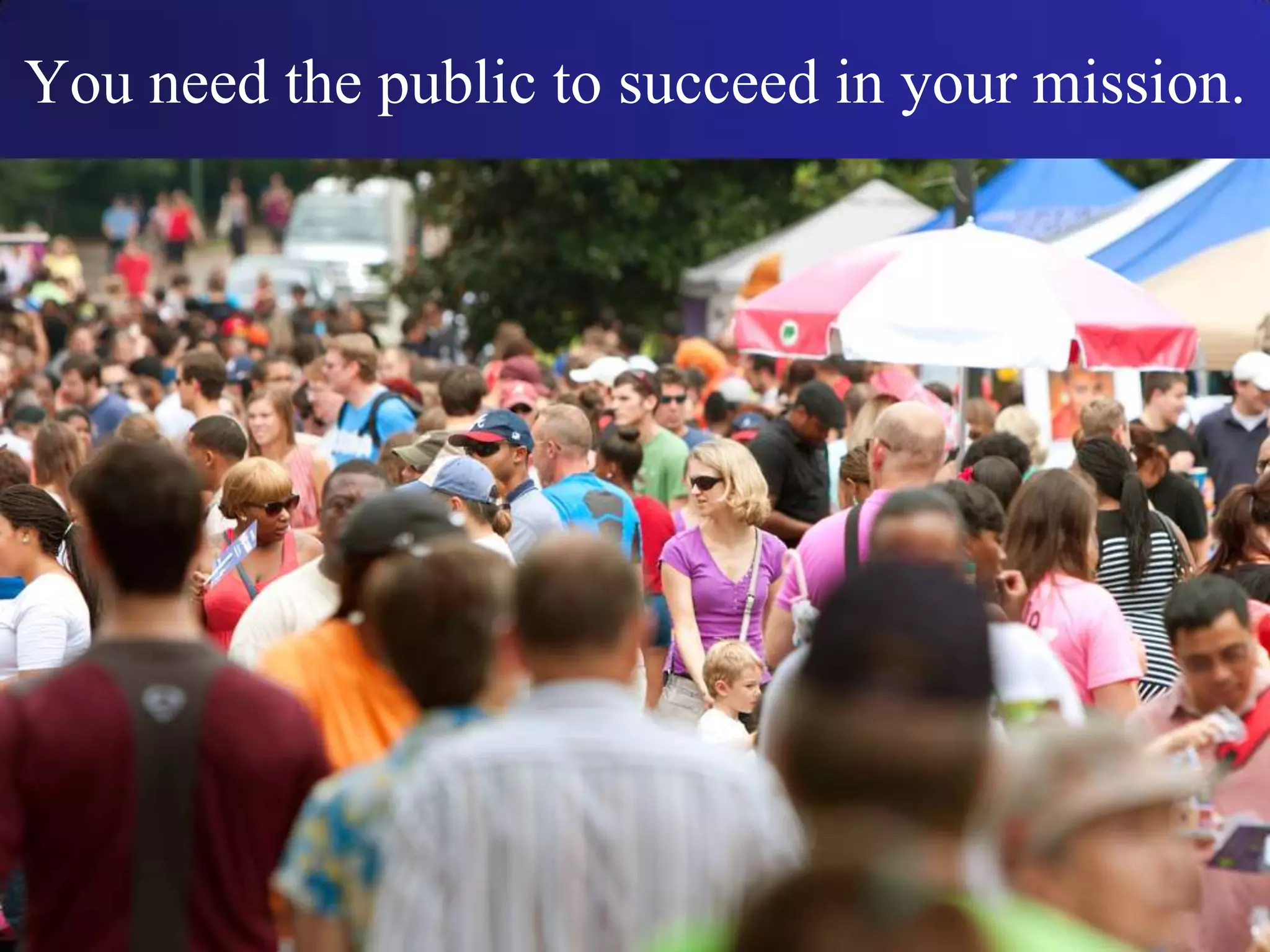
You need the public to succeed in your mission.
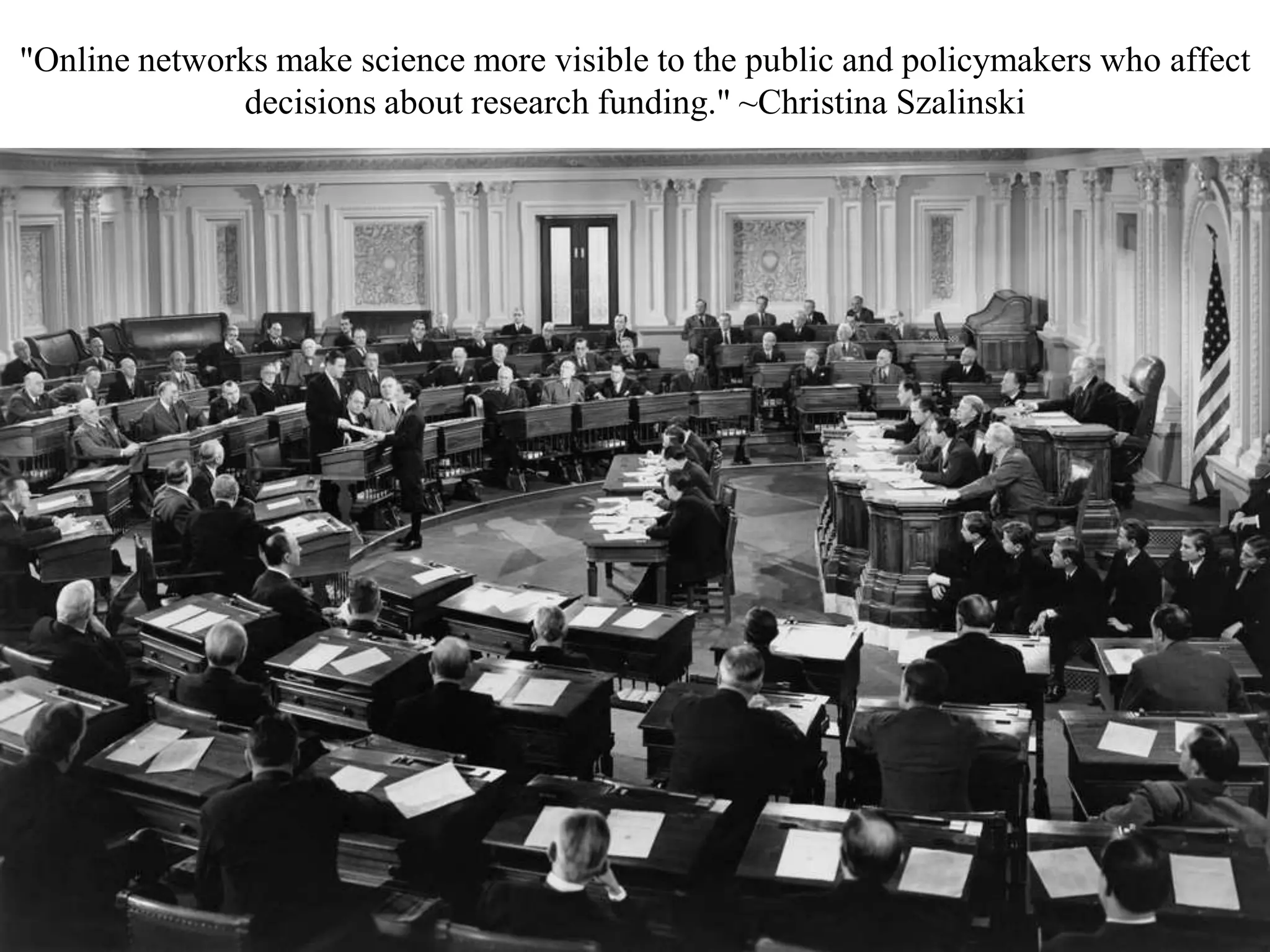
"Online networks make science more visible to the public and policymakers who affect
decisions about research funding." ~Christina Szalinski
Social media speeds the dissemination of your research,
resulting in more citations and greater readership.
What's in it for me?
What are the
benefits of using
social media on
your career.
Before I explain the benefits, let’s explore why
more of you are not involved in social media.
Many people cite time as a barrier to using social
media and conducting outreach.
Social media does not contribute to the current tenure
and promotion system.
Many do not have the knowledge and skills to use
social media tools effectively.
Departments may not support efforts deemed as
dumbing down research.
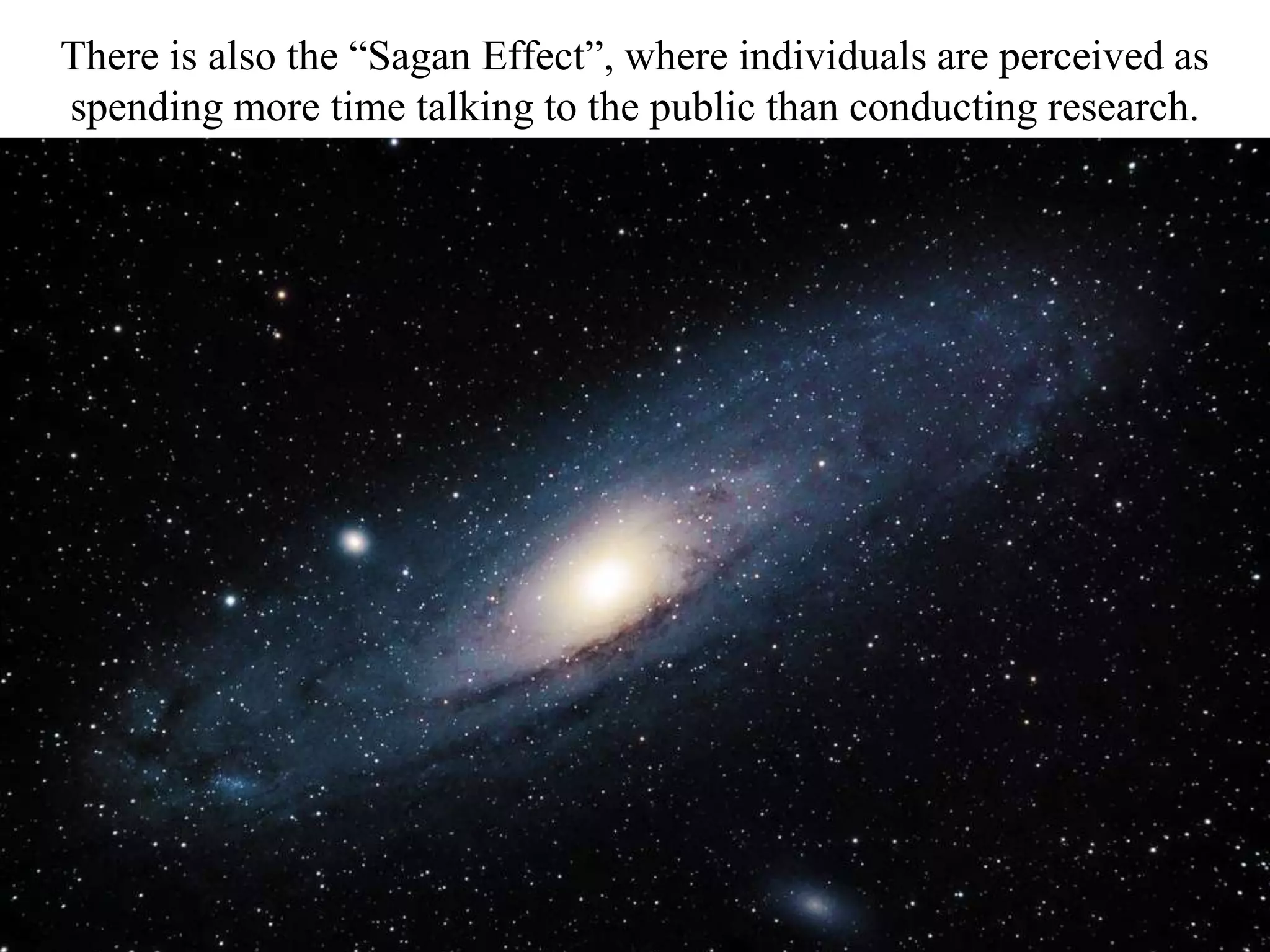
There is also the “Sagan Effect”, where individuals are perceived as
spending more time talking to the public than conducting research.
You and your work will be known, if you share it.
You are responsible for your personal branding. You
control your message to the world.
"In an Internet world there is no point in having knowledge if people don’t know you
have it, and if you are not prepared to share it." ~Euan Semple
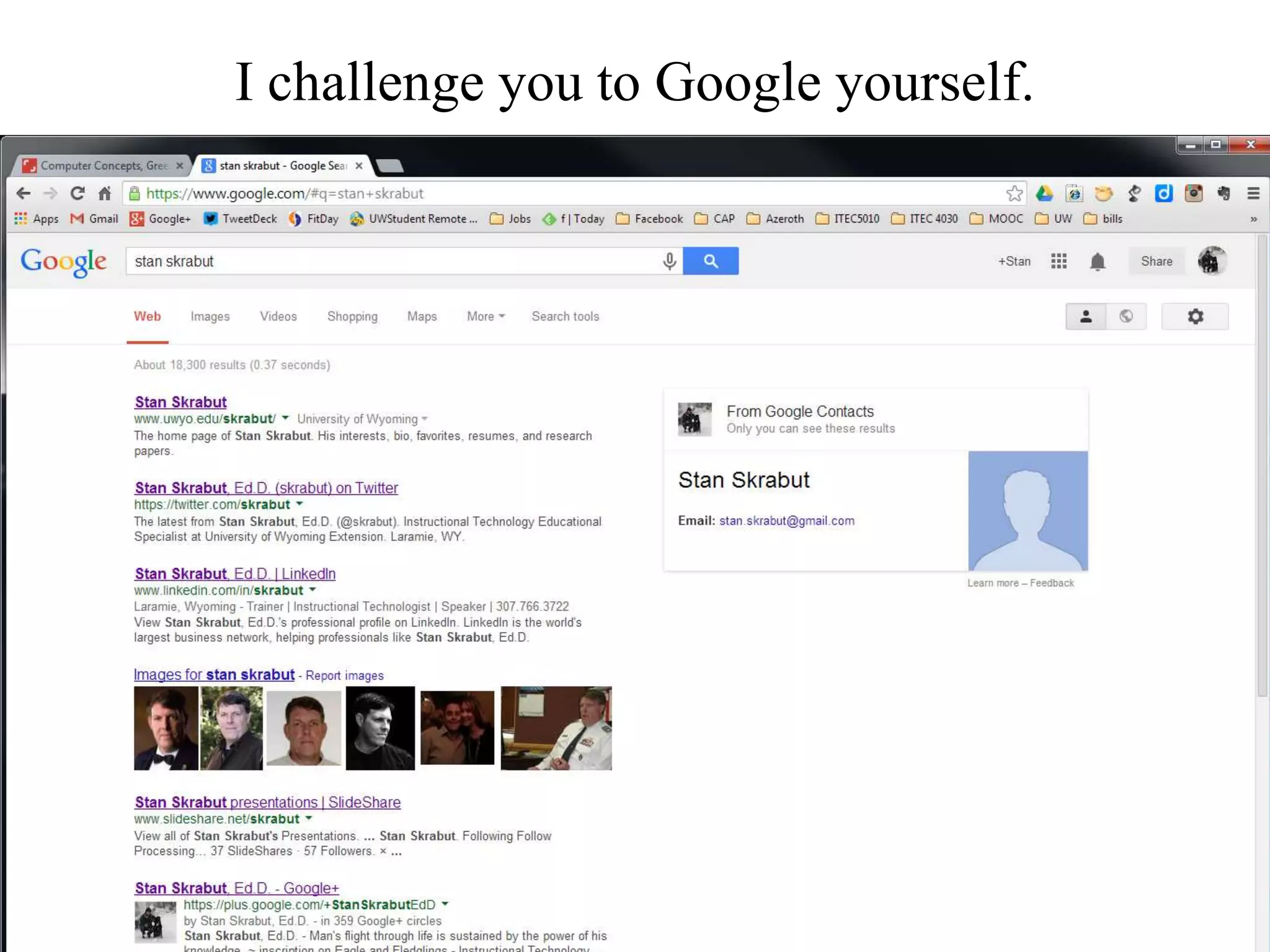
I challenge you to Google yourself.
If you hide your papers behind a paywall or jargon wall, the
general public will not read them, unless…
"If you tell people about your research, they look at it. Your research will get looked at
more than papers which are not promoted via social media." ~ Melissa Terras
Social media tools can fulfill grant outreach criteria.
Social media can grant you access to key figures in
science and government.
You can get rapid answers to problems or polls.
Social media can lead to connections resulting in
writing opportunities or conference appearances.
How can you use
social media
effectively?
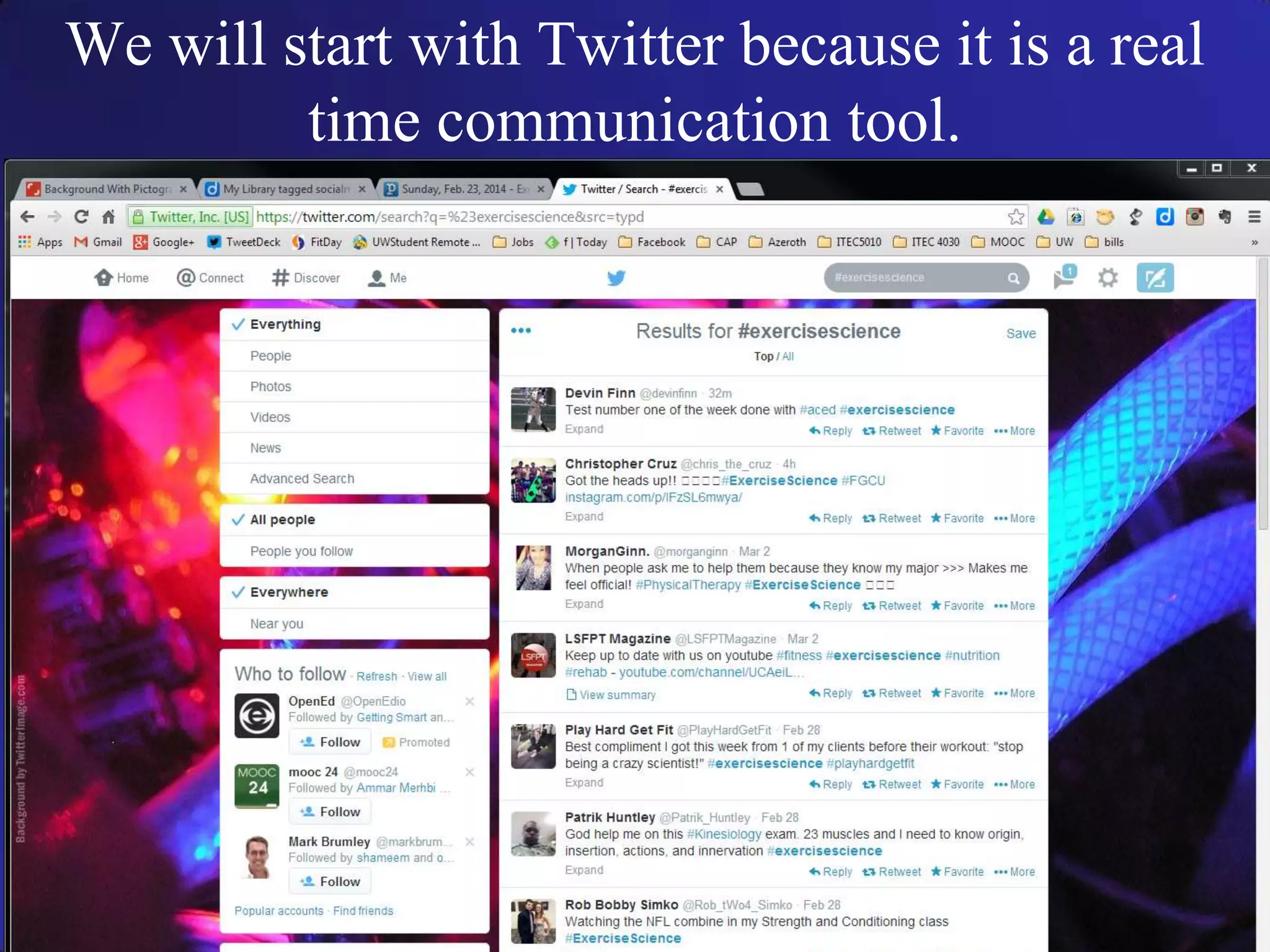
We will start with Twitter because it is a real
time communication tool.
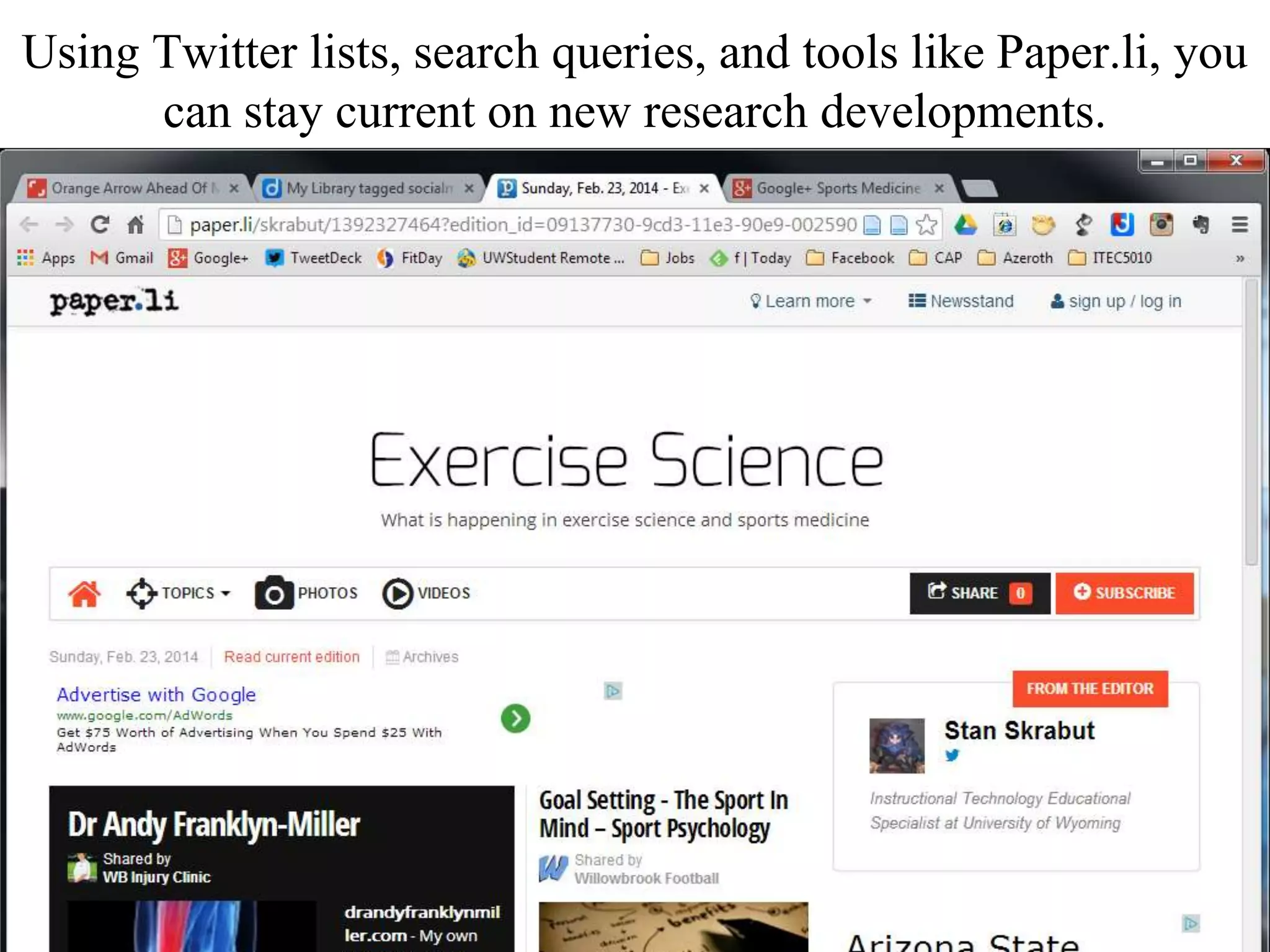
Using Twitter lists, search queries, and tools like Paper.li, you
can stay current on new research developments.
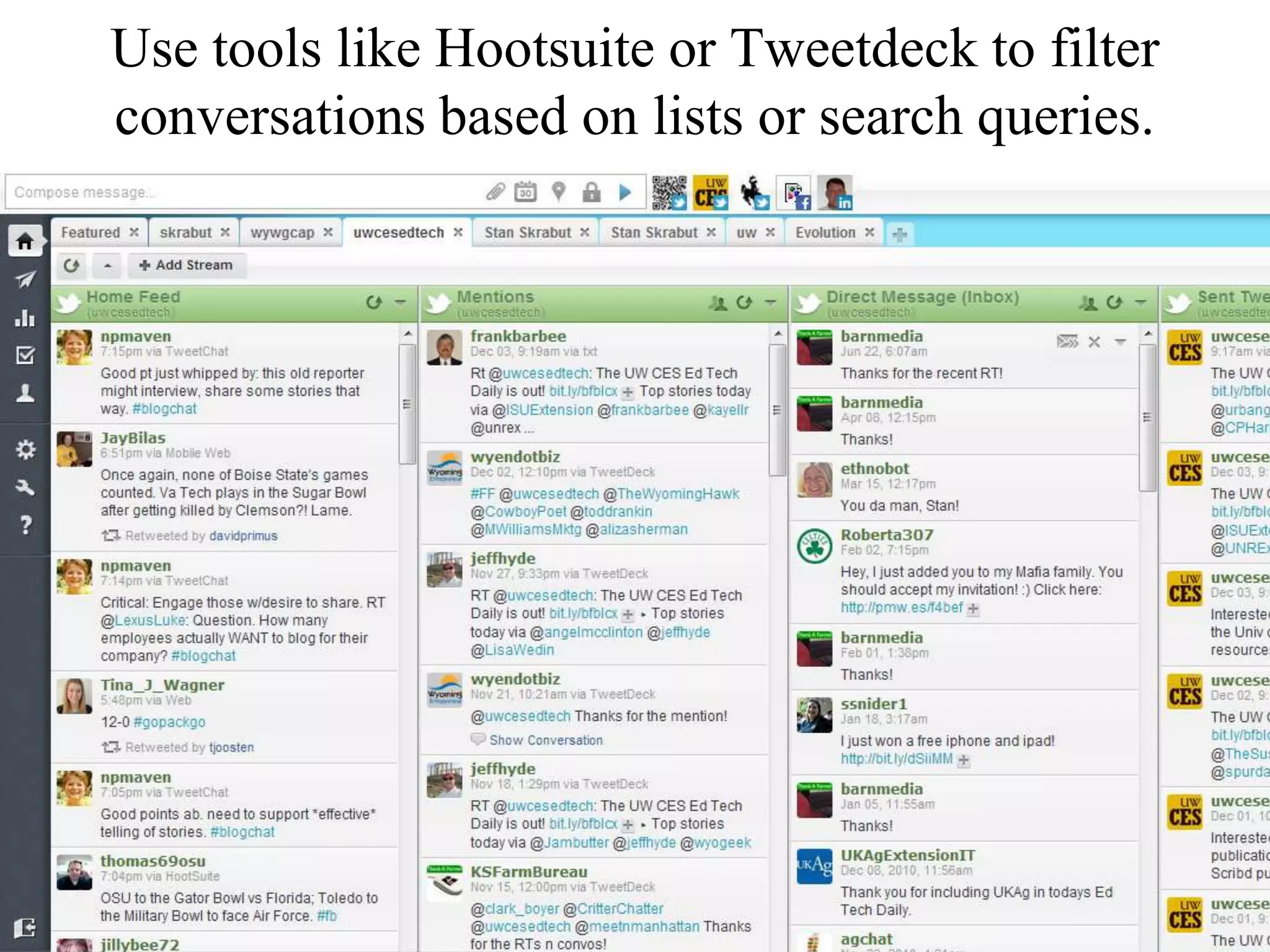
Use tools like Hootsuite or Tweetdeck to filter
conversations based on lists or search queries.
Use Twitter to publicize your new journal articles and to start
a conversation around your events using a hashtag.
Use a hashtag like #RMACSM to develop a
community.
Blogging is a way you can have a personal
impact on the field.
Blogs are great places for building an online
reputation as an expert in your field.
With a blog, you can highlight your research and the research of others
in terms the public can understand. Write for your mom.
Blogs are places where you write in length, everything
else links to the blog post.
You can explain concepts in blogs.
With a blog, there is an increased chance of
conversation around your research.
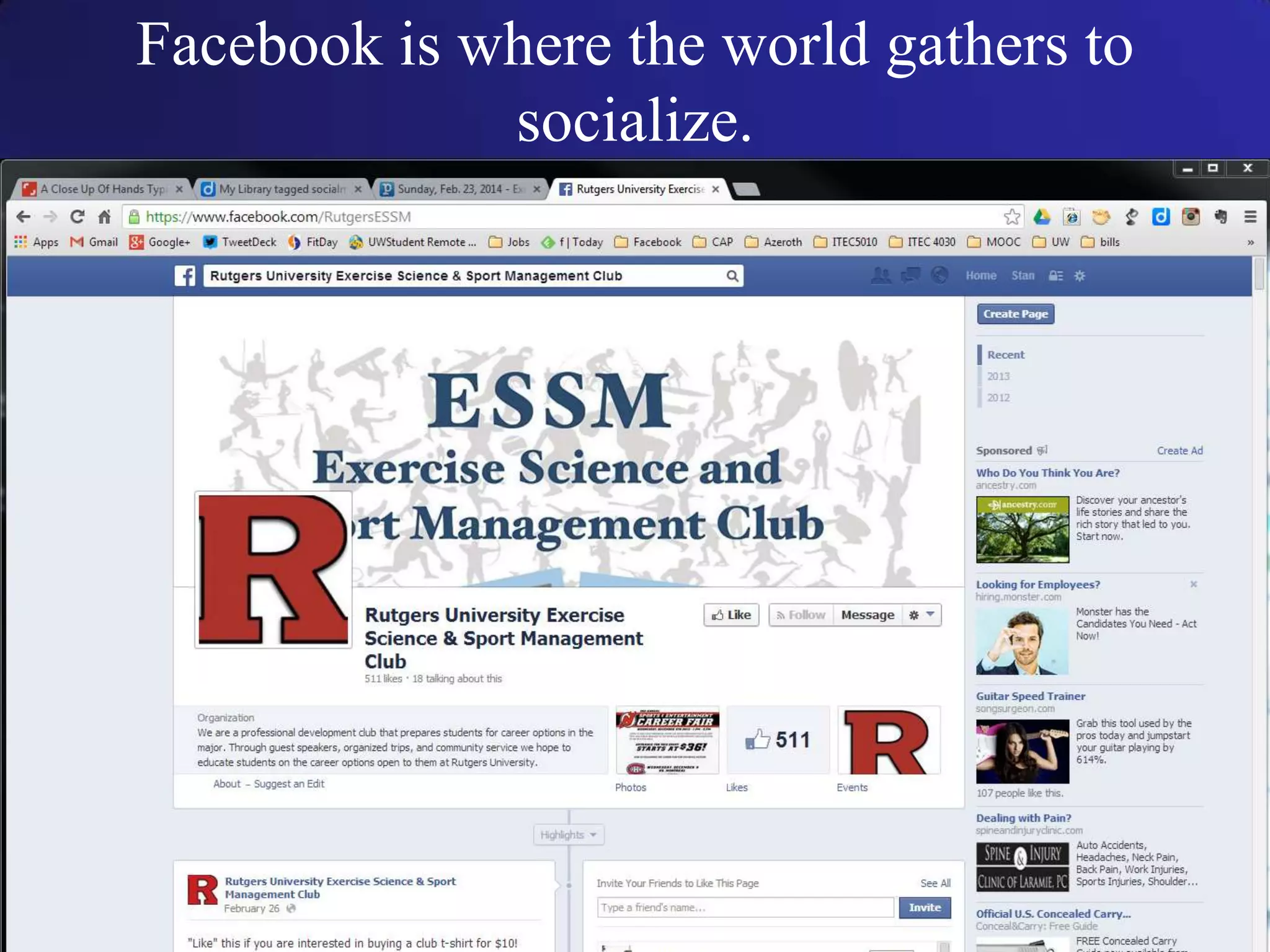
Facebook is where the world gathers to
socialize.
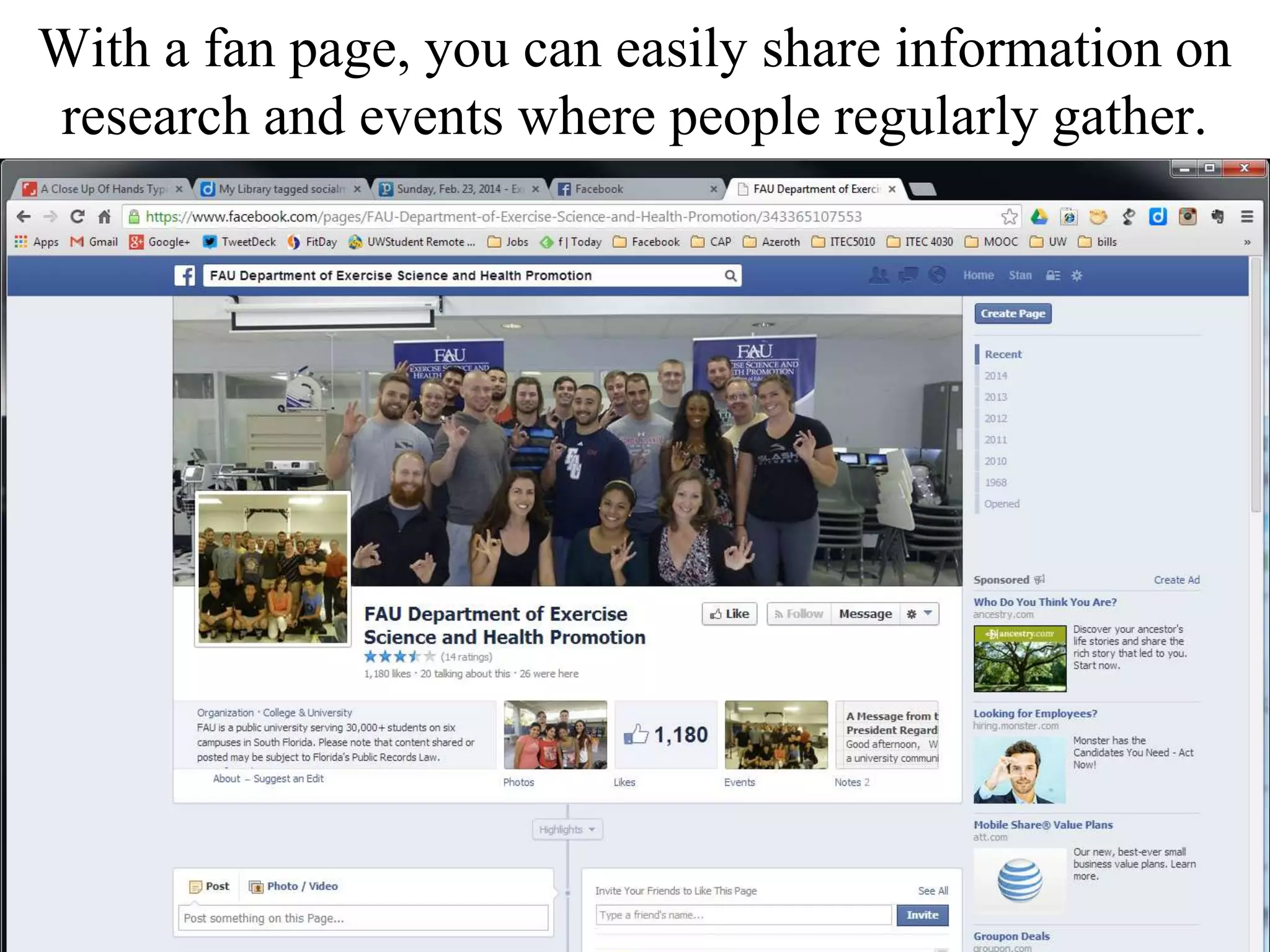
With a fan page, you can easily share information on
research and events where people regularly gather.
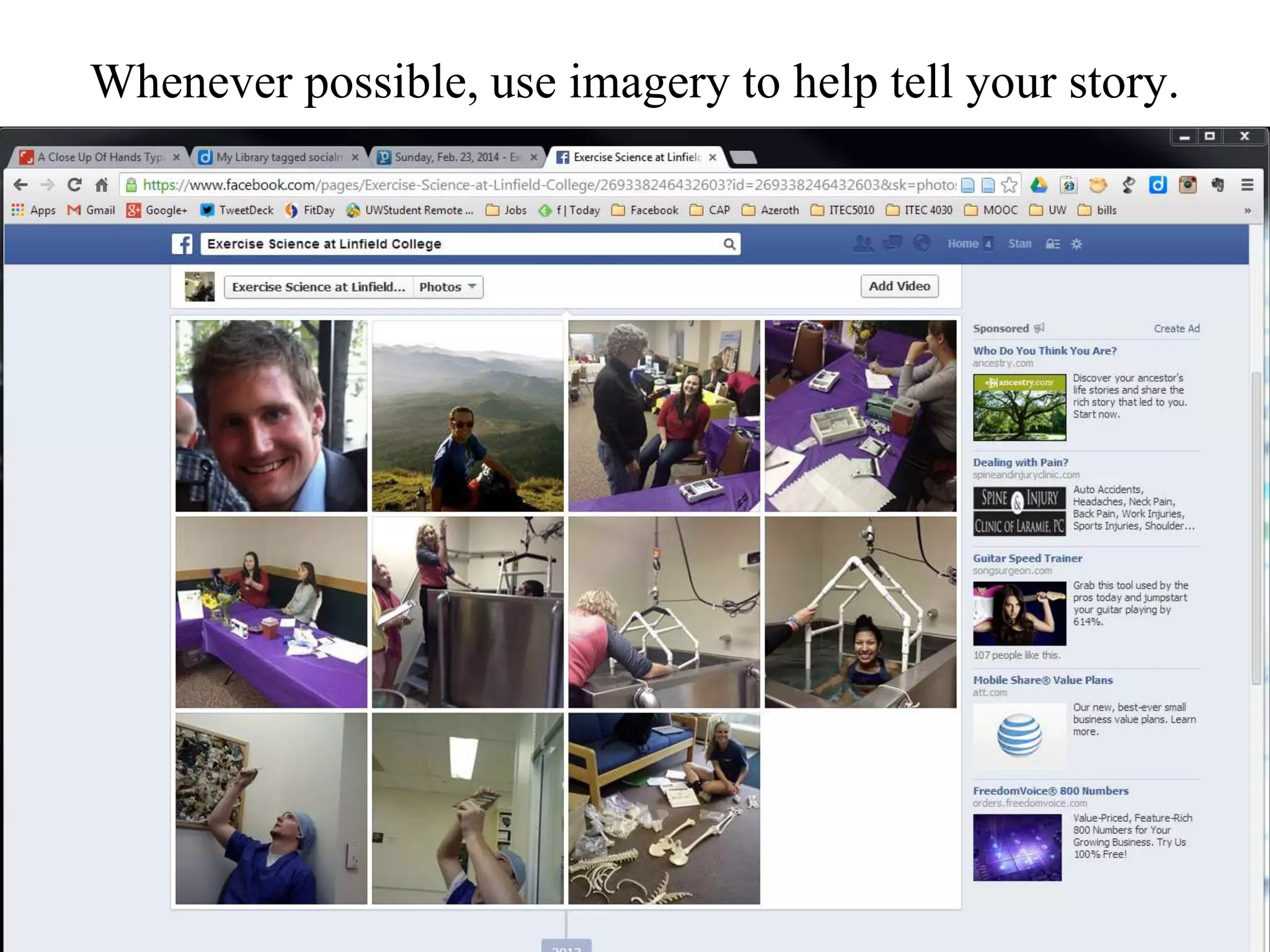
Whenever possible, use imagery to help tell your story.
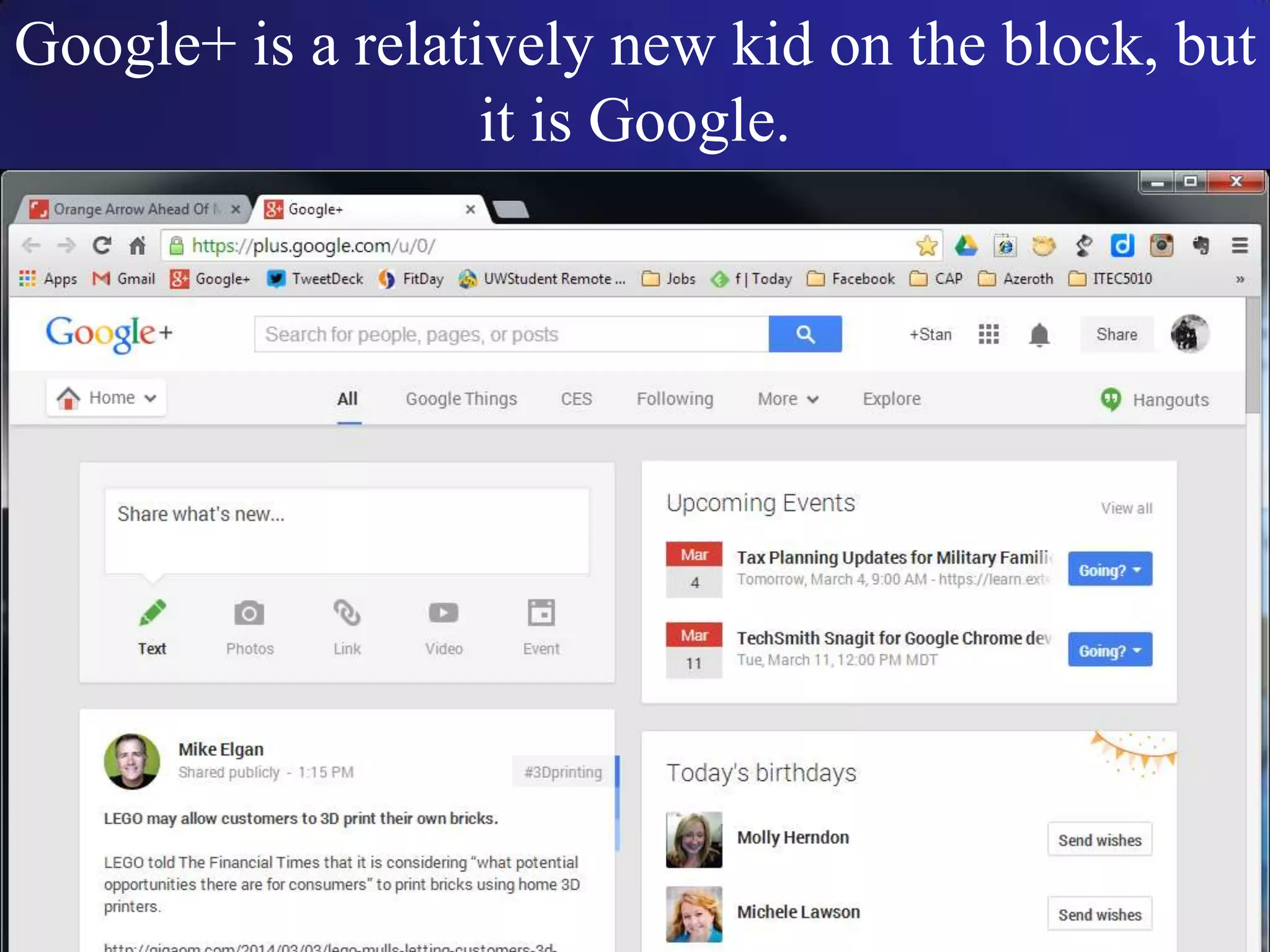
Google+ is a relatively new kid on the block, but
it is Google.
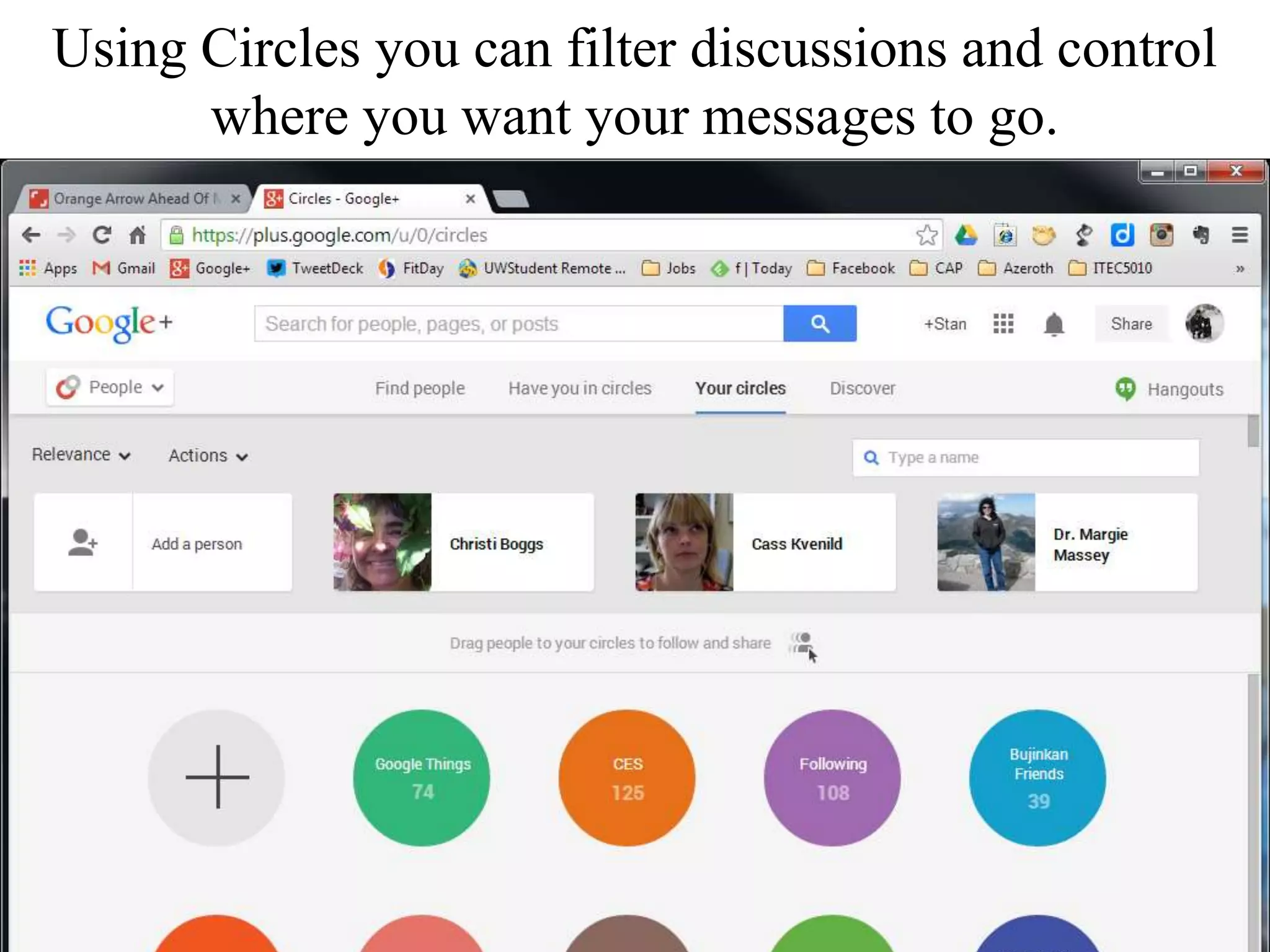
Using Circles you can filter discussions and control
where you want your messages to go.
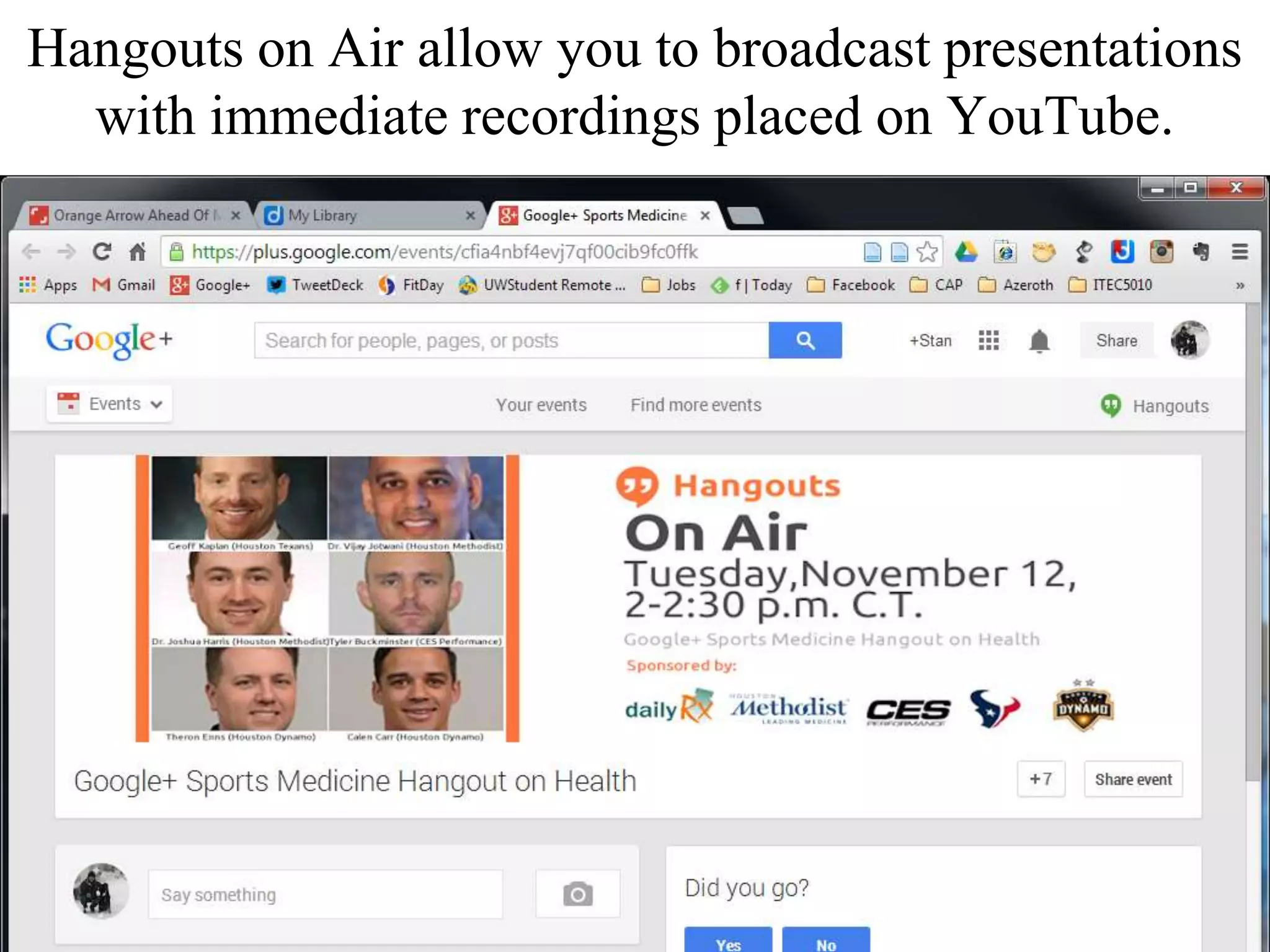
Hangouts on Air allow you to broadcast presentations
with immediate recordings placed on YouTube.
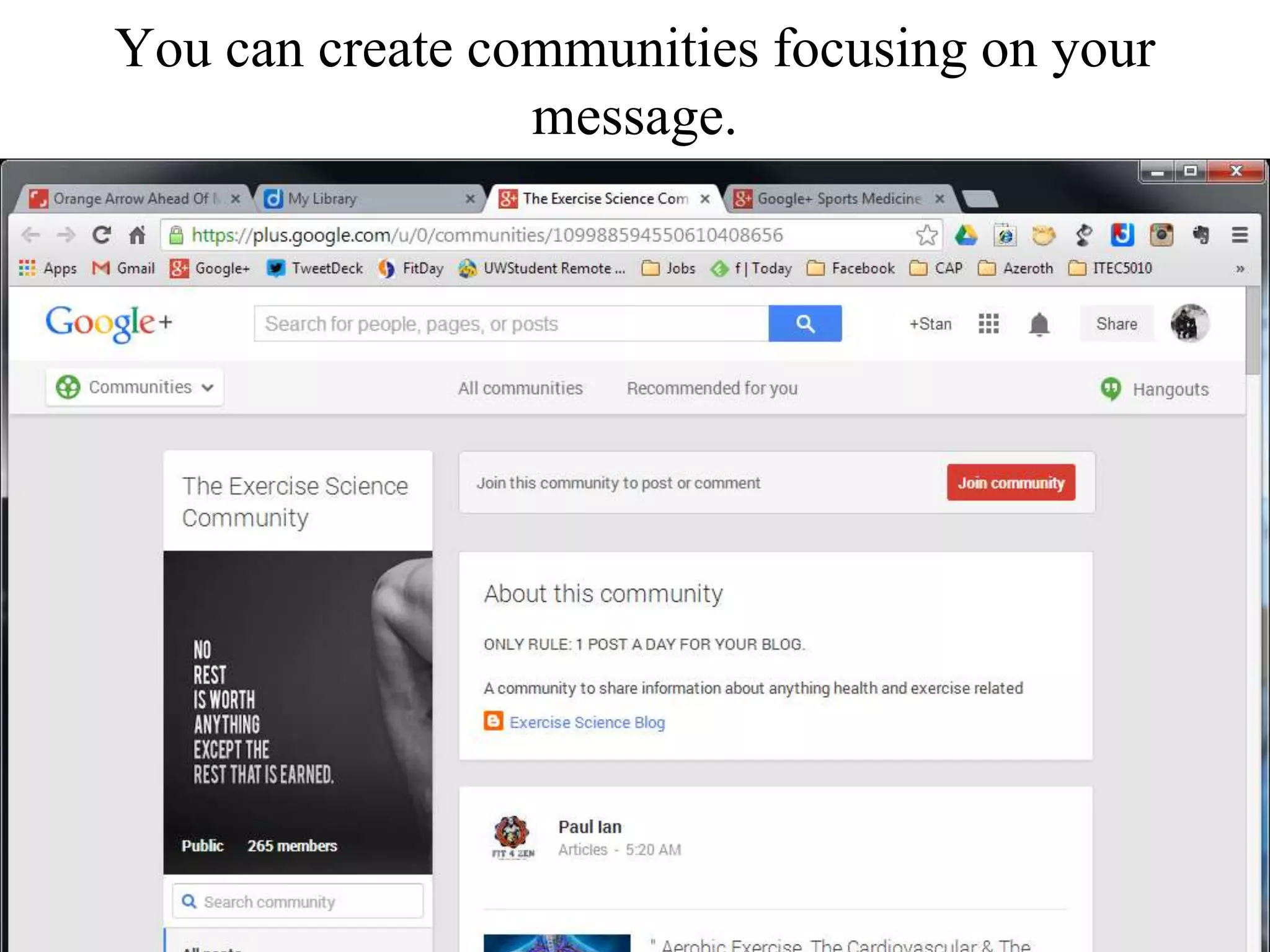
You can create communities focusing on your
message.
Social media takes time to develop a following.
Social media takes dedication.
Questions?
Have your Exercise Science
Message go Faster and Further
with Social Media
Stan Skrabut
@uwcesedtech
#uwces #RMACSM
http://www.slideshare.net/skrabut

Have your exercise science message go faster and further with social media

  • 1.
    Have your ExerciseScience Message go Faster and Further with Social Media Stan Skrabut @uwcesedtech #uwces #RMACSM http://www.slideshare.net/skrabut
  • 2.
    Social media hassignificantly altered how we communicate information.
  • 3.
    You are busyexercise science professionals.
  • 4.
    You hear thebuzz about social media but you don't want to waste time and energy.
  • 5.
    You would liketo be involved with social media only if it worth the investment.
  • 6.
    I will explainwhy social media is worth your time, and explain how to invest your time wisely
  • 7.
    Why should you spendtime with social media? I don't care what someone had for lunch.
  • 8.
    Social media iswhere everyone now communicates.
  • 9.
    1.3 billion peopleare on Facebook, and 48% are between 18 and 34 years of age.
  • 10.
    Twitter has 646million participants, and 58 million tweets are sent per day.
  • 11.
    All news platformsare losing viewership... except the Web. Source: Nielsen Media Research, Pew Research Center for the People & the Press, Audit Bureau of Circulations.
  • 12.
    You are competingwith the general public to create news and stories. The amateurs are winning.
  • 13.
    "70 percent ofAmericans cannot read and understand the science section of the New York Times" ~ Jon Miller, MSU researcher.
  • 14.
    "Most professions existbecause there is a scarce resource that requires ongoing management" ~ Clay Shirkey
  • 15.
    "50% of thepublic now cites the internet as a main source for national and international news" ~ PEW Research
  • 16.
    You need thepublic to succeed in your mission.
  • 17.
    "Online networks makescience more visible to the public and policymakers who affect decisions about research funding." ~Christina Szalinski
  • 18.
    Social media speedsthe dissemination of your research, resulting in more citations and greater readership.
  • 19.
    What's in itfor me? What are the benefits of using social media on your career.
  • 20.
    Before I explainthe benefits, let’s explore why more of you are not involved in social media.
  • 21.
    Many people citetime as a barrier to using social media and conducting outreach.
  • 22.
    Social media doesnot contribute to the current tenure and promotion system.
  • 23.
    Many do nothave the knowledge and skills to use social media tools effectively.
  • 24.
    Departments may notsupport efforts deemed as dumbing down research.
  • 25.
    There is alsothe “Sagan Effect”, where individuals are perceived as spending more time talking to the public than conducting research.
  • 26.
    You and yourwork will be known, if you share it.
  • 27.
    You are responsiblefor your personal branding. You control your message to the world.
  • 28.
    "In an Internetworld there is no point in having knowledge if people don’t know you have it, and if you are not prepared to share it." ~Euan Semple
  • 29.
    I challenge youto Google yourself.
  • 30.
    If you hideyour papers behind a paywall or jargon wall, the general public will not read them, unless…
  • 31.
    "If you tellpeople about your research, they look at it. Your research will get looked at more than papers which are not promoted via social media." ~ Melissa Terras
  • 32.
    Social media toolscan fulfill grant outreach criteria.
  • 33.
    Social media cangrant you access to key figures in science and government.
  • 34.
    You can getrapid answers to problems or polls.
  • 35.
    Social media canlead to connections resulting in writing opportunities or conference appearances.
  • 36.
    How can youuse social media effectively?
  • 37.
    We will startwith Twitter because it is a real time communication tool.
  • 38.
    Using Twitter lists,search queries, and tools like Paper.li, you can stay current on new research developments.
  • 39.
    Use tools likeHootsuite or Tweetdeck to filter conversations based on lists or search queries.
  • 40.
    Use Twitter topublicize your new journal articles and to start a conversation around your events using a hashtag.
  • 41.
    Use a hashtaglike #RMACSM to develop a community.
  • 42.
    Blogging is away you can have a personal impact on the field.
  • 43.
    Blogs are greatplaces for building an online reputation as an expert in your field.
  • 44.
    With a blog,you can highlight your research and the research of others in terms the public can understand. Write for your mom.
  • 45.
    Blogs are placeswhere you write in length, everything else links to the blog post.
  • 46.
    You can explainconcepts in blogs.
  • 47.
    With a blog,there is an increased chance of conversation around your research.
  • 48.
    Facebook is wherethe world gathers to socialize.
  • 49.
    With a fanpage, you can easily share information on research and events where people regularly gather.
  • 50.
    Whenever possible, useimagery to help tell your story.
  • 53.
    Google+ is arelatively new kid on the block, but it is Google.
  • 54.
    Using Circles youcan filter discussions and control where you want your messages to go.
  • 55.
    Hangouts on Airallow you to broadcast presentations with immediate recordings placed on YouTube.
  • 56.
    You can createcommunities focusing on your message.
  • 57.
    Social media takestime to develop a following.
  • 58.
    Social media takesdedication.
  • 59.
  • 60.
    Have your ExerciseScience Message go Faster and Further with Social Media Stan Skrabut @uwcesedtech #uwces #RMACSM http://www.slideshare.net/skrabut

Editor's Notes

  • #3 http://www.shutterstock.com/gallery-795697p1.html?cr=00&pl=edit-00
  • #10 http://www.statisticbrain.com/facebook-statistics/
  • #11 http://www.statisticbrain.com/twitter-statistics/http://www.shutterstock.com/gallery-691372p1.html?cr=00&pl=edit-00
  • #13 http://www.shutterstock.com/gallery-401914p1.html?cr=00&pl=edit-00
  • #14 http://www.sciencedaily.com/releases/2007/02/070218134322.htm
  • #15 Shirky, C. (2008). Here comes everybody: How change happens when people come together. London: Penguin Books.
  • #16 http://www.pewresearch.org/fact-tank/2013/10/16/12-trends-shaping-digital-news/Photo from http://www.flickr.com/photos/larskflem/293751740/sizes/m/in/photostream/
  • #17 http://www.shutterstock.com/gallery-1064387p1.html?cr=00&pl=edit-00
  • #18 http://www.ascb.org/ascbpost/index.php/ascbpost-home/item/113-using-social-media-for-scientists-who-swear-they-never-would
  • #21 http://www.plosone.org/article/info%3Adoi%2F10.1371%2Fjournal.pone.0036240
  • #29 Semple, E. (2012). Organizations don’t tweet, people do: A manager’s guide to the social web (1st ed.). Wiley.
  • #32 http://blogs.lse.ac.uk/impactofsocialsciences/2012/04/19/blog-tweeting-papers-worth-it/
  • #48 http://www.plosbiology.org/article/fetchObject.action?uri=info%3Adoi%2F10.1371%2Fjournal.pbio.0060240&representation=PDF