Download to read offline
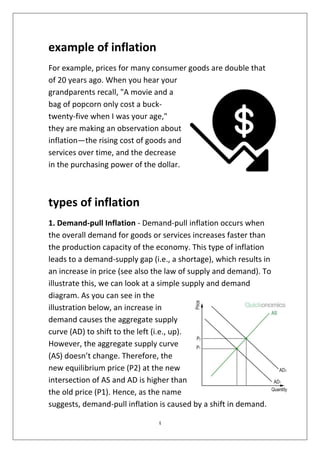
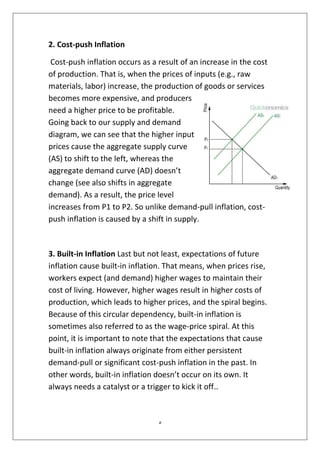


1. Inflation is defined as a rise in the general level of prices where a unit of currency buys less than it previously could. It occurs when the money supply grows faster than the economy. 2. There are three main types of inflation: demand-pull inflation caused by increased demand, cost-push inflation caused by increased costs of production, and built-in inflation caused by expectations of future inflation. 3. While inflation has some potential advantages like enabling adjustment of wages and prices, it also has disadvantages like uncertainty that reduces investment, and loss of international competitiveness from higher prices. High or hyperinflation can severely damage an economy.


