Inflammation
Definition
•Inflammation is a localized, physiologic
response(reaction) of tissues to injurious agents
aimed at limiting and eliminating the offending
agent.
•Usually denoted by the suffix ‘it is e.g
meningitis,arthritis,appendicitis,hepatitis
Classification of inflammation
Inflammation is classified into 2 types based on
the kind of tissue changes observed
Does not necessarily depend on duration of
lesion.
The two types are;
•Acute inflammation
•Chronic inflammation
Acute inflammation
•Is an immediate and early response to an
injurious agent
•relatively of short duration, lasting for minutes,
several hours or few days.
•It is characterized by exudation of fluids and
plasma proteins and the emigration of
predominantly neutrophilic leucocytes to the
site of injury.
Chronic inflammation
•Insidious onset(starts slowly)
•prolonged inflammatory process(weeks or
months)
•Characterized by active inflammation, tissue
destruction and attempts at repair going on
simultaneously.
Acute Inflammation
Occurs in two phases.
1) The Vascular response has the following
steps:
a) Immediate vasoconstriction in seconds due to
neurogenic or chemical stimuli.
b) Vasodilatation of arterioles and venules
resulting in increased blood flow.
c) After the phase of increased blood flow there
is a slowing of blood flow & stasis Increased
vascular permeability that is most remarkably
seen in the post-capillary venules. The increased
vascular permeability oozes protein-rich fluid
into extravascular tissues called exudate. The
presence of the exudates clinically appears as
swelling.
All these events due to chemical mediators of
acute inflammation.
2) Cellular response
The cellular response has the following stages:
A.Migration, rolling, pavementing, & adhesion of
leukocytes to endothelial wall
B. Transmigration of leukocytes- via pseudopodia
through the vascular wall by a process called diapedesis
to the site of injury
C. Chemotaxis-neutrophils are attracted to the site of
inflammation by chemical gradients of the
inflammatory mediators
• D. Phagocytosis-engulfment and
internalization by specialized cells of
particulate material, which includes invading
microorganisms, damaged cells,and tissue
debris.
Cardinal signs of acute
inflammation
The above processes of inflammation lead to the 5
cardinal signs of acute inflammation
•Redness (rubor) which is due to dilation of small
blood vessels within damaged tissue as it occurs in
cellulitis.
• Heat (calor) which results from increased blood
flow due to regional vascular dilation
•Swelling (tumor) which is due to accumulation of
fluid in the extravascular space which, in turn, is
due to increased vascular permeability.
• Pain (dolor), which partly results from the
stretching & destruction of tissues due to
inflammatory edema and in part from pus under
pressure in as abscess cavity.
•Some chemicals of acute inflammation, are also
known to induce pain.
•Loss of function: Due to pain while severe swelling
may also physically immobilize the tissue.
Chemical mediators of
inflammation
• These lead to the process and effects of
inflammation.
Cell injury → Chemical mediators → Acute
inflammation (i.e. the vascular & cellular
events).
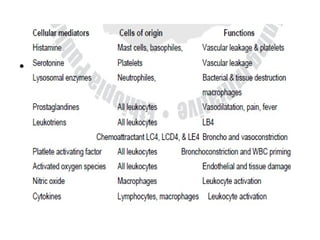
They are derived either from the plasma or cells
Plasma derived mediators
•Products of the complement system- this is an
immune response pathway activated by
presence of offending organism and releases
various products that activate various activities
of the immune cells.
•The products involved in inflammation include
– C3a,C5a -increases vascular permeability
– C5a-activates chemotaxis
– C3b,C3bi -opsoninization (coating organisms to
facilitate phagocytosis)
• Factor XII (Hegman factor) activation
• A component of clotting system
• Its activation results in recruitment of four
systems: the kinin, the clotting, the fibrinolytic
and the compliment systems.
• Cell derived mediators
Morphological types of acute
inflammation
• Serous inflammation
Characterised by thin exudate. Usually occurs in
epithelial surfaces .
• Fibrinous inflammation
Thick exudate-(butter and bread appearance)
Occurs in serous cavities e.g pericardium,pleura
• Suppurative(purulent) inflammation
Abscess formation-circumscribed accumulation of
pus in a living tissue covered in a pyogenic
membrane.
Diffuse acute inflammation-spreads

• Catarrhal inflammation-mucous membranesrespiratory tract
• Pseudomembranous inflammation-epitheial
surface necrosis- colon
Effects of inflammation
A. Beneficial effects
Dilution of toxins: The concentration of chemical and
bacterial toxins at the site of inflammation is reduced
by dilution in the exudate and its removal from the site
by the flow through the lymphatics.
Protective antibodies: Exudation results in the
presence of plasma proteins including antibodies at the
site of inflammation. Thus, antibodies directed against
the causative organisms will react and promote
microbial destruction by phagocytosis or complementmediated cell lysis.
Fibrin formation: This prevents bacterial spread
and enhances phagocytosis by
leukocytes.
Plasma mediator systems provisions: The
complement, coagulation, fibrinolytic, &
kinin systems are provided to the area of injury
by the process of inflammation.
• Cell nutrition: The flow of inflammatory exudates
brings with it glucose, oxygen and other nutrients to
meet the metabolic requirements of the greatly
increased number of cells. It also removes their
solute waste products via lymphatic channels.
• Promotion of immunity: Micro-organisms and their
toxins are carried by the exudates, either free or in
phagocytes, along the lymphatics to local lymph
nodes where they stimulate an immune response
with the generation of antibodies and immune
mechanisms of defense.
• B. Harmful effects
Tissue destruction Inflammation may result in tissue
necrosis and the tissue necrosis may, in turn, incite
inflammation.
Swelling: The swelling caused by inflammation may
have serious mechanical effects at certain locations.
Examples include acute epiglottitis with interference
in breathing; Acute meningitis and encephalitis with
effects of increased intracranial pressure.
Inappropriate response: The inflammatory seen in
hypersensitivity reactions is inappropriate (i.e.
exaggerated).
Outcomes of acute inflammation
Acute inflammation may result in any of the following
•Resolution: i.e. complete restitution of normal
structure and function of the tissue, E g. lobar
pneumonia. This occurs when the inflammatory
response is able to eliminate the offending agent
•Healing by fibrosis (scar formation).
•Abscess formation
•Progression to chronic inflammation

Inflammation

  • 1.
  • 2.
    Definition •Inflammation is alocalized, physiologic response(reaction) of tissues to injurious agents aimed at limiting and eliminating the offending agent. •Usually denoted by the suffix ‘it is e.g meningitis,arthritis,appendicitis,hepatitis
  • 3.
    Classification of inflammation Inflammationis classified into 2 types based on the kind of tissue changes observed Does not necessarily depend on duration of lesion. The two types are; •Acute inflammation •Chronic inflammation
  • 4.
    Acute inflammation •Is animmediate and early response to an injurious agent •relatively of short duration, lasting for minutes, several hours or few days. •It is characterized by exudation of fluids and plasma proteins and the emigration of predominantly neutrophilic leucocytes to the site of injury.
  • 5.
    Chronic inflammation •Insidious onset(startsslowly) •prolonged inflammatory process(weeks or months) •Characterized by active inflammation, tissue destruction and attempts at repair going on simultaneously.
  • 6.
    Acute Inflammation Occurs intwo phases. 1) The Vascular response has the following steps: a) Immediate vasoconstriction in seconds due to neurogenic or chemical stimuli. b) Vasodilatation of arterioles and venules resulting in increased blood flow.
  • 7.
    c) After thephase of increased blood flow there is a slowing of blood flow & stasis Increased vascular permeability that is most remarkably seen in the post-capillary venules. The increased vascular permeability oozes protein-rich fluid into extravascular tissues called exudate. The presence of the exudates clinically appears as swelling. All these events due to chemical mediators of acute inflammation.
  • 8.
    2) Cellular response Thecellular response has the following stages: A.Migration, rolling, pavementing, & adhesion of leukocytes to endothelial wall B. Transmigration of leukocytes- via pseudopodia through the vascular wall by a process called diapedesis to the site of injury C. Chemotaxis-neutrophils are attracted to the site of inflammation by chemical gradients of the inflammatory mediators
  • 9.
    • D. Phagocytosis-engulfmentand internalization by specialized cells of particulate material, which includes invading microorganisms, damaged cells,and tissue debris.
  • 10.
    Cardinal signs ofacute inflammation The above processes of inflammation lead to the 5 cardinal signs of acute inflammation •Redness (rubor) which is due to dilation of small blood vessels within damaged tissue as it occurs in cellulitis. • Heat (calor) which results from increased blood flow due to regional vascular dilation •Swelling (tumor) which is due to accumulation of fluid in the extravascular space which, in turn, is due to increased vascular permeability.
  • 11.
    • Pain (dolor),which partly results from the stretching & destruction of tissues due to inflammatory edema and in part from pus under pressure in as abscess cavity. •Some chemicals of acute inflammation, are also known to induce pain. •Loss of function: Due to pain while severe swelling may also physically immobilize the tissue.
  • 12.
    Chemical mediators of inflammation •These lead to the process and effects of inflammation. Cell injury → Chemical mediators → Acute inflammation (i.e. the vascular & cellular events). They are derived either from the plasma or cells
  • 13.
    Plasma derived mediators •Productsof the complement system- this is an immune response pathway activated by presence of offending organism and releases various products that activate various activities of the immune cells. •The products involved in inflammation include – C3a,C5a -increases vascular permeability – C5a-activates chemotaxis – C3b,C3bi -opsoninization (coating organisms to facilitate phagocytosis)
  • 14.
    • Factor XII(Hegman factor) activation • A component of clotting system • Its activation results in recruitment of four systems: the kinin, the clotting, the fibrinolytic and the compliment systems.
  • 15.
  • 16.
    Morphological types ofacute inflammation • Serous inflammation Characterised by thin exudate. Usually occurs in epithelial surfaces . • Fibrinous inflammation Thick exudate-(butter and bread appearance) Occurs in serous cavities e.g pericardium,pleura
  • 17.
    • Suppurative(purulent) inflammation Abscessformation-circumscribed accumulation of pus in a living tissue covered in a pyogenic membrane. Diffuse acute inflammation-spreads • Catarrhal inflammation-mucous membranesrespiratory tract • Pseudomembranous inflammation-epitheial surface necrosis- colon
  • 18.
    Effects of inflammation A.Beneficial effects Dilution of toxins: The concentration of chemical and bacterial toxins at the site of inflammation is reduced by dilution in the exudate and its removal from the site by the flow through the lymphatics. Protective antibodies: Exudation results in the presence of plasma proteins including antibodies at the site of inflammation. Thus, antibodies directed against the causative organisms will react and promote microbial destruction by phagocytosis or complementmediated cell lysis.
  • 19.
    Fibrin formation: Thisprevents bacterial spread and enhances phagocytosis by leukocytes. Plasma mediator systems provisions: The complement, coagulation, fibrinolytic, & kinin systems are provided to the area of injury by the process of inflammation.
  • 20.
    • Cell nutrition:The flow of inflammatory exudates brings with it glucose, oxygen and other nutrients to meet the metabolic requirements of the greatly increased number of cells. It also removes their solute waste products via lymphatic channels. • Promotion of immunity: Micro-organisms and their toxins are carried by the exudates, either free or in phagocytes, along the lymphatics to local lymph nodes where they stimulate an immune response with the generation of antibodies and immune mechanisms of defense.
  • 21.
    • B. Harmfuleffects Tissue destruction Inflammation may result in tissue necrosis and the tissue necrosis may, in turn, incite inflammation. Swelling: The swelling caused by inflammation may have serious mechanical effects at certain locations. Examples include acute epiglottitis with interference in breathing; Acute meningitis and encephalitis with effects of increased intracranial pressure. Inappropriate response: The inflammatory seen in hypersensitivity reactions is inappropriate (i.e. exaggerated).
  • 22.
    Outcomes of acuteinflammation Acute inflammation may result in any of the following •Resolution: i.e. complete restitution of normal structure and function of the tissue, E g. lobar pneumonia. This occurs when the inflammatory response is able to eliminate the offending agent •Healing by fibrosis (scar formation). •Abscess formation •Progression to chronic inflammation

Editor's Notes