Infertility 
evidence that matters
Not here to say 
• Infertility is inability of a couple to 
conceive after one year of sexual 
intercourse without contraception 
RCOG,1999
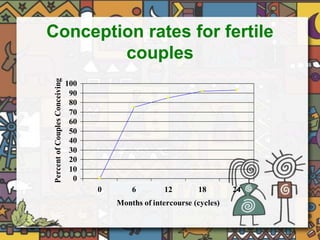
Conception rates for fertile 
couples 
100 
90 
80 
70 
60 
50 
40 
30 
20 
10 
0 
0 6 12 18 24 
Months of intercourse (cycles) 
Percent of Couples Conceiving
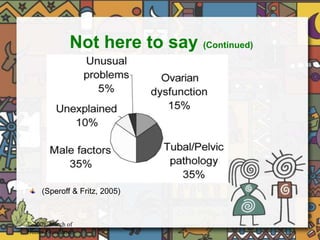
Not here to say (Continued) 
(Speroff & Fritz, 2005) 
© 2008, March of 
Dimes Foundation
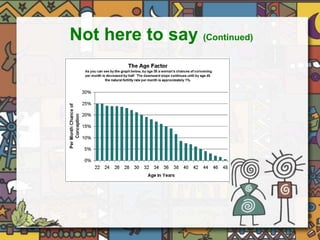
Not here to say (Continued)
here to say 
Best care not usual care
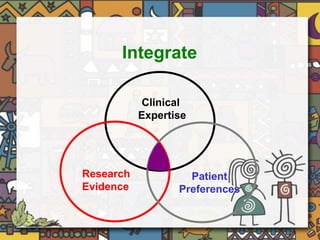
Integrate 
Clinical 
Expertise 
Research 
Evidence 
Patient 
Preferences
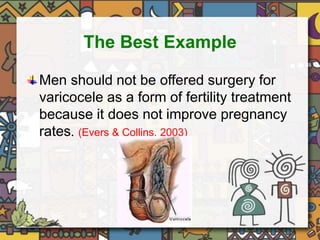
The Best Example 
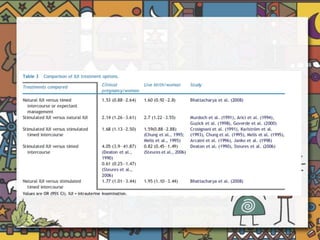
Men should not be offered surgery for 
varicocele as a form of fertility treatment 
because it does not improve pregnancy 
rates. (Evers & Collins, 2003)
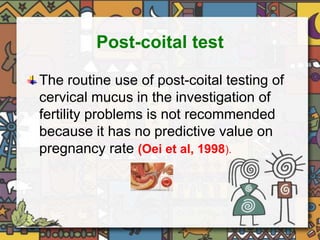
Post-coital test 
The routine use of post-coital testing of 
cervical mucus in the investigation of 
fertility problems is not recommended 
because it has no predictive value on 
pregnancy rate (Oei et al, 1998).
Aim 
To provide the most recent available 
Patient oriented evidence in infertility 
Management based on :- 
Cochrane Library, 2013 issue IV 
NICE guideline 2013.
Investigations 
How to proceed?
Concept to keep in mind 
A simplified approach will lead to a 
significant reduction in both the time 
and cost of investigating an infertile 
couple. 
(Strandell 2000)
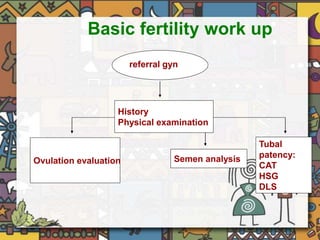
Basic fertility work up 
referral gyn 
History 
Physical examination 
Ovulation evaluation Semen analysis 
Tubal 
patency: 
CAT 
HSG 
DLS
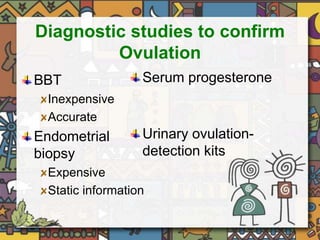
Diagnostic studies to confirm 
Ovulation 
BBT 
Inexpensive 
Accurate 
Endometrial 
biopsy 
Serum progesterone 
Urinary ovulation-detection 
Expensive 
Static information 
kits
Serum Progesterone 
Progesterone starts rising with the LH 
surge 
drawn between day 21-24 
Mid-luteal phase 
>10 ng/ml suggests ovulation
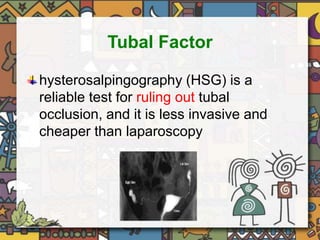
Tubal Factor 
hysterosalpingography (HSG) is a 
reliable test for ruling out tubal 
occlusion, and it is less invasive and 
cheaper than laparoscopy
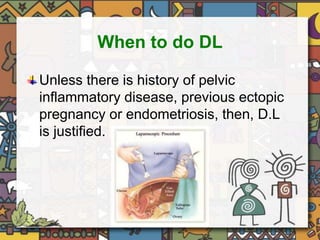
When to do DL 
Unless there is history of pelvic 
inflammatory disease, previous ectopic 
pregnancy or endometriosis, then, D.L 
is justified.
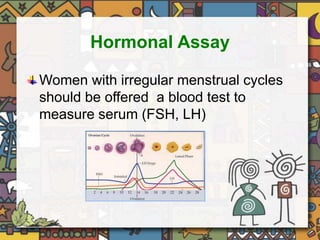
Hormonal Assay 
Women with irregular menstrual cycles 
should be offered a blood test to 
measure serum (FSH, LH)
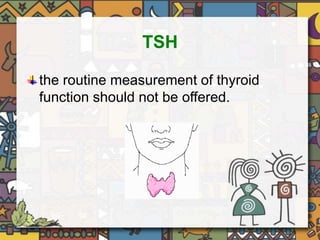
TSH 
the routine measurement of thyroid 
function should not be offered.
Prolactin assay 
This test should only be offered to 
women who have an ovulatory disorder, 
galactorrhoea or a pituitary tumour 
But not on routine basis
Tests of ovarian reserve 
AMH 
Any day of cycle 
Reliable 
expensive
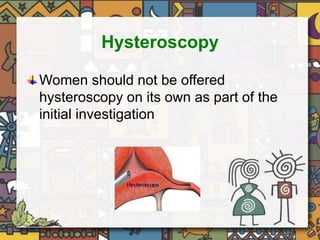
Hysteroscopy 
Women should not be offered 
hysteroscopy on its own as part of the 
initial investigation
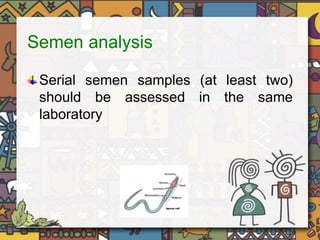
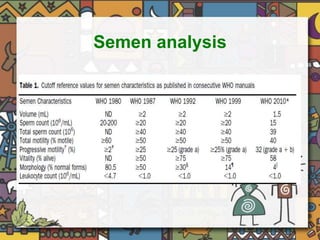
Semen analysis 
Serial semen samples (at least two) 
should be assessed in the same 
laboratory
Semen analysis
CASA vs. conventional analysis 
In a randomized controlled trial, the 
determination of motility characteristics 
as obtained by CASA systems is of 
limited value to optimizing the 
evaluation of male fertility status 
(Krause ,1995 )
What to do? 
Gonadotrophins 
Nutritional supplements ?
ICSI 
Moderate or Severe male factor 
•Obstructive azoospermia 
•non-obstructive azoospermia.
hypogonadotrophic 
hypogonadism 
hMG is a must because these are 
effective in improving fertility
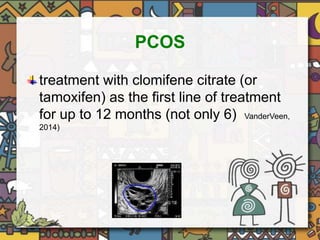
PCOS 
treatment with clomifene citrate (or 
tamoxifen) as the first line of treatment 
for up to 12 months (not only 6) VanderVeen, 
2014)
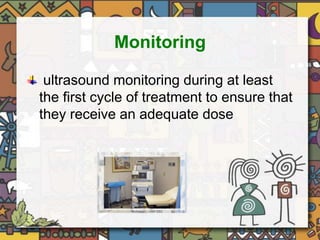
Monitoring 
ultrasound monitoring during at least 
the first cycle of treatment to ensure that 
they receive an adequate dose
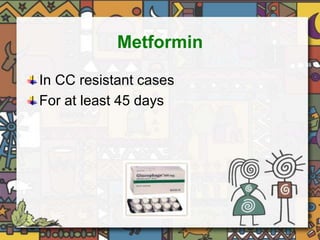
Metformin 
In CC resistant cases 
For at least 45 days
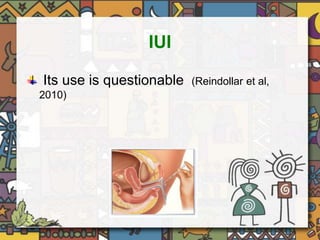
IUI 
Its use is questionable (Reindollar et al, 
2010)
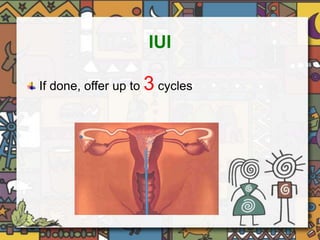
IUI 
If done, offer up to 3 cycles
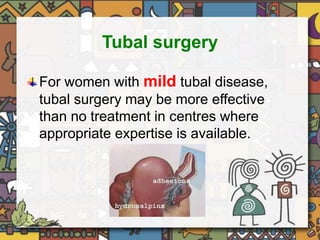
Tubal surgery 
For women with mild tubal disease, 
tubal surgery may be more effective 
than no treatment in centres where 
appropriate expertise is available.
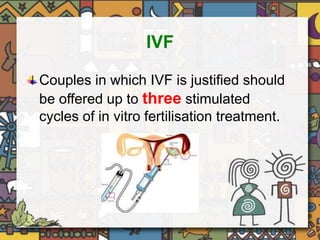
IVF 
Couples in which IVF is justified should 
be offered up to three stimulated 
cycles of in vitro fertilisation treatment.
recFSH vs hMG 
hMG, u FSH and recombinant FSH are 
equally effective in achieving a live birth 
when used following pituitary down-regulation 
as part of in vitro fertilisation 
treatment.
GnRHa in IVF/ICSI 
Long protocol is the standard .
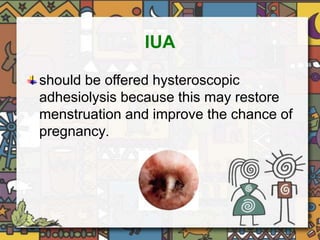
IUA 
should be offered hysteroscopic 
adhesiolysis because this may restore 
menstruation and improve the chance of 
pregnancy.
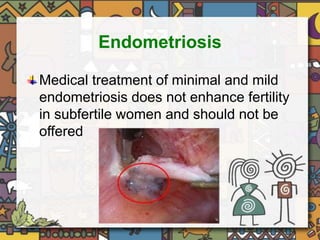
Endometriosis 
Medical treatment of minimal and mild 
endometriosis does not enhance fertility 
in subfertile women and should not be 
offered
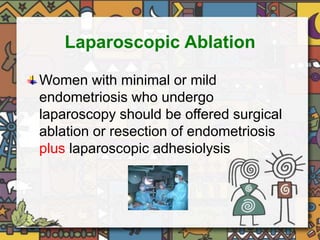
Laparoscopic Ablation 
Women with minimal or mild 
endometriosis who undergo 
laparoscopy should be offered surgical 
ablation or resection of endometriosis 
plus laparoscopic adhesiolysis
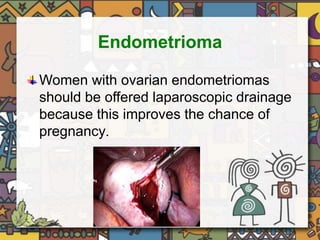
Endometrioma 
Women with ovarian endometriomas 
should be offered laparoscopic drainage 
because this improves the chance of 
pregnancy.
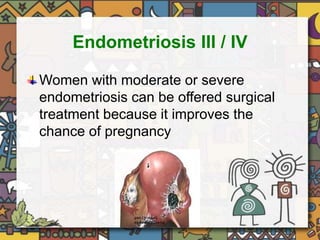
Endometriosis III / IV 
Women with moderate or severe 
endometriosis can be offered surgical 
treatment because it improves the 
chance of pregnancy
Endometriosis III / IV 
Post-operative medical treatment does 
not improve pregnancy rates in women 
with moderate to severe endometriosis 
and is not recommended.
Hydrosalpinx 
Women with ultrasound visible 
hydrosalpinges should be offered 
salpingectomy before in vitro fertilisation 
treatment because this improves the 
chance of a live birth
BMI 
female body mass index should ideally 
be in the range 19–30 before 
commencing assisted reproduction, and 
that a female body mass index outside 
this range is likely to reduce the 
success of assisted reproduction 
procedures.
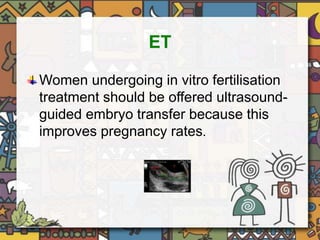
ET 
Women undergoing in vitro fertilisation 
treatment should be offered ultrasound-guided 
embryo transfer because this 
improves pregnancy rates.
Day 2 vs day 5 
Embryo transfers on day 2 or 3 and day 
5 or 6 appear to be equally effective in 
terms of increased pregnancy and live 
birth rates per cycle started
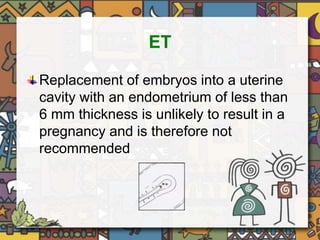
ET 
Replacement of embryos into a uterine 
cavity with an endometrium of less than 
6 mm thickness is unlikely to result in a 
pregnancy and is therefore not 
recommended
ET 
Bed rest of more than 20 minutes’ 
duration following embryo transfer does 
not improve the outcome of in vitro 
fertilisation treatment
Luteal Phase Support 
luteal support using progesterone 
improves pregnancy rates
ICSI vs IVF 
ICSI improves fertilisation rates 
compared to IVF, but once fertilisation is 
achieved the pregnancy rate is no better 
than with in vitro fertilisation
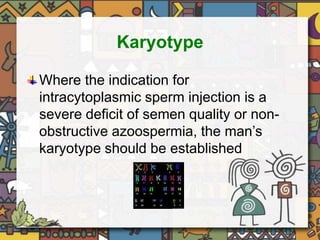
Karyotype 
Where the indication for 
intracytoplasmic sperm injection is a 
severe deficit of semen quality or non-obstructive 
azoospermia, the man’s 
karyotype should be established
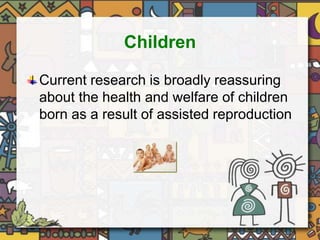
Children 
Current research is broadly reassuring 
about the health and welfare of children 
born as a result of assisted reproduction
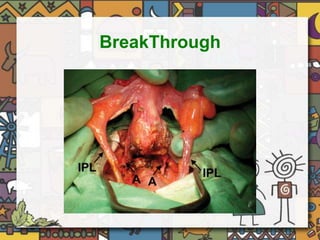
BreakThrough
Infertility 2014  : evidence that matters

Infertility 2014 : evidence that matters

  • 1.
  • 2.
    Not here tosay • Infertility is inability of a couple to conceive after one year of sexual intercourse without contraception RCOG,1999
  • 3.
    Conception rates forfertile couples 100 90 80 70 60 50 40 30 20 10 0 0 6 12 18 24 Months of intercourse (cycles) Percent of Couples Conceiving
  • 4.
    Not here tosay (Continued) (Speroff & Fritz, 2005) © 2008, March of Dimes Foundation
  • 5.
    Not here tosay (Continued)
  • 6.
    here to say Best care not usual care
  • 7.
    Integrate Clinical Expertise Research Evidence Patient Preferences
  • 8.
    The Best Example Men should not be offered surgery for varicocele as a form of fertility treatment because it does not improve pregnancy rates. (Evers & Collins, 2003)
  • 9.
    Post-coital test Theroutine use of post-coital testing of cervical mucus in the investigation of fertility problems is not recommended because it has no predictive value on pregnancy rate (Oei et al, 1998).
  • 10.
    Aim To providethe most recent available Patient oriented evidence in infertility Management based on :- Cochrane Library, 2013 issue IV NICE guideline 2013.
  • 12.
  • 13.
    Concept to keepin mind A simplified approach will lead to a significant reduction in both the time and cost of investigating an infertile couple. (Strandell 2000)
  • 14.
    Basic fertility workup referral gyn History Physical examination Ovulation evaluation Semen analysis Tubal patency: CAT HSG DLS
  • 15.
    Diagnostic studies toconfirm Ovulation BBT Inexpensive Accurate Endometrial biopsy Serum progesterone Urinary ovulation-detection Expensive Static information kits
  • 16.
    Serum Progesterone Progesteronestarts rising with the LH surge drawn between day 21-24 Mid-luteal phase >10 ng/ml suggests ovulation
  • 17.
    Tubal Factor hysterosalpingography(HSG) is a reliable test for ruling out tubal occlusion, and it is less invasive and cheaper than laparoscopy
  • 18.
    When to doDL Unless there is history of pelvic inflammatory disease, previous ectopic pregnancy or endometriosis, then, D.L is justified.
  • 19.
    Hormonal Assay Womenwith irregular menstrual cycles should be offered a blood test to measure serum (FSH, LH)
  • 20.
    TSH the routinemeasurement of thyroid function should not be offered.
  • 21.
    Prolactin assay Thistest should only be offered to women who have an ovulatory disorder, galactorrhoea or a pituitary tumour But not on routine basis
  • 22.
    Tests of ovarianreserve AMH Any day of cycle Reliable expensive
  • 23.
    Hysteroscopy Women shouldnot be offered hysteroscopy on its own as part of the initial investigation
  • 24.
    Semen analysis Serialsemen samples (at least two) should be assessed in the same laboratory
  • 25.
  • 26.
    CASA vs. conventionalanalysis In a randomized controlled trial, the determination of motility characteristics as obtained by CASA systems is of limited value to optimizing the evaluation of male fertility status (Krause ,1995 )
  • 27.
    What to do? Gonadotrophins Nutritional supplements ?
  • 29.
    ICSI Moderate orSevere male factor •Obstructive azoospermia •non-obstructive azoospermia.
  • 30.
    hypogonadotrophic hypogonadism hMGis a must because these are effective in improving fertility
  • 31.
    PCOS treatment withclomifene citrate (or tamoxifen) as the first line of treatment for up to 12 months (not only 6) VanderVeen, 2014)
  • 32.
    Monitoring ultrasound monitoringduring at least the first cycle of treatment to ensure that they receive an adequate dose
  • 33.
    Metformin In CCresistant cases For at least 45 days
  • 34.
    IUI Its useis questionable (Reindollar et al, 2010)
  • 35.
    IUI If done,offer up to 3 cycles
  • 36.
    Tubal surgery Forwomen with mild tubal disease, tubal surgery may be more effective than no treatment in centres where appropriate expertise is available.
  • 37.
    IVF Couples inwhich IVF is justified should be offered up to three stimulated cycles of in vitro fertilisation treatment.
  • 38.
    recFSH vs hMG hMG, u FSH and recombinant FSH are equally effective in achieving a live birth when used following pituitary down-regulation as part of in vitro fertilisation treatment.
  • 39.
    GnRHa in IVF/ICSI Long protocol is the standard .
  • 40.
    IUA should beoffered hysteroscopic adhesiolysis because this may restore menstruation and improve the chance of pregnancy.
  • 41.
    Endometriosis Medical treatmentof minimal and mild endometriosis does not enhance fertility in subfertile women and should not be offered
  • 42.
    Laparoscopic Ablation Womenwith minimal or mild endometriosis who undergo laparoscopy should be offered surgical ablation or resection of endometriosis plus laparoscopic adhesiolysis
  • 43.
    Endometrioma Women withovarian endometriomas should be offered laparoscopic drainage because this improves the chance of pregnancy.
  • 44.
    Endometriosis III /IV Women with moderate or severe endometriosis can be offered surgical treatment because it improves the chance of pregnancy
  • 45.
    Endometriosis III /IV Post-operative medical treatment does not improve pregnancy rates in women with moderate to severe endometriosis and is not recommended.
  • 46.
    Hydrosalpinx Women withultrasound visible hydrosalpinges should be offered salpingectomy before in vitro fertilisation treatment because this improves the chance of a live birth
  • 47.
    BMI female bodymass index should ideally be in the range 19–30 before commencing assisted reproduction, and that a female body mass index outside this range is likely to reduce the success of assisted reproduction procedures.
  • 48.
    ET Women undergoingin vitro fertilisation treatment should be offered ultrasound-guided embryo transfer because this improves pregnancy rates.
  • 49.
    Day 2 vsday 5 Embryo transfers on day 2 or 3 and day 5 or 6 appear to be equally effective in terms of increased pregnancy and live birth rates per cycle started
  • 50.
    ET Replacement ofembryos into a uterine cavity with an endometrium of less than 6 mm thickness is unlikely to result in a pregnancy and is therefore not recommended
  • 51.
    ET Bed restof more than 20 minutes’ duration following embryo transfer does not improve the outcome of in vitro fertilisation treatment
  • 52.
    Luteal Phase Support luteal support using progesterone improves pregnancy rates
  • 53.
    ICSI vs IVF ICSI improves fertilisation rates compared to IVF, but once fertilisation is achieved the pregnancy rate is no better than with in vitro fertilisation
  • 54.
    Karyotype Where theindication for intracytoplasmic sperm injection is a severe deficit of semen quality or non-obstructive azoospermia, the man’s karyotype should be established
  • 55.
    Children Current researchis broadly reassuring about the health and welfare of children born as a result of assisted reproduction
  • 56.