MANAGEMENT OF THE
INFERTILE COUPLE IN A
PRIMARY CARE SETTING
PART ONE
MILIE NWOYE MD
SHAPE ARMY MEDICAL CLINIC
FEBRUARY 20TH 2014
OUTLINE
• GENERAL GYNECOLOGY
• Gynecologic cancer screening
• Pre-conception counselling
• Tests for ovarian reserve

• THE INFERTILE COUPLE
• Definition
• Evaluating the infertile couple
• Managing the infertile couple (PART 1)
CERVICAL CANCER SCREENING
• Screening starts at age 21 regardless of sex initiation
• Ages 21-29: Pap test only every 3 years
• Ages 30-65: Pap test every 3 years OR Pap and high risk HPV testing every 5 years
• Women without a cervix: No Pap test required except less than 20 year history of high
grade abnormality OR history of DES in-utero exposure
Population

Recommended Screening
Method

Women younger than 21 years

No screening

Women aged 21–29 years

Cytology alone every 3 years

Women aged 30–65 years

Human papillomavirus and cytology
co-testing (preferred) every 5 years

Comment

Screening by HPV testing alone is
not recommended

Cytology alone (acceptable) every 3
years

Women older than 65 years

No screening is necessary after
adequate negative prior screening
results

Women with a history of CIN 2, CIN
3 or adenocarcinoma in situ should
continue routine age-based
screening for at least 20 years

Women who underwent total
hysterectomy

No screening is necessary

Applies to women without a cervix
and without a history of CIN 2, CIN
3, adenocarcinoma in situ, or cancer
in the past 20 years

Practice bulletin, ACOG, November 2012
BREAST CANCER SCREENING
• Mammography has a false negative rate of 20%*
• Age <40: Self breast awareness
• Age >40: Self breast awareness, annual clinical breast exam and mammogram (except
women with first degree relatives with premenopausal breast cancer OR women with
BRCA mutation)
ACOG guidelines

*National Cancer Institute
Mammography
American College
of Obstetricians
and Gynecologists

Age 40 years and
older annually

Clinical Breast
Examination
Age 20-39 years
every 1-3 years

Breast SelfExamination
Instruction
Consider for highrisk patients

Breast SelfAwareness
Recommended

Age 40 years and
older annually

Practice Bulletin, ACOG, August 2011
ENDOMETRIAL CANCER SCREENING
• Most common gynecologic cancer

Risk Factor

Relative Risk

• No screening tool.

Longterm high dose
HRT

10-20

• Red flags: postmenopausal bleeding

Tamoxifen

3-7

• Diagnosis:

PCOS or estrogen
producing tumor

>5

• Endometrial biopsy or D&C

Obesity

2-5

• Transvaginal ultrasound

Nulliparity

3

ACOG practice bulletin, August 2005
OVARIAN CANCER SCREENING
• Lifetime risk of 1/70
• No evidence that screening leads to earlier
detection or improved survival
• Diagnostic tests: CA 125 and transvaginal
ultrasound

ACOG, July 2007
PRE-CONCEPTION SCREENING
• Folic acid 0.4mg (or 4mg with a history of open neural tube defects)
• Risk factor-based genetic screening/ counselling
• Optimize medical conditions (HTN, DM)
• Domestic violence screening
• Avoid alcohol, tobacco, radiation, and illegal drugs
• Weight reduction

• Vaccinations (Rubella, influenza)
ACOG Committee opinion, 9/2005
TESTING FOR OVARIAN RESERVE
•

ASRM, 2005
Speroff, 2005
THE INFERTILE COUPLE
DEFINITION
For women ≤ 35: No conception after 1 year of unprotected intercourse
For women >35: No conception after 6 months of unprotected intercourse
Only 43% seek medical care
Age (years)

Infertility rates (%)

15-24

4

25-34

13

35-44

30
Age and infertility. Science 1986;233:1389-94
CAUSES OF INFERTILITY- COUPLES
5%
10%

35%

15%

Tubal and pelvic pathlogy
Male factor
Ovulatory dysfunction
Unexplained
Unusual problems

35%

Speroff, 2005
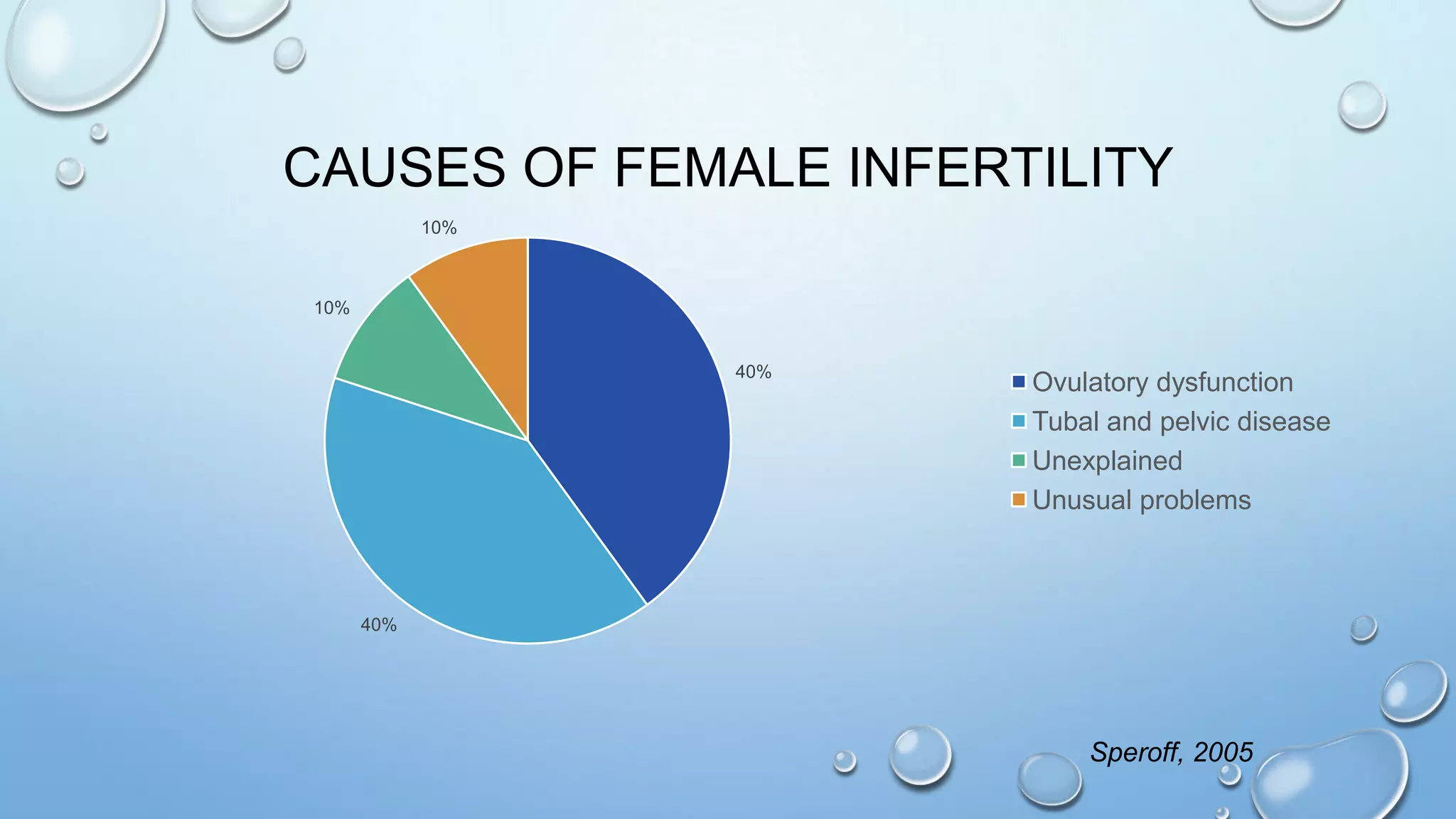
CAUSES OF FEMALE INFERTILITY
10%

10%

40%

Ovulatory dysfunction
Tubal and pelvic disease
Unexplained
Unusual problems

40%

Speroff, 2005
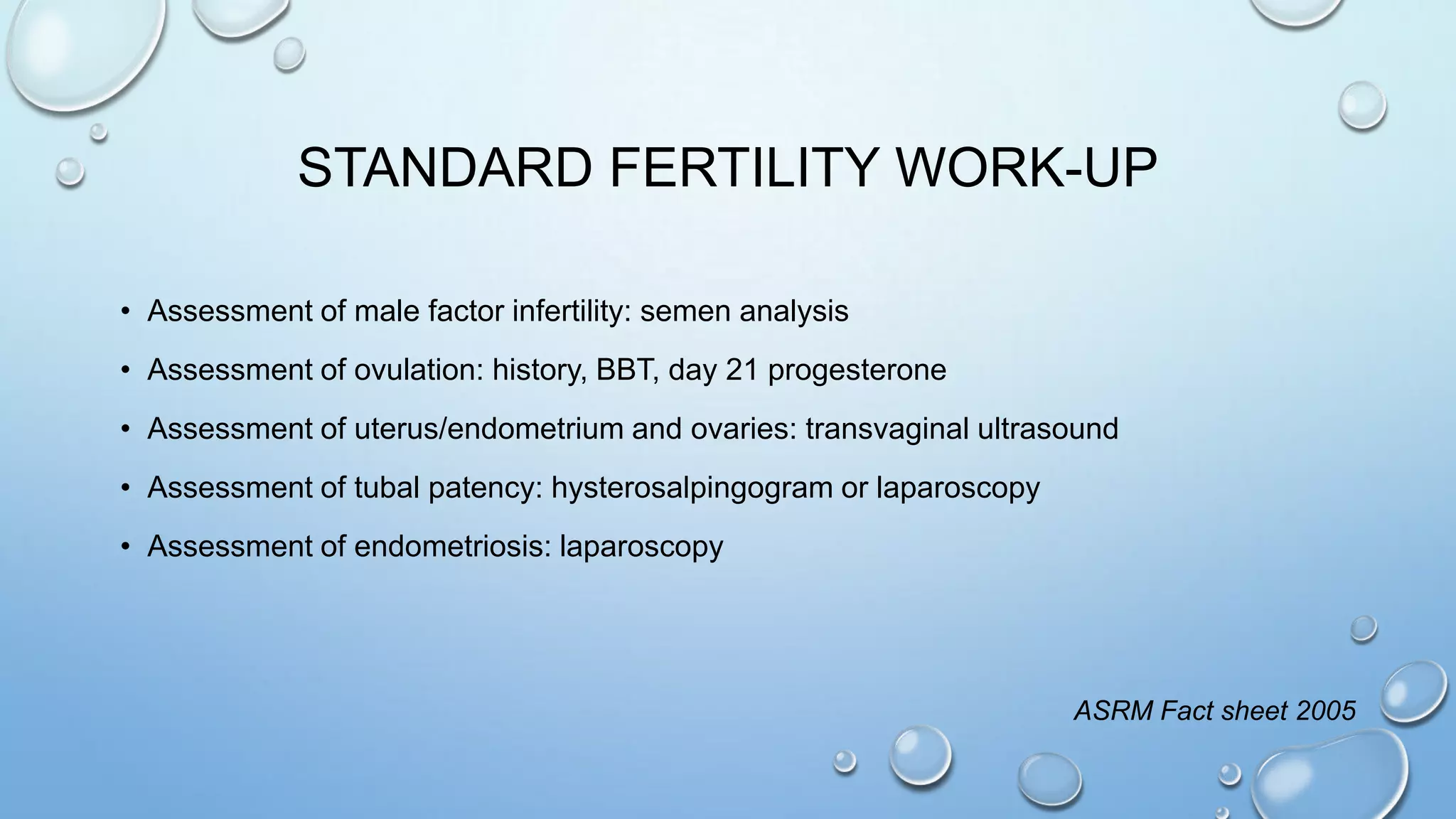
STANDARD FERTILITY WORK-UP
• Assessment of male factor infertility: semen analysis
• Assessment of ovulation: history, BBT, day 21 progesterone
• Assessment of uterus/endometrium and ovaries: transvaginal ultrasound
• Assessment of tubal patency: hysterosalpingogram or laparoscopy
• Assessment of endometriosis: laparoscopy

ASRM Fact sheet 2005
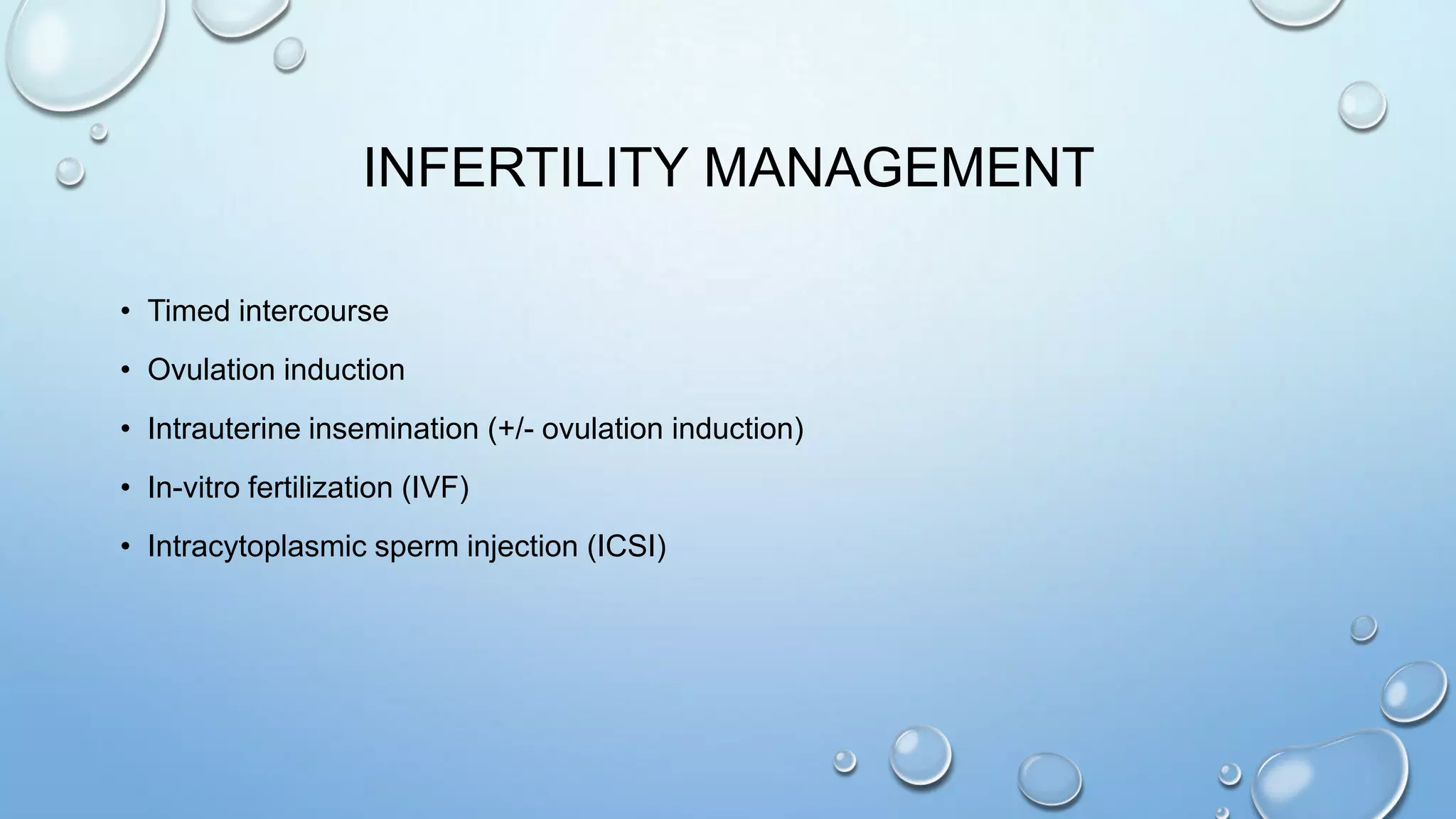
INFERTILITY MANAGEMENT
• Timed intercourse
• Ovulation induction
• Intrauterine insemination (+/- ovulation induction)
• In-vitro fertilization (IVF)
• Intracytoplasmic sperm injection (ICSI)

Management of the Infertile Couple in a Primary Care Setting. Part I

  • 1.
    MANAGEMENT OF THE INFERTILECOUPLE IN A PRIMARY CARE SETTING PART ONE MILIE NWOYE MD SHAPE ARMY MEDICAL CLINIC FEBRUARY 20TH 2014
  • 2.
    OUTLINE • GENERAL GYNECOLOGY •Gynecologic cancer screening • Pre-conception counselling • Tests for ovarian reserve • THE INFERTILE COUPLE • Definition • Evaluating the infertile couple • Managing the infertile couple (PART 1)
  • 3.
    CERVICAL CANCER SCREENING •Screening starts at age 21 regardless of sex initiation • Ages 21-29: Pap test only every 3 years • Ages 30-65: Pap test every 3 years OR Pap and high risk HPV testing every 5 years • Women without a cervix: No Pap test required except less than 20 year history of high grade abnormality OR history of DES in-utero exposure
  • 4.
    Population Recommended Screening Method Women youngerthan 21 years No screening Women aged 21–29 years Cytology alone every 3 years Women aged 30–65 years Human papillomavirus and cytology co-testing (preferred) every 5 years Comment Screening by HPV testing alone is not recommended Cytology alone (acceptable) every 3 years Women older than 65 years No screening is necessary after adequate negative prior screening results Women with a history of CIN 2, CIN 3 or adenocarcinoma in situ should continue routine age-based screening for at least 20 years Women who underwent total hysterectomy No screening is necessary Applies to women without a cervix and without a history of CIN 2, CIN 3, adenocarcinoma in situ, or cancer in the past 20 years Practice bulletin, ACOG, November 2012
  • 5.
    BREAST CANCER SCREENING •Mammography has a false negative rate of 20%* • Age <40: Self breast awareness • Age >40: Self breast awareness, annual clinical breast exam and mammogram (except women with first degree relatives with premenopausal breast cancer OR women with BRCA mutation) ACOG guidelines *National Cancer Institute
  • 6.
    Mammography American College of Obstetricians andGynecologists Age 40 years and older annually Clinical Breast Examination Age 20-39 years every 1-3 years Breast SelfExamination Instruction Consider for highrisk patients Breast SelfAwareness Recommended Age 40 years and older annually Practice Bulletin, ACOG, August 2011
  • 7.
    ENDOMETRIAL CANCER SCREENING •Most common gynecologic cancer Risk Factor Relative Risk • No screening tool. Longterm high dose HRT 10-20 • Red flags: postmenopausal bleeding Tamoxifen 3-7 • Diagnosis: PCOS or estrogen producing tumor >5 • Endometrial biopsy or D&C Obesity 2-5 • Transvaginal ultrasound Nulliparity 3 ACOG practice bulletin, August 2005
  • 8.
    OVARIAN CANCER SCREENING •Lifetime risk of 1/70 • No evidence that screening leads to earlier detection or improved survival • Diagnostic tests: CA 125 and transvaginal ultrasound ACOG, July 2007
  • 9.
    PRE-CONCEPTION SCREENING • Folicacid 0.4mg (or 4mg with a history of open neural tube defects) • Risk factor-based genetic screening/ counselling • Optimize medical conditions (HTN, DM) • Domestic violence screening • Avoid alcohol, tobacco, radiation, and illegal drugs • Weight reduction • Vaccinations (Rubella, influenza) ACOG Committee opinion, 9/2005
  • 10.
    TESTING FOR OVARIANRESERVE • ASRM, 2005 Speroff, 2005
  • 11.
    THE INFERTILE COUPLE DEFINITION Forwomen ≤ 35: No conception after 1 year of unprotected intercourse For women >35: No conception after 6 months of unprotected intercourse Only 43% seek medical care Age (years) Infertility rates (%) 15-24 4 25-34 13 35-44 30 Age and infertility. Science 1986;233:1389-94
  • 12.
    CAUSES OF INFERTILITY-COUPLES 5% 10% 35% 15% Tubal and pelvic pathlogy Male factor Ovulatory dysfunction Unexplained Unusual problems 35% Speroff, 2005
  • 13.
    CAUSES OF FEMALEINFERTILITY 10% 10% 40% Ovulatory dysfunction Tubal and pelvic disease Unexplained Unusual problems 40% Speroff, 2005
  • 14.
    STANDARD FERTILITY WORK-UP •Assessment of male factor infertility: semen analysis • Assessment of ovulation: history, BBT, day 21 progesterone • Assessment of uterus/endometrium and ovaries: transvaginal ultrasound • Assessment of tubal patency: hysterosalpingogram or laparoscopy • Assessment of endometriosis: laparoscopy ASRM Fact sheet 2005
  • 15.
    INFERTILITY MANAGEMENT • Timedintercourse • Ovulation induction • Intrauterine insemination (+/- ovulation induction) • In-vitro fertilization (IVF) • Intracytoplasmic sperm injection (ICSI)