Dr. Sharda Jain
Dr. Jyoti Agarwal
Dr. Jyoti Bhaskar
AN UPDATE
on
First Trimester
Recurrent
Pregnancy
Loss
(RPL)
AN UPDATE on First Trimester
Recurrent Pregnancy Loss (RPL)
Review This Lecture at
slideshare.net
Presented an annual conference Ghazibad Obstetric society
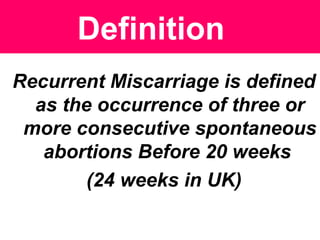
Definition
Recurrent Miscarriage is defined
as the occurrence of three or
more consecutive spontaneous
abortions Before 20 weeks
(24 weeks in UK)
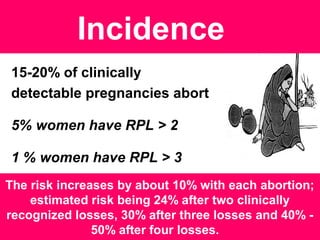
Incidence
15-20% of clinically
detectable pregnancies abort
5% women have RPL > 2
1 % women have RPL > 3
The risk increases by about 10% with each abortion;
estimated risk being 24% after two clinically
recognized losses, 30% after three losses and 40% -
50% after four losses.
The ASRM has defined RPL
as “a distinct disorder
defined by 2 or more failed
clinical pregnancies”
* Ectopic and Molar
pregnancies are NOT
included.
Definition
Should we start investigating the
couple after 2nd
ABORTION ??
Yes
It is Reasonable to Determine
the cause of their pregnancy loss, especially when
the woman is older than 35 years of age, or when
the couple have had difficulty in conceiving
BMJ2000;320:1708-12
1
Women with 2 LOSSES have
identifiable problems just as
frequently as women with 3 or more
losses; thus, evaluation for causes
may be initiated after 2 losses.
BMJ2000;320:1708-12
Types of RPL
• PRIMARY RPL have never had a previous
viable infant.
• SECONDARY RPL woman with previous H/o
delivery beyond 20 weeks and then suffered
subsequent losses.
• TERTIARY RPL refers to those women who
have multiple miscarriages interspersed with
normal pregnancies.
2
Is there a need of
Dedicated RPL CLINIC
Yes
RECURRENT PREGNANCY LOSS
A PROBLEM OF DILEMMAS
3
How
To
Manage
R
E
C
U
R
R
E
N
T
Pregnancy
Loss
As most Gynaecologist are confused when it comes to RPL
Dedicated RPL clinic
Is the answer
4
Still Experts
are
Evolving
Confusion is not settled as yet on CAUSES
Etiology
The causes are complex and obscure with
more than one factor operating in many
cases. Factor may be recurrent or non –
recurrent.
The following are the Risk Factors
of
First Trimester R.P.L.
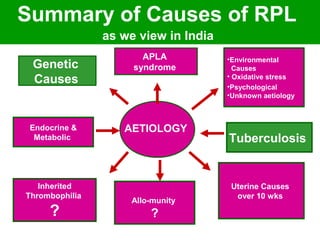
Summary of Causes of RPL
as we view in India
AETIOLOGY
Genetic
Causes
APLA
syndrome
Endocrine &
Metabolic
Inherited
Thrombophilia
?
Allo-munity
?
•Environmental
Causes
• Oxidative stress
•Psychological
•Unknown aetiology
Tuberculosis
Uterine Causes
over 10 wks
Unexplained R.P.L.
In 40% of R.P.L. cases - cause remains
undetermined
While recent research work has focused On
• TUBERCULAR ENDOMETRITIS [INDIAN
DOCTORS]
• Thrombophilia
• Spermatozoal
• Embryonic
• Endometrial characteristics
Last Word is Still Missing !
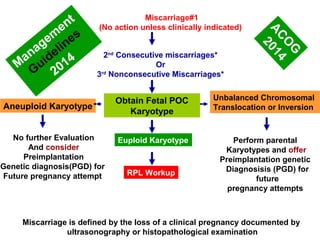
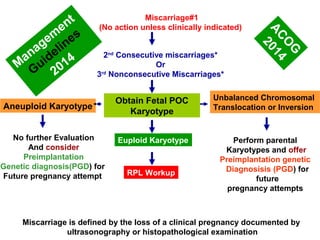
Miscarriage#1
(No action unless clinically indicated)
2nd
Consecutive miscarriages*
Or
3rd
Nonconsecutive Miscarriages*
Obtain Fetal POC
Karyotype
Aneuploid Karyotype
Unbalanced Chromosomal
Translocation or Inversion
Euploid Karyotype
RPL Workup
No further Evaluation
And consider
Preimplantation
Genetic diagnosis(PGD) for
Future pregnancy attempt
Perform parental
Karyotypes and offer
Preimplantation genetic
Diagnosisis (PGD) for
future
pregnancy attempts
Miscarriage is defined by the loss of a clinical pregnancy documented by
ultrasonography or histopathological examination
M
anagem
ent
Guidelines
2014
ACO
G
2014
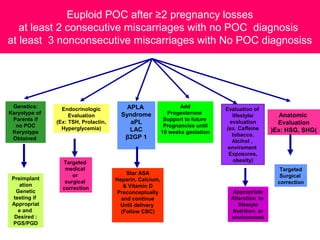
Euploid POC after ≥2 pregnancy losses
at least 2 consecutive miscarriages with no POC diagnosis
at least 3 nonconsecutive miscarriages with No POC diagnosiss
Anatomic
Evaluation
(Ex: HSG, SHG)
Endocrinologic
Evaluation
(Ex: TSH, Prolactin,
Hyperglycemia)
Add
Progesterone
Support to future
Pregnancies until
10 weeks gestation
Genetics:
Karyotype of
Parents if
no POC
Keryotype
Obtained
Evaluation of
lifestyle/
evaluation
(ex. Caffeine
tobacco,
Alcihol ,
enviroment
Exposures,
obesity)
APLA
Syndrome
aPL
LAC
β2GP 1
Targeted
Surgical
correction
Targeted
medical
or
surgical
correction
Star ASA
Heparin, Calcium,
& Vitamin D
Preconceptually
and continue
Until delivery
(Follow CBC)
Appropriate
Alteration to
lifestyle
Nutrition, or
environment
Preimplant
ation
Genetic
testing if
Appropriat
e and
Desired :
PGS/PGD
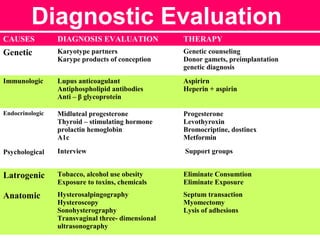
Diagnostic Evaluation
CAUSES DIAGNOSIS EVALUATION THERAPY
Genetic Karyotype partners
Karype products of conception
Genetic counseling
Donor gamets, preimplantation
genetic diagnosis
Immunologic Lupus anticoagulant
Antiphospholipid antibodies
Anti – β glycoprotein
Aspirirn
Heperin + aspirin
Endocrinologic Midluteal progesterone
Thyroid – stimulating hormone
prolactin hemoglobin
A1c
Progesterone
Levothyroxin
Bromocriptine, dostinex
Metformin
Psychological Interview Support groups
Latrogenic Tobacco, alcohol use obesity
Exposure to toxins, chemicals
Eliminate Consumtion
Eliminate Exposure
Anatomic Hysterosalpingography
Hysteroscopy
Sonohysterography
Transvaginal three- dimensional
ultrasonography
Septum transaction
Myomectomy
Lysis of adhesions
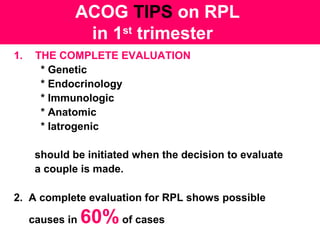
ACOG TIPS on RPL
in 1st
trimester
1. THE COMPLETE EVALUATION
* Genetic
* Endocrinology
* Immunologic
* Anatomic
* Iatrogenic
should be initiated when the decision to evaluate
a couple is made.
2. A complete evaluation for RPL shows possible
causes in 60%of cases
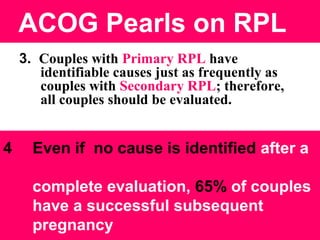
ACOG Pearls on RPL
3. Couples with Primary RPL have
identifiable causes just as frequently as
couples with Secondary RPL; therefore,
all couples should be evaluated.
4 Even if no cause is identified after a
complete evaluation, 65% of couples
have a successful subsequent
pregnancy
We Run Dedicated
Recurrent Pregnancy Loss Clinic
since 2003
Our Experience of 736 Recurrent
Consecutive Miscarriages – Updated
(30th
Jan 2015)
Focus is on GENETIC, APLA & Endocrine causes
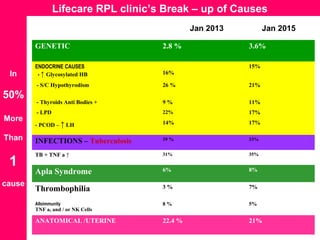
Lifecare RPL clinic’s Break – up of Causes
In
50%
More
Than
1
cause
GENETIC 2.8 % 3.6%
ENDOCRINE CAUSES
- ↑ Glycosylated HB 16%
15%
- S/C Hypothyrodism 26 % 21%
- Thyroids Anti Bodies + 9 % 11%
- LPD 22% 17%
- PCOD – ↑ LH 14% 17%
INFECTIONS – Tuberculosis 39 % 33%
TB + TNF a ↑ 31% 35%
Apla Syndrome 6% 8%
Thrombophilia 3 % 7%
Alloimmunity
TNF a, and / or NK Cells
8 % 5%
ANATOMICAL /UTERINE 22.4 % 21%
Jan 2013 Jan 2015
Three Independent risk factors
• Gestational Age at abortion
• Age of the patient (Both Husband / Wife)
• History of previous abortions
Is Gestational Age of any
importance?
Gest. Age at abortion guides us of the cause:
• 4 - 7 wks - Genetic causes
• 8 - 10 wks – APLA SYND/TB
• 10 weeks or Mid trimester - Anatomical Causes ,
APLA SYND.
Yes
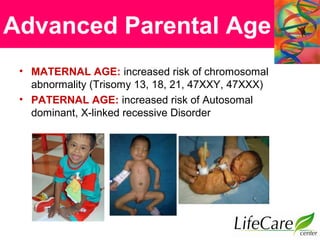
Advanced Parental Age
• MATERNAL AGE: increased risk of chromosomal
abnormality (Trisomy 13, 18, 21, 47XXY, 47XXX)
• PATERNAL AGE: increased risk of Autosomal
dominant, X-linked recessive Disorder
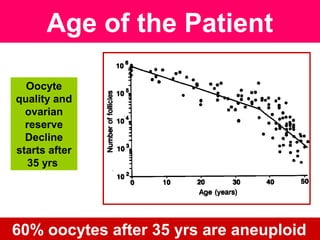
Age of the Patient
Oocyte
quality and
ovarian
reserve
Decline
starts after
35 yrs
60% oocytes after 35 yrs are aneuploid
Genetic Causes &
Management Guidelines
Miscarriage#1
(No action unless clinically indicated)
2nd
Consecutive miscarriages*
Or
3rd
Nonconsecutive Miscarriages*
Obtain Fetal POC
Karyotype
Aneuploid Karyotype
Unbalanced Chromosomal
Translocation or Inversion
Euploid Karyotype
RPL Workup
No further Evaluation
And consider
Preimplantation
Genetic diagnosis(PGD) for
Future pregnancy attempt
Perform parental
Karyotypes and offer
Preimplantation genetic
Diagnosisis (PGD) for
future
pregnancy attempts
Miscarriage is defined by the loss of a clinical pregnancy documented by
ultrasonography or histopathological examination
M
anagem
ent
Guidelines
2014
ACO
G
2014
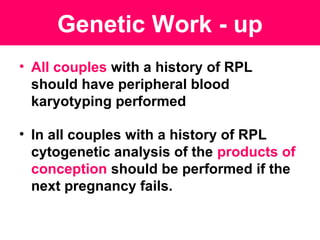
• All couples with a history of RPL
should have peripheral blood
karyotyping performed
• In all couples with a history of RPL
cytogenetic analysis of the products of
conception should be performed if the
next pregnancy fails.
Genetic Work - up
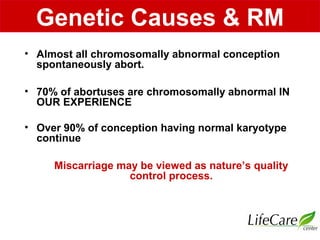
• Almost all chromosomally abnormal conception
spontaneously abort.
• 70% of abortuses are chromosomally abnormal IN
OUR EXPERIENCE
• Over 90% of conception having normal karyotype
continue
Miscarriage may be viewed as nature’s quality
control process.
Genetic Causes & RM
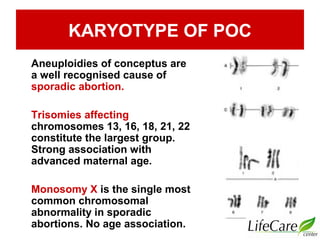
KARYOTYPE OF POC
Aneuploidies of conceptus are
a well recognised cause of
sporadic abortion.
Trisomies affecting
chromosomes 13, 16, 18, 21, 22
constitute the largest group.
Strong association with
advanced maternal age.
Monosomy X is the single most
common chromosomal
abnormality in sporadic
abortions. No age association.
KARYOTYPE OF POC
• May be advised
• Not always successful to culture
• FISH IS NOW BEING done as first procedure before
culture
• Often reveals aneuploidy which is not a cause of
RPL
• Does have a role in counselling and directing the
management.
• Women who abort chromosomally normal
pregnancies should be investigated for causes other
than genetic.
• If abortus does show unbalanced translocation then
could point to parents being balanced carriers
KARYOTYPING OF POC
• Aneuploidy is extremely common in
embryogenesis and is responsible for
the BIGGEST share of pregnancy
losses in the early first trimester.
• Genetic analysis following fetal demise is now culture through
microarry technology. ( FISH + Culture )
• Certain microarray evaluation are capable of ruling out
maternal cell contamination.
• These advances ( FISH + Culture ) may improve diagnosis and
future treatment of women suffering from failed pregnancy
Parental chromosomal
abnormalities (3-5%)
• Parental chromosomal abnormalities are
known to cause recurrent miscarriage.
• The most common abnormality is A
BALANCED TRANSLOCATION
• The risk of recurrent miscarriage in
couple with a balanced translocation is
>25%
• Modern Treatment of balanced translocation
is PGD with IVF. But most Indian patients
say that they readily conceive & find IVF &
PGD very expensive.
• Antenatal genetic testing includes time –
tested diagnostic evaluations such as
chorionic villus sampling or amniocentesis.
In addition, newer minimally invasive testing
modalities( NIPT) are currently being
developed and applied..
Parental chromosomal
abnormalities (3-5%)
Parental Genetic Factor
(3-5%)
• However the BIGGEST HOPE of
couple who do not want to under go
PGD & IVF should know that
pregnancies under good care +
Antenatal Genetic Screening gives
Successful pregnancy even without
treatment of PGD & IVF in 40 -50% of
women cases.
Preimplantation genetic Diagnosis (PGD)
PGD is subdivided into 2 broad categories
* Pre - implantation genetic diagnosis (PGD)
* The purpose of PGD is to prevent the birth of
affected children from parents with a known genetic
abnormality
* PGD is widely acknowledged as acceptable for
routine clinical application
• Preimplantation genetic screening (PGS)
* attempts to identify aneuploidy in embryos to improve
pregnancy success in certain patient populations
* Parents with no identified genetic defect or disease
* PGS remains controversial for routine application
The results obtained by PGD may not always reflect the fetus genetic
composition.
Preimplantation Genetic Diagnosis (PGD)
• PGD is performed by
* obtaining cell (S) from either a
developing embryo or oocyte.
* genetic analysis of cells obtained at
biopsy determine optimal embryos for
subsequent uterine transfer
APLA Syndrome
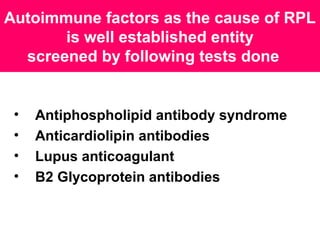
Autoimmune factors as the cause of RPL
is well established entity
screened by following tests done
• Antiphospholipid antibody syndrome
• Anticardiolipin antibodies
• Lupus anticoagulant
• B2 Glycoprotein antibodies
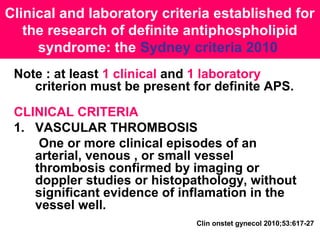
Clinical and laboratory criteria established for
the research of definite antiphospholipid
syndrome: the Sydney criteria 2010
Note : at least 1 clinical and 1 laboratory
criterion must be present for definite APS.
CLINICAL CRITERIA
1. VASCULAR THROMBOSIS
One or more clinical episodes of an
arterial, venous , or small vessel
thrombosis confirmed by imaging or
doppler studies or histopathology, without
significant evidence of inflamation in the
vessel well.
Clin onstet gynecol 2010;53:617-27
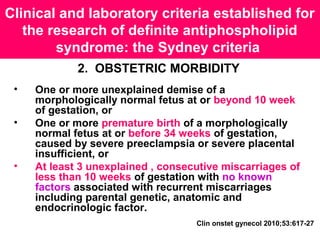
Clinical and laboratory criteria established for
the research of definite antiphospholipid
syndrome: the Sydney criteria
2. OBSTETRIC MORBIDITY
• One or more unexplained demise of a
morphologically normal fetus at or beyond 10 week
of gestation, or
• One or more premature birth of a morphologically
normal fetus at or before 34 weeks of gestation,
caused by severe preeclampsia or severe placental
insufficient, or
• At least 3 unexplained , consecutive miscarriages of
less than 10 weeks of gestation with no known
factors associated with recurrent miscarriages
including parental genetic, anatomic and
endocrinologic factor.
Clin onstet gynecol 2010;53:617-27
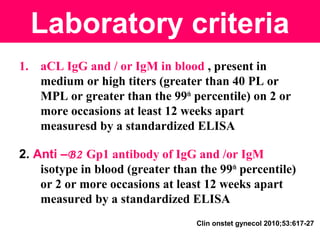
Laboratory criteria
1. aCL IgG and / or IgM in blood , present in
medium or high titers (greater than 40 PL or
MPL or greater than the 99th
percentile) on 2 or
more occasions at least 12 weeks apart
measuresd by a standardized ELISA
2. Anti –B2 Gp1 antibody of IgG and /or IgM
isotype in blood (greater than the 99th
percentile)
or 2 or more occasions at least 12 weeks apart
measured by a standardized ELISA
Clin onstet gynecol 2010;53:617-27
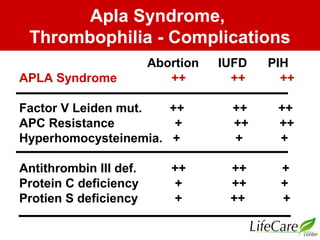
Apla Syndrome,
Thrombophilia - Complications
Abortion IUFD PIH
APLA Syndrome ++ ++ ++
Factor V Leiden mut. ++ ++ ++
APC Resistance + ++ ++
Hyperhomocysteinemia. + + +
Antithrombin III def. ++ ++ +
Protein C deficiency + ++ +
Protien S deficiency + ++ +
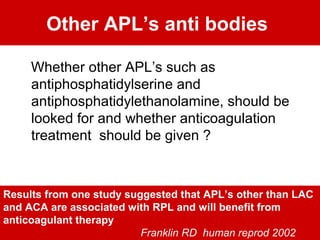
Other APL’s anti bodies
Whether other APL’s such as
antiphosphatidylserine and
antiphosphatidylethanolamine, should be
looked for and whether anticoagulation
treatment should be given ?
Results from one study suggested that APL’s other than LAC
and ACA are associated with RPL and will benefit from
anticoagulant therapy
Franklin RD human reprod 2002
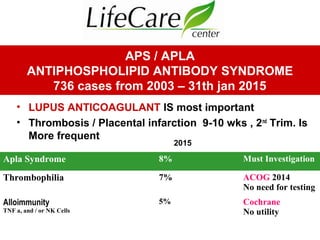
APS / APLA
ANTIPHOSPHOLIPID ANTIBODY SYNDROME
736 cases from 2003 – 31th jan 2015
• LUPUS ANTICOAGULANT IS most important
• Thrombosis / Placental infarction 9-10 wks , 2nd
Trim. Is
More frequent
Apla Syndrome 8% Must Investigation
Thrombophilia 7% ACOG 2014
No need for testing
Alloimmunity
TNF a, and / or NK Cells
5% Cochrane
No utility
2015
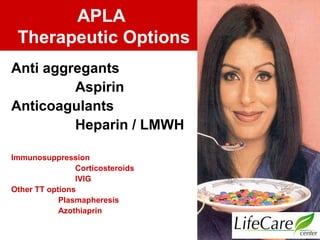
APLA
Therapeutic Options
Anti aggregants
Aspirin
Anticoagulants
Heparin / LMWH
Immunosuppression
Corticosteroids
IVIG
Other TT options
Plasmapheresis
Azothiaprin
THERAPY
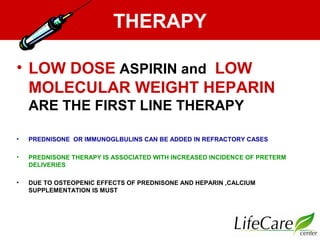
• LOW DOSE ASPIRIN and LOW
MOLECULAR WEIGHT HEPARIN
ARE THE FIRST LINE THERAPY
• PREDNISONE OR IMMUNOGLBULINS CAN BE ADDED IN REFRACTORY CASES
• PREDNISONE THERAPY IS ASSOCIATED WITH INCREASED INCIDENCE OF PRETERM
DELIVERIES
• DUE TO OSTEOPENIC EFFECTS OF PREDNISONE AND HEPARIN ,CALCIUM
SUPPLEMENTATION IS MUST
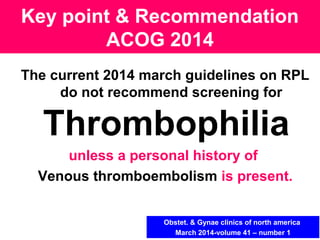
The current 2014 march guidelines on RPL
do not recommend screening for
Thrombophilia
unless a personal history of
Venous thromboembolism is present.
Key point & Recommendation
ACOG 2014
Obstet. & Gynae clinics of north america
March 2014-volume 41 – number 1
Because of ACOG position & facts…
recommendation is Against screening for
THROMBOPHILIA in RPL cases
Hence these test should be
removed from RPL panel
“Single Take Home Message”
Rationale of ACOG Recommendation on
R.P.L. & Thrombophilia
Obstet. & Gynae clinics of north america
March 2014-volume 41 – number 1
Endocrine and
METABOLIC Causes
RPL &
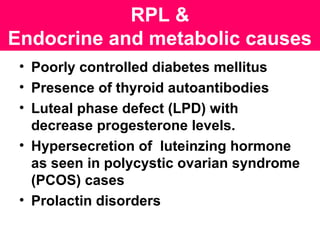
Endocrine and metabolic causes
• Poorly controlled diabetes mellitus
• Presence of thyroid autoantibodies
• Luteal phase defect (LPD) with
decrease progesterone levels.
• Hypersecretion of luteinzing hormone
as seen in polycystic ovarian syndrome
(PCOS) cases
• Prolactin disorders
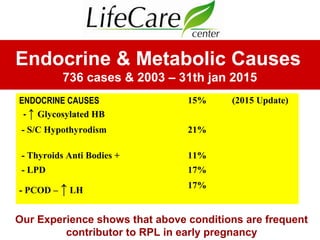
ENDOCRINE CAUSES
- ↑ Glycosylated HB
15% (2015 Update)
- S/C Hypothyrodism 21%
- Thyroids Anti Bodies + 11%
- LPD 17%
- PCOD – ↑ LH
17%
Endocrine & Metabolic Causes
736 cases & 2003 – 31th jan 2015
Our Experience shows that above conditions are frequent
contributor to RPL in early pregnancy
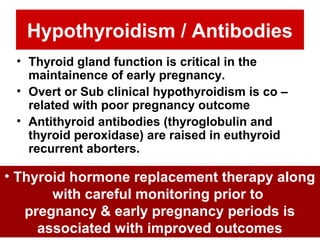
Hypothyroidism / Antibodies
• Thyroid gland function is critical in the
maintainence of early pregnancy.
• Overt or Sub clinical hypothyroidism is co –
related with poor pregnancy outcome
• Antithyroid antibodies (thyroglobulin and
thyroid peroxidase) are raised in euthyroid
recurrent aborters.
• Thyroid hormone replacement therapy along
with careful monitoring prior to
pregnancy & early pregnancy periods is
associated with improved outcomes
Diabetes MellitusDiabetes Mellitus
• Diabetic women with good metabolic
control are probably no more likely to
miscarry than non-diabetic women.
• Diabetic women with raised glycosylated
Hb concentrations in first trimester are at
increased risk.
• Diabetic patients should be euglycaemic
before attempting a pregnancy
Kalter et al Am.J.O.G.,
PCOD & RPL DILEMMA
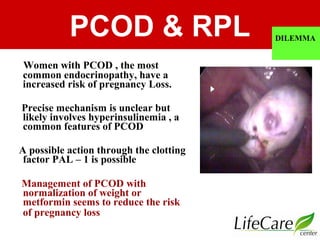
Women with PCOD , the most
common endocrinopathy, have a
increased risk of pregnancy Loss.
Precise mechanism is unclear but
likely involves hyperinsulinemia , a
common features of PCOD
A possible action through the clotting
factor PAL – 1 is possible
Management of PCOD with
normalization of weight or
metformin seems to reduce the risk
of pregnancy loss
Luteal Phase Defect
Incidence varies from 10-60%.
Evaluated by mid-luteal progesterone
and late luteal endometrial biopsy
The diagnostic criteria for LPD are still
controversial.
Treatment of patients with both RPL &
LPD using liberal progestogen in early
pregnancy seems to be beneficial.
DILEMMA
PROGESTERONE HELPS !!!
When should the supplementation start ?
• RPL progesterone
supplementation should
be started two days after
ovulation to cause
effective secretory
changes for implantation
and effective
immunomodulation to
prevent embryonic
rejection.
• And continued till 10
weeks
Anatomic Cause of
1st
Trimester RPL
is not significant !!!!
Anatomic Causes of RPL
in 1st
Trimester
1. Congenital malformations of the
reproductive tract
2. Intrauterine adhesions
3. Intrauterine masses, including
fibroids or polyps
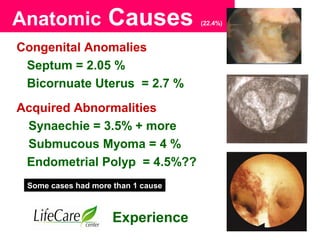
Anatomic Causes (22.4%)
Congenital Anomalies
Septum = 2.05 %
Bicornuate Uterus = 2.7 %
Acquired Abnormalities
Synaechie = 3.5% + more
Submucous Myoma = 4 %
Endometrial Polyp = 4.5%??
Experience
Some cases had more than 1 cause
Uterine Abnormalities
Treatment SUMMARY as practiced in
• Uterine septum: GnRH analogue and
hysteroscopic septal resection and
temporary intrauterine device.
• Intrauterine adhesions : hysteroscopic
division and temporary intrauterine device:
postoperative course of cyclic estrogen and
progesterone therapy.
• Fibroids: GnRH analogue and myomectomy
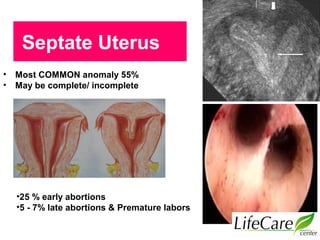
Septate Uterus
• Most COMMON anomaly 55%
• May be complete/ incomplete
•25 % early abortions
•5 - 7% late abortions & Premature labors
Infections are RARE cause of
RPL
according to world literature
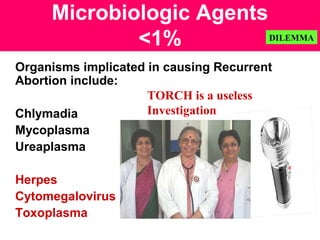
Microbiologic Agents
<1%
Organisms implicated in causing Recurrent
Abortion include:
Chlymadia
Mycoplasma
Ureaplasma
Herpes
Cytomegalovirus
Toxoplasma
TORCH is a useless
Investigation
DILEMMA
TUBERCULOSIS Is a BIG
Cause of RPL
&
Is extensively studied both by
Dr. Sharda Jain (Lifecare Centre Team)
& Dr. Sonia Malik
In Indian RPL Patients
Majority of Indian Obstetrician
Do Endorse the sameOur PPT Ref.
Slideshare.net
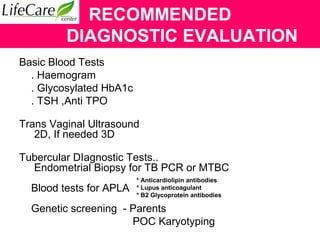
RECOMMENDED
DIAGNOSTIC EVALUATION
Basic Blood Tests
. Haemogram
. Glycosylated HbA1c
. TSH ,Anti TPO
Trans Vaginal Ultrasound
2D, If needed 3D
Tubercular DIagnostic Tests..
Endometrial Biopsy for TB PCR or MTBC
Blood tests for APLA
Genetic screening - Parents
POC Karyotyping
* Anticardiolipin antibodies
* Lupus anticoagulant
* B2 Glycoprotein antibodies
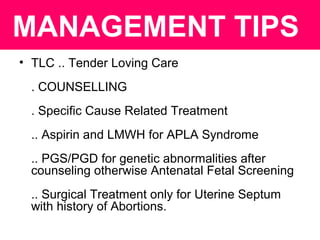
MANAGEMENT TIPS
• TLC .. Tender Loving Care
. COUNSELLING
. Specific Cause Related Treatment
.. Aspirin and LMWH for APLA Syndrome
.. PGS/PGD for genetic abnormalities after
counseling otherwise Antenatal Fetal Screening
.. Surgical Treatment only for Uterine Septum
with history of Abortions.
ADDRESS
11 Gagan Vihar , Near Karkari Morh
Flyover Delhi -51
CONTACT US
9650511339
011-22414049,
WEBSITE :
www.lifecarecentre.in
www.drshardajain.com
www.lifecareivf.com
E-MAIL ID
Sharda.lifecare@gmail.com
Lifecarecentre21@gmail.com
info@lifecareivf.com

An update on recurrent pregnancy loss 2015

  • 1.
    Dr. Sharda Jain Dr.Jyoti Agarwal Dr. Jyoti Bhaskar AN UPDATE on First Trimester Recurrent Pregnancy Loss (RPL)
  • 2.
    AN UPDATE onFirst Trimester Recurrent Pregnancy Loss (RPL) Review This Lecture at slideshare.net Presented an annual conference Ghazibad Obstetric society
  • 3.
    Definition Recurrent Miscarriage isdefined as the occurrence of three or more consecutive spontaneous abortions Before 20 weeks (24 weeks in UK)
  • 4.
    Incidence 15-20% of clinically detectablepregnancies abort 5% women have RPL > 2 1 % women have RPL > 3 The risk increases by about 10% with each abortion; estimated risk being 24% after two clinically recognized losses, 30% after three losses and 40% - 50% after four losses.
  • 5.
    The ASRM hasdefined RPL as “a distinct disorder defined by 2 or more failed clinical pregnancies” * Ectopic and Molar pregnancies are NOT included. Definition
  • 6.
    Should we startinvestigating the couple after 2nd ABORTION ?? Yes It is Reasonable to Determine the cause of their pregnancy loss, especially when the woman is older than 35 years of age, or when the couple have had difficulty in conceiving BMJ2000;320:1708-12 1
  • 7.
    Women with 2LOSSES have identifiable problems just as frequently as women with 3 or more losses; thus, evaluation for causes may be initiated after 2 losses. BMJ2000;320:1708-12
  • 8.
    Types of RPL •PRIMARY RPL have never had a previous viable infant. • SECONDARY RPL woman with previous H/o delivery beyond 20 weeks and then suffered subsequent losses. • TERTIARY RPL refers to those women who have multiple miscarriages interspersed with normal pregnancies. 2
  • 9.
    Is there aneed of Dedicated RPL CLINIC Yes RECURRENT PREGNANCY LOSS A PROBLEM OF DILEMMAS 3
  • 10.
    How To Manage R E C U R R E N T Pregnancy Loss As most Gynaecologistare confused when it comes to RPL Dedicated RPL clinic Is the answer 4
  • 11.
    Still Experts are Evolving Confusion isnot settled as yet on CAUSES
  • 12.
    Etiology The causes arecomplex and obscure with more than one factor operating in many cases. Factor may be recurrent or non – recurrent. The following are the Risk Factors of First Trimester R.P.L.
  • 13.
    Summary of Causesof RPL as we view in India AETIOLOGY Genetic Causes APLA syndrome Endocrine & Metabolic Inherited Thrombophilia ? Allo-munity ? •Environmental Causes • Oxidative stress •Psychological •Unknown aetiology Tuberculosis Uterine Causes over 10 wks
  • 14.
    Unexplained R.P.L. In 40%of R.P.L. cases - cause remains undetermined While recent research work has focused On • TUBERCULAR ENDOMETRITIS [INDIAN DOCTORS] • Thrombophilia • Spermatozoal • Embryonic • Endometrial characteristics Last Word is Still Missing !
  • 15.
    Miscarriage#1 (No action unlessclinically indicated) 2nd Consecutive miscarriages* Or 3rd Nonconsecutive Miscarriages* Obtain Fetal POC Karyotype Aneuploid Karyotype Unbalanced Chromosomal Translocation or Inversion Euploid Karyotype RPL Workup No further Evaluation And consider Preimplantation Genetic diagnosis(PGD) for Future pregnancy attempt Perform parental Karyotypes and offer Preimplantation genetic Diagnosisis (PGD) for future pregnancy attempts Miscarriage is defined by the loss of a clinical pregnancy documented by ultrasonography or histopathological examination M anagem ent Guidelines 2014 ACO G 2014
  • 16.
    Euploid POC after≥2 pregnancy losses at least 2 consecutive miscarriages with no POC diagnosis at least 3 nonconsecutive miscarriages with No POC diagnosiss Anatomic Evaluation (Ex: HSG, SHG) Endocrinologic Evaluation (Ex: TSH, Prolactin, Hyperglycemia) Add Progesterone Support to future Pregnancies until 10 weeks gestation Genetics: Karyotype of Parents if no POC Keryotype Obtained Evaluation of lifestyle/ evaluation (ex. Caffeine tobacco, Alcihol , enviroment Exposures, obesity) APLA Syndrome aPL LAC β2GP 1 Targeted Surgical correction Targeted medical or surgical correction Star ASA Heparin, Calcium, & Vitamin D Preconceptually and continue Until delivery (Follow CBC) Appropriate Alteration to lifestyle Nutrition, or environment Preimplant ation Genetic testing if Appropriat e and Desired : PGS/PGD
  • 17.
    Diagnostic Evaluation CAUSES DIAGNOSISEVALUATION THERAPY Genetic Karyotype partners Karype products of conception Genetic counseling Donor gamets, preimplantation genetic diagnosis Immunologic Lupus anticoagulant Antiphospholipid antibodies Anti – β glycoprotein Aspirirn Heperin + aspirin Endocrinologic Midluteal progesterone Thyroid – stimulating hormone prolactin hemoglobin A1c Progesterone Levothyroxin Bromocriptine, dostinex Metformin Psychological Interview Support groups Latrogenic Tobacco, alcohol use obesity Exposure to toxins, chemicals Eliminate Consumtion Eliminate Exposure Anatomic Hysterosalpingography Hysteroscopy Sonohysterography Transvaginal three- dimensional ultrasonography Septum transaction Myomectomy Lysis of adhesions
  • 18.
    ACOG TIPS onRPL in 1st trimester 1. THE COMPLETE EVALUATION * Genetic * Endocrinology * Immunologic * Anatomic * Iatrogenic should be initiated when the decision to evaluate a couple is made. 2. A complete evaluation for RPL shows possible causes in 60%of cases
  • 19.
    ACOG Pearls onRPL 3. Couples with Primary RPL have identifiable causes just as frequently as couples with Secondary RPL; therefore, all couples should be evaluated. 4 Even if no cause is identified after a complete evaluation, 65% of couples have a successful subsequent pregnancy
  • 20.
    We Run Dedicated RecurrentPregnancy Loss Clinic since 2003 Our Experience of 736 Recurrent Consecutive Miscarriages – Updated (30th Jan 2015) Focus is on GENETIC, APLA & Endocrine causes
  • 21.
    Lifecare RPL clinic’sBreak – up of Causes In 50% More Than 1 cause GENETIC 2.8 % 3.6% ENDOCRINE CAUSES - ↑ Glycosylated HB 16% 15% - S/C Hypothyrodism 26 % 21% - Thyroids Anti Bodies + 9 % 11% - LPD 22% 17% - PCOD – ↑ LH 14% 17% INFECTIONS – Tuberculosis 39 % 33% TB + TNF a ↑ 31% 35% Apla Syndrome 6% 8% Thrombophilia 3 % 7% Alloimmunity TNF a, and / or NK Cells 8 % 5% ANATOMICAL /UTERINE 22.4 % 21% Jan 2013 Jan 2015
  • 22.
    Three Independent riskfactors • Gestational Age at abortion • Age of the patient (Both Husband / Wife) • History of previous abortions
  • 23.
    Is Gestational Ageof any importance? Gest. Age at abortion guides us of the cause: • 4 - 7 wks - Genetic causes • 8 - 10 wks – APLA SYND/TB • 10 weeks or Mid trimester - Anatomical Causes , APLA SYND. Yes
  • 24.
    Advanced Parental Age •MATERNAL AGE: increased risk of chromosomal abnormality (Trisomy 13, 18, 21, 47XXY, 47XXX) • PATERNAL AGE: increased risk of Autosomal dominant, X-linked recessive Disorder
  • 25.
    Age of thePatient Oocyte quality and ovarian reserve Decline starts after 35 yrs 60% oocytes after 35 yrs are aneuploid
  • 26.
  • 27.
    Miscarriage#1 (No action unlessclinically indicated) 2nd Consecutive miscarriages* Or 3rd Nonconsecutive Miscarriages* Obtain Fetal POC Karyotype Aneuploid Karyotype Unbalanced Chromosomal Translocation or Inversion Euploid Karyotype RPL Workup No further Evaluation And consider Preimplantation Genetic diagnosis(PGD) for Future pregnancy attempt Perform parental Karyotypes and offer Preimplantation genetic Diagnosisis (PGD) for future pregnancy attempts Miscarriage is defined by the loss of a clinical pregnancy documented by ultrasonography or histopathological examination M anagem ent Guidelines 2014 ACO G 2014
  • 28.
    • All coupleswith a history of RPL should have peripheral blood karyotyping performed • In all couples with a history of RPL cytogenetic analysis of the products of conception should be performed if the next pregnancy fails. Genetic Work - up
  • 29.
    • Almost allchromosomally abnormal conception spontaneously abort. • 70% of abortuses are chromosomally abnormal IN OUR EXPERIENCE • Over 90% of conception having normal karyotype continue Miscarriage may be viewed as nature’s quality control process. Genetic Causes & RM
  • 30.
    KARYOTYPE OF POC Aneuploidiesof conceptus are a well recognised cause of sporadic abortion. Trisomies affecting chromosomes 13, 16, 18, 21, 22 constitute the largest group. Strong association with advanced maternal age. Monosomy X is the single most common chromosomal abnormality in sporadic abortions. No age association.
  • 31.
    KARYOTYPE OF POC •May be advised • Not always successful to culture • FISH IS NOW BEING done as first procedure before culture • Often reveals aneuploidy which is not a cause of RPL • Does have a role in counselling and directing the management. • Women who abort chromosomally normal pregnancies should be investigated for causes other than genetic. • If abortus does show unbalanced translocation then could point to parents being balanced carriers
  • 32.
    KARYOTYPING OF POC •Aneuploidy is extremely common in embryogenesis and is responsible for the BIGGEST share of pregnancy losses in the early first trimester. • Genetic analysis following fetal demise is now culture through microarry technology. ( FISH + Culture ) • Certain microarray evaluation are capable of ruling out maternal cell contamination. • These advances ( FISH + Culture ) may improve diagnosis and future treatment of women suffering from failed pregnancy
  • 33.
    Parental chromosomal abnormalities (3-5%) •Parental chromosomal abnormalities are known to cause recurrent miscarriage. • The most common abnormality is A BALANCED TRANSLOCATION • The risk of recurrent miscarriage in couple with a balanced translocation is >25%
  • 34.
    • Modern Treatmentof balanced translocation is PGD with IVF. But most Indian patients say that they readily conceive & find IVF & PGD very expensive. • Antenatal genetic testing includes time – tested diagnostic evaluations such as chorionic villus sampling or amniocentesis. In addition, newer minimally invasive testing modalities( NIPT) are currently being developed and applied.. Parental chromosomal abnormalities (3-5%)
  • 35.
    Parental Genetic Factor (3-5%) •However the BIGGEST HOPE of couple who do not want to under go PGD & IVF should know that pregnancies under good care + Antenatal Genetic Screening gives Successful pregnancy even without treatment of PGD & IVF in 40 -50% of women cases.
  • 36.
    Preimplantation genetic Diagnosis(PGD) PGD is subdivided into 2 broad categories * Pre - implantation genetic diagnosis (PGD) * The purpose of PGD is to prevent the birth of affected children from parents with a known genetic abnormality * PGD is widely acknowledged as acceptable for routine clinical application • Preimplantation genetic screening (PGS) * attempts to identify aneuploidy in embryos to improve pregnancy success in certain patient populations * Parents with no identified genetic defect or disease * PGS remains controversial for routine application The results obtained by PGD may not always reflect the fetus genetic composition.
  • 37.
    Preimplantation Genetic Diagnosis(PGD) • PGD is performed by * obtaining cell (S) from either a developing embryo or oocyte. * genetic analysis of cells obtained at biopsy determine optimal embryos for subsequent uterine transfer
  • 38.
  • 39.
    Autoimmune factors asthe cause of RPL is well established entity screened by following tests done • Antiphospholipid antibody syndrome • Anticardiolipin antibodies • Lupus anticoagulant • B2 Glycoprotein antibodies
  • 40.
    Clinical and laboratorycriteria established for the research of definite antiphospholipid syndrome: the Sydney criteria 2010 Note : at least 1 clinical and 1 laboratory criterion must be present for definite APS. CLINICAL CRITERIA 1. VASCULAR THROMBOSIS One or more clinical episodes of an arterial, venous , or small vessel thrombosis confirmed by imaging or doppler studies or histopathology, without significant evidence of inflamation in the vessel well. Clin onstet gynecol 2010;53:617-27
  • 41.
    Clinical and laboratorycriteria established for the research of definite antiphospholipid syndrome: the Sydney criteria 2. OBSTETRIC MORBIDITY • One or more unexplained demise of a morphologically normal fetus at or beyond 10 week of gestation, or • One or more premature birth of a morphologically normal fetus at or before 34 weeks of gestation, caused by severe preeclampsia or severe placental insufficient, or • At least 3 unexplained , consecutive miscarriages of less than 10 weeks of gestation with no known factors associated with recurrent miscarriages including parental genetic, anatomic and endocrinologic factor. Clin onstet gynecol 2010;53:617-27
  • 42.
    Laboratory criteria 1. aCLIgG and / or IgM in blood , present in medium or high titers (greater than 40 PL or MPL or greater than the 99th percentile) on 2 or more occasions at least 12 weeks apart measuresd by a standardized ELISA 2. Anti –B2 Gp1 antibody of IgG and /or IgM isotype in blood (greater than the 99th percentile) or 2 or more occasions at least 12 weeks apart measured by a standardized ELISA Clin onstet gynecol 2010;53:617-27
  • 43.
    Apla Syndrome, Thrombophilia -Complications Abortion IUFD PIH APLA Syndrome ++ ++ ++ Factor V Leiden mut. ++ ++ ++ APC Resistance + ++ ++ Hyperhomocysteinemia. + + + Antithrombin III def. ++ ++ + Protein C deficiency + ++ + Protien S deficiency + ++ +
  • 44.
    Other APL’s antibodies Whether other APL’s such as antiphosphatidylserine and antiphosphatidylethanolamine, should be looked for and whether anticoagulation treatment should be given ? Results from one study suggested that APL’s other than LAC and ACA are associated with RPL and will benefit from anticoagulant therapy Franklin RD human reprod 2002
  • 45.
    APS / APLA ANTIPHOSPHOLIPIDANTIBODY SYNDROME 736 cases from 2003 – 31th jan 2015 • LUPUS ANTICOAGULANT IS most important • Thrombosis / Placental infarction 9-10 wks , 2nd Trim. Is More frequent Apla Syndrome 8% Must Investigation Thrombophilia 7% ACOG 2014 No need for testing Alloimmunity TNF a, and / or NK Cells 5% Cochrane No utility 2015
  • 46.
    APLA Therapeutic Options Anti aggregants Aspirin Anticoagulants Heparin/ LMWH Immunosuppression Corticosteroids IVIG Other TT options Plasmapheresis Azothiaprin
  • 47.
    THERAPY • LOW DOSEASPIRIN and LOW MOLECULAR WEIGHT HEPARIN ARE THE FIRST LINE THERAPY • PREDNISONE OR IMMUNOGLBULINS CAN BE ADDED IN REFRACTORY CASES • PREDNISONE THERAPY IS ASSOCIATED WITH INCREASED INCIDENCE OF PRETERM DELIVERIES • DUE TO OSTEOPENIC EFFECTS OF PREDNISONE AND HEPARIN ,CALCIUM SUPPLEMENTATION IS MUST
  • 48.
    The current 2014march guidelines on RPL do not recommend screening for Thrombophilia unless a personal history of Venous thromboembolism is present. Key point & Recommendation ACOG 2014 Obstet. & Gynae clinics of north america March 2014-volume 41 – number 1
  • 49.
    Because of ACOGposition & facts… recommendation is Against screening for THROMBOPHILIA in RPL cases Hence these test should be removed from RPL panel “Single Take Home Message” Rationale of ACOG Recommendation on R.P.L. & Thrombophilia Obstet. & Gynae clinics of north america March 2014-volume 41 – number 1
  • 50.
  • 51.
    RPL & Endocrine andmetabolic causes • Poorly controlled diabetes mellitus • Presence of thyroid autoantibodies • Luteal phase defect (LPD) with decrease progesterone levels. • Hypersecretion of luteinzing hormone as seen in polycystic ovarian syndrome (PCOS) cases • Prolactin disorders
  • 52.
    ENDOCRINE CAUSES - ↑Glycosylated HB 15% (2015 Update) - S/C Hypothyrodism 21% - Thyroids Anti Bodies + 11% - LPD 17% - PCOD – ↑ LH 17% Endocrine & Metabolic Causes 736 cases & 2003 – 31th jan 2015 Our Experience shows that above conditions are frequent contributor to RPL in early pregnancy
  • 53.
    Hypothyroidism / Antibodies •Thyroid gland function is critical in the maintainence of early pregnancy. • Overt or Sub clinical hypothyroidism is co – related with poor pregnancy outcome • Antithyroid antibodies (thyroglobulin and thyroid peroxidase) are raised in euthyroid recurrent aborters. • Thyroid hormone replacement therapy along with careful monitoring prior to pregnancy & early pregnancy periods is associated with improved outcomes
  • 54.
    Diabetes MellitusDiabetes Mellitus •Diabetic women with good metabolic control are probably no more likely to miscarry than non-diabetic women. • Diabetic women with raised glycosylated Hb concentrations in first trimester are at increased risk. • Diabetic patients should be euglycaemic before attempting a pregnancy Kalter et al Am.J.O.G.,
  • 55.
    PCOD & RPLDILEMMA Women with PCOD , the most common endocrinopathy, have a increased risk of pregnancy Loss. Precise mechanism is unclear but likely involves hyperinsulinemia , a common features of PCOD A possible action through the clotting factor PAL – 1 is possible Management of PCOD with normalization of weight or metformin seems to reduce the risk of pregnancy loss
  • 56.
    Luteal Phase Defect Incidencevaries from 10-60%. Evaluated by mid-luteal progesterone and late luteal endometrial biopsy The diagnostic criteria for LPD are still controversial. Treatment of patients with both RPL & LPD using liberal progestogen in early pregnancy seems to be beneficial. DILEMMA
  • 57.
    PROGESTERONE HELPS !!! Whenshould the supplementation start ? • RPL progesterone supplementation should be started two days after ovulation to cause effective secretory changes for implantation and effective immunomodulation to prevent embryonic rejection. • And continued till 10 weeks
  • 58.
    Anatomic Cause of 1st TrimesterRPL is not significant !!!!
  • 59.
    Anatomic Causes ofRPL in 1st Trimester 1. Congenital malformations of the reproductive tract 2. Intrauterine adhesions 3. Intrauterine masses, including fibroids or polyps
  • 60.
    Anatomic Causes (22.4%) CongenitalAnomalies Septum = 2.05 % Bicornuate Uterus = 2.7 % Acquired Abnormalities Synaechie = 3.5% + more Submucous Myoma = 4 % Endometrial Polyp = 4.5%?? Experience Some cases had more than 1 cause
  • 61.
    Uterine Abnormalities Treatment SUMMARYas practiced in • Uterine septum: GnRH analogue and hysteroscopic septal resection and temporary intrauterine device. • Intrauterine adhesions : hysteroscopic division and temporary intrauterine device: postoperative course of cyclic estrogen and progesterone therapy. • Fibroids: GnRH analogue and myomectomy
  • 62.
    Septate Uterus • MostCOMMON anomaly 55% • May be complete/ incomplete •25 % early abortions •5 - 7% late abortions & Premature labors
  • 63.
    Infections are RAREcause of RPL according to world literature
  • 64.
    Microbiologic Agents <1% Organisms implicatedin causing Recurrent Abortion include: Chlymadia Mycoplasma Ureaplasma Herpes Cytomegalovirus Toxoplasma TORCH is a useless Investigation DILEMMA
  • 65.
    TUBERCULOSIS Is aBIG Cause of RPL & Is extensively studied both by Dr. Sharda Jain (Lifecare Centre Team) & Dr. Sonia Malik In Indian RPL Patients Majority of Indian Obstetrician Do Endorse the sameOur PPT Ref. Slideshare.net
  • 66.
    RECOMMENDED DIAGNOSTIC EVALUATION Basic BloodTests . Haemogram . Glycosylated HbA1c . TSH ,Anti TPO Trans Vaginal Ultrasound 2D, If needed 3D Tubercular DIagnostic Tests.. Endometrial Biopsy for TB PCR or MTBC Blood tests for APLA Genetic screening - Parents POC Karyotyping * Anticardiolipin antibodies * Lupus anticoagulant * B2 Glycoprotein antibodies
  • 67.
    MANAGEMENT TIPS • TLC.. Tender Loving Care . COUNSELLING . Specific Cause Related Treatment .. Aspirin and LMWH for APLA Syndrome .. PGS/PGD for genetic abnormalities after counseling otherwise Antenatal Fetal Screening .. Surgical Treatment only for Uterine Septum with history of Abortions.
  • 68.
    ADDRESS 11 Gagan Vihar, Near Karkari Morh Flyover Delhi -51 CONTACT US 9650511339 011-22414049, WEBSITE : www.lifecarecentre.in www.drshardajain.com www.lifecareivf.com E-MAIL ID Sharda.lifecare@gmail.com Lifecarecentre21@gmail.com info@lifecareivf.com