

Ovulation Stimulation
2021
• Hesham Al-Inany, M.D, PhD
• Kaainih@yahoo.com
• Mobile : 01112220298
2
Why Do We Need This Talk
• To update our knowledge and
understanding
• To provide evidence for decision-
makers
• To provide our patients with best
care based on Evidence
Outline
• Introduction
• Paradigm shift
• Gn/CC
• Supporting evidence
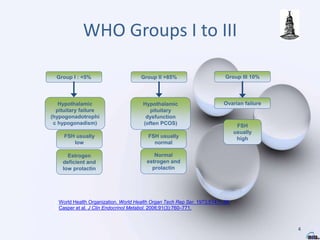
WHO Groups I to III
4
FSH usually
normal
FSH
usually
high
Hypothalamic
pituitary
dysfunction
(often PCOS)
Ovarian failure
Hypothalamic
pituitary failure
(hypogonadotrophi
c hypogonadism)
Group III 10%
Group II >85%
Group I : <5%
Normal
estrogen and
prolactin
1.World Health Organization. World Health Organ Tech Rep Ser. 1973;514:1–30.
2.Casper et al. J Clin Endocrinol Metabol. 2006;91(3):760–771.
FSH usually
low
Estrogen
deficient and
low prolactin
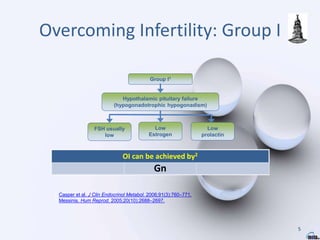
OI can be achieved by2
Gn
Overcoming Infertility: Group I
5
FSH usually
low
Hypothalamic pituitary failure
(hypogonadotrophic hypogonadism)
Group I1
Low
Estrogen
Low
prolactin
1.Casper et al. J Clin Endocrinol Metabol. 2006;91(3):760–771.
2.Messinis. Hum Reprod. 2005;20(10):2688–2697.
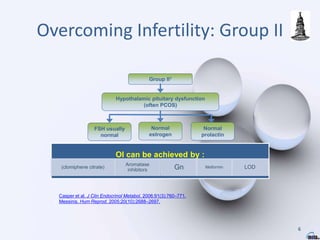
Overcoming Infertility: Group II
6
1. Casper et al. J Clin Endocrinol Metabol. 2006;91(3):760–771.
2. Messinis. Hum Reprod. 2005;20(10):2688–2697.
FSH usually
normal
Hypothalamic pituitary dysfunction
(often PCOS)
Group II1
Normal
estrogen
Normal
prolactin
OI can be achieved by :
(clomiphene citrate)
Aromatase
inhibitors Gn Metformin LOD
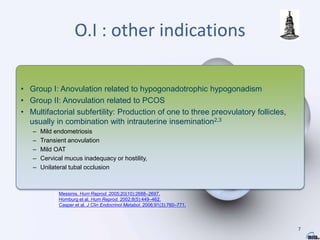
O.I : other indications
7
1.Messinis. Hum Reprod. 2005;20(10):2688–2697.
2.Homburg et al. Hum Reprod. 2002;8(5):449–462.
3.Casper et al. J Clin Endocrinol Metabol. 2006;91(3):760–771.
• Group I: Anovulation related to hypogonadotrophic hypogonadism
• Group II: Anovulation related to PCOS
• Multifactorial subfertility: Production of one to three preovulatory follicles,
usually in combination with intrauterine insemination2,3
– Mild endometriosis
– Transient anovulation
– Mild OAT
– Cervical mucus inadequacy or hostility,
– Unilateral tubal occlusion
CC – LTZ : Pros & Cons
• CC may induce flushes and mood
swings
• letrozole can give headache and
abdominal cramps.
• ~25% of cases are resistant
(Legro et al., 2014)
Gn
• tend to have fewer side effects
than clomiphene citrate (Legro,
2016).
• the treatment with oral agents
is less costly (Balen, 2013)
Outline
• Introduction
• Paradigm shift
• Gn/CC
• Supporting evidence
• Case presentation
O.I
• New era
• Based on evidence
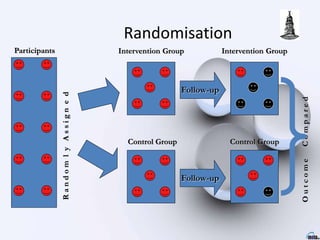
Randomisation
Participants
R
a
n
d
o
m
l
y
A
s
s
i
g
n
e
d
Intervention Group
Control Group
Follow-up
Follow-up
Intervention Group
Control Group
O
u
t
c
o
m
e
C
o
m
p
a
r
e
d
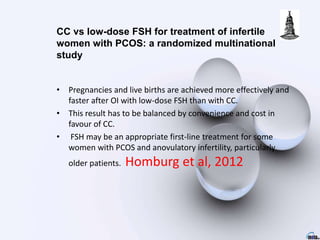
• Pregnancies and live births are achieved more effectively and
faster after OI with low-dose FSH than with CC.
• This result has to be balanced by convenience and cost in
favour of CC.
• FSH may be an appropriate first-line treatment for some
women with PCOS and anovulatory infertility, particularly
older patients. Homburg et al, 2012
CC vs low-dose FSH for treatment of infertile
women with PCOS: a randomized multinational
study
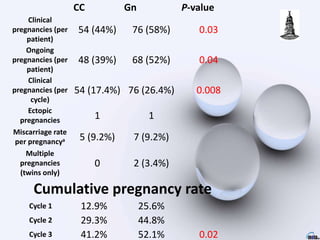
CC Gn P-value
Clinical
pregnancies (per
patient)
54 (44%) 76 (58%) 0.03
Ongoing
pregnancies (per
patient)
48 (39%) 68 (52%) 0.04
Clinical
pregnancies (per
cycle)
54 (17.4%) 76 (26.4%) 0.008
Ectopic
pregnancies 1 1
Miscarriage rate
per pregnancya 5 (9.2%) 7 (9.2%)
Multiple
pregnancies
(twins only)
0 2 (3.4%)
Cumulative pregnancy rate
Cycle 1 12.9% 25.6%
Cycle 2 29.3% 44.8%
Cycle 3 41.2% 52.1% 0.02
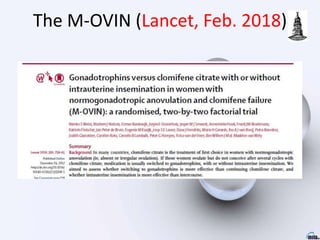
The M-OVIN (Lancet, Feb. 2018)
666 Women
• Gn group had more livebirths than CC
• [52%] vs [41%] p=0·012
• Addition of IUI did not increase
livebirths compared with intercourse
p=0·11
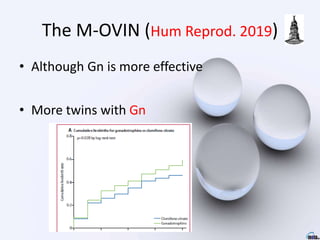
The M-OVIN (Hum Reprod. 2019)
• Although Gn is more effective
• More twins with Gn
Outline
• Current practice
• Paradigm shift
• Gn/CC
• Supporting evidence
• Case presentation
Reversed Gn/CC
(Al-Inany et al)
(ACTRN12607000568415)
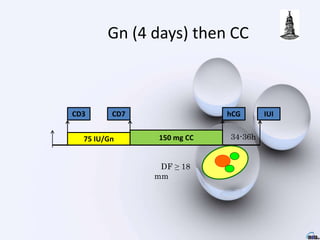
Gn (4 days) then CC
75 IU/Gn
CD3 CD7
150 mg CC
hCG IUI
DF ≥ 18
mm
34-36h
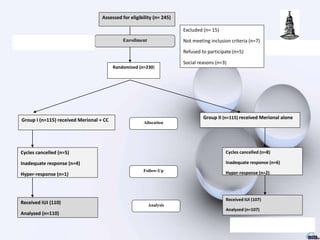
Assessed for eligibility (n= 245)
Excluded (n= 15)
Not meeting inclusion criteria (n=7)
Refused to participate (n=5)
Social reasons (n=3)
Received IUI (110)
Analyzed (n=110)
Cycles cancelled (n=5)
Inadequate response (n=4)
Hyper-response (n=1)
Group I (n=115) received Merional + CC
Cycles cancelled (n=8)
Inadequate response (n=6)
Hyper-response (n=2)
Group II (n=115) received Merional alone
Received IUI (107)
Analyzed (n=107)
Allocation
Analysis
Follow-Up
Enrollment
Randomized (n=230)
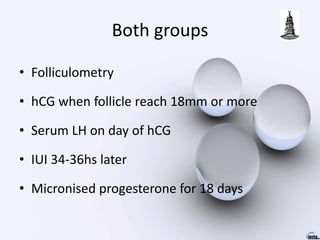
Both groups
• Folliculometry
• hCG when follicle reach 18mm or more
• Serum LH on day of hCG
• IUI 34-36hs later
• Micronised progesterone for 18 days
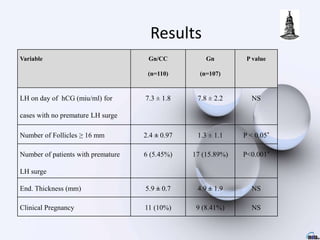
Results
Variable Gn/CC
(n=110)
Gn
(n=107)
P value
LH on day of hCG (miu/ml) for
cases with no premature LH surge
7.3 ± 1.8 7.8 ± 2.2 NS
Number of Follicles ≥ 16 mm 2.4 ± 0.97 1.3 ± 1.1 P < 0.05*
Number of patients with premature
LH surge
6 (5.45%) 17 (15.89%) P<0.001*
End. Thickness (mm) 5.9 ± 0.7 4.9 ± 1.9 NS
Clinical Pregnancy 11 (10%) 9 (8.41%) NS
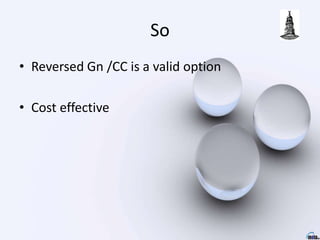
So
• Reversed Gn /CC is a valid option
• Cost effective
Outline
• Current practice
• Paradigm shift
• Gn/CC
• Supporting evidence
• Case presentation
Meta-analysis
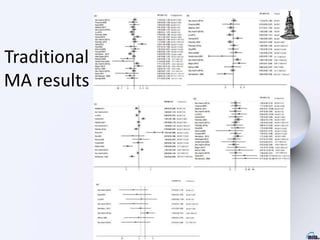
Traditional
MA results
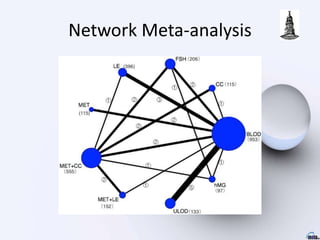
Network Meta-analysis
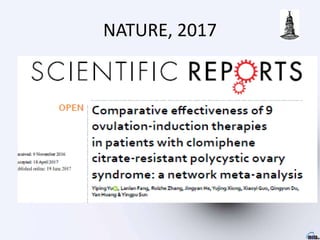
NATURE, 2017
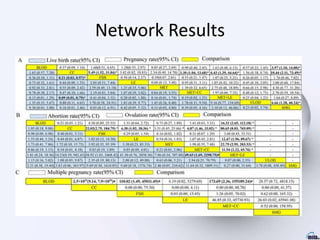
Network Results
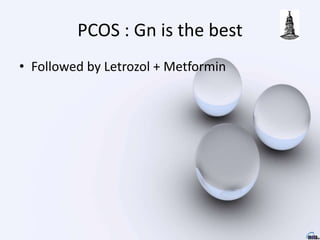
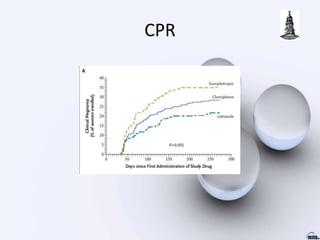
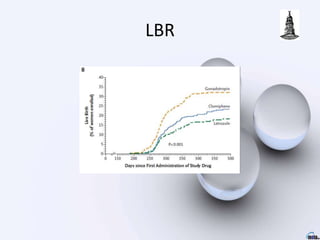
PCOS : Gn is the best
• Followed by Letrozol + Metformin
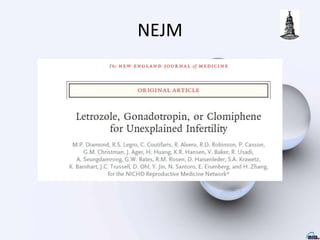
NEJM
CPR
LBR
Conclusion
• There is a clear evidence
that justify shift from CC to
Gn low dose for O.I
• Gn for 4 days followed by CC
seems to be cost effective
regimen
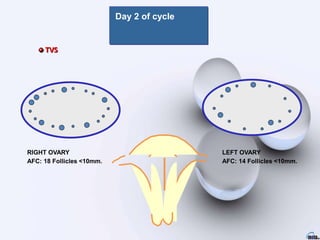
Day 2 of cycle
RIGHT OVARY
AFC: 18 Follicles <10mm.
TVS
LEFT OVARY
AFC: 14 Follicles <10mm.
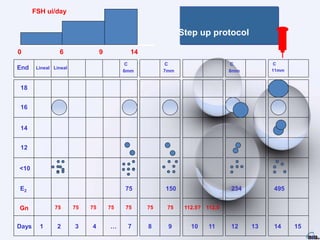
0 6 9 14
FSH ui/day
Step up protocol
8 9
75 75
C
7mm
150
10 11
112.5? 112.5
12 13
C
8mm
234
14 15
C
11mm
495
Days
Gn
E2
<10
12
14
16
18
75 75 75 75 75
1 2 3 4 … 7
End Lineal Lineal
C
6mm
75
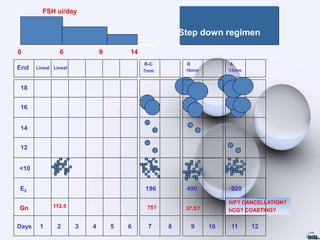
0 6 9 14
FSH ui/day
Step down regimen
Days
Gn
E2
<10
12
14
16
18
112.5
1 2 3 4 5 6
End Lineal Lineal
IVF? CANCELLATION?
hCG? COASTING?
196
7 8
75?
B-C
7mm
11 12
A
13mm
920
490
37.5?
9 10
B
10mm
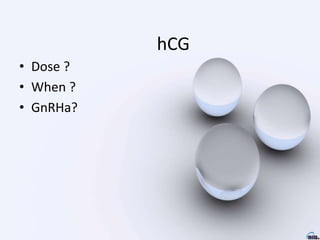
hCG
• Dose ?
• When ?
• GnRHa?
Few days later (day 6 of hCG)
 She was presenting with:
Abdominal pain
Nausea and vomiting
What could be the reason?
• Gastroenteritis
• OHSS
• Pyelitis or pyelonepheritis
Inv.
• CBC
• Urine analysis
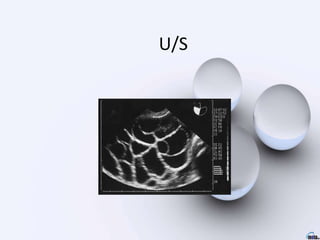
• U/S
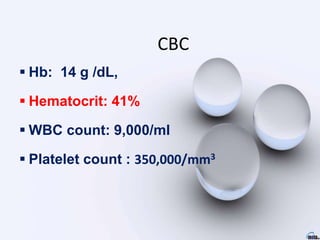
CBC
 Hb: 14 g /dL,
 Hematocrit: 41%
 WBC count: 9,000/ml
 Platelet count : 350,000/mm3
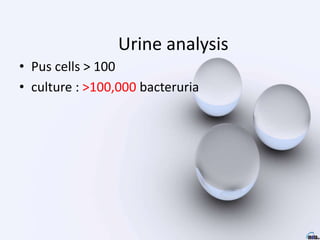
Urine analysis
• Pus cells > 100
• culture : >100,000 bacteruria
U/S
What to do?
• Outpatient management ??
• Uro-vaxom for seven days
• Analgesia and antiemetics
• Follow up
But
 Vomiting &abdominal discomfort persist
 Haematocrite : 45%
 Platelet : 420,000
Intravenous fluid infusion is decided
Which is the Best Initial IV Fluid
A. Lactated ringer's
B. Dextrose 5% in normal saline
C. Normal saline
D. Human albumin
E. Hydroxy-ethyl-starch (HES)
Patient was improved
• Discharged with normal CBC
5 days later
• She returned with more abdominal pain
 Hematocrit 46% WBC 12,000/ml
 Clinical ascites
 Dyspnea
What could be the diagnosis
• Late OHSS
What to do?
• HES
• Heparin
• IV glucose
• Aspocid
B-hCG
• 1200 !!!!
• What to do?
• Progesterone?
• Analgesic?
• Monitoring
Two weeks later
• U/S was done : Triplet ?
• What to do:-
• SER
• Cercelage
Urine analysis
• Again >100 pus cells
• What to do?
• Uro-Vaxom® is administered orally as one capsule daily
for
• (90 days).
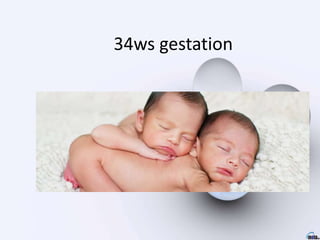
34ws gestation
57
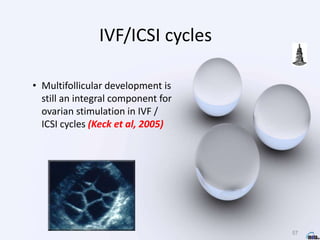
IVF/ICSI cycles
• Multifollicular development is
still an integral component for
ovarian stimulation in IVF /
ICSI cycles (Keck et al, 2005)
Which Gonadotropin?
• Human menopausal gonadotropin(hMG)
• Highly purified FSH
• Recombinant FSH (r FSH)
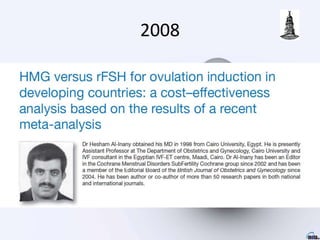
2008
Meta-analysis
Gn: 2016 Final Word
Madelon van Wely1, Irene Kwan2,
Anna L Burt3, Jane Thomas4, Andy
Vail5, Fulco Van der Veen6, Hesham G
Al-Inany
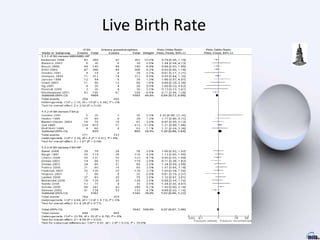
Live Birth Rate
Conclusion : 7339 women
• Gonadotrophins
are
Gonadotrophins
are
Gonadotrophins
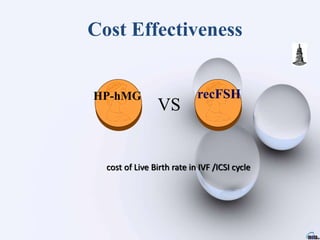
Cost Effectiveness
VS
cost of Live Birth rate in IVF /ICSI cycle
HP-hMG recFSH
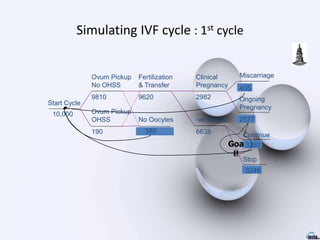
Simulating IVF cycle : 1st cycle
Start Cycle
10,000
Ovum Pickup
No OHSS
Ovum Pickup
OHSS
9810
190
Fertilization
& Transfer
No Oocytes
380
9620
Clinical
Pregnancy
-ve βHCG
2982
6638
Ongoing
Pregnancy
Miscarriage
405
2577
3246
3392
Continue
Stop
Goa
l!
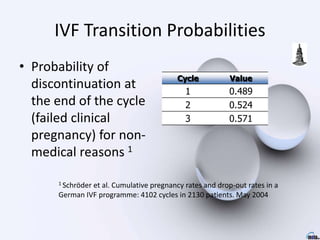
IVF Transition Probabilities
• Probability of
discontinuation at
the end of the cycle
(failed clinical
pregnancy) for non-
medical reasons 1
Cycle Value
1 0.489
2 0.524
3 0.571
1 Schröder et al. Cumulative pregnancy rates and drop-out rates in a
German IVF programme: 4102 cycles in 2130 patients. May 2004
Miscarriage
p_miscar_rFSH
Start Cycle
Pregnancy
#
Ongoing Pregnancy
Clinical Pregnancy
p_clin_preg_rFSH
continue
#
Start Cycle
stop
t_discon_nomed[ _stage]
Stop IVF
-ve bHCG
#
Fertilization &
Embryo Transfer
#
No Oocytes
p_cancel_rFSH
Start Cycle
Ovum Pickup
No OHSS
#
Miscarriage
p_miscar_rFSH
Start Cycle
Pregnancy
#
Ongoing Pregnancy
Clinical Pregnancy
p_clin_preg_rFSH
continue
#
Start Cycle
stop
t_discon_nomed[ _stage]
Stop IVF
-ve bHCG
#
Fertilization &
Embryo Transfer
#
No Oocytes
p_cancel_rFSH
Start Cycle
Ovum Pickup
OHSS
p_OHSS_rFSH
Start Cycle
1
Ongoing Pregnancy
0
Stop IVF
0
rFSH
Miscarriage
p_miscar_hMG
Start Cycle
Pregnancy
#
Ongoing Pregnancy
Clinical Pregnancy
p_clin_preg_hMG
continue
#
Start Cycle
stop
t_discon_nomed[ _stage]
Stop IVF
-ve bHCG
#
Fertilization &
Embryo Transfer
#
No Oocytes
p_cancel_hMG
Start Cycle
Ovum Pickup
No OHSS
#
Miscarriage
p_miscar_hMG
Start Cycle
Pregnancy
#
Ongoing Pregnancy
Clinical Pregnancy
p_clin_preg_hMG
continue
#
Start Cycle
stop
t_discon_nomed[ _stage]
Stop IVF
-ve bHCG
#
Fertilization &
Embryo Transfer
#
No Oocytes
p_cancel_hMG
Start Cycle
Ovum Pickup
OHSS
p_OHSS_hMG
Start Cycle
1
Ongoing Pregnancy
0
Stop IVF
0
hMG
Ovarian
Stimulant
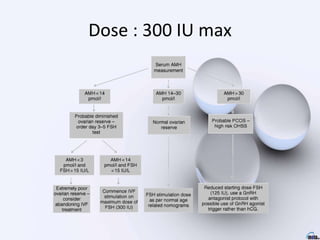
Dose : 300 IU max
4G COH strategy
• Gn: No specific type
• Dose : max 300 iu
• Cost matters
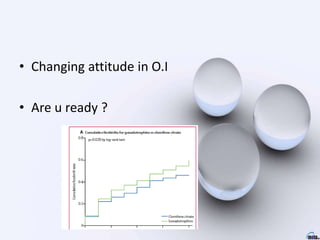
• Changing attitude in O.I
• Are u ready ?
Thank you
Dr. Hesham Al-Inany MD, PhD
e-mail : kaainih@yahoo.com
Mobile : 01112220298

O.i 2021

  • 1.
    Ovulation Stimulation 2021 • HeshamAl-Inany, M.D, PhD • Kaainih@yahoo.com • Mobile : 01112220298
  • 2.
    2 Why Do WeNeed This Talk • To update our knowledge and understanding • To provide evidence for decision- makers • To provide our patients with best care based on Evidence
  • 3.
    Outline • Introduction • Paradigmshift • Gn/CC • Supporting evidence
  • 4.
    WHO Groups Ito III 4 FSH usually normal FSH usually high Hypothalamic pituitary dysfunction (often PCOS) Ovarian failure Hypothalamic pituitary failure (hypogonadotrophi c hypogonadism) Group III 10% Group II >85% Group I : <5% Normal estrogen and prolactin 1.World Health Organization. World Health Organ Tech Rep Ser. 1973;514:1–30. 2.Casper et al. J Clin Endocrinol Metabol. 2006;91(3):760–771. FSH usually low Estrogen deficient and low prolactin
  • 5.
    OI can beachieved by2 Gn Overcoming Infertility: Group I 5 FSH usually low Hypothalamic pituitary failure (hypogonadotrophic hypogonadism) Group I1 Low Estrogen Low prolactin 1.Casper et al. J Clin Endocrinol Metabol. 2006;91(3):760–771. 2.Messinis. Hum Reprod. 2005;20(10):2688–2697.
  • 6.
    Overcoming Infertility: GroupII 6 1. Casper et al. J Clin Endocrinol Metabol. 2006;91(3):760–771. 2. Messinis. Hum Reprod. 2005;20(10):2688–2697. FSH usually normal Hypothalamic pituitary dysfunction (often PCOS) Group II1 Normal estrogen Normal prolactin OI can be achieved by : (clomiphene citrate) Aromatase inhibitors Gn Metformin LOD
  • 7.
    O.I : otherindications 7 1.Messinis. Hum Reprod. 2005;20(10):2688–2697. 2.Homburg et al. Hum Reprod. 2002;8(5):449–462. 3.Casper et al. J Clin Endocrinol Metabol. 2006;91(3):760–771. • Group I: Anovulation related to hypogonadotrophic hypogonadism • Group II: Anovulation related to PCOS • Multifactorial subfertility: Production of one to three preovulatory follicles, usually in combination with intrauterine insemination2,3 – Mild endometriosis – Transient anovulation – Mild OAT – Cervical mucus inadequacy or hostility, – Unilateral tubal occlusion
  • 8.
    CC – LTZ: Pros & Cons • CC may induce flushes and mood swings • letrozole can give headache and abdominal cramps. • ~25% of cases are resistant (Legro et al., 2014)
  • 9.
    Gn • tend tohave fewer side effects than clomiphene citrate (Legro, 2016). • the treatment with oral agents is less costly (Balen, 2013)
  • 10.
    Outline • Introduction • Paradigmshift • Gn/CC • Supporting evidence • Case presentation
  • 11.
    O.I • New era •Based on evidence
  • 12.
  • 13.
    • Pregnancies andlive births are achieved more effectively and faster after OI with low-dose FSH than with CC. • This result has to be balanced by convenience and cost in favour of CC. • FSH may be an appropriate first-line treatment for some women with PCOS and anovulatory infertility, particularly older patients. Homburg et al, 2012 CC vs low-dose FSH for treatment of infertile women with PCOS: a randomized multinational study
  • 14.
    CC Gn P-value Clinical pregnancies(per patient) 54 (44%) 76 (58%) 0.03 Ongoing pregnancies (per patient) 48 (39%) 68 (52%) 0.04 Clinical pregnancies (per cycle) 54 (17.4%) 76 (26.4%) 0.008 Ectopic pregnancies 1 1 Miscarriage rate per pregnancya 5 (9.2%) 7 (9.2%) Multiple pregnancies (twins only) 0 2 (3.4%) Cumulative pregnancy rate Cycle 1 12.9% 25.6% Cycle 2 29.3% 44.8% Cycle 3 41.2% 52.1% 0.02
  • 15.
  • 16.
    666 Women • Gngroup had more livebirths than CC • [52%] vs [41%] p=0·012 • Addition of IUI did not increase livebirths compared with intercourse p=0·11
  • 17.
    The M-OVIN (HumReprod. 2019) • Although Gn is more effective • More twins with Gn
  • 18.
    Outline • Current practice •Paradigm shift • Gn/CC • Supporting evidence • Case presentation
  • 19.
    Reversed Gn/CC (Al-Inany etal) (ACTRN12607000568415)
  • 20.
    Gn (4 days)then CC 75 IU/Gn CD3 CD7 150 mg CC hCG IUI DF ≥ 18 mm 34-36h
  • 21.
    Assessed for eligibility(n= 245) Excluded (n= 15) Not meeting inclusion criteria (n=7) Refused to participate (n=5) Social reasons (n=3) Received IUI (110) Analyzed (n=110) Cycles cancelled (n=5) Inadequate response (n=4) Hyper-response (n=1) Group I (n=115) received Merional + CC Cycles cancelled (n=8) Inadequate response (n=6) Hyper-response (n=2) Group II (n=115) received Merional alone Received IUI (107) Analyzed (n=107) Allocation Analysis Follow-Up Enrollment Randomized (n=230)
  • 22.
    Both groups • Folliculometry •hCG when follicle reach 18mm or more • Serum LH on day of hCG • IUI 34-36hs later • Micronised progesterone for 18 days
  • 23.
    Results Variable Gn/CC (n=110) Gn (n=107) P value LHon day of hCG (miu/ml) for cases with no premature LH surge 7.3 ± 1.8 7.8 ± 2.2 NS Number of Follicles ≥ 16 mm 2.4 ± 0.97 1.3 ± 1.1 P < 0.05* Number of patients with premature LH surge 6 (5.45%) 17 (15.89%) P<0.001* End. Thickness (mm) 5.9 ± 0.7 4.9 ± 1.9 NS Clinical Pregnancy 11 (10%) 9 (8.41%) NS
  • 24.
    So • Reversed Gn/CC is a valid option • Cost effective
  • 25.
    Outline • Current practice •Paradigm shift • Gn/CC • Supporting evidence • Case presentation
  • 26.
  • 27.
  • 28.
  • 29.
  • 30.
  • 31.
    PCOS : Gnis the best • Followed by Letrozol + Metformin
  • 32.
  • 33.
  • 34.
  • 35.
    Conclusion • There isa clear evidence that justify shift from CC to Gn low dose for O.I • Gn for 4 days followed by CC seems to be cost effective regimen
  • 36.
    Day 2 ofcycle RIGHT OVARY AFC: 18 Follicles <10mm. TVS LEFT OVARY AFC: 14 Follicles <10mm.
  • 37.
    0 6 914 FSH ui/day Step up protocol 8 9 75 75 C 7mm 150 10 11 112.5? 112.5 12 13 C 8mm 234 14 15 C 11mm 495 Days Gn E2 <10 12 14 16 18 75 75 75 75 75 1 2 3 4 … 7 End Lineal Lineal C 6mm 75
  • 38.
    0 6 914 FSH ui/day Step down regimen Days Gn E2 <10 12 14 16 18 112.5 1 2 3 4 5 6 End Lineal Lineal IVF? CANCELLATION? hCG? COASTING? 196 7 8 75? B-C 7mm 11 12 A 13mm 920 490 37.5? 9 10 B 10mm
  • 39.
    hCG • Dose ? •When ? • GnRHa?
  • 40.
    Few days later(day 6 of hCG)  She was presenting with: Abdominal pain Nausea and vomiting
  • 41.
    What could bethe reason? • Gastroenteritis • OHSS • Pyelitis or pyelonepheritis
  • 42.
    Inv. • CBC • Urineanalysis • U/S
  • 43.
    CBC  Hb: 14g /dL,  Hematocrit: 41%  WBC count: 9,000/ml  Platelet count : 350,000/mm3
  • 44.
    Urine analysis • Puscells > 100 • culture : >100,000 bacteruria
  • 45.
  • 46.
    What to do? •Outpatient management ?? • Uro-vaxom for seven days • Analgesia and antiemetics • Follow up
  • 47.
    But  Vomiting &abdominaldiscomfort persist  Haematocrite : 45%  Platelet : 420,000 Intravenous fluid infusion is decided
  • 48.
    Which is theBest Initial IV Fluid A. Lactated ringer's B. Dextrose 5% in normal saline C. Normal saline D. Human albumin E. Hydroxy-ethyl-starch (HES)
  • 49.
    Patient was improved •Discharged with normal CBC
  • 50.
    5 days later •She returned with more abdominal pain  Hematocrit 46% WBC 12,000/ml  Clinical ascites  Dyspnea
  • 51.
    What could bethe diagnosis • Late OHSS
  • 52.
    What to do? •HES • Heparin • IV glucose • Aspocid
  • 53.
    B-hCG • 1200 !!!! •What to do? • Progesterone? • Analgesic? • Monitoring
  • 54.
    Two weeks later •U/S was done : Triplet ? • What to do:- • SER • Cercelage
  • 55.
    Urine analysis • Again>100 pus cells • What to do? • Uro-Vaxom® is administered orally as one capsule daily for • (90 days).
  • 56.
  • 57.
    57 IVF/ICSI cycles • Multifolliculardevelopment is still an integral component for ovarian stimulation in IVF / ICSI cycles (Keck et al, 2005)
  • 58.
    Which Gonadotropin? • Humanmenopausal gonadotropin(hMG) • Highly purified FSH • Recombinant FSH (r FSH)
  • 59.
  • 60.
  • 61.
    Gn: 2016 FinalWord Madelon van Wely1, Irene Kwan2, Anna L Burt3, Jane Thomas4, Andy Vail5, Fulco Van der Veen6, Hesham G Al-Inany
  • 62.
  • 63.
    Conclusion : 7339women • Gonadotrophins are Gonadotrophins are Gonadotrophins
  • 64.
    Cost Effectiveness VS cost ofLive Birth rate in IVF /ICSI cycle HP-hMG recFSH
  • 65.
    Simulating IVF cycle: 1st cycle Start Cycle 10,000 Ovum Pickup No OHSS Ovum Pickup OHSS 9810 190 Fertilization & Transfer No Oocytes 380 9620 Clinical Pregnancy -ve βHCG 2982 6638 Ongoing Pregnancy Miscarriage 405 2577 3246 3392 Continue Stop Goa l!
  • 66.
    IVF Transition Probabilities •Probability of discontinuation at the end of the cycle (failed clinical pregnancy) for non- medical reasons 1 Cycle Value 1 0.489 2 0.524 3 0.571 1 Schröder et al. Cumulative pregnancy rates and drop-out rates in a German IVF programme: 4102 cycles in 2130 patients. May 2004
  • 67.
    Miscarriage p_miscar_rFSH Start Cycle Pregnancy # Ongoing Pregnancy ClinicalPregnancy p_clin_preg_rFSH continue # Start Cycle stop t_discon_nomed[ _stage] Stop IVF -ve bHCG # Fertilization & Embryo Transfer # No Oocytes p_cancel_rFSH Start Cycle Ovum Pickup No OHSS # Miscarriage p_miscar_rFSH Start Cycle Pregnancy # Ongoing Pregnancy Clinical Pregnancy p_clin_preg_rFSH continue # Start Cycle stop t_discon_nomed[ _stage] Stop IVF -ve bHCG # Fertilization & Embryo Transfer # No Oocytes p_cancel_rFSH Start Cycle Ovum Pickup OHSS p_OHSS_rFSH Start Cycle 1 Ongoing Pregnancy 0 Stop IVF 0 rFSH Miscarriage p_miscar_hMG Start Cycle Pregnancy # Ongoing Pregnancy Clinical Pregnancy p_clin_preg_hMG continue # Start Cycle stop t_discon_nomed[ _stage] Stop IVF -ve bHCG # Fertilization & Embryo Transfer # No Oocytes p_cancel_hMG Start Cycle Ovum Pickup No OHSS # Miscarriage p_miscar_hMG Start Cycle Pregnancy # Ongoing Pregnancy Clinical Pregnancy p_clin_preg_hMG continue # Start Cycle stop t_discon_nomed[ _stage] Stop IVF -ve bHCG # Fertilization & Embryo Transfer # No Oocytes p_cancel_hMG Start Cycle Ovum Pickup OHSS p_OHSS_hMG Start Cycle 1 Ongoing Pregnancy 0 Stop IVF 0 hMG Ovarian Stimulant
  • 68.
    Dose : 300IU max
  • 69.
    4G COH strategy •Gn: No specific type • Dose : max 300 iu • Cost matters
  • 70.
    • Changing attitudein O.I • Are u ready ?
  • 71.
    Thank you Dr. HeshamAl-Inany MD, PhD e-mail : kaainih@yahoo.com Mobile : 01112220298