Infertility
ObjectivesDefine primary and secondary infertilityDescribe the causes of infertilityDiagnosis and management of infertility
Requirements for Conception  Production of healthy egg and spermUnblocked tubes that allow sperm to reach the eggThe sperms ability to penetrate and fertilize the eggImplantation of the embryo into the uterusFinally a healthy pregnancy
InfertilityThe inability to conceive following unprotected  sexual intercourse 1 year (age < 35) or 6 months (age >35)Affects 15% of reproductive couples6.1 million couples Men and women equally affected
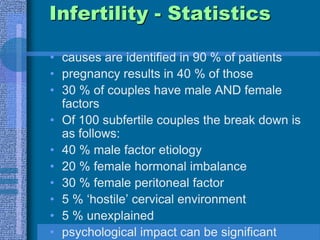
Infertility - Statisticscauses are identified in 90 % of patientspregnancy results in 40 % of those30 % of couples have male AND female factorsOf 100 subfertile couples the break down is as follows:40 % male factor etiology20 % female hormonal imbalance30 % female peritoneal factor5 % ‘hostile’ cervical environment5 % unexplainedpsychological impact can be significant
InfertilityReproductive age for womenGenerally 15-44 years of ageFertility is approximately halved between 37th and 45th year due to alterations in ovulation20% of women have their first child after age 301/3 of couples over 35 have fertility problemsOvulation decreasesHealth of the egg declinesWith the proper treatment 85% of infertile couples can expect to have a child
InfertilityPrimary infertilitya couple that has never conceivedSecondary infertilityinfertility that occurs after previous pregnancy regardless of outcome
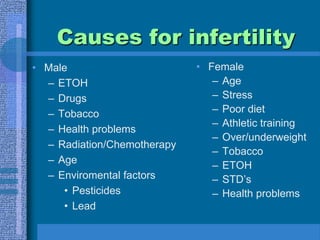
Causes for infertilityMaleETOHDrugsTobaccoHealth problemsRadiation/ChemotherapyAgeEnviromental factorsPesticidesLeadFemaleAge StressPoor dietAthletic trainingOver/underweightTobaccoETOHSTD’sHealth problems
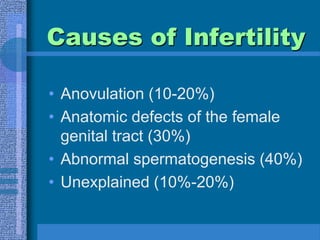
Causes of InfertilityAnovulation (10-20%)Anatomic defects of the female genital tract (30%)Abnormal spermatogenesis (40%)Unexplained (10%-20%)
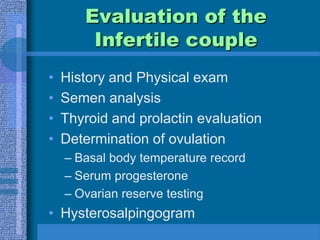
Evaluation of the Infertile coupleHistory and Physical examSemen analysisThyroid and prolactin evaluationDetermination of ovulationBasal body temperature recordSerum progesteroneOvarian reserve testingHysterosalpingogram
Abnormalities of Spermatogenesis
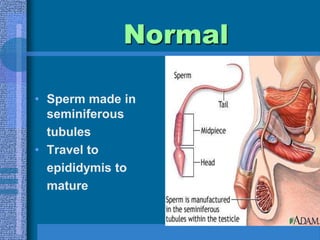
NormalSperm made in seminiferous	tubulesTravel to 	epididymis to 	mature
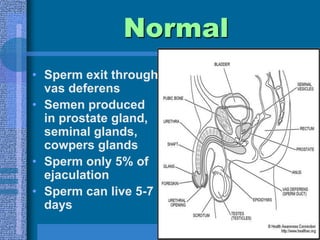
Sperm exit through vas deferensSemen produced in prostate gland, seminal glands, cowpers glandsSperm only 5% of ejaculationSperm can live 5-7 daysNormal
Male Factor40% of the cause for infertilitySperm is constantly produced by the germinal epithelium of the testicleSperm generation time 73 daysSperm production is thermoregulated1° F less than body temperatureBoth men and women can produce anti-sperm antibodies which interfere with the penetration of the cervical mucus
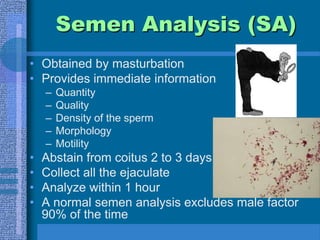
Semen Analysis (SA)Obtained by masturbationProvides immediate informationQuantityQualityDensity of the spermMorphologyMotilityAbstain from coitus 2 to 3 days Collect all the ejaculateAnalyze within 1 hourA normal semen analysis excludes male factor 90% of the time
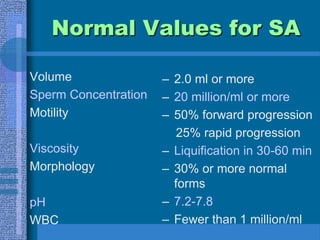
Normal Values for SAVolumeSperm ConcentrationMotilityViscosityMorphologypHWBC 2.0 ml or more
20 million/ml or more
50% forward progression    25% rapid progressionLiquification in 30-60 min
30% or more normal forms
7.2-7.8
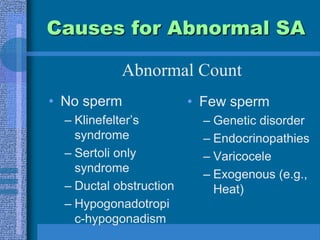
Fewer than 1 million/mlCauses for Abnormal SANo spermKlinefelter’s syndromeSertoli only syndromeDuctal obstructionHypogonadotropic-hypogonadismFew spermGenetic disorderEndocrinopathiesVaricoceleExogenous (e.g., Heat)         Abnormal Count
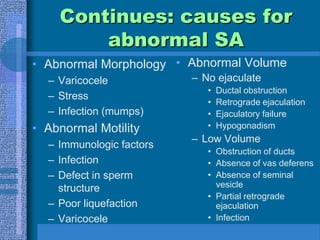
Continues: causes for abnormal SAAbnormal MorphologyVaricoceleStressInfection (mumps)Abnormal MotilityImmunologic factorsInfectionDefect in sperm structurePoor liquefactionVaricoceleAbnormal VolumeNo ejaculateDuctal obstructionRetrograde ejaculationEjaculatory failureHypogonadismLow VolumeObstruction of ductsAbsence of vas deferensAbsence of seminal vesiclePartial retrograde ejaculationInfection
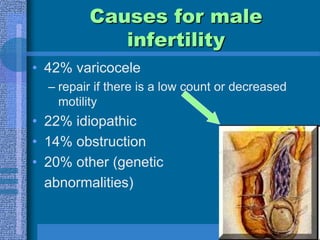
Causes for male infertility42% varicocelerepair if there is a low count or decreased motility22% idiopathic14% obstruction20% other (genetic 	abnormalities)
Abnormal Semen AnalysisOligospermiaAnatomic defectsEndocrinopathiesGenetic factorsExogenous (e.g. heat)Abnormal volumeRetrograde ejaculationInfectionEjaculatory failureAzoospermiaKlinefelter’s (1 in 500)Hypogonadotropic-hypogonadismDuctal obstruction (absence of the Vas deferens)
Evaluation of Abnormal SARepeat semen analysis in 30 daysPhysical examinationTesticular sizeVaricoceleLaboratory testsTestosterone levelFSH (spermatogenesis- Sertoli cells)LH (testosterone- Leydig cells)Referral to urology
Evaluation of Ovulation
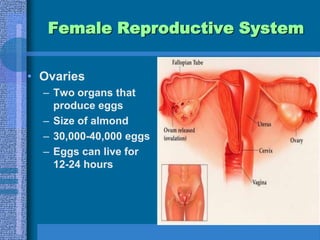
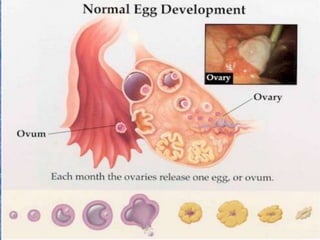
Female Reproductive SystemOvariesTwo organs that produce eggsSize of almond30,000-40,000 eggsEggs can live for 12-24 hours
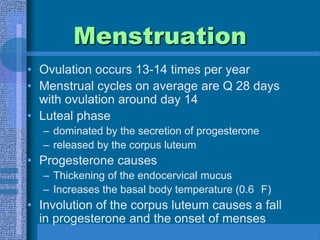
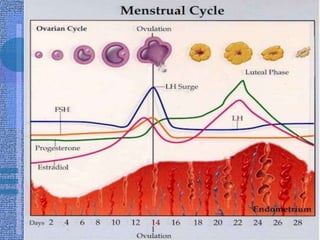
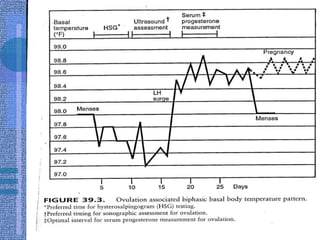
MenstruationOvulation occurs 13-14 times per yearMenstrual cycles on average are Q 28 days with ovulation around day 14Luteal phasedominated by the secretion of progesteronereleased by the corpus luteumProgesterone causesThickening of the endocervical mucusIncreases the basal body temperature (0.6° F)Involution of the corpus luteum causes a fall in progesterone and the onset of menses
OvulationA history of regular menstruation suggests regular ovulationThe majority of ovulatory women experiencefullness of the breastsdecreased vaginal secretionsabdominal bloatingAbsence of PMS symptoms may suggest anovulation mild peripheral edema
 slight weight gain
 depression
Diagnostic studies to confirm OvulationSerum progesteroneAfter ovulation risesCan be measuredUrinary ovulation-detection kitsMeasures changes in urinary LHPredicts ovulation but does not confirm itBasal body temperatureInexpensive AccurateEndometrial biopsyExpensiveStatic information
Basal Body TemperatureExcellent screening tool for ovulationBiphasic shift occurs in 90% of ovulating womenTemperature drops at the time of menses rises two days after the lutenizing hormone (LH) surgeOvum released one day prior to the first riseTemperature elevation of more than 16 days suggests pregnancy
Serum ProgesteroneProgesterone starts rising with the LH surgedrawn between day 21-24Mid-luteal phase>10 ng/ml suggests ovulation
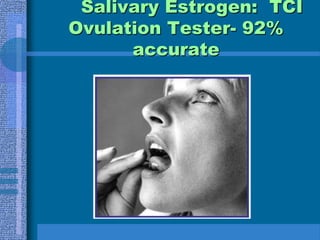
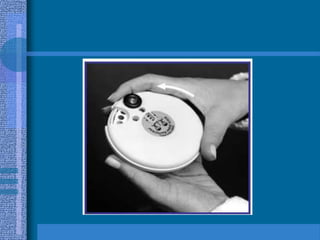
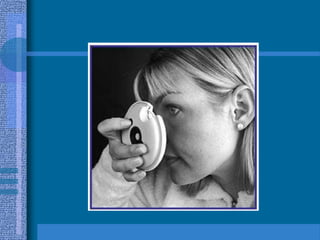
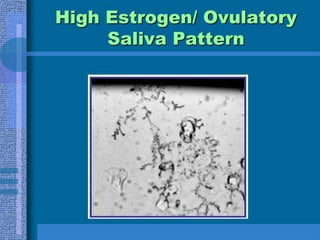
	Salivary Estrogen:  TCI  Ovulation Tester- 92% accurate
Add Saliva Sample
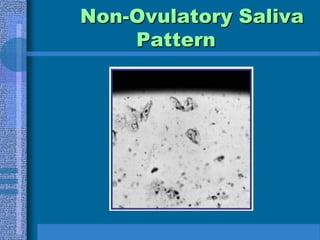
	Non-Ovulatory Saliva Pattern
High Estrogen/ Ovulatory Saliva Pattern
Anovulation
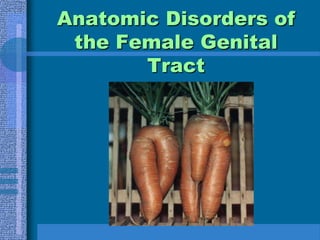
Anovulation Symptoms          Evaluation*Irregular menstrual cyclesAmenorrheaHirsuitismAcneGalactorrheaIncreased vaginal secretionsFollicle stimulating hormoneLutenizing hormoneThyroid stimulating hormoneProlactinAndrostenedioneTotal testosteroneOrder the appropriate tests based on the clinical indicationsAnatomic Disorders of the Female Genital Tract
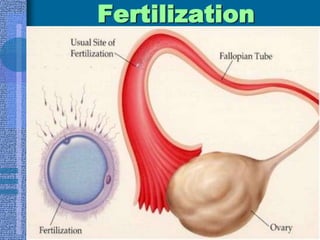
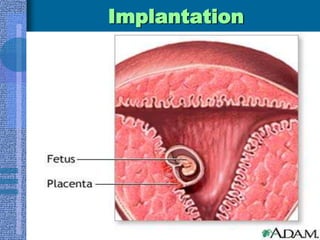
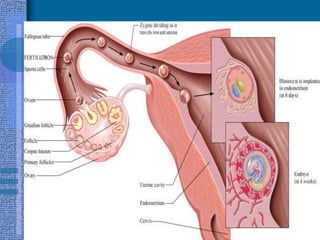
Sperm transport, Fertilization, & ImplantationThe female genital tract is not just a conduitfacilitates sperm transportcervical mucus traps the coagulated ejaculatethe fallopian tube picks up the eggFertilization must occur in the proximal portion of the tubethe fertilized oocyte cleaves and forms a zygote	enters the endometrial cavity at 3 to 5 daysImplants into the secretory endometrium for growth and development
Fertilization
Implantation
Acquired DisordersAcute salpingitisAlters the functional integrity of the fallopian tubeN. gonorrhea and C. trachomatisIntrauterine scarring Can be caused by curettageEndometriosis, scarring from surgery, tumors of the uterus and ovaryFibroids, endometriomasTrauma
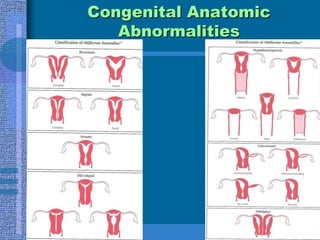
Congenital Anatomic Abnormalities
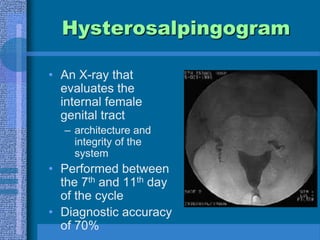
HysterosalpingogramAn X-ray that evaluates the internal female genital tractarchitecture and integrity of the systemPerformed between the 7th and 11th day of the cycleDiagnostic accuracy of 70%
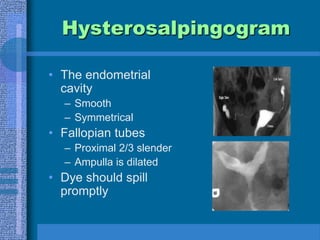
HysterosalpingogramThe endometrial cavitySmoothSymmetricalFallopian tubesProximal 2/3 slenderAmpulla is dilated Dye should spill promptly
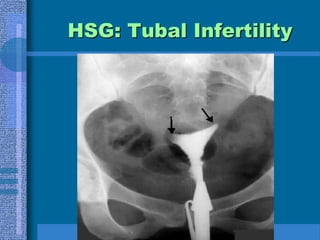
		HSG: Tubal Infertility
Unexplained infertility10% of infertile couples will have a completely normal workupPregnancy rates in unexplained infertilityno treatment 1.3-4.1%clomid and intrauterine insemination 8.3%gonadotropins and intrauterine insemination 17.1%
Treatment of the Infertile Couple
Inadequate SpermatogenesisLaparoscopy surgeryEliminate alterations of thermoregulationClomiphene citrate is occasionally used for induction of spermatogenesis20% successIn vitro fertilization may facilitate fertilizationArtificial insemination with donor sperm is often successful
adhesiolysis
Tubalcystectomy
AnovulationRestore ovulationAdminister ovulation inducing agents Clomiphene citrateAntiestrogenCombines and blocks estrogen receptors at the hypothalamus and pituitary causing a negative feedbackIncreases FSH production stimulates the ovary to make follicles
ClomidGiven for 5 days in the early part of the cycle
Maximum dose is usually 150mg50mg dose - 50% ovulate100mg -25% more ovulate150mg lower numbers of ovulationNo changes in birth defects If no pregnancy in 6 months refer for advanced therapies7% risk of twins   0.3% triplets
Superovulatory MedicationsIf no response with clomid then gonadotropins- FSH (e.g. pergonal) can be administered intramuscularlyThis is usually given under the guidance of someone who specializes in infertility This therapy is expensive and patients need to be followed closelyAdverse effectsHyperstimulation of the ovariesMultiple gestationFetal wastage
Anatomic AbnormalitiesSurgical treatmentsLysis of adhesionsSeptoplastyTuboplastyMyomectomySurgery may be performed laparoscopicallyhysteroscopicallyIf the fallopian tubes are beyond repair one must consider in vitro fertilization
Assisted Reproductive Technologies (ART)Explosion of ART has occurred in the last decade.Theses technologies help provide infertile couples with tools to bypass the normal mechanisms of gamete transportation.Probability of pregnancy in healthy couples is 30-40% per cycle, live birth rate 25%.this varies depending on age
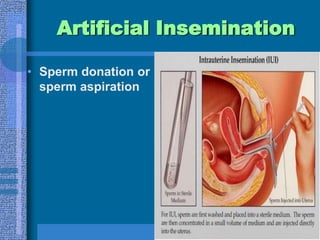
Intrauterine insemination (artificial insemination)definition: sperm introduced into female reproductive tract by means other than coitussperm can come from donor / sperm bank or from husband usually, several ejaculations are pooled often used when male has low sperm count or antibodies present in ejaculate
Artificial InseminationSperm donation or sperm aspiration
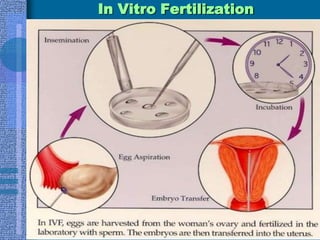
In Vitro Fertilization“test - tube babies”1st performed in 1978 (Louise Joy Brown)often performed on infertile women with tubal blockageSperm and egg combined in the lab, fertilization Zygote placed back into the uterusVery expensive and not always successfulOldest woman in the US to give birth using in vitro was 62 years old and an Romanian woman gave birth at 66
In Vitro Fertilization
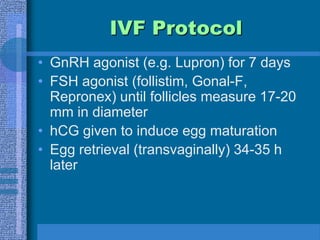
IVF ProtocolGnRH agonist (e.g. Lupron) for 7 daysFSH agonist (follistim, Gonal-F, Repronex) until follicles measure 17-20 mm in diameterhCG given to induce egg maturationEgg retrieval (transvaginally) 34-35 h later
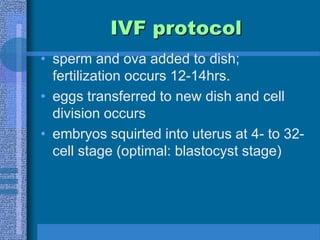
IVF protocolsperm and ova added to dish; fertilization occurs 12-14hrs.eggs transferred to new dish and cell division occursembryos squirted into uterus at 4- to 32-cell stage (optimal: blastocyst stage)
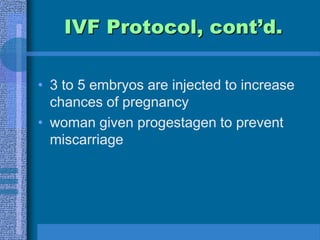
IVF Protocol, cont’d.3 to 5 embryos are injected to increase chances of pregnancywoman given progestagen to prevent miscarriage
IVF Protocol, cont’d.new variations / improvements:Intracytoplasmic sperm injection (ICSI)use of frozen embryos27,000 attempts made per year; 18.6% successful (success rates are increasing)http://www.advancedfertility.com/sampleivfcalendar.htm
GIFT and ZIFTGIFT = gamete intrafallopian transferuseful for tubal blockageova are collected and inserted into oviducts below point of blockagehusband’s sperm are placed in oviduct
GIFT and ZIFTwoman is treated with hormones to prevent miscarriage4200 attempts made / year; 28% successfulZIFT = zygote intrafallopian transferZIFT is like IVF, only zygotes (1 cell stage) are inserted below blockage in oviduct (24% success rate)

Infertility

  • 1.
  • 2.
    ObjectivesDefine primary andsecondary infertilityDescribe the causes of infertilityDiagnosis and management of infertility
  • 3.
    Requirements for Conception Production of healthy egg and spermUnblocked tubes that allow sperm to reach the eggThe sperms ability to penetrate and fertilize the eggImplantation of the embryo into the uterusFinally a healthy pregnancy
  • 4.
    InfertilityThe inability toconceive following unprotected sexual intercourse 1 year (age < 35) or 6 months (age >35)Affects 15% of reproductive couples6.1 million couples Men and women equally affected
  • 5.
    Infertility - Statisticscausesare identified in 90 % of patientspregnancy results in 40 % of those30 % of couples have male AND female factorsOf 100 subfertile couples the break down is as follows:40 % male factor etiology20 % female hormonal imbalance30 % female peritoneal factor5 % ‘hostile’ cervical environment5 % unexplainedpsychological impact can be significant
  • 6.
    InfertilityReproductive age forwomenGenerally 15-44 years of ageFertility is approximately halved between 37th and 45th year due to alterations in ovulation20% of women have their first child after age 301/3 of couples over 35 have fertility problemsOvulation decreasesHealth of the egg declinesWith the proper treatment 85% of infertile couples can expect to have a child
  • 7.
    InfertilityPrimary infertilitya couplethat has never conceivedSecondary infertilityinfertility that occurs after previous pregnancy regardless of outcome
  • 8.
    Causes for infertilityMaleETOHDrugsTobaccoHealthproblemsRadiation/ChemotherapyAgeEnviromental factorsPesticidesLeadFemaleAge StressPoor dietAthletic trainingOver/underweightTobaccoETOHSTD’sHealth problems
  • 9.
    Causes of InfertilityAnovulation(10-20%)Anatomic defects of the female genital tract (30%)Abnormal spermatogenesis (40%)Unexplained (10%-20%)
  • 10.
    Evaluation of theInfertile coupleHistory and Physical examSemen analysisThyroid and prolactin evaluationDetermination of ovulationBasal body temperature recordSerum progesteroneOvarian reserve testingHysterosalpingogram
  • 11.
  • 12.
    NormalSperm made inseminiferous tubulesTravel to epididymis to mature
  • 13.
    Sperm exit throughvas deferensSemen produced in prostate gland, seminal glands, cowpers glandsSperm only 5% of ejaculationSperm can live 5-7 daysNormal
  • 14.
    Male Factor40% ofthe cause for infertilitySperm is constantly produced by the germinal epithelium of the testicleSperm generation time 73 daysSperm production is thermoregulated1° F less than body temperatureBoth men and women can produce anti-sperm antibodies which interfere with the penetration of the cervical mucus
  • 15.
    Semen Analysis (SA)Obtainedby masturbationProvides immediate informationQuantityQualityDensity of the spermMorphologyMotilityAbstain from coitus 2 to 3 days Collect all the ejaculateAnalyze within 1 hourA normal semen analysis excludes male factor 90% of the time
  • 16.
    Normal Values forSAVolumeSperm ConcentrationMotilityViscosityMorphologypHWBC 2.0 ml or more
  • 17.
  • 18.
    50% forward progression 25% rapid progressionLiquification in 30-60 min
  • 19.
    30% or morenormal forms
  • 20.
  • 21.
    Fewer than 1million/mlCauses for Abnormal SANo spermKlinefelter’s syndromeSertoli only syndromeDuctal obstructionHypogonadotropic-hypogonadismFew spermGenetic disorderEndocrinopathiesVaricoceleExogenous (e.g., Heat) Abnormal Count
  • 22.
    Continues: causes forabnormal SAAbnormal MorphologyVaricoceleStressInfection (mumps)Abnormal MotilityImmunologic factorsInfectionDefect in sperm structurePoor liquefactionVaricoceleAbnormal VolumeNo ejaculateDuctal obstructionRetrograde ejaculationEjaculatory failureHypogonadismLow VolumeObstruction of ductsAbsence of vas deferensAbsence of seminal vesiclePartial retrograde ejaculationInfection
  • 23.
    Causes for maleinfertility42% varicocelerepair if there is a low count or decreased motility22% idiopathic14% obstruction20% other (genetic abnormalities)
  • 24.
    Abnormal Semen AnalysisOligospermiaAnatomicdefectsEndocrinopathiesGenetic factorsExogenous (e.g. heat)Abnormal volumeRetrograde ejaculationInfectionEjaculatory failureAzoospermiaKlinefelter’s (1 in 500)Hypogonadotropic-hypogonadismDuctal obstruction (absence of the Vas deferens)
  • 25.
    Evaluation of AbnormalSARepeat semen analysis in 30 daysPhysical examinationTesticular sizeVaricoceleLaboratory testsTestosterone levelFSH (spermatogenesis- Sertoli cells)LH (testosterone- Leydig cells)Referral to urology
  • 26.
  • 27.
    Female Reproductive SystemOvariesTwoorgans that produce eggsSize of almond30,000-40,000 eggsEggs can live for 12-24 hours
  • 28.
    MenstruationOvulation occurs 13-14times per yearMenstrual cycles on average are Q 28 days with ovulation around day 14Luteal phasedominated by the secretion of progesteronereleased by the corpus luteumProgesterone causesThickening of the endocervical mucusIncreases the basal body temperature (0.6° F)Involution of the corpus luteum causes a fall in progesterone and the onset of menses
  • 30.
    OvulationA history ofregular menstruation suggests regular ovulationThe majority of ovulatory women experiencefullness of the breastsdecreased vaginal secretionsabdominal bloatingAbsence of PMS symptoms may suggest anovulation mild peripheral edema
  • 31.
  • 32.
  • 33.
    Diagnostic studies toconfirm OvulationSerum progesteroneAfter ovulation risesCan be measuredUrinary ovulation-detection kitsMeasures changes in urinary LHPredicts ovulation but does not confirm itBasal body temperatureInexpensive AccurateEndometrial biopsyExpensiveStatic information
  • 34.
    Basal Body TemperatureExcellentscreening tool for ovulationBiphasic shift occurs in 90% of ovulating womenTemperature drops at the time of menses rises two days after the lutenizing hormone (LH) surgeOvum released one day prior to the first riseTemperature elevation of more than 16 days suggests pregnancy
  • 36.
    Serum ProgesteroneProgesterone startsrising with the LH surgedrawn between day 21-24Mid-luteal phase>10 ng/ml suggests ovulation
  • 37.
    Salivary Estrogen: TCI Ovulation Tester- 92% accurate
  • 38.
  • 41.
  • 42.
  • 43.
  • 44.
    Anovulation Symptoms Evaluation*Irregular menstrual cyclesAmenorrheaHirsuitismAcneGalactorrheaIncreased vaginal secretionsFollicle stimulating hormoneLutenizing hormoneThyroid stimulating hormoneProlactinAndrostenedioneTotal testosteroneOrder the appropriate tests based on the clinical indicationsAnatomic Disorders of the Female Genital Tract
  • 45.
    Sperm transport, Fertilization,& ImplantationThe female genital tract is not just a conduitfacilitates sperm transportcervical mucus traps the coagulated ejaculatethe fallopian tube picks up the eggFertilization must occur in the proximal portion of the tubethe fertilized oocyte cleaves and forms a zygote enters the endometrial cavity at 3 to 5 daysImplants into the secretory endometrium for growth and development
  • 46.
  • 47.
  • 49.
    Acquired DisordersAcute salpingitisAltersthe functional integrity of the fallopian tubeN. gonorrhea and C. trachomatisIntrauterine scarring Can be caused by curettageEndometriosis, scarring from surgery, tumors of the uterus and ovaryFibroids, endometriomasTrauma
  • 50.
  • 51.
    HysterosalpingogramAn X-ray thatevaluates the internal female genital tractarchitecture and integrity of the systemPerformed between the 7th and 11th day of the cycleDiagnostic accuracy of 70%
  • 52.
    HysterosalpingogramThe endometrial cavitySmoothSymmetricalFallopiantubesProximal 2/3 slenderAmpulla is dilated Dye should spill promptly
  • 53.
  • 54.
    Unexplained infertility10% ofinfertile couples will have a completely normal workupPregnancy rates in unexplained infertilityno treatment 1.3-4.1%clomid and intrauterine insemination 8.3%gonadotropins and intrauterine insemination 17.1%
  • 55.
    Treatment of theInfertile Couple
  • 56.
    Inadequate SpermatogenesisLaparoscopy surgeryEliminatealterations of thermoregulationClomiphene citrate is occasionally used for induction of spermatogenesis20% successIn vitro fertilization may facilitate fertilizationArtificial insemination with donor sperm is often successful
  • 57.
  • 58.
  • 59.
    AnovulationRestore ovulationAdminister ovulationinducing agents Clomiphene citrateAntiestrogenCombines and blocks estrogen receptors at the hypothalamus and pituitary causing a negative feedbackIncreases FSH production stimulates the ovary to make follicles
  • 60.
    ClomidGiven for 5days in the early part of the cycle
  • 61.
    Maximum dose isusually 150mg50mg dose - 50% ovulate100mg -25% more ovulate150mg lower numbers of ovulationNo changes in birth defects If no pregnancy in 6 months refer for advanced therapies7% risk of twins 0.3% triplets
  • 62.
    Superovulatory MedicationsIf noresponse with clomid then gonadotropins- FSH (e.g. pergonal) can be administered intramuscularlyThis is usually given under the guidance of someone who specializes in infertility This therapy is expensive and patients need to be followed closelyAdverse effectsHyperstimulation of the ovariesMultiple gestationFetal wastage
  • 63.
    Anatomic AbnormalitiesSurgical treatmentsLysisof adhesionsSeptoplastyTuboplastyMyomectomySurgery may be performed laparoscopicallyhysteroscopicallyIf the fallopian tubes are beyond repair one must consider in vitro fertilization
  • 64.
    Assisted Reproductive Technologies(ART)Explosion of ART has occurred in the last decade.Theses technologies help provide infertile couples with tools to bypass the normal mechanisms of gamete transportation.Probability of pregnancy in healthy couples is 30-40% per cycle, live birth rate 25%.this varies depending on age
  • 65.
    Intrauterine insemination (artificialinsemination)definition: sperm introduced into female reproductive tract by means other than coitussperm can come from donor / sperm bank or from husband usually, several ejaculations are pooled often used when male has low sperm count or antibodies present in ejaculate
  • 66.
  • 67.
    In Vitro Fertilization“test- tube babies”1st performed in 1978 (Louise Joy Brown)often performed on infertile women with tubal blockageSperm and egg combined in the lab, fertilization Zygote placed back into the uterusVery expensive and not always successfulOldest woman in the US to give birth using in vitro was 62 years old and an Romanian woman gave birth at 66
  • 68.
  • 69.
    IVF ProtocolGnRH agonist(e.g. Lupron) for 7 daysFSH agonist (follistim, Gonal-F, Repronex) until follicles measure 17-20 mm in diameterhCG given to induce egg maturationEgg retrieval (transvaginally) 34-35 h later
  • 70.
    IVF protocolsperm andova added to dish; fertilization occurs 12-14hrs.eggs transferred to new dish and cell division occursembryos squirted into uterus at 4- to 32-cell stage (optimal: blastocyst stage)
  • 71.
    IVF Protocol, cont’d.3to 5 embryos are injected to increase chances of pregnancywoman given progestagen to prevent miscarriage
  • 72.
    IVF Protocol, cont’d.newvariations / improvements:Intracytoplasmic sperm injection (ICSI)use of frozen embryos27,000 attempts made per year; 18.6% successful (success rates are increasing)http://www.advancedfertility.com/sampleivfcalendar.htm
  • 73.
    GIFT and ZIFTGIFT= gamete intrafallopian transferuseful for tubal blockageova are collected and inserted into oviducts below point of blockagehusband’s sperm are placed in oviduct
  • 74.
    GIFT and ZIFTwomanis treated with hormones to prevent miscarriage4200 attempts made / year; 28% successfulZIFT = zygote intrafallopian transferZIFT is like IVF, only zygotes (1 cell stage) are inserted below blockage in oviduct (24% success rate)