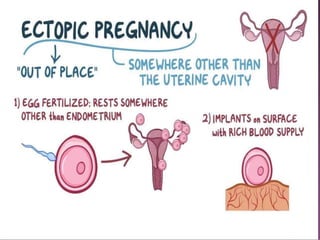
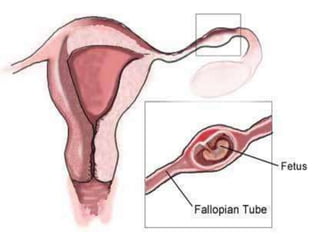
Ectopic pregnancy, also called
extrauterine pregnancy, is when a
fertilized egg grows outside a
woman's uterus, somewhere else in
her belly. It can cause life-
threatening bleeding and needs
medical care right away. In more
than 90% of cases, the egg implants
in a fallopian tube. This is called
a tubal pregnancy.
 Ectopic pregnancy still
contributes significantly to the
cause of maternal mortality &
morbidity.
 The incidence of ectopic
pregnancy is an the rise.
 An ectopic pregnancy is one in
which fertilized ovum is
implanted & develops outside
the normal uterine cavity
 D.C. DUTTA
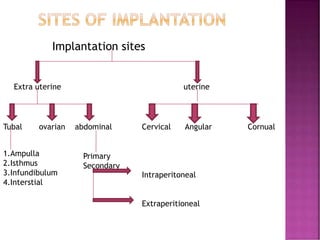
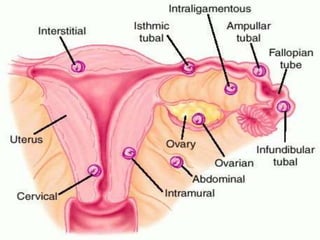
Implantation sites
Extra uterine uterine
Tubal ovarian abdominal Cervical Angular Cornual
1.Ampulla
2.Isthmus
3.Infundibulum
4.Interstial
Primary
Secondary
Intraperitoneal
Extraperitioneal
 Frequency:- The incidence has
increased because the prevalence of
chronic pelvic inflammatory disease.
 ETIOLOGY:-
Factors preventing the
migration of the fertilized ovum to
the uterine cavity .
Factors facillitating of
the fertilized ovum in the
tubalmucosa
o TUBAL MOLE
The encysted bld so collected in the
pouch of douglas is called pelvic
haematocele
o TUBAL ABORTION
If implantation occurs in the ampulla
/ in fundibulum prior to abortion . The ovum
may be converted into a mole/ a living ovum
is aborted.The expulsion may be complete /
in complete
o TUBAL RUPTURE
It may be, common in isthmic &
interstital implantation .As the isthmic portion is
narrow & the wall is less distensible
o TUBAL PERFORATION
I. Secondary abdominal pregnancy
II. Secondary broad ligament pregnancy
o CONTINUATION OF PREGNANCY
I. RARE
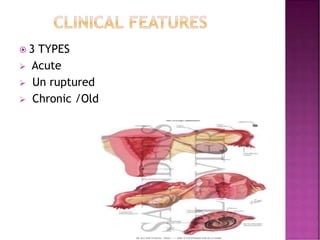
 3 TYPES
 Acute
 Un ruptured
 Chronic /Old
ACUTE
ECTOPIC
CHRONIC
ECTOPIC
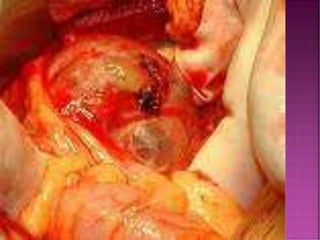
 It is associated with the massive intra
peritoneal hemorrhage due to its combined
vascularisation by the uterine & ovarian
arteries.

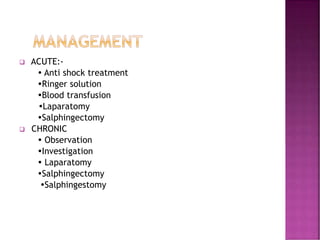
 ACUTE:-
 Anti shock treatment
Ringer solution
Blood transfusion
Laparatomy
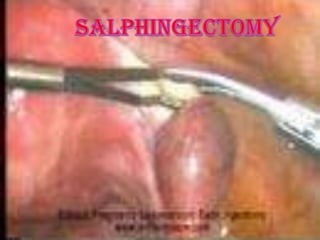
Salphingectomy
 CHRONIC
 Observation
Investigation
 Laparatomy
Salphingectomy
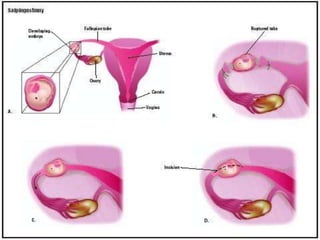
Salphingestomy
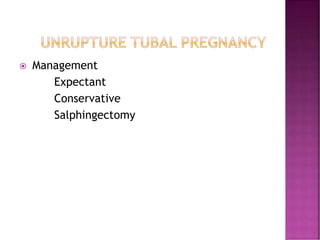
 Management
Expectant
Conservative
Salphingectomy
 Primary :- Both the tubes & ovarian are
normal without evidence of recent pregnancy
 secondary:- Abdominal pregnancy is always
secondary
SYMPTOMS
 Nausea
 vomitting
 constipation
 pain
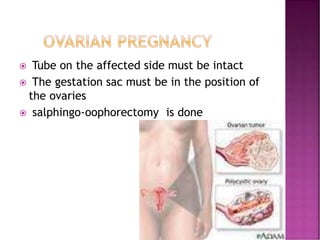
 Tube on the affected side must be intact
 The gestation sac must be in the position of
the ovaries
 salphingo-oophorectomy is done
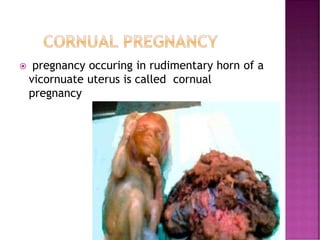
 pregnancy occuring in rudimentary horn of a
vicornuate uterus is called cornual
pregnancy
 when the implantation occur in the cervical
canal / below the internal os is called
cervical pregnancy.
Ectopic pregnancy
Ectopic pregnancy

Ectopic pregnancy

  • 3.
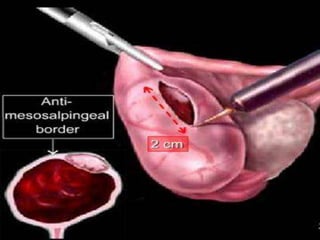
    Ectopic pregnancy, alsocalled extrauterine pregnancy, is when a fertilized egg grows outside a woman's uterus, somewhere else in her belly. It can cause life- threatening bleeding and needs medical care right away. In more than 90% of cases, the egg implants in a fallopian tube. This is called a tubal pregnancy.
  • 5.
     Ectopic pregnancystill contributes significantly to the cause of maternal mortality & morbidity.  The incidence of ectopic pregnancy is an the rise.
  • 7.
     An ectopicpregnancy is one in which fertilized ovum is implanted & develops outside the normal uterine cavity  D.C. DUTTA
  • 8.
    Implantation sites Extra uterineuterine Tubal ovarian abdominal Cervical Angular Cornual 1.Ampulla 2.Isthmus 3.Infundibulum 4.Interstial Primary Secondary Intraperitoneal Extraperitioneal
  • 10.
     Frequency:- Theincidence has increased because the prevalence of chronic pelvic inflammatory disease.  ETIOLOGY:- Factors preventing the migration of the fertilized ovum to the uterine cavity . Factors facillitating of the fertilized ovum in the tubalmucosa
  • 12.
    o TUBAL MOLE Theencysted bld so collected in the pouch of douglas is called pelvic haematocele o TUBAL ABORTION If implantation occurs in the ampulla / in fundibulum prior to abortion . The ovum may be converted into a mole/ a living ovum is aborted.The expulsion may be complete / in complete
  • 14.
    o TUBAL RUPTURE Itmay be, common in isthmic & interstital implantation .As the isthmic portion is narrow & the wall is less distensible o TUBAL PERFORATION I. Secondary abdominal pregnancy II. Secondary broad ligament pregnancy o CONTINUATION OF PREGNANCY I. RARE
  • 15.
     3 TYPES Acute  Un ruptured  Chronic /Old
  • 16.
  • 20.
     It isassociated with the massive intra peritoneal hemorrhage due to its combined vascularisation by the uterine & ovarian arteries. 
  • 22.
     ACUTE:-  Antishock treatment Ringer solution Blood transfusion Laparatomy Salphingectomy  CHRONIC  Observation Investigation  Laparatomy Salphingectomy Salphingestomy
  • 25.
  • 27.
     Primary :-Both the tubes & ovarian are normal without evidence of recent pregnancy  secondary:- Abdominal pregnancy is always secondary SYMPTOMS  Nausea  vomitting  constipation  pain
  • 28.
     Tube onthe affected side must be intact  The gestation sac must be in the position of the ovaries  salphingo-oophorectomy is done
  • 29.
     pregnancy occuringin rudimentary horn of a vicornuate uterus is called cornual pregnancy
  • 30.
     when theimplantation occur in the cervical canal / below the internal os is called cervical pregnancy.