DR. SUBODH KUMAR MAHTO
PGIMER,DR.RML HOSPITAL
NEW Delhi
 Microbial infection of the endothelial surface of the
heart or iatrogenic foreign bodies like prosthetic valves
or other intracardiac devices.
 Uncommon but life threatening infection
 Despite advances in diagnosis ,anti microbial therapy
and management of complication-high morbidity and
mortality
 Estimated incidence in Western population- 1.7 - 6.2
cases per 100,000 patient years,
 India- 17,000 episodes of IE per year
 In relatively young patients with underlying rheumatic
and congenital heart diseases.
Int J Cardiol 2005; 98: 253–260
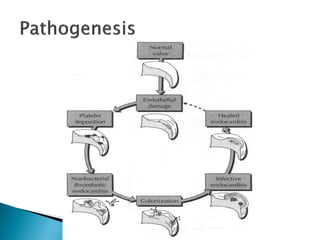
 Local inflammation triggers endothelial cells to express
integrins of β1 family
 S. aureus and other pathogens carry fibronectin-binding
proteins on their surface.
 When activated, endothelial cells bind fibronectin via integrin
and provide an adhesive surface to circulating staphylococci.
 Internalization of S. aureus into valve endothelial cells (persist
and escape host defences and antibiotics, or multiply and
spread to distant organs).
 Also occur as a consequence of chewing and tooth brushing.
 Such spontaneous bacteraemia - low grade and short duration
[1– 100 cfu/ml of blood for 10 min]
 Both magnitude of bacteraemia and ability of the pathogen to
attach to damaged valves are important
 Its high incidence explain why most cases of IE are unrelated
to invasive procedures.
Ann Intern Med 1998;129: 761–769.
1. IE with positive blood culture (85%)
- IE due to streptococci and enterococci
- IE due to staphylococci (aureus and CONS)
2. IE with negative blood cultures because of prior
antibiotic treatment
3. IE frequently a/w negative blood cultures
4. IE associated with constantly negative blood culture
 Viridans streptococci- S sanguis, S oralis (mitis), S
salivarius, S mutans, Gemella morbillorum.
 S milleri and S anginosus group (S intermedius,
anginosus, and constellatus)
 Abiotrophia defectiva and Granulicatella species/
nutritionally variant streptococci)- require broth
supplemented with pyridoxal hydrochloride or
cysteine.
 Enterococcus faecalis (90% )
 Rarely, by E. faecium and E. durans
 Highly tolerant to antibiotic-induced killing
 Eradication requires prolonged administration (up to
6 weeks) of synergistic bactericidal combinations of
cell wall inhibitors with aminoglycosides
 S aureus -most common cause of IE in developed world.
 Increase incidence due to- healthcare contact (eg,
intravascular catheters, surgical wounds, indwelling
prosthetic devices).
 Nonaddicts S aureus -left side of heart
 Mortality rates -25% to 40%.
 IDUs- tricuspid valve.
 Cure rates- high (85%)
 NVE- estimated incidence ~ 5% of all cases of
endocarditis.
 PVE- up to 52% of early onset PVE attributed to
CoNS.
 Fastidious Gram-negative bacilli
 Haemophilus parainfluenzae,
 H aphrophilus, H paraphrophilus, H influenzae,
 Actinobacillus actinomycetemcomitans,
 Cardiobacterium hominis,
 Eikenella corrodens,
 Kingella kingae, and K denitrificans
 Among Enterobacteriaceae- Salmonella most common
cause.
 Most cases - caused by S choleraesuis, S typhimurium,
and S enteritidis.
 Common features-Left-sided disease, large vegetations,
and involvement of architecturally normal valves
 Mortality rates -70%
 Male:female ratio -2.5:1
 Mean age -30 years.
 Affects normal valves in most cases.
 Left-sided endocarditis-early surgery with valve
replacement.
 Isolated right-sided IE-medical therapy may be curative.
 Mostly by Candida and Aspergillus
 Survival rate <20%
 Blood culture –positive in Candida ,negative in
Aspergiillus
Exp Clin Cardiol. 2012 Winter; 17(4): 175–178.
 Multidrug resistance- Viridans group streptococci.
 Oxacillin resistance- S. aureus (ORSA)
 Development of intermediate and highlevel resistance to
vancomycin - S. aureus & Vancomycin resistance- Enterococci
 S aureus surpassed Viridans group streptococci as leading
cause of IE.
 Overall worsening of average clinical course of patients with
endocarditis
Arch Intern Med. 2002;162:90 –94.
 Approximate incidence-1.5 to 3.3 cases per 1000
person years.
 Two thirds of these patients-no clinical evidence of
underlying heart disease
 Only 35% of IDUs with IE demonstrate heart
murmurs on admission.
 S. aureus -most common cause of right-sided IE in IDUs
 Left sided IE - caused equally by viridans group
streptococci and S aureus.
 Distribution –
◦ Tricuspid alone or in combination with others-73 %
◦ Aortic alone – 7 %;
◦ Mitral alone – 6 %;
◦ Aortic plus mitral - 1.5 %
 5-10% cases of IE
 Most frequently in IVDAs
 Mainly involve tricuspid valve
 Staph.aureus- 60-90%
 Prognosis good- in hospital mortality rate <10%
Symptoms % of Pts Signs % of Pts
Fever 80-85 Fever 80-90
Chills 42-75 Murmur 80-95
Sweats 25 Changing M 10-40
Anorexia 25-55 Neuro abn 30-40
Wt loss 25-35 Emboli 20-40
Malaise 25-40 Splenomegaly 15-50
Dyspnea 20-40 Clubbing 10-20
Cough 25 Peripheral manifestations
Stroke 13-20 Osler nodes 7-10
Myalgia/Arthral. 15-30 Splinters 5-15
Chest pain 8-35 Petechiae 10-40
Janeway lesion 6-10
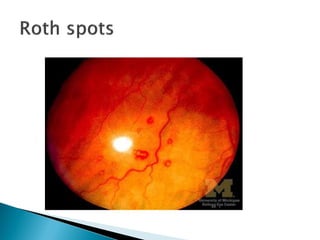
Roth spots 4-10
Braunwald 8th Edition
1. Nonspecific
2. Nonblanching
3. Linear reddish-brown lesions found under the nail bed
4. Usually do NOT extend the entire length of the nail
1. More specific
2. Painful and erythematous nodules
3. Located on pulp of fingers and toes
1. More specific
2. Erythematous, blanching macules
3. Nonpainful
4. Located on palms and soles
 New regurgitant heart murmur
 Embolic event of unknown etiology
 Sepsis of unknown origin
 Fever ( associated with intracardiac device, prosthetic valve,
CHD, previous h/o IE, IVU, any intervention, new
conduction disturbance, CHF, positive blood cultures,
vascular/ immunologic/neurologic signs and symptoms,
pulmonary embolism and peripheral abscess)
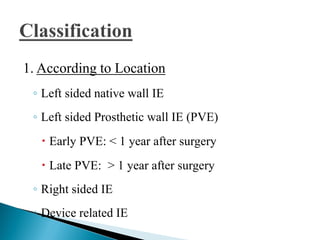
1. According to Location
◦ Left sided native wall IE
◦ Left sided Prosthetic wall IE (PVE)
 Early PVE: < 1 year after surgery
 Late PVE: > 1 year after surgery
◦ Right sided IE
◦ Device related IE
2. According to mode of Acquisition
 Health Care Associated
oNosocomial ( >48 hour after hospitalization)
oNon-Nosocomial ( <48 hour after hospitalization)
Home based nursing, IV therapy/ chemotherapy,
hemodialysis < 30 days before onset of IE
Hospitalized in acute care facility < 90 before onset of IE
Resident in nursing home/ long term care facility
 Community Acquired ( <48 hour after hospitalization)
 Intravenous drug abuse associated
3. According to time of developememt
 Acute
◦ Toxic presentation
◦ Progressive valve destruction & metastatic infection
developing in days to weeks
◦ Most commonly caused by S. aureus
 Sub acute
◦ Mild toxicity
◦ Presentation over weeks to months
◦ Rarely leads to metastatic infection
◦ Most commonly S. viridans or enterococcus
 Relapse:
repeat episodes of IE caused by the same organism
<6 month after the initial episode
 Reinfection:
infection with different microorganism
or
Repeat episode of infection caused by the same
organism >6 month after initial episode
 Definite IE - Pathological confirmation from surgical
autopsy specimen.
 Probable IE - Persistant bacteremia and evidence of
either new valvular regurgitation or vascular
phenomena in face of underlying valvular heart
disease
 Only minority of patient with bonafied IE could be
classified as definite cases.
 IVU was not recognised as an important predisposing
condition.
 ECHO finding were not included.
1. Definite infective endocarditis
 Pathological criteria
◦ Microorganisms demonstrated by culture or histological
examination of a vegetation, a vegetation that has
embolized, or an intracardiac abscess specimen; or
◦ Pathological lesions; vegetation or intracardiac abscess
confirmed by histological examination showing active
endocarditis
 Clinical criteria
◦ 2 major criteria; or
◦ 1 major criterion and 3 minor criteria; or
◦ 5 minor criteria
2. Possible IE
◦ 1 major criterion and 1 minor criterion; or
◦ 3 minor criteria
3. Rejected IE
◦ Firm alternative diagnosis explaining evidence of IE; or
◦ Resolution of IE with antibiotic therapy for 4 days; or
◦ No pathological evidence of IE at surgery or autopsy, with
antibiotic therapy for 4 days; or
◦ Does not meet criteria for possible IE as above
1. Blood culture positive for IE
 Typical microorganisms consistent with IE from 2 separate blood
cultures: Viridans streptococci, S. bovis, HACEK, S. aureus; or
community-acquired enterococci in the absence of a primary focus;
or
 Microorganisms consistent with IE from persistently positive blood
cultures : At least 2 positive cultures of blood samples drawn 12 h
apart; or all of 3 or a majority of 4 separate cultures of blood (with
first and last sample drawn at least 1 h apart)
or
 Single positive blood culture for Coxiella burnetii or anti–phase 1
IgG antibody titer >1:800
2. Evidence of Endocardial involvement
Echocardiogram positive for IE defined as follows:
 Oscillating intracardiac mass on valve or supporting
structures, in the path of regurgitant jets, or on implanted
material inabsence of an alternative anatomic explanation;
 Abscess;
 New partial dehiscence of prosthetic valve;
 New valvular regurgitation (worsening or changing of
preexisting murmur not sufficient)
 Predisposition- predisposing heart condition, or IDU
 Fever- temperature 38°C
 Vascular- major arterial emboli, septic pulmonary infarcts,
mycotic aneurysm, ICH, conjunctival hemorrhages, and
Janeway’s lesions
 Immunologic - GN, Osler’s nodes, Roth’s spots, and RF
 Microbiological evidence- positive blood culture but does
not meet a major criterion or serological evidence of active
infection with organism consistent with IE
Microbiological
Diagnosis
 Positive blood cultures - cornerstones of diagnosis.
 Three sets taken including at least one aerobic and one
anaerobic each containing 10 mL of blood
 Prolonged culture- associated with rising likelihood of
contamination
1. Inadequate microbiological techniques,
2. Infection with highly fastidious bacteria or nonbacterial
pathogens,
3. Previous administration of antimicrobial agents before
blood cultures were obtained
 Blood cultures - negative in up to 31 % of patients
Int J Cardiol 2005; 98: 253–260
 Electron microscopy -high sensitivity but time
consuming and expensive.
 Coxiella burnetii and Bartonella species -easily
detected by serological testing using indirect
immunofluorescence or ELISA
 Legionella -Immunological analysis of urine
 PCR - rapid and reliable detection of fastidious and non-
culturable agents in patients with IE.
Limitations
1. Lack of reliable application to whole blood samples,
2. Risk of contamination,
3. False negatives due to the presence of PCR inhibitors,
4. Inability to provide information concerning bacterial
sensitivity to antimicrobial agents
5. Persistent positivity despite clinical remission.
Microbiological diagnosis in culture-positive and culture-negative
infective endocarditis. IE = infective endocarditis; PCR =
polymerase chain reaction. *If the organism remains unidentified and the
patient is stable, consider antibiotic withdrawal and repeat blood
cultures.
 Sensitivity of TTE - 40 to 63%
 Sensitivity of TEE - 90 to 100%.
 Echo features suggestive of IE-
1. Vegetation
2. Abscess
3. Psuedoaneurysm
4. Perforation
5. Fistula
6. Valve aneurysm
7. Dehiscence of prosthetic valve
 False negative
1. Presence of preexisting severe lesions (MVP, degenerative
calcified lesions, prosthetic valves),
2. Vegetations are very small <2 mm,
3. Not yet present or already embolized.
 False positive-
Degenerative /myxomatous valve, SLE, advanced
malignancy (marantic endocarditis), chordal rupture.
Penicillin Sensitive Relative Penicillin Resistant
1. Cryst Penicillin G or
Ceftriaxone X 4 weeks
2. Cryst Penicillin G
or X 2 weeks
Ceftriaxone
plus
Gentamicin X 2 weeks
3. Vancomycin X 4 weeks
1. Cryst Penicillin G
or X 4 weeks
Ceftriaxone
plus
Gentamicin X 2 weeks
2. Vancomycin X 4 weeks
Penicillin Sensitive Penicillin Resistant
1. Cryst Penicillin G
or X 6 weeks
Ceftriaxone
with/without
Gentamicin X 2 weeks
2. Vancomycin X 6 weeks
1. Cryst Penicillin G
or X 6 weeks
Ceftriaxone
plus
Gentamicin X 6 weeks
2. Vancomycin X 6 weeks
Oxacillin Susceptible Oxacillin Resistant
1. Oxacillin/Nafcillin
or X 6 weeks
Cefazolin (penicillin allergic)
with/without
Gentamicin X 3-5 days
1. Vancomycin X 6 weeks
Oxacillin Susceptible Oxacillin Resistant
1. Oxacillin/Nafcillin X ≥ 6 weeks
plus
Rifampicin X ≥ 6 weeks
plus
Gentamicin X 2 weeks
1.Vancomycin X ≥ 6 weeks
plus
Rifampicin X ≥ 6 weeks
plus
Gentamicin X 2 weeks
Penicillin/Gentamicin/
Vancomycin Sensitive
Penicillin/Streptomycin/
Vancomycin Sensitive
1. Cryst Penicillin G or
Ampicillin X 4 - 6 weeks
plus
Gentamicin X 4 - 6 weeks
2. Vancomycin X 6 weeks
plus
Gentamicin X 6 weeks
1. Cryst Penicillin G or
Ampicillin X 4 - 6 weeks
plus
Streptomycin X 4 - 6 weeks
2. Vancomycin X 6 weeks
plus
Streptomycin X 6 weeks
Penicillin Resistant
Aminoglyco/Vanco Sensitive
Penicillin Aminoglycoside
Vancomycin Resistant
1. Ampicillin-Sulbactam
plus X 6 weeks
Gentamicin
(only for β Lactamase producing)
2. Vancomycin
plus X 6 weeks
Gentamicin
1. E faecium:
Linezolid or ≥ 8 weeks
Quinupristin-dafopristin
2. E faecalis:
 Imipenem/Cilastatin + Ampicillin
or ≥ 8 weeks
 Ceftriaxone* + Ampicillin
(dose is 4g/24hr)
1. Ceftriaxone
or
2. Ampicillin – Sulbactam
or
3. Ciprofloxacin
Native valve Prosthetic Valve
1. Ampicillin-Sulbactam
plus X 4 - 6 weeks
Gentamicin
2. Vancomycin
plus
Gentamicin X 4 - 6 weeks
plus
Ciprofloxacin
1. Early (< 1 year)
Vancomycin + Cefepime +
Rifampicin X 6 weeks
plus
Gentamicin X 2 weeks
2. Late ( > 1 year)
Same as native valve
plus X 6 weeks
Rifampicin
Culture Negative Culture Positive
1. Ceftriaxone X 6 weeks
plus
Gentamicin X 2 weeks
With/without
Doxycycline X 6 weeks
1. Doxycycline X 6 weeks
plus
Gentamicin X 2 weeks
 Valve replacement after 7 to 10 days of antibiotic
therapy.
 Antibiotic-third generation cepahlosporin with
Gentamycin.
Arch Intern Med. 1980;140:199 –202.
 Left-sided - early surgery with valve replacement.
 Isolated right-sided - medical therapy may be
curative [preferred regimen –high dose Tobramycin
(8 mg/kg per day IV or IM OD) with either extended-
spectrum penicillin or ceftazidime or cefepime for 6
weeks.
Infection. 2004;32: 163–169.
2 Phase therapy-
 Induction therapy– valve replacement and parental
Amphotericin B continued for 6 weeks.
 Suppressive therapy -with oral azoles lifelong
thereafter.
Clin Infect Dis. 2001;32:50–62.
 2 weeks therapy with oxacillin with/without gentamycin:
1. Methicillin susceptible S. aureus.
2. Absence of metastatic site of infection.
3. Absence of cardiac and extra cardiac complication.
4. < 20 mm vegetation
5. Absence of immunosuppresion CD4 (>200cells/mm)
with or without HIV
6. Absence of left sided valve infection
 Standard 4-6 weeks therapy for
1. Rt. HF, vegetation >20mm, acute respiratory failure,
acute renal failure, empyema
2. Associated left sided IE
3. IVU with severe immunosuppression with or
without HIV
 Proportion of CHD in patients with IE- varies
between 2-18%
 More frequently affect the right heart
 Prognosis better – mortality rate 10%
 Most frequent complication (50-60%)
 Most frequent indication for surgery
 Affects aortic (29%) and mitral valve (20%) mainly
CHF may develop acutely from-
1. Perforation of a native or bio prosthetic valve leaflet,
2. Rupture of infected mitral chordae,
3. Valve obstruction by bulky vegetations,
4. Sudden intracardiac shunts from fistulous tracts or
prosthetic dehiscence.
Circulation 2005 e394-e434
Persisting fever due to
 Inadequate antibiotic therapy
 Resistant organism
 Infected lines
 Locally uncontrolled infection
 Embolic complication
 Extra cardiac site of infection
 Adverse reaction to antibiotics.
Perivalvular abcess:
 Frequent in PVE (56-100%).
 In NVE more common in aortic valve (10-40%)
Fistula formation:
 1.6 % in IE.
 S.Aureus- most common organism (46%)
Peri valvular extension:
 Suspected in persisting high grade unexplained fever and A-V
block in ECG.
 TEE is modality of choice for diagnosis.
 Left sided IE: spleen and brain
 65% of embolic events involve CNS
 Right sided NVE / Pacemaker IE: Pulmonary embolism
 Overall embolic risk: 20-50%
 90% of CNS emboli lodge in the distribution of MCA.
 Risk reduces to 6-21% 2 weeks after therapy.
 In 20-40% of IE patients.
 Include: ischemic or hemorrhagic stroke, TIA, silent
cerebral embolism, infectious aneurysm, brain abscess,
meningitis , toxic encephalopathy and seizures.
 Most common organism: S. Aureus
 Overall mortality rate among IE patients with
ICMAs is 60%.
 Occurrence of ICMAs : 1.2% to 5% of cases,
underestimated because some ICMAs remain
asymptomatic and resolve with antimicrobial
therapy.
 Imaging procedures indicated in patients with-
1. Localized or severe headaches;
2. “Sterile” meningitis, especially if erythrocytes or
xanthochromia is present;
3. Focal neurological signs.
 Treatment- neurosurgery or endovascular therapy.
 Tender, pulsatile mass in a patient with IE
 Hematemesis, hematobilia, and jaundice- rupture of a
hepatic artery MA;
 Arterial HTN and hematuria- rupture of a renal MA;
 Massive bloody diarrhoea -rupture of an ECMA into
the small or large bowel.
Treatment- Long term suppressive antibiotic therapy
with Autologous venous grafts
 Acute renal failure: In 30% of patients
◦ Causes: immune complexes, renal infarction, nephrotoxic
drugs, contrast agents, HF, sepsis
◦ Hemodialysis may be required
 Rheumatic: Peripheral arthritis in 14%,
Spondylodiscitis in 3-15%
 Splenic abscess: splenic infarction common complication
of left-sided IE (40% of cases)
◦ Only 5% with splenic infarction develop splenic abscess.
◦ Viridans streptococci and S aureus each account for 40%
◦ Definitive treatment: splenectomy with appropriate
antibiotics
◦ If possible, splenectomy should be performed before
valve replacement surgery
 Myocarditis :
◦ Can cause cardiac failure
◦ Ventricular arrhythmia imply a poor prognosis
◦ Best assessed using TTE
 Pericarditis:
◦ Purulent pericarditis rare
◦ Ruptured psuedoaneurysm & fistula may communicate
with pericardium causing fatal consequenses
 IE is much more likely to result from frequent
exposure to random bacteremia associated with daily
activities than from bacteremia caused by a dental,
GI tract, or GU tract procedure.
 Prophylaxis may prevent an exceedingly small
number of cases of IE, if any, in individuals who
undergo a dental, GI tract, or GU tract procedure.
 The risk of antibiotic-associated adverse events
exceeds the benefit, if any, from prophylactic
antibiotic therapy.
 Maintenance of optimal oral health and hygiene may
reduce the incidence of bacteremia from daily
activities and is more important than prophylactic
antibiotics for a dental procedure to reduce the risk
of IE.
High-risk category
 Prosthetic cardiac valves, including bioprosthetic and
homograft valves
 Previous bacterial endocarditis
 Complex cyanotic congenital heart disease (e.g., single
ventricle states, TGA, TOF)
 Surgically constructed systemic-pulmonary shunts or
conduits
Moderate-risk category
 Congenital cardiac malformations other than those
listed in the high-risk and negligible-risk categories
 Acquired valvular dysfunction (e.g. RHD)
 Hypertrophic cardiomyopathy
 Mitral valve prolapse with valvular regurgitation
and/or thickened leaflets
Negligible-risk (no greater risk than general population)
 Isolated secundum ASD.
 Surgical repair of ASD, VSD, PDA (without residua > 6 mnth)
 Previous CABG.
 Mitral valve prolapse without valvular regurgitation
 Physiologic, functional or innocent heart murmur
 Previous Kawasaki disease without valvular dysfunction
 Previous rheumatic fever without valvular dysfunction
 Cardiac pacemakers and ICD.
 Dental extractions
 Periodontal procedures, including surgery, scaling, root planning,
probing and recall maintenance
 Dental implant placement and reimplantation of avulsed teeth
 Endodontic (root canal) instrumentation or surgery only beyond the
apex
 Subgingival placement of antibiotic fibers or strips
 Initial placement of orthodontic bands (but not brackets)
 Intraligamentary local anesthetic injections
 Prophylactic cleaning of teeth or implants, where bleeding is
anticipated
 Restorative dentistry (operative and prosthodontic) with or
without retraction cord
 Local anesthetic injections (non intraligamentary)
 Intracanal endodontic treatment (post-placement and build-up)
 Placement of rubber dams
 Postoperative suture removal
 Placement of removable prosthodontic or orthodontic devices
 Oral impressions
 Fluoride treatments
 Oral radiographs
 Orthodontic appliance adjustment
 Shedding of primary teeth
 Respiratory tract
◦ Tonsillectomy and/or adenoidectomy
◦ Surgical procedures that involve respiratory mucosa
◦ Bronchoscopy with a rigid bronchoscope
 Gastrointestinal tract
◦ Sclerotherapy for esophageal varices
◦ Esophageal stricture dilation
◦ ERCP with biliary obstruction
◦ Biliary tract surgery
◦ Surgical procedures that involve intestinal mucosa
 Genitourinary tract
◦ Prostatic surgery
◦ Cystoscopy
◦ Urethral dilation
 Genitourinary tract
◦ Vaginal hysterectomy†
◦ Vaginal delivery†
◦ Cesarean section
◦ In uninfected tissue:
◦ Urethral catheterization
◦ Uterine dilatation and curettage
◦ Therapeutic abortion
◦ Sterilization procedures
◦ Insertion or removal of intrauterine devices
 Gastrointestinal tract
◦ Transesophageal echocardiography
◦ Endoscopy with or without gastrointestinal biopsy
 Respiratory tract
◦ Endotracheal intubation
◦ Bronchoscopy using a flexible bronchoscope, with or
without biopsy
◦ Tympanostomy tube insertion
 Other procedures
◦ Cardiac catheterization, including balloon angioplasty
◦ Coronary stents and implanted cardiac pacemakers and
defibrillators
◦ Incision or biopsy of surgically scrubbed skin
◦ Circumcision
 Mean patient age - 49.3 ± 13.7 years.
 M : F - 3.3:1.
 Rheumatic heart disease- 37.7% patients.
 Patients already received antibiotic therapy before
presentation- 54.1%.
 Blood cultures positive - 67.2% patients.
 Commonest microbial isolates:
Streptococci and Staphylococci 21.4% patients each.
Indian Journal of Critical Care Medicine:2013;140-47
 Emergence of antimicrobial resistance in classic IE microflora,
namely, the gram-positive cocci.
 Existence of antimicrobial resistance in complex ecologic biofilms.
 Changing pattern of causal agents now regarded as important
pathogens of IE e.g., Bartonella spp., T. whippeli, and fungi;
 Changing epidemiologic trends of persons who acquire IE,
including injection drug users, persons with HIV/AIDS, children
with CHD, and persons undergoing body piercing.

Infective endocarditis pdf

  • 1.
    DR. SUBODH KUMARMAHTO PGIMER,DR.RML HOSPITAL NEW Delhi
  • 2.
     Microbial infectionof the endothelial surface of the heart or iatrogenic foreign bodies like prosthetic valves or other intracardiac devices.  Uncommon but life threatening infection  Despite advances in diagnosis ,anti microbial therapy and management of complication-high morbidity and mortality
  • 3.
     Estimated incidencein Western population- 1.7 - 6.2 cases per 100,000 patient years,  India- 17,000 episodes of IE per year  In relatively young patients with underlying rheumatic and congenital heart diseases. Int J Cardiol 2005; 98: 253–260
  • 5.
     Local inflammationtriggers endothelial cells to express integrins of β1 family  S. aureus and other pathogens carry fibronectin-binding proteins on their surface.  When activated, endothelial cells bind fibronectin via integrin and provide an adhesive surface to circulating staphylococci.  Internalization of S. aureus into valve endothelial cells (persist and escape host defences and antibiotics, or multiply and spread to distant organs).
  • 6.
     Also occuras a consequence of chewing and tooth brushing.  Such spontaneous bacteraemia - low grade and short duration [1– 100 cfu/ml of blood for 10 min]  Both magnitude of bacteraemia and ability of the pathogen to attach to damaged valves are important  Its high incidence explain why most cases of IE are unrelated to invasive procedures. Ann Intern Med 1998;129: 761–769.
  • 8.
    1. IE withpositive blood culture (85%) - IE due to streptococci and enterococci - IE due to staphylococci (aureus and CONS) 2. IE with negative blood cultures because of prior antibiotic treatment 3. IE frequently a/w negative blood cultures 4. IE associated with constantly negative blood culture
  • 9.
     Viridans streptococci-S sanguis, S oralis (mitis), S salivarius, S mutans, Gemella morbillorum.  S milleri and S anginosus group (S intermedius, anginosus, and constellatus)  Abiotrophia defectiva and Granulicatella species/ nutritionally variant streptococci)- require broth supplemented with pyridoxal hydrochloride or cysteine.
  • 10.
     Enterococcus faecalis(90% )  Rarely, by E. faecium and E. durans  Highly tolerant to antibiotic-induced killing  Eradication requires prolonged administration (up to 6 weeks) of synergistic bactericidal combinations of cell wall inhibitors with aminoglycosides
  • 11.
     S aureus-most common cause of IE in developed world.  Increase incidence due to- healthcare contact (eg, intravascular catheters, surgical wounds, indwelling prosthetic devices).  Nonaddicts S aureus -left side of heart  Mortality rates -25% to 40%.  IDUs- tricuspid valve.  Cure rates- high (85%)
  • 12.
     NVE- estimatedincidence ~ 5% of all cases of endocarditis.  PVE- up to 52% of early onset PVE attributed to CoNS.
  • 14.
     Fastidious Gram-negativebacilli  Haemophilus parainfluenzae,  H aphrophilus, H paraphrophilus, H influenzae,  Actinobacillus actinomycetemcomitans,  Cardiobacterium hominis,  Eikenella corrodens,  Kingella kingae, and K denitrificans
  • 15.
     Among Enterobacteriaceae-Salmonella most common cause.  Most cases - caused by S choleraesuis, S typhimurium, and S enteritidis.  Common features-Left-sided disease, large vegetations, and involvement of architecturally normal valves  Mortality rates -70%
  • 16.
     Male:female ratio-2.5:1  Mean age -30 years.  Affects normal valves in most cases.  Left-sided endocarditis-early surgery with valve replacement.  Isolated right-sided IE-medical therapy may be curative.
  • 17.
     Mostly byCandida and Aspergillus  Survival rate <20%  Blood culture –positive in Candida ,negative in Aspergiillus
  • 18.
    Exp Clin Cardiol.2012 Winter; 17(4): 175–178.
  • 20.
     Multidrug resistance-Viridans group streptococci.  Oxacillin resistance- S. aureus (ORSA)  Development of intermediate and highlevel resistance to vancomycin - S. aureus & Vancomycin resistance- Enterococci  S aureus surpassed Viridans group streptococci as leading cause of IE.  Overall worsening of average clinical course of patients with endocarditis Arch Intern Med. 2002;162:90 –94.
  • 22.
     Approximate incidence-1.5to 3.3 cases per 1000 person years.  Two thirds of these patients-no clinical evidence of underlying heart disease  Only 35% of IDUs with IE demonstrate heart murmurs on admission.
  • 23.
     S. aureus-most common cause of right-sided IE in IDUs  Left sided IE - caused equally by viridans group streptococci and S aureus.  Distribution – ◦ Tricuspid alone or in combination with others-73 % ◦ Aortic alone – 7 %; ◦ Mitral alone – 6 %; ◦ Aortic plus mitral - 1.5 %
  • 24.
     5-10% casesof IE  Most frequently in IVDAs  Mainly involve tricuspid valve  Staph.aureus- 60-90%  Prognosis good- in hospital mortality rate <10%
  • 26.
    Symptoms % ofPts Signs % of Pts Fever 80-85 Fever 80-90 Chills 42-75 Murmur 80-95 Sweats 25 Changing M 10-40 Anorexia 25-55 Neuro abn 30-40 Wt loss 25-35 Emboli 20-40 Malaise 25-40 Splenomegaly 15-50 Dyspnea 20-40 Clubbing 10-20 Cough 25 Peripheral manifestations Stroke 13-20 Osler nodes 7-10 Myalgia/Arthral. 15-30 Splinters 5-15 Chest pain 8-35 Petechiae 10-40 Janeway lesion 6-10 Roth spots 4-10 Braunwald 8th Edition
  • 28.
    1. Nonspecific 2. Nonblanching 3.Linear reddish-brown lesions found under the nail bed 4. Usually do NOT extend the entire length of the nail
  • 29.
    1. More specific 2.Painful and erythematous nodules 3. Located on pulp of fingers and toes
  • 30.
    1. More specific 2.Erythematous, blanching macules 3. Nonpainful 4. Located on palms and soles
  • 32.
     New regurgitantheart murmur  Embolic event of unknown etiology  Sepsis of unknown origin  Fever ( associated with intracardiac device, prosthetic valve, CHD, previous h/o IE, IVU, any intervention, new conduction disturbance, CHF, positive blood cultures, vascular/ immunologic/neurologic signs and symptoms, pulmonary embolism and peripheral abscess)
  • 34.
    1. According toLocation ◦ Left sided native wall IE ◦ Left sided Prosthetic wall IE (PVE)  Early PVE: < 1 year after surgery  Late PVE: > 1 year after surgery ◦ Right sided IE ◦ Device related IE
  • 35.
    2. According tomode of Acquisition  Health Care Associated oNosocomial ( >48 hour after hospitalization) oNon-Nosocomial ( <48 hour after hospitalization) Home based nursing, IV therapy/ chemotherapy, hemodialysis < 30 days before onset of IE Hospitalized in acute care facility < 90 before onset of IE Resident in nursing home/ long term care facility  Community Acquired ( <48 hour after hospitalization)  Intravenous drug abuse associated
  • 36.
    3. According totime of developememt  Acute ◦ Toxic presentation ◦ Progressive valve destruction & metastatic infection developing in days to weeks ◦ Most commonly caused by S. aureus  Sub acute ◦ Mild toxicity ◦ Presentation over weeks to months ◦ Rarely leads to metastatic infection ◦ Most commonly S. viridans or enterococcus
  • 37.
     Relapse: repeat episodesof IE caused by the same organism <6 month after the initial episode  Reinfection: infection with different microorganism or Repeat episode of infection caused by the same organism >6 month after initial episode
  • 39.
     Definite IE- Pathological confirmation from surgical autopsy specimen.  Probable IE - Persistant bacteremia and evidence of either new valvular regurgitation or vascular phenomena in face of underlying valvular heart disease
  • 40.
     Only minorityof patient with bonafied IE could be classified as definite cases.  IVU was not recognised as an important predisposing condition.  ECHO finding were not included.
  • 41.
    1. Definite infectiveendocarditis  Pathological criteria ◦ Microorganisms demonstrated by culture or histological examination of a vegetation, a vegetation that has embolized, or an intracardiac abscess specimen; or ◦ Pathological lesions; vegetation or intracardiac abscess confirmed by histological examination showing active endocarditis  Clinical criteria ◦ 2 major criteria; or ◦ 1 major criterion and 3 minor criteria; or ◦ 5 minor criteria
  • 42.
    2. Possible IE ◦1 major criterion and 1 minor criterion; or ◦ 3 minor criteria 3. Rejected IE ◦ Firm alternative diagnosis explaining evidence of IE; or ◦ Resolution of IE with antibiotic therapy for 4 days; or ◦ No pathological evidence of IE at surgery or autopsy, with antibiotic therapy for 4 days; or ◦ Does not meet criteria for possible IE as above
  • 43.
    1. Blood culturepositive for IE  Typical microorganisms consistent with IE from 2 separate blood cultures: Viridans streptococci, S. bovis, HACEK, S. aureus; or community-acquired enterococci in the absence of a primary focus; or  Microorganisms consistent with IE from persistently positive blood cultures : At least 2 positive cultures of blood samples drawn 12 h apart; or all of 3 or a majority of 4 separate cultures of blood (with first and last sample drawn at least 1 h apart) or  Single positive blood culture for Coxiella burnetii or anti–phase 1 IgG antibody titer >1:800
  • 44.
    2. Evidence ofEndocardial involvement Echocardiogram positive for IE defined as follows:  Oscillating intracardiac mass on valve or supporting structures, in the path of regurgitant jets, or on implanted material inabsence of an alternative anatomic explanation;  Abscess;  New partial dehiscence of prosthetic valve;  New valvular regurgitation (worsening or changing of preexisting murmur not sufficient)
  • 45.
     Predisposition- predisposingheart condition, or IDU  Fever- temperature 38°C  Vascular- major arterial emboli, septic pulmonary infarcts, mycotic aneurysm, ICH, conjunctival hemorrhages, and Janeway’s lesions  Immunologic - GN, Osler’s nodes, Roth’s spots, and RF  Microbiological evidence- positive blood culture but does not meet a major criterion or serological evidence of active infection with organism consistent with IE
  • 46.
  • 47.
     Positive bloodcultures - cornerstones of diagnosis.  Three sets taken including at least one aerobic and one anaerobic each containing 10 mL of blood  Prolonged culture- associated with rising likelihood of contamination
  • 48.
    1. Inadequate microbiologicaltechniques, 2. Infection with highly fastidious bacteria or nonbacterial pathogens, 3. Previous administration of antimicrobial agents before blood cultures were obtained  Blood cultures - negative in up to 31 % of patients Int J Cardiol 2005; 98: 253–260
  • 50.
     Electron microscopy-high sensitivity but time consuming and expensive.  Coxiella burnetii and Bartonella species -easily detected by serological testing using indirect immunofluorescence or ELISA  Legionella -Immunological analysis of urine
  • 51.
     PCR -rapid and reliable detection of fastidious and non- culturable agents in patients with IE. Limitations 1. Lack of reliable application to whole blood samples, 2. Risk of contamination, 3. False negatives due to the presence of PCR inhibitors, 4. Inability to provide information concerning bacterial sensitivity to antimicrobial agents 5. Persistent positivity despite clinical remission.
  • 52.
    Microbiological diagnosis inculture-positive and culture-negative infective endocarditis. IE = infective endocarditis; PCR = polymerase chain reaction. *If the organism remains unidentified and the patient is stable, consider antibiotic withdrawal and repeat blood cultures.
  • 54.
     Sensitivity ofTTE - 40 to 63%  Sensitivity of TEE - 90 to 100%.  Echo features suggestive of IE- 1. Vegetation 2. Abscess 3. Psuedoaneurysm 4. Perforation 5. Fistula 6. Valve aneurysm 7. Dehiscence of prosthetic valve
  • 55.
     False negative 1.Presence of preexisting severe lesions (MVP, degenerative calcified lesions, prosthetic valves), 2. Vegetations are very small <2 mm, 3. Not yet present or already embolized.  False positive- Degenerative /myxomatous valve, SLE, advanced malignancy (marantic endocarditis), chordal rupture.
  • 59.
    Penicillin Sensitive RelativePenicillin Resistant 1. Cryst Penicillin G or Ceftriaxone X 4 weeks 2. Cryst Penicillin G or X 2 weeks Ceftriaxone plus Gentamicin X 2 weeks 3. Vancomycin X 4 weeks 1. Cryst Penicillin G or X 4 weeks Ceftriaxone plus Gentamicin X 2 weeks 2. Vancomycin X 4 weeks
  • 60.
    Penicillin Sensitive PenicillinResistant 1. Cryst Penicillin G or X 6 weeks Ceftriaxone with/without Gentamicin X 2 weeks 2. Vancomycin X 6 weeks 1. Cryst Penicillin G or X 6 weeks Ceftriaxone plus Gentamicin X 6 weeks 2. Vancomycin X 6 weeks
  • 61.
    Oxacillin Susceptible OxacillinResistant 1. Oxacillin/Nafcillin or X 6 weeks Cefazolin (penicillin allergic) with/without Gentamicin X 3-5 days 1. Vancomycin X 6 weeks
  • 62.
    Oxacillin Susceptible OxacillinResistant 1. Oxacillin/Nafcillin X ≥ 6 weeks plus Rifampicin X ≥ 6 weeks plus Gentamicin X 2 weeks 1.Vancomycin X ≥ 6 weeks plus Rifampicin X ≥ 6 weeks plus Gentamicin X 2 weeks
  • 63.
    Penicillin/Gentamicin/ Vancomycin Sensitive Penicillin/Streptomycin/ Vancomycin Sensitive 1.Cryst Penicillin G or Ampicillin X 4 - 6 weeks plus Gentamicin X 4 - 6 weeks 2. Vancomycin X 6 weeks plus Gentamicin X 6 weeks 1. Cryst Penicillin G or Ampicillin X 4 - 6 weeks plus Streptomycin X 4 - 6 weeks 2. Vancomycin X 6 weeks plus Streptomycin X 6 weeks
  • 64.
    Penicillin Resistant Aminoglyco/Vanco Sensitive PenicillinAminoglycoside Vancomycin Resistant 1. Ampicillin-Sulbactam plus X 6 weeks Gentamicin (only for β Lactamase producing) 2. Vancomycin plus X 6 weeks Gentamicin 1. E faecium: Linezolid or ≥ 8 weeks Quinupristin-dafopristin 2. E faecalis:  Imipenem/Cilastatin + Ampicillin or ≥ 8 weeks  Ceftriaxone* + Ampicillin (dose is 4g/24hr)
  • 65.
    1. Ceftriaxone or 2. Ampicillin– Sulbactam or 3. Ciprofloxacin
  • 66.
    Native valve ProstheticValve 1. Ampicillin-Sulbactam plus X 4 - 6 weeks Gentamicin 2. Vancomycin plus Gentamicin X 4 - 6 weeks plus Ciprofloxacin 1. Early (< 1 year) Vancomycin + Cefepime + Rifampicin X 6 weeks plus Gentamicin X 2 weeks 2. Late ( > 1 year) Same as native valve plus X 6 weeks Rifampicin
  • 67.
    Culture Negative CulturePositive 1. Ceftriaxone X 6 weeks plus Gentamicin X 2 weeks With/without Doxycycline X 6 weeks 1. Doxycycline X 6 weeks plus Gentamicin X 2 weeks
  • 68.
     Valve replacementafter 7 to 10 days of antibiotic therapy.  Antibiotic-third generation cepahlosporin with Gentamycin. Arch Intern Med. 1980;140:199 –202.
  • 69.
     Left-sided -early surgery with valve replacement.  Isolated right-sided - medical therapy may be curative [preferred regimen –high dose Tobramycin (8 mg/kg per day IV or IM OD) with either extended- spectrum penicillin or ceftazidime or cefepime for 6 weeks. Infection. 2004;32: 163–169.
  • 70.
    2 Phase therapy- Induction therapy– valve replacement and parental Amphotericin B continued for 6 weeks.  Suppressive therapy -with oral azoles lifelong thereafter. Clin Infect Dis. 2001;32:50–62.
  • 71.
     2 weekstherapy with oxacillin with/without gentamycin: 1. Methicillin susceptible S. aureus. 2. Absence of metastatic site of infection. 3. Absence of cardiac and extra cardiac complication. 4. < 20 mm vegetation 5. Absence of immunosuppresion CD4 (>200cells/mm) with or without HIV 6. Absence of left sided valve infection
  • 72.
     Standard 4-6weeks therapy for 1. Rt. HF, vegetation >20mm, acute respiratory failure, acute renal failure, empyema 2. Associated left sided IE 3. IVU with severe immunosuppression with or without HIV
  • 74.
     Proportion ofCHD in patients with IE- varies between 2-18%  More frequently affect the right heart  Prognosis better – mortality rate 10%
  • 80.
     Most frequentcomplication (50-60%)  Most frequent indication for surgery  Affects aortic (29%) and mitral valve (20%) mainly
  • 81.
    CHF may developacutely from- 1. Perforation of a native or bio prosthetic valve leaflet, 2. Rupture of infected mitral chordae, 3. Valve obstruction by bulky vegetations, 4. Sudden intracardiac shunts from fistulous tracts or prosthetic dehiscence. Circulation 2005 e394-e434
  • 82.
    Persisting fever dueto  Inadequate antibiotic therapy  Resistant organism  Infected lines  Locally uncontrolled infection  Embolic complication  Extra cardiac site of infection  Adverse reaction to antibiotics.
  • 83.
    Perivalvular abcess:  Frequentin PVE (56-100%).  In NVE more common in aortic valve (10-40%) Fistula formation:  1.6 % in IE.  S.Aureus- most common organism (46%) Peri valvular extension:  Suspected in persisting high grade unexplained fever and A-V block in ECG.  TEE is modality of choice for diagnosis.
  • 84.
     Left sidedIE: spleen and brain  65% of embolic events involve CNS  Right sided NVE / Pacemaker IE: Pulmonary embolism  Overall embolic risk: 20-50%  90% of CNS emboli lodge in the distribution of MCA.  Risk reduces to 6-21% 2 weeks after therapy.
  • 85.
     In 20-40%of IE patients.  Include: ischemic or hemorrhagic stroke, TIA, silent cerebral embolism, infectious aneurysm, brain abscess, meningitis , toxic encephalopathy and seizures.  Most common organism: S. Aureus
  • 86.
     Overall mortalityrate among IE patients with ICMAs is 60%.  Occurrence of ICMAs : 1.2% to 5% of cases, underestimated because some ICMAs remain asymptomatic and resolve with antimicrobial therapy.
  • 87.
     Imaging proceduresindicated in patients with- 1. Localized or severe headaches; 2. “Sterile” meningitis, especially if erythrocytes or xanthochromia is present; 3. Focal neurological signs.  Treatment- neurosurgery or endovascular therapy.
  • 88.
     Tender, pulsatilemass in a patient with IE  Hematemesis, hematobilia, and jaundice- rupture of a hepatic artery MA;  Arterial HTN and hematuria- rupture of a renal MA;  Massive bloody diarrhoea -rupture of an ECMA into the small or large bowel. Treatment- Long term suppressive antibiotic therapy with Autologous venous grafts
  • 89.
     Acute renalfailure: In 30% of patients ◦ Causes: immune complexes, renal infarction, nephrotoxic drugs, contrast agents, HF, sepsis ◦ Hemodialysis may be required  Rheumatic: Peripheral arthritis in 14%, Spondylodiscitis in 3-15%
  • 90.
     Splenic abscess:splenic infarction common complication of left-sided IE (40% of cases) ◦ Only 5% with splenic infarction develop splenic abscess. ◦ Viridans streptococci and S aureus each account for 40% ◦ Definitive treatment: splenectomy with appropriate antibiotics ◦ If possible, splenectomy should be performed before valve replacement surgery
  • 91.
     Myocarditis : ◦Can cause cardiac failure ◦ Ventricular arrhythmia imply a poor prognosis ◦ Best assessed using TTE  Pericarditis: ◦ Purulent pericarditis rare ◦ Ruptured psuedoaneurysm & fistula may communicate with pericardium causing fatal consequenses
  • 93.
     IE ismuch more likely to result from frequent exposure to random bacteremia associated with daily activities than from bacteremia caused by a dental, GI tract, or GU tract procedure.  Prophylaxis may prevent an exceedingly small number of cases of IE, if any, in individuals who undergo a dental, GI tract, or GU tract procedure.
  • 94.
     The riskof antibiotic-associated adverse events exceeds the benefit, if any, from prophylactic antibiotic therapy.  Maintenance of optimal oral health and hygiene may reduce the incidence of bacteremia from daily activities and is more important than prophylactic antibiotics for a dental procedure to reduce the risk of IE.
  • 96.
    High-risk category  Prostheticcardiac valves, including bioprosthetic and homograft valves  Previous bacterial endocarditis  Complex cyanotic congenital heart disease (e.g., single ventricle states, TGA, TOF)  Surgically constructed systemic-pulmonary shunts or conduits
  • 97.
    Moderate-risk category  Congenitalcardiac malformations other than those listed in the high-risk and negligible-risk categories  Acquired valvular dysfunction (e.g. RHD)  Hypertrophic cardiomyopathy  Mitral valve prolapse with valvular regurgitation and/or thickened leaflets
  • 98.
    Negligible-risk (no greaterrisk than general population)  Isolated secundum ASD.  Surgical repair of ASD, VSD, PDA (without residua > 6 mnth)  Previous CABG.  Mitral valve prolapse without valvular regurgitation  Physiologic, functional or innocent heart murmur  Previous Kawasaki disease without valvular dysfunction  Previous rheumatic fever without valvular dysfunction  Cardiac pacemakers and ICD.
  • 99.
     Dental extractions Periodontal procedures, including surgery, scaling, root planning, probing and recall maintenance  Dental implant placement and reimplantation of avulsed teeth  Endodontic (root canal) instrumentation or surgery only beyond the apex  Subgingival placement of antibiotic fibers or strips  Initial placement of orthodontic bands (but not brackets)  Intraligamentary local anesthetic injections  Prophylactic cleaning of teeth or implants, where bleeding is anticipated
  • 100.
     Restorative dentistry(operative and prosthodontic) with or without retraction cord  Local anesthetic injections (non intraligamentary)  Intracanal endodontic treatment (post-placement and build-up)  Placement of rubber dams  Postoperative suture removal  Placement of removable prosthodontic or orthodontic devices  Oral impressions  Fluoride treatments  Oral radiographs  Orthodontic appliance adjustment  Shedding of primary teeth
  • 101.
     Respiratory tract ◦Tonsillectomy and/or adenoidectomy ◦ Surgical procedures that involve respiratory mucosa ◦ Bronchoscopy with a rigid bronchoscope  Gastrointestinal tract ◦ Sclerotherapy for esophageal varices ◦ Esophageal stricture dilation ◦ ERCP with biliary obstruction ◦ Biliary tract surgery ◦ Surgical procedures that involve intestinal mucosa  Genitourinary tract ◦ Prostatic surgery ◦ Cystoscopy ◦ Urethral dilation
  • 102.
     Genitourinary tract ◦Vaginal hysterectomy† ◦ Vaginal delivery† ◦ Cesarean section ◦ In uninfected tissue: ◦ Urethral catheterization ◦ Uterine dilatation and curettage ◦ Therapeutic abortion ◦ Sterilization procedures ◦ Insertion or removal of intrauterine devices
  • 103.
     Gastrointestinal tract ◦Transesophageal echocardiography ◦ Endoscopy with or without gastrointestinal biopsy  Respiratory tract ◦ Endotracheal intubation ◦ Bronchoscopy using a flexible bronchoscope, with or without biopsy ◦ Tympanostomy tube insertion  Other procedures ◦ Cardiac catheterization, including balloon angioplasty ◦ Coronary stents and implanted cardiac pacemakers and defibrillators ◦ Incision or biopsy of surgically scrubbed skin ◦ Circumcision
  • 105.
     Mean patientage - 49.3 ± 13.7 years.  M : F - 3.3:1.  Rheumatic heart disease- 37.7% patients.  Patients already received antibiotic therapy before presentation- 54.1%.  Blood cultures positive - 67.2% patients.  Commonest microbial isolates: Streptococci and Staphylococci 21.4% patients each. Indian Journal of Critical Care Medicine:2013;140-47
  • 106.
     Emergence ofantimicrobial resistance in classic IE microflora, namely, the gram-positive cocci.  Existence of antimicrobial resistance in complex ecologic biofilms.  Changing pattern of causal agents now regarded as important pathogens of IE e.g., Bartonella spp., T. whippeli, and fungi;  Changing epidemiologic trends of persons who acquire IE, including injection drug users, persons with HIV/AIDS, children with CHD, and persons undergoing body piercing.