12/04/2024 1
INFECTIVE
ENDOCARDITIS
BY: DR. K.S.K JUSU
DEPARTMENT OF INTERNAL MEDICINE
MAKENI SCHOOL OF CLINICAL SCIENCES
12/04/2024 2
Definition of IE
 Serious infection of the endocardium of the heart
 Particularly the heart vavle associated with high
degree of illness and death
 Generally associated with altered and abnormal
heart architecture, in combination with exposure
to bacteria through trauma and potentially high
risk activities involving transient bacteraemia.
12/04/2024 3
Classification of IE
 Native valve IE
 Prosthetic valve IE
 Intravenous drug abuse IE
 Nosocomial IE
12/04/2024 4
Prosthetic valve endocarditis( PVE)
 10-30% 0f all cases in developed nations
 Early PVE occurs within 60days
. Nosocomial( s. epidermidis predominate)
 Late PVE occurs after 60days
. Community( same organisms as NVE)
12/04/2024 5
Pathology……..
 NVE infection is largely confined to leaflets
 PVE infection commonly extends beyond valve ring eg septal abscesses and
prosthetic dehiscence
 Invasive infection more common in aortic position and if onset is early
12/04/2024 6
Classification cont………
 Acute
- toxic presentation
- progressive valve distruction
- metastatic infection developing in days to weeks
- commonly cause by staph. Aureus
 Subacute
- Mild toxicity
- Presentation over weeks to months
- Rarely lead to metastatic infection
- Most commonly by strep. Viridan or enterococcus
12/04/2024 7
Risk factors of IE
 Dental manipulation
 Dental disease
 Brushing teeth
 Extracardiac infection
 Instrumentation ( urinary tract, iv infusion, GI tract)
 Cardiac surgery
 Iv drug use
 Rheumatic heart disease
 Congenital heart disease
12/04/2024 8
Risk factors cont…..
 RHD
 Mitral site more common in women and aortic site in men
 Congenital heart disease, 10-20% in young adults and 8% in older adults,
common with PDA, VSD,AORTIC valve
 Iv drug abuse, high tendency to involve right sided valves
distribution in clinical series
-46-78% tricuspid
-24-32% mitral
-8-19% aortic
Staph aureus predominant organism
12/04/2024 9
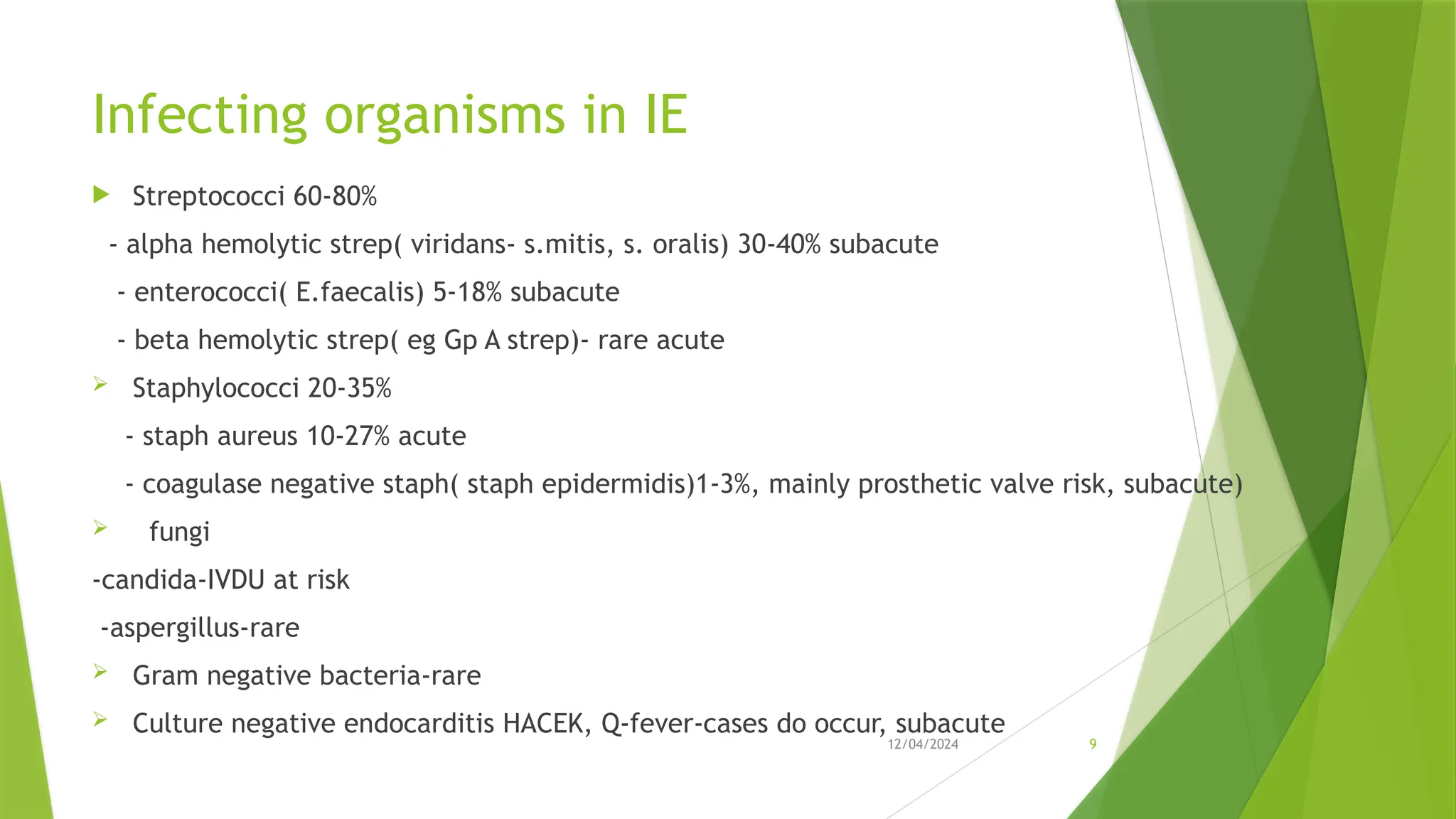
Infecting organisms in IE
 Streptococci 60-80%
- alpha hemolytic strep( viridans- s.mitis, s. oralis) 30-40% subacute
- enterococci( E.faecalis) 5-18% subacute
- beta hemolytic strep( eg Gp A strep)- rare acute
 Staphylococci 20-35%
- staph aureus 10-27% acute
- coagulase negative staph( staph epidermidis)1-3%, mainly prosthetic valve risk, subacute)
 fungi
-candida-IVDU at risk
-aspergillus-rare
 Gram negative bacteria-rare
 Culture negative endocarditis HACEK, Q-fever-cases do occur, subacute
12/04/2024 10
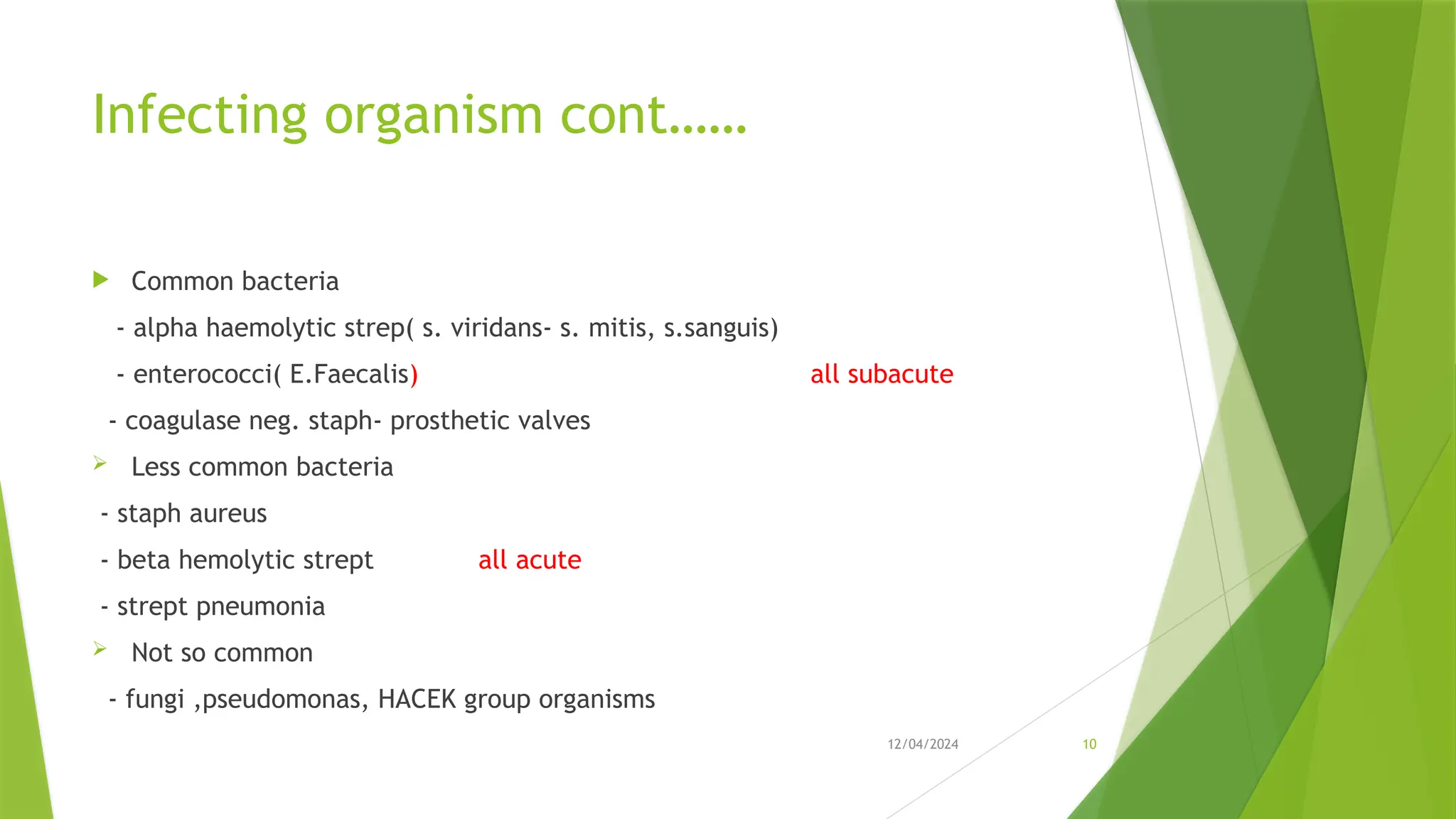
Infecting organism cont……
 Common bacteria
- alpha haemolytic strep( s. viridans- s. mitis, s.sanguis)
- enterococci( E.Faecalis) all subacute
- coagulase neg. staph- prosthetic valves
 Less common bacteria
- staph aureus
- beta hemolytic strept all acute
- strept pneumonia
 Not so common
- fungi ,pseudomonas, HACEK group organisms
12/04/2024 11
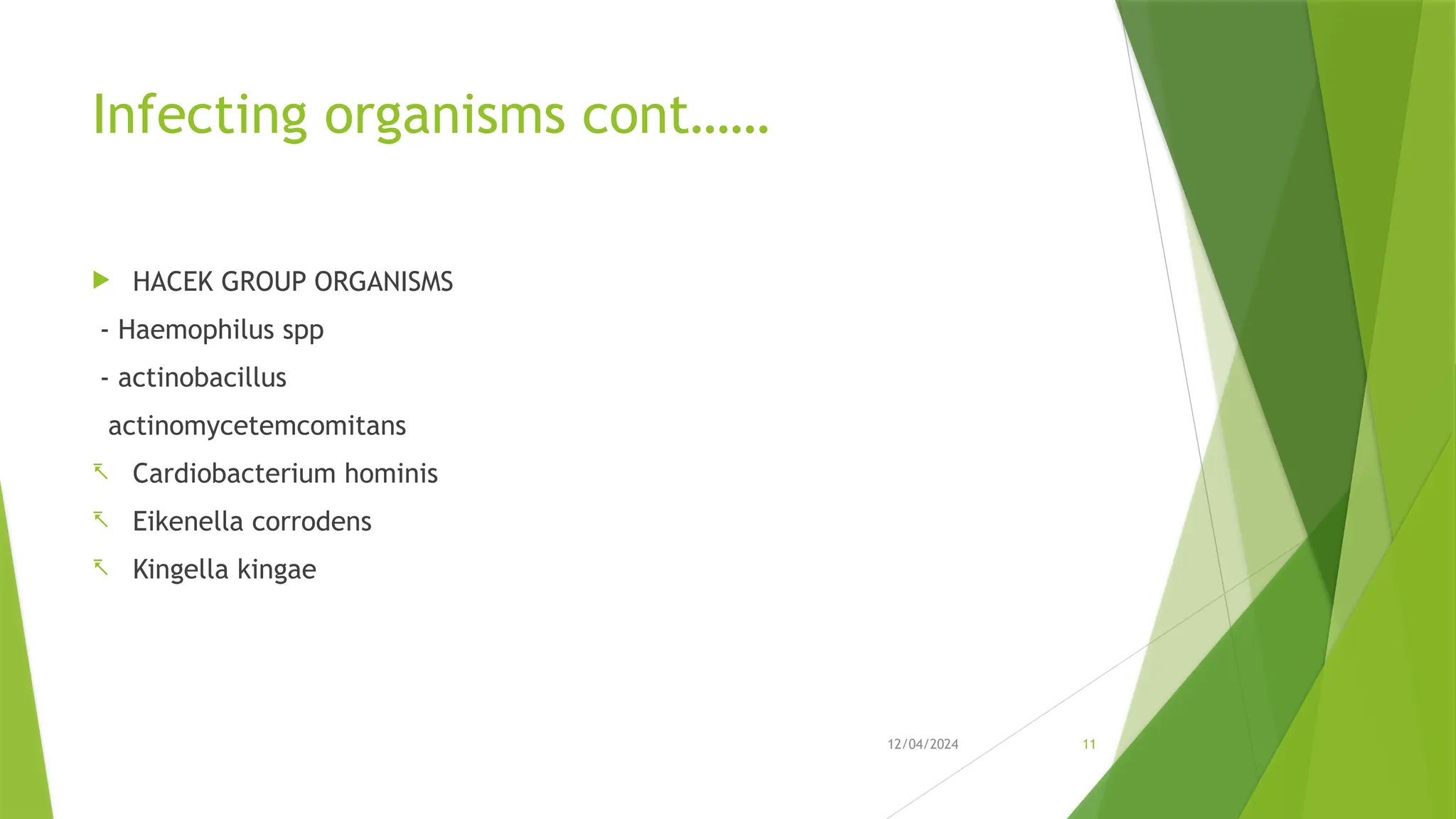
Infecting organisms cont……
 HACEK GROUP ORGANISMS
- Haemophilus spp
- actinobacillus
actinomycetemcomitans
- Cardiobacterium hominis
- Eikenella corrodens
- Kingella kingae
12/04/2024 12
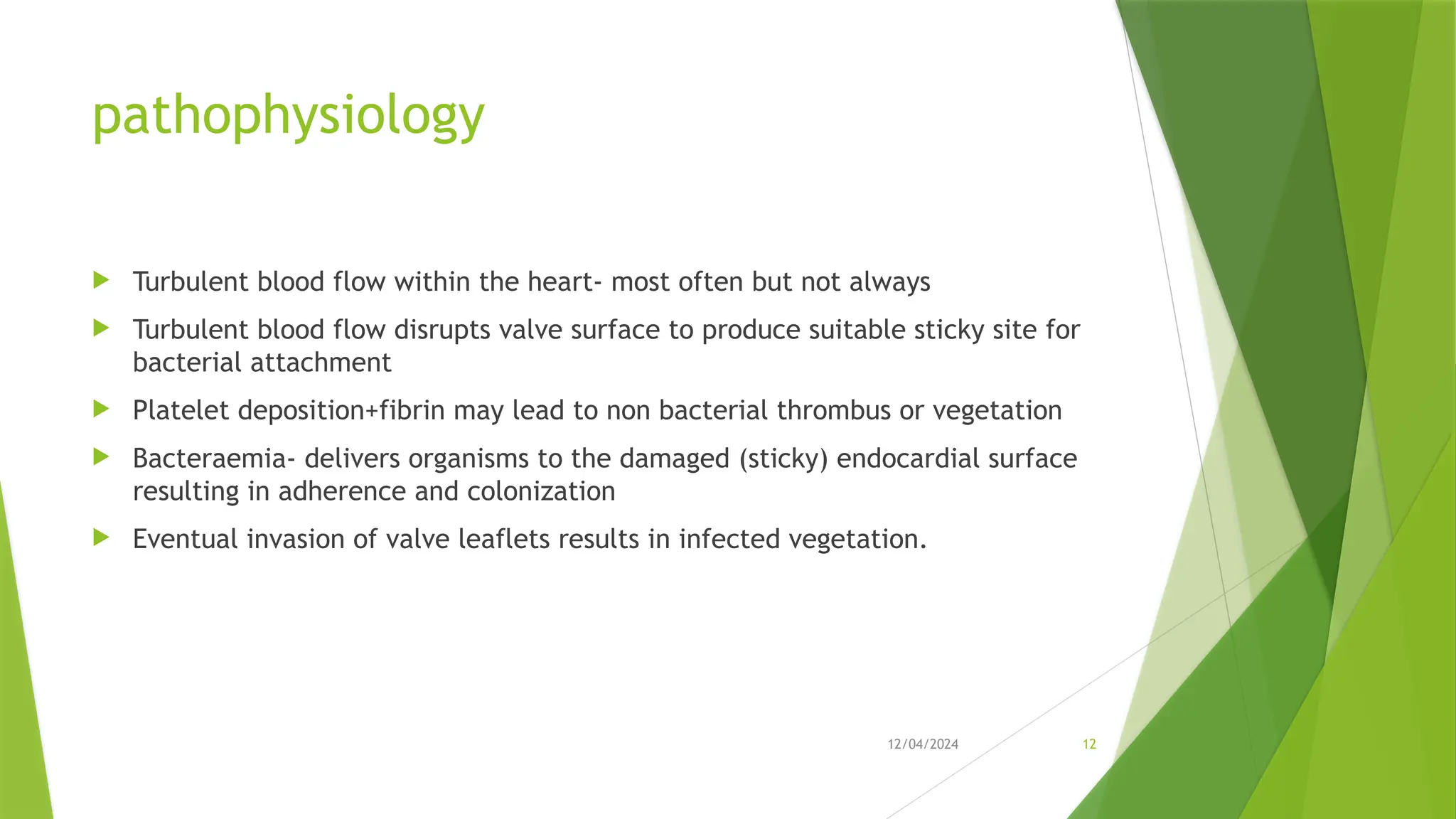
pathophysiology
 Turbulent blood flow within the heart- most often but not always
 Turbulent blood flow disrupts valve surface to produce suitable sticky site for
bacterial attachment
 Platelet deposition+fibrin may lead to non bacterial thrombus or vegetation
 Bacteraemia- delivers organisms to the damaged (sticky) endocardial surface
resulting in adherence and colonization
 Eventual invasion of valve leaflets results in infected vegetation.
12/04/2024 13
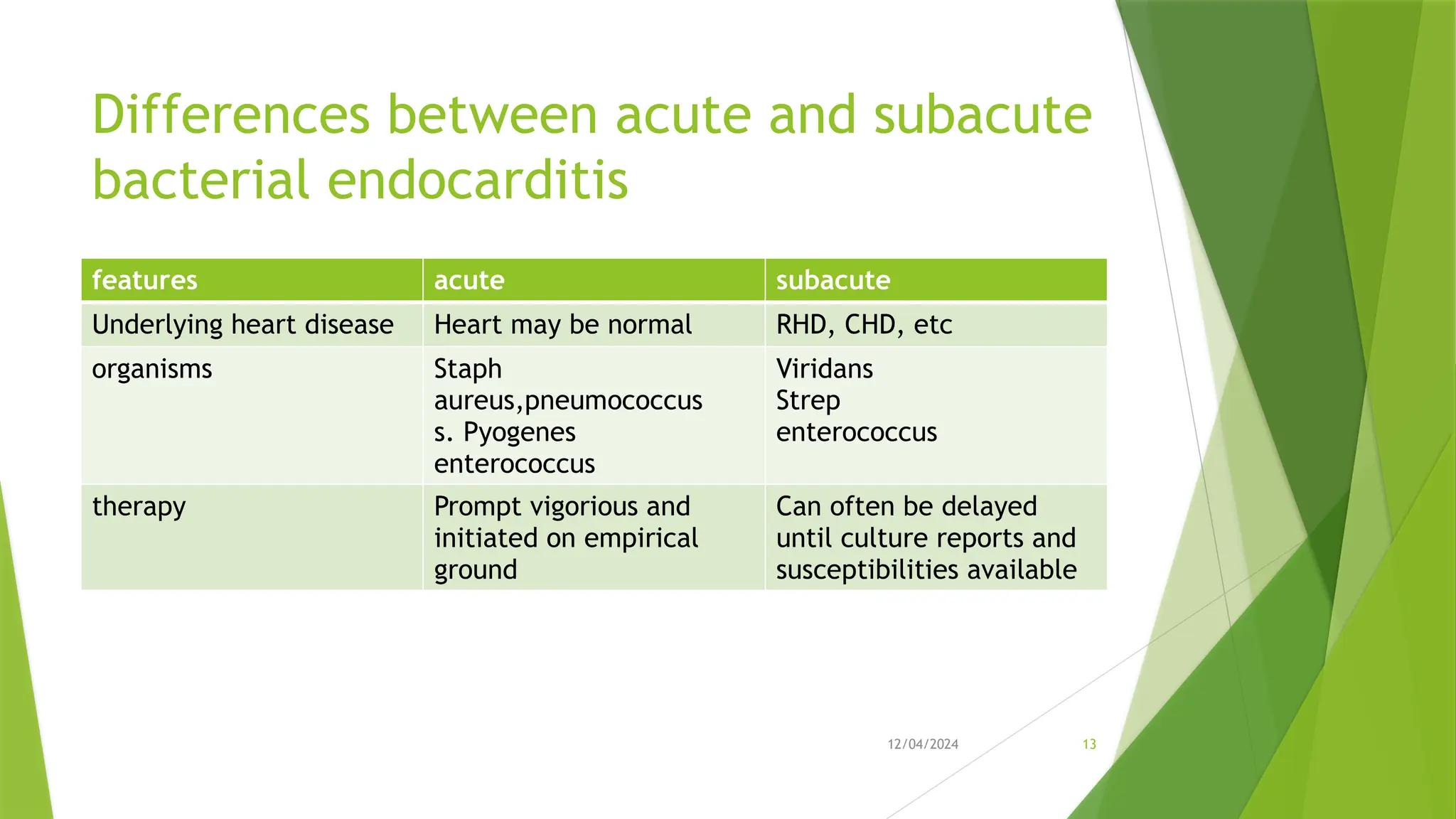
Differences between acute and subacute
bacterial endocarditis
features acute subacute
Underlying heart disease Heart may be normal RHD, CHD, etc
organisms Staph
aureus,pneumococcus
s. Pyogenes
enterococcus
Viridans
Strep
enterococcus
therapy Prompt vigorious and
initiated on empirical
ground
Can often be delayed
until culture reports and
susceptibilities available
12/04/2024 14
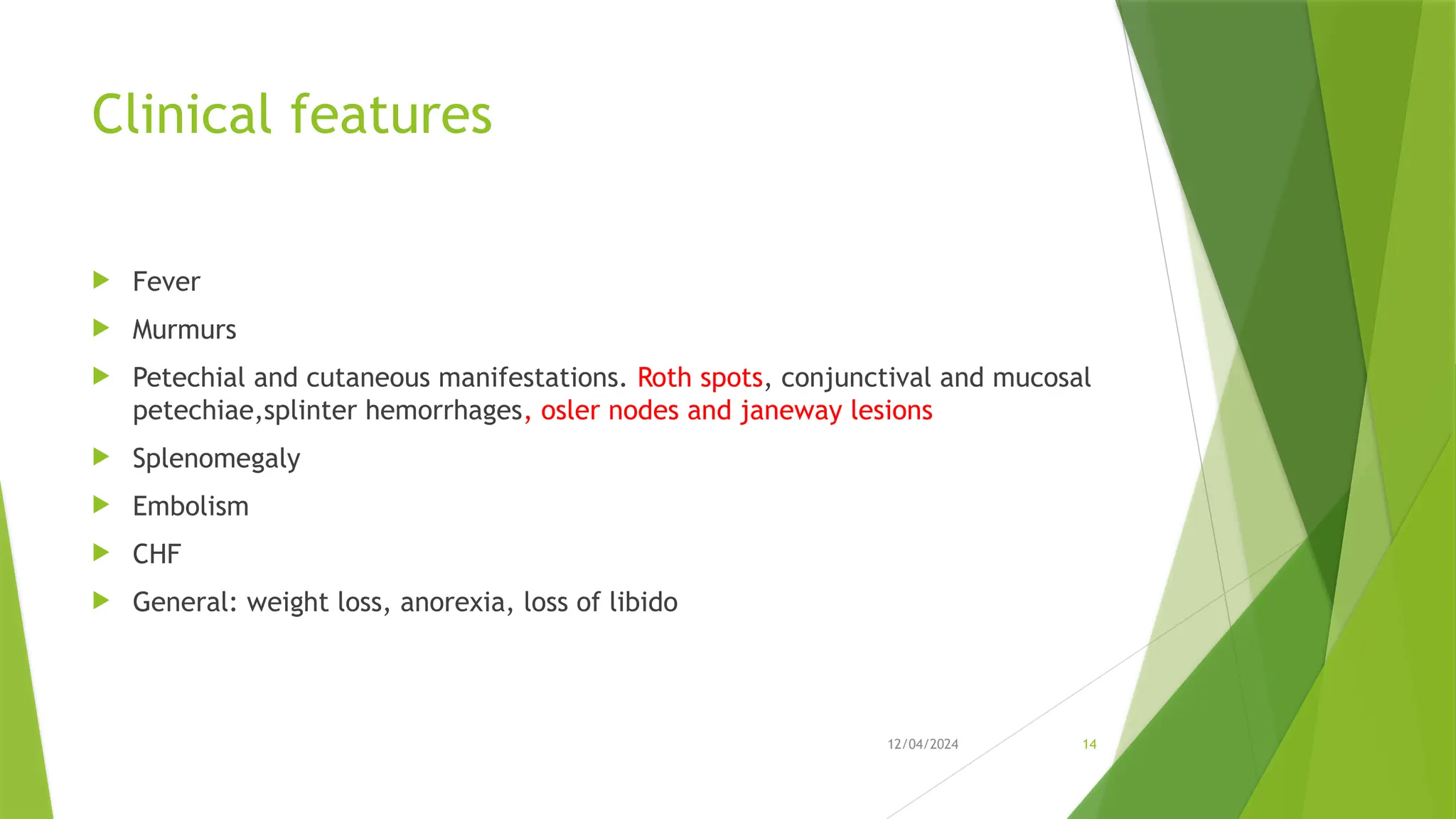
Clinical features
 Fever
 Murmurs
 Petechial and cutaneous manifestations. Roth spots, conjunctival and mucosal
petechiae,splinter hemorrhages, osler nodes and janeway lesions
 Splenomegaly
 Embolism
 CHF
 General: weight loss, anorexia, loss of libido
12/04/2024 15
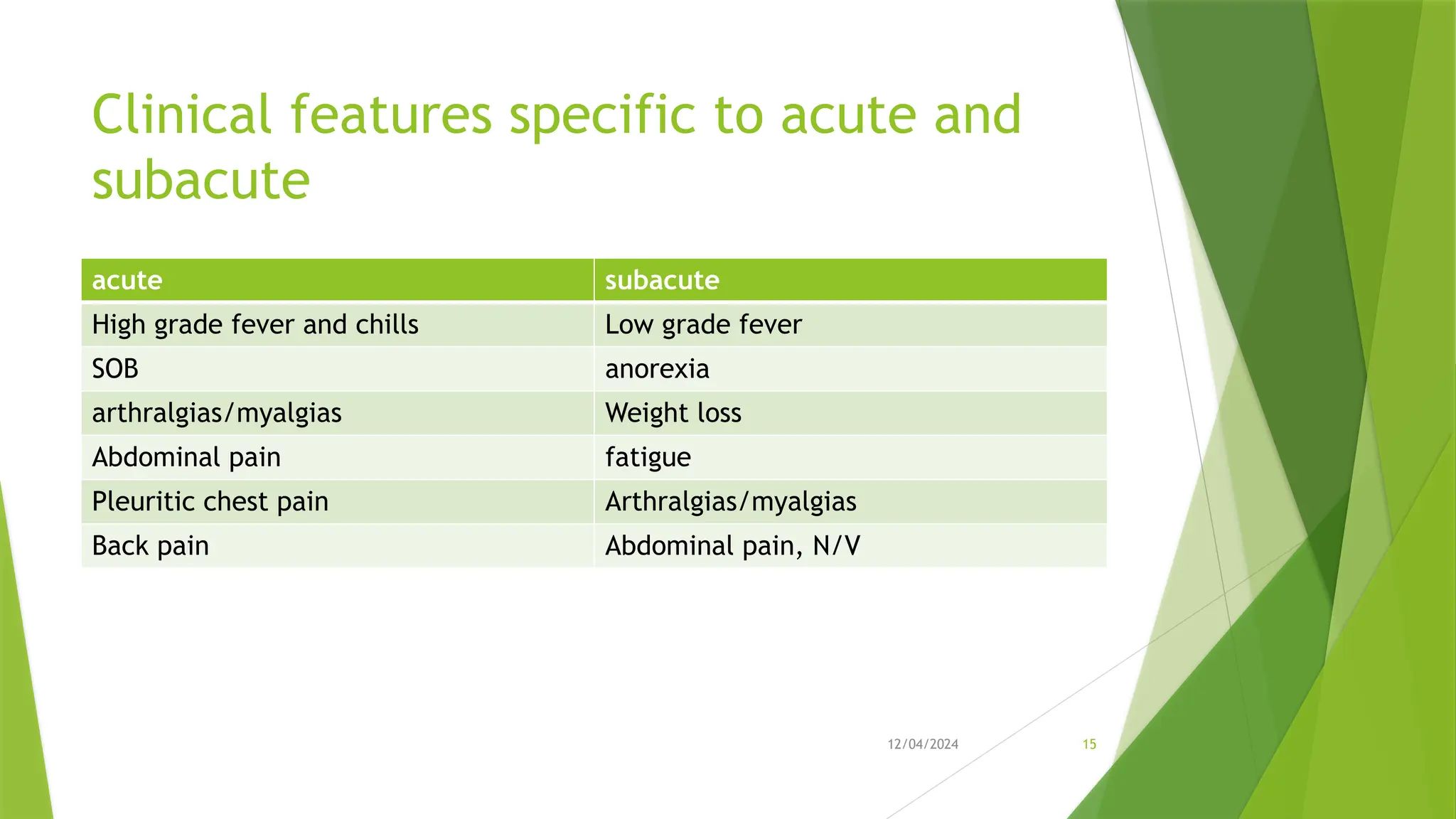
Clinical features specific to acute and
subacute
acute subacute
High grade fever and chills Low grade fever
SOB anorexia
arthralgias/myalgias Weight loss
Abdominal pain fatigue
Pleuritic chest pain Arthralgias/myalgias
Back pain Abdominal pain, N/V
12/04/2024 16
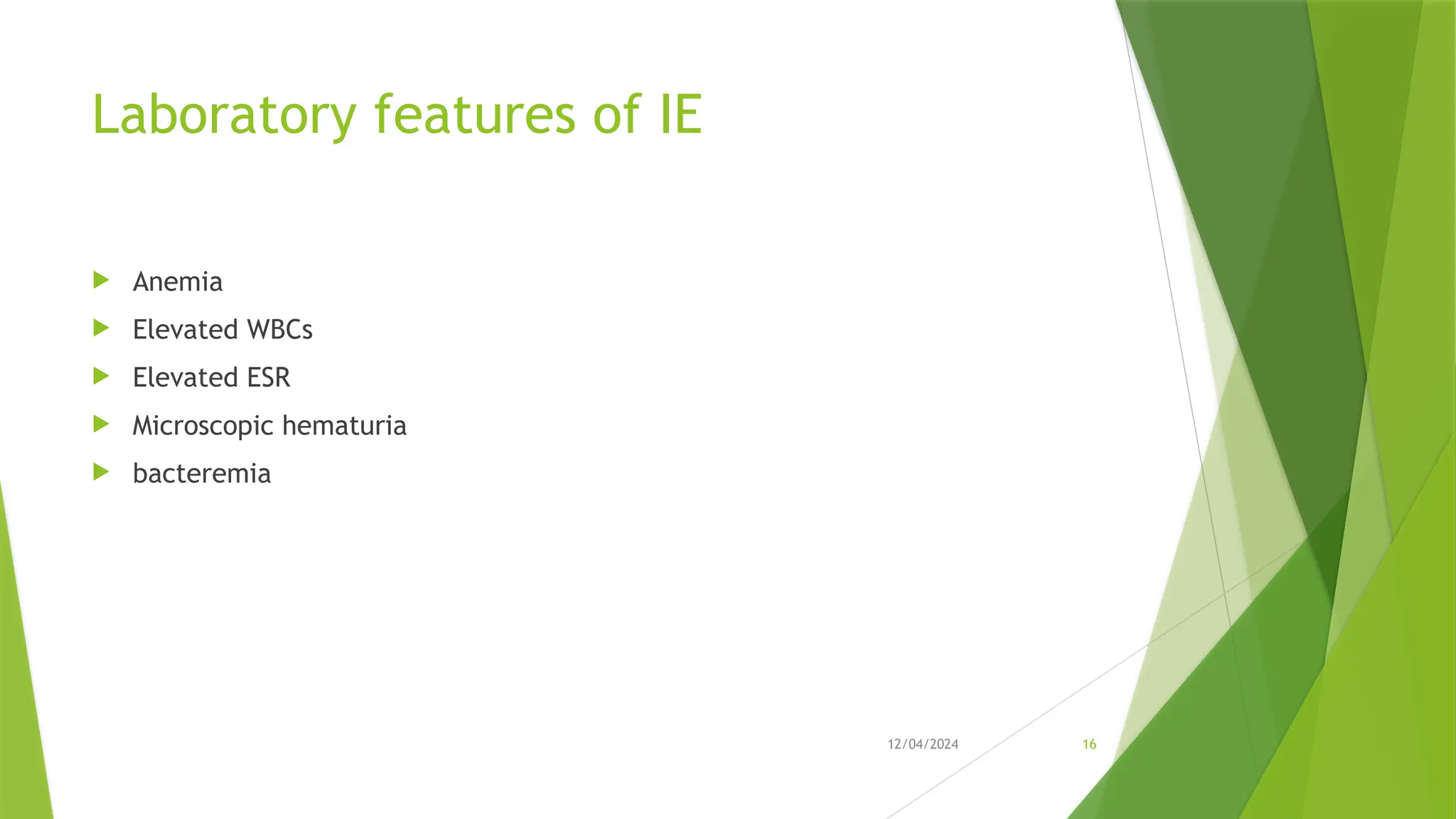
Laboratory features of IE
 Anemia
 Elevated WBCs
 Elevated ESR
 Microscopic hematuria
 bacteremia
12/04/2024 17
Lab……….
BLOOD CULTURES REMAIN A CORNER STONE OF THE DIAGNOSIS OF IE CASES AND
SHOULD BE TAKEN PRIOR TO STARTING ANTIBIOTICS IN ALL CASES
Minimum of three blood cultures( ideally spread over 24hours) from three
separate venipuncture sites
12/04/2024 18
Additional tests
 CBC
 Complement levels(c3,c4)
 RF
 Urinalysis
12/04/2024 19
Imaging
 CXR- multiple focal infilterates and calcification of heart valves
 ECG- look for evidence of ischaemia,arrhythmias
 echocardiography
12/04/2024 20
Indications for echocardiography
 Transthoracic echocardiography( TTE)
- 1st
.line if suspected IE
- native valves
 Trans esophageal echocardiography( TEE)
- prosthetic valve
- intracardiac complications
- inadequate TTE
12/04/2024 21
Treatment
 Parenteral antibiotics- high serum concentration and prolonged treatment to
kill dormant bacteria clustered in vegetation, at least 4-6weeks
 Surgery for intracardiac complications/paravalve abscess
12/04/2024 22
complications
 Embolic
 Local spread of infection
 Metastatic spread of infection
 Formation of immune complexes
12/04/2024 23
THANKS FOR LISTENING

INFECTIVE ENDOCARDITIS. Endocarditis is a disease condition that affect the one of the layer of the heart which is the endocardium.

  • 1.
    12/04/2024 1 INFECTIVE ENDOCARDITIS BY: DR.K.S.K JUSU DEPARTMENT OF INTERNAL MEDICINE MAKENI SCHOOL OF CLINICAL SCIENCES
  • 2.
    12/04/2024 2 Definition ofIE  Serious infection of the endocardium of the heart  Particularly the heart vavle associated with high degree of illness and death  Generally associated with altered and abnormal heart architecture, in combination with exposure to bacteria through trauma and potentially high risk activities involving transient bacteraemia.
  • 3.
    12/04/2024 3 Classification ofIE  Native valve IE  Prosthetic valve IE  Intravenous drug abuse IE  Nosocomial IE
  • 4.
    12/04/2024 4 Prosthetic valveendocarditis( PVE)  10-30% 0f all cases in developed nations  Early PVE occurs within 60days . Nosocomial( s. epidermidis predominate)  Late PVE occurs after 60days . Community( same organisms as NVE)
  • 5.
    12/04/2024 5 Pathology……..  NVEinfection is largely confined to leaflets  PVE infection commonly extends beyond valve ring eg septal abscesses and prosthetic dehiscence  Invasive infection more common in aortic position and if onset is early
  • 6.
    12/04/2024 6 Classification cont……… Acute - toxic presentation - progressive valve distruction - metastatic infection developing in days to weeks - commonly cause by staph. Aureus  Subacute - Mild toxicity - Presentation over weeks to months - Rarely lead to metastatic infection - Most commonly by strep. Viridan or enterococcus
  • 7.
    12/04/2024 7 Risk factorsof IE  Dental manipulation  Dental disease  Brushing teeth  Extracardiac infection  Instrumentation ( urinary tract, iv infusion, GI tract)  Cardiac surgery  Iv drug use  Rheumatic heart disease  Congenital heart disease
  • 8.
    12/04/2024 8 Risk factorscont…..  RHD  Mitral site more common in women and aortic site in men  Congenital heart disease, 10-20% in young adults and 8% in older adults, common with PDA, VSD,AORTIC valve  Iv drug abuse, high tendency to involve right sided valves distribution in clinical series -46-78% tricuspid -24-32% mitral -8-19% aortic Staph aureus predominant organism
  • 9.
    12/04/2024 9 Infecting organismsin IE  Streptococci 60-80% - alpha hemolytic strep( viridans- s.mitis, s. oralis) 30-40% subacute - enterococci( E.faecalis) 5-18% subacute - beta hemolytic strep( eg Gp A strep)- rare acute  Staphylococci 20-35% - staph aureus 10-27% acute - coagulase negative staph( staph epidermidis)1-3%, mainly prosthetic valve risk, subacute)  fungi -candida-IVDU at risk -aspergillus-rare  Gram negative bacteria-rare  Culture negative endocarditis HACEK, Q-fever-cases do occur, subacute
  • 10.
    12/04/2024 10 Infecting organismcont……  Common bacteria - alpha haemolytic strep( s. viridans- s. mitis, s.sanguis) - enterococci( E.Faecalis) all subacute - coagulase neg. staph- prosthetic valves  Less common bacteria - staph aureus - beta hemolytic strept all acute - strept pneumonia  Not so common - fungi ,pseudomonas, HACEK group organisms
  • 11.
    12/04/2024 11 Infecting organismscont……  HACEK GROUP ORGANISMS - Haemophilus spp - actinobacillus actinomycetemcomitans - Cardiobacterium hominis - Eikenella corrodens - Kingella kingae
  • 12.
    12/04/2024 12 pathophysiology  Turbulentblood flow within the heart- most often but not always  Turbulent blood flow disrupts valve surface to produce suitable sticky site for bacterial attachment  Platelet deposition+fibrin may lead to non bacterial thrombus or vegetation  Bacteraemia- delivers organisms to the damaged (sticky) endocardial surface resulting in adherence and colonization  Eventual invasion of valve leaflets results in infected vegetation.
  • 13.
    12/04/2024 13 Differences betweenacute and subacute bacterial endocarditis features acute subacute Underlying heart disease Heart may be normal RHD, CHD, etc organisms Staph aureus,pneumococcus s. Pyogenes enterococcus Viridans Strep enterococcus therapy Prompt vigorious and initiated on empirical ground Can often be delayed until culture reports and susceptibilities available
  • 14.
    12/04/2024 14 Clinical features Fever  Murmurs  Petechial and cutaneous manifestations. Roth spots, conjunctival and mucosal petechiae,splinter hemorrhages, osler nodes and janeway lesions  Splenomegaly  Embolism  CHF  General: weight loss, anorexia, loss of libido
  • 15.
    12/04/2024 15 Clinical featuresspecific to acute and subacute acute subacute High grade fever and chills Low grade fever SOB anorexia arthralgias/myalgias Weight loss Abdominal pain fatigue Pleuritic chest pain Arthralgias/myalgias Back pain Abdominal pain, N/V
  • 16.
    12/04/2024 16 Laboratory featuresof IE  Anemia  Elevated WBCs  Elevated ESR  Microscopic hematuria  bacteremia
  • 17.
    12/04/2024 17 Lab………. BLOOD CULTURESREMAIN A CORNER STONE OF THE DIAGNOSIS OF IE CASES AND SHOULD BE TAKEN PRIOR TO STARTING ANTIBIOTICS IN ALL CASES Minimum of three blood cultures( ideally spread over 24hours) from three separate venipuncture sites
  • 18.
    12/04/2024 18 Additional tests CBC  Complement levels(c3,c4)  RF  Urinalysis
  • 19.
    12/04/2024 19 Imaging  CXR-multiple focal infilterates and calcification of heart valves  ECG- look for evidence of ischaemia,arrhythmias  echocardiography
  • 20.
    12/04/2024 20 Indications forechocardiography  Transthoracic echocardiography( TTE) - 1st .line if suspected IE - native valves  Trans esophageal echocardiography( TEE) - prosthetic valve - intracardiac complications - inadequate TTE
  • 21.
    12/04/2024 21 Treatment  Parenteralantibiotics- high serum concentration and prolonged treatment to kill dormant bacteria clustered in vegetation, at least 4-6weeks  Surgery for intracardiac complications/paravalve abscess
  • 22.
    12/04/2024 22 complications  Embolic Local spread of infection  Metastatic spread of infection  Formation of immune complexes
  • 23.