Diseases
Infectious and Noninfectious
Conditions
Agenda: Infectious and
Noninfectious Conditions
 Introduction to Disease (infectious/noninfectious;
acute/chronic; sanitation and medical care)
 U.S. and Global Concerns (resources, poverty,
education, economics, sanitation, medical care)
 Acquired and Natural Immunity
 Risk Factors and Responsibilities
 Dept. of Health and Human Services
 Prevention/Treatment
 When should you see the doctor?
 Patient Rights – Anonymous vs. Confidential
 Concerns Today – Diabesity, Bioterriorism
Introduction
 History of Diseases in the United States
 Comparison of U.S. Diseases with other
countries
 Evolution of Epidemiology
 Changes in Sanitation and Medical Care
 Technological advances – our first hospital,
testing procedure for Cardiovascular
Disease, Cancer, cholesterol, diabetes
Immunity
 Define Immunity
 Acquired versus natural immunity
 Autoimmune diseases
 Compensatory mechanisms
Risk Factors for Disease
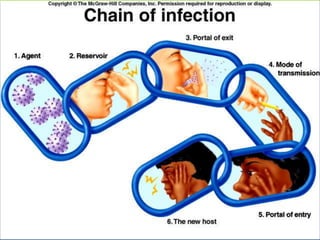
 If Disease is Contagious…what is the mode
of transmission (direct vs. indirect contact)?
 If Disease is Not Contagious…what are the
risk factors (lifestyle, environment, genetics,
individual characteristics)?
 What has research discovered about
disease?
 Acute versus chronic disease
Assessing Your Disease Risks
 Risk Factors You Can’t Control
 Heredity
 Aging
 Environmental conditions
 Organism resistance
Assessing Your Disease Risks
 Risk Factors You Can Control (continued)
 Stress
 Nutrition
 Physical activity
 Sleep
 Drug use
 Personal hygiene
The Pathogens: Routes of
Transmission
 Transmission
 Direct contact
 Indirect contact
 Auto-inoculate yourself
 Airborne contacts
 Food-borne pathogens
 Animal-borne pathogens
 Interspecies pathogens
 Water-borne diseases
The Pathogens: Routes of
Transmission
 Bacteria
 Single-celled organisms
 Staphylococcal infections
 Streptococcal infections
 Pneumonia
 Legionnaire’s disease
 Tuberculosis
 Periodontal disease
The Pathogens: Routes of
Transmission
 Viruses
 Smallest pathogens
 Protein structures
 Common cold
 Influenza
 Infectious Mononucleosis
 Hepatitis (HAV, HBV, HCV)
 Measles
The Pathogens: Routes of
Transmission
 Other Pathogens
 Fungi
 Protozoa
 Parasitic worms
 Prions
Responsibilities with Disease
 Is the disease contagious? If it is - how do
we prevent the spread? Quarantine? Modify
lifestyle or environment? Genetic testing?
Therapeutic measures?
 If the disease is not contagious – how does
an individual control the disease with
medication or food or other means?
 Does this individual have any restrictions?
Driving? Pregnancy? Sports? Travel?
Dept. of Health & Human
Services
 What you may not know and what you should
know.
 Your doctor can (and sometimes is required
to by law) report your condition to the Dept. of
Health and Human Services and the DMV
 Federal, State and Local Laws vary
Prevention/Treatment of
Disease
 Infectious Conditions:
1. Identify pathogen
2. Identify mode of
transmission
3. Identify behaviors
responsible for the
spread of the
pathogen
 Noninfectious
Conditions:
1. Risk factors
2. Prevention
3. Treatment
4. Therapy (doctor visits,
physical therapy,
psychological care)
When is it time to see a
doctor?
 Annual check-up –
Routine visit to your
primary care physician
or specialist, dental visit
every 6 months for
cleaning and check-up,
eye doctor, prenatal or
postnatal visits,
dermatologist,
cardiologist, oncologist
 New condition – or an
awareness of an
existing condition (i.e.
depression, alcoholism,
yeast infection,
changes in a mole,
chronic or persistent
pain or discomfort
Patient – Doctor Relationship
 What are your patient rights?
 Are you seeing a doctor on a consultation
basis or to receive a prescription? This may
change your rights.
 Ask your doctor what he/she has to report to
local, state and federal authorities
Health Concerns Today
 Lifestyle Diseases (cardiovascular, cancer,
diabesity)
 Psychosocial Issues (depression, road rage,
work place violence, domestic violence,
discrimination towards ethnicity,
homosexuality, right to choose)
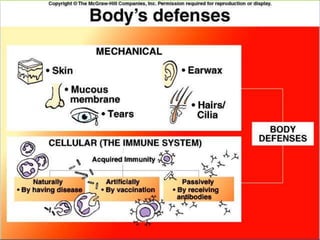
Your Body’s Defenses:
Keeping You Well
 Physical and Chemical Defenses
 Skin
 Enzymes
 Body temperature
 Linings of the body
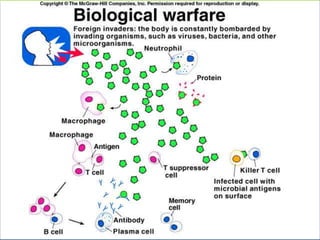
Your Body’s Defenses:
Keeping You Well
 The Immune System: Your Body Fights Back
 Immunity
 Antigens
 Antibodies
 Immunoglobulins
 Humoral immune response
 Cell-mediated immunity
 Lymphocytes
Your Body’s Defenses:
Keeping You Well
 Fever
 Rises in temperature can be harmful if extreme
 High temperatures can destroy some disease causing
organisms
 Stimulates more white blood cell production
 Why is it important to allow a fever to
continue, if it isn’t extreme?
Your Body’s Defenses:
Keeping You Well
 Pain
 Response to either direct or referred pain
 Most often accompanied by inflammation
 Vaccine
 Vaccination and T- and B-cell memory
 Acquired immunity
 Natural immunity
Emerging and Resurgent
Diseases
 Tiny Microbes: Lethal Threats
 Mad Cow Disease (Bovine Spongiform Encephalitis)
 Dengue and Dengue Hemorrhagic Fever
 Ebola
 Cryptosporidium
 Escherichia coli 0157:H7
 Cholera
Emerging and Resurgent
Diseases
 Tiny Microbes: Lethal Threats (continued)
 Hantavirus
 Bioterrorism: The New Global Threat
 West Nile Virus
 SARS
 HIV/AIDS
Noninfectious Diseases
 Chronic Lung Diseases
 Dyspnea
 Chronic obstructive pulmonary diseases
(COPDs)
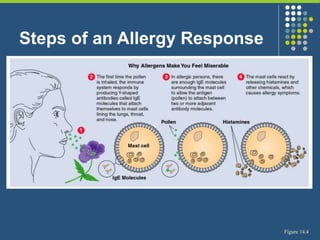
 Allergy-Induced Respiratory Problems
 Antigen or allergen
 Production of antibodies
 Hypersensitive reaction
 Release of histamines
Steps of an Allergy Response
Figure 14.4
Noninfectious Diseases Hay Fever
 Example of COPD
 Asthma
 Long-term chronic inflammatory disorder
 Blocked airflow to the lungs
 Air pollutants, particulates, smoke can trigger an
asthma attack
 Most common chronic disease of childhood
 #1 cause of hospitalization and absenteeism
Noninfectious Diseases
 Emphysema
 Gradual destruction of alveoli
 Difficult to exhale
 Victim struggles to take in air
 Chest cavity expands over time (barrel-chest)
Noninfectious Diseases
 Bronchitis
 Inflammation of bronchial tubes
 Reduced air flow from the lungs
 Acute bronchitis – 95% of cases are viral
 Chronic bronchitis has a mucous laden cough
 Cigarette smoking is often the cause of chronic
bronchitis
Noninfectious Diseases
 Sleep Apnea
 Affects 5% of the general population
 Periodic episodes of breathing cessation for 10
seconds or longer
 Causes restless sleep, high blood pressure,
sleepiness during waking hours, CVD
 Prevention: reduce alcohol use, change sleeping
position, schedule, medicinal interventions
Neurological Disorders
 Headaches
 Tension headaches
 Migraine headaches
 Secondary headaches
Neurological Disorders
 Seizure Disorders
 Epilepsy
 1% of Americans are epileptic
 Types of seizures:
 Grand mal
 Petit mal
 Psychomotor
 Jacksonian
Gender-Related Disorders
 Premenstrual Syndrome (PMS)
 Symptoms vary
 Plausible cause: hormones
Gender-Related Disorders
 Endometriosis
 Tends to effect women age 20-40
 Symptoms:
 Severe cramping
 Irregular periods
 Fatigue
 Painful intercourse
 Characterized by abnormal growth and development
of endometrial tissue
Digestion-Related Disorders
 Diabetes
 Pancreas’ role
 Diabetes mellitus
 Hyperglycemia
 Type I
 Type II
 Gestational diabetes
 Risk factors
 Controlling diabetes
Digestion-Related Disorders
 Peptic Ulcers
 Lesion or wound in body tissue
 Chronic
 Occur in the stomach lining or duodenum
 Helicobacter pylori
Musculoskeletal Diseases
 Arthritis
 Strikes 1 in 7
 Osteoarthritis
 Rheumatoid arthritis
 Fibromyalgia
 Chronic, painful
 5-6% affected
 Array of symptoms
 Difficult to diagnose
Musculoskeletal Diseases
 Systemic Lupus Erythematosus (SLE)
 Immune system attacks the body
 Destroys or injures organs
 Low Back Pain (LBP)
 80% will experience LBP
Musculoskeletal Diseases
 Chronic Fatigue Syndrome (CFS)
 Feeling tired all the time
 Possible psychological roots
 Repetitive Stress Injuries (RSIs)
 24% of work injuries
 Carpal tunnel most common
Make your first date…
 A Kaiser date!
Keys to Reducing STIs
Education
Early diagnosis
and treatment
Prevention
Do we effectively teach
sexuality in K-12 schools?
 Explain the human body to children in an honest
and informative approach.
 Explain the natural hormonal urges for sex, but
also stress the risks and responsibilities.
 Your children will undoubtedly observe your
ideology towards sex, relationships, religion and
any prejudice towards other groups
(homophobic, ethnic discrimination, sexual
orientation, etc.). We learn to love and
appreciate from our parents. This is an
awesome responsibility we far-reaching social
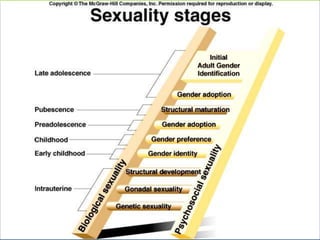
SEXUAL IDENTITY
 Sexual Identity
 Gonads
 Puberty
 Hypothalamus
 Pituitary Gland
 Secondary Sex
Characteristics
 Gender
 Gender Roles
 Gender Identity
 Gender Role
Stereotypes
 Androgyny
 Socialization
Secondary Sex Characteristics
 Males
 Low pitch voice, facial/body hair, muscular
development
 Females
 Increase breast and hip size, body/pubic hair
Gonads
 The reproductive organs (sex organs) in a
male (testes) or a female (ovaries).
Developed at 8 weeks of fetal life.
Puberty
 The period of sexual maturation. Sequence
of events leading to the development of the
secondary sexual characteristics and fertility.
Age of onset is 10-16 years old with the
hypothalamus, pituitary glands and gonads.
Hypothalamus
 Control center of brain which signals pituitary
gland with GnRH (gonadotropin-releasing
hormone). Initiates our fertility capability.
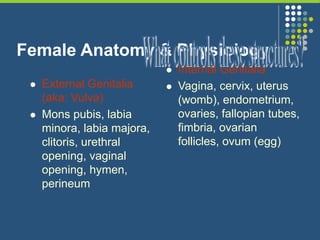
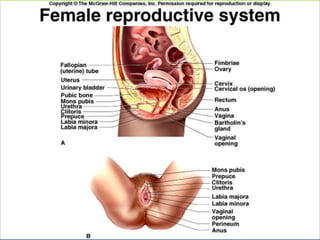
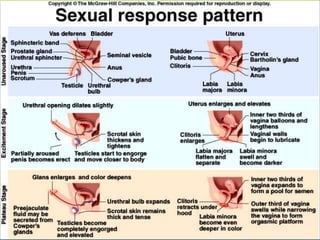
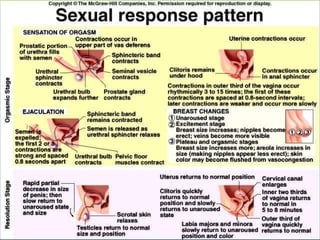
Female Anatomy & Physiology
 External Genitalia
(aka: Vulva)
 Mons pubis, labia
minora, labia majora,
clitoris, urethral
opening, vaginal
opening, hymen,
perineum
 Internal Genitalia
 Vagina, cervix, uterus
(womb), endometrium,
ovaries, fallopian tubes,
fimbria, ovarian
follicles, ovum (egg)
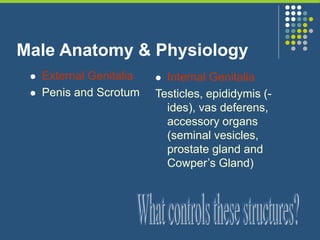
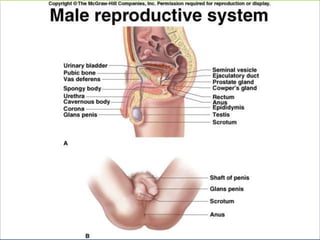
Male Anatomy & Physiology
 External Genitalia
 Penis and Scrotum
 Internal Genitalia
Testicles, epididymis (-
ides), vas deferens,
accessory organs
(seminal vesicles,
prostate gland and
Cowper’s Gland)
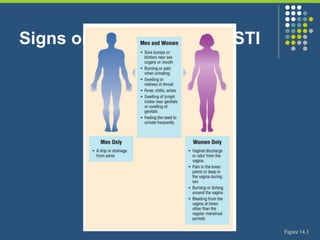
Signs or Symptoms of an STI
Figure 14.3
V. Sexual Orientation, Behaviors
and Dysfunctions
 Sexual Orientation
 Heterosexual, Homosexual, Bisexual
 Sexual Behavior
 Autoerotic behaviors, sexual fantasies, masturbation, erogenous zones,
cunnilingus, fellatio, anal intercourse, vaginal intercourse, oral sex, variant
sexual behavior, celibacy, homophobia, limerance
 Sexual Dysfunctions
 Inhibited sexual desire (ISD), sexual aversion disorder, erectile dysfunction
(impotence), premature ejaculation, retarded ejaculation, preorgasmic,
dyspareunia, vaginismus
VI. Sexually Transmitted
Infections
 Agenda:
1) Incidence versus Prevalence
2) Type of Pathogen – bacteria, virus, parasite, protozoa
3) Protective barriers
V. Sexually Transmitted Infections
Chlamydia
Gonorrhea
Syphilis
Pelvic inflammatory disease
Genital warts
Genital herpes
Hepatitis B
HIV/AIDS
Trichomoniasis
Candida
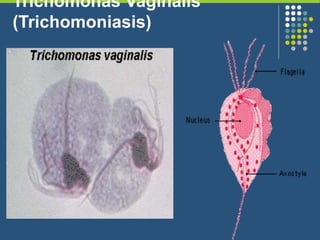
Trichomonas Vaginalis
(Trichomoniasis)
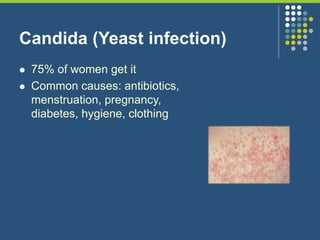
Candida (Yeast infection)
 75% of women get it
 Common causes: antibiotics,
menstruation, pregnancy,
diabetes, hygiene, clothing
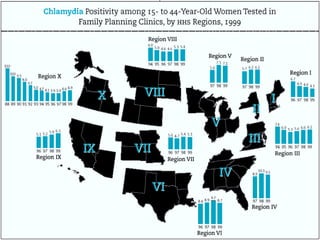
Chlamydia
 Pathogen: bacterial
 Prognosis: curable
 If not treated: infertility
 Scaring of the fallopian
tubes and possibly
pelvic inflammatory
disease
 Leading cause of
infertility among couples
 Women do not have any signs
or symptoms most the time –
Men generally do – so Men
tend to get treated – Women in
general contract infection
easier than men do to surface
area exposed.
 Treatment/Prevention
 The best type of prevention is
not having sex – however
when you are ready to have
sex – communication is very
important and a visit to the
doctor’s office for STD testing
Gonorrhea
 Incidence rose 9% in
1998
 Milky-white discharge in
men, painful urination
 Men – 80% have s/s
 Women – 80% don’t
have s/s
 Women – slimy yellow-
green discharge from
vagina or urethra
 Oral sex – throat infection
 Rectal sex
 Incidence correlated with
alcohol consumption
 Dual therapy with
Chlamydia
 Eye infections
Primary Syphilis
 Pathogen:
 Bacteria (Spirochete)
 Distinct stages
 Any organ may be involved
 Primary syphilis –
appearance of small painless
red pustule on skin or
mucous membrane 10 – 90
days after exposure – lesion
may appear anywhere on
body where contact with
pathogen occurred – most
often the anogenital region
 This painless red pustule
quickly erodes forming a
painless, bloodless ulcer,
called a chancre, exuding
fluid filled with spirochetes
– heals spontaneously
within 10-40 days.
 The secondary stage –
occurs 2 months later –
spirochetes have increased
in number and spread
throughout the body
Secondary Syphilis
 S/S:
 General malaise
 Anorexia nervosa
 Nausea/fever
 Headache/alopecia
 Bone and joint pain
 Rash that does not itch
 Flat white sores in mouth and throat
 Highly contagious at this stage – can be spread
by kissing
Tertiary Syphilis
 Appearance of soft rubbery tumors called gummas that
ulcerate and heal by scaring
 Gummas may develop anywhere on the body – eyes,
lungs, liver, stomach, or reproductive organs
 Tertiary syphilis may be painless or may be very painful
 Tissues and structures of the body may be damaged –
including the CNS, myocardium, valves of the heart may be
damaged or destroyed
 The culminating effects may be mental insanity and/or
severe physical disability and premature death
Pelvic Inflammatory Disease
 Signs & Symptoms  Treatment/Prevention
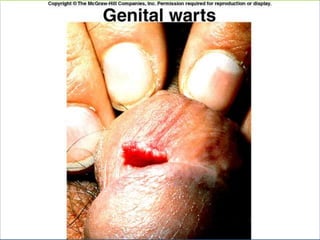
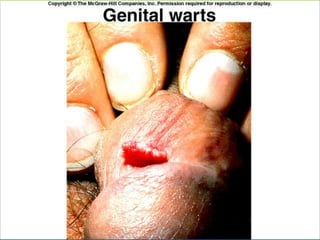
Genital Warts
 HPV pathogen
 Pinkish-white lesions
 Raised clusters on
penis or scrotum or
labia, cervix or around
anus
 In women this can
cause precancerous
changes on cervix
 Treatment/Prevention
 Gels, cryotherapy,
surgical removal
 Warts need not be
present to infect partner
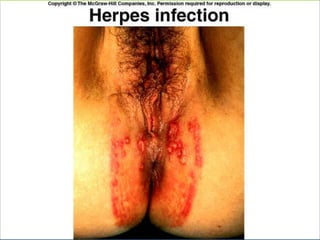
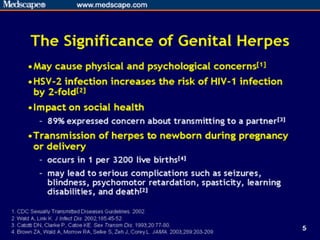
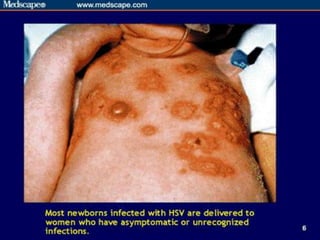
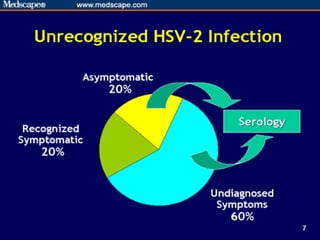
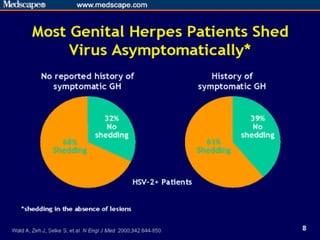
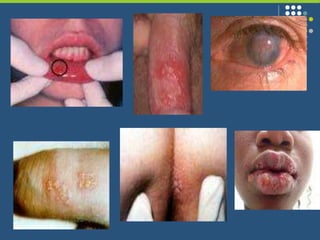
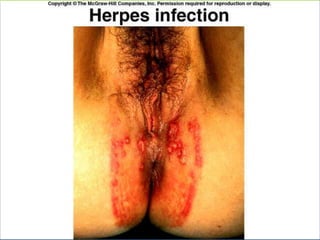
Herpes (simplex 1 & 2)
 Signs & Symptoms  Treatment/Prevention
AIDS / HIV
 Most devastating infectious disease in the past 80 years
 Since 1999 58.6% of reported cases have died
 Annual cost $20,000 per person
 Annually by public & private $13 billion
 AIDS is caused by a virus (HIV) that attacks the helper T cells
of the immune system
 People lose the ability to fight off infections
 Opportunistic infections – Pneumocystis carinii pneumonia,
Kaposi’s sarcoma, toxoplasmosis within the brain, wasting
syndrome, cervical cancer, recurrent TB
Human Immunodeficiency Virus (HIV)
Chronic disease that progressively damages
the body’s immune system
Asymptomatic period ranges from 2 to 20
years
virus can be passed on to others during this time
AIDS is diagnosed when number of CD4 T
cells (helper T cells) falls to certain level or
marker conditions appear
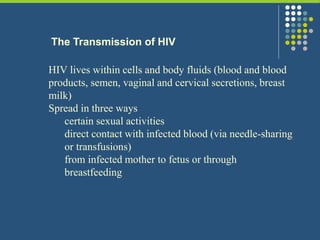
The Transmission of HIV
HIV lives within cells and body fluids (blood and blood
products, semen, vaginal and cervical secretions, breast
milk)
Spread in three ways
certain sexual activities
direct contact with infected blood (via needle-sharing
or transfusions)
from infected mother to fetus or through
breastfeeding
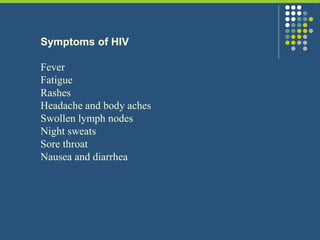
Symptoms of HIV
Fever
Fatigue
Rashes
Headache and body aches
Swollen lymph nodes
Night sweats
Sore throat
Nausea and diarrhea
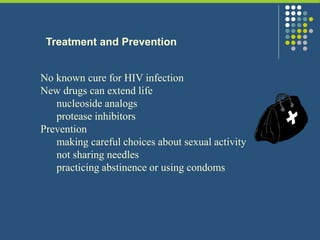
Treatment and Prevention
No known cure for HIV infection
New drugs can extend life
nucleoside analogs
protease inhibitors
Prevention
making careful choices about sexual activity
not sharing needles
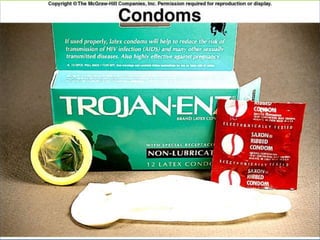
practicing abstinence or using condoms
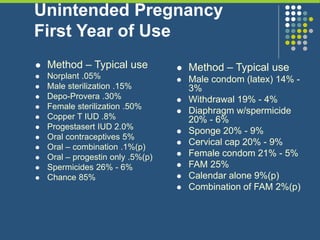
Unintended Pregnancy
First Year of Use
 Method – Typical use
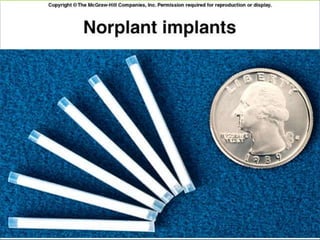
 Norplant .05%
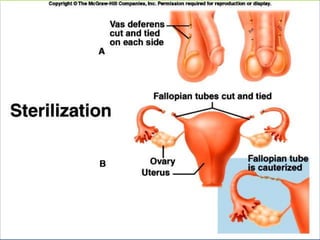
 Male sterilization .15%
 Depo-Provera .30%
 Female sterilization .50%
 Copper T IUD .8%
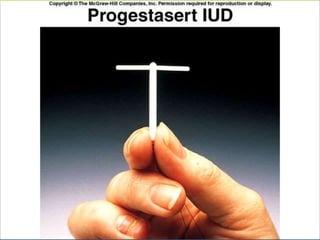
 Progestasert IUD 2.0%
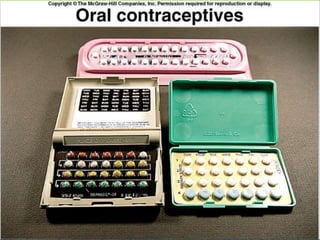
 Oral contraceptives 5%
 Oral – combination .1%(p)
 Oral – progestin only .5%(p)
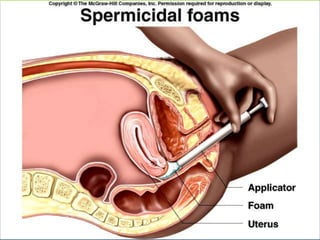
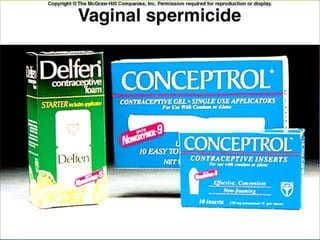
 Spermicides 26% - 6%
 Chance 85%
 Method – Typical use
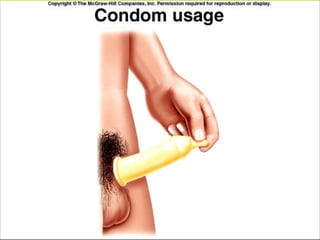
 Male condom (latex) 14% -
3%
 Withdrawal 19% - 4%
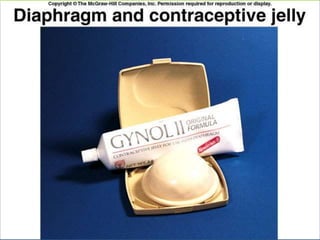
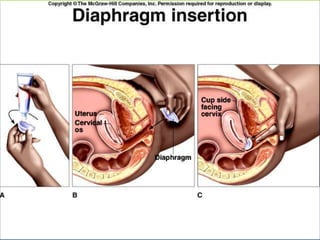
 Diaphragm w/spermicide
20% - 6%
 Sponge 20% - 9%
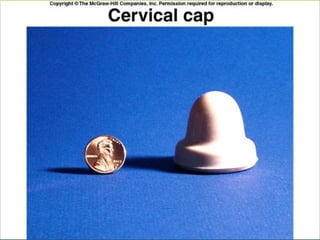
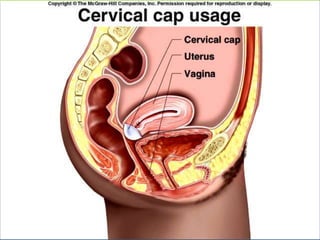
 Cervical cap 20% - 9%
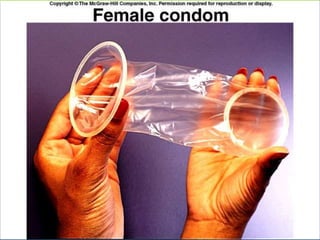
 Female condom 21% - 5%
 FAM 25%
 Calendar alone 9%(p)
 Combination of FAM 2%(p)
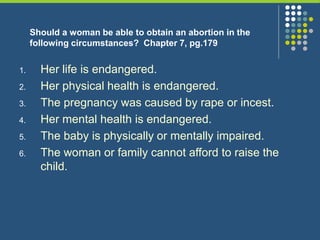
Should a woman be able to obtain an abortion in the
following circumstances? Chapter 7, pg.179
1. Her life is endangered.
2. Her physical health is endangered.
3. The pregnancy was caused by rape or incest.
4. Her mental health is endangered.
5. The baby is physically or mentally impaired.
6. The woman or family cannot afford to raise the
child.
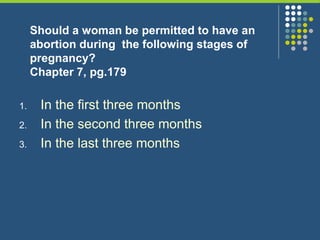
Should a woman be permitted to have an
abortion during the following stages of
pregnancy?
Chapter 7, pg.179
1. In the first three months
2. In the second three months
3. In the last three months
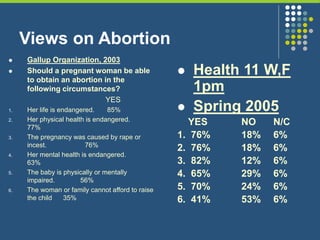
Views on Abortion
 Gallup Organization, 2003
 Should a pregnant woman be able
to obtain an abortion in the
following circumstances?
YES
1. Her life is endangered. 85%
2. Her physical health is endangered.
77%
3. The pregnancy was caused by rape or
incest. 76%
4. Her mental health is endangered.
63%
5. The baby is physically or mentally
impaired. 56%
6. The woman or family cannot afford to raise
the child 35%
 Health 11 W,F
1pm
 Spring 2005
YES NO N/C
1. 76% 18% 6%
2. 76% 18% 6%
3. 82% 12% 6%
4. 65% 29% 6%
5. 70% 24% 6%
6. 41% 53% 6%
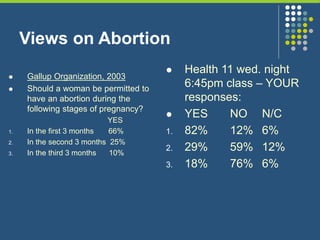
Views on Abortion
 Gallup Organization, 2003
 Should a woman be permitted to
have an abortion during the
following stages of pregnancy?
YES
1. In the first 3 months 66%
2. In the second 3 months 25%
3. In the third 3 months 10%
 Health 11 wed. night
6:45pm class – YOUR
responses:
 YES NO N/C
1. 82% 12% 6%
2. 29% 59% 12%
3. 18% 76% 6%
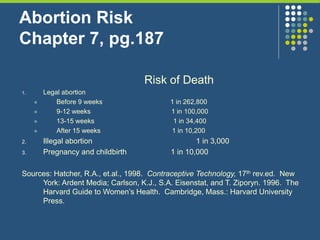
Abortion Risk
Chapter 7, pg.187
Risk of Death
1. Legal abortion
 Before 9 weeks 1 in 262,800
 9-12 weeks 1 in 100,000
 13-15 weeks 1 in 34,400
 After 15 weeks 1 in 10,200
2. Illegal abortion 1 in 3,000
3. Pregnancy and childbirth 1 in 10,000
Sources: Hatcher, R.A., et.al., 1998. Contraceptive Technology, 17th rev.ed. New
York: Ardent Media; Carlson, K.J., S.A. Eisenstat, and T. Ziporyn. 1996. The
Harvard Guide to Women’s Health. Cambridge, Mass.: Harvard University
Press.
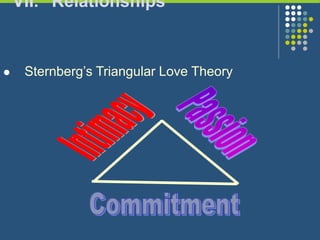
VII. Relationships
 Sternberg’s Triangular Love Theory
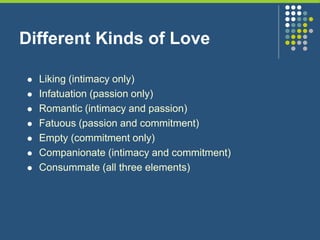
Different Kinds of Love
 Liking (intimacy only)
 Infatuation (passion only)
 Romantic (intimacy and passion)
 Fatuous (passion and commitment)
 Empty (commitment only)
 Companionate (intimacy and commitment)
 Consummate (all three elements)
Relationships
Chapter 4 – pg.103
1. Cohabitation – About 5% of all American households - 4
million heterosexual couples and 1.5 million gay/lesbian
couples live together. By age 30, half of all men and women
have cohabited.
2. Most Americans will marry sometime in their lives – 75% of
men and women are married by age 30 and 95% by age 65
3. Marriage has been found to be beneficial for both sexes –
lower mortality rates, higher sexual satisfaction and higher
income.
4. More than half of couples who live together marry after 3
years and 75% after 5 years.
5. Cohabiting couples most likely to marry were: women over
the age of 25, the woman had a religious affiliation, and the
woman’s parents remained married during her childhood.
Sexually Transmitted
Infections
 History
 Also called STDs, or venereal diseases
 20 known types of STIs
 16.2 million cases in 1999 (CDC)
 Possible Causes: Why Me?
 Moral stigma
 Casual attitude toward sex
 Ignorance about infections/symptoms
Sexually Transmitted
Infections
 Modes of Transmission
 Sexual intercourse
 Oral-genital
 Genital to hand
 Mouth to mouth
Sexually Transmitted
Infections Chlamydia
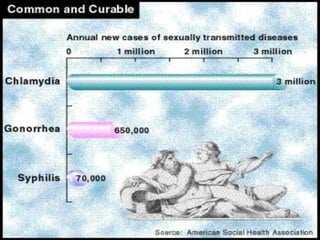
 4 million infected annually
 Many display no symptoms
 Secondary damage can lead to sterility
 Pelvic Inflammatory Disease (PID)
 Describes a number of infections of the
uterus/fallopian tubes/ovaries
 Can result from untreated infections
 Nonsexual causes: excessive douching, substance
abuse, smoking
Sexually Transmitted
Infections
 Gonorrhea
 Most common STI
 $1.1 billion a year in health care costs
 Early treatment: antibiotics
Sexually Transmitted
Infections
 Syphilis
 Caused by a bacterial organism
 Spirochete known as Treponema pallidum
 Stages: primary, secondary, latent, late
 Treatment: antibiotics (penicillin)
 Pubic Lice
 “Crabs”
 Small parasites which deposit eggs in pubic hair
Sexually Transmitted
Infections
 Genital HPV
 Genital warts
 Among most common STIs
 Two types: full-blown and flat warts
 Tendency for dysplasia, changes in cells that can lead
to precancerous conditions
Sexually Transmitted
Infections
 Candidiasis (Moniliasis)
 Yeast-like fungus caused by Candida albicans
 Symptoms: severe itching, burning, swelling
 Trichomoniasis
 Caused by a protozoan
 Half of American men and women carry this organism
 Many remain symptom-free
Sexually Transmitted
Infections
 General Urinary Tract Infections
 Sexual transmission
 Can also be caused by invading organisms in the
genital area
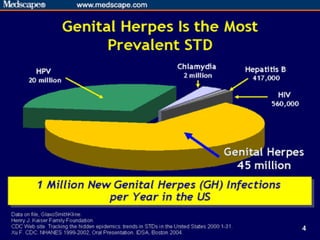
 Herpes
 Family of infections
 Sores and eruptions of the skin
 Genital Herpes: herpes simplex virus
 Preventing herpes
Sexually Transmitted
Infections
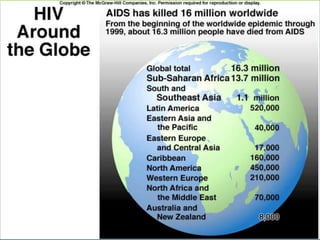
 HIV/AIDS
 Global health problem
 Over 18 million have died of AIDS
 14 million struggle with the disease
 A Shifting Epidemic
 Newly found indicator of virus: drop in CD4s, the
master immune cell
 Improved reporting/accuracy
Sexually Transmitted
Infections
 Women and AIDS
 Women > risk with infected partner
 Women represented 43% of cases in 2000
 Transmission of HIV
 Fluid exchange
 Engaging in high risk behaviors
 Receiving a blood transfusion prior to 1985
 Injecting drugs
 Mother-to-infant transmission (perinatal)
Sexually Transmitted
Infections
 Symptoms of HIV
 Incubation time varies greatly
 Infants and newborns at risk since immune system
not fully developed
 For HIV positive adults, AIDS will develop in 8-10
years with no treatment
Sexually Transmitted
Infections
 Testing for HIV Antibodies
 Blood test known as ELISA
 Western blot – follows 2 positive ELISA
 These tests detect antibodies
 Even with antibodies, not all develop AIDS
Sexually Transmitted
Infections
 New Hope for Treatment
 New drugs slow progression of virus
 Medication is very expensive
 Multi-drug treatment exceeds $20,000 per year
 Preventing HIV Infection

Infectious And Noninfectious Diseases Spring 2006

  • 1.
  • 2.
    Agenda: Infectious and NoninfectiousConditions  Introduction to Disease (infectious/noninfectious; acute/chronic; sanitation and medical care)  U.S. and Global Concerns (resources, poverty, education, economics, sanitation, medical care)  Acquired and Natural Immunity  Risk Factors and Responsibilities  Dept. of Health and Human Services  Prevention/Treatment  When should you see the doctor?  Patient Rights – Anonymous vs. Confidential  Concerns Today – Diabesity, Bioterriorism
  • 3.
    Introduction  History ofDiseases in the United States  Comparison of U.S. Diseases with other countries  Evolution of Epidemiology  Changes in Sanitation and Medical Care  Technological advances – our first hospital, testing procedure for Cardiovascular Disease, Cancer, cholesterol, diabetes
  • 4.
    Immunity  Define Immunity Acquired versus natural immunity  Autoimmune diseases  Compensatory mechanisms
  • 7.
    Risk Factors forDisease  If Disease is Contagious…what is the mode of transmission (direct vs. indirect contact)?  If Disease is Not Contagious…what are the risk factors (lifestyle, environment, genetics, individual characteristics)?  What has research discovered about disease?  Acute versus chronic disease
  • 8.
    Assessing Your DiseaseRisks  Risk Factors You Can’t Control  Heredity  Aging  Environmental conditions  Organism resistance
  • 9.
    Assessing Your DiseaseRisks  Risk Factors You Can Control (continued)  Stress  Nutrition  Physical activity  Sleep  Drug use  Personal hygiene
  • 11.
    The Pathogens: Routesof Transmission  Transmission  Direct contact  Indirect contact  Auto-inoculate yourself  Airborne contacts  Food-borne pathogens  Animal-borne pathogens  Interspecies pathogens  Water-borne diseases
  • 12.
    The Pathogens: Routesof Transmission  Bacteria  Single-celled organisms  Staphylococcal infections  Streptococcal infections  Pneumonia  Legionnaire’s disease  Tuberculosis  Periodontal disease
  • 13.
    The Pathogens: Routesof Transmission  Viruses  Smallest pathogens  Protein structures  Common cold  Influenza  Infectious Mononucleosis  Hepatitis (HAV, HBV, HCV)  Measles
  • 14.
    The Pathogens: Routesof Transmission  Other Pathogens  Fungi  Protozoa  Parasitic worms  Prions
  • 15.
    Responsibilities with Disease Is the disease contagious? If it is - how do we prevent the spread? Quarantine? Modify lifestyle or environment? Genetic testing? Therapeutic measures?  If the disease is not contagious – how does an individual control the disease with medication or food or other means?  Does this individual have any restrictions? Driving? Pregnancy? Sports? Travel?
  • 16.
    Dept. of Health& Human Services  What you may not know and what you should know.  Your doctor can (and sometimes is required to by law) report your condition to the Dept. of Health and Human Services and the DMV  Federal, State and Local Laws vary
  • 17.
    Prevention/Treatment of Disease  InfectiousConditions: 1. Identify pathogen 2. Identify mode of transmission 3. Identify behaviors responsible for the spread of the pathogen  Noninfectious Conditions: 1. Risk factors 2. Prevention 3. Treatment 4. Therapy (doctor visits, physical therapy, psychological care)
  • 18.
    When is ittime to see a doctor?  Annual check-up – Routine visit to your primary care physician or specialist, dental visit every 6 months for cleaning and check-up, eye doctor, prenatal or postnatal visits, dermatologist, cardiologist, oncologist  New condition – or an awareness of an existing condition (i.e. depression, alcoholism, yeast infection, changes in a mole, chronic or persistent pain or discomfort
  • 19.
    Patient – DoctorRelationship  What are your patient rights?  Are you seeing a doctor on a consultation basis or to receive a prescription? This may change your rights.  Ask your doctor what he/she has to report to local, state and federal authorities
  • 20.
    Health Concerns Today Lifestyle Diseases (cardiovascular, cancer, diabesity)  Psychosocial Issues (depression, road rage, work place violence, domestic violence, discrimination towards ethnicity, homosexuality, right to choose)
  • 21.
    Your Body’s Defenses: KeepingYou Well  Physical and Chemical Defenses  Skin  Enzymes  Body temperature  Linings of the body
  • 22.
    Your Body’s Defenses: KeepingYou Well  The Immune System: Your Body Fights Back  Immunity  Antigens  Antibodies  Immunoglobulins  Humoral immune response  Cell-mediated immunity  Lymphocytes
  • 23.
    Your Body’s Defenses: KeepingYou Well  Fever  Rises in temperature can be harmful if extreme  High temperatures can destroy some disease causing organisms  Stimulates more white blood cell production  Why is it important to allow a fever to continue, if it isn’t extreme?
  • 24.
    Your Body’s Defenses: KeepingYou Well  Pain  Response to either direct or referred pain  Most often accompanied by inflammation  Vaccine  Vaccination and T- and B-cell memory  Acquired immunity  Natural immunity
  • 25.
    Emerging and Resurgent Diseases Tiny Microbes: Lethal Threats  Mad Cow Disease (Bovine Spongiform Encephalitis)  Dengue and Dengue Hemorrhagic Fever  Ebola  Cryptosporidium  Escherichia coli 0157:H7  Cholera
  • 26.
    Emerging and Resurgent Diseases Tiny Microbes: Lethal Threats (continued)  Hantavirus  Bioterrorism: The New Global Threat  West Nile Virus  SARS  HIV/AIDS
  • 27.
    Noninfectious Diseases  ChronicLung Diseases  Dyspnea  Chronic obstructive pulmonary diseases (COPDs)  Allergy-Induced Respiratory Problems  Antigen or allergen  Production of antibodies  Hypersensitive reaction  Release of histamines
  • 28.
    Steps of anAllergy Response Figure 14.4
  • 29.
    Noninfectious Diseases HayFever  Example of COPD  Asthma  Long-term chronic inflammatory disorder  Blocked airflow to the lungs  Air pollutants, particulates, smoke can trigger an asthma attack  Most common chronic disease of childhood  #1 cause of hospitalization and absenteeism
  • 30.
    Noninfectious Diseases  Emphysema Gradual destruction of alveoli  Difficult to exhale  Victim struggles to take in air  Chest cavity expands over time (barrel-chest)
  • 31.
    Noninfectious Diseases  Bronchitis Inflammation of bronchial tubes  Reduced air flow from the lungs  Acute bronchitis – 95% of cases are viral  Chronic bronchitis has a mucous laden cough  Cigarette smoking is often the cause of chronic bronchitis
  • 32.
    Noninfectious Diseases  SleepApnea  Affects 5% of the general population  Periodic episodes of breathing cessation for 10 seconds or longer  Causes restless sleep, high blood pressure, sleepiness during waking hours, CVD  Prevention: reduce alcohol use, change sleeping position, schedule, medicinal interventions
  • 33.
    Neurological Disorders  Headaches Tension headaches  Migraine headaches  Secondary headaches
  • 34.
    Neurological Disorders  SeizureDisorders  Epilepsy  1% of Americans are epileptic  Types of seizures:  Grand mal  Petit mal  Psychomotor  Jacksonian
  • 35.
    Gender-Related Disorders  PremenstrualSyndrome (PMS)  Symptoms vary  Plausible cause: hormones
  • 36.
    Gender-Related Disorders  Endometriosis Tends to effect women age 20-40  Symptoms:  Severe cramping  Irregular periods  Fatigue  Painful intercourse  Characterized by abnormal growth and development of endometrial tissue
  • 37.
    Digestion-Related Disorders  Diabetes Pancreas’ role  Diabetes mellitus  Hyperglycemia  Type I  Type II  Gestational diabetes  Risk factors  Controlling diabetes
  • 38.
    Digestion-Related Disorders  PepticUlcers  Lesion or wound in body tissue  Chronic  Occur in the stomach lining or duodenum  Helicobacter pylori
  • 39.
    Musculoskeletal Diseases  Arthritis Strikes 1 in 7  Osteoarthritis  Rheumatoid arthritis  Fibromyalgia  Chronic, painful  5-6% affected  Array of symptoms  Difficult to diagnose
  • 40.
    Musculoskeletal Diseases  SystemicLupus Erythematosus (SLE)  Immune system attacks the body  Destroys or injures organs  Low Back Pain (LBP)  80% will experience LBP
  • 41.
    Musculoskeletal Diseases  ChronicFatigue Syndrome (CFS)  Feeling tired all the time  Possible psychological roots  Repetitive Stress Injuries (RSIs)  24% of work injuries  Carpal tunnel most common
  • 42.
    Make your firstdate…  A Kaiser date!
  • 45.
    Keys to ReducingSTIs Education Early diagnosis and treatment Prevention
  • 46.
    Do we effectivelyteach sexuality in K-12 schools?  Explain the human body to children in an honest and informative approach.  Explain the natural hormonal urges for sex, but also stress the risks and responsibilities.  Your children will undoubtedly observe your ideology towards sex, relationships, religion and any prejudice towards other groups (homophobic, ethnic discrimination, sexual orientation, etc.). We learn to love and appreciate from our parents. This is an awesome responsibility we far-reaching social
  • 47.
    SEXUAL IDENTITY  SexualIdentity  Gonads  Puberty  Hypothalamus  Pituitary Gland  Secondary Sex Characteristics  Gender  Gender Roles  Gender Identity  Gender Role Stereotypes  Androgyny  Socialization
  • 49.
    Secondary Sex Characteristics Males  Low pitch voice, facial/body hair, muscular development  Females  Increase breast and hip size, body/pubic hair
  • 50.
    Gonads  The reproductiveorgans (sex organs) in a male (testes) or a female (ovaries). Developed at 8 weeks of fetal life.
  • 51.
    Puberty  The periodof sexual maturation. Sequence of events leading to the development of the secondary sexual characteristics and fertility. Age of onset is 10-16 years old with the hypothalamus, pituitary glands and gonads.
  • 52.
    Hypothalamus  Control centerof brain which signals pituitary gland with GnRH (gonadotropin-releasing hormone). Initiates our fertility capability.
  • 54.
    Female Anatomy &Physiology  External Genitalia (aka: Vulva)  Mons pubis, labia minora, labia majora, clitoris, urethral opening, vaginal opening, hymen, perineum  Internal Genitalia  Vagina, cervix, uterus (womb), endometrium, ovaries, fallopian tubes, fimbria, ovarian follicles, ovum (egg)
  • 56.
    Male Anatomy &Physiology  External Genitalia  Penis and Scrotum  Internal Genitalia Testicles, epididymis (- ides), vas deferens, accessory organs (seminal vesicles, prostate gland and Cowper’s Gland)
  • 60.
    Signs or Symptomsof an STI Figure 14.3
  • 61.
    V. Sexual Orientation,Behaviors and Dysfunctions  Sexual Orientation  Heterosexual, Homosexual, Bisexual  Sexual Behavior  Autoerotic behaviors, sexual fantasies, masturbation, erogenous zones, cunnilingus, fellatio, anal intercourse, vaginal intercourse, oral sex, variant sexual behavior, celibacy, homophobia, limerance  Sexual Dysfunctions  Inhibited sexual desire (ISD), sexual aversion disorder, erectile dysfunction (impotence), premature ejaculation, retarded ejaculation, preorgasmic, dyspareunia, vaginismus
  • 62.
    VI. Sexually Transmitted Infections Agenda: 1) Incidence versus Prevalence 2) Type of Pathogen – bacteria, virus, parasite, protozoa 3) Protective barriers
  • 63.
    V. Sexually TransmittedInfections Chlamydia Gonorrhea Syphilis Pelvic inflammatory disease Genital warts Genital herpes Hepatitis B HIV/AIDS Trichomoniasis Candida
  • 64.
  • 65.
    Candida (Yeast infection) 75% of women get it  Common causes: antibiotics, menstruation, pregnancy, diabetes, hygiene, clothing
  • 66.
    Chlamydia  Pathogen: bacterial Prognosis: curable  If not treated: infertility  Scaring of the fallopian tubes and possibly pelvic inflammatory disease  Leading cause of infertility among couples  Women do not have any signs or symptoms most the time – Men generally do – so Men tend to get treated – Women in general contract infection easier than men do to surface area exposed.  Treatment/Prevention  The best type of prevention is not having sex – however when you are ready to have sex – communication is very important and a visit to the doctor’s office for STD testing
  • 69.
    Gonorrhea  Incidence rose9% in 1998  Milky-white discharge in men, painful urination  Men – 80% have s/s  Women – 80% don’t have s/s  Women – slimy yellow- green discharge from vagina or urethra  Oral sex – throat infection  Rectal sex  Incidence correlated with alcohol consumption  Dual therapy with Chlamydia  Eye infections
  • 70.
    Primary Syphilis  Pathogen: Bacteria (Spirochete)  Distinct stages  Any organ may be involved  Primary syphilis – appearance of small painless red pustule on skin or mucous membrane 10 – 90 days after exposure – lesion may appear anywhere on body where contact with pathogen occurred – most often the anogenital region  This painless red pustule quickly erodes forming a painless, bloodless ulcer, called a chancre, exuding fluid filled with spirochetes – heals spontaneously within 10-40 days.  The secondary stage – occurs 2 months later – spirochetes have increased in number and spread throughout the body
  • 71.
    Secondary Syphilis  S/S: General malaise  Anorexia nervosa  Nausea/fever  Headache/alopecia  Bone and joint pain  Rash that does not itch  Flat white sores in mouth and throat  Highly contagious at this stage – can be spread by kissing
  • 72.
    Tertiary Syphilis  Appearanceof soft rubbery tumors called gummas that ulcerate and heal by scaring  Gummas may develop anywhere on the body – eyes, lungs, liver, stomach, or reproductive organs  Tertiary syphilis may be painless or may be very painful  Tissues and structures of the body may be damaged – including the CNS, myocardium, valves of the heart may be damaged or destroyed  The culminating effects may be mental insanity and/or severe physical disability and premature death
  • 73.
    Pelvic Inflammatory Disease Signs & Symptoms  Treatment/Prevention
  • 75.
    Genital Warts  HPVpathogen  Pinkish-white lesions  Raised clusters on penis or scrotum or labia, cervix or around anus  In women this can cause precancerous changes on cervix  Treatment/Prevention  Gels, cryotherapy, surgical removal  Warts need not be present to infect partner
  • 76.
    Herpes (simplex 1& 2)  Signs & Symptoms  Treatment/Prevention
  • 84.
    AIDS / HIV Most devastating infectious disease in the past 80 years  Since 1999 58.6% of reported cases have died  Annual cost $20,000 per person  Annually by public & private $13 billion  AIDS is caused by a virus (HIV) that attacks the helper T cells of the immune system  People lose the ability to fight off infections  Opportunistic infections – Pneumocystis carinii pneumonia, Kaposi’s sarcoma, toxoplasmosis within the brain, wasting syndrome, cervical cancer, recurrent TB
  • 85.
    Human Immunodeficiency Virus(HIV) Chronic disease that progressively damages the body’s immune system Asymptomatic period ranges from 2 to 20 years virus can be passed on to others during this time AIDS is diagnosed when number of CD4 T cells (helper T cells) falls to certain level or marker conditions appear
  • 87.
    The Transmission ofHIV HIV lives within cells and body fluids (blood and blood products, semen, vaginal and cervical secretions, breast milk) Spread in three ways certain sexual activities direct contact with infected blood (via needle-sharing or transfusions) from infected mother to fetus or through breastfeeding
  • 88.
    Symptoms of HIV Fever Fatigue Rashes Headacheand body aches Swollen lymph nodes Night sweats Sore throat Nausea and diarrhea
  • 89.
    Treatment and Prevention Noknown cure for HIV infection New drugs can extend life nucleoside analogs protease inhibitors Prevention making careful choices about sexual activity not sharing needles practicing abstinence or using condoms
  • 93.
    Unintended Pregnancy First Yearof Use  Method – Typical use  Norplant .05%  Male sterilization .15%  Depo-Provera .30%  Female sterilization .50%  Copper T IUD .8%  Progestasert IUD 2.0%  Oral contraceptives 5%  Oral – combination .1%(p)  Oral – progestin only .5%(p)  Spermicides 26% - 6%  Chance 85%  Method – Typical use  Male condom (latex) 14% - 3%  Withdrawal 19% - 4%  Diaphragm w/spermicide 20% - 6%  Sponge 20% - 9%  Cervical cap 20% - 9%  Female condom 21% - 5%  FAM 25%  Calendar alone 9%(p)  Combination of FAM 2%(p)
  • 109.
    Should a womanbe able to obtain an abortion in the following circumstances? Chapter 7, pg.179 1. Her life is endangered. 2. Her physical health is endangered. 3. The pregnancy was caused by rape or incest. 4. Her mental health is endangered. 5. The baby is physically or mentally impaired. 6. The woman or family cannot afford to raise the child.
  • 110.
    Should a womanbe permitted to have an abortion during the following stages of pregnancy? Chapter 7, pg.179 1. In the first three months 2. In the second three months 3. In the last three months
  • 111.
    Views on Abortion Gallup Organization, 2003  Should a pregnant woman be able to obtain an abortion in the following circumstances? YES 1. Her life is endangered. 85% 2. Her physical health is endangered. 77% 3. The pregnancy was caused by rape or incest. 76% 4. Her mental health is endangered. 63% 5. The baby is physically or mentally impaired. 56% 6. The woman or family cannot afford to raise the child 35%  Health 11 W,F 1pm  Spring 2005 YES NO N/C 1. 76% 18% 6% 2. 76% 18% 6% 3. 82% 12% 6% 4. 65% 29% 6% 5. 70% 24% 6% 6. 41% 53% 6%
  • 112.
    Views on Abortion Gallup Organization, 2003  Should a woman be permitted to have an abortion during the following stages of pregnancy? YES 1. In the first 3 months 66% 2. In the second 3 months 25% 3. In the third 3 months 10%  Health 11 wed. night 6:45pm class – YOUR responses:  YES NO N/C 1. 82% 12% 6% 2. 29% 59% 12% 3. 18% 76% 6%
  • 113.
    Abortion Risk Chapter 7,pg.187 Risk of Death 1. Legal abortion  Before 9 weeks 1 in 262,800  9-12 weeks 1 in 100,000  13-15 weeks 1 in 34,400  After 15 weeks 1 in 10,200 2. Illegal abortion 1 in 3,000 3. Pregnancy and childbirth 1 in 10,000 Sources: Hatcher, R.A., et.al., 1998. Contraceptive Technology, 17th rev.ed. New York: Ardent Media; Carlson, K.J., S.A. Eisenstat, and T. Ziporyn. 1996. The Harvard Guide to Women’s Health. Cambridge, Mass.: Harvard University Press.
  • 114.
  • 115.
    Different Kinds ofLove  Liking (intimacy only)  Infatuation (passion only)  Romantic (intimacy and passion)  Fatuous (passion and commitment)  Empty (commitment only)  Companionate (intimacy and commitment)  Consummate (all three elements)
  • 116.
    Relationships Chapter 4 –pg.103 1. Cohabitation – About 5% of all American households - 4 million heterosexual couples and 1.5 million gay/lesbian couples live together. By age 30, half of all men and women have cohabited. 2. Most Americans will marry sometime in their lives – 75% of men and women are married by age 30 and 95% by age 65 3. Marriage has been found to be beneficial for both sexes – lower mortality rates, higher sexual satisfaction and higher income. 4. More than half of couples who live together marry after 3 years and 75% after 5 years. 5. Cohabiting couples most likely to marry were: women over the age of 25, the woman had a religious affiliation, and the woman’s parents remained married during her childhood.
  • 117.
    Sexually Transmitted Infections  History Also called STDs, or venereal diseases  20 known types of STIs  16.2 million cases in 1999 (CDC)  Possible Causes: Why Me?  Moral stigma  Casual attitude toward sex  Ignorance about infections/symptoms
  • 118.
    Sexually Transmitted Infections  Modesof Transmission  Sexual intercourse  Oral-genital  Genital to hand  Mouth to mouth
  • 119.
    Sexually Transmitted Infections Chlamydia 4 million infected annually  Many display no symptoms  Secondary damage can lead to sterility  Pelvic Inflammatory Disease (PID)  Describes a number of infections of the uterus/fallopian tubes/ovaries  Can result from untreated infections  Nonsexual causes: excessive douching, substance abuse, smoking
  • 120.
    Sexually Transmitted Infections  Gonorrhea Most common STI  $1.1 billion a year in health care costs  Early treatment: antibiotics
  • 121.
    Sexually Transmitted Infections  Syphilis Caused by a bacterial organism  Spirochete known as Treponema pallidum  Stages: primary, secondary, latent, late  Treatment: antibiotics (penicillin)  Pubic Lice  “Crabs”  Small parasites which deposit eggs in pubic hair
  • 122.
    Sexually Transmitted Infections  GenitalHPV  Genital warts  Among most common STIs  Two types: full-blown and flat warts  Tendency for dysplasia, changes in cells that can lead to precancerous conditions
  • 123.
    Sexually Transmitted Infections  Candidiasis(Moniliasis)  Yeast-like fungus caused by Candida albicans  Symptoms: severe itching, burning, swelling  Trichomoniasis  Caused by a protozoan  Half of American men and women carry this organism  Many remain symptom-free
  • 124.
    Sexually Transmitted Infections  GeneralUrinary Tract Infections  Sexual transmission  Can also be caused by invading organisms in the genital area  Herpes  Family of infections  Sores and eruptions of the skin  Genital Herpes: herpes simplex virus  Preventing herpes
  • 125.
    Sexually Transmitted Infections  HIV/AIDS Global health problem  Over 18 million have died of AIDS  14 million struggle with the disease  A Shifting Epidemic  Newly found indicator of virus: drop in CD4s, the master immune cell  Improved reporting/accuracy
  • 126.
    Sexually Transmitted Infections  Womenand AIDS  Women > risk with infected partner  Women represented 43% of cases in 2000  Transmission of HIV  Fluid exchange  Engaging in high risk behaviors  Receiving a blood transfusion prior to 1985  Injecting drugs  Mother-to-infant transmission (perinatal)
  • 127.
    Sexually Transmitted Infections  Symptomsof HIV  Incubation time varies greatly  Infants and newborns at risk since immune system not fully developed  For HIV positive adults, AIDS will develop in 8-10 years with no treatment
  • 128.
    Sexually Transmitted Infections  Testingfor HIV Antibodies  Blood test known as ELISA  Western blot – follows 2 positive ELISA  These tests detect antibodies  Even with antibodies, not all develop AIDS
  • 129.
    Sexually Transmitted Infections  NewHope for Treatment  New drugs slow progression of virus  Medication is very expensive  Multi-drug treatment exceeds $20,000 per year  Preventing HIV Infection