Court procedure
Preparation of
Statement of Facts
Chandrabos PV
Associate Fellow,IMG
Criminal Procedure
• Indian Penal Code,1860[IPC]
• The Code of Criminal
Procedure,1973[ Cr PC]
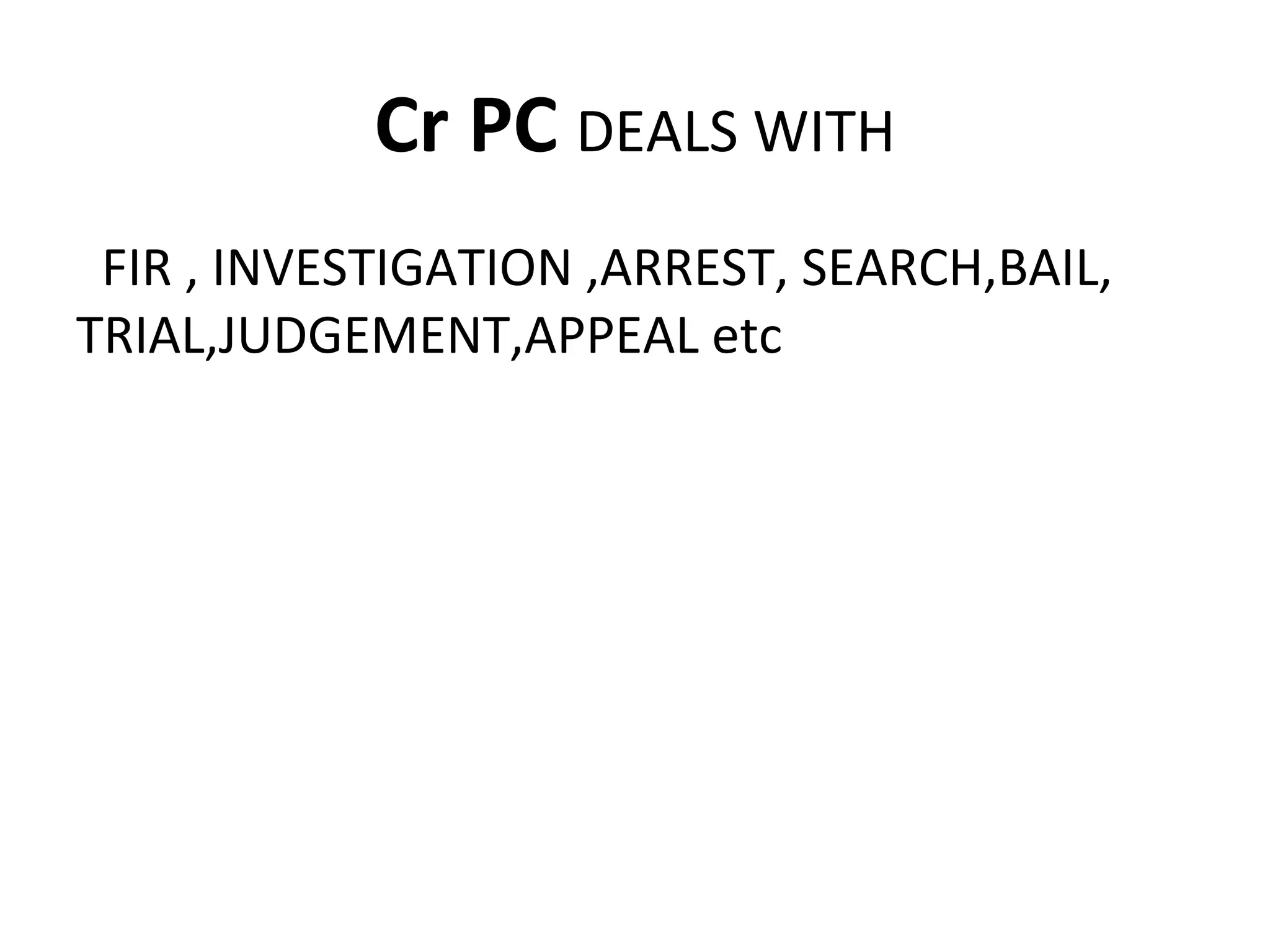
Cr PC DEALS WITH
FIR , INVESTIGATION ,ARREST, SEARCH,BAIL,
TRIAL,JUDGEMENT,APPEAL etc
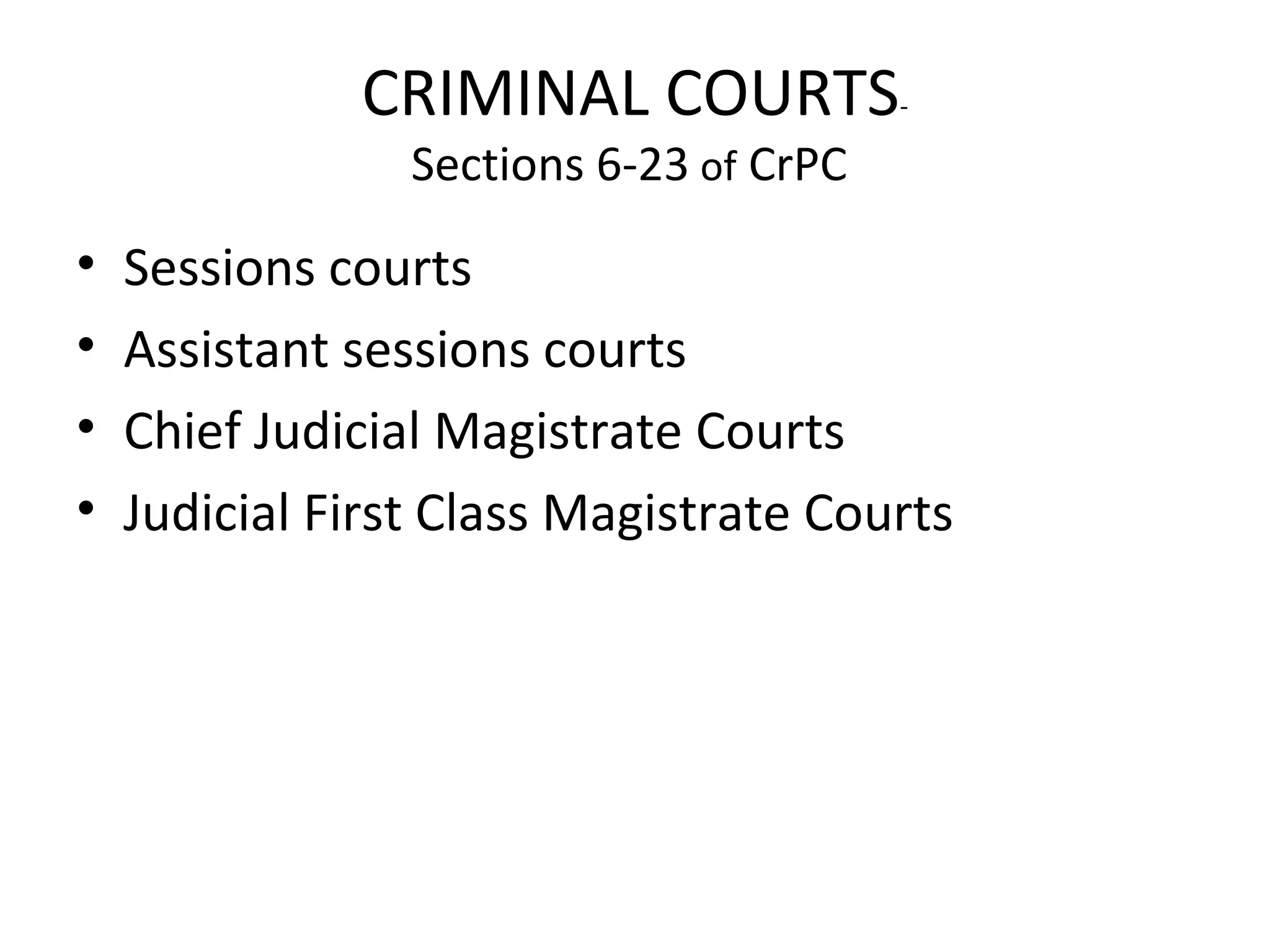
CRIMINAL COURTS-
Sections 6-23 of CrPC
• Sessions courts
• Assistant sessions courts
• Chief Judicial Magistrate Courts
• Judicial First Class Magistrate Courts
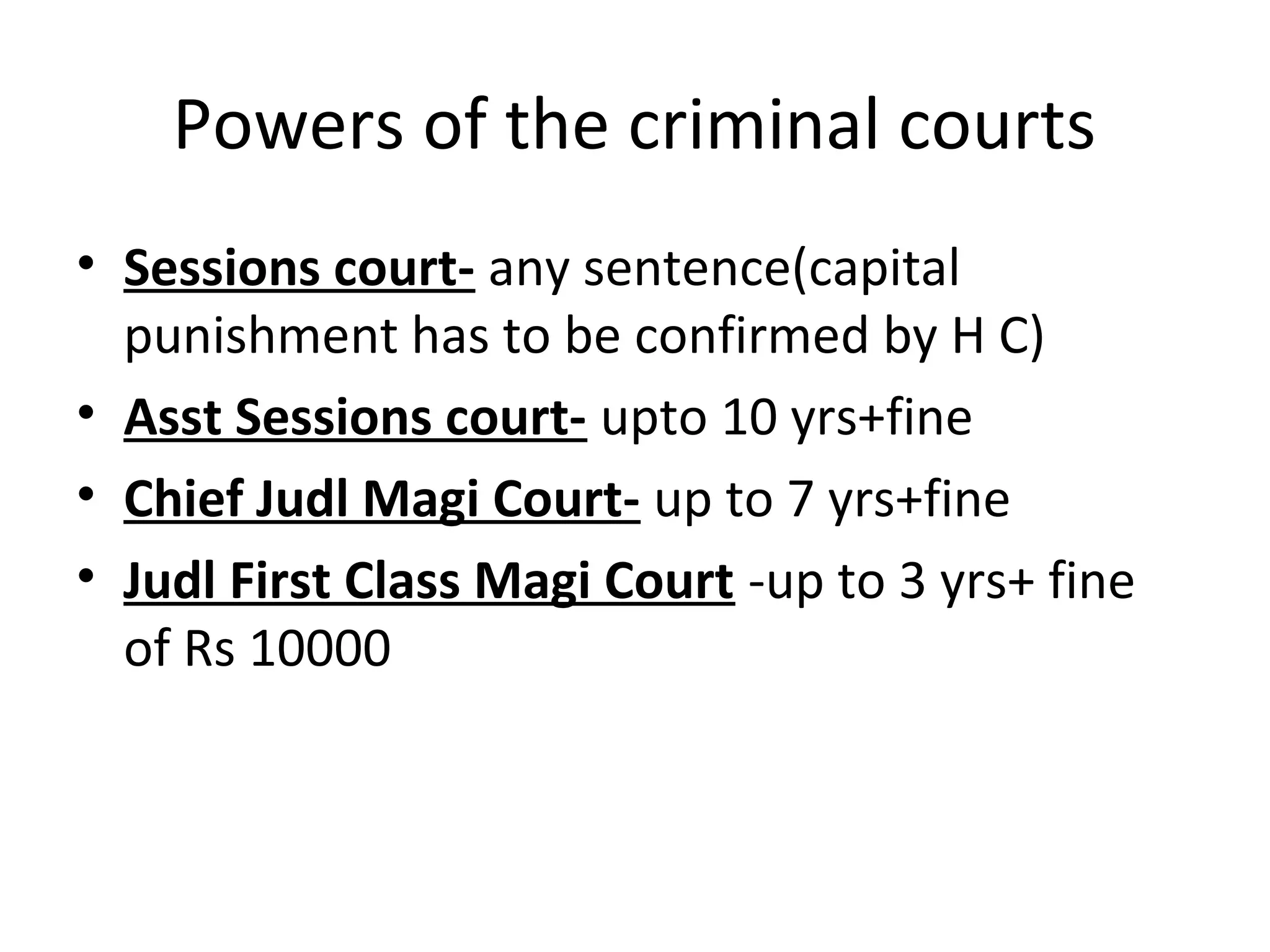
Powers of the criminal courts
• Sessions court- any sentence(capital
punishment has to be confirmed by H C)
• Asst Sessions court- upto 10 yrs+fine
• Chief Judl Magi Court- up to 7 yrs+fine
• Judl First Class Magi Court -up to 3 yrs+ fine
of Rs 10000
Civil Procedure
Code of Civil
Procedure 1908
[C P C]
CPC
Civil Courts, Its powers, Jurisdiction,
Suits[plaint & written statement],
Interim Orders, Judgment & Decree,
Execution of Decree etc
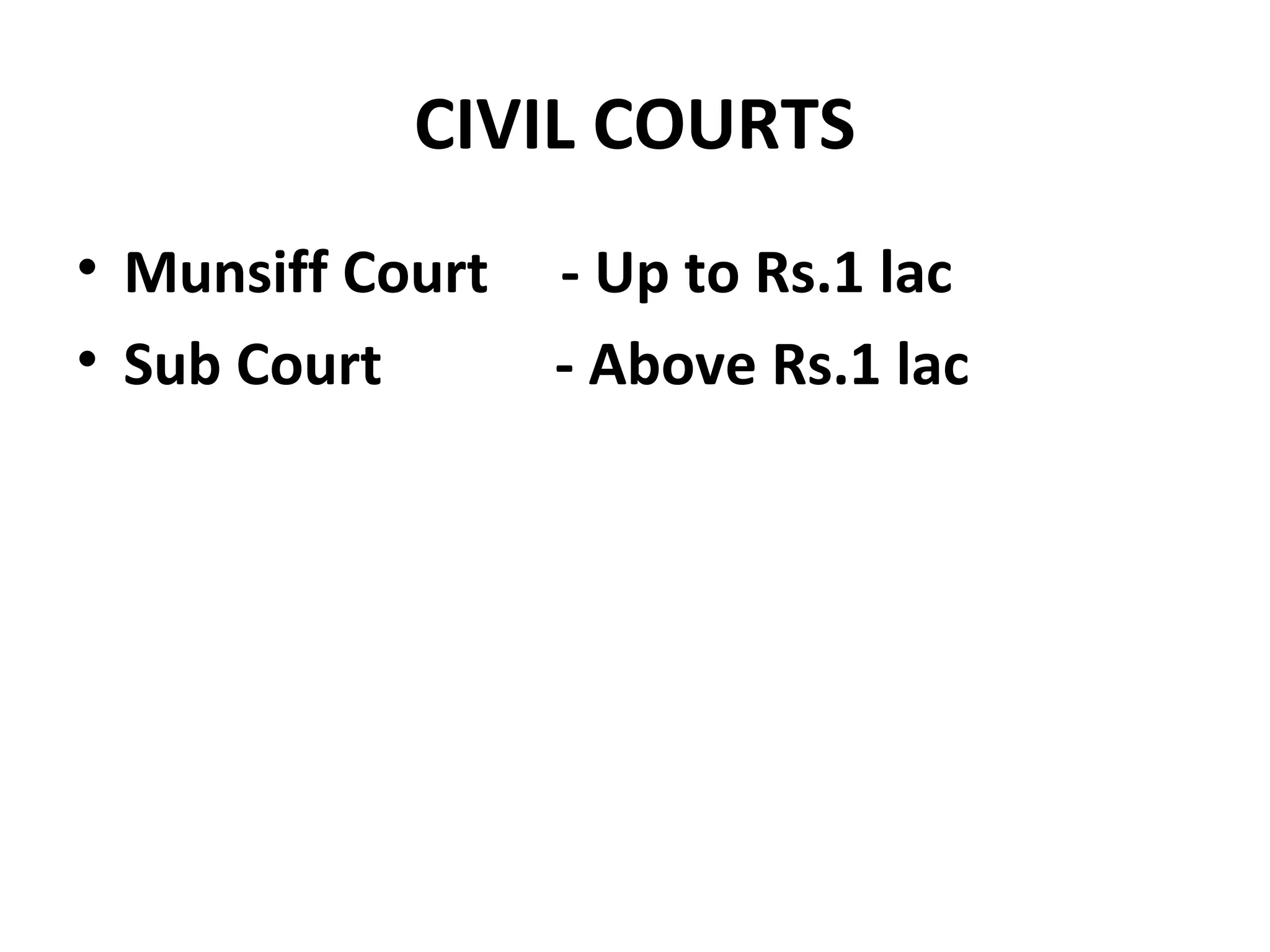
CIVIL COURTS
• Munsiff Court - Up to Rs.1 lac
• Sub Court - Above Rs.1 lac
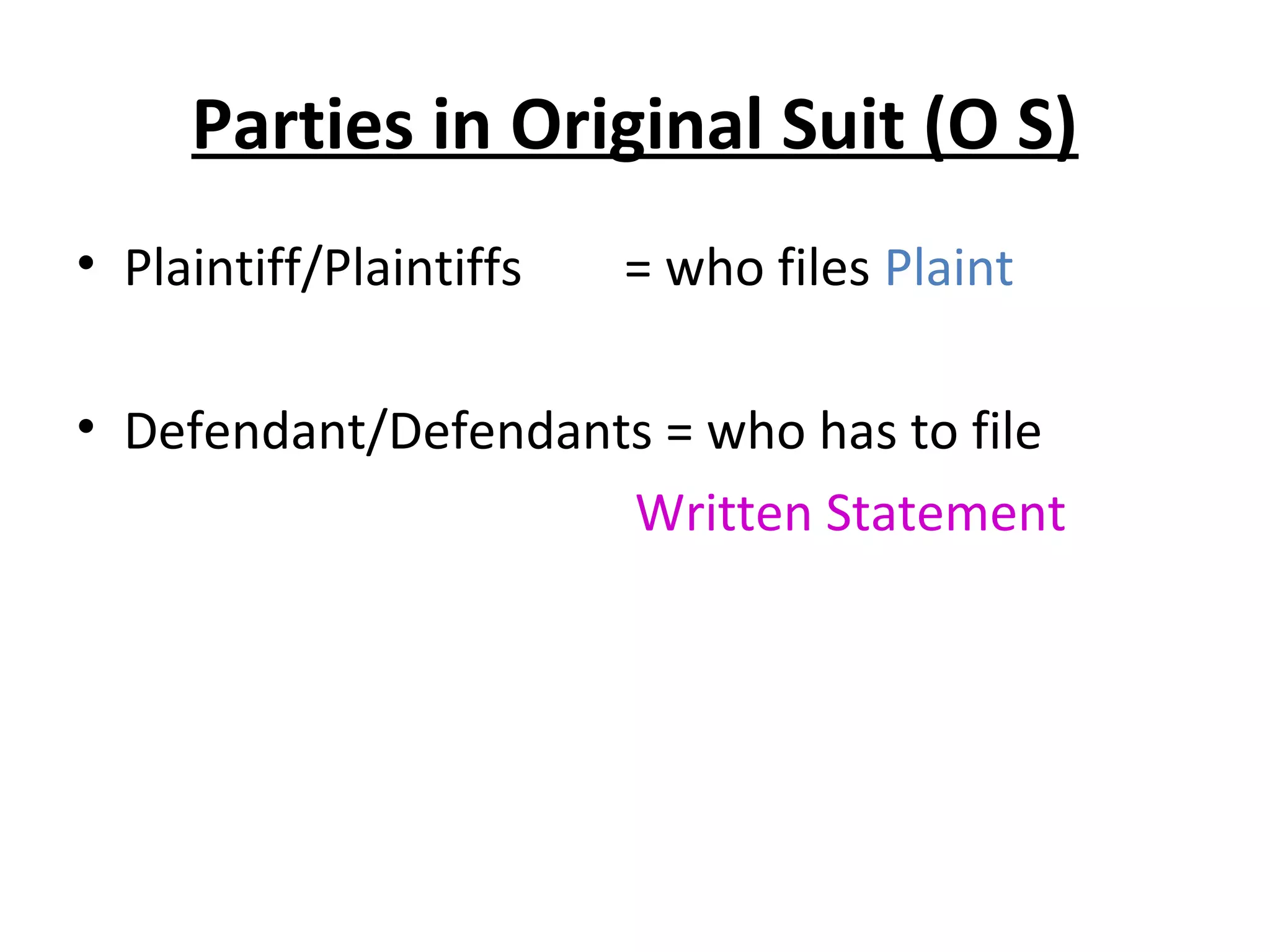
Parties in Original Suit (O S)
• Plaintiff/Plaintiffs = who files Plaint
• Defendant/Defendants = who has to file
Written Statement
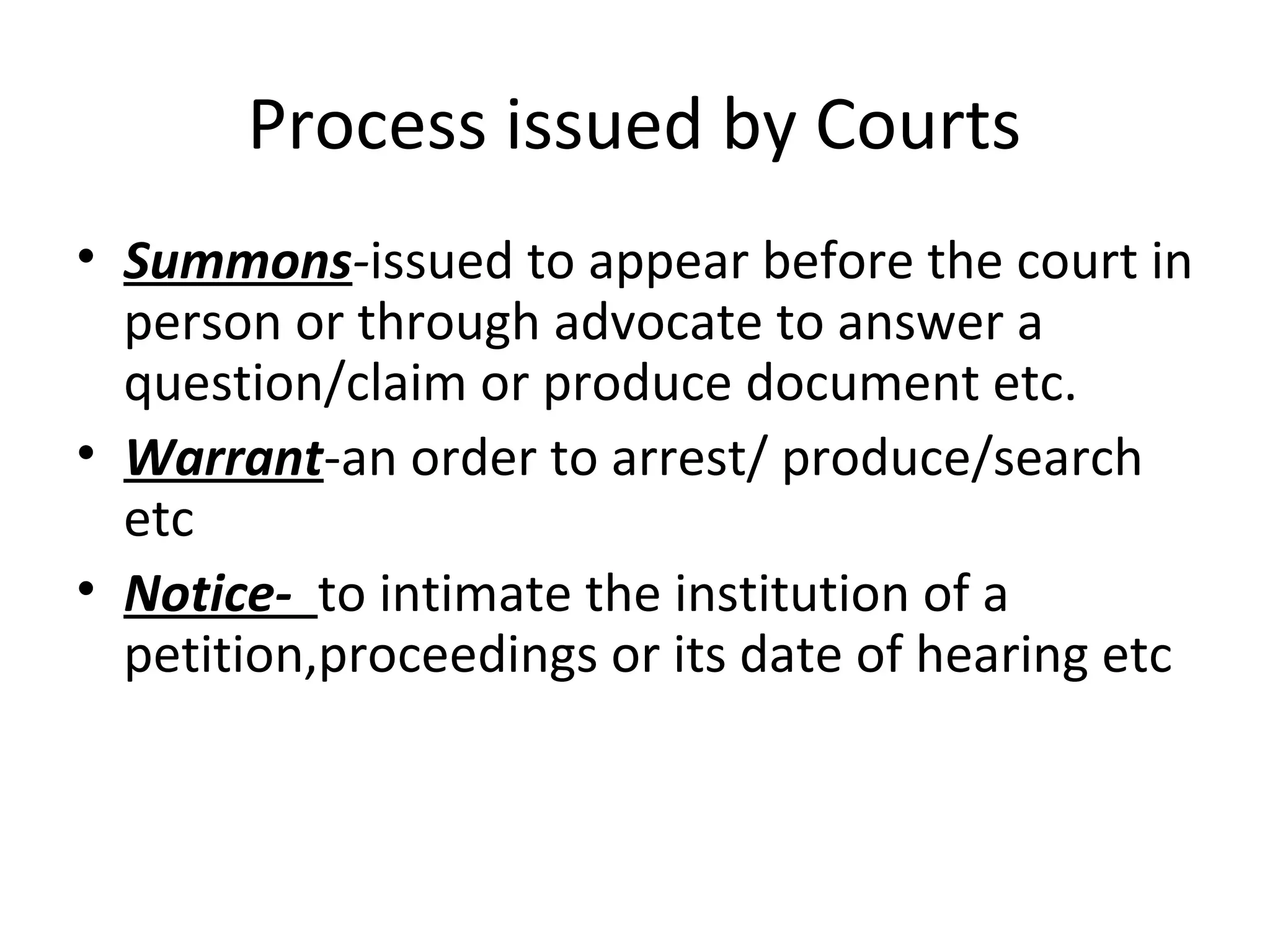
Process issued by Courts
• Summons-issued to appear before the court in
person or through advocate to answer a
question/claim or produce document etc.
• Warrant-an order to arrest/ produce/search
etc
• Notice- to intimate the institution of a
petition,proceedings or its date of hearing etc
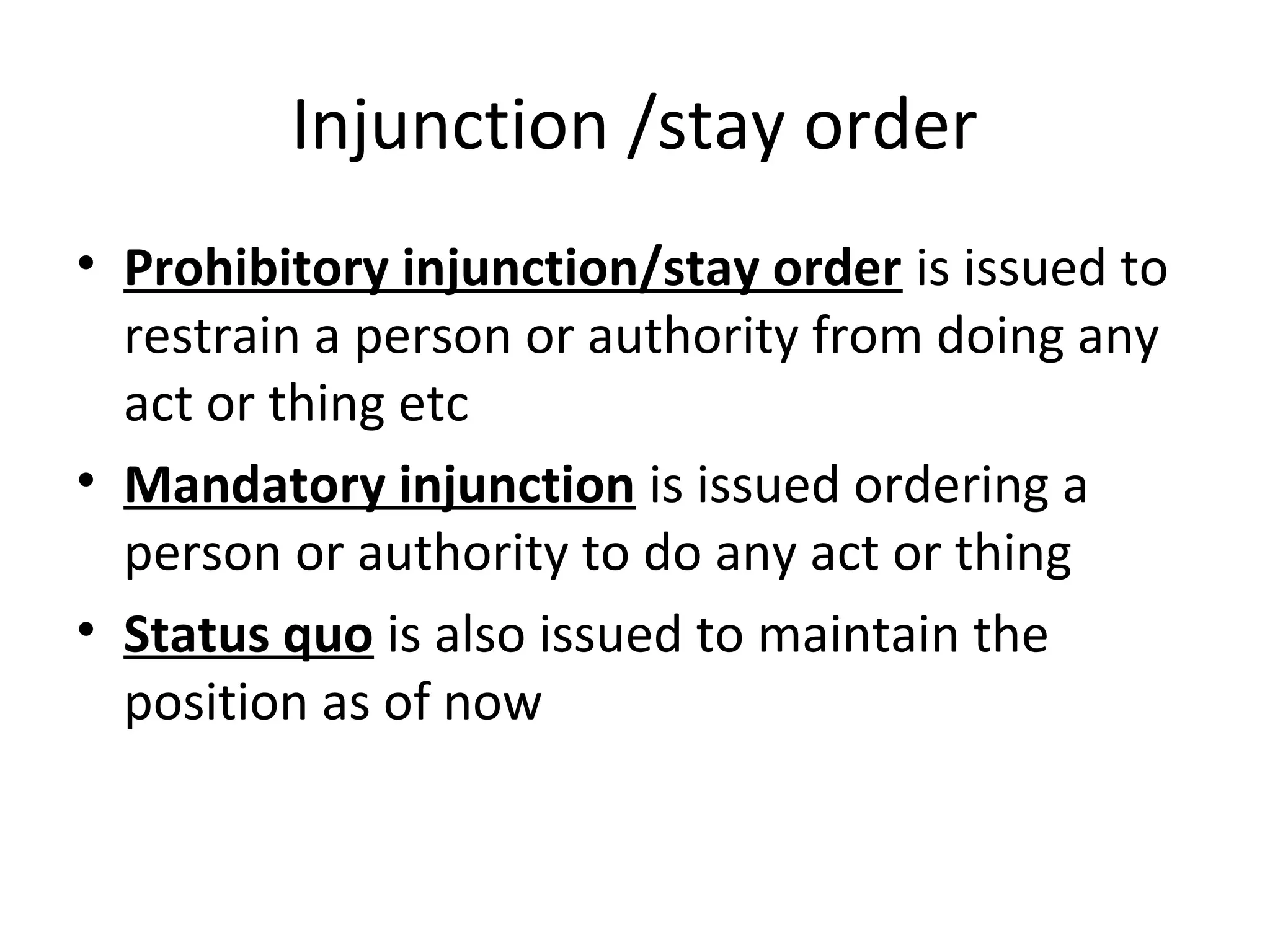
Injunction /stay order
• Prohibitory injunction/stay order is issued to
restrain a person or authority from doing any
act or thing etc
• Mandatory injunction is issued ordering a
person or authority to do any act or thing
• Status quo is also issued to maintain the
position as of now
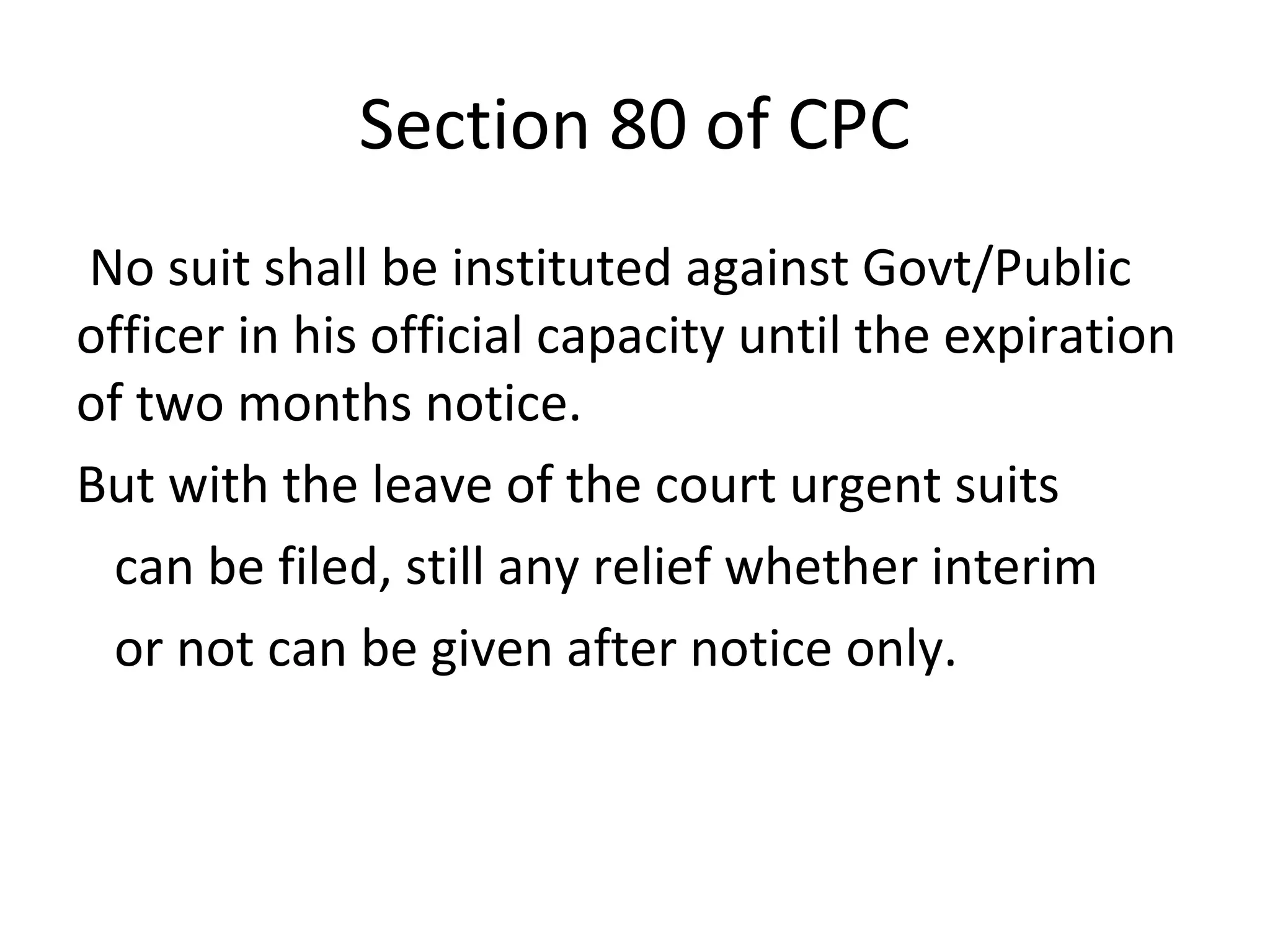
Section 80 of CPC
No suit shall be instituted against Govt/Public
officer in his official capacity until the expiration
of two months notice.
But with the leave of the court urgent suits
can be filed, still any relief whether interim
or not can be given after notice only.
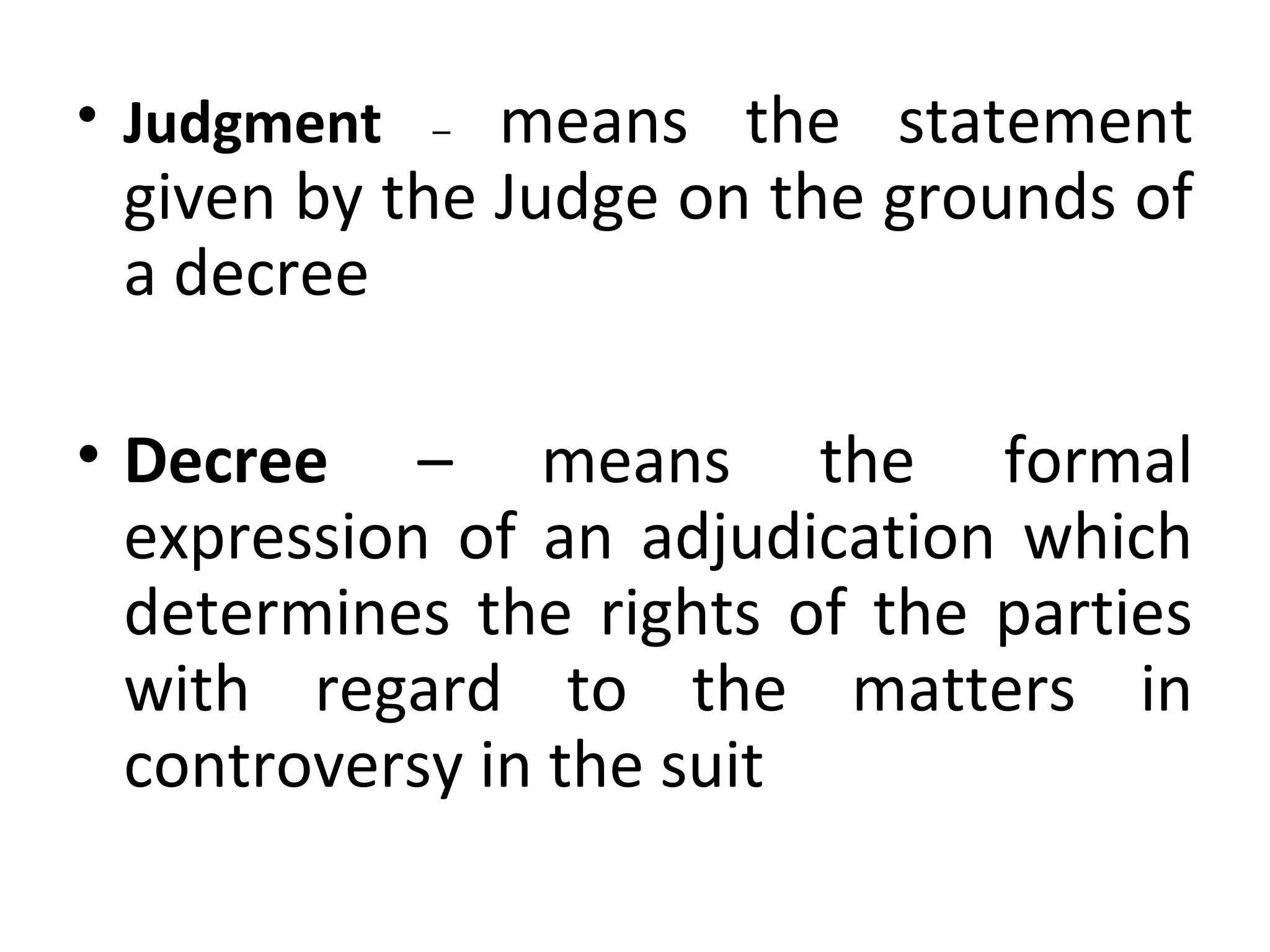
• Judgment – means the statement
given by the Judge on the grounds of
a decree
• Decree – means the formal
expression of an adjudication which
determines the rights of the parties
with regard to the matters in
controversy in the suit
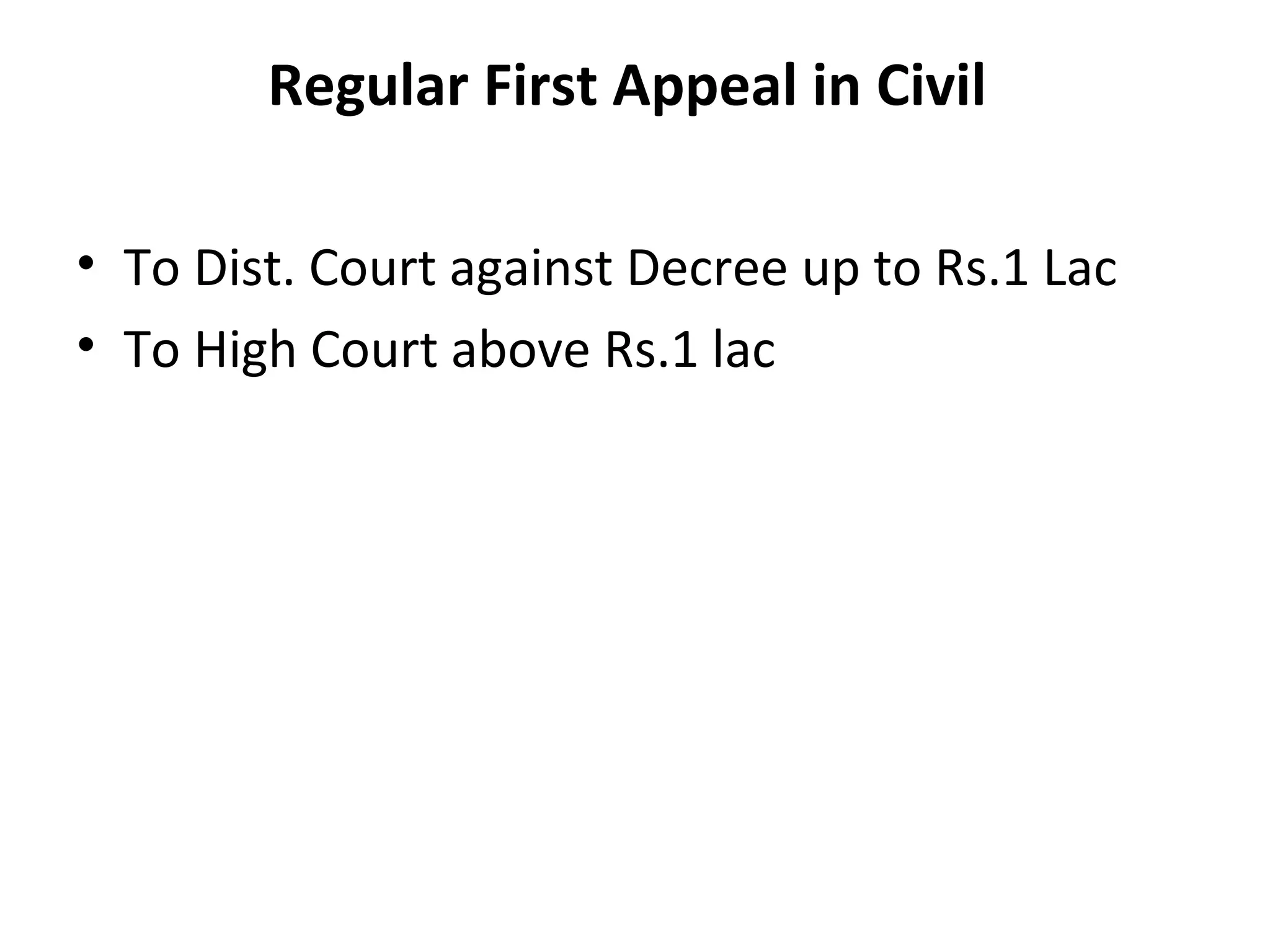
Regular First Appeal in Civil
• To Dist. Court against Decree up to Rs.1 Lac
• To High Court above Rs.1 lac
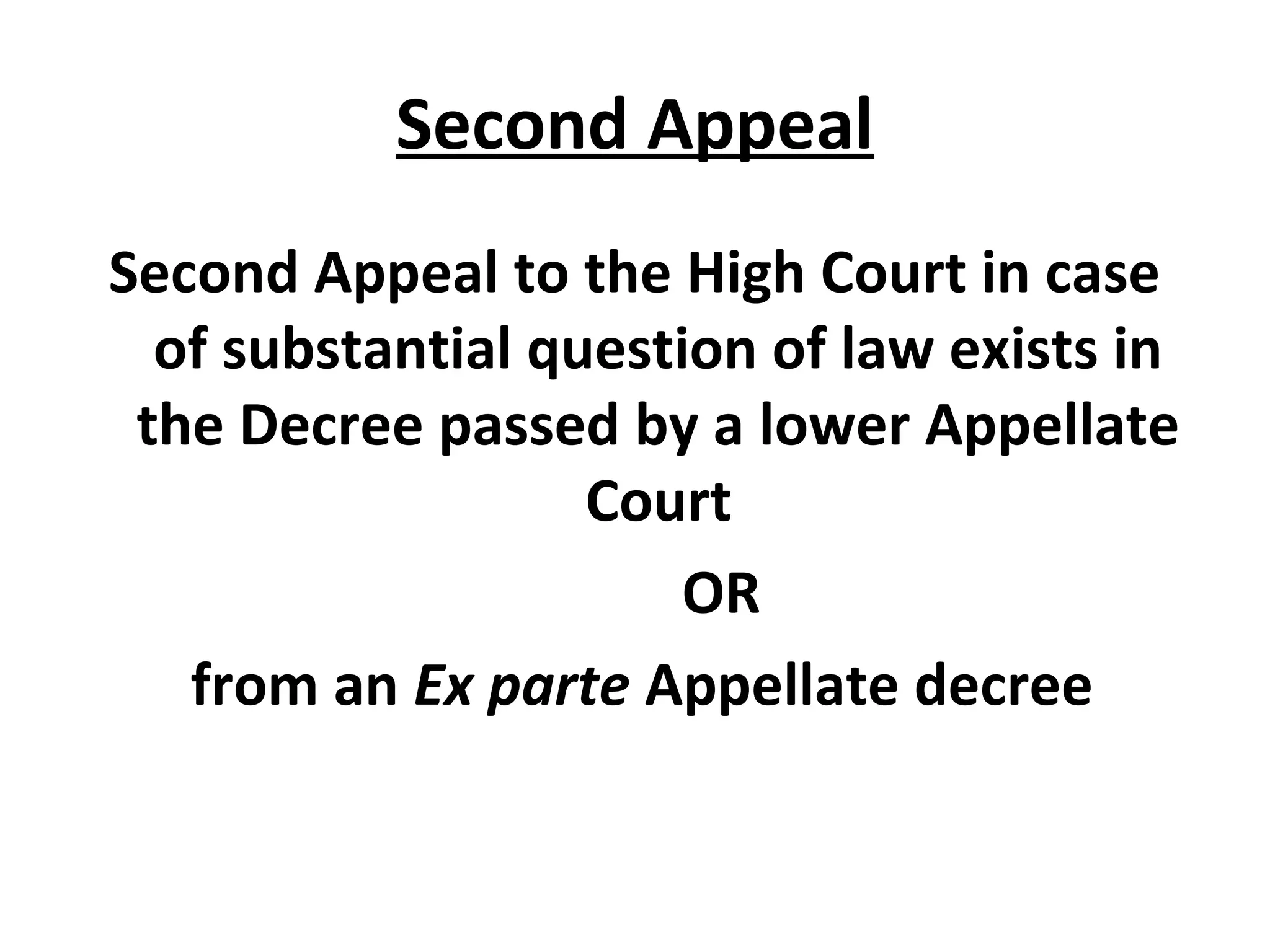
Second Appeal
Second Appeal to the High Court in case
of substantial question of law exists in
the Decree passed by a lower Appellate
Court
OR
from an Ex parte Appellate decree
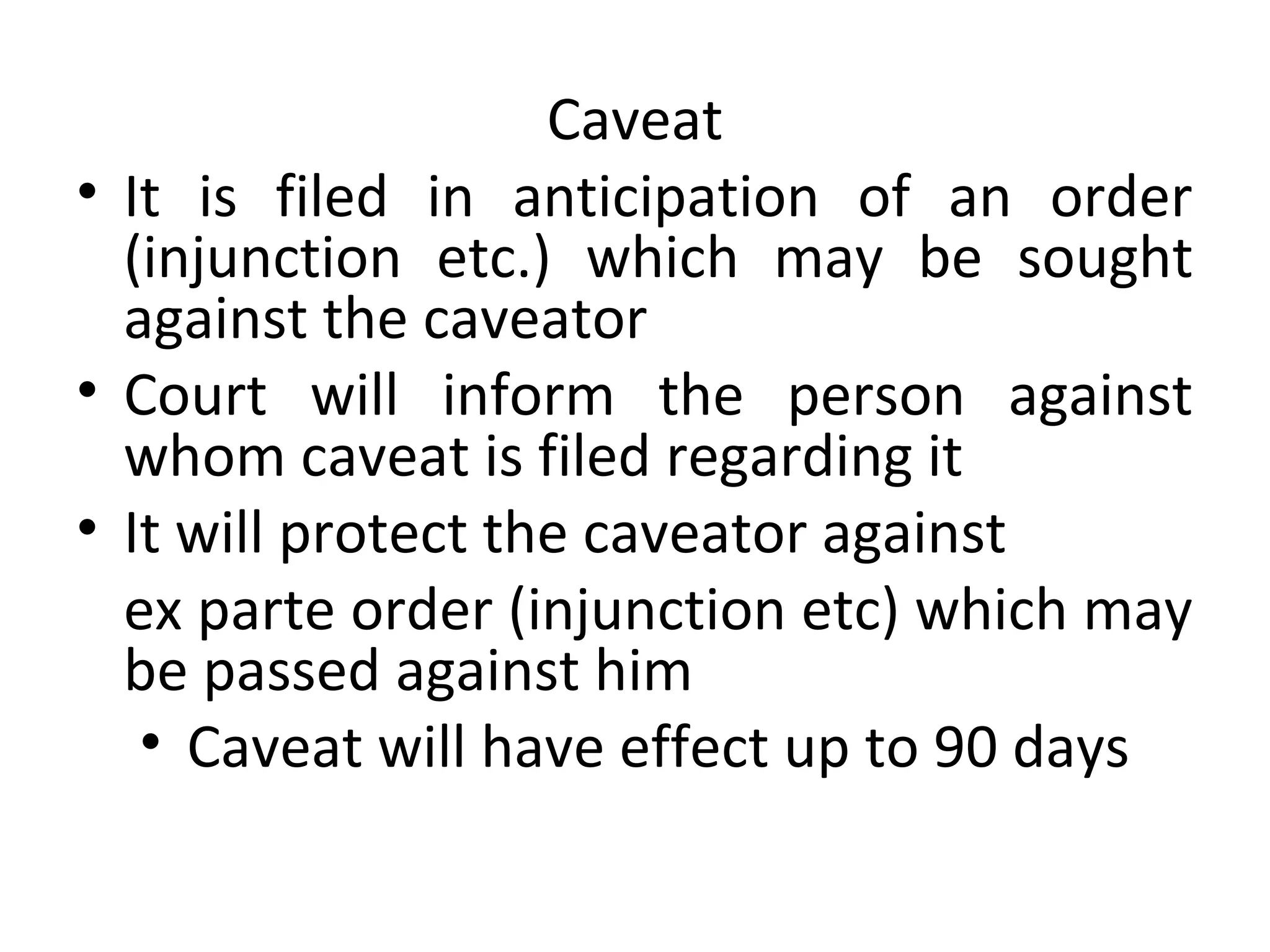
Caveat
• It is filed in anticipation of an order
(injunction etc.) which may be sought
against the caveator
• Court will inform the person against
whom caveat is filed regarding it
• It will protect the caveator against
ex parte order (injunction etc) which may
be passed against him
• Caveat will have effect up to 90 days
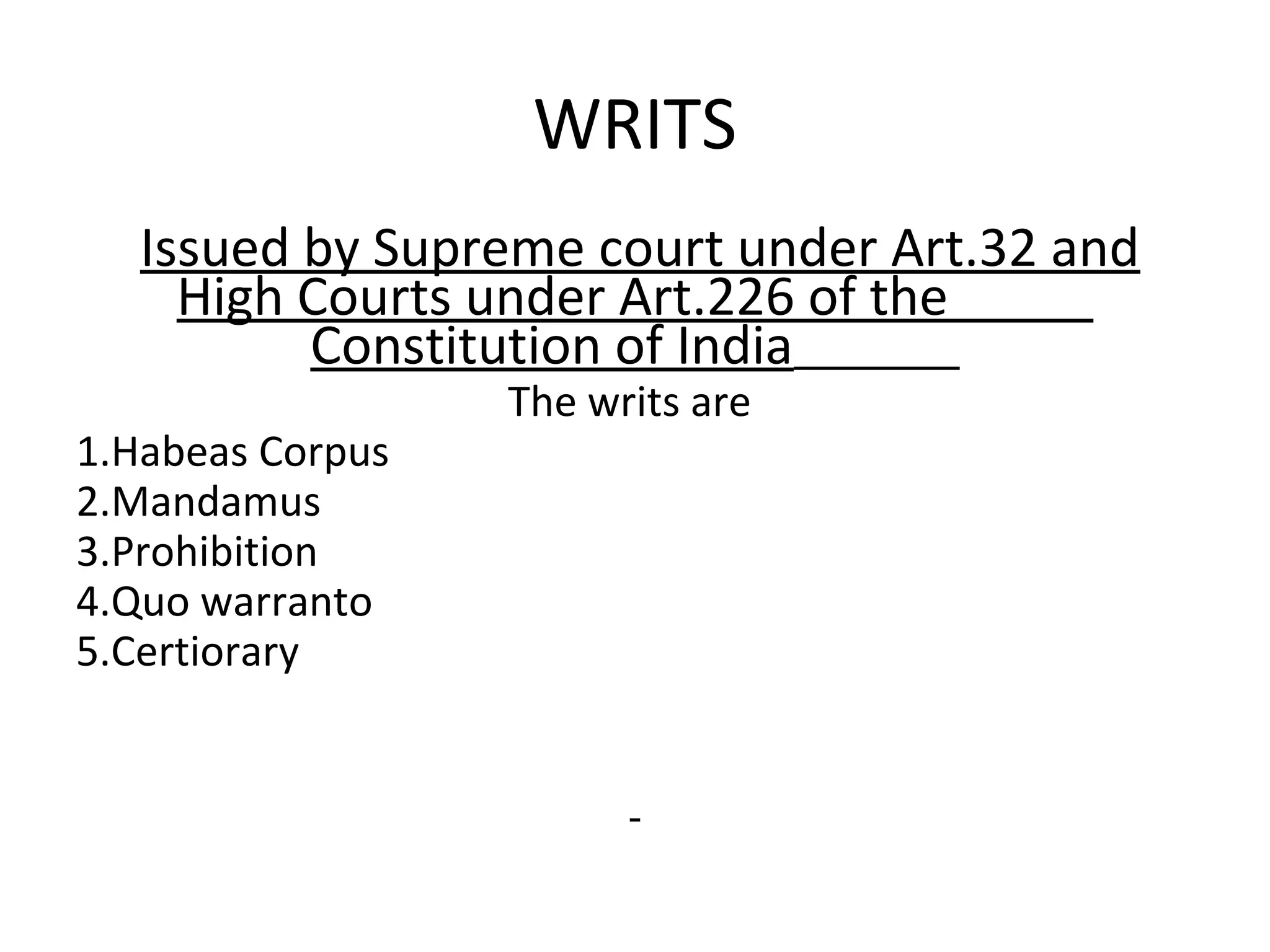
WRITS
Issued by Supreme court under Art.32 and
High Courts under Art.226 of the
Constitution of India
The writs are
1.Habeas Corpus
2.Mandamus
3.Prohibition
4.Quo warranto
5.Certiorary
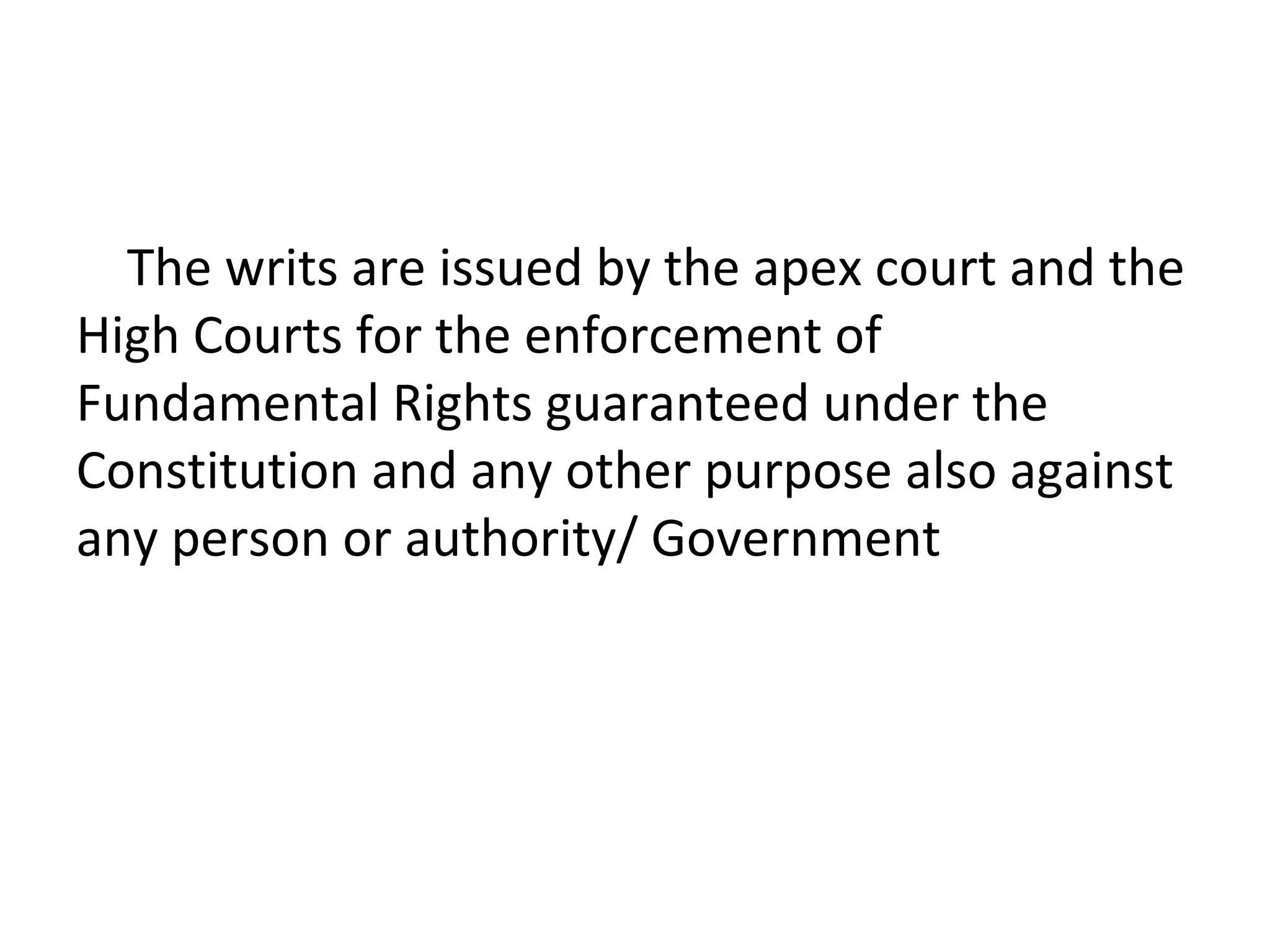
The writs are issued by the apex court and the
High Courts for the enforcement of
Fundamental Rights guaranteed under the
Constitution and any other purpose also against
any person or authority/ Government
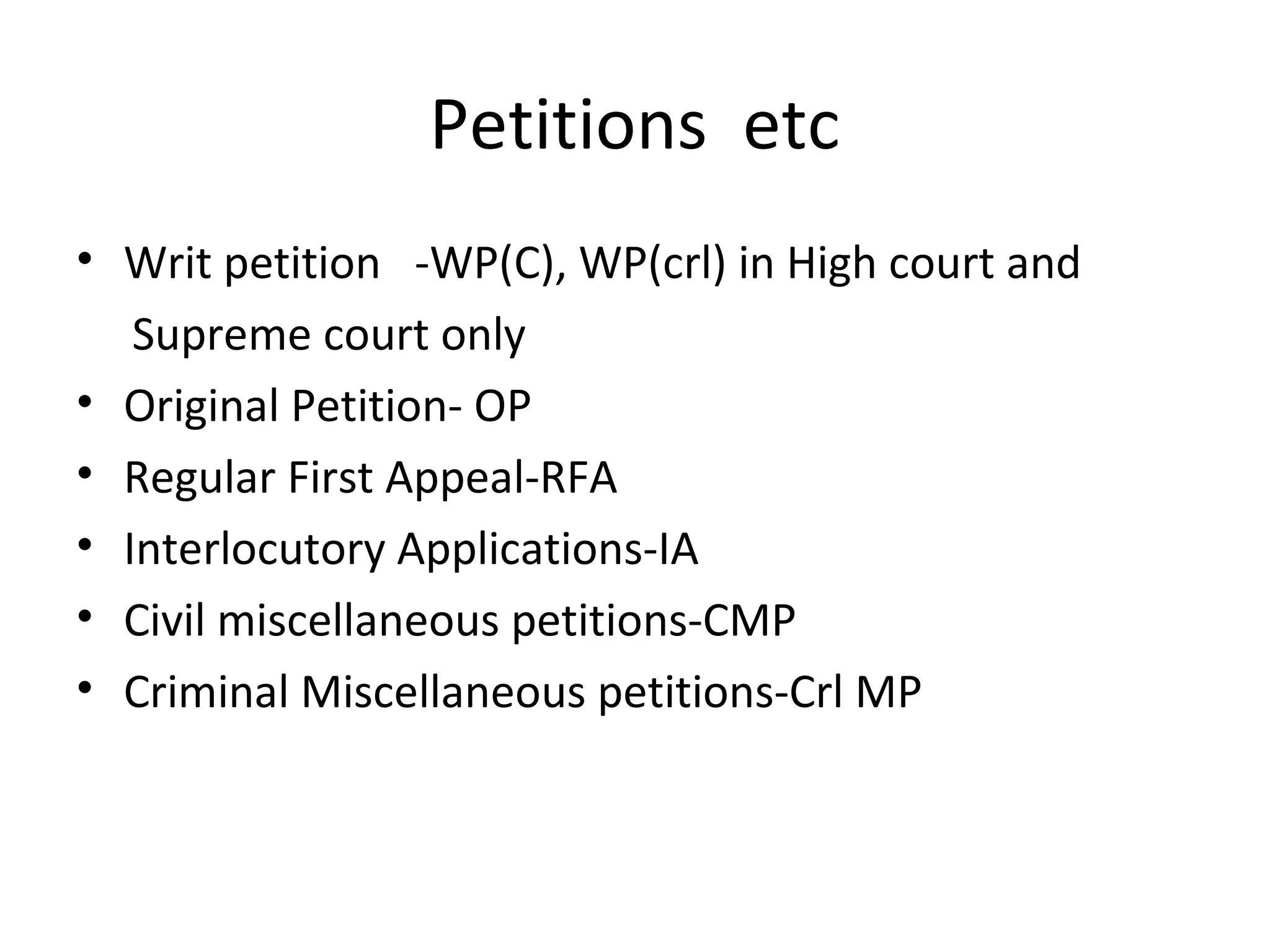
Petitions etc
• Writ petition -WP(C), WP(crl) in High court and
Supreme court only
• Original Petition- OP
• Regular First Appeal-RFA
• Interlocutory Applications-IA
• Civil miscellaneous petitions-CMP
• Criminal Miscellaneous petitions-Crl MP
Govt Advocates
• Dist Govt Pleaders in Dist centers
• Addl Govt Pleaders in Addl Dist Courts and Sub
court centers
• Pleaders in Munsiffs Courts(Advocate doing
Govt works)
• Special Govt Pleaders and Pub:Prosecutors
• Standing Counsels in the Supreme Court
Govt Advocates in High Court
• Advocate General(Art 165 of the Con:)
• Addl Advocate General
• Senior Govt Pleaders and Govt Pleaders
• Public Prosecutors
PREPARATION OF STATEMENT
OF FACTS
to defend Govt cases
Points to be kept in mind
• Give a brief history of the case in beginning
• Include only relevant facts
• Legal questions to be answered by law
officer/GP
• Answer para by para and ground by ground
without omissions
Points to be kept contd..
• Every averment allegation must be answered
• Clubbing of paras to be avoided
• Cross reference of paras can be made
• Costs to be claimed in relevant cases
particularly in frivolous and vexatious
litigations
Follow up action
• Pursue the case with GP
• Request GP to get the stay/injunction vacated
• Ensure copy application in time since delay
may affect right of appeal
• Ensure execution of decree/orders
• If there is no appeal comply with the order/
judgment in time/avoid attachment
The Kerala Government Law
Officers( appointment and
conditions of services)and Conduct
of Cases Rules,1978
KGLO Rules –R 18
Govt Law Officers shall conduct the cases
carefully and efficiently and safeguard
Government interests and in case of any default
he shall be liable to pay the Govt damages equal
to the loss/injury incurred or sustained as a
result of his carelessness, negligence or other
misconduct in conducting any case.
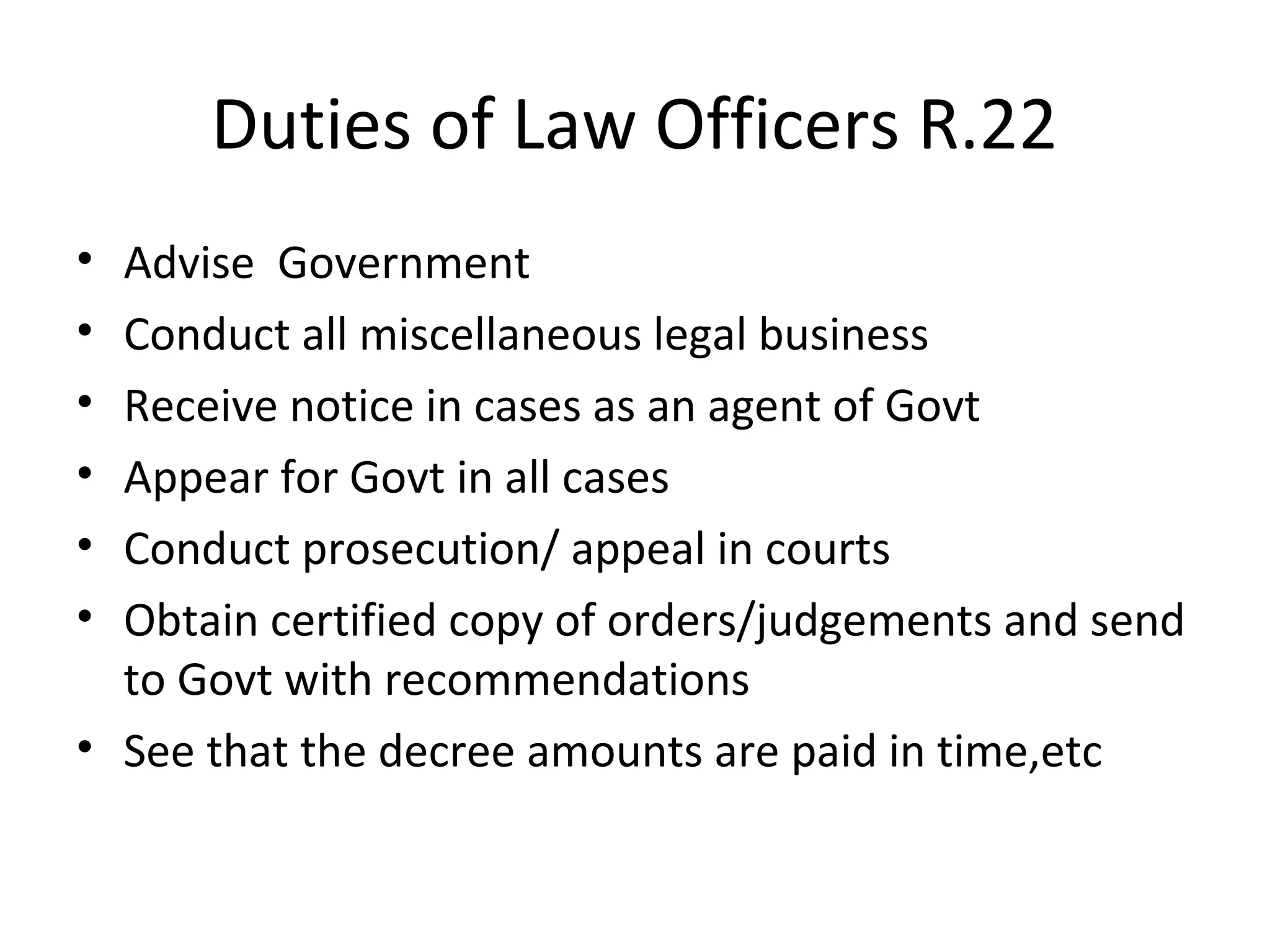
Duties of Law Officers R.22
• Advise Government
• Conduct all miscellaneous legal business
• Receive notice in cases as an agent of Govt
• Appear for Govt in all cases
• Conduct prosecution/ appeal in courts
• Obtain certified copy of orders/judgements and send
to Govt with recommendations
• See that the decree amounts are paid in time,etc
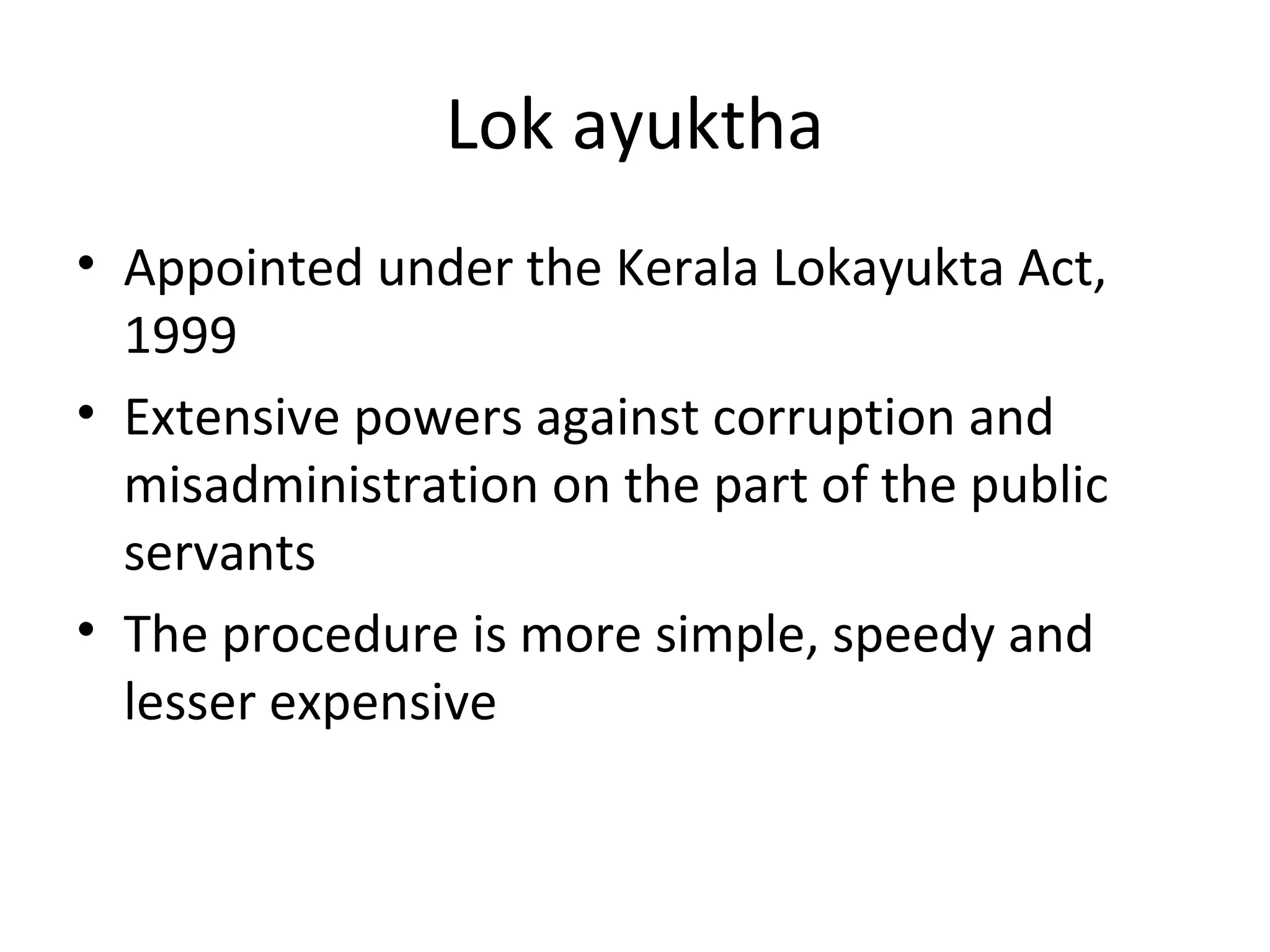
Lok ayuktha
• Appointed under the Kerala Lokayukta Act,
1999
• Extensive powers against corruption and
misadministration on the part of the public
servants
• The procedure is more simple, speedy and
lesser expensive
thanks
Chandrabos PV
Joint Secretary [Law] to Govt
O/D Associate Fellow,I M G
Mob-9497366502,Email-pvcbos@hotmail.com

Court procedure & preparation of statement of facts

  • 1.
    Court procedure Preparation of Statementof Facts Chandrabos PV Associate Fellow,IMG
  • 3.
    Criminal Procedure • IndianPenal Code,1860[IPC] • The Code of Criminal Procedure,1973[ Cr PC]
  • 4.
    Cr PC DEALSWITH FIR , INVESTIGATION ,ARREST, SEARCH,BAIL, TRIAL,JUDGEMENT,APPEAL etc
  • 5.
    CRIMINAL COURTS- Sections 6-23of CrPC • Sessions courts • Assistant sessions courts • Chief Judicial Magistrate Courts • Judicial First Class Magistrate Courts
  • 6.
    Powers of thecriminal courts • Sessions court- any sentence(capital punishment has to be confirmed by H C) • Asst Sessions court- upto 10 yrs+fine • Chief Judl Magi Court- up to 7 yrs+fine • Judl First Class Magi Court -up to 3 yrs+ fine of Rs 10000
  • 7.
    Civil Procedure Code ofCivil Procedure 1908 [C P C]
  • 8.
    CPC Civil Courts, Itspowers, Jurisdiction, Suits[plaint & written statement], Interim Orders, Judgment & Decree, Execution of Decree etc
  • 9.
    CIVIL COURTS • MunsiffCourt - Up to Rs.1 lac • Sub Court - Above Rs.1 lac
  • 10.
    Parties in OriginalSuit (O S) • Plaintiff/Plaintiffs = who files Plaint • Defendant/Defendants = who has to file Written Statement
  • 11.
    Process issued byCourts • Summons-issued to appear before the court in person or through advocate to answer a question/claim or produce document etc. • Warrant-an order to arrest/ produce/search etc • Notice- to intimate the institution of a petition,proceedings or its date of hearing etc
  • 12.
    Injunction /stay order •Prohibitory injunction/stay order is issued to restrain a person or authority from doing any act or thing etc • Mandatory injunction is issued ordering a person or authority to do any act or thing • Status quo is also issued to maintain the position as of now
  • 13.
    Section 80 ofCPC No suit shall be instituted against Govt/Public officer in his official capacity until the expiration of two months notice. But with the leave of the court urgent suits can be filed, still any relief whether interim or not can be given after notice only.
  • 14.
    • Judgment –means the statement given by the Judge on the grounds of a decree • Decree – means the formal expression of an adjudication which determines the rights of the parties with regard to the matters in controversy in the suit
  • 15.
    Regular First Appealin Civil • To Dist. Court against Decree up to Rs.1 Lac • To High Court above Rs.1 lac
  • 16.
    Second Appeal Second Appealto the High Court in case of substantial question of law exists in the Decree passed by a lower Appellate Court OR from an Ex parte Appellate decree
  • 17.
    Caveat • It isfiled in anticipation of an order (injunction etc.) which may be sought against the caveator • Court will inform the person against whom caveat is filed regarding it • It will protect the caveator against ex parte order (injunction etc) which may be passed against him • Caveat will have effect up to 90 days
  • 18.
    WRITS Issued by Supremecourt under Art.32 and High Courts under Art.226 of the Constitution of India The writs are 1.Habeas Corpus 2.Mandamus 3.Prohibition 4.Quo warranto 5.Certiorary
  • 19.
    The writs areissued by the apex court and the High Courts for the enforcement of Fundamental Rights guaranteed under the Constitution and any other purpose also against any person or authority/ Government
  • 20.
    Petitions etc • Writpetition -WP(C), WP(crl) in High court and Supreme court only • Original Petition- OP • Regular First Appeal-RFA • Interlocutory Applications-IA • Civil miscellaneous petitions-CMP • Criminal Miscellaneous petitions-Crl MP
  • 21.
    Govt Advocates • DistGovt Pleaders in Dist centers • Addl Govt Pleaders in Addl Dist Courts and Sub court centers • Pleaders in Munsiffs Courts(Advocate doing Govt works) • Special Govt Pleaders and Pub:Prosecutors • Standing Counsels in the Supreme Court
  • 22.
    Govt Advocates inHigh Court • Advocate General(Art 165 of the Con:) • Addl Advocate General • Senior Govt Pleaders and Govt Pleaders • Public Prosecutors
  • 23.
    PREPARATION OF STATEMENT OFFACTS to defend Govt cases
  • 24.
    Points to bekept in mind • Give a brief history of the case in beginning • Include only relevant facts • Legal questions to be answered by law officer/GP • Answer para by para and ground by ground without omissions
  • 25.
    Points to bekept contd.. • Every averment allegation must be answered • Clubbing of paras to be avoided • Cross reference of paras can be made • Costs to be claimed in relevant cases particularly in frivolous and vexatious litigations
  • 26.
    Follow up action •Pursue the case with GP • Request GP to get the stay/injunction vacated • Ensure copy application in time since delay may affect right of appeal • Ensure execution of decree/orders • If there is no appeal comply with the order/ judgment in time/avoid attachment
  • 27.
    The Kerala GovernmentLaw Officers( appointment and conditions of services)and Conduct of Cases Rules,1978
  • 28.
    KGLO Rules –R18 Govt Law Officers shall conduct the cases carefully and efficiently and safeguard Government interests and in case of any default he shall be liable to pay the Govt damages equal to the loss/injury incurred or sustained as a result of his carelessness, negligence or other misconduct in conducting any case.
  • 29.
    Duties of LawOfficers R.22 • Advise Government • Conduct all miscellaneous legal business • Receive notice in cases as an agent of Govt • Appear for Govt in all cases • Conduct prosecution/ appeal in courts • Obtain certified copy of orders/judgements and send to Govt with recommendations • See that the decree amounts are paid in time,etc
  • 30.
    Lok ayuktha • Appointedunder the Kerala Lokayukta Act, 1999 • Extensive powers against corruption and misadministration on the part of the public servants • The procedure is more simple, speedy and lesser expensive
  • 31.
    thanks Chandrabos PV Joint Secretary[Law] to Govt O/D Associate Fellow,I M G Mob-9497366502,Email-pvcbos@hotmail.com